
Bed bugs are some of the most persistent pests in homes, hotels, and apartments. While adult bed bugs cause itchy bites and sleepless nights, their eggs are the real reason infestations never seem to end. Even if you kill visible bugs, new ones can hatch days later, restarting the cycle.
To get rid of bed bugs completely, you must understand their eggs — how they look, where they hide, how long they take to hatch, and how to kill them effectively. This guide breaks down everything you need to know to recognize and eliminate bed bug eggs for good.
What Do Bed Bug Eggs Look Like?
Color and Appearance
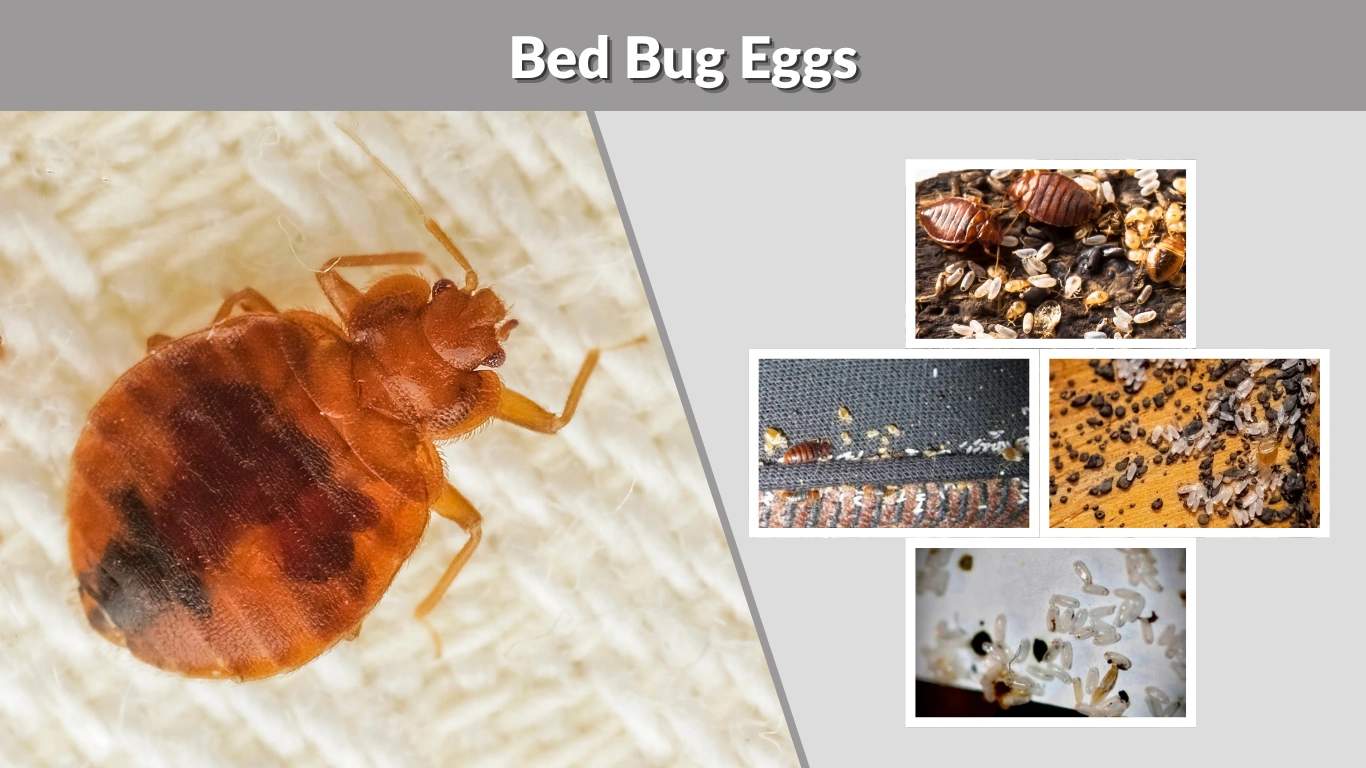
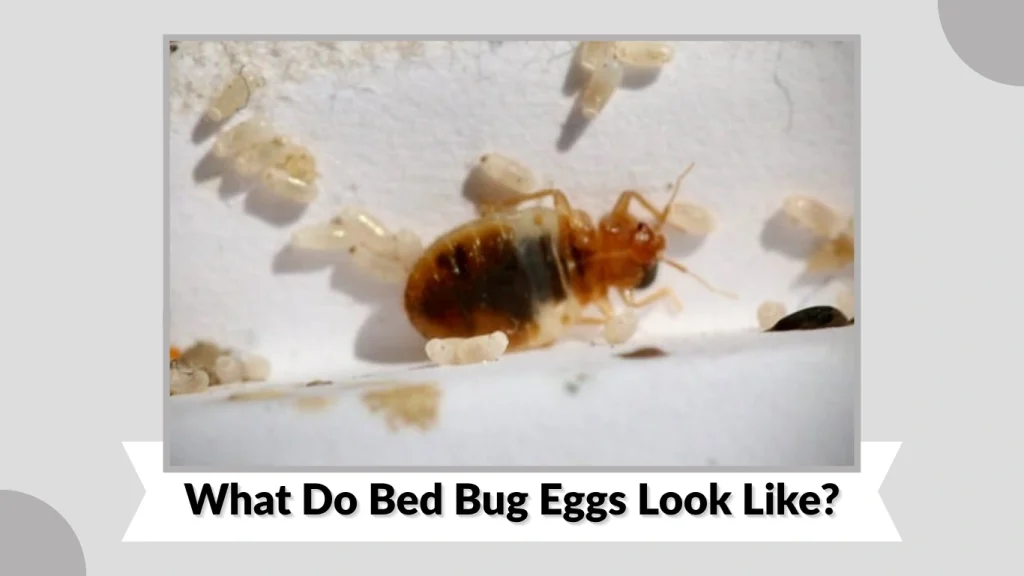
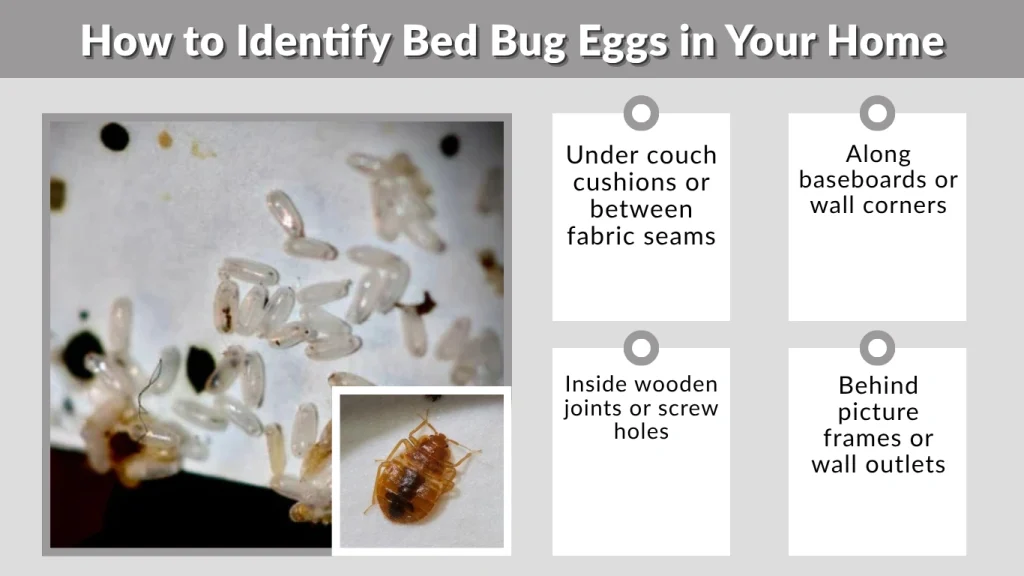
Bed bug eggs are tiny, oval, and pearl-white, resembling miniature grains of rice. They’re usually no longer than 1 millimeter, about the size of a pinhead. When freshly laid, the eggs have a slight shine and may appear translucent or glossy. Over time, they turn dull white or slightly yellowish.
If you spot clusters of small white dots along seams, corners, or fabric folds, there’s a good chance they’re bed bug eggs. They’re often laid in tight groups of 10–50, usually in hidden spots close to where the insects feed.
Size and Texture
Each bed bug egg measures roughly 1/25 of an inch long — just large enough to see with the naked eye. They have a sticky outer coating that helps them cling to rough surfaces like wood, fabric, or metal. This adhesive quality allows them to remain firmly attached to mattress seams, furniture joints, and wall cracks, even during cleaning.
The surface of a fresh egg looks smooth and slightly moist, while older eggs appear wrinkled or flattened as they dry out. Unhatched eggs are firm, while hatched ones leave behind papery shells.
Identifying Hatched or Old Eggs
When eggs hatch, they leave behind translucent shells called eggshells. These are light, flaky, and often mistaken for dandruff or dust particles. Finding these eggshells in bedding, along baseboards, or under furniture is a clear sign that bed bugs are actively reproducing nearby.
Older eggs that fail to hatch may look dry, cracked, or dusty. You may also find them stuck to fibers on bedding or carpets, especially after vacuuming or washing.
Where Do Bed Bugs Lay Their Eggs?
Mattresses and Bedding
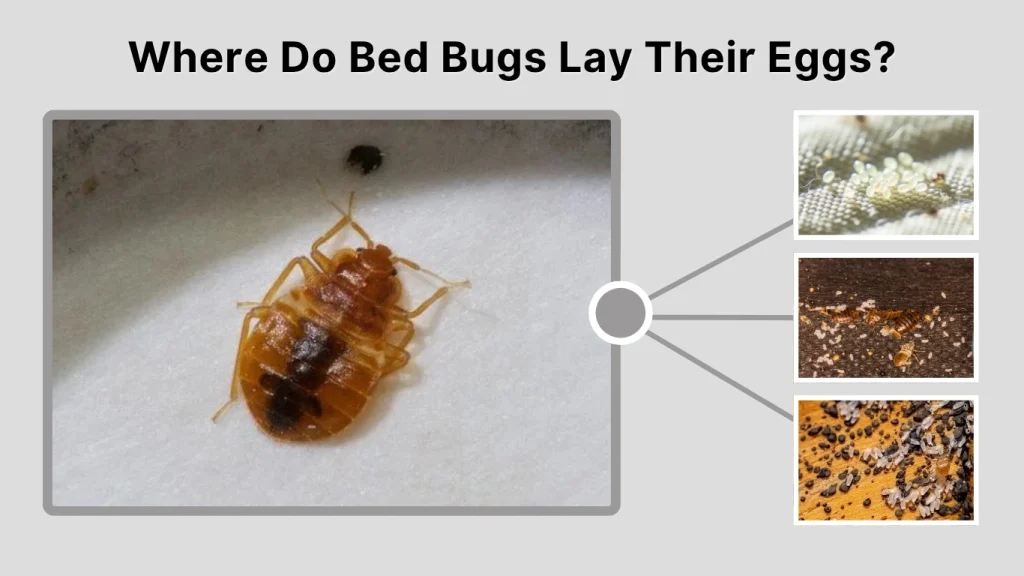
Bed bugs prefer to lay eggs close to their food source — humans. The most common hiding and nesting spots include:
- Mattress seams and tufts
- Box springs and bed frames
- Headboards and nearby wall joints
- Under mattress tags or zippers
They lay their eggs in hidden areas that are dark, warm, and undisturbed. Because of this, you’ll often find them along stitching lines or cracks that aren’t touched during routine cleaning.
Furniture and Upholstery
Aside from beds, bed bugs also deposit eggs in other pieces of furniture. Upholstered couches, recliners, and chairs are popular spots, especially near seams or underneath cushions. They also hide inside wooden joints, screw holes, and cracks between furniture parts.
In advanced infestations, bed bugs may spread to curtains, carpets, or baseboards, laying eggs wherever they find refuge.
Clothing and Personal Items
Bed bug eggs can occasionally stick to clothing, backpacks, and bags that remain near infested beds. However, bed bugs don’t lay eggs directly on moving hosts like humans or pets. They need stable surfaces to ensure the eggs stay secure until hatching.
If your clothes or linens have been exposed to an infested area, wash and dry them at high heat immediately to prevent eggs from surviving.
Myths About Eggs on Skin or Hair
It’s a common myth that bed bugs lay eggs in human skin or hair. They do not. Bed bugs feed on blood but don’t burrow or live on the body like lice or mites. Their eggs are too fragile to survive the natural movement of skin or hair, so they always lay them on surfaces instead.
If you find small white flakes on your body, they’re likely skin cells or dandruff, not bed bug eggs.
The Bed Bug Egg Life Cycle
How Long They Take to Hatch
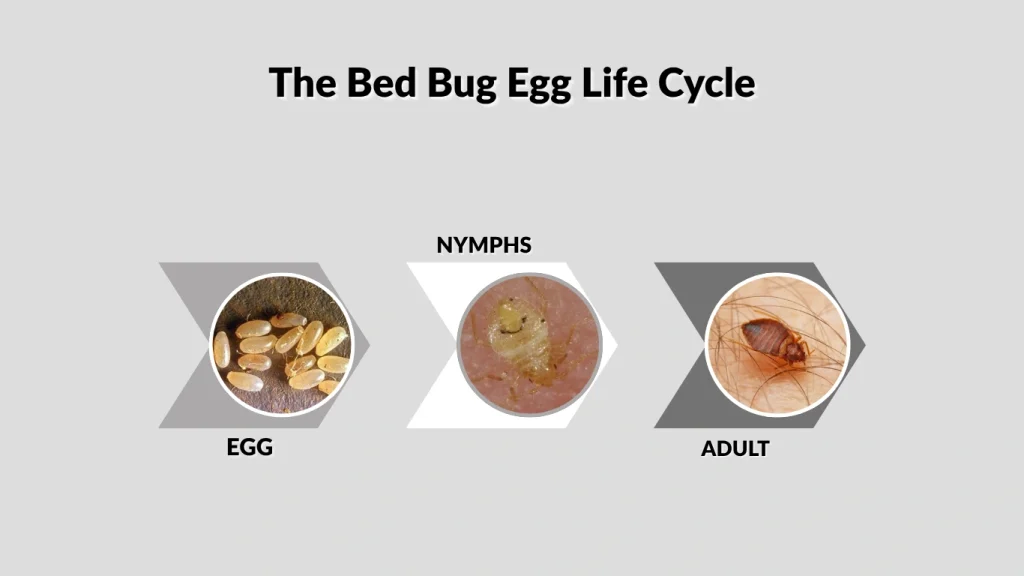
Under warm and humid conditions, bed bug eggs hatch within 6 to 10 days. The ideal temperature for development is around 75–80°F (24–27°C). Cooler temperatures slow down hatching, allowing eggs to survive for weeks before producing new nymphs.
Each female bed bug can lay up to 500 eggs during her lifetime, typically in batches of 1–5 per day. This steady rate of reproduction is what makes infestations so persistent — even after a major extermination, new eggs can continue to hatch and repopulate your home.
Nymph Stage and Growth
When eggs hatch, the baby bed bugs — called nymphs — are pale, nearly translucent, and about the size of a sesame seed. They immediately seek a blood meal to survive and grow. Nymphs must molt five times before becoming adults, feeding on blood between each stage.
In warm indoor conditions, the entire life cycle — from egg to adult — can complete in as little as four to six weeks. This rapid reproduction means that even missing a few eggs during cleaning can result in a new wave of infestation within a month.
How to Identify Bed Bug Eggs in Your Home
Signs on Bedding and Mattresses
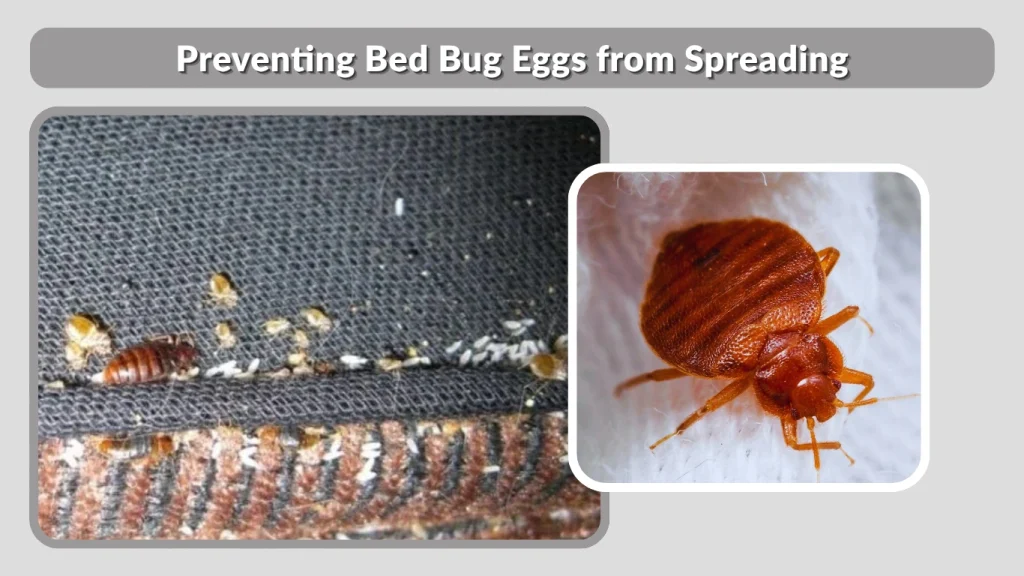
The easiest way to detect bed bug eggs is to check your bed and surrounding areas. Eggs often appear in clusters of tiny white dots along mattress seams, under tags, or near zippers. You may also find them on box springs or behind headboards.
Look for a mix of live eggs, empty eggshells, dark fecal spots, and reddish stains — all classic signs of an active infestation. Use a flashlight to examine every crease, as bed bugs prefer narrow hiding spots.
Eggs on Furniture and Walls
If the infestation has spread, bed bug eggs may also appear:
- Under couch cushions or between fabric seams
- Along baseboards or wall corners
- Inside wooden joints or screw holes
- Behind picture frames or wall outlets
Eggs on vertical surfaces are often cemented in place by a sticky substance that prevents them from falling off. This makes removal challenging without thorough cleaning or professional heat treatment.
Visibility and Detection Tools
Although bed bug eggs are visible to the naked eye, their size makes them easy to miss. Use a bright flashlight, magnifying glass, or sticky tape to collect samples for confirmation. Professionals sometimes use UV flashlights or monitors to locate clusters in dark spaces.
If you suspect bed bug eggs but aren’t sure, calling a pest control expert can help confirm the infestation before it worsens.
What Kills Bed Bug Eggs
Heat Treatment
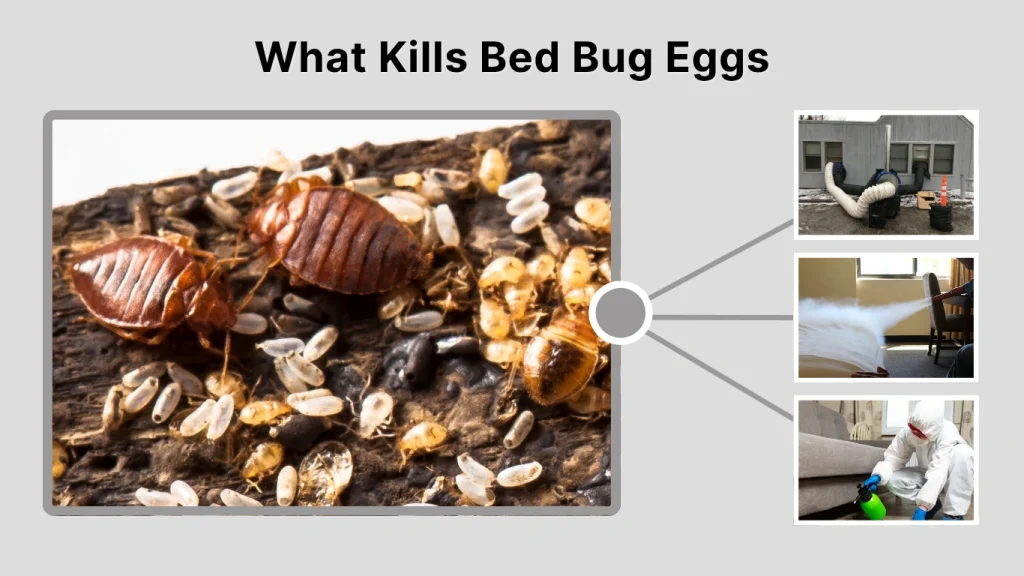
Heat is the most reliable and chemical-free way to kill bed bug eggs. These eggs die at temperatures of 118°F (48°C) within 20 minutes or 122°F (50°C) almost instantly.
Professional exterminators use industrial heaters to warm entire rooms evenly, ensuring no egg survives inside walls or furniture. You can also use steam cleaners at temperatures above 200°F for smaller areas such as mattresses, couches, and carpets.
Steam Cleaning
Steam reaches deep into fabrics, crevices, and corners where chemicals can’t. Move slowly over surfaces to maintain direct heat contact for several seconds. Regular steaming, paired with vacuuming, helps destroy both eggs and young nymphs.
Chemical Treatments
Certain EPA-approved insecticides specifically target bed bugs and their eggs. Look for formulas that mention “egg kill” or “residual protection.”
Effective ingredients include pyrethroids, neonicotinoids, and insect growth regulators (IGRs). Popular options are:
- Harris Egg Kill Bed Bug Killer
- Hot Shot Bed Bug Killer with Egg Kill
Professional pest control services often combine these with heat treatment for maximum effectiveness.
Household Solutions
Some household products can help in early infestations:
- Rubbing alcohol: Kills live bugs and eggs on contact but evaporates quickly.
- Bleach: Breaks down egg membranes but can damage fabrics and paint.
- Vacuuming: Removes visible eggs, but bags must be sealed and discarded immediately.
- Washing and drying: Hot water and high heat cycles kill both eggs and live insects.
While these methods work on the surface, they rarely eliminate deeply hidden eggs, so they’re best used alongside professional treatment.
Preventing Bed Bug Eggs from Spreading
Laundry and Cleaning
Bed bugs can’t survive high heat, so frequent washing and drying are essential. Clean bedding, clothes, and curtains in hot water (≥120°F) and dry on the highest setting for at least 30 minutes.
Vacuum your mattress, carpets, and baseboards regularly. Always empty vacuum bags into sealed plastic before disposal to prevent re-infestation.
Sealing and Encasements
After cleaning, use mattress and pillow encasements to trap any remaining eggs or nymphs. These covers prevent hidden bugs from escaping and stop new ones from nesting inside.
Seal cracks and crevices in walls, baseboards, and floors with caulk to eliminate egg-laying sites.
Inspection and Monitoring
Even after treatment, regular inspection is vital. Check for eggs or signs of activity every 7–10 days, which matches the typical incubation period. Place interceptor traps under bed legs to monitor for new movement.
Early detection prevents a few eggs from turning into another large infestation.
Professional vs. DIY Egg Removal
Professional Treatments
Hiring pest control experts offers the highest success rate because they combine multiple proven methods — heat, steam, and chemical applications. Professionals can reach areas that home tools can’t and provide follow-up visits to ensure that all eggs are destroyed.
They also use specialized thermometers and sensors to maintain lethal heat levels without damaging your furniture or electronics.
DIY Methods
DIY approaches are useful for small infestations or prevention. Regular vacuuming, steaming, and laundry cycles can reduce egg numbers dramatically.
However, bed bug eggs are tough and often hidden, so a combination of home cleaning and professional extermination is usually necessary for total elimination.
FAQs
What do bed bug eggs look like on a mattress?
They appear as tiny white or off-white grains, often clustered in seams or under tags. You may also notice dark fecal spots or shed skins nearby.
Can you see bed bug eggs with the naked eye?
Yes — they’re about 1 mm long, similar in size to a pinhead. A flashlight or magnifying glass can make them easier to spot.
How long do bed bug eggs take to hatch?
Eggs typically hatch in 6–10 days, depending on temperature and humidity. Warm environments accelerate the process.
Does alcohol or bleach kill bed bug eggs?
Both can kill on direct contact, but they don’t penetrate hidden cracks or fabrics. Professional heat or steam treatment is far more effective.
Where do bed bugs lay eggs?
They prefer dark, protected spots close to humans — mattress seams, bed frames, furniture joints, and wall crevices.
