
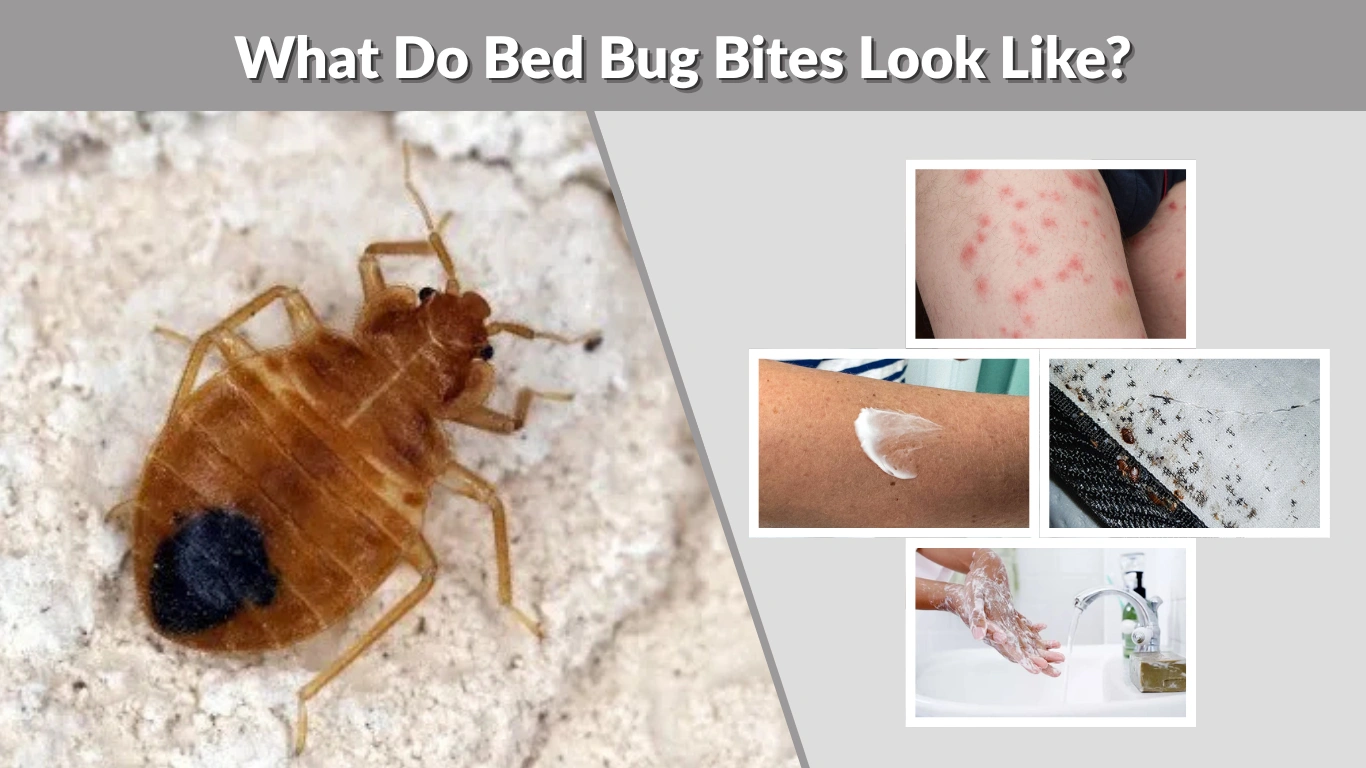
Waking up with itchy red bumps can be unsettling, especially when you suspect bed bugs. These tiny, blood-feeding insects are nocturnal pests that come out at night to feed on human blood. While their bites are not dangerous, they can cause irritation, allergic reactions, and sleepless nights.
Recognizing what bed bug bites look like is crucial to confirm an infestation and take early action. The problem is, their bites often resemble mosquito or flea bites, making them tricky to identify. In this article, we’ll explore how to recognize bed bug bites, how they look on different skin tones, where they usually appear, and how to treat them effectively.
Understanding Bed Bug Bites
How Bed Bugs Bite
Bed bugs feed in a very specific way. When they bite, they use two tiny tubes: one injects a numbing agent and an anticoagulant, while the other draws blood. Because of the numbing effect, you won’t feel the bite as it happens — which is why people often wake up with new marks that weren’t there before.
A single feeding session lasts anywhere from 3 to 10 minutes, and bed bugs usually feed once every few days. However, in an infested environment, multiple bugs feeding at once can lead to dozens of bites overnight.
Reactions to bed bug bites vary by person. Some individuals experience mild redness and itching, while others develop severe allergic responses with swelling and irritation.
What Bed Bug Bites Look Like
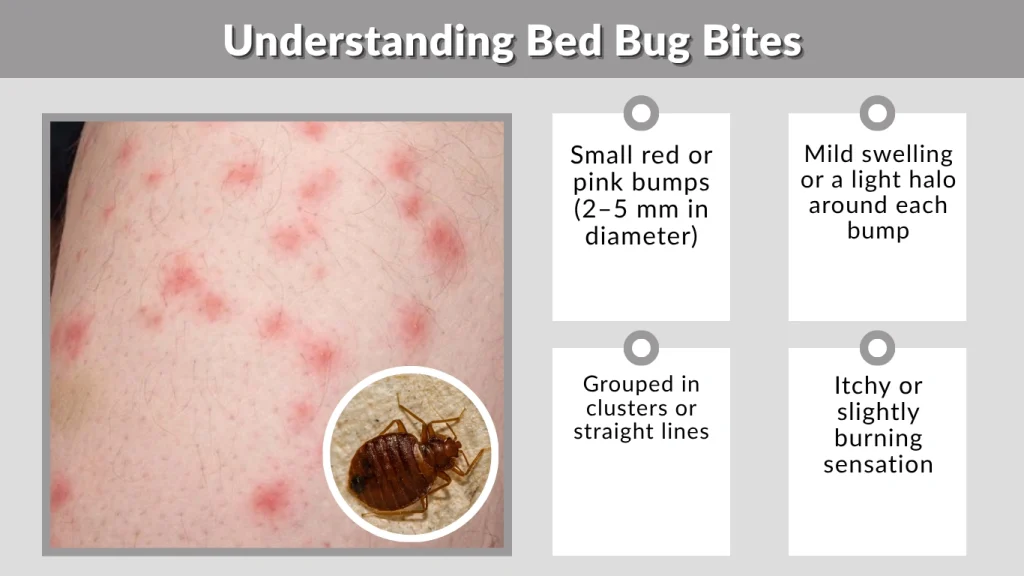
Bed bug bites typically appear as small, red, raised bumps that may be slightly swollen or warm to the touch. The hallmark pattern is often clusters or straight lines of 3–5 bites, sometimes described as the “breakfast, lunch, and dinner” pattern.
The bites usually appear on exposed areas of the body during sleep — such as the arms, face, neck, and legs. While they might look similar to mosquito or flea bites, they tend to be more uniform in size and more likely to occur in neat rows rather than scattered randomly.
In some cases, the center of a bed bug bite may have a tiny puncture mark, indicating where the bug’s feeding tube pierced the skin.
Key visual traits include:
- Small red or pink bumps (2–5 mm in diameter)
- Mild swelling or a light halo around each bump
- Grouped in clusters or straight lines
- Itchy or slightly burning sensation
Bite marks often appear overnight, since bed bugs are most active between midnight and dawn.
How Bed Bug Bites Look on Different Skin Tones
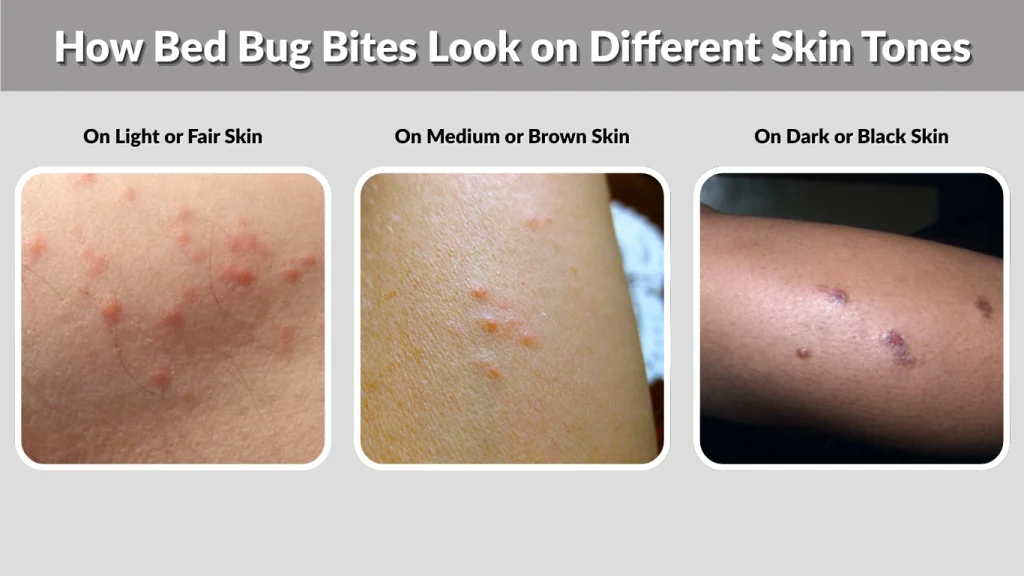
Bed bug bites don’t look the same on everyone. The appearance of redness and inflammation can vary significantly depending on skin tone. Understanding these differences helps ensure accurate identification and avoids misdiagnosing the bites as something else.
On Light or Fair Skin
On lighter complexions, bed bug bites appear as red or pink welts, often surrounded by a paler ring. Because of the contrast, the bites are usually easier to spot in early stages.
The center of the bite may darken slightly or have a pinpoint mark where the bug pierced the skin. In some cases, small blisters or hives may develop if the person is sensitive to the saliva proteins.
Fresh bites on fair skin tend to look inflamed and bright, but as they heal, they fade into light brown or pinkish marks before disappearing completely.
On Medium or Brown Skin
On medium-toned skin, bed bug bites may appear reddish-brown, pink, or slightly darker than the surrounding skin. The swelling is more visible than the color change itself, which can make them feel raised or bumpy to the touch.
As they heal, these bites can leave behind dark spots or mild discoloration, known as post-inflammatory hyperpigmentation. These marks are harmless but may last longer than the initial irritation.
On Dark or Black Skin
On darker skin tones, bed bug bites often look dark brown, purple, or grayish rather than red. The raised texture is usually more noticeable than the color. Inflammation may cause the area to feel warm or tender, especially if scratched.
Healing can sometimes result in temporary dark marks or scarring, particularly in individuals prone to hyperpigmentation. Moisturizing the area and avoiding scratching helps reduce the chance of long-term discoloration.
Because redness is less visible on dark skin, other symptoms like itching, small bumps, or swelling may be stronger indicators of bed bug bites.
Where Bed Bugs Usually Bite
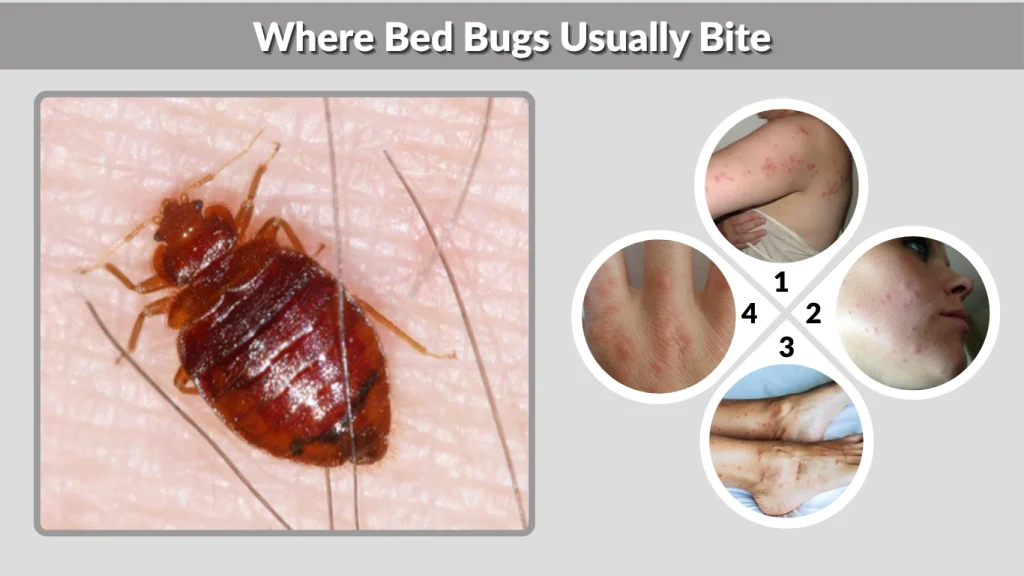
Bed bugs prefer to bite areas that are exposed during sleep — places where skin meets the bedding. They avoid thick hair or tight clothing but easily access bare skin.
Common bite locations include:
- Arms and shoulders: The most exposed areas for side sleepers.
- Face and neck: Common targets because they’re usually uncovered.
- Legs and ankles: Often bitten if the blanket doesn’t cover them completely.
- Hands and fingers: May be bitten when resting outside the sheets.
Rarely, bed bugs bite the back, torso, or behind the knees, depending on sleeping position. Because they don’t live on the body, bites are limited to the time they feed — typically at night.
Stages of Bed Bug Bites
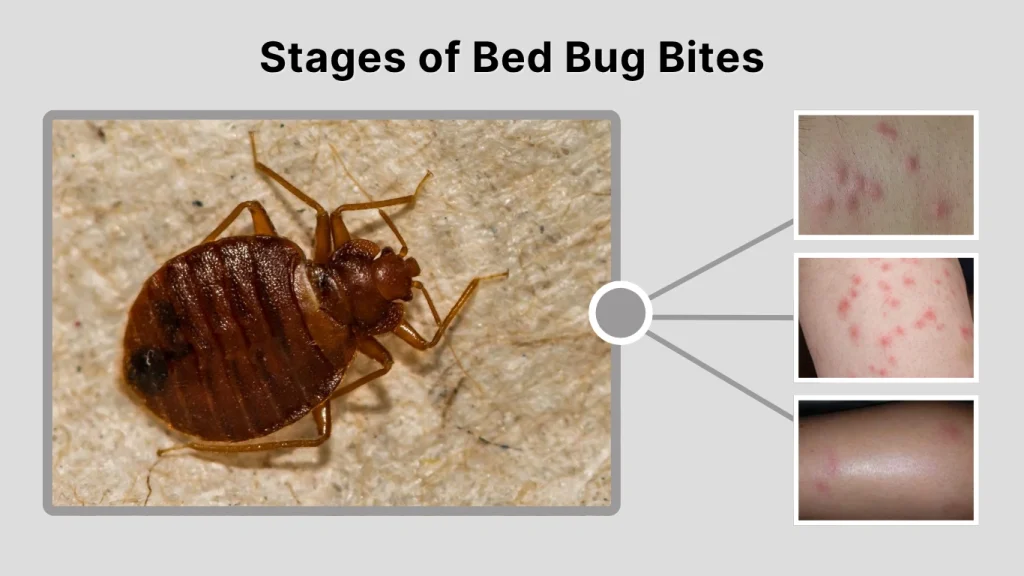
Early or Fresh Bites
In the earliest stage, bed bug bites appear as flat or slightly raised red spots within hours after feeding. You may notice mild itching, burning, or tightness in the affected area. Fresh bites often show up overnight, so people usually discover them in the morning after sleeping in an infested bed.
At first glance, these marks can resemble mosquito bites, but the key difference is that bed bug bites tend to form clusters or straight lines, particularly on areas like arms or legs that remain uncovered.
Developing Stage
After one to three days, bites become more noticeable and itchier. The surrounding skin may swell slightly and feel tender to the touch. The area can also develop a darker red center surrounded by a lighter halo.
If you scratch excessively, tiny scabs or open sores may appear, which increases the risk of infection. During this stage, the bites may also start to appear more uniform, making it easier to tell them apart from other insect bites.
Healing Stage
Within a week, most bed bug bites begin to fade. The redness reduces, and the marks flatten out. However, in some cases—especially for people with darker skin tones—the bites can leave dark or purplish marks that persist for several weeks.
Applying moisturizers or gentle topical creams can help minimize discoloration. If scratching leads to infection, medical treatment with antibiotics or antiseptic creams may be necessary.
Bed Bug Bites vs Other Common Insect Bites
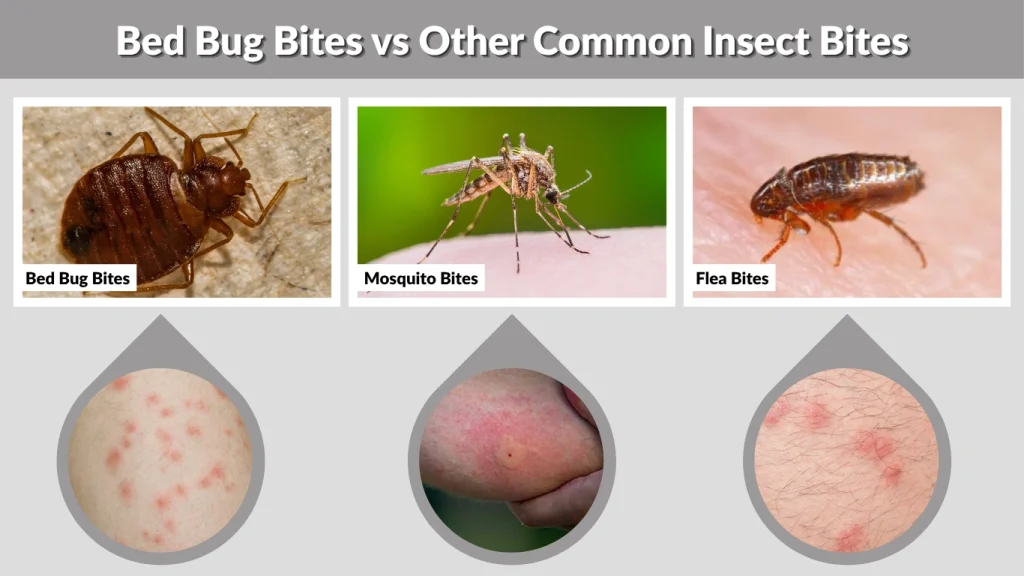
Many people confuse bed bug bites with bites from other insects, especially mosquitoes or fleas. Knowing the differences can help you identify the true cause and act faster to eliminate the source.
Bed Bug Bites vs Mosquito Bites
| Feature | Bed Bug Bites | Mosquito Bites |
| Pattern | Clusters or straight lines | Random, scattered |
| Appearance | Small, uniform red bumps | Puffy, irregular bumps |
| Itching | Often delayed, intense | Immediate, moderate |
| Timing | Appear overnight | Shortly after bite |
| Location | Exposed skin during sleep | Any exposed area |
Unlike mosquito bites, which are often isolated and appear soon after being bitten, bed bug bites develop gradually and are typically found after sleeping.
Bed Bug Bites vs Flea Bites
| Feature | Bed Bug Bites | Flea Bites |
| Size | Larger, smoother welts | Smaller red dots with darker center |
| Location | Upper body, face, arms | Lower legs, ankles, feet |
| Pattern | Straight lines or clusters | Random patches |
| Itch Level | Moderate to severe | Intense, immediate |
Flea bites usually appear around the ankles or feet, while bed bugs target upper body areas. Flea bites also itch almost instantly, whereas bed bug bites may take hours or days to become irritated.
How to Confirm Bed Bugs Are the Cause
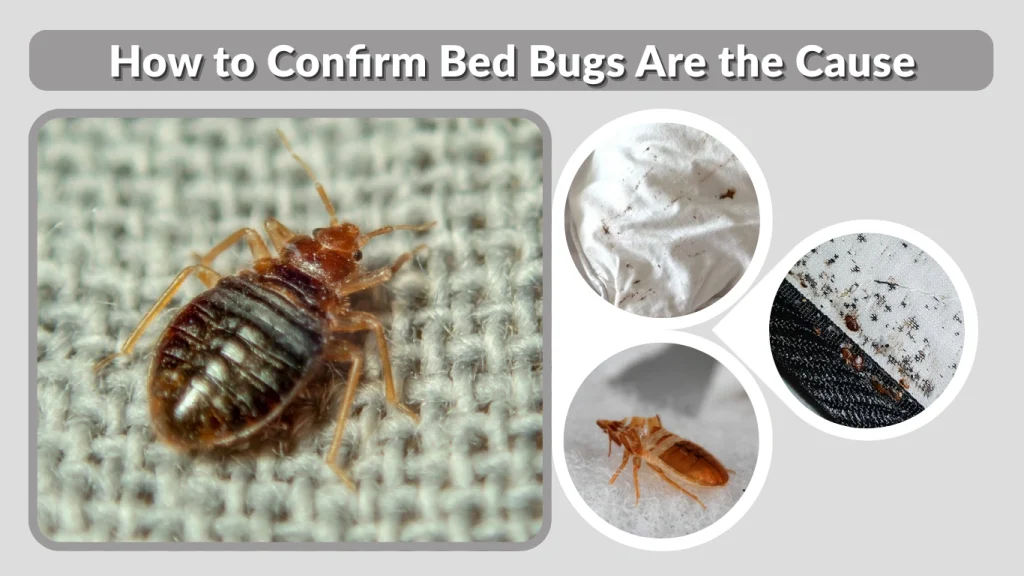
Other Signs of Infestation
If you suspect bed bugs, look for physical evidence near where you sleep. Common signs include:
- Rust-colored stains on sheets or pillowcases (from crushed bugs).
- Tiny black specks (bed bug feces) along mattress seams or bed frames.
- Shed skins or empty shells from nymphs growing into adults.
- A musty, sweet odor — a sign of large infestations.
Finding these along with bite marks confirms the presence of bed bugs.
Inspecting Your Sleeping Area
Use a flashlight to check seams, mattress tags, headboards, and cracks in nearby furniture. Bed bugs are small (about the size of an apple seed) and flat, making them easy to hide.
For deeper inspection:
- Slide a credit card along seams to dislodge hiding bugs.
- Check under fitted sheets, box springs, and electrical outlets.
- Examine luggage or clothing if you’ve recently traveled.
If evidence is found, immediate cleaning and professional pest control are recommended.
What to Do If You Have Bed Bug Bites
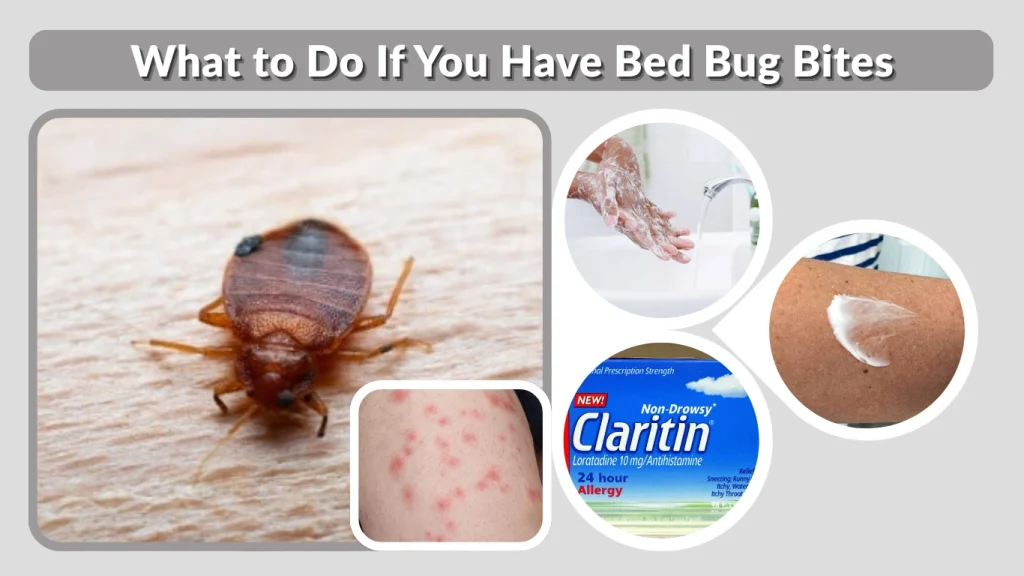
Relieving Symptoms
Bed bug bites usually heal on their own, but symptoms can be managed with simple treatments:
- Clean the bites using mild soap and warm water to prevent infection.
- Apply anti-itch cream, calamine lotion, or a cold compress to reduce irritation.
- Take oral antihistamines for severe itching or allergic reactions.
- Avoid scratching, as it can lead to infection and scarring.
If swelling, pain, or pus develops, consult a healthcare provider — these may be signs of infection requiring antibiotics.
Getting Rid of Bed Bugs
Treating the bites is only part of the solution. You must also eliminate the infestation to prevent recurring bites.
Steps include:
- Wash bedding and clothes in hot water (at least 120°F / 49°C).
- Dry them on the highest heat setting for at least 30 minutes.
- Vacuum mattresses, bed frames, and carpets thoroughly.
- Seal cracks and crevices in walls or furniture.
- Use bed bug-proof mattress encasements to trap any remaining bugs.
- Consider professional extermination using heat treatments or safe insecticides.
Avoid using harsh chemicals on your own, as improper treatment can spread bugs to new areas.
Myths and Misconceptions
“Bed Bugs Only Infest Dirty Homes”
False. Bed bugs don’t care about cleanliness — they only need warmth and access to blood. Even spotless hotels and homes can have infestations.
“Bed Bug Bites Always Come in Threes”
Not always. Although the “breakfast, lunch, and dinner” pattern is common, bites may appear in different groupings based on how the bug feeds.
“You Can Feel Bed Bugs Bite You”
Wrong. Their saliva contains anesthetic compounds that prevent you from feeling the bite in real time. Most people only notice after the bugs have fed and left.
Prevention and Protection Tips
At Home
- Regularly inspect beds, mattresses, and furniture seams.
- Reduce clutter and vacuum often.
- Keep beds away from walls and tuck sheets tightly.
- Use protective mattress covers and wash bedding weekly.
While Traveling
- Inspect hotel beds and luggage racks before settling in.
- Keep suitcases elevated and zipped closed.
- Wash travel clothes in hot water upon returning home.
- Avoid placing luggage directly on the floor or carpet.
FAQs
What do bed bug bites look like on humans?
They’re small, red, itchy bumps — usually in lines or clusters — that appear on exposed skin after sleeping.
What do bed bug bites look like on dark skin?
They often appear brown, purple, or gray instead of red and may leave temporary darker marks after healing.
How long do bed bug bites last?
Most heal in 1–2 weeks. Scratching or allergic reactions can extend healing time.
Do bed bug bites itch immediately?
Not always. Itching can take several hours or even a day to begin after the bite.
How can I tell bed bug bites from mosquito bites?
Bed bug bites appear overnight in lines or clusters, while mosquito bites are random and appear soon after exposure.
