
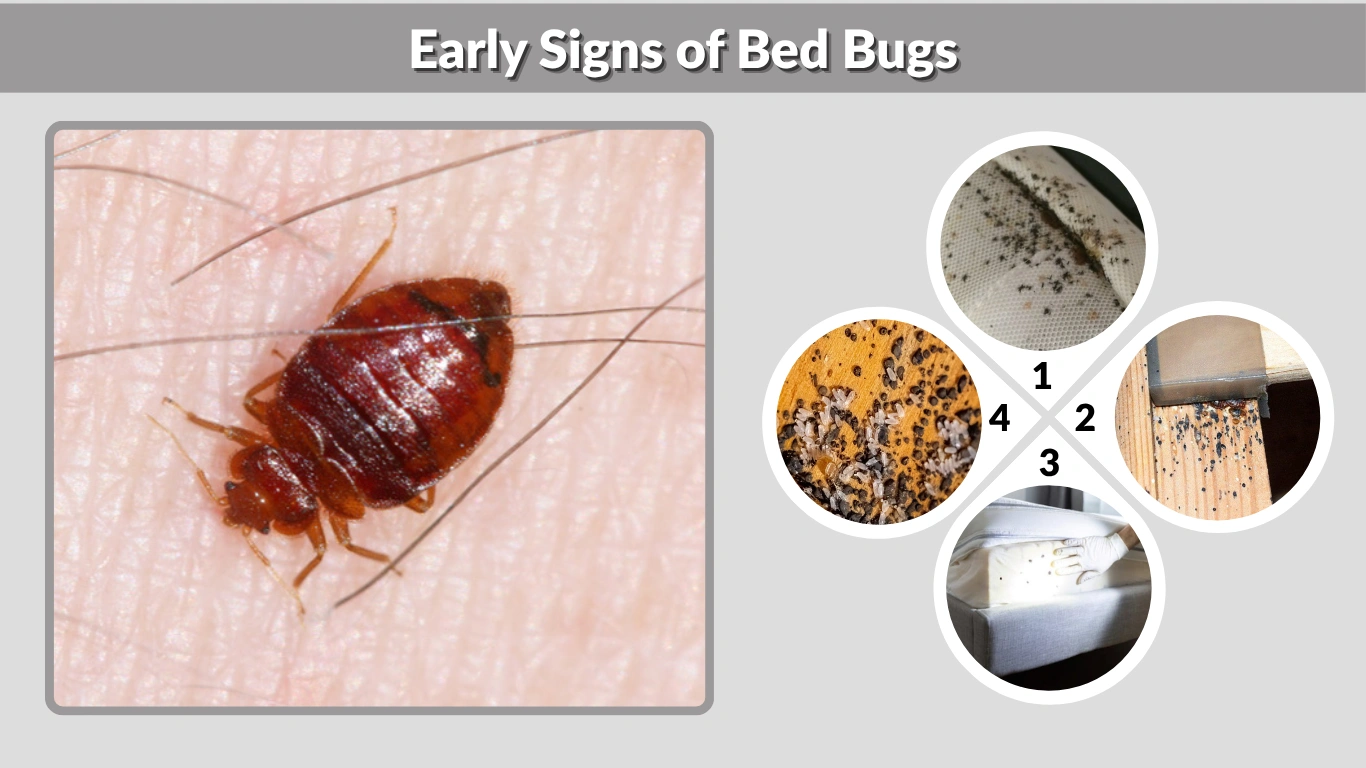
Bed bugs are small, elusive pests that can quietly invade your home, hiding in mattresses, furniture, and even walls. They reproduce quickly, and by the time you notice obvious bites or visible bugs, the infestation may already be widespread. Catching bed bugs early — in their first stage — is crucial to prevent discomfort, allergic reactions, and costly extermination treatments.
This guide will help you identify the earliest signs of bed bugs on mattresses, sheets, furniture, and even your skin, so you can act fast and stop an infestation before it spreads.
Why Early Detection of Bed Bugs Matters
Understanding Bed Bugs
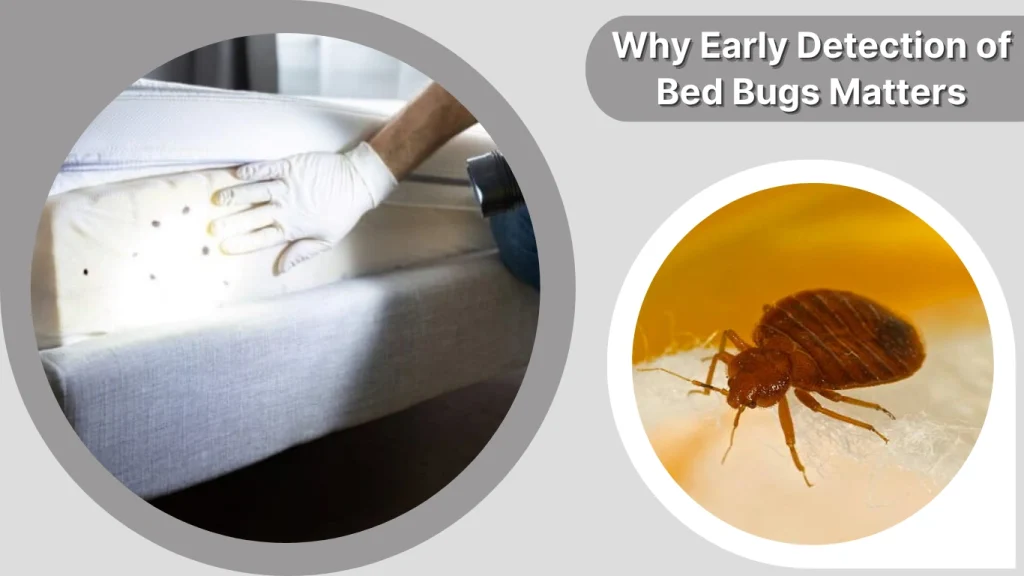
Bed bugs are tiny, flat, reddish-brown insects about the size of an apple seed. They feed on human blood at night, usually when you’re asleep. Because they are nocturnal and hide during the day, most people don’t realize they have bed bugs until the infestation becomes severe.
They can live for months without feeding, which makes them extremely persistent. Even a single female can lay hundreds of eggs, turning a small problem into a major one in just weeks.
How Fast Bed Bugs Spread
Bed bugs spread through travel, used furniture, or shared spaces like apartment buildings and hotels. Once they enter your home, they hide in mattresses, box springs, bed frames, and baseboards — close to where people sleep.
A single bed bug can lay up to five eggs per day, and these eggs hatch within 7–10 days. That’s why early detection is essential — the earlier you spot the signs, the easier it is to control the problem before it gets out of hand.
What Are the Early Signs of Bed Bugs?
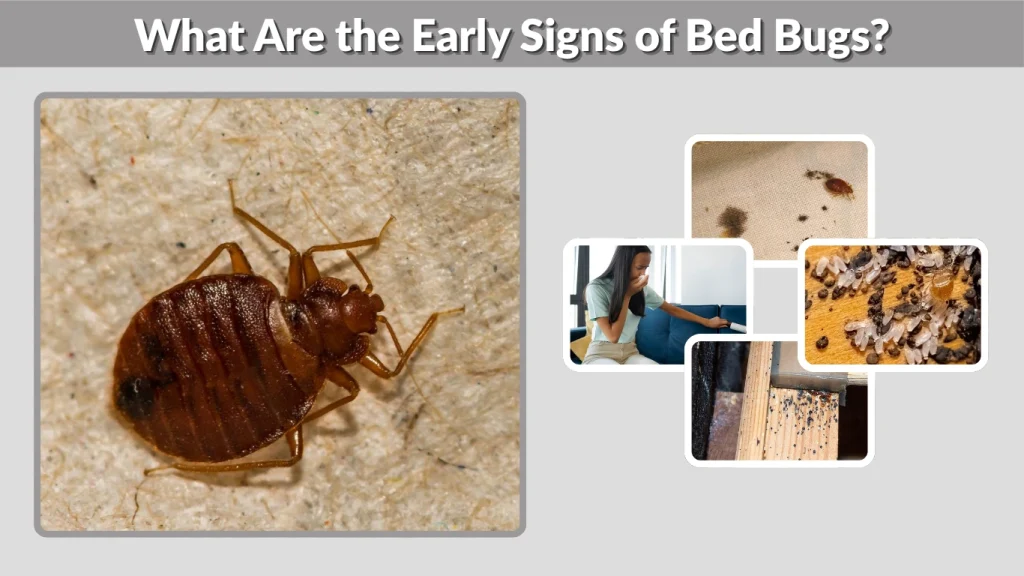
Bed bugs don’t appear suddenly overnight; they leave subtle evidence of their presence as they feed and reproduce. Recognizing these early signs helps you take swift action before a full infestation develops.
1. Tiny Dark or Rust-Colored Stains on Sheets
The first noticeable clue is often small black dots or reddish stains on your bedding.
- Black or dark spots: These are bed bug feces — digested blood that looks like tiny ink dots or pepper flakes.
- Reddish-brown smears: Caused by accidentally crushing a bug while sleeping.
Check your sheets, pillowcases, and mattress edges, especially near the head or foot of the bed.
If you notice spots that smear red when dampened with water, it’s likely bed bug waste rather than simple dirt.
2. Small White Eggs or Shells
Bed bug eggs are among the earliest — and easiest — signs to miss. They are:
- Tiny (1 mm), white, oval-shaped, and slightly sticky.
- Often found in clusters, glued to fabric seams or wooden furniture cracks.
- Found near the edges of mattresses, headboards, and box springs.
Even old eggs or eggshells (pale yellow or dry) indicate that bed bugs have been active in the area. If you spot them, it’s a sign you’re dealing with an early or ongoing infestation.
3. Translucent Shed Skins
As bed bugs mature, they shed their exoskeleton several times. These shed skins are thin, hollow, and transparent — shaped just like a tiny bug.
You’ll often find them:
- Along mattress seams, under bed frames, or in drawer joints.
- In piles or scattered among dust, especially near sleeping areas.
Finding even one shed skin means bed bugs are living and growing nearby.
4. Sweet or Musty Odor
Another early warning sign is a distinct, sweet, musty smell in your bedroom or couch area.
This odor comes from bed bug pheromones — chemical scents they use to communicate and cluster together. While faint at first, it becomes stronger as infestations grow.
If your room smells oddly sweet or moldy without reason, it’s worth investigating your mattress and bedding closely.
5. Tiny Live Bugs
The clearest sign — though often overlooked — is the presence of live bed bugs. In early stages, these are usually nymphs (baby bed bugs), which are:
- Pale white or translucent in color.
- About the size of a sesame seed.
- Harder to spot because they’re fast and hide in cracks and seams.
Adults are easier to identify: flat, oval, brownish insects about 5–7 mm long. You’ll often find them hiding near mattress tags, headboards, or under baseboards during the day.
Early Signs of Bed Bugs on Mattresses and Bedding
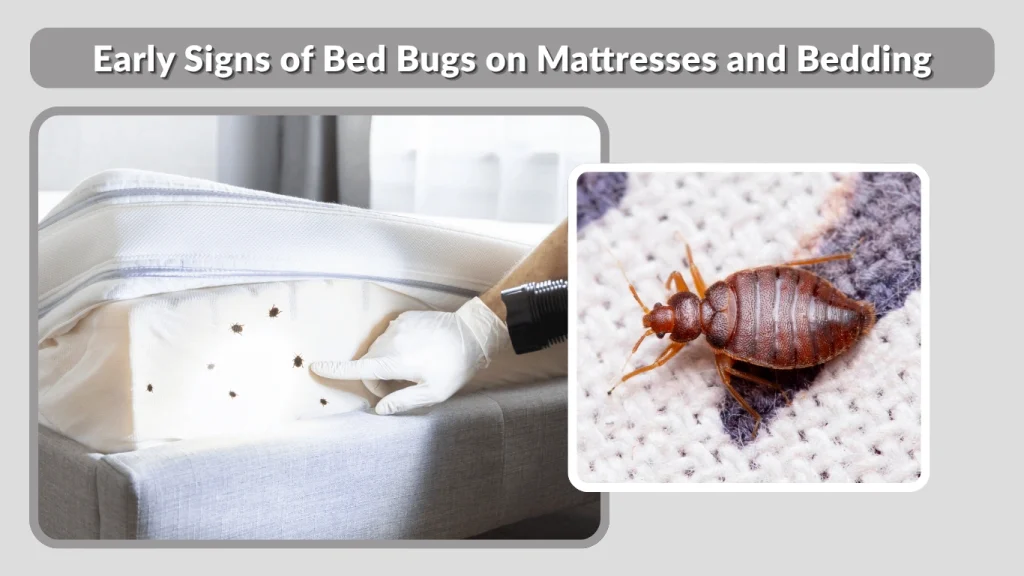
Your bed is the first and most common hiding place for bed bugs. Since they feed on sleeping humans, their earliest activity almost always shows up around the mattress, box spring, and sheets.
How to Inspect Your Mattress
Start by removing all bedding and inspecting the mattress carefully:
- Check seams, edges, and corners with a flashlight.
- Examine mattress tags, zippers, and folds, where eggs and droppings collect.
- Flip the mattress and check the underside too — bed bugs prefer dark, hidden areas.
If you see black dots, red stains, or tiny white eggs, it’s time to clean the area immediately and continue inspecting nearby furniture.
Early Signs on Sheets and Pillows
Even small stains can be a clue. Look closely for:
- Blood spots or droppings on pillowcases or fitted sheets.
- Tiny white eggs or shells stuck to seams.
- Black ink-like marks that don’t wash out easily.
Pull back your pillows and inspect under the pillowcase — bed bugs sometimes hide inside seams or even in zippers.
Early Signs on a New Mattress
Don’t assume a new mattress is safe. Bed bugs can hitchhike on:
- Luggage from travel,
- Used furniture, or
- Old bed frames nearby.
If you notice small rust stains or tiny black dots on a brand-new mattress, it may be infested from another source. Always inspect your bed frame and headboard, not just the mattress surface.
Early Signs of Bed Bugs on Skin
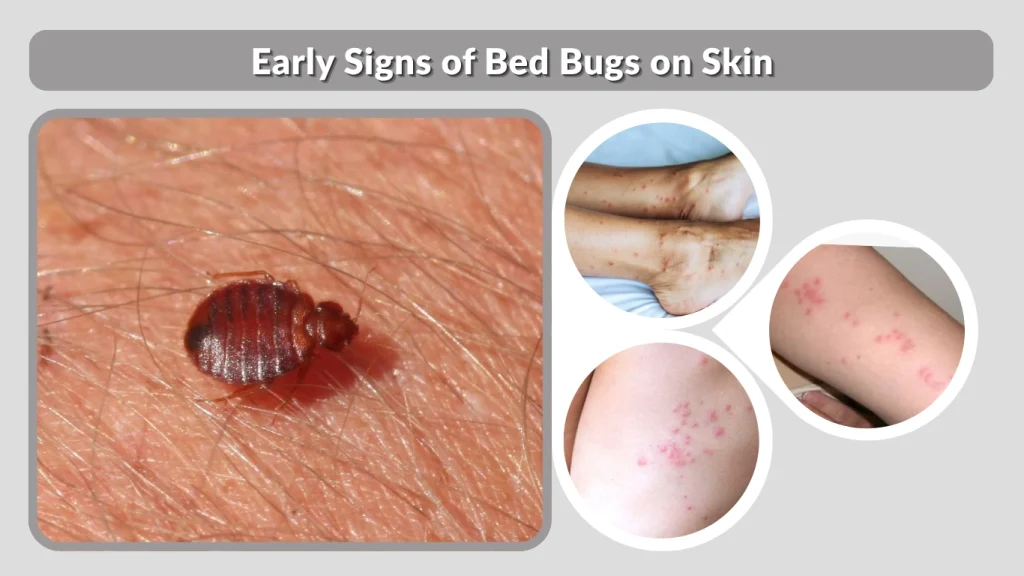
Not everyone reacts the same way to bed bug bites, which can make detection tricky. Still, physical signs often appear before you see the insects themselves.
Identifying Bed Bug Bites
Bed bug bites usually appear as small, red, itchy welts in a line or cluster pattern — often referred to as the “breakfast, lunch, and dinner” trio.
They’re most common on:
- Arms and legs
- Neck and face
- Back or shoulders
Bites often appear overnight and may become inflamed after scratching. While not dangerous, they can cause itching and irritation that lasts for several days.
Difference Between Bed Bug Bites and Other Insects
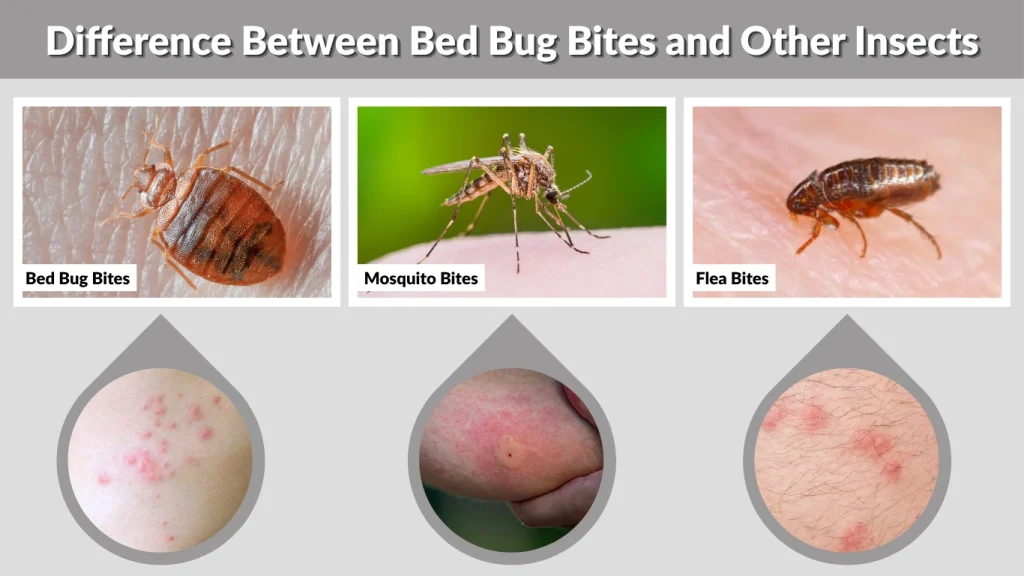
Bed bug bites can look similar to mosquito or flea bites but have some key differences.
| Insect | Bite Pattern | Common Area | Itch Level |
| Bed Bug | Linear clusters | Exposed skin at night | Moderate–Severe |
| Mosquito | Random, isolated | Anywhere | Mild–Moderate |
| Flea | Tiny red dots | Ankles and legs | Intense |
| Dust Mite Allergy | Rash or irritation | All over | Mild |
If you wake up with new itchy bumps that weren’t there the night before, especially in clusters, bed bugs are a likely cause.
Early Signs of Bed Bugs on Furniture and Couches
Bed bugs don’t just stay in beds — they can spread to couches, chairs, and other furniture, especially if you nap or sit on them often. Early detection in these areas is key before they migrate to other rooms.
Upholstered Furniture
Start by checking under cushions, inside zippers, and along stitching seams.
Look for:
- Black spots or reddish stains (fecal droppings and crushed bugs).
- Tiny white eggs stuck to fabric folds or under zippers.
- Shed skins or shells, especially around corners and under armrests.
Flip removable cushions and inspect both sides. If your couch or recliner has gaps or hidden compartments, shine a flashlight inside to detect any movement or debris.
Wooden or Leather Furniture
Even non-fabric furniture can host early bed bug signs.
- Check screw holes, wood joints, and drawer corners.
- For leather furniture, bugs tend to hide under seams, tags, or creases, not on the smooth surfaces.
- Use a credit card edge or scraper to run along joints — if you dislodge dark flecks or tiny insects, inspect further.
Couches and Recliners
Bed bugs are drawn to warmth and human scent, so recliners and couches are common secondary hiding places. Inspect recliner hinges, stitching folds, and the base fabric.
If you notice itching or bites after sitting for long periods, your couch may be infested even before your bed.
Early Signs of Bed Bugs on Walls, Carpets, and Curtains
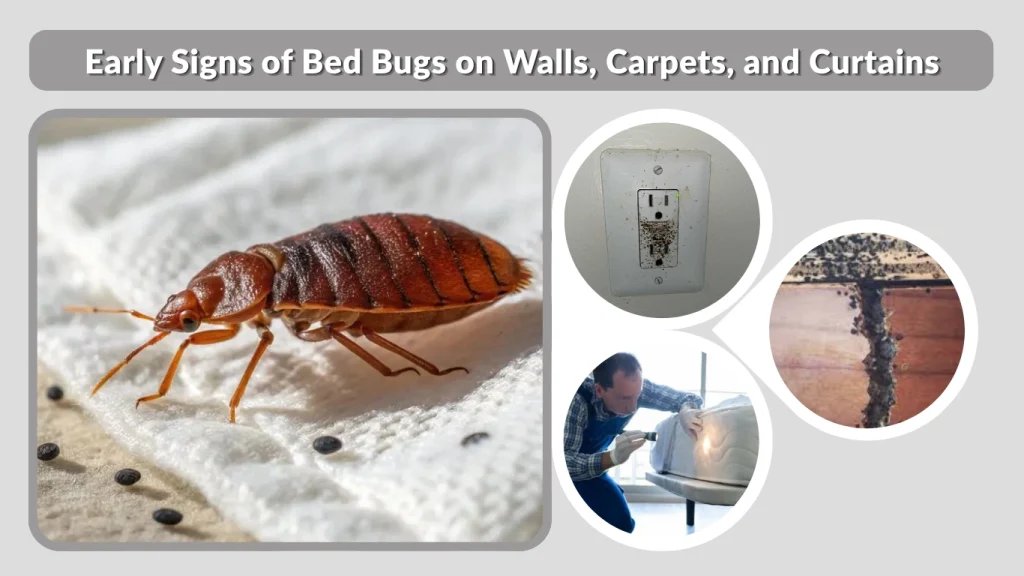
Bed bugs can spread quickly beyond the bed as their population grows, hiding in less obvious places around your home.
Walls and Baseboards
- Look for tiny black dots (fecal stains) near baseboards or around electrical outlets.
- They often crawl behind loose wallpaper or picture frames, especially in bedrooms.
- Check light switch plates and wall joints with a flashlight.
If you spot small clusters of dark spots or faint reddish smears on the wall near your bed, that’s a red flag of bed bug activity.
Carpets and Rugs
- Bed bugs may hide under carpets or along the edges where the floor meets the wall.
- Check under furniture legs and behind nightstands or dressers.
- Vacuum regularly, paying special attention to corners and edges.
Curtains and Drapes
Inspect the folds and hems of curtains, particularly near windows close to your bed. Bed bugs often hide there during the day.
You may find tiny eggs or black specks along the bottom edge or behind curtain pleats.
Early Signs of Bed Bugs in Cars and Luggage
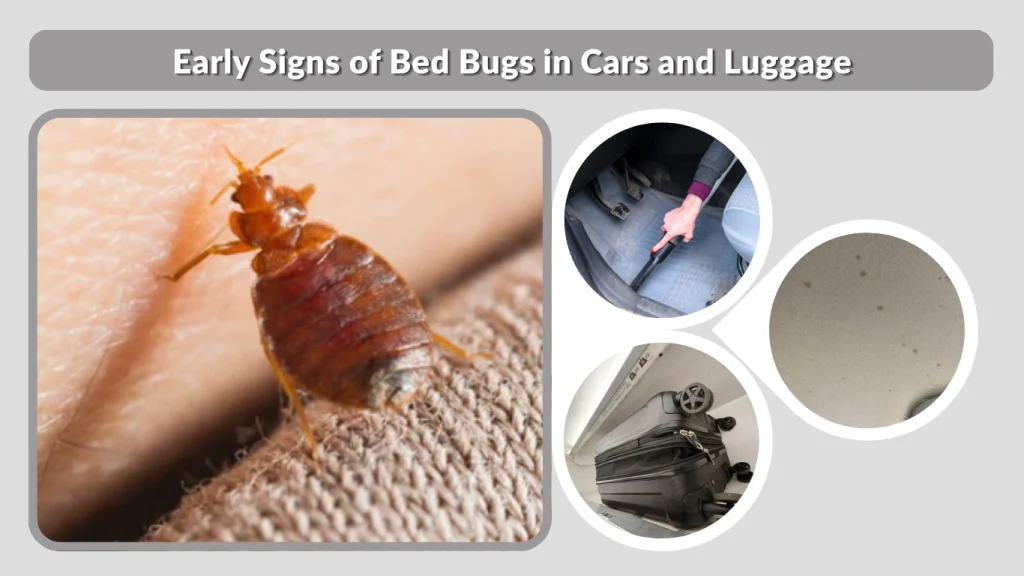
Bed Bugs in Cars
Although less common, bed bugs can survive inside vehicles, especially if you travel frequently.
- Check seat seams, headrests, and under floor mats.
- Look for small reddish-brown stains or clear exoskeletons.
- If you notice bites after long drives, inspect your car thoroughly.
Luggage and Travel Bags
After any trip, always inspect your luggage before bringing it inside.
- Look inside zippers, pockets, and lining seams using a flashlight.
- Shake out all clothes and wash them in hot water (120°F / 49°C) immediately.
- Vacuum luggage thoroughly and store it in sealed plastic bins or bags.
Travel is the leading cause of bed bug introductions — so early post-travel inspection can stop an infestation before it begins.
How to Confirm Early Bed Bug Activity
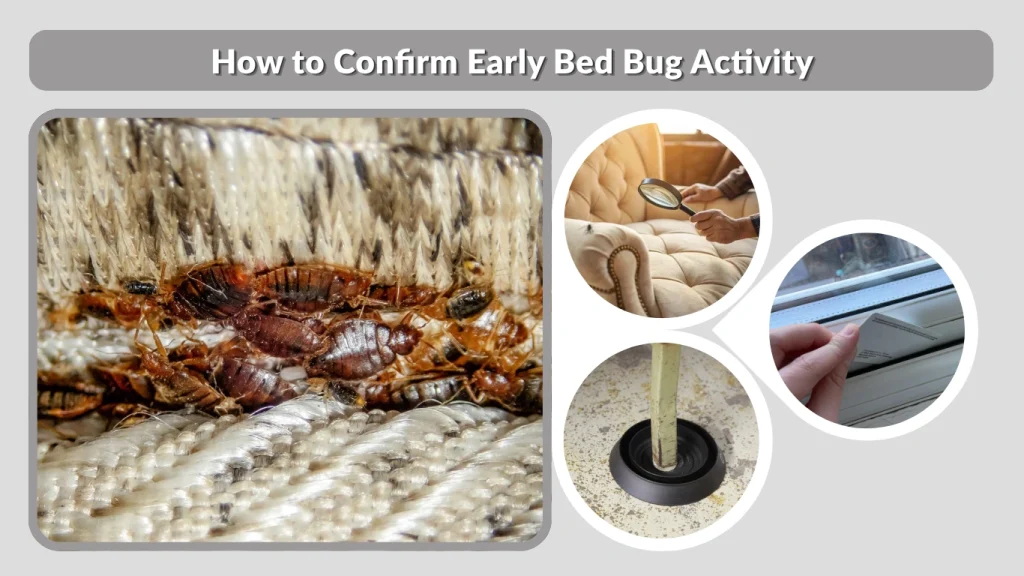
You might see a few signs but want to be sure before taking drastic action. Here’s how to confirm.
DIY Inspection Tools
- Flashlight and Magnifying Glass: Shine light into dark crevices and check for movement or eggs.
- Credit Card or Ruler: Run along mattress seams or furniture cracks — if small bugs or debris come out, inspect closely.
- Sticky Tape or Interceptors: Place under bed legs or along furniture edges to catch crawling bugs overnight.
- Hair Dryer Test: Blow warm air into seams — bed bugs may crawl out of hiding due to heat.
Professional Inspections
If you suspect bed bugs but can’t find proof, call pest control. Professionals may use:
- Canine inspections — trained dogs detect the unique scent of bed bugs.
- Thermal cameras — spot heat signatures from clusters.
- Visual inspection tools — to locate eggs, shells, and droppings hidden in walls or furniture.
Professional verification ensures you’re treating the right pest early.
What to Do If You Find Early Signs of Bed Bugs
Discovering early evidence can be unsettling, but quick action can prevent the infestation from growing.
Immediate Steps
- Don’t move furniture or bedding to another room — it spreads bugs.
- Vacuum thoroughly, especially mattress seams, bed frames, and carpet edges.
- Wash and dry bedding, clothes, and curtains on high heat (120°F/49°C).
- Seal vacuum contents in a plastic bag before disposal.
- Use mattress encasements to trap any remaining bugs inside and prevent future hiding.
Natural and DIY Remedies
- Steam cleaning: Effective for killing bugs and eggs on mattresses and upholstery.
- Diatomaceous earth: A natural powder that dehydrates bugs; sprinkle in cracks and crevices.
- Rubbing alcohol or vinegar spray: Temporary repellents, though less effective for full elimination.
When to Call Pest Control
If the signs persist or you find multiple bugs in different areas, it’s time for professional treatment. Experts use heat treatments or chemical applications to completely eliminate bed bugs at all life stages.
How to Prevent Future Infestations
Regular Inspections
- Check mattresses, furniture, and carpets monthly.
- Reduce clutter — bed bugs thrive in hidden, dark areas.
- Vacuum weekly and empty the cleaner outside.
Safe Travel Habits
- Inspect hotel beds before unpacking.
- Keep luggage on racks, not floors or beds.
- Wash travel clothes immediately upon returning home.
Protective Tools
- Use bed bug-proof mattress encasements.
- Place interceptor traps under bed and couch legs.
- Avoid buying used upholstered furniture without thorough inspection.
These preventive habits make it far less likely for bed bugs to return or spread unnoticed.
FAQs
What are the very first signs of bed bugs?
Small black dots (fecal stains), blood spots, or shed skins on sheets and mattresses.
Can you see bed bugs with the naked eye?
Yes — adults are visible, but nymphs and eggs are tiny and harder to spot.
Do early infestations smell?
Yes — a sweet, musty odor may be noticeable even before bugs are visible.
Can bed bugs appear on new mattresses?
Yes — they can hitchhike from other furniture, luggage, or wall crevices.
How long before bed bugs spread?
They can lay eggs daily, so an unnoticed infestation may double within weeks.
