
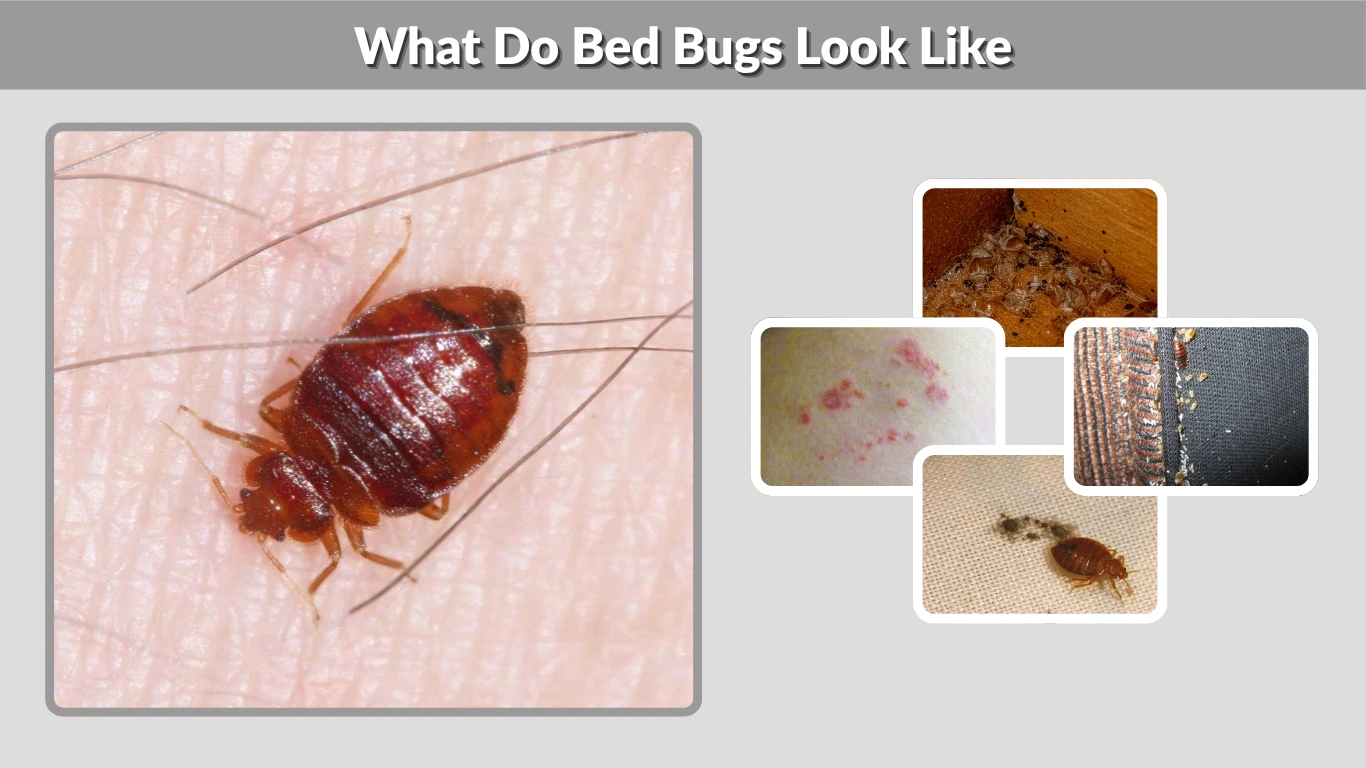
Bed bugs are tiny, flat, blood-sucking insects that hide in mattresses, furniture, and even clothing. They come out mostly at night to feed on human or animal blood, leaving behind itchy welts and subtle clues of their presence. Because they are small and fast-moving, infestations often go unnoticed until they become serious.
If you’ve ever woken up with mysterious bites or found dark spots on your sheets, you may be wondering: What do bed bugs actually look like? This guide will help you identify bed bugs, their eggs, bites, and other signs — so you can spot them early and take action before an infestation spreads.
What Do Bed Bugs Look Like?
General Appearance
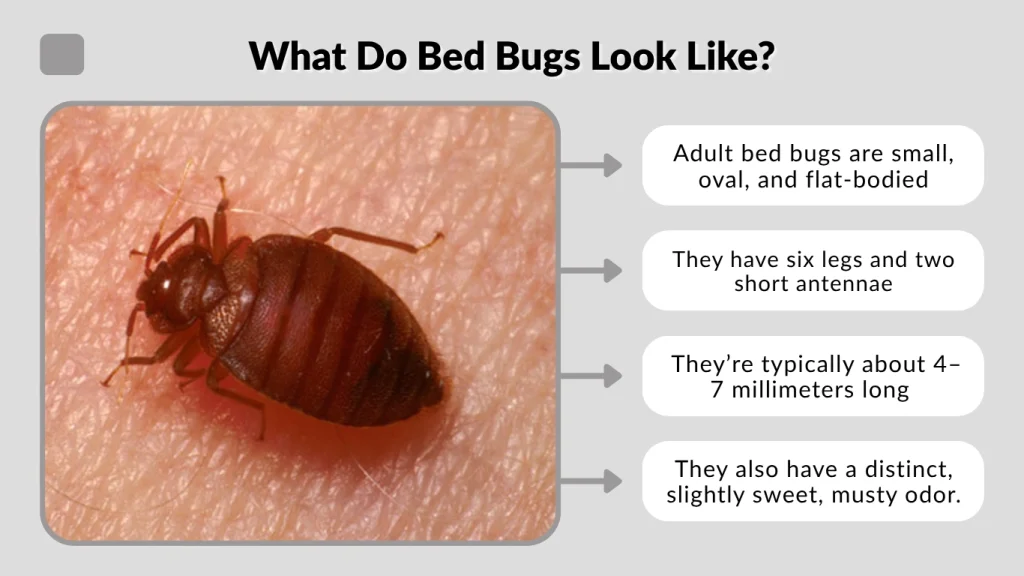
Adult bed bugs are small, oval, and flat-bodied, resembling an apple seed in both shape and size. They’re typically about 4–7 millimeters long (roughly a quarter of an inch). Before feeding, their color ranges from light brown to reddish-brown. After a meal, they become darker, rounder, and more swollen as their bodies fill with blood.
They have six legs and two short antennae, but no wings, so they cannot fly. Unlike fleas or lice, bed bugs move relatively slowly, which makes them easier to identify when seen up close. They also have a distinct, slightly sweet, musty odor, especially in large numbers.
Bed bugs are often mistaken for small ticks or cockroach nymphs, but their flat, oval body and reddish color make them unique once you know what to look for.
What Do Bed Bugs Look Like to the Naked Eye?
You can see bed bugs with the naked eye, especially adults and older nymphs. Under average room lighting, they appear as small brownish insects crawling along seams or cracks. Their small size allows them to hide easily — in mattress crevices, baseboards, behind headboards, or under furniture.
You might not spot them right away during the day, as they prefer dark hiding spots. Nighttime or using a flashlight at the edges of bedding often reveals them more clearly.
What Do Bed Bugs Look Like Up Close or Under Magnification?
Under magnification, bed bugs have segmented, shiny bodies with tiny golden hairs. You can see their small head, oval abdomen, and piercing mouthpart used to draw blood. Their body shape is flatter than most insects, which helps them slip into tiny cracks as thin as a credit card.
When illuminated under a blacklight, their bodies appear amber or light brown, while their droppings may faintly fluoresce.
The Bed Bug Life Stages
Bed Bug Eggs
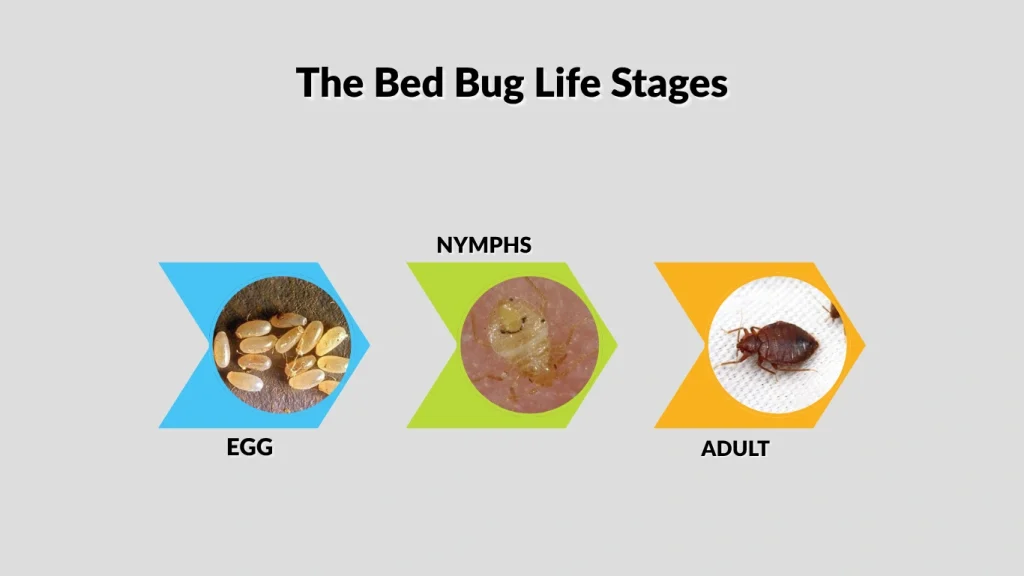
Bed bug eggs are one of the hardest signs to spot. They are tiny, white or pearl-colored, and about 1 millimeter long, roughly the size of a pinhead. Each egg is oval-shaped and often laid in clusters of 10–50.
You’ll typically find them hidden in mattress seams, behind headboards, along baseboards, or in fabric folds. They have a slightly sticky texture that helps them cling to surfaces, and under light, they may look shiny or reflective — similar to grains of rice or dandruff flakes.
After about a week, these eggs hatch into baby bed bugs called nymphs.
Bed Bug Nymphs (Baby Bed Bugs)
Nymphs, or young bed bugs, are almost transparent when they first hatch. They measure about 1–2 millimeters long, making them easy to overlook. After feeding, their bodies turn bright red because their thin skin reveals the blood they’ve consumed.
As they grow, nymphs shed their outer skin five times before becoming adults. Each stage, known as an instar, gets darker and more visible. By the final molt, they resemble small adult bed bugs, just slightly lighter in color. Finding these translucent or pale yellow skins (exoskeletons) near sleeping areas is a key sign of an active infestation.
Adult Bed Bugs
Fully grown adults are reddish-brown, oval-shaped, and flat before feeding. After a meal, they appear more elongated, swollen, and darker — often resembling a small red bean. They can survive for several months without feeding and live for up to a year under ideal conditions.
They hide during the day in tight spaces like mattress seams, headboard joints, furniture cracks, and wall outlets, emerging at night when you’re asleep.
What Do Bed Bugs Look Like in and Around the Bed?
Bed Bugs on Mattresses
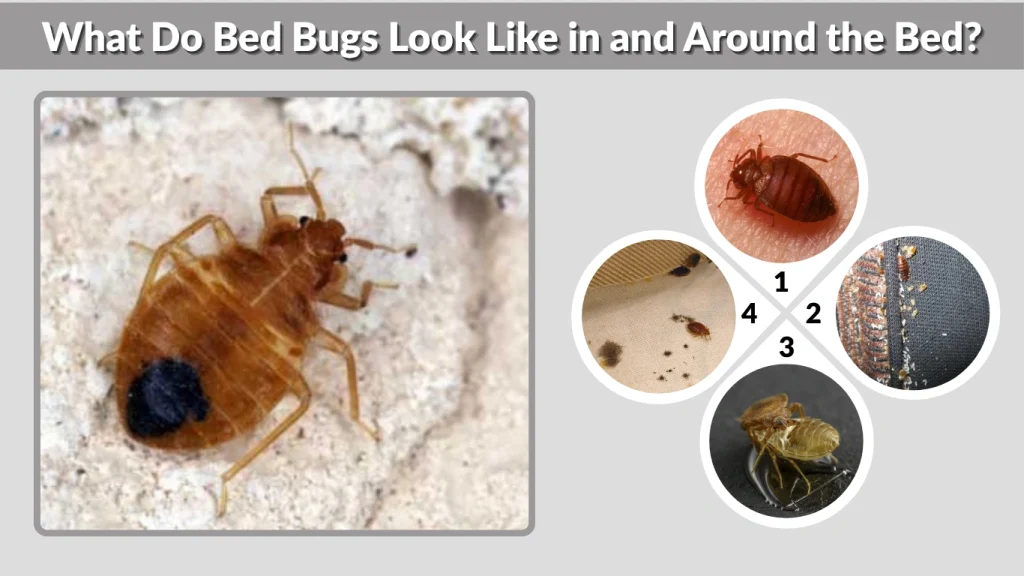
Mattresses are bed bugs’ favorite hiding place because they provide warmth and easy access to a food source — you. The insects tend to hide around seams, piping, buttons, and under mattress tags.
You might notice small dark clusters along the edges — these could be fecal stains, shed skins, or the bugs themselves. When disturbed, they may scurry quickly into cracks or under folds.
Look for:
- Live bugs (flat, oval, brown or reddish)
- White eggs or eggshells near seams
- Yellowish molted skins
- Small dark or rust-colored spots
Bed Bugs on Sheets and Pillows
Bed bugs themselves rarely stay on sheets for long, but they leave behind evidence of their nighttime activity. You might see:
- Tiny blood smears from crushed bugs after feeding
- Dark fecal spots that look like black pen marks or coffee grounds
- White specks (eggs or eggshells) near seams or edges
On light-colored sheets, these stains are easier to notice, while on dark fabric, you might see faint shiny spots or shed skins instead.
Bed Bugs in Furniture and Carpets
Beyond the bed, bed bugs can hide in sofa cushions, recliners, curtains, and even electrical outlets. They prefer tight, dark places where they can flatten themselves against surfaces. In carpets, they stay near the edges or baseboards rather than deep in the fibers.
Look closely at the corners and crevices of wooden furniture — especially joints and screw holes — where tiny brown or black droppings might indicate their presence.
Bed Bugs on Clothes or Curtains
While bed bugs don’t live on clothing the way lice do, they can temporarily hide in folds, seams, or laundry piles. White eggs or black specks on clothes can be a sign of infestation nearby. Curtains and fabric furniture are also common secondary hiding spots.
Other Physical Evidence of Bed Bugs
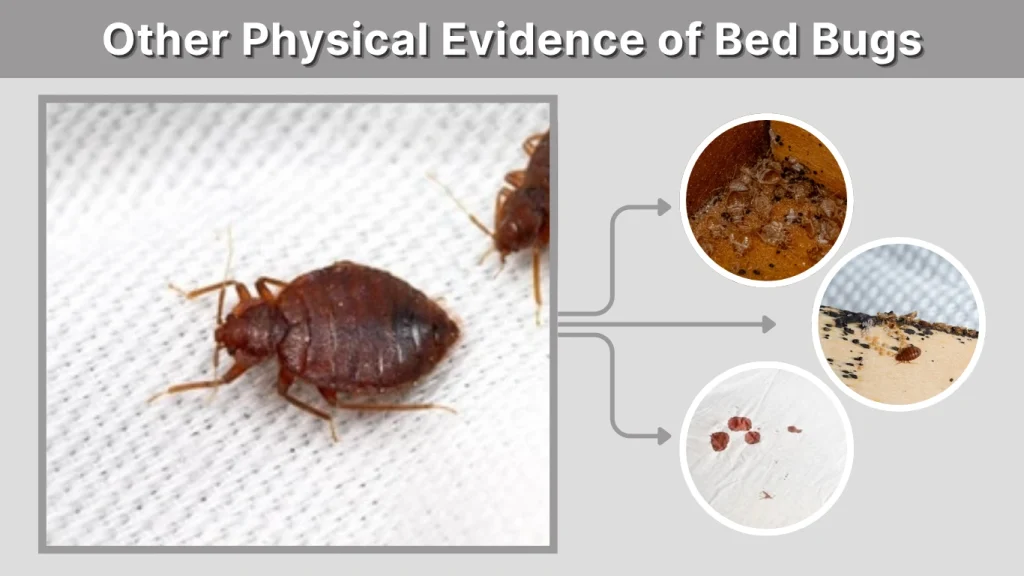
Bed Bug Shells and Casings
When growing, bed bugs shed their outer shell or exoskeleton, leaving behind small, hollow casings. These are light yellow or translucent and shaped exactly like a smaller version of the insect. Finding these along mattress seams, under furniture, or near walls usually means the infestation is active.
Bed Bug Droppings
Bed bug droppings appear as tiny black or dark brown dots, similar to black pepper or pen ink spots. They’re dried blood and often found in clusters along seams, headboards, or wall crevices. If you wipe them with a damp cloth, they’ll smear like ink.
Blood Stains and Smears
You may notice small rust-colored smudges on your sheets, pajamas, or mattress. These come from crushed bugs or small bleeding after a bite. The stains are typically round or irregular and found near the edges of where you sleep.
What Do Bed Bug Bites Look Like?
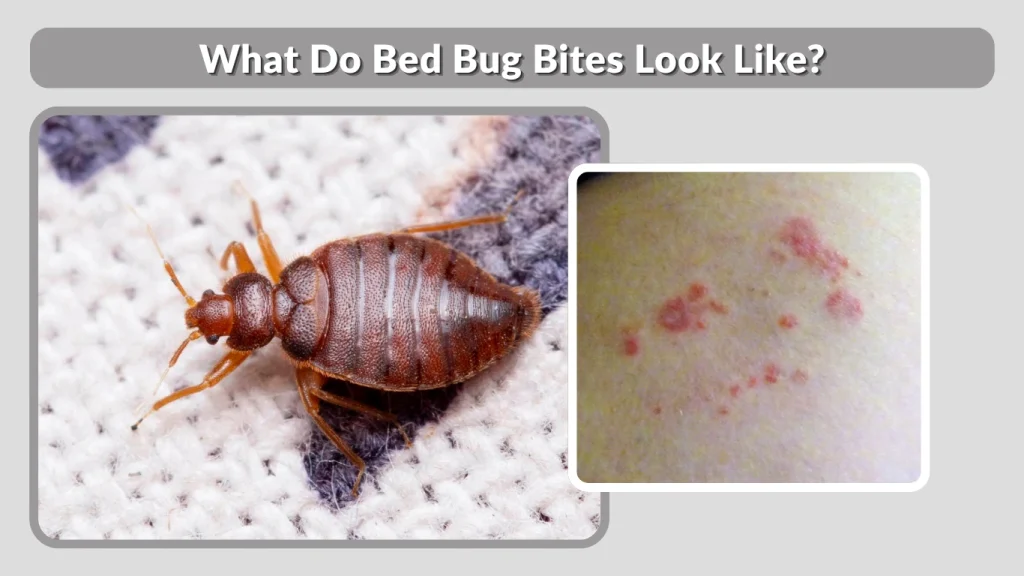
When bed bugs feed, they inject a small amount of anesthetic and anticoagulant into the skin, so you don’t feel the bite right away. The reaction appears several hours later and varies from person to person — some people experience red, itchy welts, while others show almost no visible signs.
Typical Bed Bug Bite Appearance
Bed bug bites generally look like small, raised red bumps or welts with a darker center. They may appear in clusters or straight lines, often described as the “breakfast, lunch, and dinner” pattern because of their grouped feeding behavior.
The bites are usually itchy and inflamed, especially after scratching. They tend to appear on exposed areas of skin such as:
- Arms and shoulders
- Legs and ankles
- Neck and face
- Back or torso (where skin touches the mattress)
Although not dangerous, excessive scratching can cause secondary skin infections or scarring, particularly in sensitive individuals.
Bed Bug Bites on Different Skin Tones
The color and visibility of bed bug bites can differ depending on your skin tone:
- Light skin: bites appear bright red or pink, often surrounded by a slightly darker ring.
- Medium to dark skin: bites may appear dark red, purple, or brown, and can leave behind darker marks as they heal.
- Very dark skin: bites may show up as small raised bumps rather than vivid red spots, sometimes blending with natural pigmentation.
Regardless of skin tone, the swelling and itchiness are the most noticeable symptoms.
Fresh vs. Healing Bed Bug Bites
- Fresh bites: red, swollen, and itchy within hours after feeding.
- Healing bites: turn brown or purple after a few days and may flake or scab slightly.
- Old bites: fade into darker pigmentation spots that can last for weeks.
You may also find new bites each morning, as bed bugs typically feed multiple nights in a row until detected.
Bed Bug Bites vs. Other Insect Bites
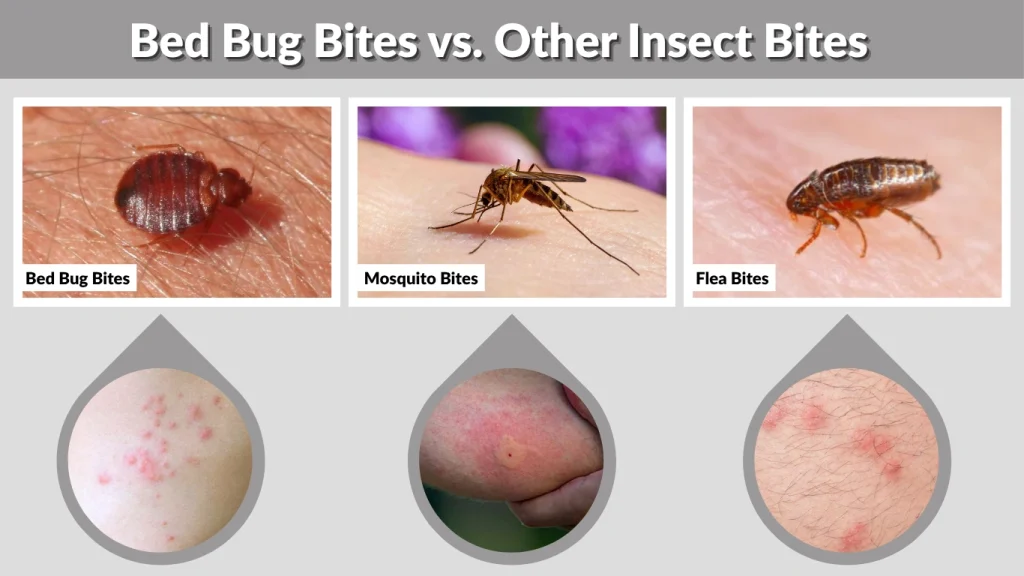
| Bite Type | Pattern | Itch Level | Location | Other Signs |
| Bed Bug | In rows or clusters | High | Exposed areas (arms, neck, face) | Blood spots or droppings nearby |
| Mosquito | Random single bumps | Moderate | Any exposed area | Often appear outdoors |
| Flea | Small, grouped dots | Intense | Ankles, lower legs | May see fleas or pets scratching |
| Spider | One or two bites | Mild–Moderate | Anywhere | May have two puncture marks |
| Allergic Rash | Random patches | Itchy or burning | Varies | Not linked to specific locations |
If you consistently wake up with grouped or linear bites, especially in the same areas, it’s a strong sign that bed bugs are the cause rather than mosquitoes or fleas.
What Do Bed Bugs Look Like on Skin and When They Feed?
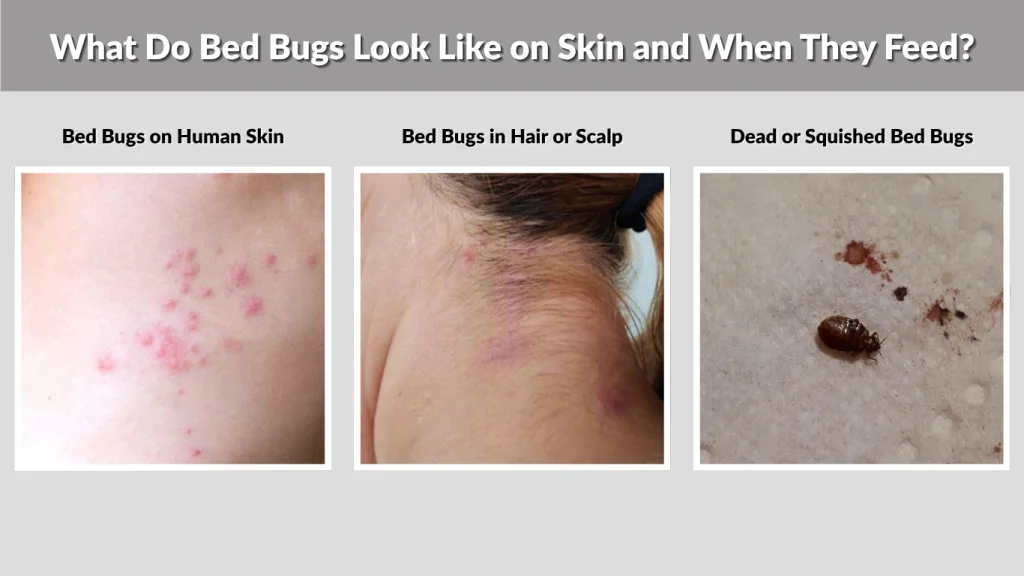
Bed Bugs on Human Skin
When feeding, bed bugs appear as flat, reddish-brown insects crawling slowly across the skin. They don’t burrow or live under the skin — instead, they pierce it briefly with a beak-like mouthpart to drink blood for about 5 to 10 minutes. Once full, they retreat back to hiding spots in bedding or furniture.
They’re most active between 2 a.m. and 5 a.m., when humans are in the deepest stage of sleep.
Bed Bugs in Hair or Scalp
Unlike lice or fleas, bed bugs don’t cling to hair or fur. They prefer smooth, hairless surfaces like arms, legs, or the neck. However, they might crawl across your scalp while moving to another feeding spot. If they do, they move away quickly and don’t remain there long.
Dead or Squished Bed Bugs
A dead bed bug looks like a flat, dried-out shell, darker than a live one. When squished, a bed bug releases a reddish smear (from blood) and a faint musty odor. Dried-up ones can look like small black or brown flakes stuck to fabric or walls.
How to Identify Bed Bugs Quickly
Common Visual Clues
Spotting one live bug isn’t the only sign of infestation. Look for a combination of indicators:
- Live bed bugs near mattress seams, pillows, or headboards.
- Tiny black dots (feces) or rust-colored stains on sheets.
- Pale yellow shells or casings from molting nymphs.
- Small white eggs glued along fabric seams or cracks.
- Musty, sweet odor in heavy infestations.
Bed bugs often cluster close to where people sleep, sit, or rest, including couches and recliners.
Tools and Techniques for Detection
- Use a flashlight and magnifying glass to inspect seams, folds, and cracks.
- Place interceptor traps under bed legs to catch wandering bugs.
- Look behind wall art, electrical outlets, or baseboards for hidden colonies.
- If unsure, contact a pest professional for a thorough inspection — they can identify eggs, nymphs, and adults with accuracy.
FAQs
1. Can you see bed bugs with the naked eye?
Yes — adult bed bugs are clearly visible, though their eggs and nymphs may require close inspection or a flashlight.
2. What do bed bug eggs look like on sheets or mattresses?
Tiny, white, and rice-grain-like — often found in clusters along seams or cracks.
3. Do bed bugs live on human skin?
No. They only crawl onto skin to feed briefly before hiding again.
4. What do bed bug droppings look like?
Small black or brown spots that look like pen ink or pepper specks, often found on sheets or furniture.
5. What do dead bed bugs look like?
Flattened, dried, and dark — they may crumble or leave brown flakes when touched.
6. What does a bed bug bite rash look like?
A collection of itchy red bumps, sometimes with a darker center or blister-like top, usually in straight or zigzag lines.
