

Japanese beetles (Popillia japonica) are some of the most recognized garden pests in North America. With their metallic-green bodies and bronze wings, they look almost beautiful—until they start destroying plants. While gardeners worry about their appetite for leaves and flowers, many people also wonder: Do Japanese beetles bite or sting humans? This article explores the truth behind that question and offers safety tips for humans, pets, and plants.
Understanding Japanese Beetles
Identification
Japanese beetles are small, measuring about ½ inch long, with a shiny green head and copper-colored wings. Along the sides of their abdomen, they have six pairs of white tufts—a key feature that sets them apart from other beetles. They’re most active during warm, sunny days, often seen feeding in groups on leaves and flowers.
Behavior and Habitat
These beetles are native to Japan but were accidentally introduced to the United States in the early 1900s. They’ve since become a major agricultural pest across much of North America. Adult beetles feed on more than 300 plant species, including roses, grapes, fruit trees, and corn.
They spend their early life underground as grubs, feeding on grass roots, and emerge in summer as adults. While their plant damage is severe, their threat to humans is nearly nonexistent.
Do Japanese Beetles Bite Humans?

Bite Behavior Explained
Despite their intimidating appearance, Japanese beetles are harmless to humans. They do not have fangs or stingers and cannot bite through skin. Their mouthparts are designed for chewing plant leaves, not animal tissue.
When handled, however, a Japanese beetle may grip or pinch slightly using its small jaws. This may feel like a light nip or prick, but it does not break the skin or cause pain. It’s simply a defensive reflex when they feel trapped.
Why People Think They Bite
Many people believe Japanese beetles bite because of the tickling or pinching sensation when the insects crawl on their skin. In reality, they’re only using their legs and mouthparts to grip surfaces, not biting out of aggression.
Sometimes, people also confuse them with Asian lady beetles—a different species that can bite lightly. This mix-up contributes to the widespread myth that Japanese beetles are biters.
Do Japanese Beetles Sting or Bite?

Japanese beetles do not sting and have no venom or stingers. Unlike bees or wasps, they lack any mechanism to inject toxins. Their only means of defense is to fly away quickly or drop to the ground when disturbed.
Even when handled roughly, they do not lash out or attack. The most they might do is cling to your skin for balance. If you feel a pinch, it’s accidental rather than harmful.
Why They’re Harmless
- No stingers or venom glands.
- Mouthparts made for chewing soft plant tissue.
- No known cases of allergic reaction or infection from contact.
For gardeners, the real threat from Japanese beetles isn’t to people—it’s to their plants. These beetles can devastate gardens, stripping foliage and ruining crops in a matter of days.
What Do Japanese Beetle Bites Look Like?
Possible Reactions
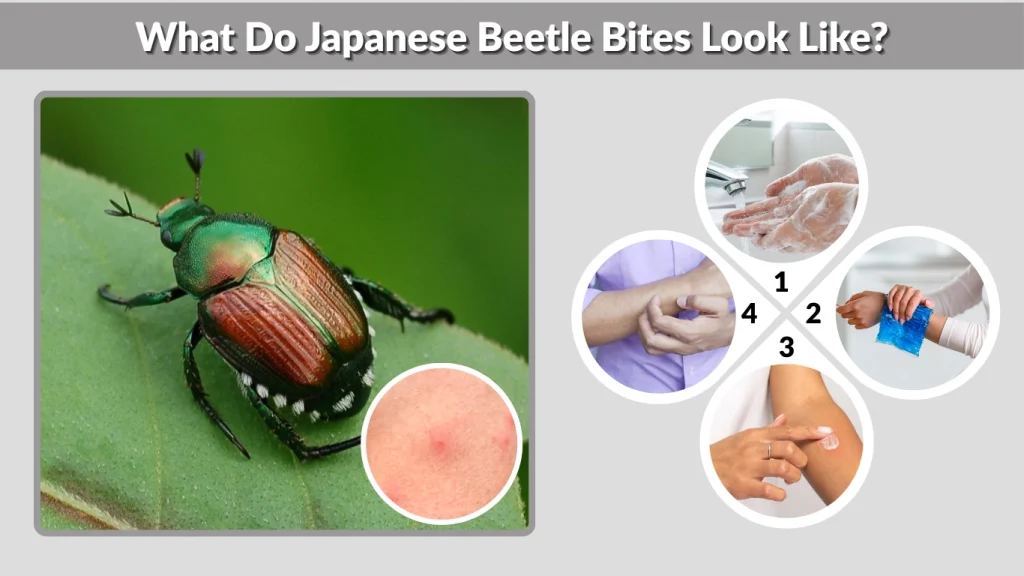
True bites from Japanese beetles are extremely rare. If you believe you’ve been bitten, you’re more likely feeling irritation from their legs or a minor scratch. Occasionally, a person’s skin might show:
- A small red dot.
- Mild swelling or itching.
- Light irritation from contact or pressure.
Most “bite marks” reported are actually caused by other insects like mosquitoes, ants, or Asian lady beetles—not Japanese beetles.
How to Treat Minor Reactions
If your skin reacts to contact with a beetle:
- Wash the area with soap and water.
- Apply an ice pack to reduce swelling or redness.
- Use a mild antiseptic or aloe vera to soothe irritation.
- Avoid scratching the area to prevent further irritation.
In rare cases of prolonged redness or itching, it may be an allergic reaction to the beetle’s outer shell (chitin). Over-the-counter creams like hydrocortisone can relieve discomfort.
Do Japanese Beetles Bite Dogs or Pets?

Japanese beetles are also harmless to pets. They do not bite or sting dogs, cats, or other animals. However, curious pets might try to eat them while exploring outdoors. A few beetles won’t hurt, but large quantities may cause:
- Mild stomach upset.
- Temporary vomiting or diarrhea.
This reaction happens because beetles have hard exoskeletons that are difficult to digest. It’s not toxicity—it’s irritation.
To protect your pets:
- Supervise them outdoors during beetle season.
- Keep gardens and lawns clean of adult beetles.
- Use pet-safe pest control methods, such as neem oil or milky spore treatments.
Japanese Beetles vs. Japanese Lady Beetles
Look-Alike Confusion
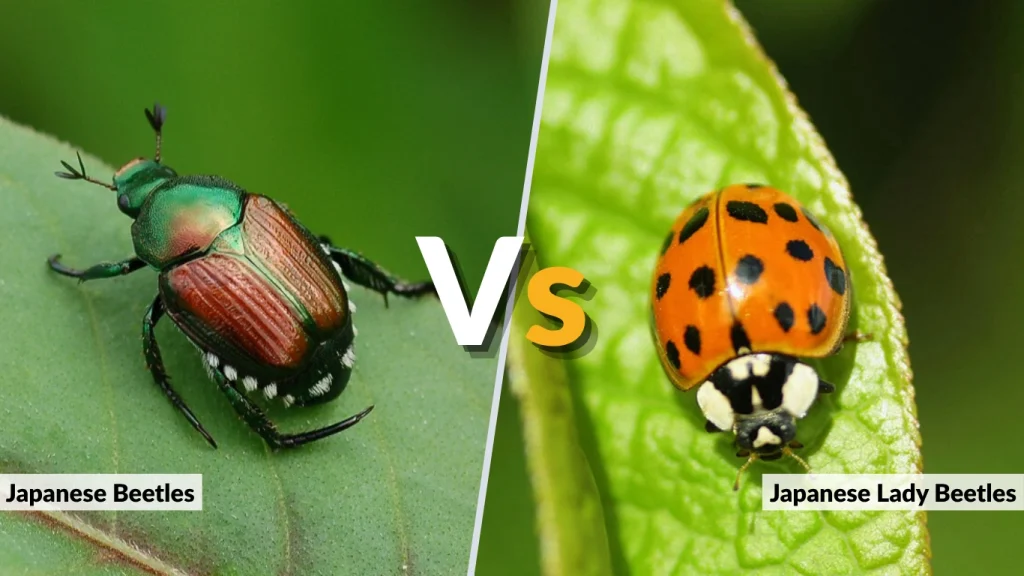
One major reason people think Japanese beetles bite is that they confuse them with Japanese lady beetles (also called Asian lady beetles). Both insects appear around the same time of year and share part of their name, but they are very different in appearance and behavior.
- Japanese Beetle: Metallic green and copper-colored wings; feeds on plants outdoors.
- Japanese Lady Beetle: Orange or red with black spots; often invades homes in autumn.
Japanese lady beetles belong to the same family as ladybugs and are actually beneficial insects, feeding on aphids and garden pests. However, when disturbed, Asian lady beetles can bite lightly. Their bite feels like a quick pinch and might leave a small red mark. Japanese beetles, by contrast, do not bite or sting at all.
How to Tell Them Apart
| Feature | Japanese Beetle | Japanese Lady Beetle |
| Color | Metallic green with bronze wings | Orange/red with black spots |
| Habitat | Gardens, lawns, and crops | Gardens and homes (especially indoors) |
| Bite Behavior | Harmless – may pinch when handled | Can bite lightly, leaving a small red dot |
| Threat | Damages plants | Nuisance indoors |
By identifying them correctly, you can handle each species properly — controlling Japanese beetles outdoors and preventing lady beetles from entering your home.
Why People Confuse Beetle Bites
Common Misidentifications
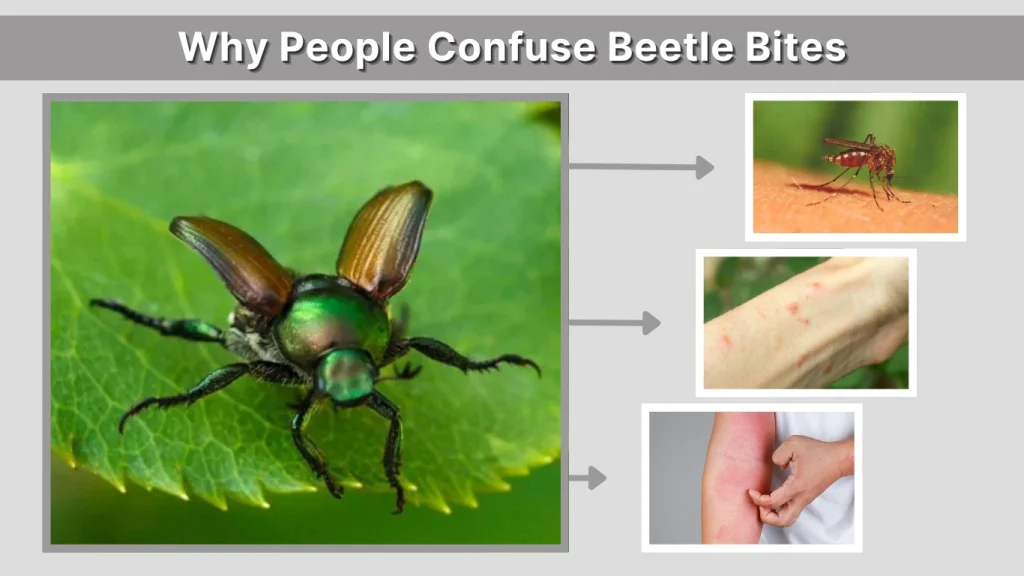
In many cases, people misinterpret other skin irritations as beetle bites. Common causes include:
- Mosquitoes, ants, or fleas that bite unnoticed.
- Contact dermatitis from plants or garden soil.
- Allergic sensitivity to beetle shells or insect residue.
Japanese beetles are not aggressive and do not seek out human skin. They’re drawn to light, moisture, and plant fragrance — not people. If you notice marks after working in the garden, it’s more likely caused by other insects or skin irritation, not beetles.
The Real Risk
While Japanese beetles pose no risk to humans, they can severely harm plants. Their feeding behavior, known as skeletonizing, strips leaves down to the veins, leaving plants vulnerable to disease and sunlight damage. Over time, this can weaken trees, flowers, and crops if left uncontrolled.
Safety and Prevention Tips
Handling and Removal
If you encounter Japanese beetles in your garden, you can manage them safely without fear of bites.
- Avoid bare-hand contact — use gloves or a small jar.
- Hand-pick beetles in the early morning when they’re sluggish.
- Drop them into a bucket of soapy water to eliminate them instantly.
- Shake plants gently to dislodge clusters of feeding beetles.
For severe infestations, consider organic repellents like neem oil or diatomaceous earth, which deter beetles without harming beneficial insects.
Protecting Your Garden
- Neem oil: Works as a feeding deterrent and reproductive inhibitor.
- Milky spore: Kills larvae (grubs) in the soil, reducing future populations.
- Diatomaceous earth: Cuts through beetles’ exoskeletons, dehydrating them naturally.
- Avoid pheromone traps near gardens. While they attract beetles, they may draw even more into your yard if placed too close.
These natural methods are pet-safe, pollinator-friendly, and effective when used consistently through the growing season.
Seasonal Tips
- June–July: Focus on removing adult beetles from plants.
- August–October: Treat soil for grubs with nematodes or milky spore.
- Winter: Rake and remove plant debris to prevent egg laying next spring.
Maintaining these steps yearly breaks the beetle life cycle and prevents large infestations.
Fun and Lesser-Known Facts
- Japanese beetles were first discovered in the U.S. in 1916 in New Jersey.
- Adult beetles live only 30–45 days, but lay dozens of eggs that become next summer’s grubs.
- Their iridescent colors are caused by light reflection, not pigment.
- Birds such as starlings and robins feed on them naturally.
- Despite being harmless to humans, they’re classified as one of North America’s most invasive garden pests.
FAQs
Do Japanese Beetles Bite Humans?
No, Japanese beetles do not bite humans. Their jaws are too weak to pierce skin and are designed only to chew plant matter.
Do Japanese Beetles Sting or Inject Venom?
No, they lack stingers and venom glands. They are harmless to humans and pets.
Can Japanese Beetles Hurt My Dog or Cat?
They don’t bite or sting pets. If eaten in large numbers, they may cause mild stomach irritation, but they are not poisonous.
Why Do People Think They Bite?
Because Japanese beetles can pinch slightly when handled or are confused with Asian lady beetles, which can deliver a mild bite.
How Should I Remove Them Safely?
Use gloves or drop beetles into soapy water. For prevention, apply neem oil or biological grub control to reduce next season’s population.
