
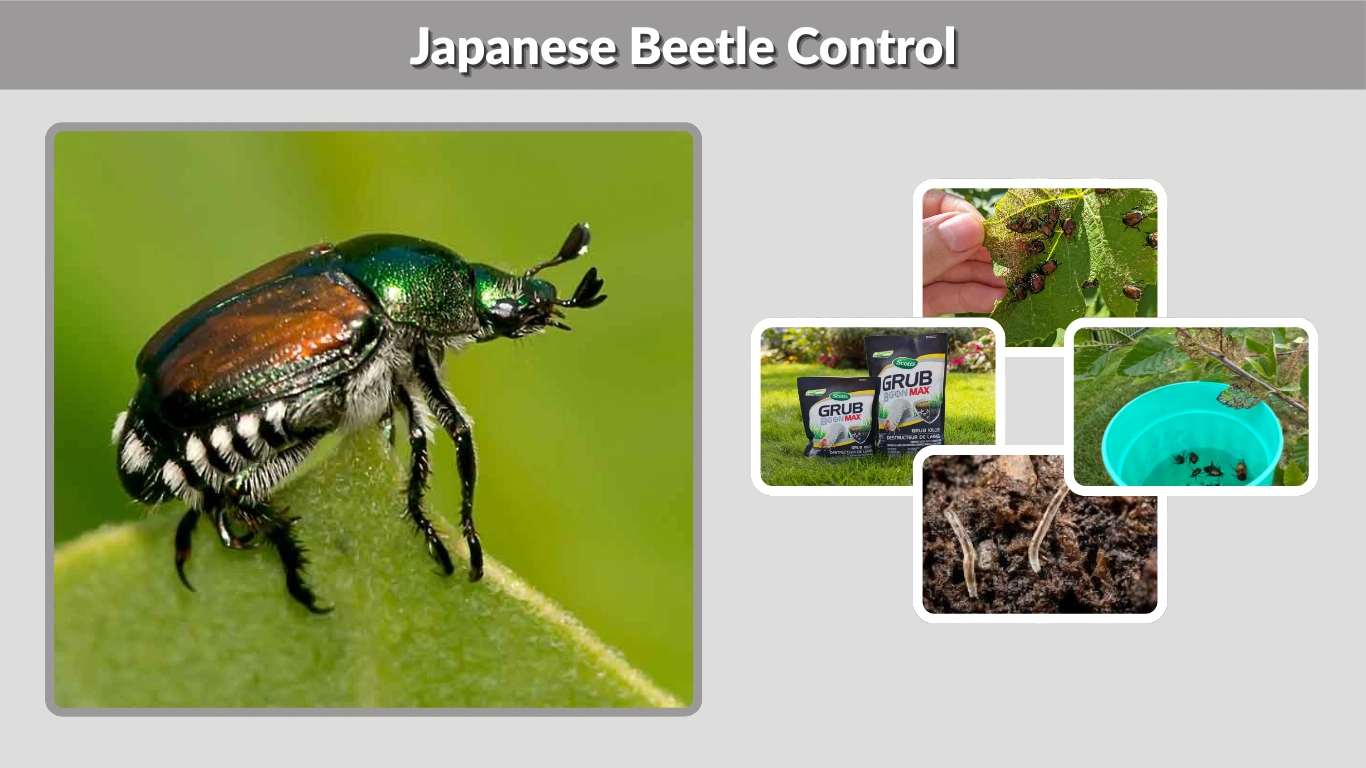
Japanese beetles (Popillia japonica) are small, shiny, and devastating garden pests that can destroy plants in days. With their metallic green bodies and bronze wings, they may look beautiful, but their feeding habits cause serious damage to lawns, fruit trees, roses, and crops. Understanding how to control these beetles effectively — using natural, biological, and chemical methods — is the key to keeping your garden healthy all season long.
Understanding the Japanese Beetle
What They Look Like
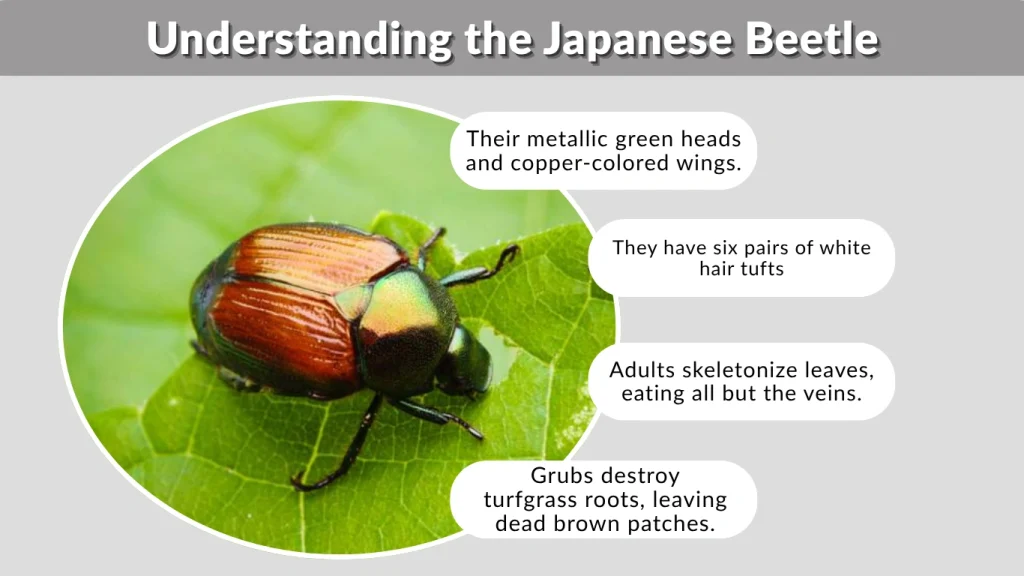
Japanese beetles measure about half an inch long and are easy to identify by their metallic green heads and copper-colored wings. Along the sides of their abdomen, they have six pairs of white hair tufts, which distinguish them from other similar beetles. You’ll often spot them clustered together on plants during warm, sunny days.
Life Cycle Overview
The Japanese beetle’s life cycle plays a major role in how infestations spread.
- Eggs: Females lay eggs in moist soil midsummer.
- Larvae (Grubs): Grubs hatch and feed on grass roots during late summer and early fall, damaging lawns.
- Pupae: In spring, they pupate underground.
- Adults: Emerge in early summer to feed on over 300 plant species.
Because adults lay eggs that become grubs, effective control means targeting both stages — above and below the soil.
Why Control Is Important
Japanese beetles are invasive and reproduce rapidly. Even a small number can cause serious damage:
- Adults skeletonize leaves, eating all but the veins.
- Grubs destroy turfgrass roots, leaving dead brown patches.
- Each female lays up to 60 eggs, causing populations to explode yearly.
Without intervention, they can ruin ornamentals, gardens, and lawns within weeks.
Natural and Organic Control Methods
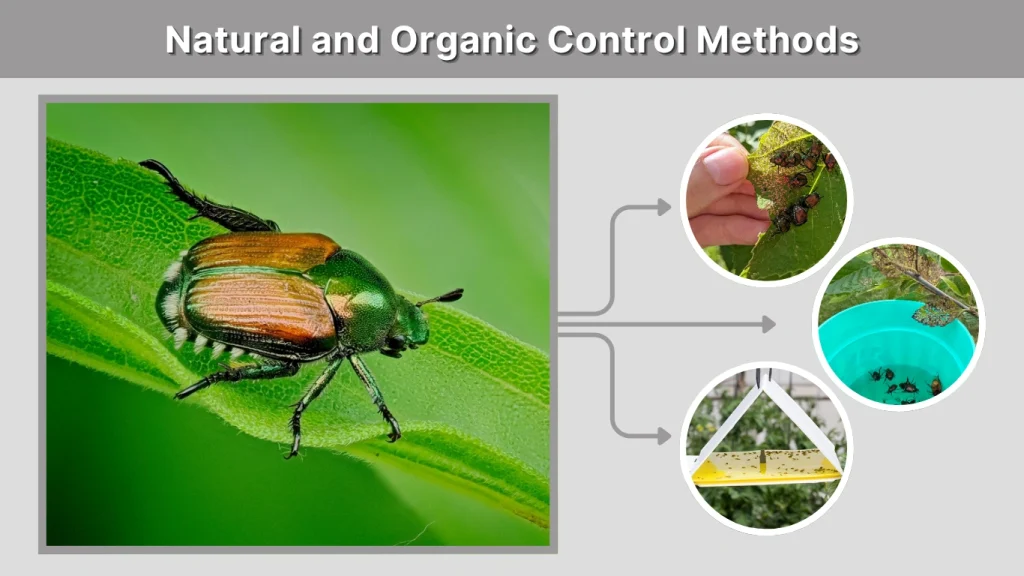
Natural approaches are safe, sustainable, and highly effective when used consistently. These methods work best when applied early in the beetle season, before populations peak.
Hand Removal and Traps
One of the simplest and most effective techniques is hand-picking beetles off plants. In the early morning, when they’re sluggish, shake them into a bucket of soapy water to kill them.
You can also use pheromone traps, but these should be placed away from the garden, since they attract beetles over long distances. Hand removal works best for small infestations, especially on roses and grapevines.
Neem Oil and Natural Sprays
Neem oil is one of the best natural insecticides for controlling Japanese beetles. When beetles ingest neem-treated leaves, it disrupts their hormones, preventing feeding and reproduction.
- Mix 2 tablespoons of neem oil with a gallon of water and spray plants weekly.
- Apply in the evening to protect pollinators.
Neem is biodegradable and safe for most beneficial insects, making it ideal for organic gardening.
Diatomaceous Earth
Another effective natural solution is diatomaceous earth (DE) — a fine, powdery mineral that kills insects by dehydrating them.
- Sprinkle DE on leaves, soil, or around plants.
- Reapply after rainfall for continued protection.
It’s chemical-free, safe for pets and people, but should be used cautiously around flowering plants to protect bees.
Homemade Remedies
You can also make simple home sprays for Japanese beetle control:
- Mix water, dish soap, and garlic or peppermint oil to create a natural repellent.
- Spray directly on affected leaves.
- Reflective aluminum foil mulch under plants can also deter beetles from landing.
These remedies are affordable, non-toxic, and work best in combination with other control methods.
Benefits of Organic Methods
Natural and organic controls are ideal for homeowners who want pest management without harming the environment.
- Safe for pets, pollinators, and children.
- Compatible with fruit and vegetable gardens.
- Sustainable for long-term prevention when used consistently.
Biological Control Methods
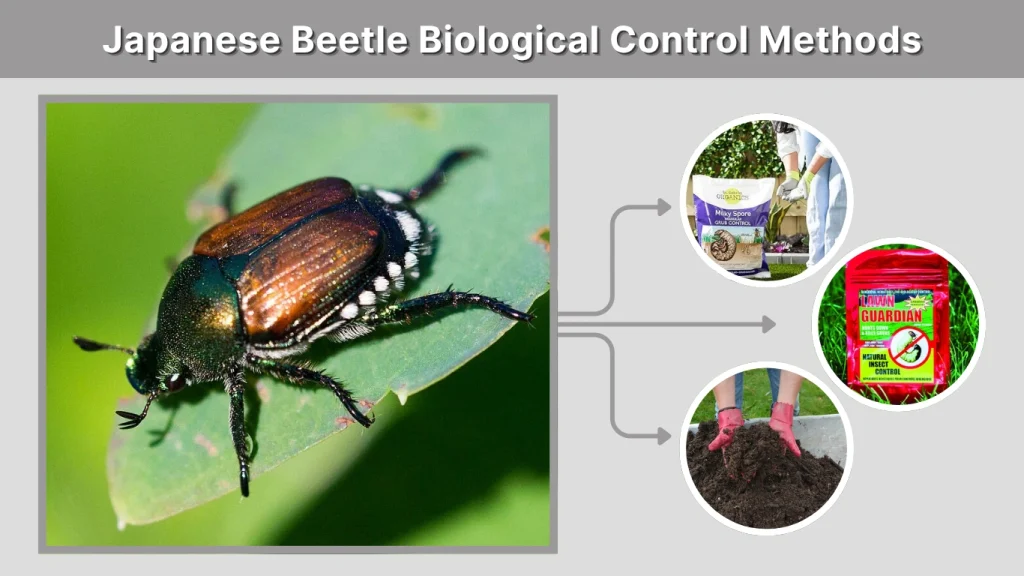
Biological control targets Japanese beetles at the larval (grub) stage, reducing next year’s adult population naturally. These methods use living organisms that attack beetle grubs underground, offering long-term results.
Milky Spore Disease
Milky spore (Bacillus popilliae) is a naturally occurring bacterium that infects and kills Japanese beetle larvae in the soil. Once applied, the spores multiply as grubs die, providing up to 10–15 years of protection.
- Apply milky spore powder or granules in late summer or early fall when grubs are active near the surface.
- Best used in warm climates where soil temperatures support bacterial growth.
- Safe for people, pets, and beneficial insects.
Though it works slowly, milky spores are an excellent long-term biological defense for lawns and gardens.
Beneficial Nematodes
Another effective biological option is using beneficial nematodes, microscopic worms that parasitize grubs.
The most effective species for Japanese beetles is Heterorhabditis bacteriophora.
- Apply nematodes in moist soil during the evening.
- Keep soil damp for a week afterward to ensure survival.
- They infect grubs within days, stopping them before they mature.
Nematodes can be purchased online or at garden centers and are completely safe for humans, pets, and pollinators. When combined with milky spore, they offer a balanced natural solution.
Why Biological Control Works
These living treatments target beetles before they emerge as adults. They’re most effective when used yearly as part of an integrated pest management (IPM) plan. Over time, the beetle population declines naturally, reducing the need for chemical insecticides.
Chemical Control and Commercial Products
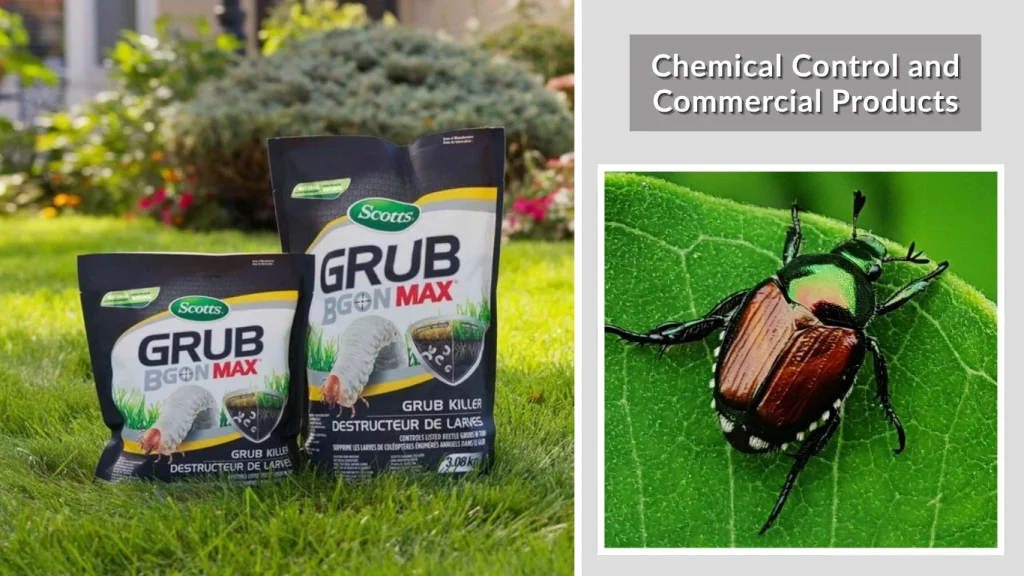
While natural methods work well for moderate infestations, severe outbreaks may require the use of chemical treatments. When used correctly, insecticides can provide fast, effective control of adult beetles and grubs. However, they should always be applied responsibly to avoid harming pollinators and beneficial insects.
Chemical Insecticides
Commercial sprays like Bayer Japanese Beetle Control and Scotts Garden Insect Killer contain ingredients such as carbaryl, cyfluthrin, or pyrethrin. These compounds act quickly, killing adult beetles on contact.
- Apply insecticides during early morning or evening, when bees and butterflies are inactive.
- Focus on heavily infested plants like roses, fruit trees, and ornamental shrubs.
- Repeat every 7–10 days if beetle activity continues.
Tip: Always read and follow the label instructions carefully. Overuse of chemicals can disrupt ecosystems and cause resistance among beetle populations.
Systemic Control Options
For long-lasting protection, gardeners often use systemic insecticides, which are absorbed through a plant’s roots and transported throughout its tissues. Products containing imidacloprid or acephate protect leaves from feeding for several weeks.
Systemic treatments work especially well for ornamental trees and shrubs, providing a defense barrier against adult beetles.
- Apply systemics in early spring or late fall before the beetle season.
- Avoid spraying blooming plants to protect pollinators.
Pros and Cons of Chemical Control
Pros:
- Immediate reduction of visible beetles.
- Convenient and readily available in stores.
- Effective for large infestations.
Cons:
- Can harm bees, butterflies, and aquatic life if misused.
- Not suitable for edible crops near harvest time.
- Requires repeat applications for continued protection.
Whenever possible, combine chemical methods with natural and biological controls for a balanced approach.
Grub Control for Lawns
Why Target Grubs
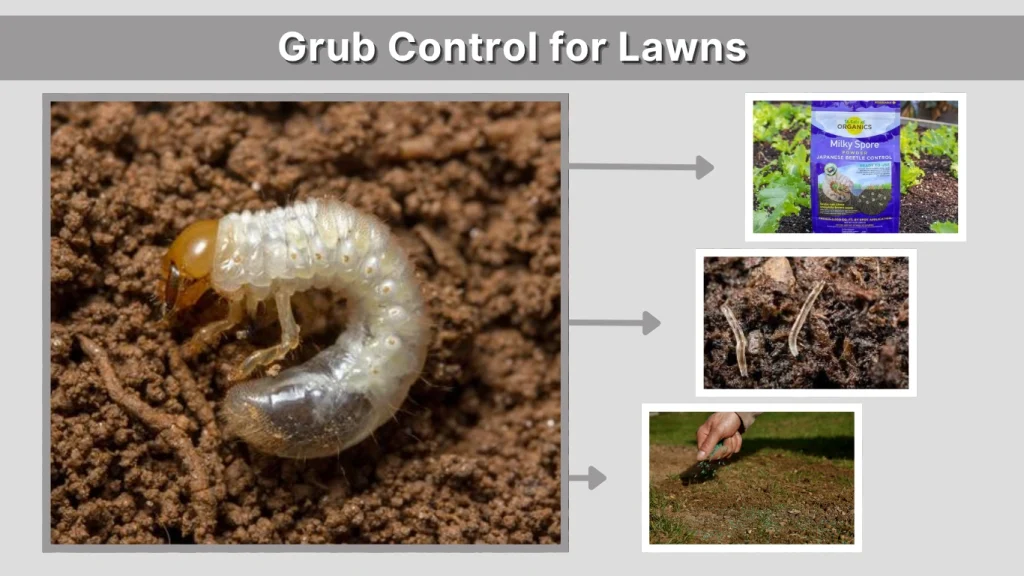
Japanese beetle control starts below ground. The larval or grub stage causes significant turf damage by feeding on the grass. This weakens the lawn, creating brown, dead patches and attracting skunks and birds that dig for grubs.
Natural Grub Solutions
- Milky spore powder: A long-term biological solution that builds up over time.
- Beneficial nematodes: Fast-acting, eco-friendly treatment that reduces grub numbers within weeks.
- Keep lawns aerated and well-drained to discourage egg-laying.
Healthy soil naturally resists infestation — beetles prefer compacted, overwatered areas.
Chemical Grub Control
For persistent infestations, chemical grub killers like Bayer Grub Control or Scotts GrubEx can be used. These treatments contain chlorantraniliprole or trichlorfon, which kill larvae before they mature.
- Apply in late July through September when grubs feed actively.
- Water the lawn after application to help chemicals penetrate the soil.
When to Apply
Timing is crucial — grub treatments should be applied before winter dormancy. Once temperatures drop, larvae move deeper underground, making treatment ineffective. Regular monitoring and early action lead to better control each year.
Controlling Japanese Beetles on Specific Plants
Roses and Ornamentals
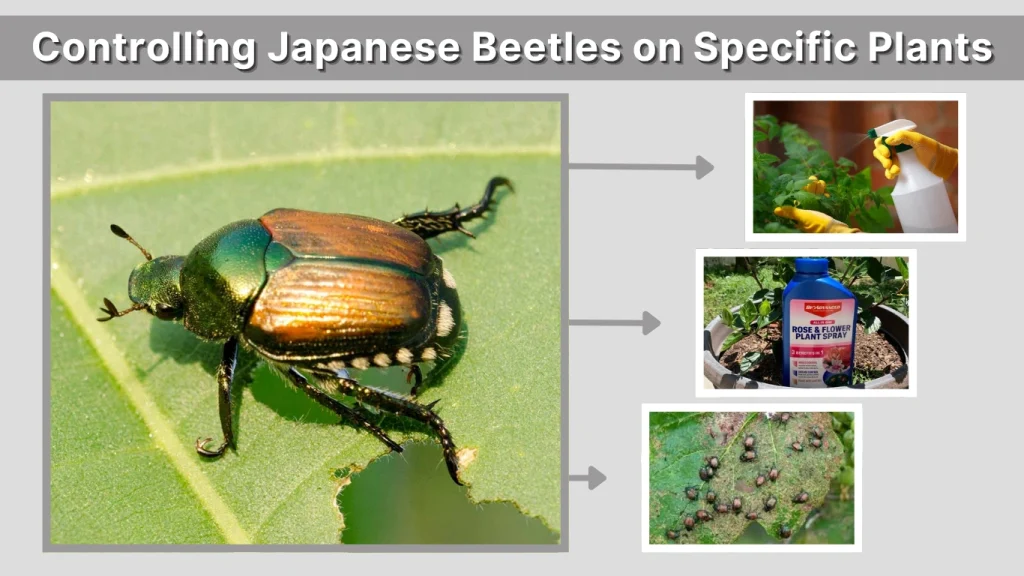
Roses are among the Japanese beetle’s favorite foods.
- Use neem oil or insecticidal soap to repel beetles naturally.
- Systemic rose protectants like Bayer 3-in-1 Rose Care provide ongoing defense.
- Remove damaged leaves and petals to discourage further feeding.
For heavy infestations, prune and dispose of infested stems to limit attraction.
Fruit Trees and Orchards
Japanese beetles feed aggressively on apple, cherry, and plum trees.
- Cover trees with fine mesh netting during peak beetle activity.
- Use kaolin clay sprays to create a physical barrier on leaves and fruits.
- Avoid chemical sprays close to harvest; opt for neem-based products instead.
Regular inspection and early treatment keep fruit production safe and healthy.
Grapevines and Vineyards
Beetles can strip grape leaves within days, stunting vine growth.
- Hand-pick beetles early in the morning.
- Use floating row covers to protect young vines.
- Apply neem oil or diatomaceous earth between rows for prevention.
Organic growers can integrate milky spore and nematodes to reduce future infestations naturally.
Regional and Seasonal Management
Localized Programs
Certain regions such as Colorado and Wisconsin have implemented coordinated control efforts against Japanese beetles. Agricultural departments monitor beetle populations and offer community-wide treatment plans, especially in newly infested areas like Parker, Colorado.
Residents can check with local extension offices or garden centers for updates, recommended products, and treatment timing suited to local conditions.
When to Start Control
- Early June: Begin adult beetle control as soon as activity is spotted.
- Late July–September: Focus on grub control treatments.
- Fall and Spring: Apply milky spore or nematodes for long-term prevention.
Following this seasonal schedule ensures consistent results year after year.
Integrated Pest Management (IPM)
Combining Control Methods
Integrated Pest Management (IPM) uses multiple strategies — cultural, biological, and chemical — to maintain beetle populations below damaging levels.
A successful IPM approach includes:
- Hand removal and soapy water traps for adults.
- Biological grub control with nematodes and milky spores.
- Chemical spot treatments for severe infestations.
- Healthy gardening habits such as proper watering, soil maintenance, and pruning.
This combined method reduces reliance on chemicals while ensuring long-term control.
Benefits of IPM
- Minimizes harm to pollinators and wildlife.
- Prevents resistance to insecticides.
- Encourages ecological balance in the garden.
By combining methods and monitoring yearly, you can manage Japanese beetles efficiently without disrupting your local ecosystem.
FAQs
What Controls Japanese Beetles Naturally?
Neem oil, diatomaceous earth, and beneficial nematodes are the most effective natural options. Hand-picking beetles daily also helps reduce populations significantly.
When Should I Apply Grub Control?
Apply grub treatments between late July and early September when larvae are feeding near the surface. Early timing ensures the highest success rate.
Does Grub Control Kill Adult Beetles?
Yes, indirectly. Killing grubs prevents new adults from emerging the following summer, reducing infestations over time.
Are There Pet-Safe or Bee-Safe Solutions?
Yes. Milky spore, neem oil, and diatomaceous earth are safe for pets and pollinators when applied correctly.
What’s the Best Long-Term Control Strategy?
Combine natural, biological, and chemical controls through an integrated pest management plan. Regular monitoring and consistent application are key to sustainable success.
