
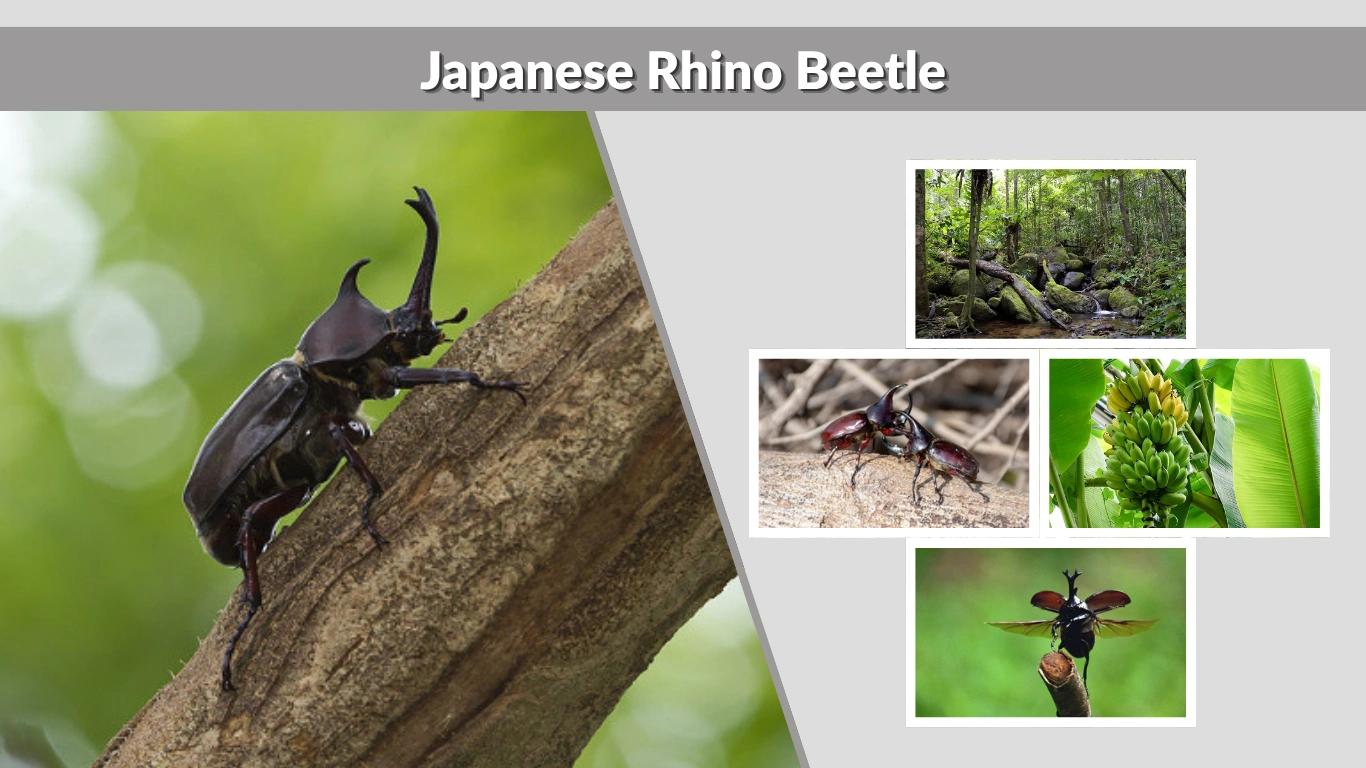
The Japanese rhino beetle (Trypoxylus dichotomus), known locally as “kabutomushi,” is one of Japan’s most admired insects. With its glossy black armor and signature horn, this beetle is a symbol of strength, endurance, and summer in Japanese culture. Loved as a pet, featured in games, and celebrated in folklore, the Japanese rhino beetle fascinates both children and collectors. This guide explores its appearance, habitat, life stages, and the basics of beetle care.
Overview and Key Facts
Scientific Classification
The Japanese rhino beetle belongs to the family Scarabaeidae and the genus Trypoxylus. It is a member of the rhinoceros beetle group, known for their powerful horns and armor-like bodies. Native to East Asia, particularly Japan, Korea, Taiwan, and China, these beetles are found in forests and rural areas where rotting wood and tree sap are abundant.
Cultural Significance in Japan
In Japan, kabutomushi are more than just insects — they’re cultural icons. During summer, children collect them from trees to keep as pets. They also appear in anime, manga, and games such as Mesuking and Yakuza Kiwami. Beetle-fighting contests are a traditional pastime, showcasing their strength and spirit. Their name, meaning “helmet insect,” reflects both their appearance and their cultural symbolism of courage.
Size, Color, and Appearance
Physical Size and Dimensions
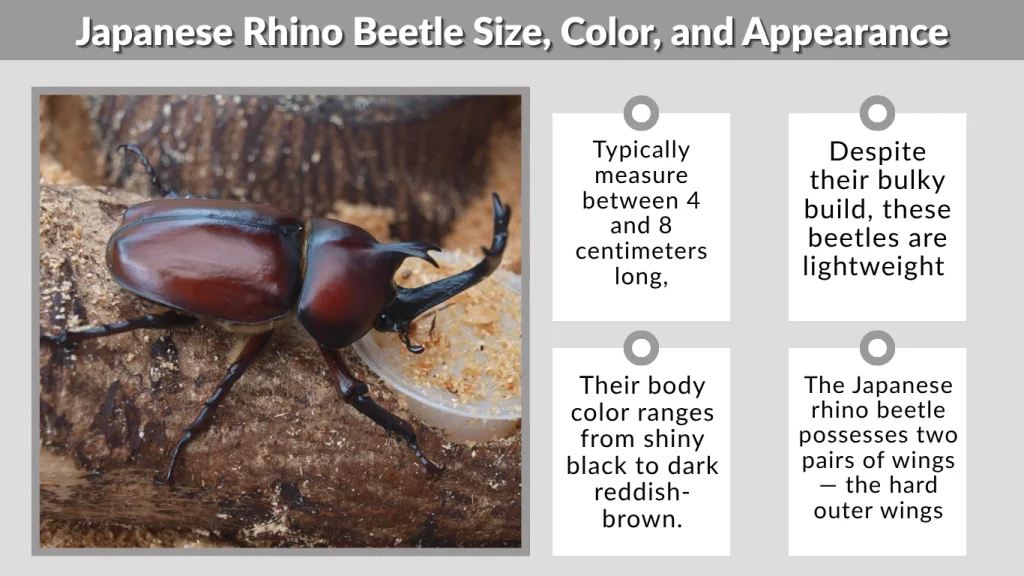
Adult male Japanese rhino beetles typically measure between 4 and 8 centimeters long, with the horn accounting for much of their impressive size. Females are smaller, averaging around 3 to 5 centimeters, and lack the prominent horn. Despite their bulky build, these beetles are lightweight and surprisingly agile, capable of flying short distances using their hidden wings.
Color and Gloss
Their body color ranges from shiny black to dark reddish-brown. Under bright light, their carapace can appear metallic or reflective. This natural gloss helps protect them from moisture while acting as camouflage against tree bark. The combination of toughness and beauty makes them one of the most striking insects in the world.
Wings and Flying Ability
The Japanese rhino beetle possesses two pairs of wings — the hard outer wings (elytra) that protect the softer inner wings used for flight. These inner wings can beat rapidly, allowing the beetle to fly surprisingly well. They are mostly nocturnal fliers, drawn to lights on warm summer nights. Though their flight produces a loud buzzing sound, they are harmless and gentle creatures.
Identification
Body Structure
Their bodies are divided into three sections: the head, thorax, and abdomen. The head bears the iconic Y-shaped horn in males, used primarily for fighting and courtship. The thorax is covered by a thick shield-like plate called the pronotum, which adds extra protection during combat or when digging into bark.
Male vs. Female Differences
The easiest way to tell males from females is by their horn. Males have a large, forked horn projecting from their head, while females have a smoother, rounded head with no horn. Males use their horns to lift and throw rivals during fights over food or mates — a behavior often imitated in children’s games and Japanese media.
Eyes and Antennae
Japanese rhino beetles have compound eyes that provide a wide field of vision, useful for detecting movement in low light. Their antennae are short and clubbed, ending in fan-like structures that can detect pheromones and the scent of tree sap. These sensory tools make them skilled nighttime navigators.
Habitat and Natural Range
Where Japanese Rhino Beetles Live
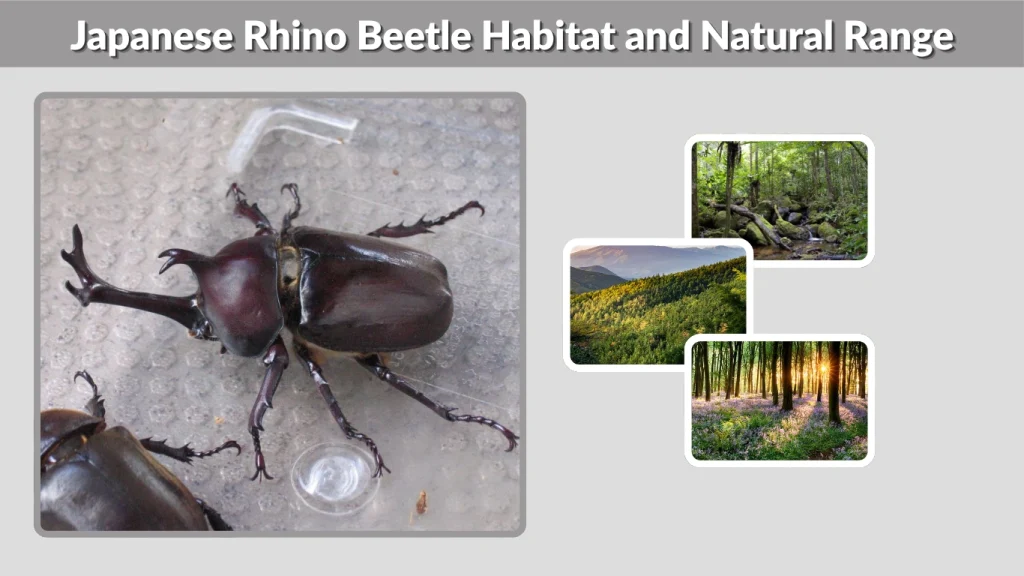
These beetles are native to East Asia and thrive in Japan’s warm, humid forests. They are commonly found in wooded areas, parks, and mountain forests, especially during summer months. They prefer environments rich in decaying wood, which serves as both a food source and breeding ground.
Preferred Environment
Japanese rhino beetles are most active from June to September. They favor oak trees that exude sticky sap — a vital food source. At night, they gather around sap flows alongside other beetles and moths. They also inhabit areas with soft, moist soil where females can safely lay eggs. Their need for humidity and organic matter makes dense forests ideal.
Urban and Captive Habitats
In captivity, Japanese rhino beetles adapt easily to terrariums or small insect enclosures. Beetle enthusiasts in Japan often keep them in plastic or glass tanks filled with soil, wood shavings, and leaf litter. With proper care — including moisture control, food, and hiding spaces — these beetles can thrive indoors, providing both entertainment and education.
Diet and Feeding Behavior
Larval Diet
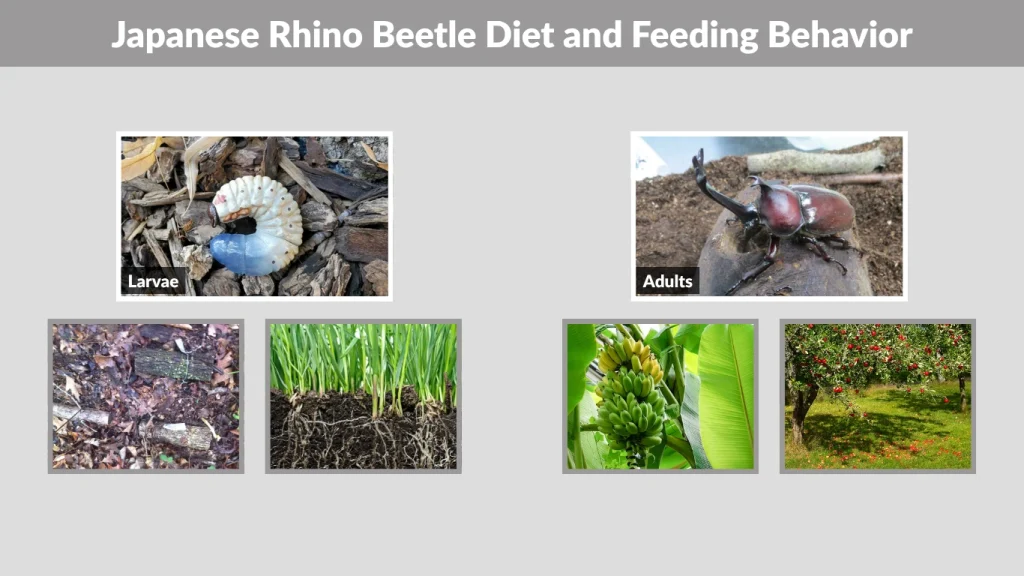
In the larval stage, the beetle feeds on decomposing wood and organic material buried underground. The larvae are large, C-shaped grubs that grow rapidly, molting several times as they consume nutrients from decaying plant matter. This feeding process is crucial to soil recycling, as they break down dead wood into nutrient-rich compost.
Adult Diet
Adult Japanese rhino beetles feed mainly on tree sap and ripe fruits such as bananas, apples, and peaches. In captivity, owners often use special “beetle jelly” — a nutrient-packed gel designed to sustain adult beetles. They are most active at night, feeding for long periods before hiding again at dawn.
Life Cycle and Growth Stages
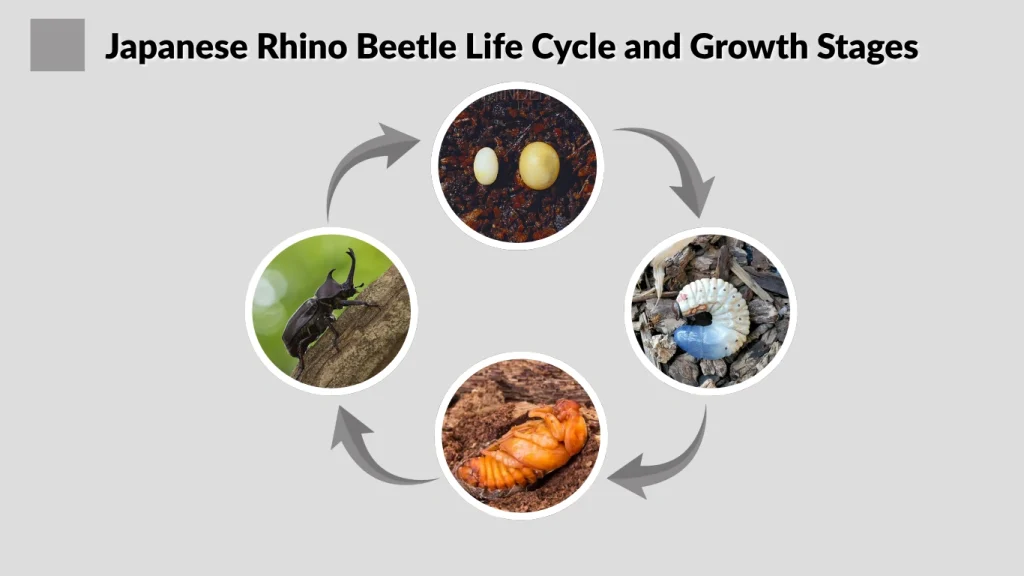
Egg Stage
The Japanese rhino beetle’s life begins when a female lays her eggs in moist, decaying soil or rotting wood during the summer. Each female can produce between 10 and 30 eggs, carefully placing them where organic matter is plentiful. The eggs are small, white, and round, hatching within two to four weeks depending on temperature and humidity levels.
Larva Stage
Once hatched, the larvae — large, white, C-shaped grubs — begin feeding on decomposing wood, leaves, and organic debris. This stage lasts between six months and one year. The larvae grow significantly, shedding their skin multiple times. During this time, they play a vital role in decomposing organic matter, enriching the soil, and maintaining forest health.
Pupa Stage
When the larva reaches full size, it forms a hard, oval chamber underground and transitions into the pupal stage. Inside this protective case, the beetle undergoes metamorphosis, developing wings, legs, and the distinctive horn. This transformation lasts around one month, after which the adult emerges, ready for life above ground.
Adult Stage
The adult Japanese rhino beetle typically appears in early summer and lives for three to six months. Males spend much of this time competing for mates and feeding on tree sap. In nature, their adult lifespan is relatively short, as they die once the breeding season ends, but in captivity, proper care can extend their lives slightly longer.
Behavior and Adaptations

Fighting Behavior
Male Japanese rhino beetles are famous for their combat rituals. Using their large Y-shaped horns, they battle rivals by attempting to flip or push them off tree trunks. These fights are not deadly but determine dominance for access to females or sap sources. This behavior is also mirrored in Japanese pop culture and children’s beetle-fighting tournaments.
Flying and Nocturnal Habits
Despite their large size, these beetles are skilled fliers. They open their hard elytra to reveal strong, membranous wings underneath and can travel short distances. Japanese rhino beetles are nocturnal, becoming active after sunset and often gathering around sap-rich trees or outdoor lights. Their buzzing flight sound is a familiar part of Japanese summer nights.
Defensive Traits
While they look fierce, Japanese rhino beetles are completely harmless. Their thick exoskeleton provides excellent protection against predators, and when threatened, they may produce a faint hissing sound by rubbing their abdomen against their wing covers. Their impressive strength allows them to lift over 100 times their body weight — one of the greatest feats in the insect world.
Care and Pet Guide
Housing and Environment
Keeping Japanese rhino beetles as pets is common in Japan. They require a spacious container filled with moist soil, leaf litter, and small pieces of decaying wood. The enclosure should maintain humidity between 70–80% and be kept at a moderate temperature of around 22–26°C (72–78°F). Hiding places such as bark pieces are essential to reduce stress.
Feeding in Captivity
Beetle jelly is the most common food for captive Japanese rhino beetles, available in many pet shops. It’s rich in sugars and nutrients that sustain adult beetles. Ripe fruits like apples, bananas, and peaches are also suitable. Feeding should occur in the evening since the beetles are nocturnal.
Handling Tips
Japanese rhino beetles are gentle and easy to handle, but care should be taken to avoid damaging their legs or wings. It’s best to let them crawl onto your hand rather than picking them up by the horn or body. Their claws can grip skin firmly, so handling should be slow and cautious.
Japanese Rhino Beetle for Sale
In Japan, kabutomushi are sold in pet stores and online during summer. Prices vary by size, sex, and rarity. Outside Japan, exporting these beetles may be regulated, so buyers should check local wildlife laws. Ethically sourced, captive-bred beetles are always the best choice for enthusiasts.
Lifespan and Maintenance
Average Lifespan
In the wild, adult Japanese rhino beetles live for about three to six months, while their total life cycle from egg to adult spans roughly one year. In captivity, proper temperature, diet, and humidity can extend their life slightly, sometimes up to eight months as adults.
Factors Affecting Longevity
Lifespan is influenced by environmental conditions, diet, and stress levels. Low humidity, poor food, or overcrowded enclosures can shorten their life. Beetles kept in optimal habitats with good nutrition tend to live longer and remain active throughout the season.
How to Extend Lifespan
To maximize their lifespan, provide clean soil, fresh food, and moderate humidity. Avoid handling them excessively, and ensure the enclosure remains shaded and ventilated. Replacing soil every few weeks prevents mold and maintains health for both larvae and adults.
Interesting Facts
- In Japan, kabutomushi are symbols of summer and strength.
- Male beetles use their horns like jousting lances in fights.
- They feature in games like Yakuza Kiwami and Mesuking.
- Children often collect them from trees using light traps.
- They can lift objects over 100 times their own weight.
FAQs
How long do Japanese rhino beetles live?
Japanese rhino beetles live for about a year from egg to adulthood, with adults surviving 3–6 months. In captivity, optimal care can extend this to around 8 months. The larval phase takes the longest, lasting several months underground before metamorphosis.
Where can Japanese rhino beetles be found?
They are native to East Asia, especially Japan, Korea, Taiwan, and parts of China. They inhabit forests and mountain areas with moist soil and decaying wood, particularly near oak trees that provide abundant sap.
What do Japanese rhino beetles eat in captivity?
In captivity, they thrive on beetle jelly, which provides essential nutrients and hydration. Fresh fruits like bananas, apples, and melons can also be offered, but food should be replaced daily to prevent spoilage.
Can Japanese rhino beetles fly?
Yes, they can. Despite their heavy appearance, Japanese rhino beetles are strong fliers, mostly active at night. They use their hidden wings to travel short distances and are often attracted to bright lights during the summer.
Are Japanese rhino beetles sold as pets in Japan?
Yes, they are extremely popular pets in Japan. Pet shops and online stores sell them seasonally, especially during summer. They’re affordable, easy to care for, and cherished by children and hobbyists alike.
