
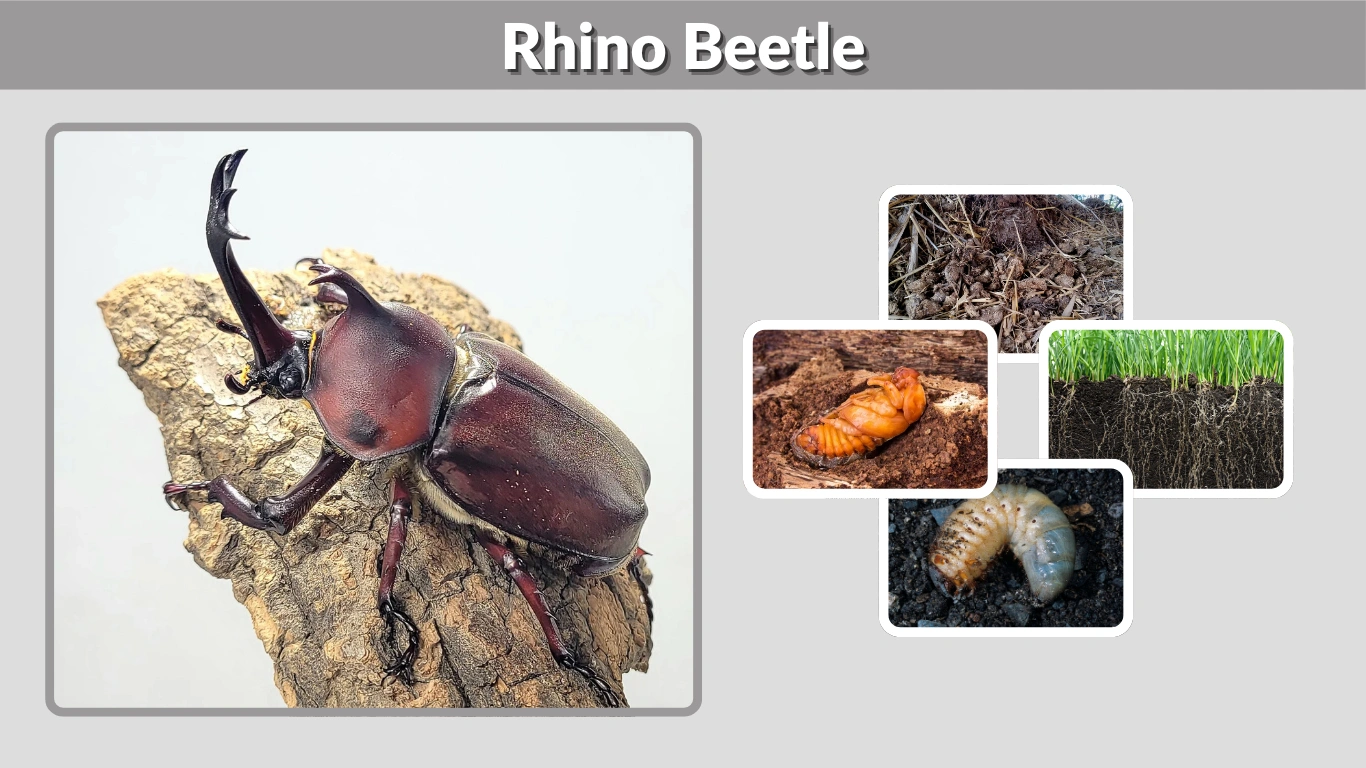
Rhino beetles are among the most powerful insects in the world, capable of lifting objects many times their own weight. Recognized for their unique horn-like projections, they are often compared to miniature armored tanks of the insect kingdom. Found mainly in tropical and subtropical regions, these beetles play vital ecological roles as decomposers and soil aerators. Their impressive strength, glossy exoskeletons, and distinctive shapes make them fascinating creatures of both science and folklore.
Size and Physical Characteristics
Average Size and Weight
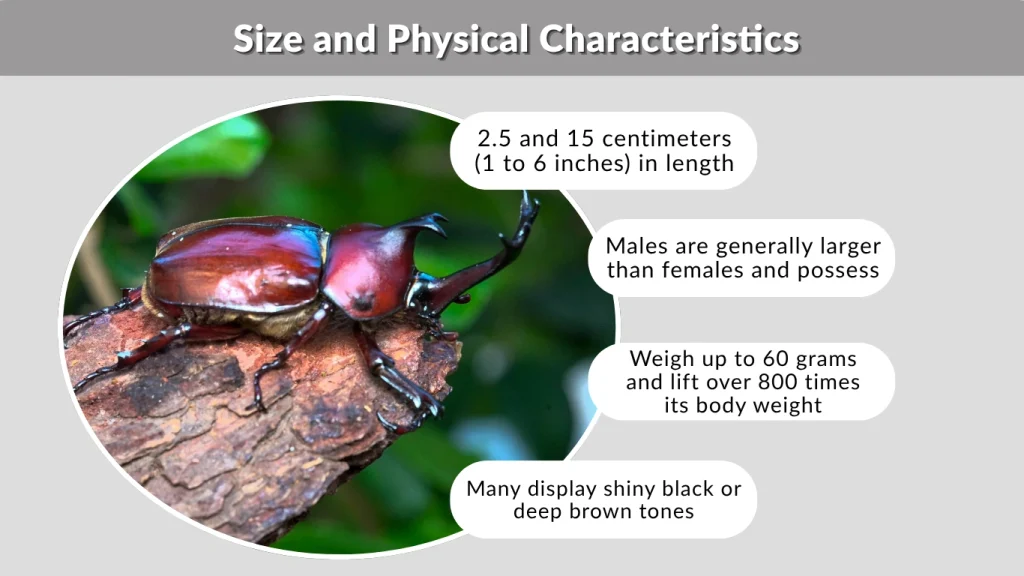
Rhino beetles vary significantly in size depending on the species. Most adult beetles measure between 2.5 and 15 centimeters (1 to 6 inches) in length, making them some of the largest beetles on Earth. Males are generally larger than females and possess more prominent horns. Despite their intimidating appearance, they are harmless to humans. A fully grown male can weigh up to 60 grams and lift over 800 times its body weight — a true symbol of insect strength.
Color Variations
The coloration of rhino beetles ranges widely across species. Many display shiny black or deep brown tones, while others feature metallic greens, reddish hues, or golden reflections depending on light and moisture conditions. Some tropical species, such as the Hercules beetle, even change color slightly with humidity. Their glossy exoskeleton serves not only for protection but also for camouflage in forested environments filled with bark, leaves, and decaying wood.
Distinctive Appearance
Rhino beetles have thick, curved bodies covered with a hard, chitinous shell that gives them a polished, armored look. Their most striking feature is the horn on the male’s head, which resembles the horn of a rhinoceros — the trait that gives them their name. These horns are not used for defense against predators but rather for fighting rival males during mating competitions. Despite their bulky form, rhino beetles are surprisingly agile and can climb and burrow with ease.
Identification
Body Structure
A rhino beetle’s body is divided into three main parts: the head, thorax, and abdomen. The thorax is covered by a sturdy shield called the pronotum, which protects the head and upper body. Their compact build and powerful musculature allow them to dig through soil, climb trees, and even fly short distances, thanks to their hidden wings tucked beneath hard outer covers known as elytra.
Horn Features
Male rhino beetles are instantly recognizable by their prominent horns, which vary in shape and length among species. Some, like the Japanese rhinoceros beetle, have a single forked horn, while others feature multiple spikes or curved antler-like projections. Females usually lack horns or possess much smaller ones. These horns play a crucial role in courtship rituals, where males engage in pushing battles to win access to females.
Legs and Antennae
Their six strong, clawed legs help them cling to bark and leaves with remarkable strength. The front legs are often used for digging or gripping during fights. Rhino beetles also have short, clubbed antennae composed of tiny plates called lamellae, which can fan out to detect scents. This sensory adaptation helps them locate food sources and mates, even in dense vegetation or at night.
Habitat and Distribution
Natural Habitats
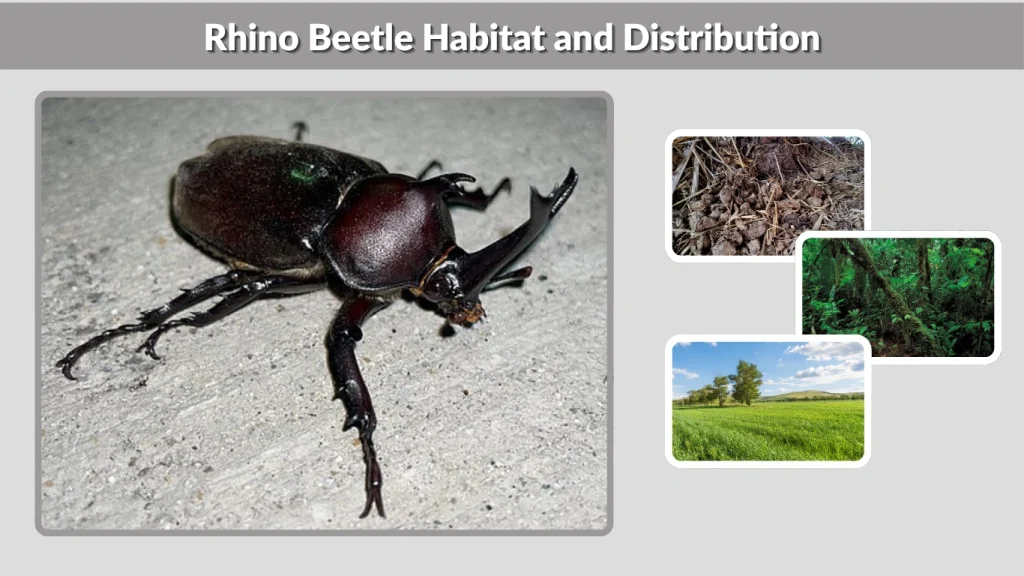
Rhino beetles inhabit a variety of warm, humid environments, often near decaying organic matter. They thrive in tropical rainforests, grasslands, and agricultural regions where rotting wood and decomposing leaves provide ample nourishment for their larvae. Fallen logs, compost piles, and tree stumps are ideal breeding sites. Their preference for moist conditions makes them less common in arid areas.
Global Distribution
These beetles are found worldwide, especially in tropical and subtropical zones. Large populations exist in Southeast Asia, Central and South America, Africa, and parts of Australia. Some species, such as the Hercules beetle of Central America and the Japanese rhinoceros beetle, are famous for their size and beauty. In certain regions, like Thailand and Japan, they are even kept as pets or used in beetle-fighting competitions, a traditional pastime that highlights their cultural importance.
Diet and Feeding Behavior
Larval Diet
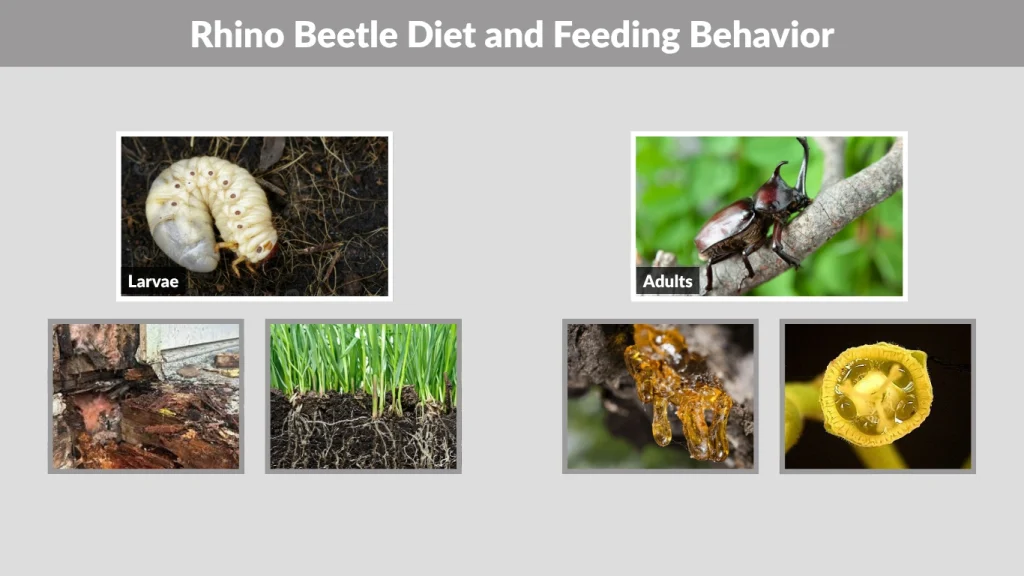
Rhino beetle larvae, also known as grubs, spend most of their lives underground feeding on decaying wood, roots, and organic compost. This stage can last several months to years, depending on species and environmental conditions. By breaking down decomposing matter, the larvae enrich the soil and promote plant growth, playing a vital role in forest ecosystems.
Adult Diet
Adult rhino beetles have a simpler diet compared to their larvae. They primarily consume tree sap, nectar, and overripe fruit. Some species prefer sugary plant juices that ooze from tree bark, while others feed on fermenting fruit. Though they may appear fierce, their mouthparts are designed for sucking rather than biting, making them entirely harmless to humans and plants.
Life Cycle
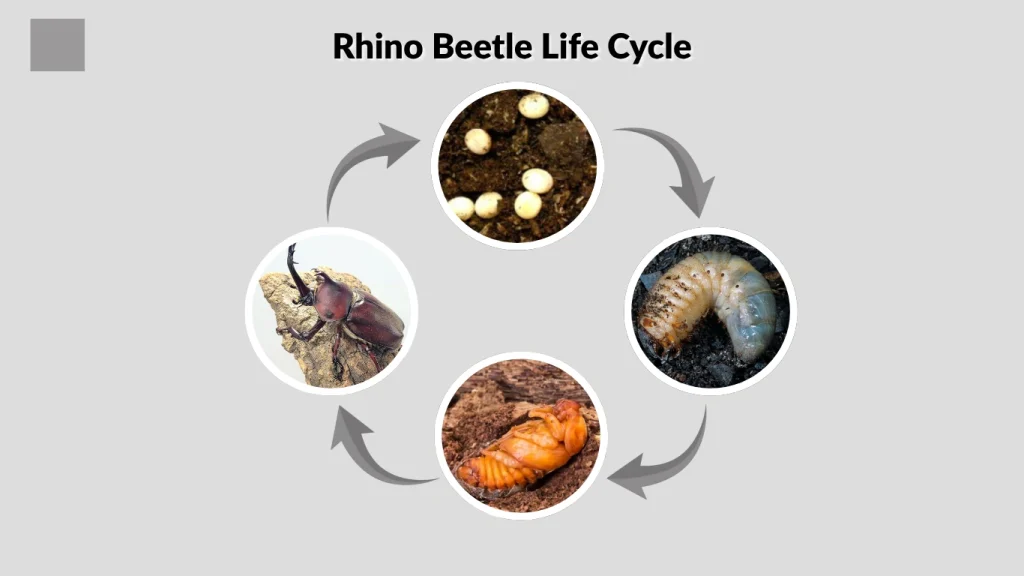
Egg to Larva
The life cycle of a rhino beetle begins when the female lays eggs in decaying wood, compost, or moist soil. After several weeks, the eggs hatch into large, white grubs that immediately start feeding on decomposing plant matter. This larval stage can last from six months to over two years, depending on the species and environment. During this time, the larvae grow significantly, molting multiple times before transforming into pupae.
Pupa to Adult
After reaching maturity, the larva forms a protective cocoon and enters the pupal stage. Inside the cocoon, it undergoes a complete metamorphosis — developing wings, horns, and the tough exoskeleton characteristic of adult beetles. This stage lasts several weeks. Once fully formed, the adult beetle emerges, ready to fly, feed, and reproduce. Most adult rhino beetles live for three to six months, though some species may survive longer in captivity.
Behavior and Adaptations
Nocturnal Habits
Rhino beetles are primarily nocturnal. They hide under logs or in the soil during the day and become active at night to feed and mate. Their attraction to light sources often brings them close to human dwellings, especially in tropical regions. Their strong wings allow short but powerful flights, while their body armor protects them from predators like birds and lizards.
Defensive Mechanisms
Despite their fearsome look, rhino beetles are gentle creatures that do not bite or sting. Their main defense is their thick exoskeleton, which acts as a shield against attacks. When threatened, they may emit a hissing sound by rubbing their abdomen against their wing covers. Their strength also helps them push away predators or escape tight spots by burrowing quickly into the ground.
Role in the Ecosystem
Decomposition and Soil Health
Rhino beetles play a crucial ecological role by breaking down organic matter. As larvae, they feed on decaying wood and compost, helping recycle nutrients back into the soil. This process enhances soil fertility and promotes healthy plant growth. In forests, they act as natural decomposers, accelerating the decay of dead trees and leaves.
Food Source for Wildlife
Many birds, reptiles, and small mammals rely on rhino beetles as a protein-rich food source. Their larvae, in particular, are sought after by wild animals and even humans in some cultures. In this way, rhino beetles form an essential link in food chains, maintaining ecological balance across their habitats.
Human Interaction and Conservation
Cultural Significance
In several Asian countries, rhino beetles hold cultural and symbolic importance. In Japan and Thailand, they are kept as pets and admired for their beauty and strength. Beetle-fighting contests are popular in some rural regions, where males battle using their horns. Additionally, these beetles often appear in folklore and traditional art, symbolizing power, perseverance, and transformation.
Threats and Protection
Although many species remain abundant, habitat destruction and pesticide use threaten some rhino beetle populations. Deforestation reduces breeding sites, while light pollution disrupts their nocturnal activities. Conservation efforts focus on protecting tropical forests and promoting awareness about their ecological importance. Captive breeding programs and environmental education initiatives help sustain these magnificent insects for future generations.
FAQs
What is the average size of a rhino beetle?
Most rhino beetles measure between 2.5 and 15 centimeters in length, depending on the species. The males are usually larger and feature prominent horns, while females are smaller and more compact. Some tropical species, like the Hercules beetle, can even exceed 17 centimeters under ideal conditions.
Why do rhino beetles have horns?
Male rhino beetles grow horns primarily for combat and courtship. They use these impressive structures to wrestle rival males when competing for mates. The horns also serve as a display of strength and health, helping females select the strongest partners for reproduction.
Where can rhino beetles be found naturally?
Rhino beetles are found in tropical and subtropical regions worldwide, including Southeast Asia, Africa, Central and South America, and Australia. They prefer humid environments such as forests, gardens, and agricultural lands where decaying wood and compost provide abundant food and shelter.
Are rhino beetles harmful to humans or plants?
No, rhino beetles are completely harmless to humans and most plants. They do not bite, sting, or spread disease. Adults mainly feed on fruit, nectar, or tree sap, while larvae consume decaying matter. In fact, they help improve soil quality and reduce organic waste.
How long do rhino beetles live?
The lifespan of a rhino beetle varies by species, but typically ranges from one to two years, including all life stages. The larval stage lasts the longest, sometimes up to 18 months, while adults generally live for a few months. In captivity, their lifespan may extend slightly due to controlled conditions.
