

Rhinoceros beetles are among the most powerful and fascinating insects in the world, known for their impressive horns and immense strength. Found across tropical and temperate regions, these beetles play vital ecological roles in decomposition and soil enrichment. From the mighty Hercules Beetle to the elegant Golofa Porteri, each species displays unique adaptations, colors, and behaviors that make them icons of the insect kingdom.
1. Hercules Beetle
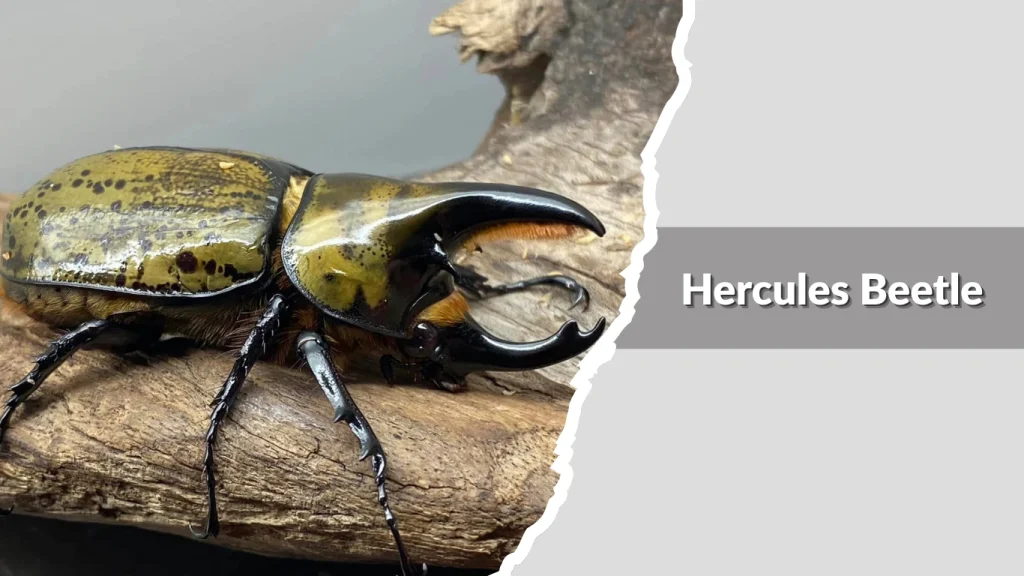
The Hercules Beetle is one of the largest and strongest beetles in the world, famed for its incredible horn and strength. Found primarily in Central and South America, this impressive insect can lift objects up to 850 times its body weight, making it a true powerhouse of the insect kingdom.
Identification
- Males have a large horn on the thorax and another on the head.
- Females lack horns and are smaller in size.
- Body color ranges from olive green to brown with black spots.
- Adults can reach up to 7 inches long, including the horn.
Habitat
Hercules beetles inhabit tropical rainforests and humid lowland regions of Central and South America. They are often found in decaying wood, leaf litter, and near rotting logs where larvae develop.
Behaviors
Male Hercules beetles are known for their strength-based battles during mating season, using their horns to lift and throw rivals. They are primarily nocturnal and tend to stay hidden during the day to avoid predators.
Diet and Lifecycle
Adults feed on rotting fruit, tree sap, and decaying plant matter, while larvae consume decomposing wood. The complete life cycle can take up to two years — most of which is spent in the larval stage before emerging as an adult beetle.
2. Japanese Rhinoceros Beetle

The Japanese Rhinoceros Beetle, also known as Allomyrina dichotoma, is a popular and iconic insect in East Asia. Revered for its strength and unique horned shape, it’s often kept as a pet in Japan. Despite its fierce appearance, it’s completely harmless to humans.
Identification
- Glossy dark brown to black body with a metallic sheen.
- Males have a long, curved horn extending from the head.
- Females are smaller and lack the large horn.
- Adult size ranges from 1.5 to 2.5 inches long.
Habitat
This species inhabits forests, woodlands, and rural areas across Japan, Korea, China, and Taiwan. They prefer moist environments with abundant rotting logs and tree sap, which serve as food and breeding grounds.
Behaviors
Male beetles use their horns to fight rivals for mates, often locking horns and flipping opponents off branches. They are nocturnal and are strongly attracted to light sources at night.
Diet and Lifecycle
Adult Japanese rhinoceros beetles feed primarily on tree sap, ripe fruits, and nectar. The larvae develop underground, feeding on decomposing organic matter for several months before pupating and emerging as adults in summer.
3. European Rhinoceros Beetle
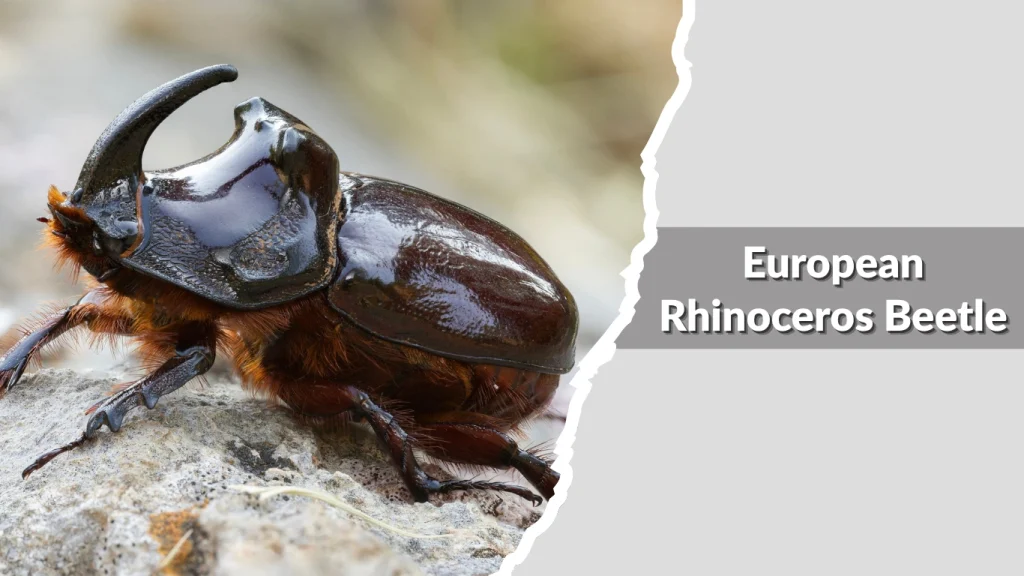
The European Rhinoceros Beetle (Oryctes nasicornis) is one of Europe’s largest beetles, admired for its impressive horn and glossy brown shell. Despite its intimidating appearance, it is completely harmless and plays a key ecological role in decomposing organic matter.
Identification
- Adults are dark reddish-brown with a shiny surface.
- Males have a prominent curved horn on the head.
- Females are smaller and lack or have a reduced horn.
- Typically grow between 1 to 1.5 inches long.
Habitat
European rhinoceros beetles are found in woodlands, gardens, and parks throughout Europe, North Africa, and parts of Asia. They prefer areas rich in decaying wood, compost, or sawdust where their larvae can thrive.
Behaviors
These beetles are nocturnal and spend most of their time hidden in soil or rotting wood. Males use their horn in combat to compete for females during the breeding season. They are strong fliers and often attracted to lights at night.
Diet and Lifecycle
Larvae feed on decaying wood and plant matter for several years before pupating. Adults emerge in spring or early summer and live for a few months, feeding mainly on tree sap and fruit juices. The entire life cycle can last up to four years.
4. Elephant Beetle

The Elephant Beetle (Megasoma elephas) is a massive rhinoceros beetle species native to Central and South America. Known for its incredible size and horn structure resembling an elephant’s trunk, it is one of the strongest insects on Earth and an important decomposer in tropical ecosystems.
Identification
- Males have a long, trunk-like horn on the head and two smaller horns on the thorax.
- Females are smaller and lack large horns.
- Color ranges from dark brown to black, covered in fine yellowish hair.
- Adults can grow up to 4.5 inches long.
Habitat
Elephant beetles inhabit tropical rainforests and humid areas, particularly in Mexico, Central America, and northern South America. They are typically found near decaying logs and tree stumps where larvae feed and develop.
Behaviors
Males use their horns in fierce wrestling matches to compete for females. Despite their bulky size, elephant beetles are strong fliers and mostly nocturnal, staying hidden during the day and active at night.
Diet and Lifecycle
Larvae feed on decaying wood and organic matter, while adults consume sap, rotting fruit, and nectar. The larval stage can last up to three years, making it the longest phase of their life cycle before pupation and emergence as adults.
5. Atlas Beetle
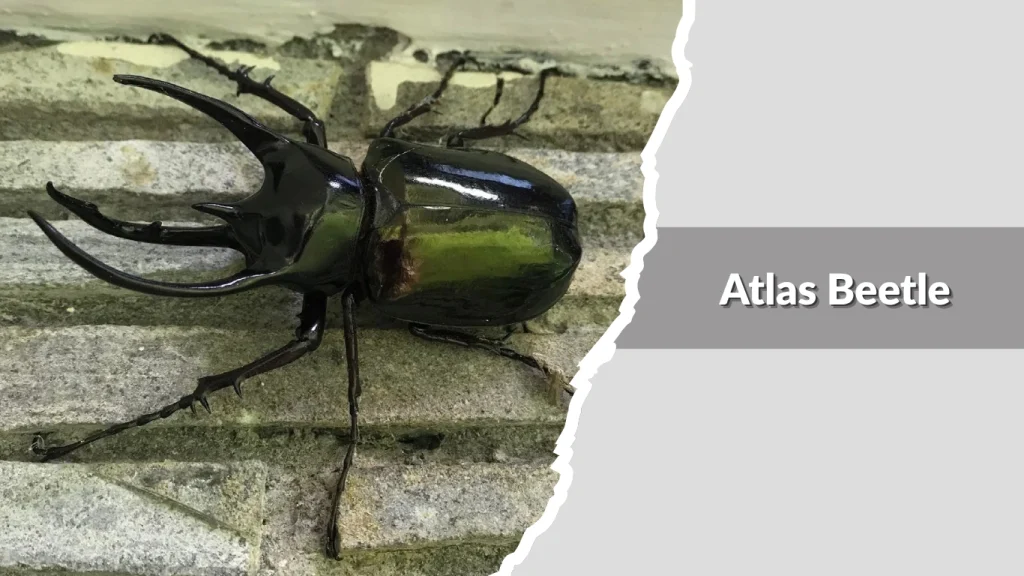
The Atlas Beetle (Chalcosoma atlas) is one of the most powerful rhinoceros beetles, native to Southeast Asia. Named after the Greek Titan Atlas, this beetle is renowned for its massive size and incredible strength, capable of lifting objects many times its body weight.
Identification
- Males have three prominent horns—one central and two lateral on the thorax.
- Females lack horns and are smaller and smoother in texture.
- Body color ranges from shiny black to dark brown.
- Adult size varies from 2.5 to 5 inches long.
Habitat
Atlas beetles inhabit tropical rainforests in Malaysia, Indonesia, and the Philippines. They prefer moist, decaying wood habitats where larvae can develop safely. They are often found near fallen logs or composting vegetation.
Behaviors
Males are highly territorial and use their horns to fight rivals, flipping or pushing opponents during mating battles. They are strong climbers and fliers, most active during nighttime hours.
Diet and Lifecycle
The larvae feed on decaying wood and plant material, while adults primarily consume tree sap and rotting fruit. The life cycle takes around one to two years, with the larval stage lasting the longest before metamorphosis into the impressive adult beetle.
6. Eastern Hercules Beetle
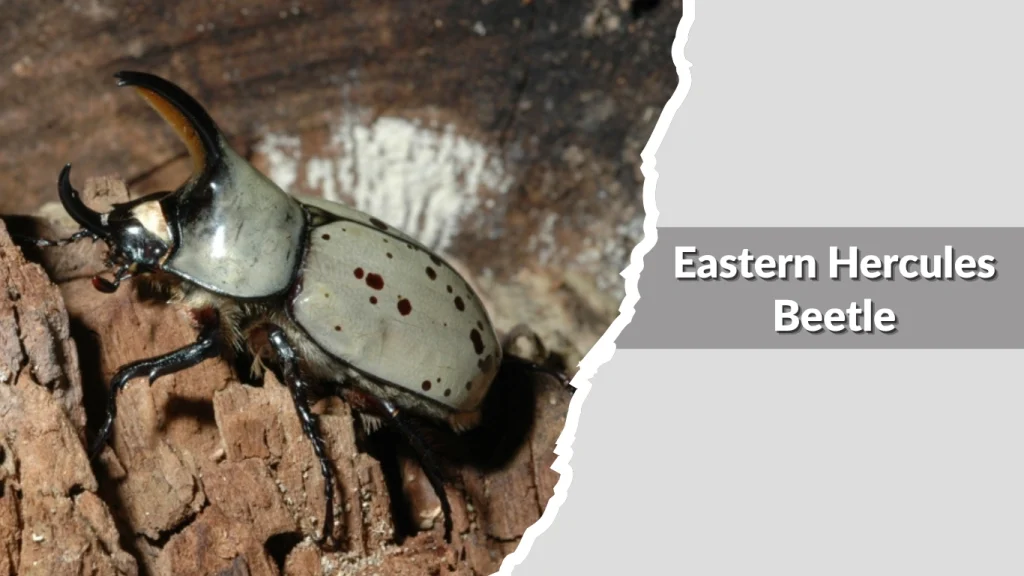
The Eastern Hercules Beetle (Dynastes tityus) is one of the largest beetles in the United States and a close relative of the famous Hercules Beetle. Known for its impressive horns and variable coloration, it is a fascinating species found in the forests of the southeastern U.S.
Identification
- Males have long, curved horns on both the head and thorax.
- Females are smaller and hornless.
- Color varies from pale green to grayish-yellow with black spots.
- Adults range from 2 to 2.5 inches long.
Habitat
Eastern Hercules beetles are found in hardwood forests, particularly in regions with decaying oak, hickory, and ash trees. They prefer moist woodland environments rich in rotting logs for larval development.
Behaviors
Males use their horns in strength contests, flipping other males during fights over females. They are nocturnal and spend much of their lives hidden under logs or in the soil, emerging mainly during warm, humid nights.
Diet and Lifecycle
Larvae feed on decomposing wood for up to two years before pupating. Adults live for several months, feeding on tree sap, ripe fruit, and decaying vegetation. Their long larval stage plays a key role in recycling forest nutrients.
7. Ox Beetle

The Ox Beetle (Strategus aloeus) is a robust rhinoceros beetle native to the Americas, particularly common in the southern United States and Mexico. Its powerful build and three-horned appearance make it one of the most recognizable beetles in its range, though it is gentle and harmless to humans.
Identification
- Males have three prominent horns—one on the head and two on the thorax.
- Females are hornless and slightly smaller.
- Color ranges from reddish-brown to dark brown with a glossy shell.
- Adults measure about 1 to 2 inches long.
Habitat
Ox beetles inhabit sandy soils, grasslands, and wooded areas. They are often found near compost piles, decaying logs, and organic debris where larvae feed and develop.
Behaviors
Males use their horns in combat to win access to females, engaging in pushing and flipping battles. They are nocturnal, spend daylight hours buried underground, and are strong flyers during warm, humid nights.
Diet and Lifecycle
Larvae feed on decomposing plant matter and decaying wood, contributing to soil health. Adults consume fruit, tree sap, and organic juices. The life cycle spans about one year, with most of it spent in the larval stage before transforming into adults in late summer.
8. Coconut Rhinoceros Beetle
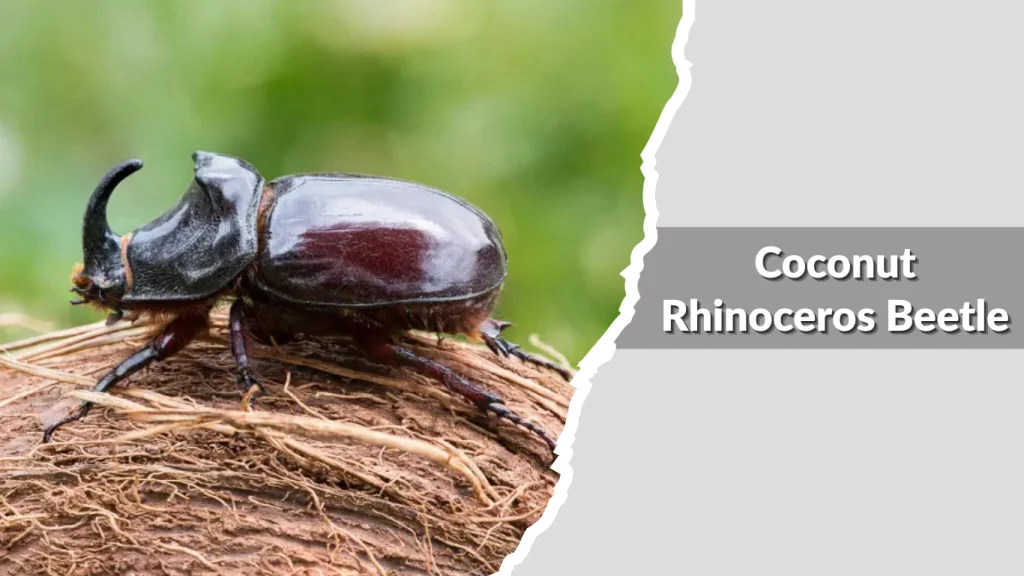
The Coconut Rhinoceros Beetle (Oryctes rhinoceros) is a major pest species found in tropical regions, known for damaging coconut palms and other palm trees. Despite its destructive nature, it is a fascinating and powerful beetle, easily identified by its shiny shell and single horn.
Identification
- Adults are dark brown to black with a glossy, hard shell.
- Males have a single, curved horn on their head.
- Females are smaller with shorter or no horns.
- Grows up to 2.5 inches in length.
Habitat
Coconut rhinoceros beetles inhabit tropical and subtropical regions, especially in Southeast Asia, the Pacific Islands, and parts of Africa. They thrive in areas rich in decaying organic matter like compost, rotting logs, or palm debris.
Behaviors
Adults are mostly nocturnal and fly to palm trees at night to feed and bore into the crown to consume sap. They are strong fliers despite their heavy bodies and prefer humid, coastal climates.
Diet and Lifecycle
Larvae feed on decomposing organic matter, while adults bore into palm trunks to feed on sap and soft tissue. The full life cycle lasts about six to nine months, depending on temperature and food availability. Infestations can cause severe damage to palm plantations.
9. Horned Dung Beetle
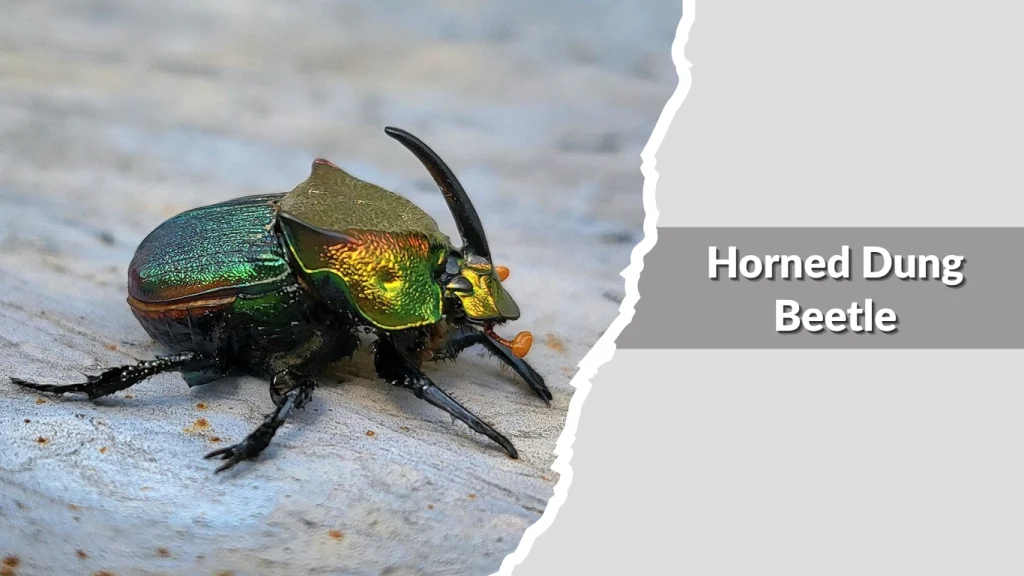
The Horned Dung Beetle (Copris lunaris) is a rhinoceros-type beetle recognized for its role in recycling animal waste. Found across Europe, Asia, and parts of Africa, it plays a vital ecological role by improving soil quality and nutrient cycling through its dung-burying behavior.
Identification
- Adults are shiny black or dark brown.
- Males have a single curved horn on the head; females have a small bump instead.
- Compact, rounded body with strong digging legs.
- Grows about 0.5 to 1 inch long.
Habitat
Horned dung beetles thrive in grasslands, pastures, and farmlands where grazing animals are common. They live in or near manure piles, burrowing beneath to create tunnels for nesting and feeding.
Behaviors
These beetles are highly active at night, rolling or burying dung balls underground for future consumption or egg-laying. Males and females often work together to bury dung, showcasing a rare example of insect cooperation.
Diet and Lifecycle
Both adults and larvae feed primarily on animal dung. Females lay eggs inside buried dung balls, which provide food for developing larvae. The complete life cycle spans several months, and adults may live for nearly a year in favorable conditions.
10. Five-Horned Rhinoceros Beetle
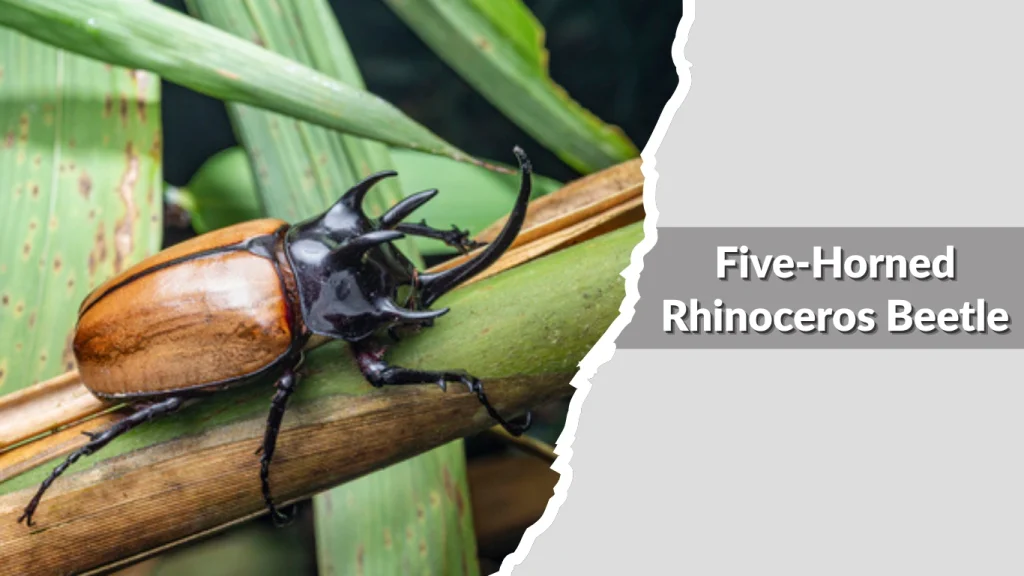
The Five-Horned Rhinoceros Beetle (Eupatorus gracilicornis) is one of the most spectacular and exotic beetles in the world. Native to Southeast Asia, this species is famous for its unique five-horned appearance, giving it a fierce yet majestic look. Despite its intimidating form, it’s completely harmless to humans.
Identification
- Males have five distinct horns — one central horn on the head and four branching horns on the thorax.
- Females lack horns and are smaller in size.
- Glossy black to dark brown exoskeleton with golden or bronze sheen.
- Adults can reach 3 to 4 inches long.
Habitat
Five-horned rhinoceros beetles inhabit tropical forests in Thailand, Myanmar, Laos, and surrounding regions. They are usually found in humid environments with plenty of decaying wood, tree sap, and organic debris for feeding and breeding.
Behaviors
Males use their horns to wrestle rivals during mating season, often engaging in dramatic horn-to-horn battles. They are nocturnal, flying actively at night and hiding under logs or soil during the day.
Diet and Lifecycle
Larvae feed on decomposing wood and organic material for up to a year before pupating. Adults primarily consume tree sap, rotting fruits, and plant juices. The full life cycle lasts around one to two years, depending on environmental conditions.
11. Siamese Rhinoceros Beetle
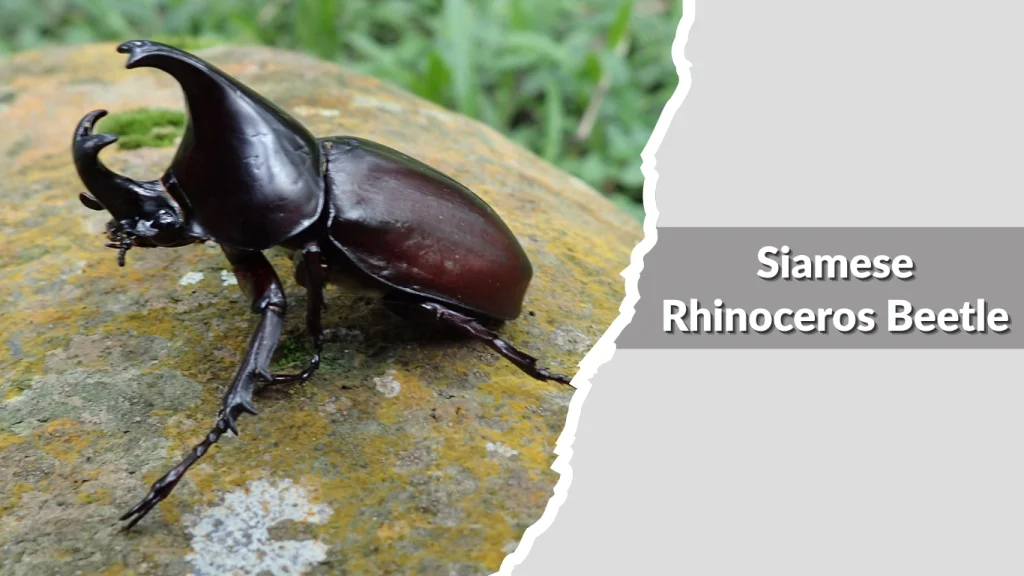
The Siamese Rhinoceros Beetle (Xylotrupes gideon) is one of the most well-known beetles in Southeast Asia, admired for its shiny armor and strong, horned appearance. In Thailand, it’s often called the “fighting beetle” due to its popularity in traditional beetle battles.
Identification
- Males have two prominent horns forming a V-shape on the head and thorax.
- Females are smaller and lack horns.
- The exoskeleton is glossy black or deep chestnut brown.
- Adults grow up to 3 inches in length.
Habitat
This species inhabits tropical and subtropical forests across Thailand, Malaysia, Indonesia, and the Philippines. They prefer moist, shaded areas rich in decaying wood and plant matter, where larvae can grow and feed safely.
Behaviors
Male Siamese rhinoceros beetles use their horns to fight over mates, often locking horns in strength-based duels. They are nocturnal, attracted to lights, and highly active during humid nights after rainfall.
Diet and Lifecycle
Larvae feed on rotting wood, while adults prefer tree sap and ripe or decaying fruits such as bananas and mangoes. The life cycle takes about one year, with most of the time spent in the larval stage before transforming into adults during the rainy season.
12. Dynastes granti (Western Hercules Beetle)
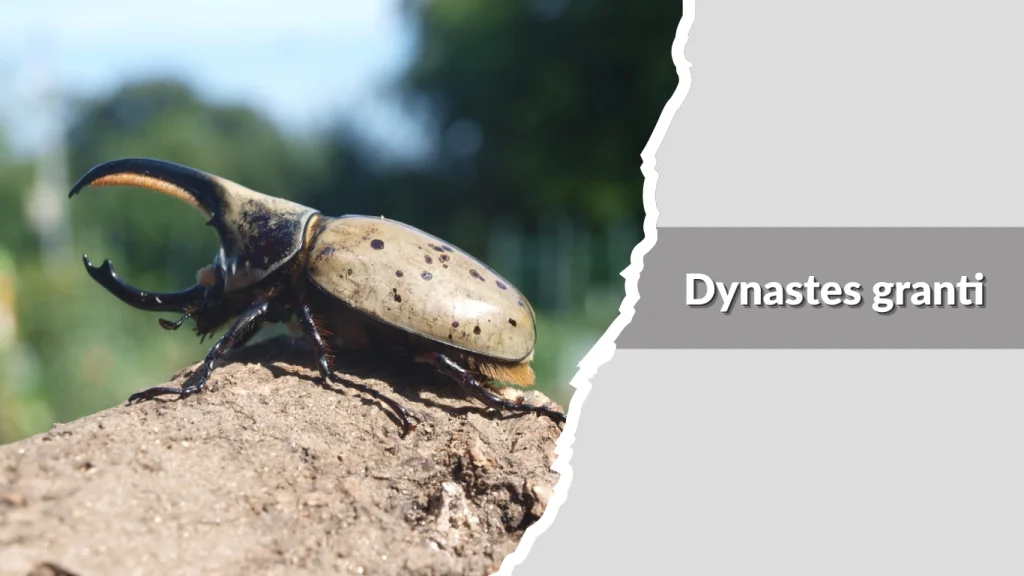
The Western Hercules Beetle (Dynastes granti), native to the southwestern United States, is a striking species closely related to the Eastern Hercules Beetle. Its beautiful coloration and large horns make it one of the most admired beetles in North America.
Identification
- Males possess long, curved horns on the head and thorax.
- Females are smaller and hornless.
- Elytra (wing covers) are pale gray or silvery-white with black spotting.
- Adults range from 2 to 2.5 inches long.
Habitat
Western Hercules beetles inhabit oak and pine forests across Arizona, New Mexico, and northern Mexico. They prefer dry, mountainous regions with decaying logs and rich organic soil for larval development.
Behaviors
Males use their horns to battle over mates, flipping rivals in impressive displays of strength. They are nocturnal and often found flying near lights during summer nights. Despite their size, they are gentle and non-aggressive.
Diet and Lifecycle
Larvae feed on decomposing hardwood and roots, while adults consume fruit, tree sap, and plant juices. The life cycle takes about one to two years, with the larval stage lasting the longest before metamorphosis into adults in late summer.
13. Golofa Porteri
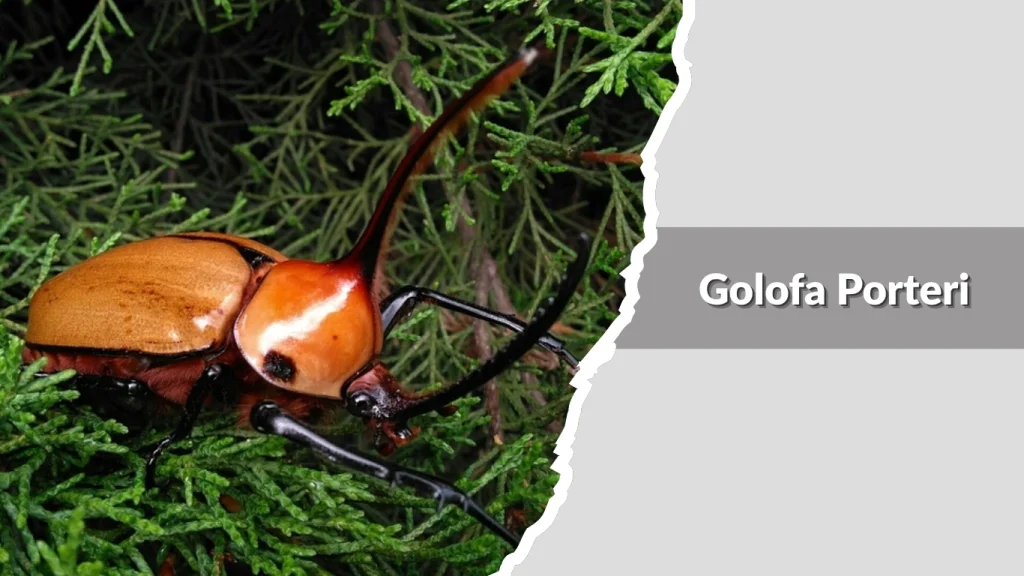
The Golofa porteri is a magnificent rhinoceros beetle species native to South America, known for its slender, elongated horn and golden-brown sheen. This elegant beetle is admired by collectors for its striking appearance and gentle nature, despite its warrior-like build.
Identification
- Males have a long, thin horn extending from the head and a smaller thoracic horn.
- Females are hornless and more rounded in shape.
- Body color ranges from golden brown to reddish-brown with a glossy finish.
- Adults grow between 2.5 and 3.5 inches long.
Habitat
Golofa porteri inhabits tropical and subtropical forests across countries like Ecuador, Peru, and Colombia. They thrive in humid environments with plenty of decaying wood and organic matter for larvae to develop.
Behaviors
Males use their elongated horns in ritualistic battles for dominance during the breeding season. They are nocturnal, emerging at night to feed and mate, and hide in soil or under logs during the day.
Diet and Lifecycle
Larvae feed on rotting wood and plant debris, aiding forest decomposition. Adult beetles consume sap, fermenting fruit, and nectar. Their full life cycle lasts about one to two years, with the larval stage comprising the majority of their development.
