

Stink bugs are shield-shaped insects known for releasing a strong odor when threatened. Belonging to the family Pentatomidae, there are over 4,700 species worldwide, many of which play important roles in ecosystems—some as agricultural pests, others as natural predators of harmful insects. This guide explores 15 common types of stink bugs, detailing their appearance, habitats, behaviors, lifecycles, and diets. From notorious pests like the Brown Marmorated Stink Bug to beneficial predators like the Spined Soldier Bug, discover how these diverse insects impact both crops and nature.
1. Brown Marmorated Stink Bug

The Brown Marmorated Stink Bug (Halyomorpha halys) is one of the most widespread and recognizable stink bug species in the world. Native to East Asia (China, Japan, Korea), it has become a major invasive pest in North America and Europe, where it damages crops and becomes a household nuisance during colder months. This species is infamous for emitting a strong, unpleasant odor when disturbed or crushed.
Identification
- Scientific name: Halyomorpha halys
- Size: 12–17 mm long.
- Color: Mottled brown or grayish-brown.
- Shape: Shield-shaped body typical of stink bugs.
- Distinctive features:
- Alternating light and dark bands on the antennae.
- Light and dark markings along the edge of the abdomen.
- Smooth, rounded shoulders (unlike some native stink bugs).
- Alternating light and dark bands on the antennae.
Habitat
Brown Marmorated Stink Bugs are found in fields, orchards, gardens, and wooded areas. During the warm months, they live outdoors feeding on fruits, vegetables, and ornamental plants. In late fall, they seek shelter indoors, often clustering in attics, walls, and window frames to overwinter. They prefer warm, dry environments for hibernation, making homes and buildings ideal refuges.
Behaviors
This species is highly invasive and capable of rapid population growth. Adults are strong fliers, easily moving between crops and buildings. When threatened, they release a pungent chemical from glands in the abdomen as a defense mechanism. They are not harmful to humans or pets but are considered major agricultural pests, causing extensive damage to fruit trees, soybeans, corn, and other crops.
Lifecycle & Diet
The Brown Marmorated Stink Bug undergoes five nymphal stages before reaching adulthood, completing its life cycle in one to two generations per year depending on climate.
- Eggs: Laid in clusters on the underside of leaves (20–30 eggs per cluster).
- Nymphs: Small and blackish-red, gradually developing the shield shape and coloration of adults.
- Adults: Live several months and overwinter in sheltered areas.
- Diet: Feeds on plant sap from fruits, vegetables, legumes, and ornamental plants—especially apples, peaches, soybeans, and tomatoes.
2. Green Stink Bug
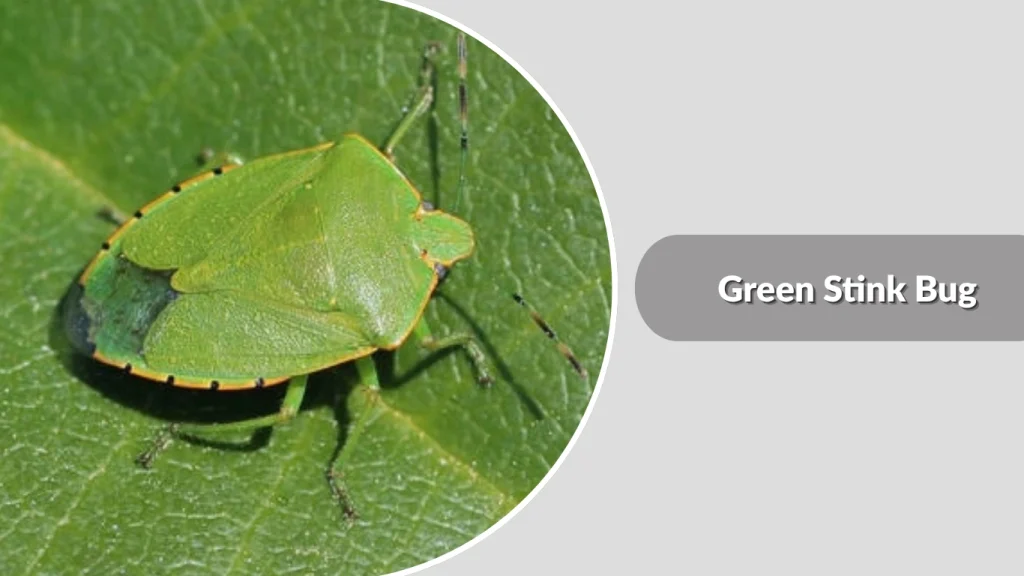
The Green Stink Bug (Chinavia hilaris) is a common North American species easily recognized by its bright green color and distinctive odor. Found in gardens, fields, and forests, it feeds on a wide range of plants and crops. While often seen as a pest, it plays a role in natural ecosystems by feeding on both wild and cultivated vegetation.
Identification
- Scientific name: Chinavia hilaris
- Size: 12–18 mm long.
- Color: Bright green with narrow yellow or orange margins along the body.
- Shape: Shield-shaped, typical of stink bugs.
- Distinctive feature: Small black dot at the tip of the scutellum (the triangular area on the back).
Habitat
The Green Stink Bug inhabits gardens, crop fields, forests, and grasslands across North and Central America. It prefers warm climates and is frequently found on soybeans, corn, tomatoes, and fruit trees. During the colder months, adults seek shelter under bark, leaf litter, or in buildings.
Behaviors
Adults and nymphs feed by piercing plant tissues and sucking out sap, which can cause fruit deformities and reduced crop yields. They emit a strong odor when handled or threatened. Green Stink Bugs are most active from late spring through fall, with adults flying from field to field in search of food or mates.
Lifecycle & Diet
Their life cycle includes egg, five nymphal stages, and adult, with two or more generations per year in warm climates. Eggs are laid in clusters on the underside of leaves.
- Nymph diet: Tender plant stems and young fruits.
- Adult diet: Fruits, vegetables, legumes, and grains (especially soybeans and tomatoes).
3. Southern Green Stink Bug
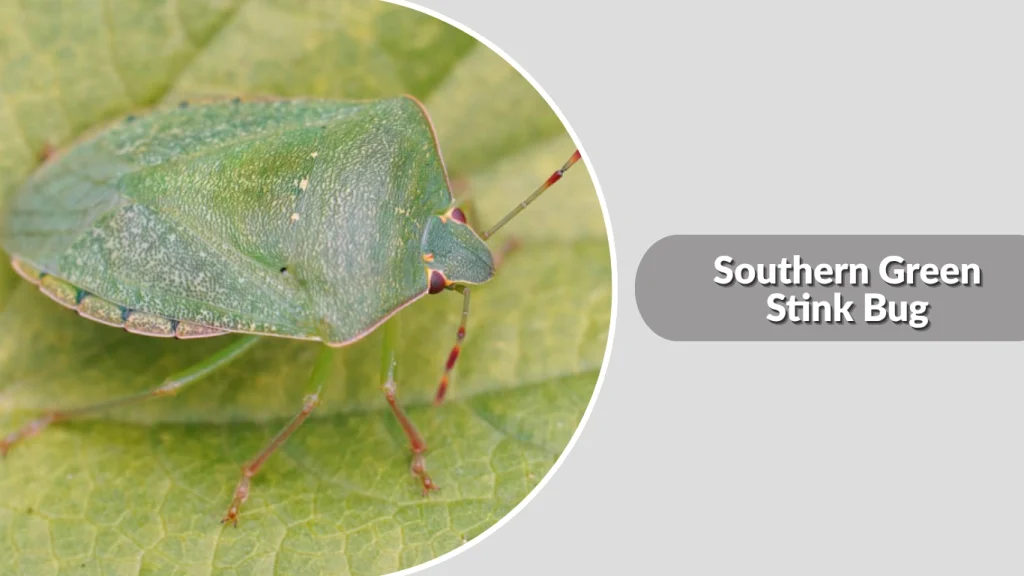
The Southern Green Stink Bug (Nezara viridula) is a global pest species found in tropical and subtropical regions worldwide. Originally from Africa, it has spread across Asia, the Americas, and Europe. It is one of the most economically important stink bugs, attacking a wide variety of crops.
Identification
- Scientific name: Nezara viridula
- Size: 12–17 mm long.
- Color: Bright green, sometimes turning yellowish in cold weather.
- Shape: Broad, shield-like body.
- Distinctive feature: Small black dot on each wing membrane and a distinct pale line across the shoulders.
Habitat
Southern Green Stink Bugs live in farmlands, gardens, and meadows, preferring legume crops like beans, soybeans, and peas. They are especially common in warm and humid regions such as the southern U.S., South America, Asia, and Africa. They overwinter in weedy areas or plant debris.
Behaviors
These stink bugs are voracious feeders, piercing fruits and pods to suck sap, which results in shriveled seeds and deformed fruits. They are strong fliers and can quickly infest large crop areas. Adults emit a pungent odor when threatened and can reproduce rapidly in favorable climates.
Lifecycle & Diet
The Southern Green Stink Bug completes its life cycle in 6–8 weeks, producing multiple generations each year in warm regions. Females lay eggs in tight clusters on leaves.
- Nymph diet: Leaves, stems, and soft fruits.
- Adult diet: A wide range of crops including soybeans, tomatoes, cotton, citrus, and beans.
4. Brown Stink Bug

The Brown Stink Bug (Euschistus servus) is a widespread species in North America, often found in gardens, agricultural fields, and woodlands. It is known for damaging crops like corn, cotton, and soybeans, where it feeds by piercing plant tissue and extracting sap. While less invasive than the brown marmorated stink bug, it remains an important agricultural pest in the southern and central United States.
Identification
- Scientific name: Euschistus servus
- Size: 11–15 mm long.
- Color: Light to dark brown, sometimes with reddish or yellowish undertones.
- Shape: Broad, shield-shaped body.
- Distinctive feature: Sharp, pointed shoulders and small black spots on the wings.
Habitat
Brown Stink Bugs inhabit farmlands, gardens, forest edges, and grasslands throughout North and Central America. They thrive in areas with dense vegetation and a steady supply of host plants. Adults often overwinter under plant debris, tree bark, or in leaf litter.
Behaviors
Adults and nymphs are sap-feeders, targeting fruits, vegetables, and grains. Feeding damage appears as small sunken spots or shriveled seeds. Adults are strong fliers and often move between wild hosts and cultivated crops. When disturbed, they release the typical stink bug odor as a defense mechanism.
Lifecycle & Diet
The Brown Stink Bug’s life cycle includes egg, five nymphal stages, and adult, with one or two generations annually. Eggs are laid on the undersides of leaves in neat clusters.
- Nymph diet: Tender stems, fruit pods, and young leaves.
- Adult diet: Corn, soybeans, tomatoes, cotton bolls, and various weeds.
5. Red-shouldered Stink Bug

The Red-shouldered Stink Bug (Thyanta custator) is an attractive and easily recognizable stink bug species due to its green body and reddish coloration near the shoulders. Found across North America, it feeds on a wide range of plants but rarely causes severe damage compared to other pest species.
Identification
- Scientific name: Thyanta custator
- Size: 10–14 mm in length.
- Color: Pale green with red or pinkish markings on the shoulders (pronotum).
- Shape: Smooth, rounded shield-shaped body.
- Distinctive feature: Reddish shoulders and a small pale dot in the center of the back.
Habitat
This species occurs in gardens, meadows, and farmlands throughout the United States, Mexico, and Central America. It is often seen on beans, corn, soybeans, and clover, especially during the warmer months. Adults overwinter under leaf litter or plant residue.
Behaviors
Red-shouldered Stink Bugs are generalist feeders, using their piercing-sucking mouthparts to extract sap from leaves, stems, and developing fruits. They are moderately active flyers and emit a mild odor when disturbed. Compared to other stink bugs, their feeding causes only minor cosmetic damage on most crops.
Lifecycle & Diet
The species typically completes its life cycle in one year, with adults emerging in late spring and laying eggs through summer.
- Nymph diet: Leaves and soft stems of legumes and wild plants.
- Adult diet: Soybeans, alfalfa, clover, and corn, as well as garden vegetables and weeds.
6. Forest Stink Bug

The Forest Stink Bug (Chlorochroa uhleri) is a native North American species commonly found in wooded areas, grasslands, and agricultural fields near forests. Although it primarily feeds on wild plants, it can sometimes become a minor pest of crops such as alfalfa, wheat, and canola. Its green coloration helps it blend easily with foliage, offering excellent camouflage.
Identification
- Scientific name: Chlorochroa uhleri
- Size: 11–15 mm long.
- Color: Bright to olive green, with pale yellow edges on the thorax and abdomen.
- Shape: Shield-shaped, slightly elongated body.
- Distinctive feature: Yellow to cream-colored border along the pronotum and wings; green legs and antennae.
Habitat
Forest Stink Bugs are distributed widely across western and central North America, especially in wooded areas, shrublands, and grasslands. They prefer habitats with dense vegetation and mixed crops near natural plant hosts.
Behaviors
Adults and nymphs feed on plant sap using their piercing mouthparts. While primarily associated with wild plants, large populations can move into cropland during late summer, feeding on seeds and pods. When disturbed, they release a characteristic odor as a defense mechanism.
Lifecycle & Diet
The Forest Stink Bug has one generation per year, overwintering as adults under leaf litter or bark. They emerge in spring to feed and reproduce.
- Larval diet: Grasses, alfalfa, and weeds.
- Adult diet: Seeds and sap from wild and cultivated plants such as wheat, barley, and mustard.
7. Rice Stink Bug

The Rice Stink Bug (Oebalus pugnax) is a well-known agricultural pest native to the southern United States, Central America, and parts of South America. It primarily attacks rice crops but also feeds on other cereals, making it a major threat to grain production.
Identification
- Scientific name: Oebalus pugnax
- Size: 10–12 mm long.
- Color: Straw-colored to light brown with small black speckles.
- Shape: Narrower and more elongated than most stink bugs.
- Distinctive feature: Sharp, pointed shoulders and dark-tipped antennae.
Habitat
Rice Stink Bugs are found in rice fields, grain crops, and grassy areas across the southern U.S. (especially in Texas, Louisiana, Mississippi, and Arkansas). They prefer moist environments where rice and wild grasses grow.
Behaviors
These bugs are highly mobile and often migrate between wild grasses and rice fields. They feed on developing grains, causing shriveled seeds and reduced yields. Heavy infestations can significantly impact rice quality and production. They are active during the warm months and can produce multiple generations per season.
Lifecycle & Diet
Their lifecycle includes egg, nymph, and adult stages, completed in 4–6 weeks under ideal conditions. Eggs are laid in clusters on grass blades or rice leaves.
- Nymph diet: Rice grains and wild grass seeds.
- Adult diet: Rice, barley, wheat, sorghum, and other cereal crops.
8. One-spotted Stink Bug
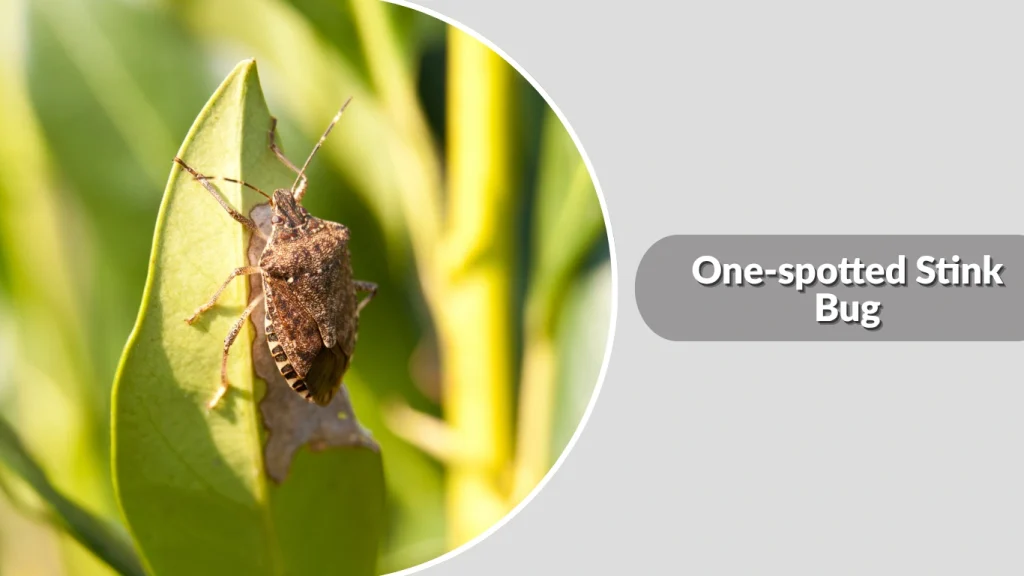
The One-spotted Stink Bug (Euschistus variolarius) is a widespread North American species known for the distinctive single dark spot on its back. It inhabits both natural and agricultural environments, feeding on various crops and wild plants. Though typically not a severe pest, it can cause noticeable damage in large numbers, particularly in soybean and corn fields.
Identification
- Scientific name: Euschistus variolarius
- Size: 11–15 mm long.
- Color: Brownish-gray with mottled patterns.
- Shape: Broad, shield-shaped body.
- Distinctive feature: A single dark circular spot on the scutellum (center of the back).
Habitat
The One-spotted Stink Bug is found throughout the United States, Canada, and Mexico, thriving in grasslands, meadows, and crop fields. It is especially common in regions where soybeans, corn, and grains are cultivated.
Behaviors
Adults and nymphs are sap-feeders, puncturing stems, leaves, and pods to extract fluids. Damage appears as discolored or shriveled areas on fruits and seeds. They are strong fliers, moving between wild hosts and agricultural plants throughout the summer. Like other stink bugs, they emit a strong odor when threatened.
Lifecycle & Diet
This species typically produces one generation per year. Adults overwinter in leaf litter or under bark and emerge in spring to lay eggs.
- Nymph diet: Tender plant stems and pods.
- Adult diet: Soybeans, corn, clover, alfalfa, and wild grasses.
9. Spined Soldier Bug
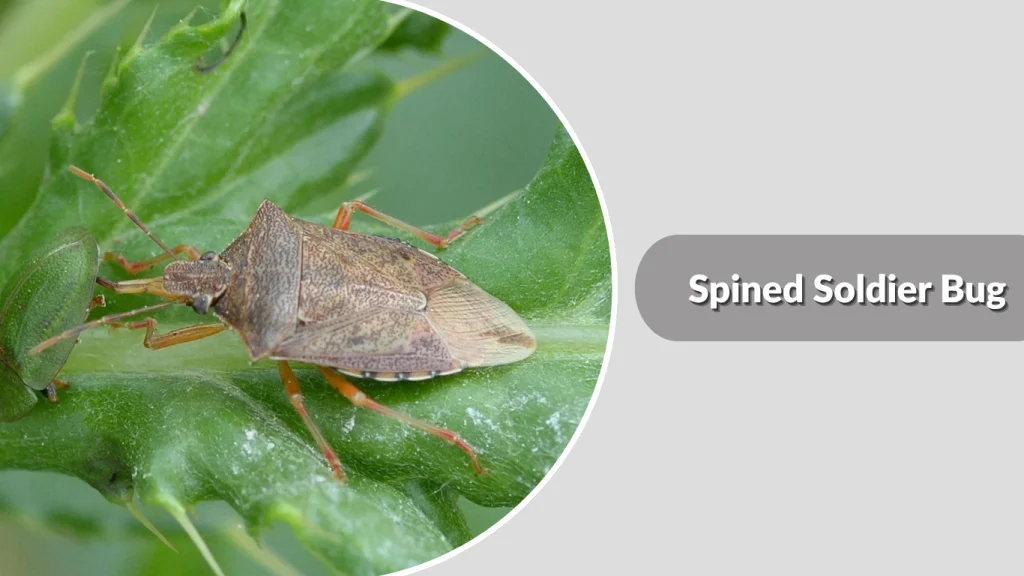
The Spined Soldier Bug (Podisus maculiventris) is a beneficial predatory stink bug native to North America. Unlike most stink bugs, it feeds on other insects—particularly caterpillars and beetle larvae—making it an important natural pest controller in gardens and farms. It is often used in biological pest management programs.
Identification
- Scientific name: Podisus maculiventris
- Size: 11–13 mm long.
- Color: Brown to grayish-tan with pale legs.
- Shape: Broad and shield-shaped, similar to pest stink bugs.
- Distinctive feature: Two sharp spines projecting from the shoulders; pale underside with dark markings.
Habitat
This species inhabits gardens, forests, fields, and orchards throughout North and Central America. It thrives wherever prey insects (such as caterpillars) are abundant, including vegetable gardens, cornfields, and fruit orchards.
Behaviors
The Spined Soldier Bug is predatory, feeding on soft-bodied insects such as armyworms, Colorado potato beetle larvae, and gypsy moth caterpillars. It ambushes its prey using a sharp, piercing beak to inject digestive enzymes. Though beneficial, it may occasionally bite humans if mishandled, causing mild irritation.
Lifecycle & Diet
This species usually has two to three generations per year, depending on temperature and food availability. Females lay clusters of barrel-shaped eggs on leaves near prey populations.
- Nymph and adult diet: Caterpillars, beetle larvae, and other soft-bodied insects.
- Ecological role: Acts as a natural predator that helps reduce pest populations in crops and gardens.
10. Dusky Stink Bug
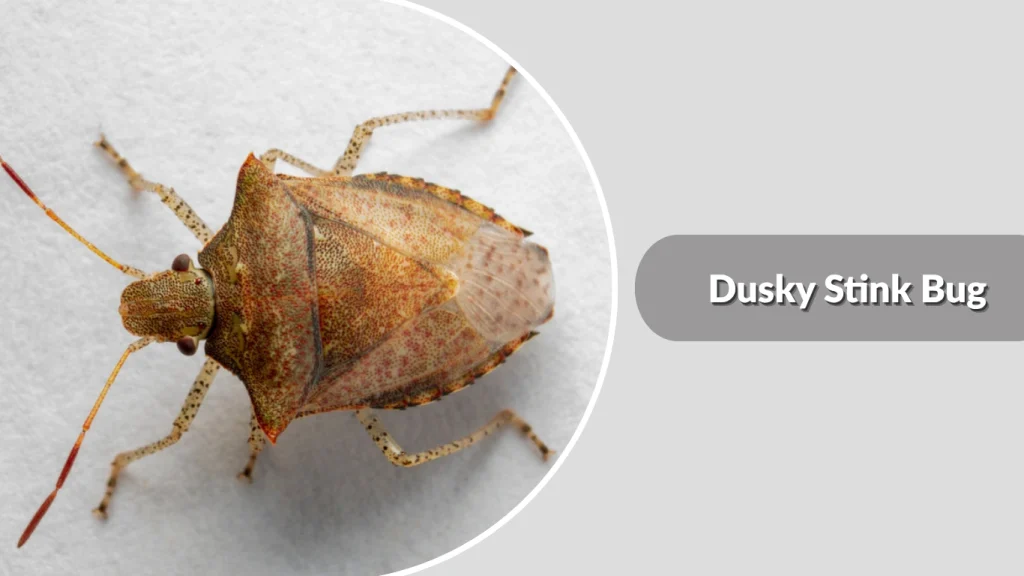
The Dusky Stink Bug (Euschistus tristigmus) is a widespread species in North and Central America, often found in agricultural fields, meadows, and forest edges. It is considered a minor pest, but heavy infestations can cause noticeable damage to crops such as soybeans, corn, and cotton. Its muted coloration helps it blend into soil and plant debris.
Identification
- Scientific name: Euschistus tristigmus
- Size: 11–15 mm long.
- Color: Dull brown to grayish-brown.
- Shape: Oval and shield-shaped.
- Distinctive feature: Dark speckles on the pronotum (area behind the head) and lighter patches on the wings.
Habitat
Dusky Stink Bugs inhabit grasslands, woodlands, and agricultural regions throughout North America, especially in the southeastern United States and Mexico. They prefer areas with dense vegetation or crops such as beans, tomatoes, and corn.
Behaviors
Both adults and nymphs feed by piercing plant tissues and sucking sap, which leads to discolored seeds, misshapen fruit, and wilting. They are nocturnal feeders, hiding under leaves or debris during the day. Like other stink bugs, they produce a strong odor when threatened or crushed.
Lifecycle & Diet
The Dusky Stink Bug completes its life cycle in 6–8 weeks, often producing two or more generations per year in warm regions.
- Nymph diet: Tender stems and developing fruits.
- Adult diet: Soybeans, corn, tomatoes, cotton, and a variety of wild plants.
11. Two-spotted Stink Bug
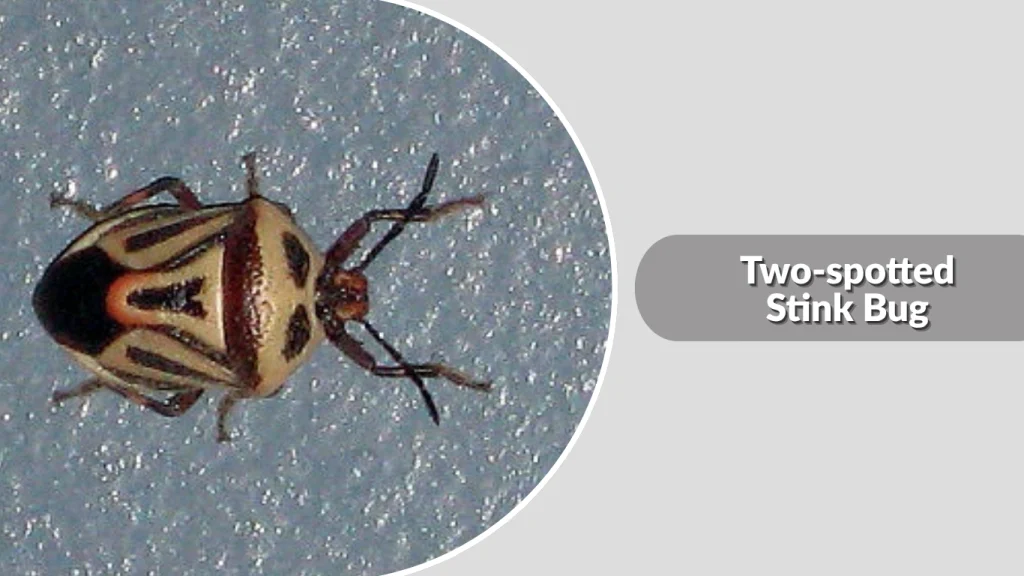
The Two-spotted Stink Bug (Perillus bioculatus) is a beneficial predatory stink bug found across North America. Recognizable by the two dark spots on its wings, this species preys on harmful crop pests such as the Colorado potato beetle and other larvae. Farmers and gardeners often welcome it as a natural biological control agent.
Identification
- Scientific name: Perillus bioculatus
- Size: 10–12 mm long.
- Color: Black with bright red or orange markings; wings show two prominent dark spots.
- Shape: Shield-shaped, compact body.
- Distinctive feature: Two black circular spots on the light-colored wing covers; bright contrasting colors serve as warning coloration.
Habitat
Two-spotted Stink Bugs are found in gardens, farmlands, and forest edges throughout the United States, Canada, and Mexico. They prefer environments with high populations of prey insects, particularly potato fields and vegetable gardens.
Behaviors
This species is predatory, using its needle-like beak to inject digestive enzymes into soft-bodied prey such as caterpillars and beetle larvae. It is diurnal and active on plants during the day. Although beneficial, it may emit an odor when disturbed, similar to pest stink bugs.
Lifecycle & Diet
They produce two or more generations per year, depending on climate. Eggs are laid in clusters near prey-rich areas, and both nymphs and adults are active hunters.
- Nymph and adult diet: Colorado potato beetle larvae, caterpillars, aphids, and other soft-bodied insects.
- Ecological role: Serves as an important biological control agent in crop protection.
12. Brown-winged Green Stink Bug
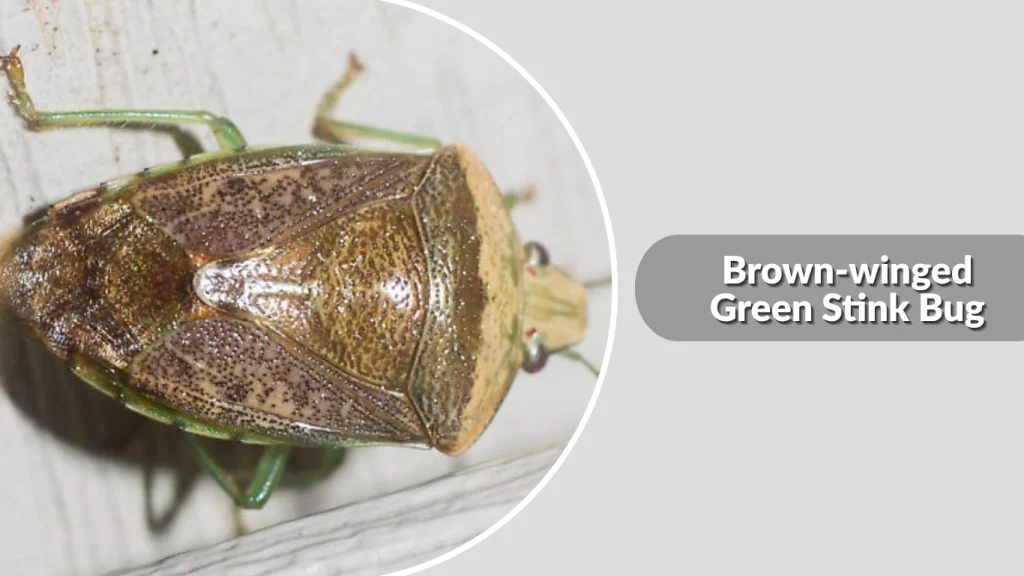
The Brown-winged Green Stink Bug (Plautia stali) is a widespread species native to East and Southeast Asia. It has become a significant agricultural pest, especially in fruit orchards and vegetable farms. Recognized by its green body and distinct brown-tinted wings, it damages crops by piercing fruits and stems to suck sap.
Identification
- Scientific name: Plautia stali
- Size: 12–16 mm long.
- Color: Bright green body with brownish or bronze-tinted wing covers.
- Shape: Broad, shield-shaped insect with smooth edges.
- Distinctive feature: Brownish wings and yellow margins along the thorax; emits a strong odor when handled.
Habitat
This species inhabits orchards, gardens, and croplands throughout Japan, China, India, Southeast Asia, and Australia. It prefers warm, humid environments where fruiting plants and vegetables are abundant.
Behaviors
Adults and nymphs feed on fruits, stems, and seeds, causing discoloration and spoilage. They are particularly harmful to crops such as citrus, apples, pears, soybeans, and tomatoes. During colder seasons, adults often seek shelter in human structures or under bark.
Lifecycle & Diet
The Brown-winged Green Stink Bug completes its life cycle in 6–8 weeks, producing several generations per year in warm regions.
- Nymph diet: Tender stems, fruits, and pods.
- Adult diet: A wide range of fruits, vegetables, and legumes.
13. Harlequin Bug
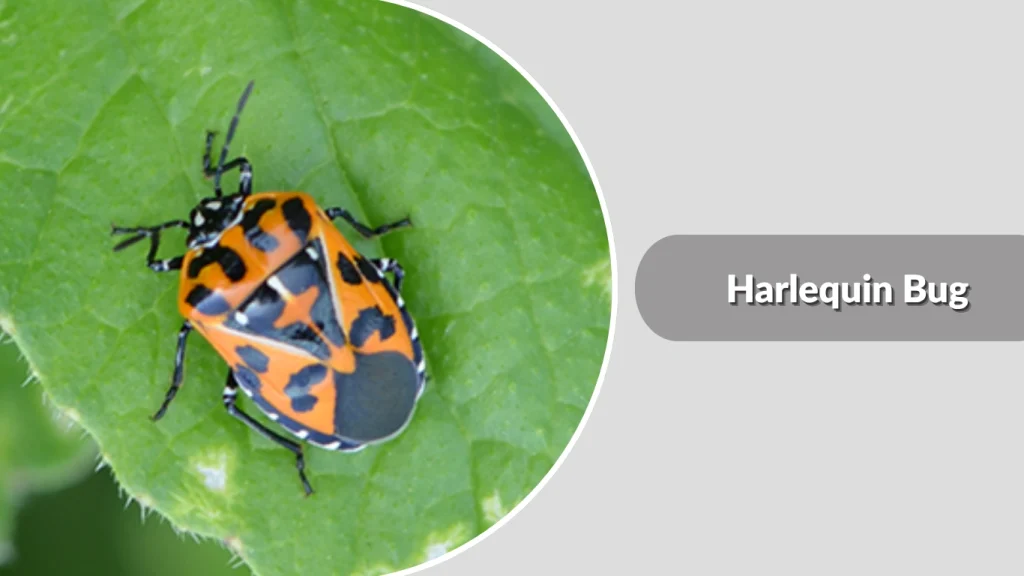
The Harlequin Bug (Murgantia histrionica) is one of the most colorful and easily recognized stink bugs. Native to Central America, it has spread widely across the southern United States, where it feeds on cruciferous plants like cabbage, broccoli, and kale. Its bright black, orange, and yellow pattern serves as a warning to predators.
Identification
- Scientific name: Murgantia histrionica
- Size: 8–12 mm long.
- Color: Glossy black with orange, red, or yellow markings.
- Shape: Oval and shield-like, slightly smaller than most stink bugs.
- Distinctive feature: Bold, harlequin-like coloration that warns of its foul odor and bitter taste.
Habitat
The Harlequin Bug thrives in warm climates, found in gardens, farms, and weedy fields across the southern United States, Mexico, and Central America. It prefers areas with cruciferous crops and wild mustard plants.
Behaviors
This species is a serious pest of the cabbage family. Both nymphs and adults feed on plant sap by piercing stems and leaves, causing yellowing, wilting, and even plant death. Their bright colors deter predators such as birds and spiders.
Lifecycle & Diet
The Harlequin Bug has two to three generations per year in warm regions. Eggs are barrel-shaped and laid in rows on the underside of leaves, often appearing in black-and-white bands.
- Nymph diet: Leaves and stems of cruciferous vegetables (e.g., cabbage, kale, mustard).
- Adult diet: The same as nymphs—preferring members of the mustard and broccoli families.
14. Redbanded Stink Bug
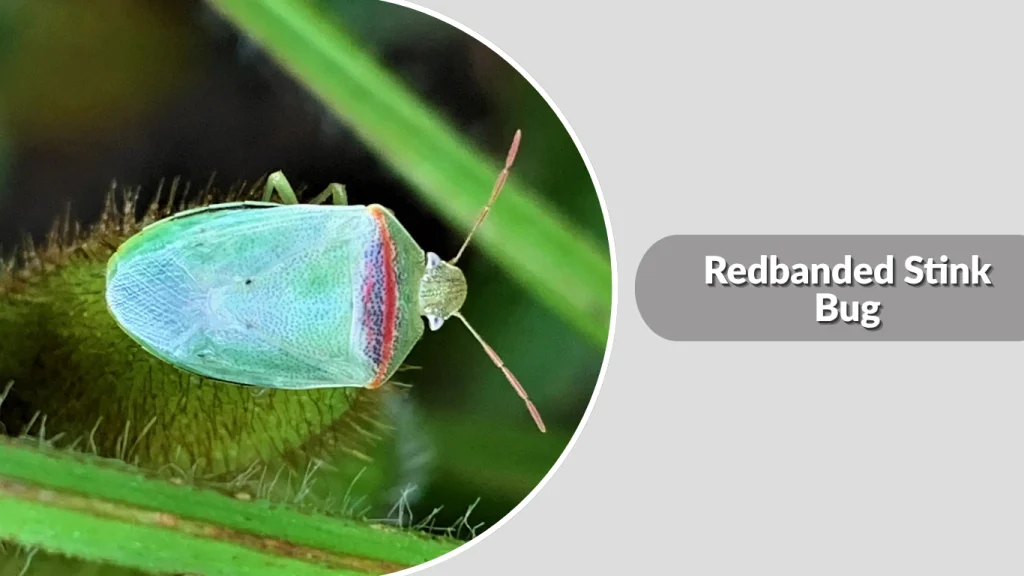
The Redbanded Stink Bug (Piezodorus guildinii) is a significant agricultural pest native to Central and South America, now found throughout the southern United States. Named for the reddish band across its back, this species primarily targets soybean crops, where it causes severe yield loss and seed damage.
Identification
- Scientific name: Piezodorus guildinii
- Size: 9–12 mm long.
- Color: Bright green with a distinctive reddish or purplish band across the pronotum (behind the head).
- Shape: Shield-shaped body with pointed shoulders.
- Distinctive feature: Red band across the back and small black spots at the tips of the wings.
Habitat
The Redbanded Stink Bug is found in soybean fields, grasslands, and agricultural zones throughout South America, Central America, and the southern United States. It prefers warm, humid regions, especially near legume crops.
Behaviors
This stink bug is a serious pest of soybeans and other legumes. Both adults and nymphs pierce seed pods to suck plant juices, causing seed shriveling, premature pod drop, and reduced oil content in soybeans. Adults are strong fliers and migrate between fields as crops mature.
Lifecycle & Diet
The life cycle is completed in 5–7 weeks, with several generations per year in tropical climates. Eggs are laid in clusters on leaves or pods.
- Nymph diet: Pods and developing seeds of soybeans and other legumes.
- Adult diet: Soybeans, beans, alfalfa, and clover.
15. Blue Shield Bug

The Blue Shield Bug (Zicrona caerulea) is one of the most visually striking stink bug species, recognized by its metallic blue or bluish-green coloration. Unlike most stink bugs, it is predatory, feeding on other insects rather than plants, making it beneficial for natural pest control. It is found widely across Europe, Asia, and North America.
Identification
- Scientific name: Zicrona caerulea
- Size: 8–10 mm long.
- Color: Shiny metallic blue, blue-green, or turquoise.
- Shape: Compact, shield-shaped body with smooth surface.
- Distinctive feature: Iridescent blue coloration and small, rounded body shape.
Habitat
The Blue Shield Bug inhabits grasslands, meadows, forest edges, and gardens, often found on plants where prey insects like caterpillars and beetle larvae are abundant. It prefers temperate regions with moderate humidity.
Behaviors
This species is a predator, using its sharp beak to pierce and consume soft-bodied insects, especially caterpillars, aphids, and beetle larvae. Despite its bright appearance, it rarely emits odor unless threatened. It contributes positively to ecosystems by helping regulate pest populations.
Lifecycle & Diet
Blue Shield Bugs have one or two generations per year, depending on climate. Females lay small clusters of eggs on leaves near prey populations.
- Nymph and adult diet: Caterpillars, beetle larvae, aphids, and other small insects.
- Ecological role: Beneficial predator that helps control crop pests naturally.
