
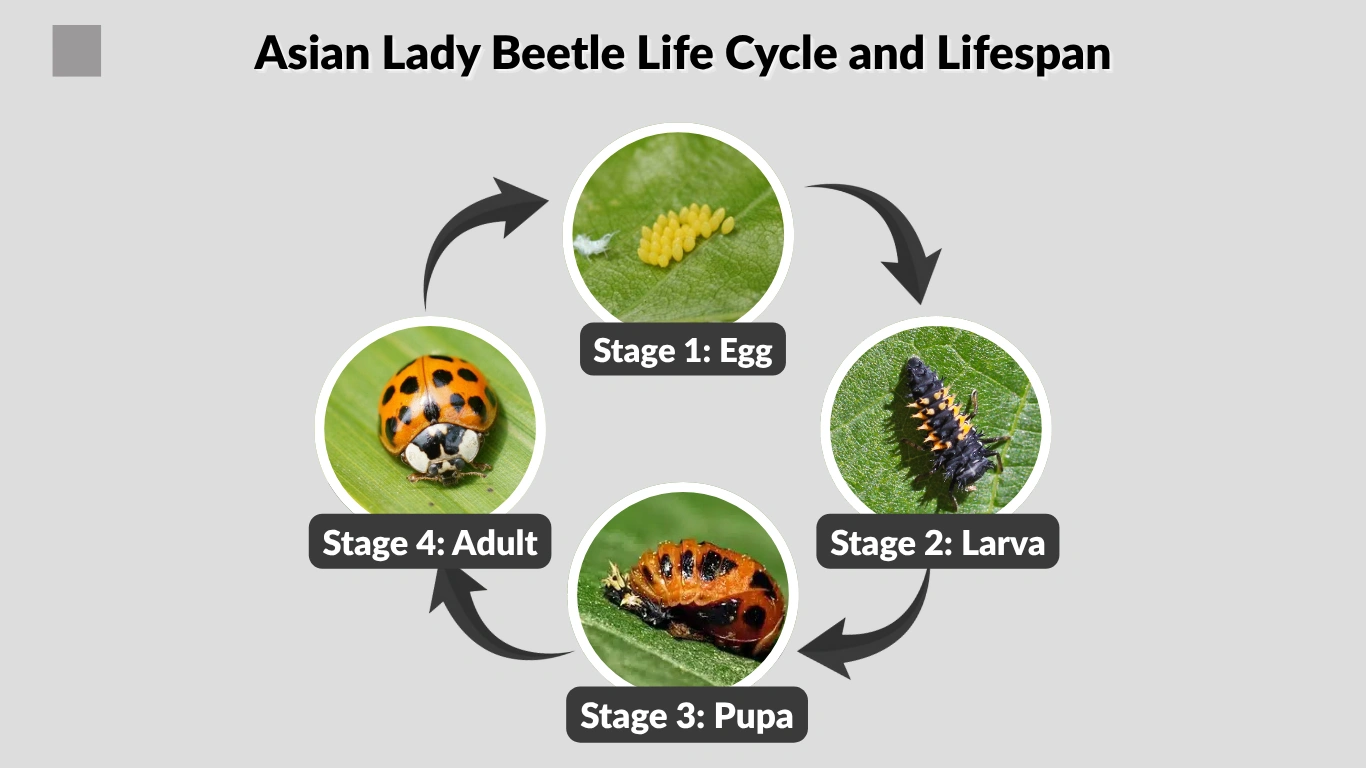
The Asian lady beetle has one of the most adaptable life cycles among insects. Originating in Asia, it was introduced to North America to control agricultural pests but quickly became an invasive species. Understanding its life cycle — from egg to adult — helps explain how these beetles thrive in gardens and even complete their life stages inside homes.
Overview of the Asian Lady Beetle Life Cycle
The life cycle of the Asian lady beetle consists of four main stages: egg, larva, pupa, and adult. The entire process typically takes 30 to 60 days, depending on temperature and food availability. Warmer climates accelerate their growth, allowing multiple generations each year.
Unlike native ladybugs, Asian lady beetles can reproduce quickly and survive indoors for months. Their adaptability to temperature, light, and food conditions makes them successful invaders. Adults emerge in spring, feed and mate during summer, and move indoors during fall to overwinter.
The cycle repeats annually, with populations peaking in late summer when food sources like aphids are abundant.
Stage 1: Egg
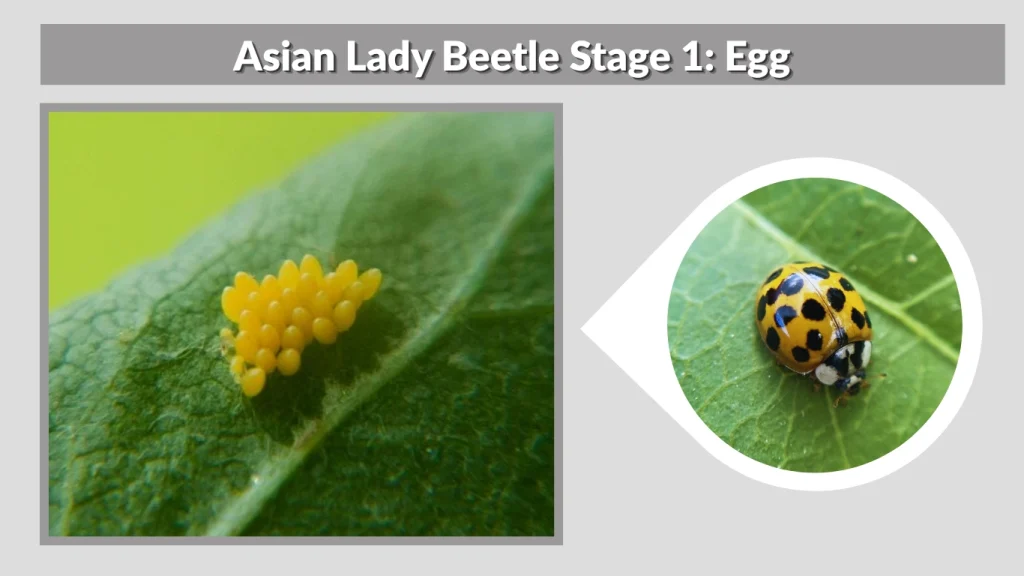
The egg stage is the first phase in the Asian lady beetle’s development. After mating, female beetles lay clusters of 20–30 tiny, oval, yellow eggs on the undersides of leaves. These locations are chosen carefully, usually near colonies of aphids or mites, which serve as the first food source for newly hatched larvae.
The eggs hatch within 3 to 5 days in warm conditions. Cooler temperatures or lack of sunlight can extend the incubation period by a few days. Females may lay hundreds of eggs over their lifetime, allowing rapid population growth — one reason infestations spread so easily.
Stage 2: Larva
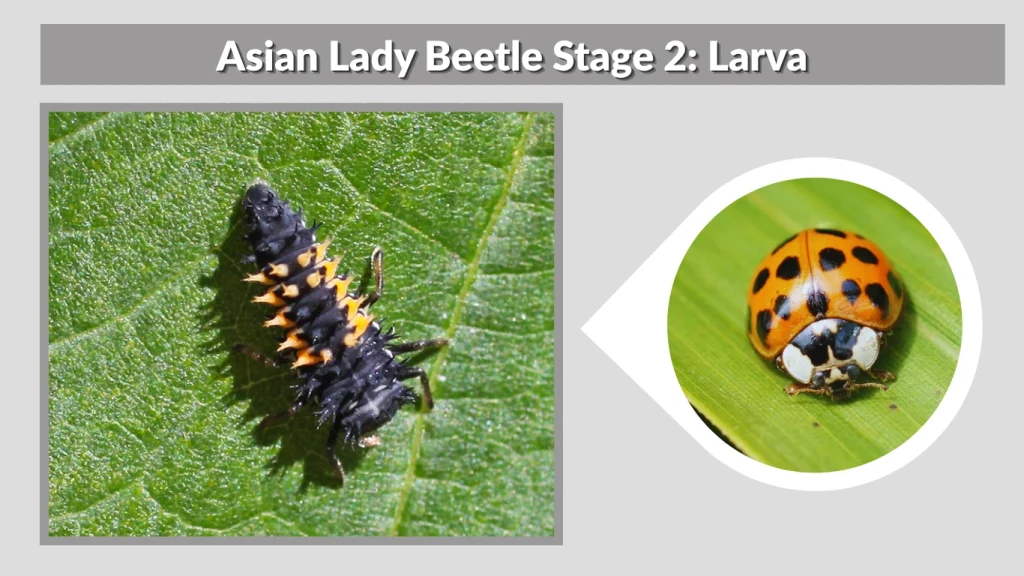
After hatching, the larvae begin feeding immediately. The larval stage is one of the most active parts of the beetle’s life cycle. Larvae are dark gray or black, with elongated, alligator-like bodies marked by orange or yellow stripes.
During this stage, larvae molt four times as they grow — known as instars — before reaching full size. The process lasts 10 to 14 days under ideal conditions. Each larva can consume up to 400 aphids, making them effective natural pest controllers outdoors.
However, Asian lady beetle larvae are more aggressive than native ladybug larvae. They not only compete for food but sometimes prey on other beetle larvae, contributing to their dominance in certain environments.
Stage 3: Pupa
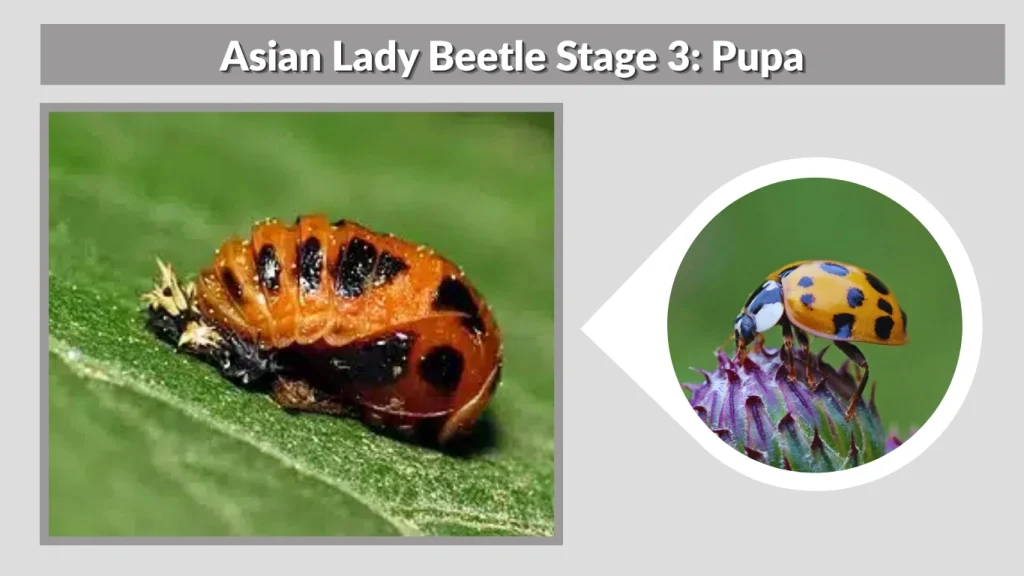
Once the larva matures, it attaches itself to a surface such as a leaf, stem, or wall to enter the pupal stage. At this point, the larva stops feeding and begins transformation into an adult beetle. The pupa is small, round, and orange or yellow with black markings.
This stage typically lasts 5 to 7 days, though temperature plays a key role — warmer conditions speed up development. Inside the pupa, the beetle undergoes a process called metamorphosis, where tissues reorganize and the adult form develops. When complete, the new beetle emerges, initially pale in color before darkening within hours.
The pupal stage is fragile, and heavy rainfall or human disturbance can affect survival rates. Yet in protected areas like house walls or leaf clusters, the transformation often succeeds.
Stage 4: Adult Asian Lady Beetle
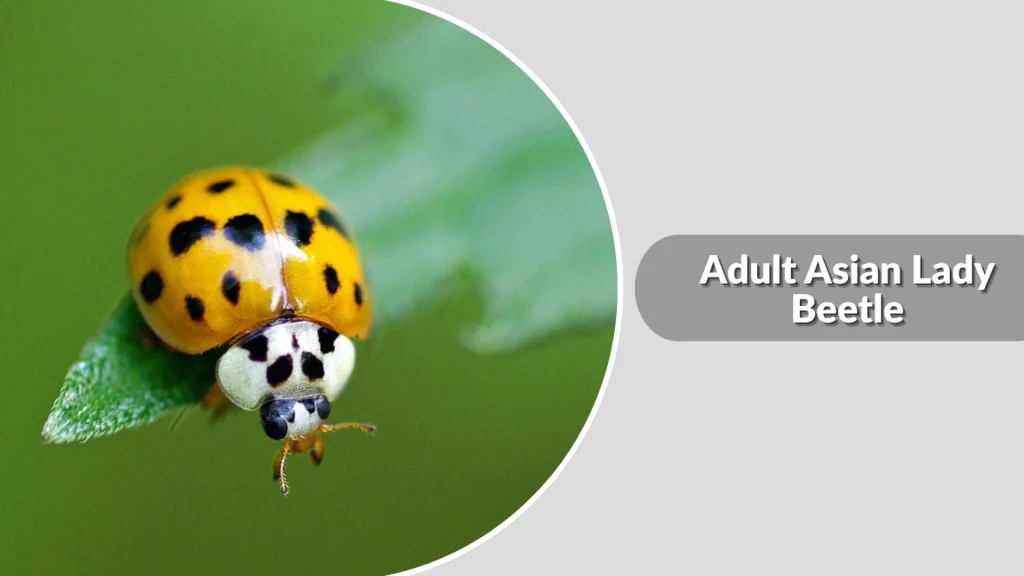
When the adult emerges, it’s ready to feed and reproduce within two weeks. Adult Asian lady beetles are oval, glossy, and vary in color from orange to deep red, with black spots ranging from zero to nineteen. Their most distinctive feature is the white “M” or “W” marking behind the head, separating them from native ladybugs.
Adult beetles live for 30 to 90 days outdoors but can survive longer indoors. During the summer, they feed on aphids, scale insects, and mites. When autumn arrives, they begin seeking shelter, entering homes, attics, or other warm areas to overwinter.
Indoors, the lack of predators and stable temperatures allow them to survive for months — sometimes up to a year — extending their normal lifespan. This ability explains why infestations often persist through winter without the beetles dying off naturally.
Asian Lady Beetle Life Cycle in Houses
Although the full life cycle usually happens outdoors, Asian lady beetles can complete it indoors if conditions are right. Warmth, light, and hidden crevices make houses suitable environments, especially near windows or attics.
Inside, females may lay eggs in undisturbed areas such as wall voids or behind curtains. If the larvae hatch successfully, they can feed on small insects or organic debris before pupating. However, indoor breeding is less common than overwintering — most indoor beetles enter in their adult stage and remain dormant until spring.
Their ability to survive without food and withstand cold makes them particularly resilient. Even in unheated spaces like basements or attics, they can remain inactive for months before reemerging.
The Multicolored Asian Lady Beetle Life Cycle
The multicolored Asian lady beetle (Harmonia axyridis), often referred to as the “harlequin ladybird,” is simply a color variation of the same species. Its life cycle follows the same four stages—egg, larva, pupa, and adult—but it’s known for greater adaptability and a wider range of colors, from pale yellow to deep red.
These beetles can thrive in both warm and cool climates, adjusting their breeding cycles according to environmental conditions. In southern regions, they may produce up to five generations per year, while in colder climates, typically only two. Their flexibility allows them to survive in agricultural, urban, and indoor settings, contributing to their rapid spread across the United States and Europe.
Asian Lady Beetle Lifespan
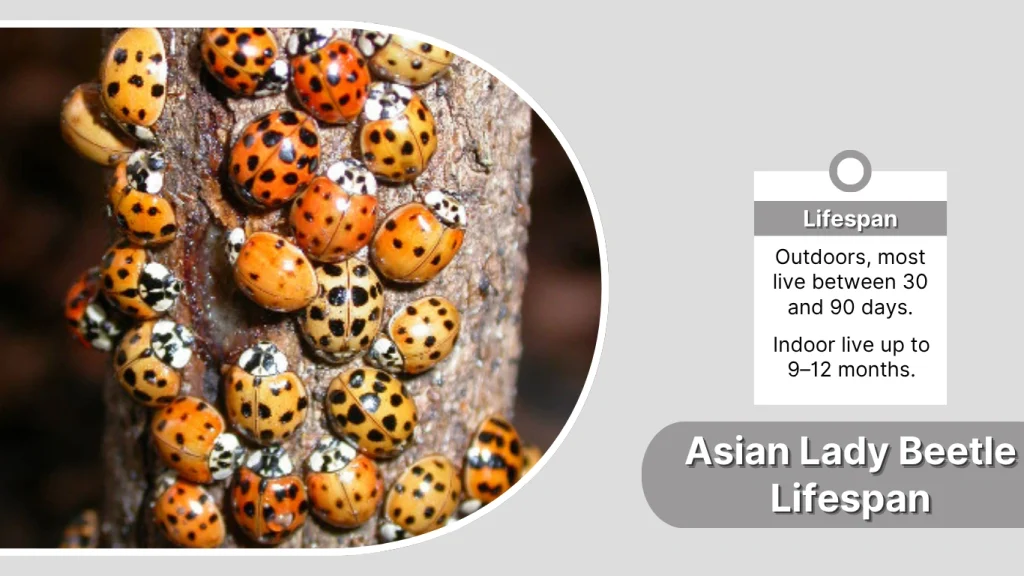
The lifespan of an Asian lady beetle varies based on temperature, habitat, and food availability. Outdoors, most live between 30 and 90 days, but when they find shelter indoors or during overwintering, their lifespan extends significantly.
Outdoor Lifespan
In nature, their lifespan depends heavily on weather and predation. Beetles emerging in spring live long enough to reproduce once or twice before dying off by late summer. Harsh winters typically shorten survival rates, though many overwinter as adults in sheltered outdoor spots such as under bark or leaf litter.
Indoor Lifespan
Inside homes, the story changes dramatically. Asian lady beetles can live up to 9–12 months when protected from extreme temperatures and predators. Homes provide stable conditions—warmth, light, and limited exposure to hazards—which allow them to survive through winter and sometimes beyond.
They don’t need much food during this period; they can conserve energy by remaining inactive. This explains why beetles found indoors in spring are often survivors from the previous fall’s infestation rather than newly hatched individuals.
Factors Influencing Lifespan
- Temperature: Warmer, stable conditions extend survival.
- Food Supply: Access to aphids and mites supports longer outdoor life.
- Shelter: Indoor or sheltered overwintering protects them from predators.
- Reproduction: Beetles that reproduce heavily tend to have shorter lifespans.
How Environment Affects the Asian Lady Beetle Life Cycle
Environmental conditions play a major role in determining how quickly Asian lady beetles grow and reproduce. Warm, humid weather accelerates their development, allowing multiple life cycles per year. In contrast, cold or dry conditions slow down reproduction and reduce egg survival.
During winter, adult beetles enter diapause, a dormant state where metabolism slows down drastically. This helps them conserve energy for months until temperatures rise again. Once spring returns, they resume activity, feeding and breeding rapidly to start the cycle anew.
Interestingly, when these beetles overwinter inside homes, artificial heat and light can disrupt their natural cycle. Some wake up prematurely and start moving around, which is why homeowners often notice activity during midwinter.
Managing and Breaking the Life Cycle Indoors
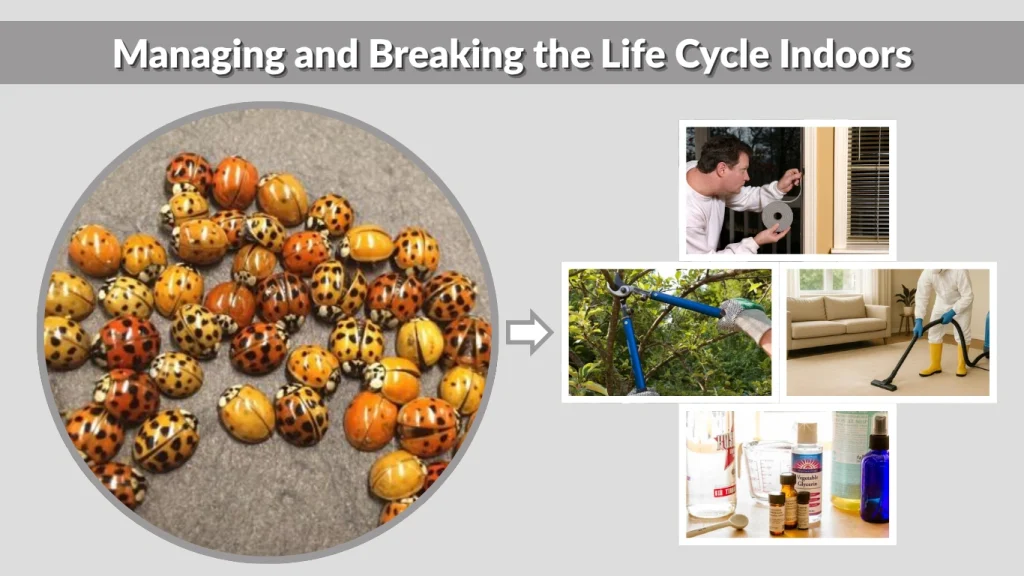
To control infestations, it’s important to break the beetle’s life cycle before they can reproduce or overwinter indoors.
Steps to Interrupt Their Cycle
- Seal Entry Points: Use caulk or weather stripping to block cracks, vents, and door gaps before fall.
- Vacuum Safely: Remove visible beetles gently using a vacuum and discard the bag outdoors.
- Clean Surfaces: Wipe infested areas with a vinegar-water solution to remove pheromone trails.
- Use Natural Repellents: Essential oils like peppermint or clove deter beetles without harming pets.
- Encourage Native Ladybugs: Supporting local ladybug species helps reduce competition and maintain ecological balance.
By targeting their overwintering stage, you prevent indoor infestations and limit their ability to restart the breeding cycle in spring.
Ecological Importance vs. Invasive Impact
Although Asian lady beetles are often considered pests, they do have some ecological benefits. They feed on aphids, scale insects, and mites, helping reduce pest pressure in gardens and farmlands. However, their invasive nature outweighs their advantages because they displace native ladybugs and dominate shared ecosystems.
Their rapid reproduction and extended lifespan make population control challenging. Supporting native species through habitat-friendly gardening—like avoiding heavy pesticide use—helps restore ecological balance naturally.
FAQs
How long is the Asian lady beetle life cycle?
The complete life cycle of an Asian lady beetle lasts between 30 and 60 days, depending on temperature and food availability. In warmer climates, they can complete several generations per year, while in cooler areas, only one or two cycles typically occur annually.
Where do Asian lady beetles lay their eggs?
Female beetles lay eggs on the undersides of leaves, close to aphid colonies or other small insects. Each female lays up to 1,000 eggs in her lifetime, typically in clusters of 20–30. These eggs hatch within three to five days in warm weather.
Can Asian lady beetles complete their life cycle indoors?
Yes, under ideal conditions. Warmth, light, and hidden spaces like attics or window frames allow them to survive and reproduce indoors. However, indoor breeding is rare; most beetles found inside are adults that have entered to overwinter rather than to reproduce.
What is the lifespan of an Asian lady beetle in a house?
Inside homes, Asian lady beetles can live up to 9–12 months, far longer than their outdoor lifespan of 2–3 months. Indoor environments provide steady warmth, shelter from predators, and limited need for food, helping them survive throughout winter.
What’s the difference between Asian and native ladybug life cycles?
While both species share the same four developmental stages, Asian lady beetles reproduce more frequently and live longer. They also overwinter indoors, unlike native ladybugs that remain outdoors. These differences give Asian beetles a stronger survival advantage but make them more invasive.
