
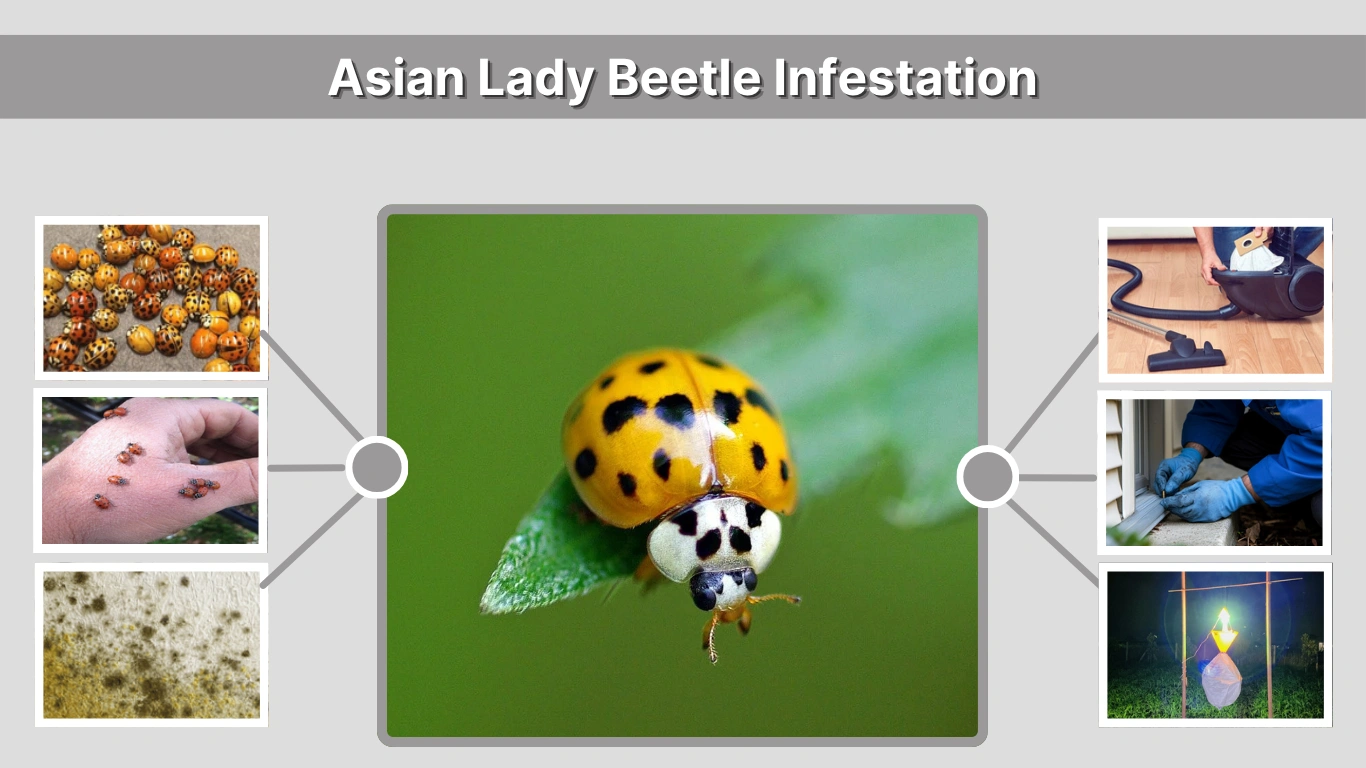
Asian lady beetle infestations are common during cooler months when these insects invade homes seeking warmth. While they look similar to harmless ladybugs, Asian lady beetles can quickly multiply and cause unpleasant odors, wall stains, and even minor allergic reactions. Understanding what causes an infestation and how to get rid of it helps prevent long-term household discomfort and damage.
What Is an Asian Lady Beetle Infestation?
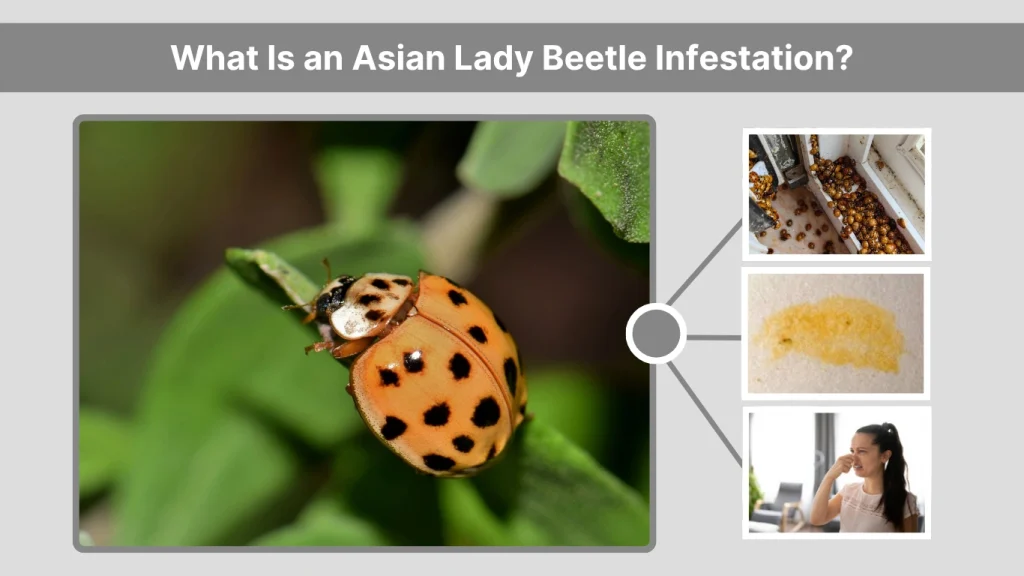
An Asian lady beetle infestation occurs when large numbers of these beetles gather inside or around homes. Unlike native ladybugs that remain outdoors, Asian lady beetles often cluster in warm indoor spaces like attics, ceilings, or window frames. They prefer bright, sunny areas and are especially noticeable on light-colored walls.
During fall, these beetles gather in groups of hundreds or even thousands as they prepare for winter. Once they find an entry point, they settle inside walls, crawlspaces, or behind furniture. While they don’t eat wood or fabrics, their secretions and large populations make them a frustrating nuisance.
Common signs of infestation include:
- Dozens of beetles visible near windows or light fixtures
- Yellowish stains or sticky spots on walls
- A foul, musty odor when beetles are disturbed or crushed
What Causes Asian Lady Beetle Infestations?
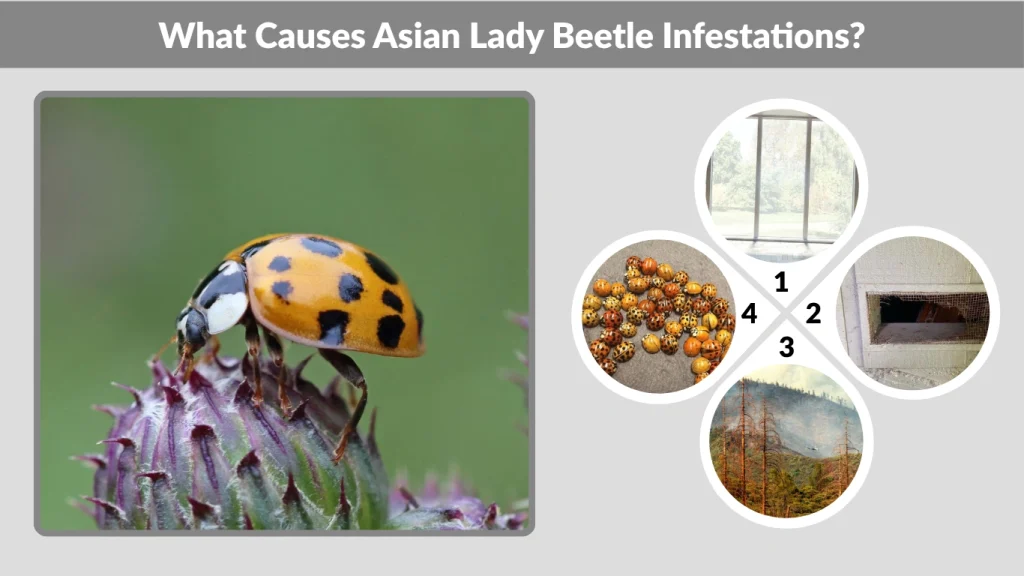
Asian lady beetles enter homes primarily in autumn, when outdoor temperatures drop. Their natural instinct is to seek warm, sheltered places for hibernation (a process known as diapause). Unfortunately, homes, sheds, and office buildings provide the ideal environment.
Key Causes:
- Warmth and Sunlight: Beetles are attracted to heat-reflecting surfaces like white walls, light siding, or sunlit windows.
- Entry Points: Gaps around doors, vents, windows, and rooflines allow them to crawl inside.
- Regional Climate: States like California, Texas, and Maine report heavy infestations due to mild fall weather that encourages beetle activity.
- Overpopulation Outdoors: When beetle populations grow large, they migrate toward homes in search of new shelter.
Once indoors, they can live for months without food or water, making them persistent even through winter.
How to Identify an Asian Lady Beetle Infestation
Recognizing an infestation early is essential to prevent it from spreading. Asian lady beetles look almost identical to ladybugs but have a few distinct characteristics.
Identification Tips:
- Color: Orange, red, or yellow with variable black spots.
- Head Marking: A white “M” or “W” shape on the head behind the eyes.
- Location: Found in clusters near ceilings, windows, or corners exposed to sunlight.
- Behavior: When disturbed, they release a yellow liquid that smells bad and stains surfaces.
You might also notice a slow buzzing sound or beetles crawling on walls and ceilings during warm afternoons. These are sure signs of an infestation forming.
Problems Caused by Asian Lady Beetle Infestations

Although they don’t eat household materials, Asian lady beetles can still cause several issues that make infestations unpleasant.
- Odor and Stains: Their yellow secretion has a foul smell and leaves stubborn marks on walls, curtains, and furniture.
- Allergic Reactions: Some people experience itching, eye irritation, or respiratory symptoms from exposure.
- Bites: They occasionally nip skin when handled, leaving small red marks.
- Pet Irritation: Dogs may drool or paw at their mouths if beetles cling inside.
Over time, a severe infestation can reduce indoor air quality and create discomfort due to odor and allergens. While not structurally damaging, their presence can still impact your home’s cleanliness and comfort.
How to Get Rid of an Asian Lady Beetle Infestation
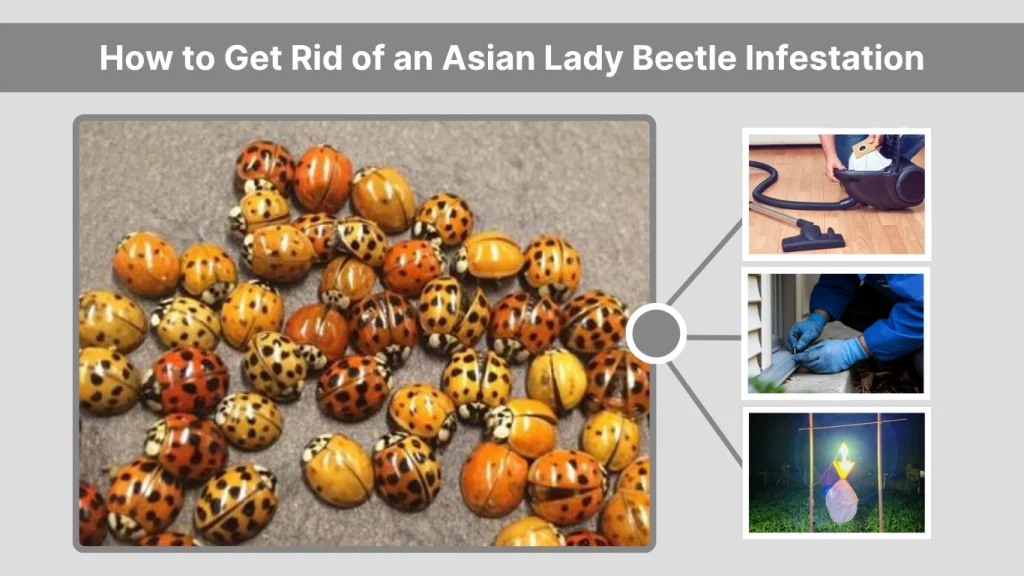
Small infestations can be handled easily with cleaning and sealing, but large ones may need professional pest control. Since crushing beetles releases strong odors and stains, it’s important to remove them safely.
Effective Removal Tips:
- Vacuum Carefully: Use a vacuum cleaner with a disposable bag to collect beetles without crushing them.
- Seal Entry Points: Caulk cracks and gaps around windows, doors, and vents.
- Natural Repellents: Mix water with peppermint or citrus essential oils and spray near windows and corners.
- Light Traps: These attract beetles in dark areas, making them easier to collect.
- Dispose Properly: Empty the vacuum or trap contents outdoors far from your home.
Avoid using harsh insecticides indoors, especially around children or pets. Instead, focus on prevention and exclusion for lasting results.
Treatment for Infestations in Different Areas
Asian lady beetle infestations can appear in different parts of a property. Treating them effectively means targeting both the interior and exterior of your home to prevent re-entry and reproduction.
6.1 Indoor Treatment
- Vacuum and Contain: The safest way to remove beetles indoors is by vacuuming. Use a disposable vacuum bag and seal it immediately afterward to avoid odor and reinfestation.
- Light Traps: Set up small light traps in dark rooms or attics where beetles hide. They’re drawn to light and can be easily collected.
- Natural Cleaning Sprays: Wipe walls, ceilings, and window sills with a vinegar-water solution. This removes pheromone trails that attract more beetles.
- Odor Neutralization: After cleaning, use citrus or baking soda solutions to eliminate lingering smells from their secretions.
Avoid crushing beetles indoors—this releases yellow fluid that stains and intensifies the odor.
Outdoor Treatment
Prevention begins outside, where beetles first gather before moving indoors.
- Seal Exterior Cracks: Inspect siding, vents, door frames, and rooflines. Caulk or weatherproof small gaps.
- Apply Barriers: In late summer or early fall, apply a light layer of pyrethrin-based insecticide or diatomaceous earth around exterior walls and entry points.
- Remove Sheltering Areas: Clear debris, leaves, or wood piles near walls where beetles might cluster.
- Trim Vegetation: Maintain distance between shrubs or tree branches and your house to reduce shade and warmth that attract beetles.
These outdoor measures help minimize the risk of large-scale infestations before beetles migrate indoors.
Pet and Animal Safety
Asian lady beetles can irritate pets, especially dogs that sniff or eat them. To keep your pets safe:
- Inspect your pet’s mouth if they drool or paw excessively.
- Remove any visible beetles gently with a damp cloth.
- Provide water and monitor for swelling or discomfort.
If symptoms persist, consult a veterinarian. Beetle chemicals can cause mild oral burns or ulcers in rare cases.
Preventing Future Infestations
Long-term prevention is the most effective solution for avoiding yearly beetle invasions. Focus on preparation before fall when beetles start seeking warm shelter.
Preventive Steps
- Seal Openings: Check all windows, vents, and chimneys before cold weather sets in.
- Install Screens: Use fine mesh over attic vents and soffits to block entry.
- Adjust Lighting: Switch to yellow-tinted bulbs outside, as bright white light attracts beetles.
- Use Natural Repellents: Regularly spray essential oils like peppermint, clove, or citrus near doors and windows.
- Encourage Native Ladybugs: They compete with Asian beetles and help control pest populations naturally.
Homeowners who follow these seasonal maintenance steps usually experience fewer infestations year after year.
Common Myths About Asian Lady Beetle Infestations
Several misconceptions surround Asian lady beetles. Clearing them up helps you focus on effective control.
- Myth 1: They Only Infest Dirty Homes
False. Beetles seek warmth and sunlight, not dirt or clutter. Even spotless homes can experience infestations. - Myth 2: They Are Harmless Ladybugs
Not true. While they look similar, Asian lady beetles bite, secrete irritating fluids, and outcompete native ladybugs. - Myth 3: Pesticides Always Work
Overusing pesticides indoors can harm humans and pets. Preventive sealing and natural repellents are safer, long-term solutions.
When to Call Pest Control
If hundreds of beetles are swarming or crawling from walls or ceilings, professional pest control may be needed. Experts can use safe residual insecticides on exterior walls and attics to eliminate clusters. This is especially useful in heavily infested areas like California, Texas, and Maine, where seasonal outbreaks are common.
Professional treatment combined with preventive maintenance ensures beetles don’t return the following year.
FAQs
What causes Asian lady beetle infestations?
Asian lady beetles infest homes seeking warmth in fall. They’re attracted to sunlight, heat, and small entry points like vents or cracks. Once inside, they gather in clusters on walls or ceilings, staying dormant through winter until warmer temperatures return.
How do I get rid of an Asian lady beetle infestation in my house?
Vacuum beetles carefully without crushing them and seal entry points using caulk or weatherstripping. Clean surfaces with vinegar to remove pheromones and apply natural repellents like peppermint or citrus oils around windows, doors, and light fixtures.
Can Asian lady beetle infestations harm pets?
Yes, particularly dogs. If a dog ingests beetles, the insects’ defensive chemicals can irritate the mouth or stomach. Symptoms include drooling, pawing at the mouth, or loss of appetite. Rinse your pet’s mouth and contact a veterinarian if irritation continues.
Why do Asian lady beetles infest homes in fall?
As temperatures drop, Asian lady beetles search for warm shelters to survive the winter. Homes, attics, and sheds provide perfect conditions for hibernation. They’re most active on sunny autumn days, entering buildings through cracks and vents.
When should I call pest control for an infestation?
Call pest control if the infestation spreads throughout multiple rooms or you find beetles emerging from walls in large numbers. Professionals can apply safe, targeted treatments and recommend sealing strategies to prevent future infestations effectively.
