

Bed bug poop is one of the clearest indicators of an infestation. These tiny droppings often go unnoticed until stains appear on sheets, walls, or mattresses. Knowing how to identify, locate, and clean bed bug feces can help stop an infestation early before it spreads. This guide explains what bed bug poop looks like, where it appears, and how to confirm it’s not dirt, mold, or another insect’s droppings.
What Does Bed Bug Poop Look Like?
Bed bug poop appears as small, dark spots—often resembling ink stains made by a black marker. The droppings are composed of digested blood, which gives them a dark brown to black appearance. When freshly deposited, they may feel slightly sticky or soft, but once dry, they leave behind permanent stains.
Each dropping is tiny, about the size of a pinhead or smaller, and typically round or smeared, depending on the surface. On fabric or porous material like sheets or mattresses, the poop tends to soak in slightly, creating irregular dots. On hard surfaces such as wood or metal, the spots remain more circular and raised.
A good rule of thumb: if you can smear the spot with a damp cotton swab and it leaves a reddish or rusty streak, it’s likely bed bug feces. This simple test helps distinguish bed bug poop from dust or mold.
Common Places to Find Bed Bug Poop

Bed bugs are nocturnal pests that hide close to where people sleep, which makes their droppings appear mainly around sleeping or resting areas. The most common locations include:
- On Beds and Sheets: Tiny black dots along pillow edges, seams, or folds of sheets are telltale signs.
- On Mattresses: Look for clusters near the corners, tags, or stitching where bugs hide.
- On Walls and Ceilings: Bed bugs may climb walls, leaving droppings around wall joints or above headboards.
- On Baseboards and Furniture: Poop stains can be found in cracks, joints, or behind furniture where bed bugs retreat during the day.
- On Plastic, Metal, or Wood: Bed bugs can also crawl over non-fabric surfaces, leaving behind distinct, dark specks.
These spots often appear in clusters since bed bugs feed and defecate in the same areas repeatedly. Regular inspection of these zones helps detect early infestations before they escalate.
Bed Bug Poop vs. Other Insect Droppings

Since other insects can leave similar marks, correctly identifying bed bug feces is essential.
Bed Bug Poop vs. Flea Poop
Flea droppings are also dark but appear more granular, like ground pepper. If you wet flea dirt, it turns red because it’s dried blood, similar to bed bug feces—but flea poop is smaller and usually found on pets or pet bedding, not on human beds or walls.
Bed Bug Poop vs. Roach Poop
Cockroach droppings are larger, cylindrical, and often have ridges at the ends. They don’t smear red like bed bug feces. Roach poop is typically found near food or dark corners, not primarily on beds or sheets.
Bed Bug Poop vs. Mold or Dirt
Mold spots may resemble bed bug stains but have a fuzzy or patchy texture, unlike the smooth and soaked-in look of bed bug poop. Dirt, on the other hand, won’t smear red when wet.
How to Identify Bed Bug Poop Early
Spotting early signs of bed bug poop can help prevent a full-blown infestation. Watch for the following indicators:
- Tiny Black or Rust-Colored Stains: Found on pillowcases, mattress seams, or clothing.
- Clusters Near Bed Corners: Bed bugs often gather in groups, leaving multiple droppings close together.
- Smear Test Confirmation: Dabbing a moist tissue or cotton swab over the spot will often produce a faint reddish tint if it’s bed bug feces.
- UV Light Check: Bed bug poop can appear as dark or dull patches under ultraviolet light, helping identify hidden spots on furniture or bedding.
The earliest stains usually appear near feeding sites, such as along mattress seams or headboard edges. These marks might be mistaken for pen ink or dust at first glance but don’t wash away easily. Early detection allows homeowners to intervene before eggs and nymphs spread.
Bed Bug Poop on Different Surfaces

On Sheets and Bedding
Bed bug poop on sheets looks like scattered ink drops or small clusters of black spots. These stains don’t come off easily in the wash because they soak into the fibers. If you find such spots near the pillow or bed edges, it’s a strong indication of bed bug activity.
On Walls and Ceilings
When infestations grow, bed bugs may travel up walls or behind paintings, leaving fecal marks along edges and corners. On walls, the stains are often circular and darker than mold. On ceilings, they appear as small pepper-like dots.
On Furniture, Drawers, and Wood
Wooden furniture often conceals bed bugs in joints and crevices. Droppings here are slightly raised and matte black. Use a flashlight to inspect under drawers, behind headboards, and near screw holes.
On Metal, Plastic, and Paper
Although less common, bed bug poop can appear on metal frames, plastic bins, or even paper items stored near infested areas. The stains are harder and more distinct, showing up as small, solid dots rather than smears.
Does Bed Bug Poop Smear or Stay Hard?
Bed bug droppings are semi-liquid when fresh and tend to smear easily on contact. Once dry, they harden but retain a dark color that doesn’t fade over time. The texture depends on how long ago the bug defecated and the surface type.
- Fresh Poop: Slightly sticky and smears reddish-brown when rubbed.
- Old Poop: Hard, dry, and may flake slightly but still leaves a permanent mark.
Many people test stains by adding a drop of water. If the spot turns reddish or rust-colored, it confirms the presence of digested blood. However, dried spots on hard surfaces like wood or metal may not smear easily, which doesn’t mean they’re not from bed bugs—it simply means they’re older.
Health Risks of Bed Bug Poop
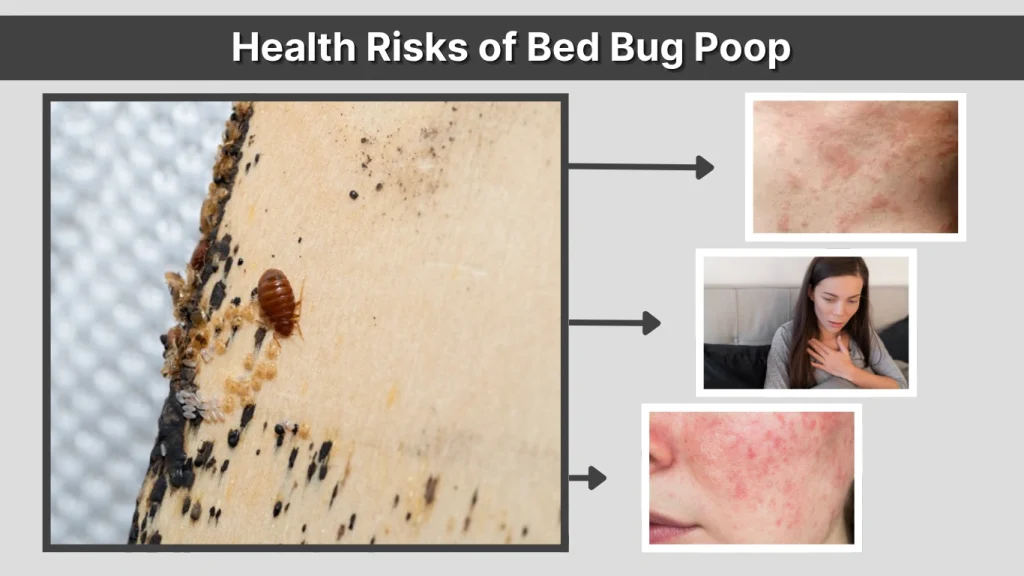
While bed bug poop doesn’t transmit diseases directly, it can cause mild health issues in sensitive individuals. The droppings are made of dried blood and insect waste, which may trigger allergic reactions or respiratory irritation. Prolonged exposure to infested bedding can worsen asthma or cause skin inflammation when particles mix with dust in the air.
Touching bed bug feces accidentally and then rubbing your eyes can lead to irritation or mild infections. People with allergies might notice itching, redness, or hives when they come in contact with contaminated fabrics. It’s always best to clean stained surfaces thoroughly and wash your hands after handling potentially infested items.
How to Clean Bed Bug Poop

Cleaning bed bug feces requires care to avoid spreading stains or reintroducing bugs to other areas. Because these droppings are made of digested blood, they tend to cling to fibers and surfaces, making removal challenging. Follow these steps for effective cleaning and disinfection.
Step 1: Identify and Isolate the Area
Before cleaning, inspect the surrounding area for live bed bugs, eggs, or shells. Strip bedding, curtains, and nearby fabrics. Keep them in sealed plastic bags to prevent bugs from escaping during washing.
Step 2: Vacuum and Steam
Use a vacuum with a HEPA filter to remove droppings, debris, and hidden bugs from cracks and seams. Then, use a steam cleaner with temperatures above 120°F (49°C) to kill remaining eggs or larvae on mattresses, carpets, and furniture joints.
Step 3: Wash Fabrics Properly
Wash all affected linens, clothes, and curtains in hot water—preferably above 130°F (54°C). Dry them on the highest heat setting for at least 30 minutes. Heat kills both stains and bugs effectively.
Step 4: Spot Clean Hard Surfaces
For walls, wood, and metal, use a mild detergent mixed with warm water or a vinegar-based cleaner. Scrub gently with a soft cloth to lift stains without damaging paint or finish. If stains persist, enzyme-based cleaners can help dissolve organic residue.
Step 5: Disinfect and Monitor
After cleaning, use rubbing alcohol or a diluted bleach solution (only on non-porous surfaces) to sanitize the area. Finally, re-inspect after a few days to ensure no new spots or bugs have appeared.
How to Get Rid of Bed Bugs and Prevent Future Poop
Even after removing stains, addressing the root cause—the infestation—is essential. Bed bugs breed rapidly, and their droppings will return if the colony remains.
Inspect and Eliminate Hiding Spots
Check behind headboards, picture frames, electrical outlets, and under mattresses. Bed bugs hide in tiny crevices during the day. Use a flashlight and magnifying glass to look for eggs, exoskeletons, or live bugs.
Use Heat or Cold Treatments
Heat treatment is one of the most effective ways to kill bed bugs at all life stages. Professional exterminators often use room heaters that raise temperatures to around 140°F (60°C). For small items, freezing at 0°F (-18°C) for four days also works.
Apply Bed Bug Sprays and Powders
Use EPA-approved sprays or diatomaceous earth powder along cracks, corners, and baseboards. These treatments kill bugs on contact and prevent them from returning. Always follow product instructions carefully to ensure safety and effectiveness.
Protect Mattresses and Furniture
Encasements for mattresses and pillows help trap remaining bugs and prevent future nesting. Vacuum regularly and keep clutter minimal to limit hiding areas.
Professional Pest Control
For large infestations, hiring a professional exterminator is the best solution. Experts can identify infestation levels and apply chemical or heat treatments safely, ensuring every bug and egg is eliminated.
FAQs
What color is bed bug poop?
Bed bug poop is dark brown to black due to the dried blood they digest. Fresh droppings may look slightly reddish or rusty, but they quickly darken as they dry. On fabric, they often soak in and appear like tiny ink stains that are difficult to wash out.
Does bed bug poop wash out easily?
No, bed bug poop does not wash out easily. Since it contains iron from digested blood, it seeps into fabric fibers and leaves lasting stains. Using enzyme-based or oxygen bleach cleaners can lighten marks, but complete removal often requires several treatments.
Is bed bug poop hard or sticky?
When freshly deposited, bed bug poop is slightly soft and sticky, similar to ink or paint. After drying, it becomes hard and crusty but remains dark in color. The texture can help identify how recent the droppings are and whether bugs are still active nearby.
Can you find bed bug poop without seeing bugs?
Yes, and it’s quite common. Bed bugs are experts at hiding, so their droppings often appear before the insects themselves are spotted. If you see dark dots on sheets, walls, or furniture and they smear reddish-brown when wet, it’s a strong sign of bed bug presence.
How often do bed bugs poop after feeding?
Bed bugs usually poop several times after a blood meal. They digest food quickly, so feces may appear within minutes or hours of feeding. This frequent defecation is why infested areas often have multiple stains clustered together near hiding or feeding zones.
