
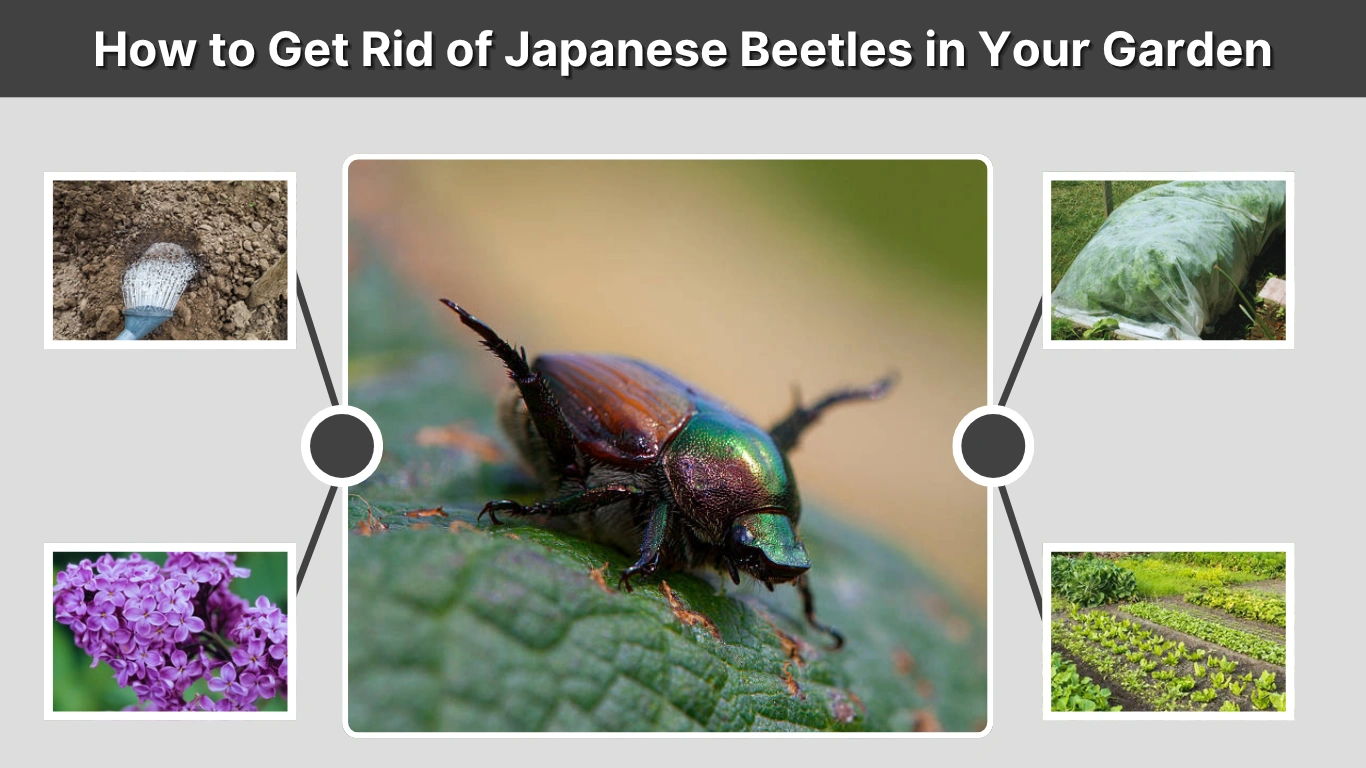
Japanese beetles are one of the most destructive garden pests that attack a wide variety of plants, from vegetables and fruits to flowers and shrubs. Known for their shiny, metallic-green bodies and copper wings, these insects can quickly turn a thriving garden into a scene of damage. Understanding how to identify, control, and prevent Japanese beetles is key to protecting your garden throughout the growing season.
What Are Japanese Beetles?
Japanese beetles (Popillia japonica) are invasive pests native to Japan, first discovered in North America in the early 1900s. They thrive in warm, humid climates and have spread widely across the United States. Adult beetles measure about half an inch long, with metallic green bodies and bronze wing covers that make them easy to recognize.
They are often referred to as Japanese garden beetles or Asiatic garden beetles, though the latter is technically a different species. Despite their small size, Japanese beetles can cause extensive damage by feeding on leaves, flowers, and fruits, leaving behind skeletonized foliage.
How to Identify Japanese Beetles in the Garden
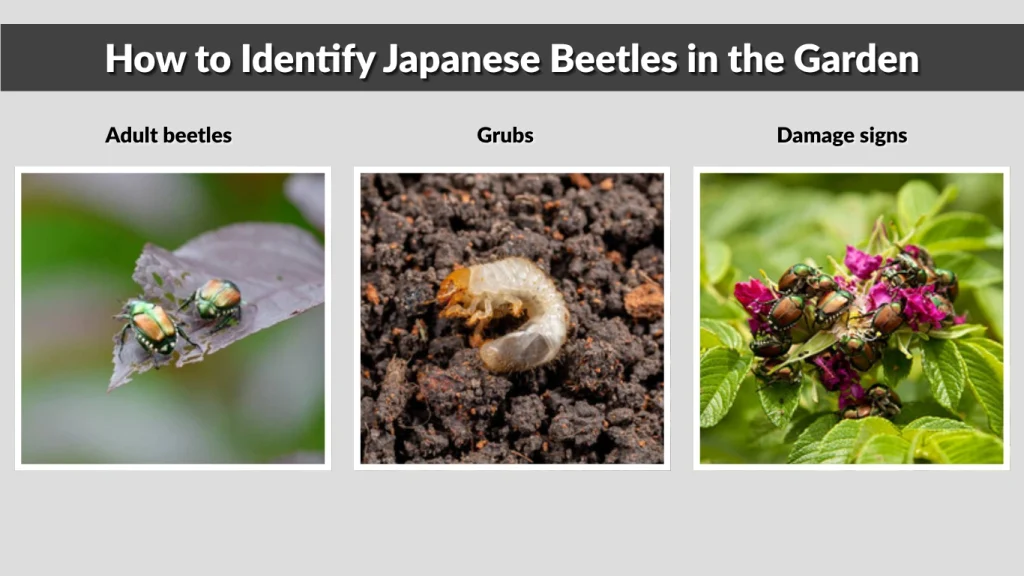
Identifying Japanese beetles early helps you take action before they multiply. Here’s what to look for:
- Adult beetles: Metallic green and copper-colored with tiny white tufts along the sides.
- Grubs: White, C-shaped larvae found in soil, feeding on plant roots.
- Damage signs: Leaves appear skeletonized or lacy due to beetles eating tissue between the veins. Flowers may also appear chewed or partially destroyed.
If your plants show these symptoms in mid-summer, there’s a good chance Japanese beetles are the culprits.
Life Cycle of Japanese Beetles
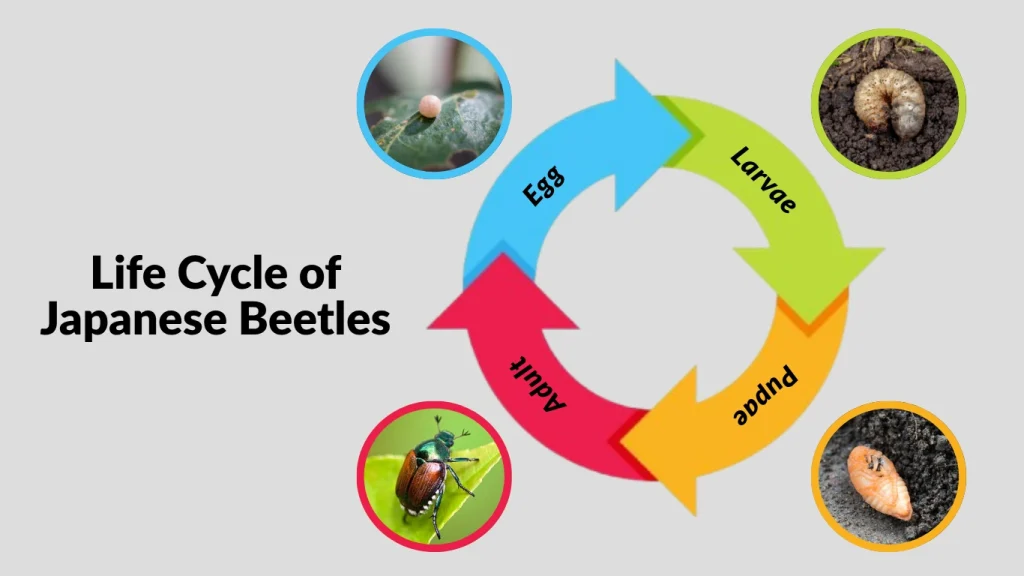
Understanding the life cycle helps in targeting them effectively. Japanese beetles go through four main stages: egg, larva (grub), pupa, and adult.
- Eggs are laid in soil during mid-summer.
- Larvae (grubs) hatch within two weeks and feed on roots during fall.
- Pupae remain in the soil through spring.
- Adults emerge in early summer to feed and reproduce.
The entire cycle lasts one year, but since overlapping generations occur, beetles can be active every growing season if left uncontrolled.
Are Japanese Beetles Bad for Your Garden?
Yes — Japanese beetles are considered highly destructive pests. They feed on more than 300 plant species, including roses, beans, grapes, raspberries, corn, and fruit trees. Their feeding habits weaken plants, reducing their ability to photosynthesize and grow properly.
Beyond the visible leaf damage, heavy infestations can lead to long-term plant stress, reduced yields, and even death of young plants. In vegetable gardens, they can ruin both the leaves and edible portions of crops.
Common Plants Japanese Beetles Eat
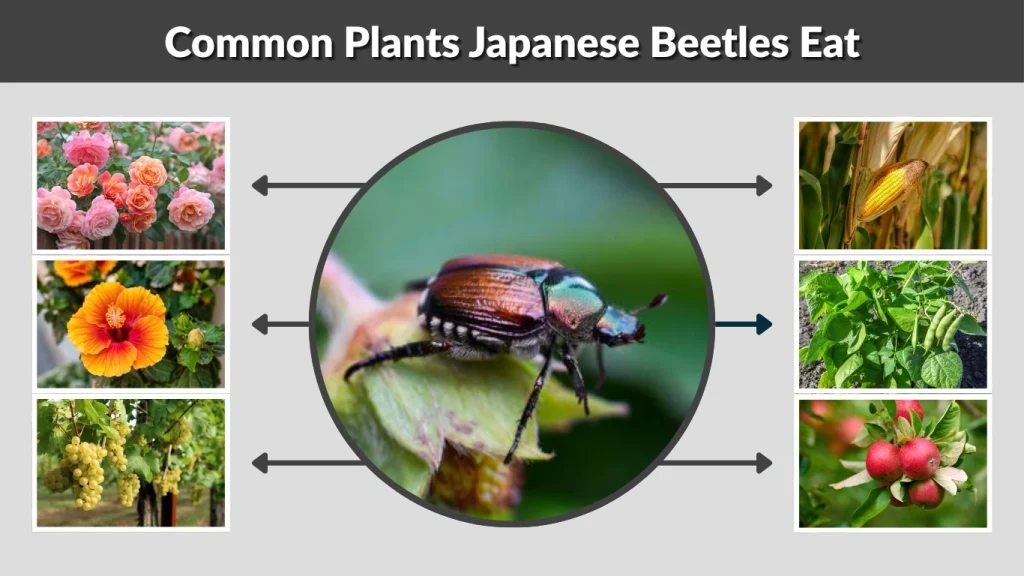
Japanese beetles are not picky eaters, but they have some favorites. They are commonly found feeding on:
- Roses and hibiscus
- Grapes and raspberries
- Corn, beans, and soybeans
- Maple and linden trees
- Apple and plum trees
By knowing their preferred plants, you can monitor these areas more closely during summer months.
Natural Ways to Get Rid of Japanese Beetles
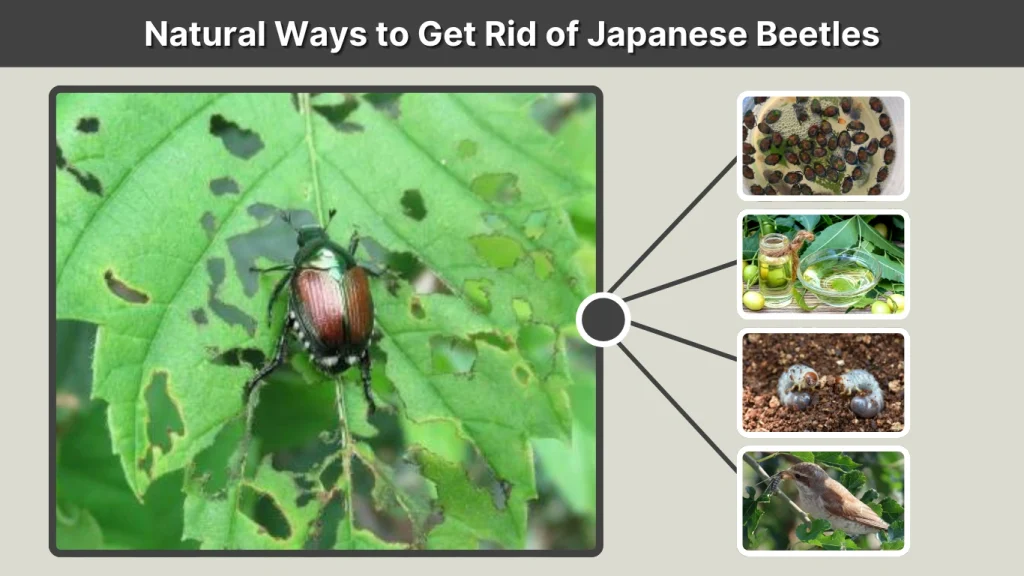
If you prefer eco-friendly pest control, there are several natural methods to manage Japanese beetles effectively.
Handpicking
Pick beetles off plants early in the morning when they’re sluggish. Drop them into a bucket of soapy water to kill them. While time-consuming, it’s an effective short-term control method for small gardens.
Neem Oil
Neem oil acts as a natural pesticide that disrupts the beetles’ feeding and reproduction. Spray it on leaves in the early morning or evening to avoid harming pollinators.
Milky Spore and Nematodes
Milky spore powder and beneficial nematodes can be applied to the soil to target grubs. These biological controls attack larvae before they grow into adult beetles, helping prevent future infestations.
Birds and Predatory Insects
Encourage natural predators like starlings, robins, and tachinid flies to visit your garden. These creatures feed on beetles and larvae, helping maintain a balanced ecosystem.
Effective Garden Sprays and Treatments
When natural methods aren’t enough, using safe insecticidal treatments can help. Garden Safe Insecticidal Soap can kill Japanese beetles on contact, though it works best on younger insects. Neem-based sprays provide longer-lasting effects by deterring adult beetles from feeding.
For severe infestations, products like Cyonara Lawn & Garden Spray can be used. It’s effective against beetles, though care must be taken to avoid harming beneficial insects. Always read the product label carefully before applying it to vegetable or flower gardens.
Preventing Japanese Beetles in the Garden
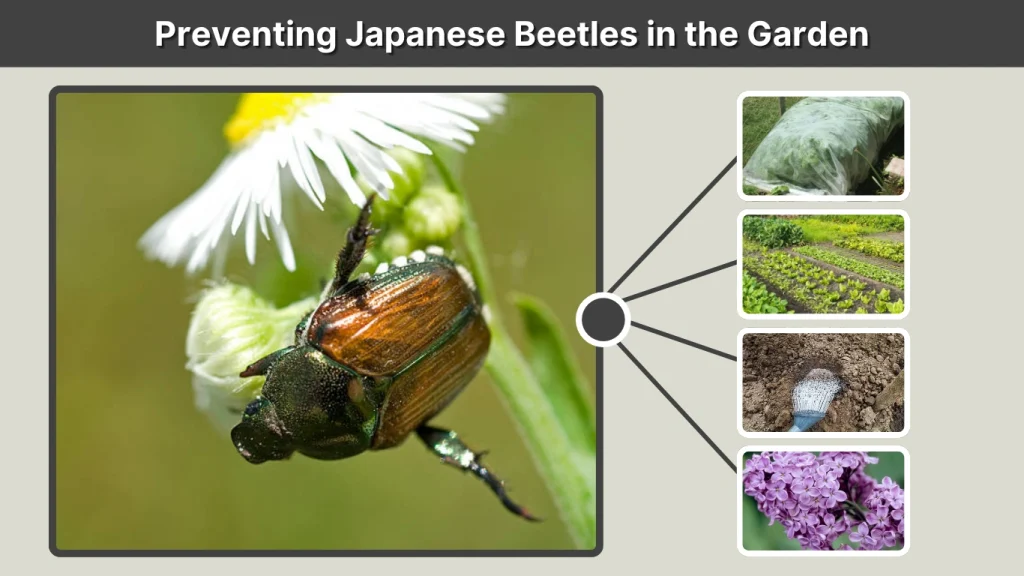
Prevention is the most effective long-term solution. Here’s how to keep Japanese beetles out of your garden:
- Use row covers during peak beetle season (June–July).
- Rotate crops yearly to prevent soil-based grub buildup.
- Avoid overwatering, as moist soil attracts females for egg-laying.
- Plant beetle-resistant species like lilac, boxwood, or dogwood.
- Install pheromone traps far from your main garden area to lure beetles away.
Consistent prevention can dramatically reduce beetle activity year after year.
Japanese Beetle Grubs in Vegetable Gardens
Japanese beetle grubs live underground, feeding on plant roots, especially in lawns and vegetable patches. These white, C-shaped larvae can cause as much damage as adult beetles by weakening roots and preventing plants from absorbing nutrients. To identify grubs, dig a small patch of soil and look for soft, curled larvae beneath the surface.
To eliminate them, apply milky spore disease or beneficial nematodes, both of which naturally target and kill grubs. Keeping soil dry between watering cycles discourages egg-laying. For serious infestations, you can use grub-specific insecticides labeled for vegetable gardens, but always check that they are safe for edible crops.
Japanese Beetle vs. Asiatic Garden Beetle
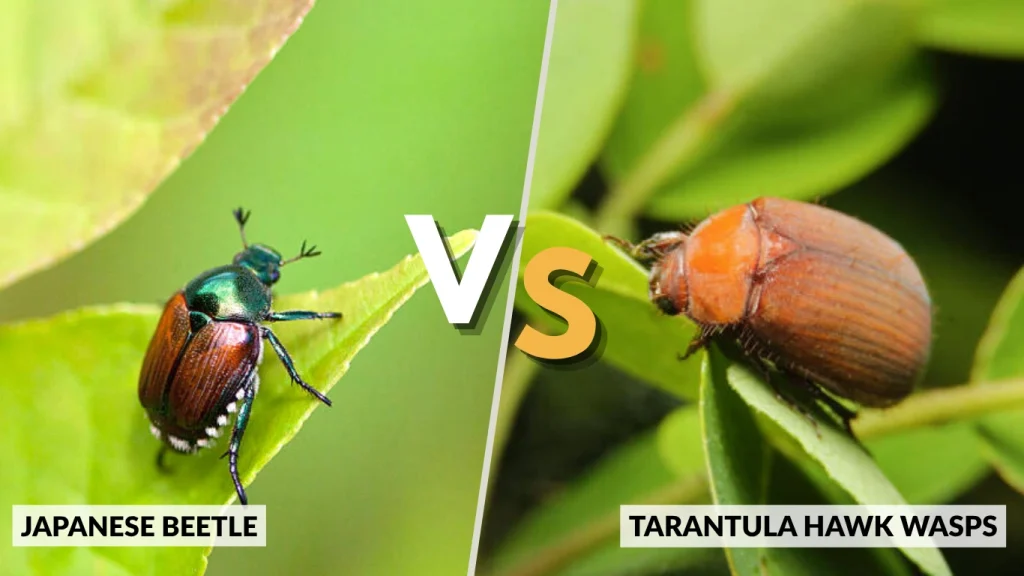
Though similar in name, the Japanese beetle and Asiatic garden beetle are distinct pests.
- Japanese beetles have metallic green bodies and bronze wings, while Asiatic beetles are smaller and brownish.
- Japanese beetles are daytime feeders, damaging leaves and flowers. Asiatic beetles are nocturnal, chewing on low-growing plants and roots at night.
- Control methods are similar, but Asiatic beetles are more soil-focused, meaning grub treatments are particularly important for managing them effectively.
Recognizing which species is invading your garden helps in choosing the right strategy.
Home Remedies to Keep Beetles Away
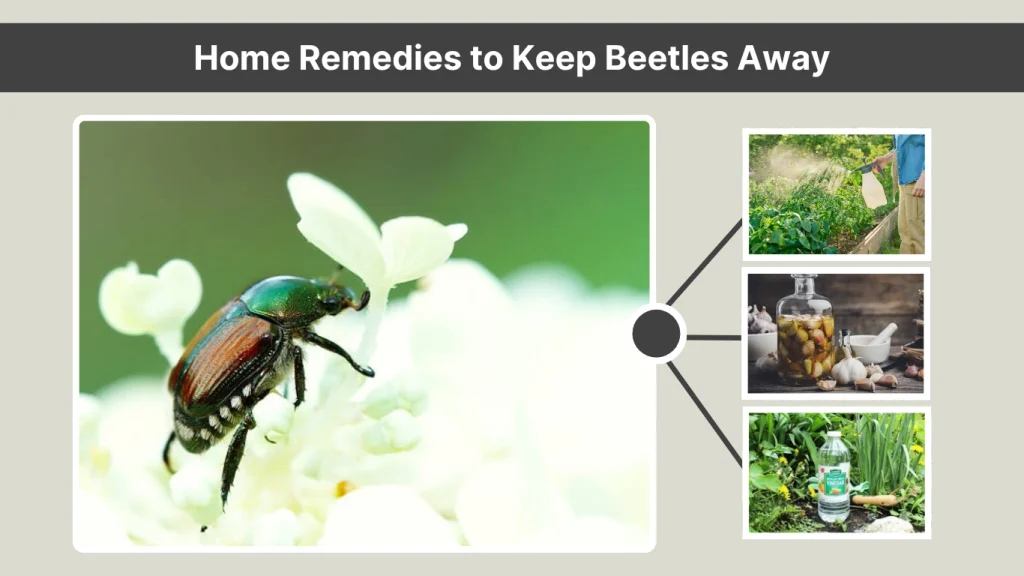
You don’t always need chemical sprays to control beetles—home remedies can work surprisingly well.
- Soapy Water Spray: Mix two teaspoons of dish soap per gallon of water and spray directly on beetles. It suffocates them and disrupts their feeding.
- Garlic or Peppermint Spray: These scents repel beetles naturally. Boil crushed garlic or mint leaves in water, cool, and spray on affected plants.
- Vinegar Solution: A diluted vinegar mixture (1:3 ratio with water) can deter beetles, though excessive use can damage leaves, so apply sparingly.
- Essential Oils: Oils like clove, wintergreen, or cedar act as repellents when diluted and sprayed lightly on foliage.
These remedies are affordable, safe for most plants, and reduce chemical use in your garden.
Best Practices for Ongoing Beetle Control
Japanese beetles require consistent management. Combine different strategies throughout the year for lasting results:
- Spring: Apply beneficial nematodes or milky spore to control grubs before they mature.
- Early Summer: Inspect plants daily and handpick visible beetles.
- Mid-Summer: Use traps and sprays as populations peak.
- Fall: Aerate soil and reduce watering to discourage egg-laying.
Also, keep your garden healthy by pruning damaged plants and maintaining soil fertility. Healthy plants are less attractive to pests and can better recover from beetle attacks.
FAQs
What attracts Japanese beetles to gardens?
Japanese beetles are drawn to lush, fragrant, and fruit-bearing plants such as roses, grapes, and linden trees. They also target weakened or stressed vegetation. Gardens with high humidity, rich soil, and open sunlight create an inviting environment for these beetles to feed and reproduce rapidly.
Does insecticidal soap kill Japanese beetles?
Yes, insecticidal soap can kill Japanese beetles upon direct contact by breaking down their protective coating, leading to dehydration. However, it works best for smaller infestations. For large outbreaks, combine it with neem oil or manual removal for more complete control across different garden areas.
How can I naturally prevent Japanese beetles?
Natural prevention focuses on soil health and biodiversity. Introducing nematodes, keeping grass trimmed, and rotating crops disrupt the beetles’ breeding cycle. You can also plant resistant species like lilac and boxwood or use neem oil regularly to deter feeding without harming pollinators or beneficial insects.
Are Japanese beetles harmful to vegetable gardens?
Absolutely. Japanese beetles feed on both the leaves and fruit of vegetables such as beans, corn, and tomatoes. Their feeding weakens plants, reduces yields, and can even cause premature plant death. Applying organic deterrents and maintaining soil treatments help protect crops through the growing season.
