
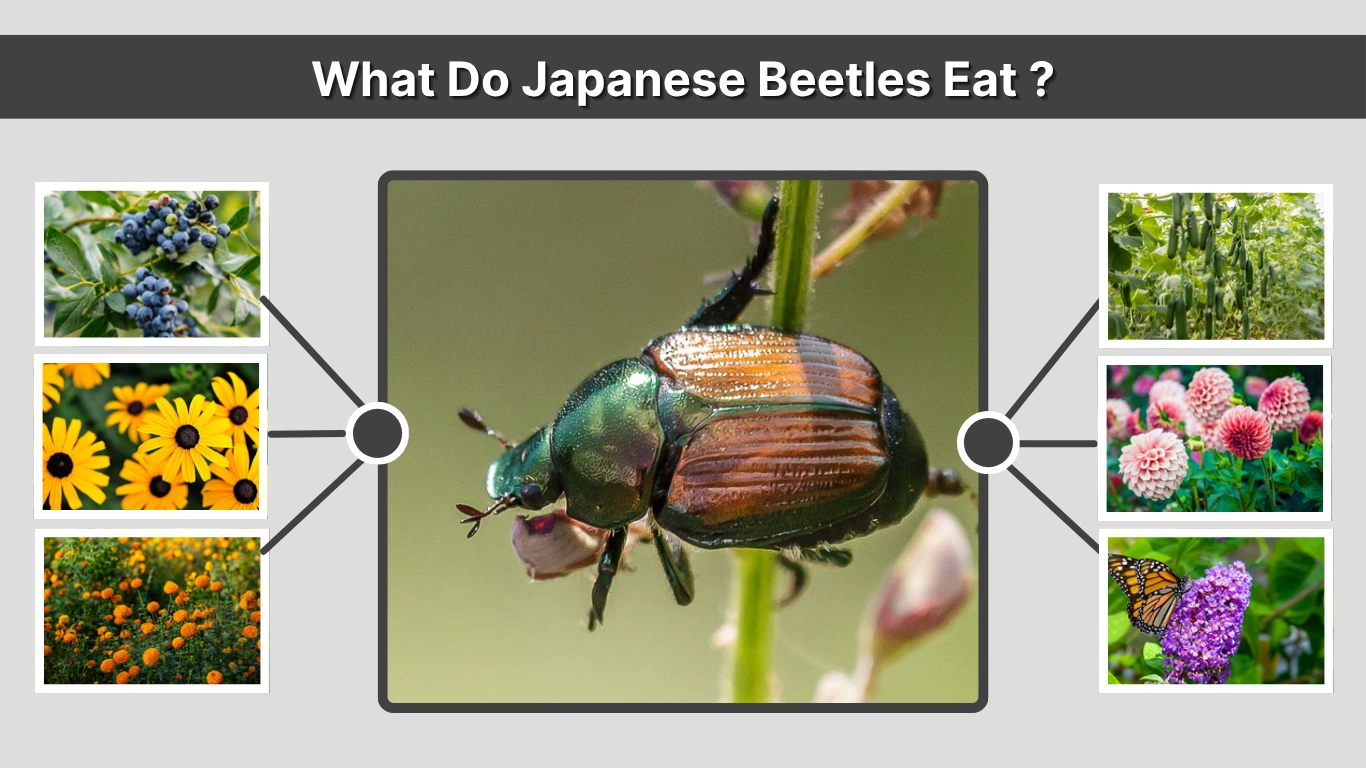
Japanese beetles are one of the most destructive garden pests, known for their shiny metallic green and bronze bodies and voracious appetite. They feed on hundreds of plant species, damaging gardens, crops, and fruit trees. But despite their destructive nature, these beetles also serve as a food source for many animals and insects, balancing their role in the ecosystem.
Understanding Japanese Beetles
Japanese beetles (Popillia japonica) are invasive pests native to Japan but have become a major problem in North America. They emerge from the soil as adults in early summer and remain active for about six to eight weeks. During this period, they feed aggressively on the leaves, flowers, and fruits of many plants. Their larvae, called grubs, live underground and feed on grass roots, damaging lawns and turf.
These beetles are highly social feeders and are attracted to plants already being eaten by others. Once they infest a garden, they can quickly defoliate plants and cause severe damage if left uncontrolled.
What Do Japanese Beetles Eat?
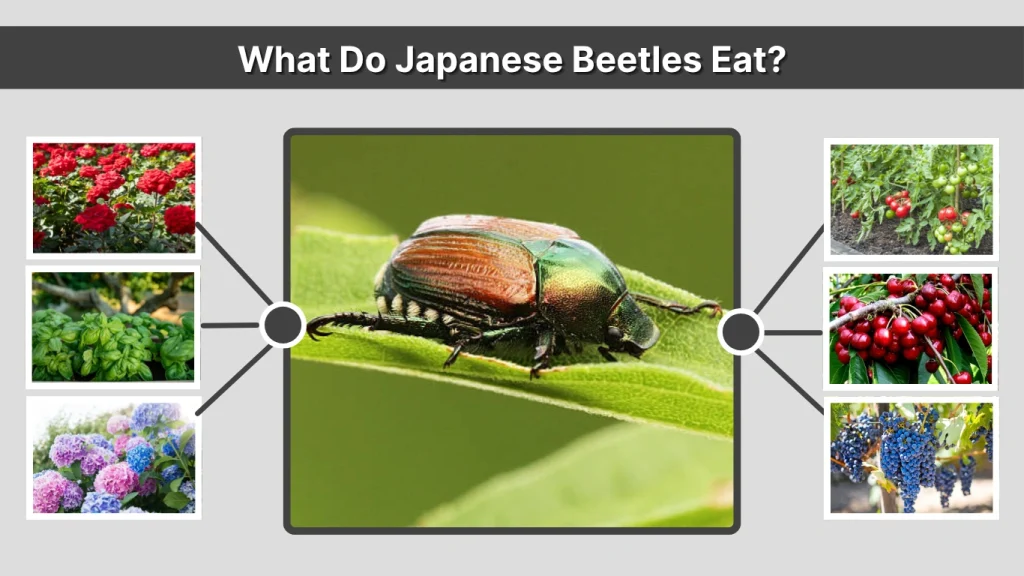
Japanese beetles are not picky eaters. They feed on more than 300 plant species, making them one of the most widespread garden pests. They typically target soft, tender leaves, flowers, and fruits, leaving behind skeletonized foliage — a clear sign of infestation.
Common Plants Japanese Beetles Eat
Here are some of the most common plants that Japanese beetles love to feed on:
- Roses – One of their absolute favorites, often left with lace-like leaves and destroyed blooms.
- Basil – The aroma attracts beetles, and they chew through its tender leaves.
- Hydrangeas – Especially the young leaves and flower clusters.
- Tomato Plants – Beetles chew the leaves and can reduce fruit production.
- Fruit Trees – Including apple, cherry, peach, and plum trees.
- Grapevines – A highly preferred plant, as beetles love the soft leaves and fruits.
- Blueberry Bushes – They target both the foliage and young fruit.
- Black-eyed Susans – Bright flowers make them attractive to these beetles.
- Marigolds – Despite being pest-resistant for some insects, they attract Japanese beetles.
- Cucumber Plants – They feed on leaves and flowers, reducing yields.
- Dahlias – Their large petals often become a feast for beetles.
- Butterfly Bushes – Popular targets during summer blooming seasons.
Japanese beetles usually start feeding from the top of a plant and move downward, causing extensive damage to the upper canopy first.
What Japanese Beetles Don’t Like to Eat
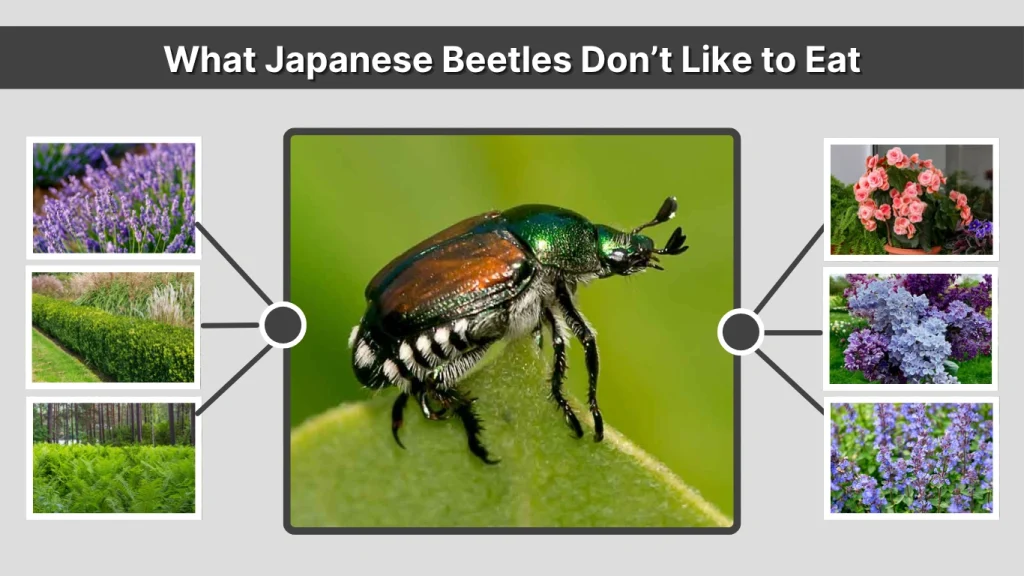
While they devour many plants, there are several that Japanese beetles tend to avoid. These plants can be good choices for pest-resistant gardens:
- Lavender
- Boxwood
- Ferns
- Begonias
- Lilac
- Catnip
- Lantana
- Garlic and chives
Planting these can act as a natural deterrent and help reduce beetle activity around susceptible plants.
Japanese Beetles Eating Habits and Behavior
Japanese beetles feed during the daytime, especially in warm, sunny conditions. They release pheromones to attract other beetles, causing large infestations on single plants. The damage they cause is distinct — leaves appear skeletonized, with only veins remaining, and flowers become ragged or completely eaten.
They prefer plants in sunny areas over those in shade and are most active between late June and early August. Beetles also feed on overripe fruits, further damaging orchards and fruit trees.
Their larvae, or grubs, live in the soil and feed primarily on grass roots during spring and fall, leading to brown patches in lawns. Controlling both stages is important to fully manage infestations.
What Eats Japanese Beetles?
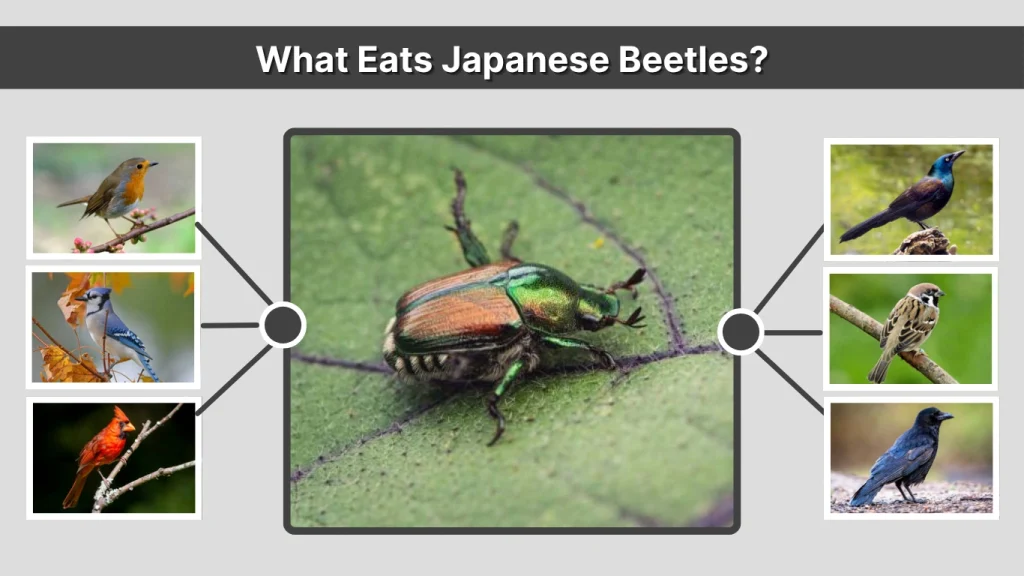
Fortunately, Japanese beetles have natural enemies that help keep their population in check. These predators include birds, insects, amphibians, and even some reptiles. Encouraging these creatures in your garden can reduce beetle numbers without chemical pesticides.
Birds That Eat Japanese Beetles
Several bird species are known to feed on Japanese beetles and their grubs. While they may not eliminate an infestation completely, they provide excellent natural control.
- Robins – Eat both adult beetles and grubs found in the soil.
- Blue Jays – Known for their strong beaks, they can easily crush beetles.
- Cardinals – Often found pecking beetles off rose bushes and fruit trees.
- Grackles – Especially effective in digging up and eating grubs from lawns.
- Sparrows – Feed on beetles resting on shrubs and small plants.
- Crows – Help control grub populations by foraging in soil.
- Starlings – Excellent at locating and eating larvae under the grass.
- Barn Swallows – Capture flying beetles in mid-air during feeding periods.
Encouraging birds through feeders, birdbaths, and nesting areas can help naturally reduce beetle populations around gardens and orchards.
Insects That Eat Japanese Beetles
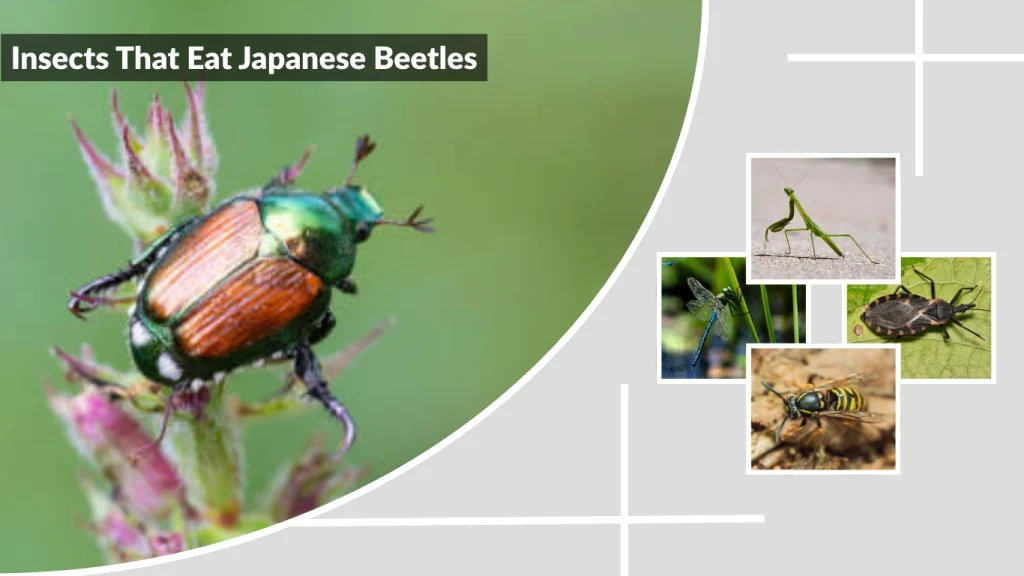
Predatory insects also play an essential role in reducing Japanese beetle populations. These natural enemies often target adult beetles or larvae:
- Praying Mantises – Ambush and consume adult beetles quickly.
- Assassin Bugs – Pierce beetles with their sharp mouthparts and feed on them.
- Wasps – Some species attack beetles directly, while parasitic wasps target larvae.
- Dragonflies – Catch adult beetles during flight.
- Ladybugs – Feed on beetle eggs and small larvae in the soil.
Maintaining a balanced insect population helps manage pests naturally, reducing the need for harsh insecticides that could harm beneficial bugs.
Amphibians and Reptiles That Eat Japanese Beetles
Amphibians and reptiles are another group of natural predators that help manage Japanese beetle populations. They typically feed on both adult beetles and larvae during warm, humid seasons when these insects are most active.
- Frogs and Toads – Both are known to eat Japanese beetles when they come near ground level or rest on leaves. Their quick tongues allow them to capture beetles easily.
- Garter Snakes – Although not their main food source, they occasionally consume grubs found in soil.
- Lizards – Some garden lizards, such as skinks, will eat beetles that move across rocks or sunny patches.
These creatures thrive in moist, shaded areas, so keeping small water features and hiding spots in your garden encourages their presence, providing additional pest control benefits.
Do Chickens and Ducks Eat Japanese Beetles?
Yes, chickens and ducks love eating Japanese beetles — and they’re great helpers in pest control. Chickens will chase after adult beetles, while ducks and guinea fowl eat both adults and larvae. They can clean up beetles that fall from plants or traps and even scratch the soil to find grubs.
- Chickens – Known for their strong foraging habits, they eat live beetles and grubs. You can release them in infested areas to reduce beetle numbers naturally.
- Ducks – They prefer moist areas and often feed on beetles near ponds or gardens.
- Guinea Fowl – Very effective hunters that actively patrol for adult beetles and other pests.
However, moderation is key. While these birds can eat Japanese beetles safely, consuming too many could cause digestive issues due to the beetle’s tough exoskeleton. It’s best to let them forage freely rather than feeding beetles in large quantities from traps.
Can Pets Eat Japanese Beetles?
Pet owners often worry about what happens if their dogs or cats eat beetles. Fortunately, Japanese beetles are not toxic, but they aren’t ideal snacks either.
- Dogs and Cats – Eating a few beetles won’t harm them, but large amounts can cause stomach upset. The beetles’ hard shells are difficult to digest.
- Bearded Dragons and Geckos – Reptiles like bearded dragons or leopard geckos can eat beetles occasionally, but wild beetles might contain pesticides, which can be dangerous.
- Avoid Feeding from Traps – Beetles caught in chemical traps should never be given to pets or poultry, as they may carry insecticide residue.
If your pets accidentally eat a few beetles, it’s rarely a concern. Still, it’s best to discourage them from eating insects directly from the garden, especially after pesticide use.
Are Japanese Beetles Poisonous or Edible for Humans?
Japanese beetles are not poisonous to humans, and technically, they are edible. In some cultures, insects similar to Japanese beetles are consumed as a protein source. However, eating them from gardens is not recommended because they may have been exposed to pesticides or fertilizers.
Their taste is often described as bitter or earthy, and they must be cooked properly before consumption to eliminate any bacteria. While edible insect enthusiasts sometimes experiment with beetles, most people view them as pests rather than food.
How to Attract Birds and Insects That Eat Japanese Beetles
Encouraging natural predators in your garden is an eco-friendly way to control beetle populations. Here are a few ways to make your yard more inviting to them:
- Add Bird Feeders and Baths – Birds like robins and blue jays are drawn to safe water sources.
- Grow Native Shrubs – Plants like sumac, dogwood, and serviceberry attract insect-eating birds.
- Avoid Broad Pesticides – Harsh chemicals can kill beneficial insects and reduce natural control.
- Create Habitat Diversity – Include areas with shrubs, mulch, and small water sources for frogs and toads.
- Use Companion Planting – Grow plants like garlic, catnip, and chives that deter beetles while supporting pollinators.
By maintaining a natural ecosystem, your garden becomes self-sustaining, reducing infestations over time.
How to Stop Japanese Beetles from Eating Plants
Even with natural predators, infestations can sometimes get out of control. Here are the best ways to protect your plants and limit beetle damage:
- Handpicking – Early in the morning, when beetles are sluggish, shake them off plants into soapy water.
- Neem Oil Spray – Safe for most plants, neem oil disrupts beetle feeding and reproduction.
- Traps – Place pheromone traps at least 30 feet away from plants to lure beetles away.
- Milky Spore Treatment – A natural soil treatment that targets beetle larvae, preventing future generations.
- Row Covers – Use mesh netting to protect valuable plants like roses or grapes during peak beetle season.
- Plant Resistant Species – Add more beetle-resistant plants to reduce attraction to your garden.
These organic strategies not only stop current infestations but also help prevent long-term damage to your landscape.
Japanese Beetles and Specific Plant Damage
Because Japanese beetles target many popular plants, it’s helpful to know how to identify and manage damage to specific ones.
Japanese Beetles Eating Basil
Basil plants are frequently attacked because of their scent. Covering them with fine mesh during summer can prevent severe leaf damage.
Japanese Beetles Eating Roses
Roses are a primary target. Remove damaged blooms, use neem oil, and place traps away from rose bushes to reduce attraction.
Japanese Beetles Eating Fruit Trees
Apple, cherry, and peach trees often experience heavy infestations. Regular pruning and pheromone traps placed nearby can protect fruit.
Japanese Beetles Eating Tomato Plants
They chew holes in tomato leaves and flowers, reducing fruit yield. Handpicking and spraying neem oil weekly can prevent major harm.
Summary Table: What Japanese Beetles Eat vs. What Eats Them
| Japanese Beetles Eat | Animals That Eat Them |
| Roses, basil, hydrangeas, fruit trees, grapes, marigolds | Birds (robins, cardinals, blue jays) |
| Tomato plants, cucumbers, dahlias, butterfly bushes | Insects (mantises, wasps, assassin bugs) |
| Blueberry bushes, black-eyed Susans | Amphibians (frogs, toads) |
| Overripe fruits, soft leaves | Poultry (chickens, ducks, guinea fowl) |
FAQs
What does a Japanese beetle eat?
Japanese beetles feed on over 300 plant species, including roses, fruit trees, and vegetable crops. They prefer soft, tender leaves and flowers, often skeletonizing the foliage. They’re especially active in summer when plant growth is lush and temperatures are warm.
Do birds eat Japanese beetles?
Yes, many birds such as robins, starlings, grackles, and cardinals eat Japanese beetles and their grubs. Encouraging these birds through birdbaths and feeders helps reduce beetle infestations naturally without the need for chemical treatments.
Can chickens eat Japanese beetles?
Chickens can safely eat Japanese beetles and their larvae. They’re excellent natural pest controllers and enjoy foraging for them in gardens. However, avoid feeding beetles collected from traps or treated areas, as they may contain harmful pesticide residues.
Do praying mantises eat Japanese beetles?
Praying mantises are effective predators of adult Japanese beetles. They use their strong front legs to grab and consume them. Keeping mantises in your garden can significantly reduce beetle numbers, as they feed on many other harmful pests as well.
How can I protect my plants from Japanese beetles naturally?
You can control Japanese beetles by handpicking them, using neem oil, introducing milky spore to kill larvae, and encouraging natural predators like birds and frogs. Planting resistant species such as lavender, ferns, or boxwood also helps prevent infestations.
