The Salt Creek Tiger Beetle is one of the rarest and most threatened insects in North America. Found only in Nebraska’s saline wetlands, it has become a symbol of how fragile ecosystems can be when faced with habitat loss and environmental change. Known for its dazzling speed and predatory skills, this beetle is now listed as endangered under the Endangered Species Act (ESA). Conservationists, scientists, and even zoos are working tirelessly to save this unique insect from extinction.
Overview of the Salt Creek Tiger Beetle
Tiger beetles are known worldwide for their speed and predatory efficiency. The Salt Creek Tiger Beetle (Cicindela nevadica lincolniana) is a subspecies of the Nevada tiger beetle, but it has adapted to a very specific environment: Nebraska’s saline wetlands. This habitat requirement makes it incredibly vulnerable to disturbance.
What makes the Salt Creek Tiger Beetle so significant is not only its rarity but also its role as an indicator species. Its population health reflects the overall condition of saline wetlands, which are themselves disappearing at an alarming rate.
Scientific Classification and Status

Like all beetles, this insect belongs to the order Coleoptera. Within the tiger beetle group, it is among the most threatened.
Classification:
- Kingdom: Animalia
- Phylum: Arthropoda
- Class: Insecta
- Order: Coleoptera
- Family: Carabidae
- Genus: Cicindela
- Species: C. nevadica
- Subspecies: lincolniana
The Salt Creek Tiger Beetle was officially listed as endangered under the ESA in 2005, giving it federal protection. The U.S. Fish and Wildlife Service (USFWS) oversees its conservation and recovery programs, highlighting its critical importance.
Range and Habitat
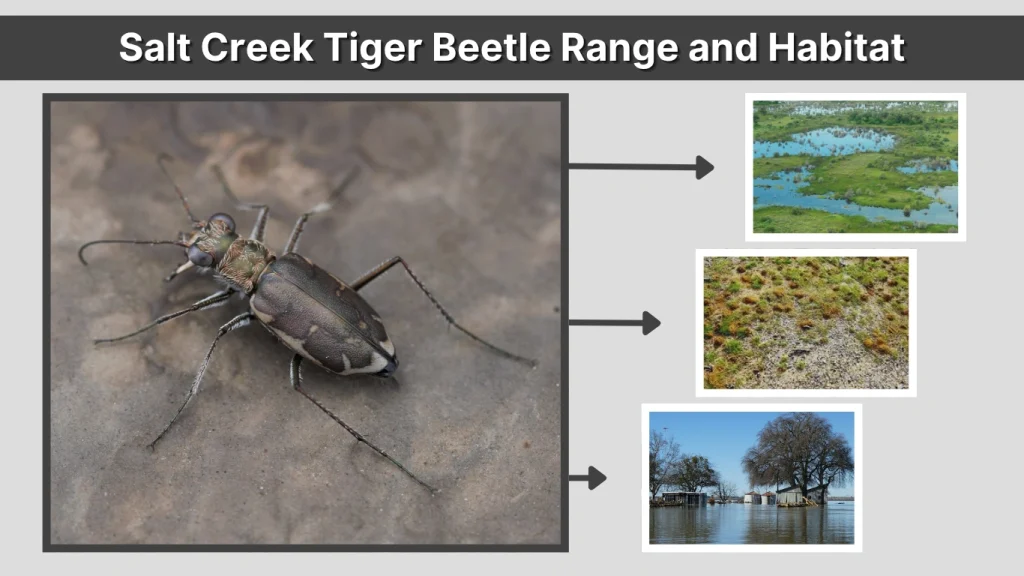
The Salt Creek Tiger Beetle is a habitat specialist, meaning it requires very specific conditions to survive. Its range is extremely limited to Lancaster County, Nebraska, primarily near the city of Lincoln.
Critical Habitat Features:
- Found in saline wetlands and adjacent streams.
- Requires bare or sparsely vegetated soil for hunting and egg-laying.
- Depends on natural flooding cycles that maintain wetland conditions.
A range map created by the USFWS shows just how narrow its distribution is. Unlike widespread beetles, this insect exists only in fragmented pockets of wetland, making its survival heavily dependent on habitat protection and restoration.
Physical Characteristics and Life Cycle
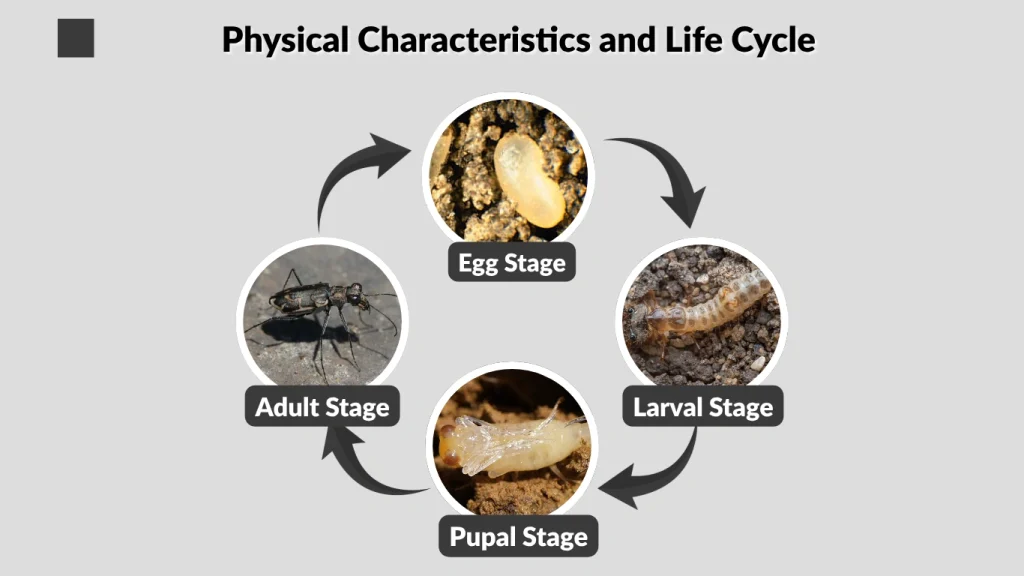
The Salt Creek Tiger Beetle shares the classic traits of tiger beetles but also has features that make it stand out.
Physical Traits
- Small insect, about 0.5 inches long.
- Metallic bronze or green coloration with cream-colored spots on its wing covers.
- Long, slender legs built for speed.
- Large eyes and sickle-shaped jaws that help it hunt prey.
Life Cycle
Like other beetles, the Salt Creek Tiger Beetle undergoes complete metamorphosis:
- Egg Stage: Laid in sandy soil near wetland areas.
- Larval Stage: Larvae dig vertical burrows and wait to ambush passing insects.
- Pupal Stage: Transformation into adults occurs underground.
- Adult Stage: Adults emerge in late spring or early summer to hunt and reproduce.
This life cycle is closely tied to seasonal wetland conditions. Any disturbance to these habitats—such as droughts, flooding disruptions, or human development—can directly impact their breeding success.
Diet and Predators

Like all tiger beetles, the Salt Creek species is a skilled predator. Its diet and role in the ecosystem are critical for maintaining insect balance.
Diet
- Feeds on small insects such as flies, ants, and other invertebrates.
- Uses its speed to chase down prey.
- Powerful jaws allow it to crush and consume insects quickly.
Predators
- Birds, amphibians, and spiders often prey on adults.
- Larvae in burrows are vulnerable to ants and parasitic wasps.
- Human-driven habitat change indirectly increases predation risk by reducing cover.
This predator-prey dynamic is part of what makes the beetle valuable in ecosystems. It helps keep insect populations in check, serving as a natural pest controller.
Importance in the Ecosystem
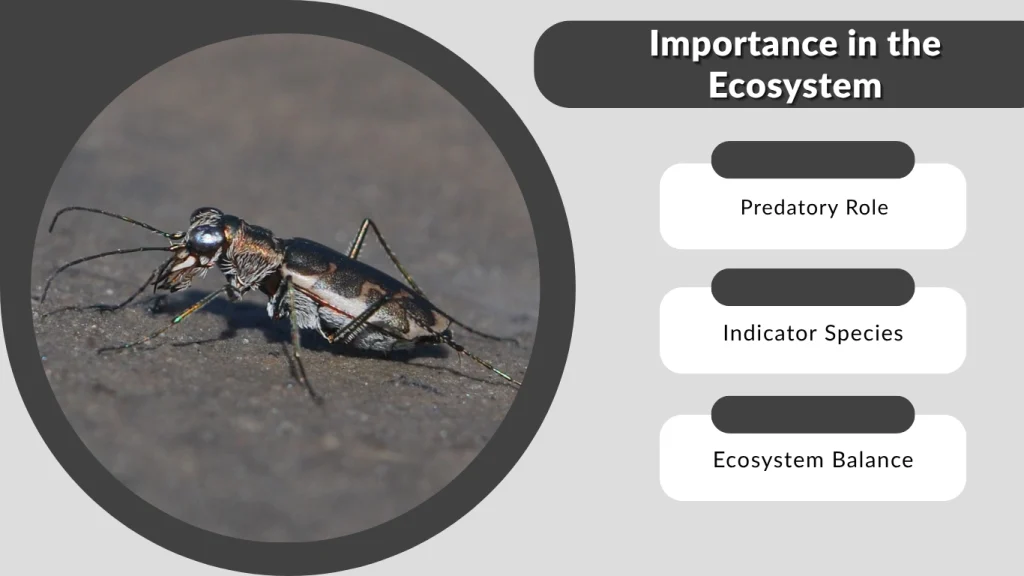
The Salt Creek Tiger Beetle is more than just an endangered insect—it is a keystone of its environment.
Why It’s Important:
- Predatory Role: Helps regulate insect populations in wetlands.
- Indicator Species: Declining numbers signal deteriorating wetland health.
- Ecosystem Balance: Part of the complex food web supporting birds, amphibians, and mammals.
Its presence in saline wetlands highlights the ecological richness of Nebraska’s landscape. Without this beetle, these ecosystems lose a vital predator and an important sign of environmental stability.
Threats and Endangerment
The Salt Creek Tiger Beetle’s endangered status is primarily due to human activity. Its population has shrunk drastically over the past century.
Why It’s Endangered:
- Habitat Loss: More than 90% of Nebraska’s saline wetlands have been drained for farming and development.
- Urban Expansion: Growing cities encroach on critical habitats.
- Pollution: Agricultural runoff contaminates the wetlands.
- Climate Change: Alters flooding cycles and soil conditions needed for breeding.
- Small Population Size: With only a few hundred individuals left, genetic diversity is extremely limited.
These combined threats explain why the Salt Creek Tiger Beetle is considered one of the most endangered insects in the United States.
Conservation Efforts and Recovery Plans
Because the Salt Creek Tiger Beetle is federally listed under the Endangered Species Act (ESA), conservation efforts are extensive and ongoing. The U.S. Fish and Wildlife Service (USFWS) has designated critical habitat areas and developed a comprehensive final recovery plan to stabilize and expand populations.
Key Recovery Measures:
- Habitat Restoration: Re-creating saline wetlands in Lancaster County.
- Captive Breeding Programs: The Henry Doorly Zoo in Omaha, Nebraska has successfully bred Salt Creek Tiger Beetles in captivity and released them into protected areas.
- Monitoring Programs: Regular surveys of populations to track numbers and survival rates.
- Public Outreach: Educating communities about the importance of wetland preservation.
These steps are crucial because wild populations alone may not recover without human intervention. Captive breeding, in particular, has offered a safety net for this species.
Population Trends
The Salt Creek Tiger Beetle once had a broader presence across Nebraska, but today its numbers are alarmingly low. Estimates suggest fewer than 500 individuals remain in the wild at any given time.
While this paints a grim picture, recent conservation measures have shown cautious optimism. Captive breeding has increased survival chances, and restored wetlands are slowly beginning to support healthier populations. However, the beetle’s limited distribution means any sudden environmental disruption could still cause catastrophic losses.
Cultural and Scientific Significance
Beyond its ecological role, the Salt Creek Tiger Beetle has found a place in both culture and science.
Origami and Art
World-renowned origami artist Robert J. Lang created a detailed crease pattern (CP) for the Salt Creek Tiger Beetle, available in origami diagrams and PDFs. His work not only celebrates the beetle’s intricate form but also raises awareness of its endangered status.
Symbol of Nebraska’s Natural Heritage
For Nebraska, this beetle represents a rare and fragile part of the state’s natural identity. Conservation campaigns often use it as a symbol of the importance of protecting saline wetlands.
Scientific Research
Because it is an indicator species, the Salt Creek Tiger Beetle is the subject of ecological studies. Researchers use its population trends to measure wetland health, making it both scientifically and environmentally valuable.
Future of the Salt Creek Tiger Beetle
The outlook for the Salt Creek Tiger Beetle depends heavily on continued conservation. With fewer than a handful of known populations in the wild, the margin for survival is narrow.
What the Beetle Needs to Survive:
- Protected Wetlands: Ensuring saline wetlands remain undeveloped and pollution-free.
- Ongoing Captive Breeding: Expanding zoo-led programs for population reinforcement.
- Community Engagement: Involving local communities in conservation work.
- Climate Resilience: Adapting strategies to mitigate climate change effects on wetland ecosystems.
If these actions are maintained and expanded, there is hope that this beetle can recover. Without them, extinction is a very real possibility.
FAQs
What is the Salt Creek Tiger Beetle’s scientific name?
The Salt Creek Tiger Beetle is scientifically named Cicindela nevadica lincolniana. It is a subspecies of the Nevada tiger beetle and is found only in the saline wetlands of Lancaster County, Nebraska. This narrow classification highlights its rarity and specialized habitat requirements.
Where is the Salt Creek Tiger Beetle found?
It is endemic to Nebraska, specifically around the Salt Creek drainage in Lancaster County. Its range is extremely limited, as it relies on saline wetlands with bare soil for survival. Because of this, any habitat destruction immediately threatens its population.
Why is the Salt Creek Tiger Beetle endangered?
The beetle is endangered primarily due to habitat loss. Over 90% of Nebraska’s saline wetlands have been destroyed or altered by agriculture and urban development. Pollution, invasive species, and climate change further contribute to its decline, leaving only small fragmented populations.
What does the Salt Creek Tiger Beetle eat?
This species feeds on small insects such as ants, flies, and other invertebrates. Known for its speed and sharp jaws, it hunts by chasing down prey in open areas of wetland soil. Its predatory role helps maintain ecological balance by controlling insect populations.
What conservation efforts are in place for the Salt Creek Tiger Beetle?
Conservation includes habitat restoration, captive breeding programs at the Henry Doorly Zoo, and recovery strategies led by the USFWS. These efforts aim to increase population numbers, safeguard critical habitats, and raise awareness about the beetle’s importance to wetland ecosystems.