
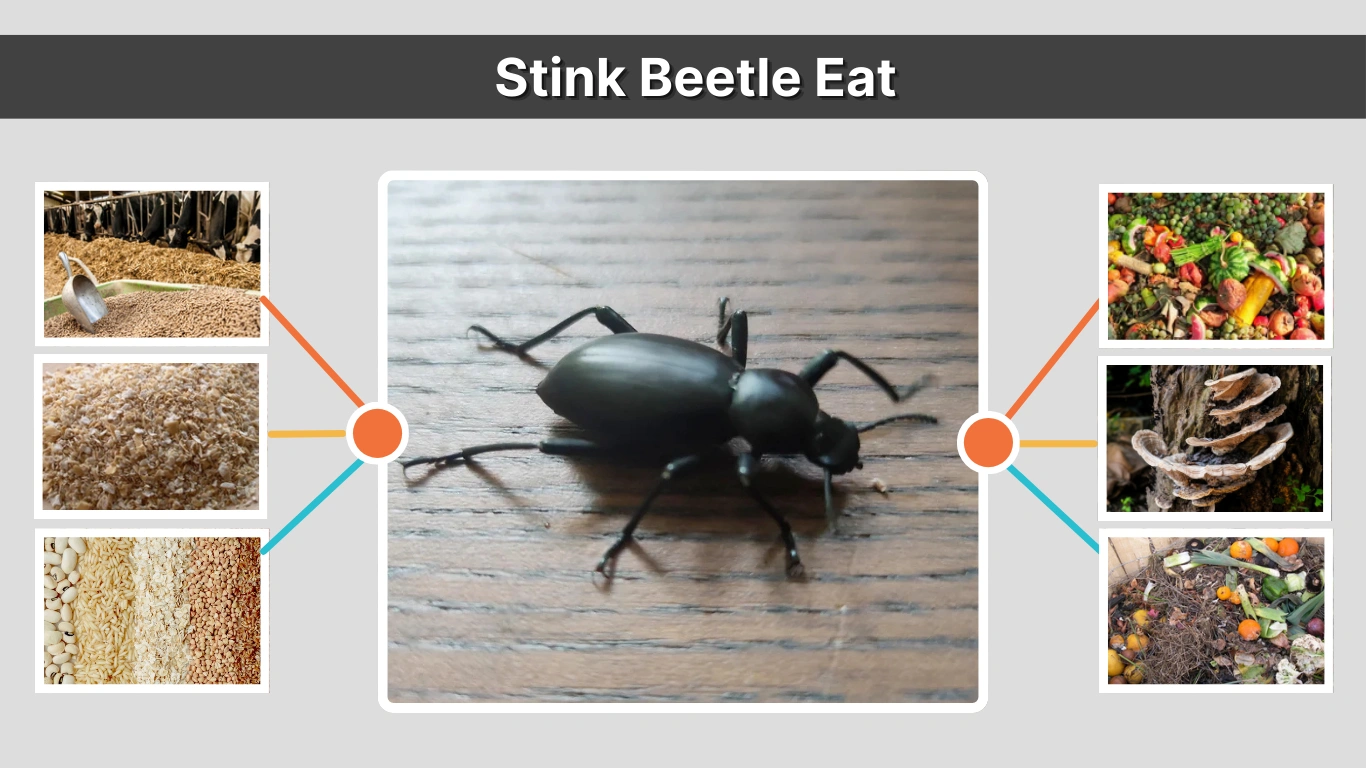
Stink beetles, often known as darkling beetles from the Eleodes genus, are common in deserts, grasslands, and even gardens. Famous for their headstand defensive posture and foul odor, they play important ecological roles. Their diet is surprisingly varied, ranging from seeds and leaves to decaying matter. Understanding what stink beetles eat reveals their survival strategies and impact on both natural and human-influenced environments.
General Feeding Habits
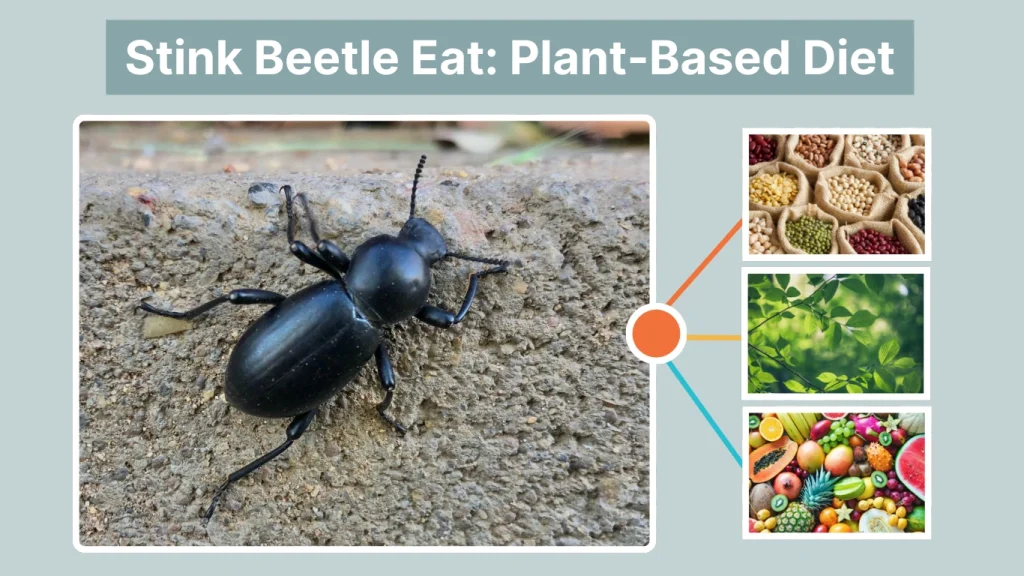
Stink beetles are primarily herbivorous scavengers that survive on plant materials and organic debris. Unlike predatory beetles, they rarely hunt live prey. Instead, they consume dry seeds, rotting vegetation, and stored grains. Adapted for arid habitats, they can thrive on scarce resources, making them resilient survivors in deserts, farms, and households alike.
Plant-Based Diet
Seeds
Seeds form a large part of stink beetle diets, especially in deserts where vegetation is limited. They crack open and consume dry grass seeds, grains, and beans. This preference makes them beneficial in recycling natural seeds but problematic when they invade pantries or stored crops, contaminating supplies with their feeding activity.
Leaves
Stink beetles chew on soft or decaying leaves they find on the ground. Rather than actively attacking healthy plants, they often target fallen or weakened leaves. In gardens or farms, this feeding sometimes extends to young crops. Their role helps recycle plant matter but may also cause minor agricultural issues if populations increase.
Fruits
Rotting or fallen fruits attract stink beetles, offering sugar and moisture in otherwise dry habitats. They typically feed on damaged fruit rather than fresh produce, though hungry beetles may nibble ripe fruits in gardens. By consuming spoiled fruit, they aid in natural decomposition, but indoors, they can become a nuisance pest.
Roots and Stems
Some stink beetle species nibble on underground roots and tender stems, especially in cultivated soil. This feeding behavior can harm seedlings and weaken small vegetable plants. Farmers and gardeners often notice damage when young plants wilt unexpectedly. While not as destructive as other pests, stink beetles still pose localized risks.
Grains
Grains such as wheat, oats, rice, and corn are highly attractive to stink beetles. In agricultural settings or storage bins, they readily infest grain piles. Their feeding contaminates food products, making them unsuitable for human or animal consumption. This trait makes stink beetles both a farm pest and a household nuisance.
Organic & Decaying Matter
Dead Plant Material
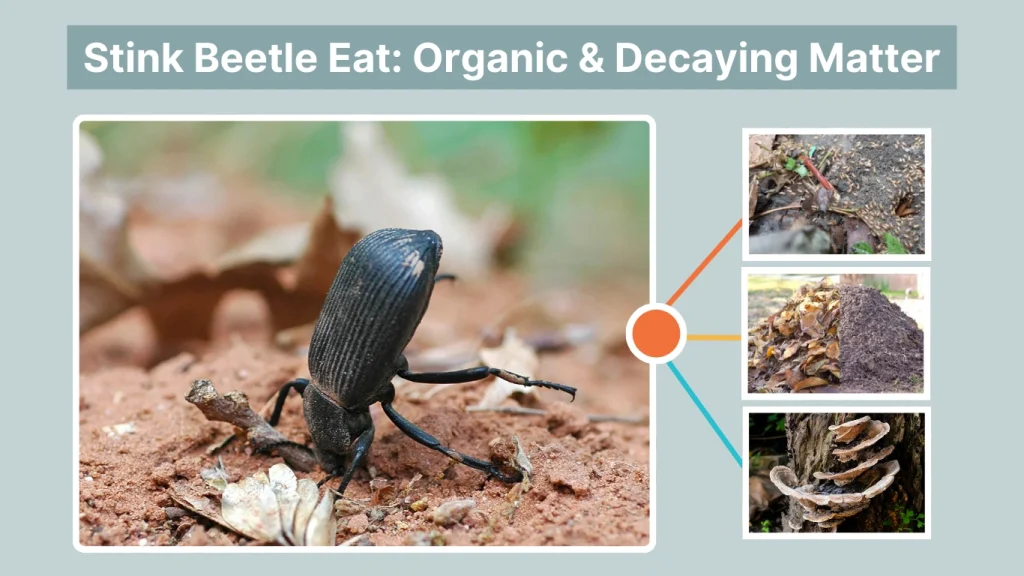
Stink beetles thrive on dry, dead vegetation. They chew dried grasses, twigs, and husks left behind in their environment. This habit helps recycle plant matter that would otherwise accumulate. By breaking down these tough materials, stink beetles contribute to soil fertility and natural nutrient cycling in arid and semi-arid regions.
Compost and Leaf Litter
In gardens or wild habitats, stink beetles consume compost piles and leaf litter. They feed on decomposing scraps, enhancing the breakdown process. Their activity speeds up organic recycling and enriches soil with nutrients. This role makes them helpful decomposers, though their presence in compost bins may sometimes be considered bothersome.
Fungi
Though less common, stink beetles occasionally consume fungi or mold in moist conditions. This may occur in shaded areas, damp soils, or decaying logs. Feeding on fungi provides additional nutrients while balancing fungal growth. Their diet flexibility allows them to take advantage of whatever food sources become available in changing environments.
Occasional Animal-Based Diet
Small Insects
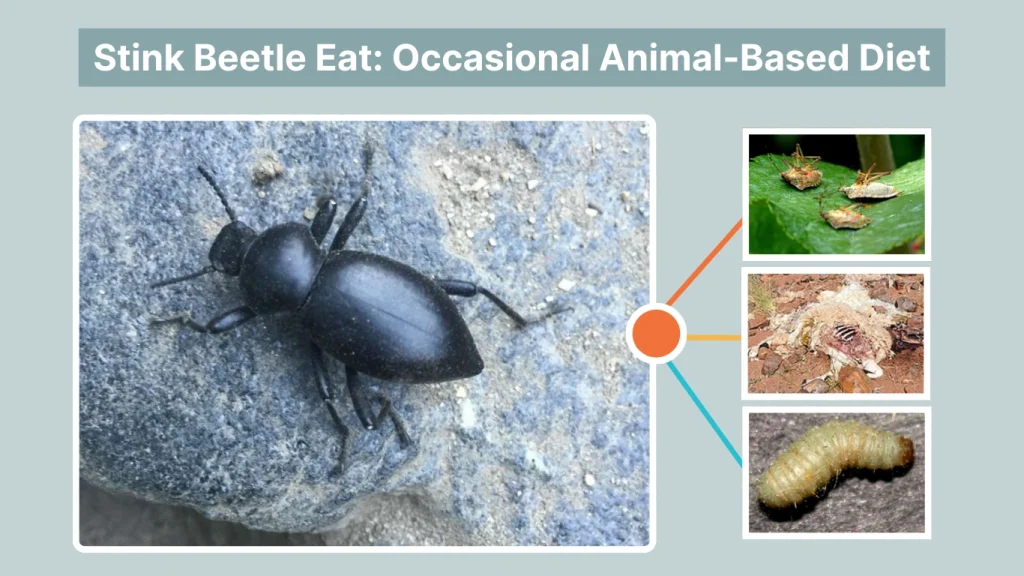
While stink beetles are not active hunters, they sometimes nibble on dead insects or soft-bodied remains. This behavior is opportunistic, supplementing their mostly plant-based diet. By consuming insect fragments, they recycle nutrients back into the ecosystem, although these instances are rare compared to their preference for seeds and vegetation.
Carrion Residue
In harsh desert environments, stink beetles may scavenge traces of carrion. They don’t consume large amounts of animal flesh but can feed on residue and decomposed fragments. This opportunistic feeding helps them survive in resource-scarce conditions, highlighting their adaptability and resilience in harsh climates where food choices are limited.
Human-Associated Foods
Stored Food Products
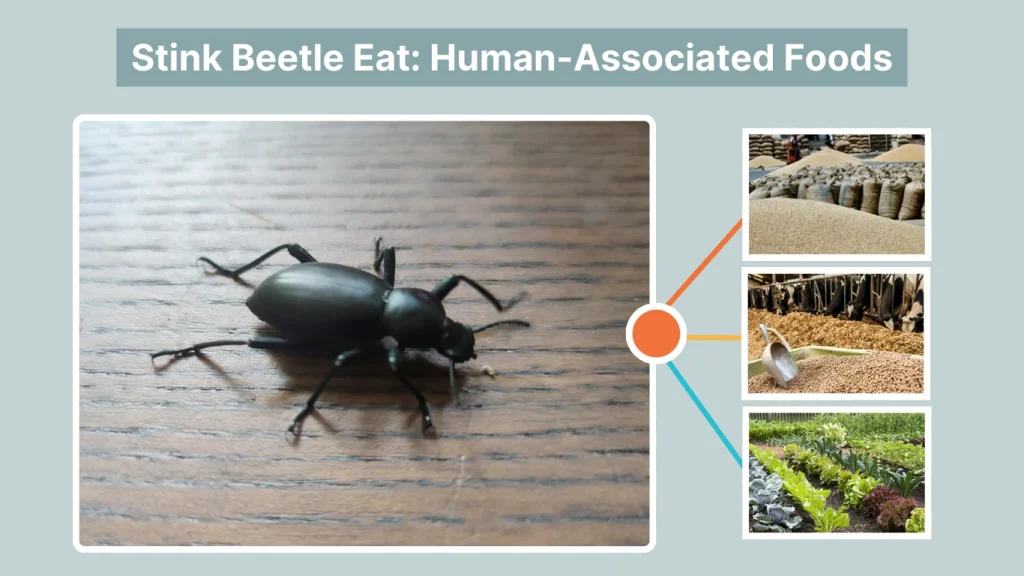
Stink beetles often infest pantries, attacking flour, cereal, dried beans, and rice. Their presence contaminates food, making it inedible. Once inside a home or storage bin, they can reproduce quickly. Preventing infestations requires sealed containers and proper sanitation, as stink beetles exploit any available cracks or loose packaging.
Animal Feed
In barns or livestock facilities, stink beetles are drawn to animal feed. They feed on grains and pellets, sometimes reducing feed quality. Their infestation can cause both economic loss and contamination risks. Regular cleaning and secure storage are essential to keep them from spreading through farm supplies and feed bins.
Garden Crops
Stink beetles occasionally damage garden vegetables, particularly seedlings with tender roots and shoots. While not as aggressive as other pests, they can still affect crop growth in small-scale farming. Monitoring soil, using barriers, and rotating crops help reduce the impact of these beetles in garden environments.
Diet by Life Stage
Larvae (Mealworms)
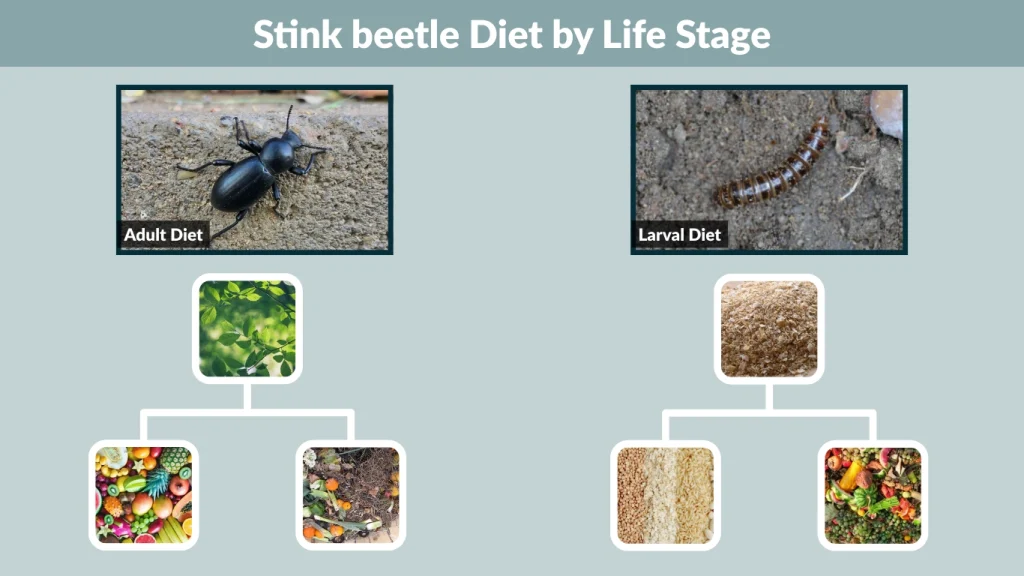
Stink beetle larvae, often called mealworms, feed on bran, grains, and organic scraps. Widely bred as feeders for reptiles and birds, they thrive on dry cereals. Their ability to eat a broad range of stored products makes them common in captivity, where they are raised commercially for pet and farm industries.
Adults
Adult stink beetles consume mostly seeds, grains, and dry plant matter. They also scavenge decaying vegetation and organic litter. Unlike their larvae, adults are more mobile, actively searching for food across diverse environments. Their tough diet supports their survival in harsh climates, making them remarkably adaptable insects in desert ecosystems.
Environmental Influence on Diet
Stink beetle diets are shaped by their surroundings. In deserts, they rely on dry seeds and vegetation. In farms, they target crops and stored grains. Seasonal shifts also matter—spring offers fresh plants, while summer limits them to dried debris. Their adaptability allows them to thrive wherever food is available.
Role of Stink Beetle Diet in Ecosystems
By feeding on organic waste, stink beetles recycle nutrients into the soil, supporting plant growth. They help break down tough plant matter and balance fungal populations. As prey for reptiles, birds, and small mammals, their diet makes them part of the food chain, strengthening ecosystem stability in dry landscapes.
Conclusion
Stink beetles survive on a diverse diet ranging from seeds and grains to rotting vegetation and fungi. Occasionally scavenging insect remains or carrion, they adapt to whatever resources are available. Their feeding habits make them vital decomposers and soil enrichers, though sometimes pests in homes or farms. Overall, stink beetles demonstrate remarkable resilience through their dietary flexibility.
FAQS
1. What do stink beetles mainly eat?
Stink beetles are primarily herbivorous, feeding on seeds, dry grasses, leaves, and decaying vegetation. They thrive on plant-based foods but also scavenge fungi or organic debris when available. Their diet reflects their adaptability, allowing them to survive in deserts, gardens, and even households where stored grains and cereals are accessible.
2. Do stink beetles eat live insects?
No, stink beetles are not active hunters. They rarely feed on live insects, preferring plant matter and organic waste. However, in tough conditions, they may scavenge dead insects or carrion residue. This behavior is opportunistic, supplementing their diet when vegetation and seeds are scarce in dry or harsh environments.
3. Can stink beetles damage crops?
Yes, stink beetles sometimes damage crops, particularly seedlings with soft roots and shoots. They may also chew grains and stored food products in barns or pantries. While not as destructive as other beetle pests, their presence in farming areas can reduce yield quality, making pest management strategies necessary in affected regions.
4. Do stink beetles eat fungi or compost?
Stink beetles occasionally feed on fungi, mold, or decomposing organic matter found in compost piles or leaf litter. This diet provides extra nutrients, especially in moist environments. Their feeding helps break down waste materials, making them beneficial decomposers. However, in gardens, their presence in compost bins can sometimes be bothersome.
5. What do stink beetle larvae (mealworms) eat?
Stink beetle larvae, known as mealworms, feed on bran, oats, grains, and organic scraps. In captivity, they are often raised on cereals and vegetable matter for pet food. Their flexible diet allows them to grow quickly, making them valuable in commercial farming as feeders for birds, reptiles, and other animals.
