
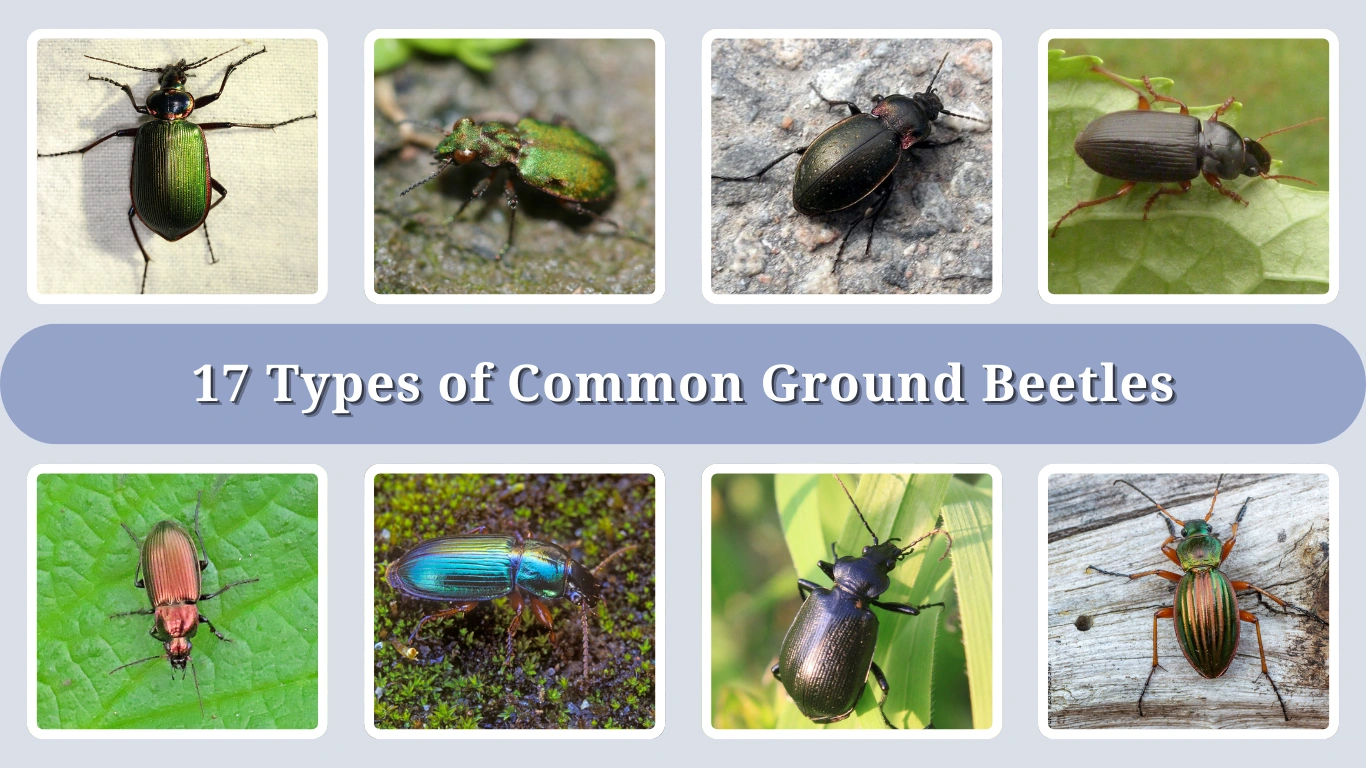
Ground beetles (Carabidae) form one of the largest and most diverse beetle families in the world, with thousands of species inhabiting forests, grasslands, wetlands, and agricultural landscapes. Known for their speed, strength, and predatory habits, they are vital allies in natural pest control. Many species are nocturnal hunters that feed on slugs, caterpillars, and insect larvae, while others also consume seeds. Their wide distribution and ecological importance make them fascinating insects to study.
1. Bronze Ground Beetle (Carabus nemoralis)
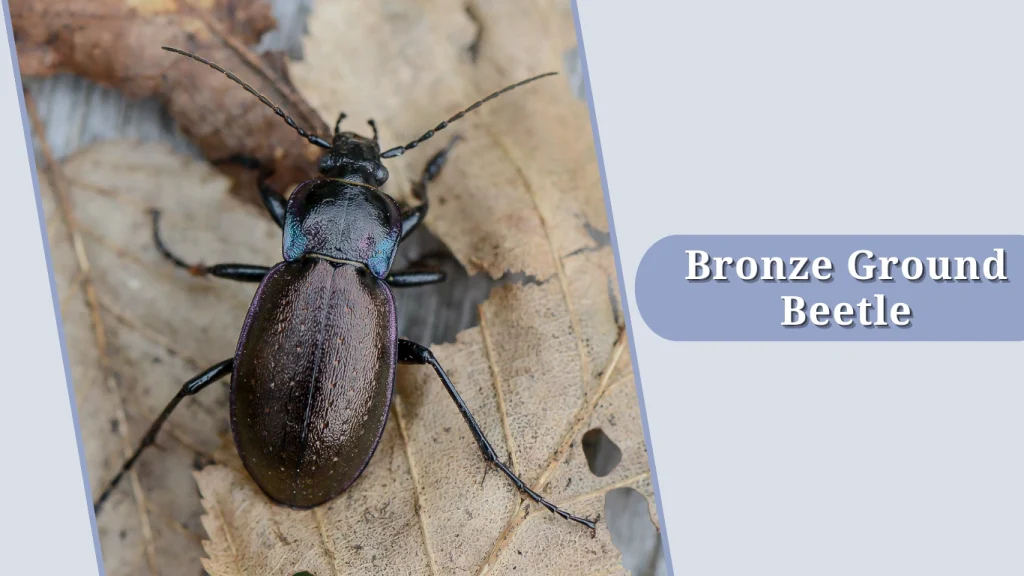
The Bronze Ground Beetle is one of the most widespread and recognizable ground beetles in Europe and North America. Known for its shiny bronze or metallic brown coloration, it plays an important role as a natural predator in gardens, woodlands, and agricultural lands. This beetle is nocturnal, highly active during the night, and is often found hiding under stones, logs, or leaf litter during the day. Its ability to control pests makes it valuable for natural ecosystems and farming environments.
Identification
- Size: Adults typically measure 18–26 mm in length.
- Color: Shiny bronze or copper-brown with a smooth, oval body.
- Legs: Strong, dark legs adapted for running.
- Elytra: Hardened wing covers with faint ridges and metallic sheen.
- Antennae: Long, slender, and segmented, useful for detecting prey.
Habitat
The Bronze Ground Beetle is found in a wide range of habitats, including woodlands, grasslands, gardens, and farmland edges. It prefers moist soil and shaded areas where it can easily find cover. In urban areas, it often thrives in gardens and compost piles, as these environments provide both food and shelter.
Behaviors
This beetle is nocturnal, emerging at night to hunt. It is a fast runner, using speed to chase down prey rather than flying, as it is generally flightless. During the day, it hides under stones, bark, and leaf litter. In colder months, it overwinters in soil or sheltered spaces until spring.
Diet & Life
The Bronze Ground Beetle is a carnivorous predator, feeding on slugs, caterpillars, worms, and insect larvae. It helps reduce pest populations naturally, making it beneficial for crops. Adults live up to two years, with reproduction occurring in late spring and early summer. Eggs are laid in soil, and larvae—also predatory—contribute to pest control before maturing into adults.
2. Granulated Ground Beetle (Carabus granulatus)
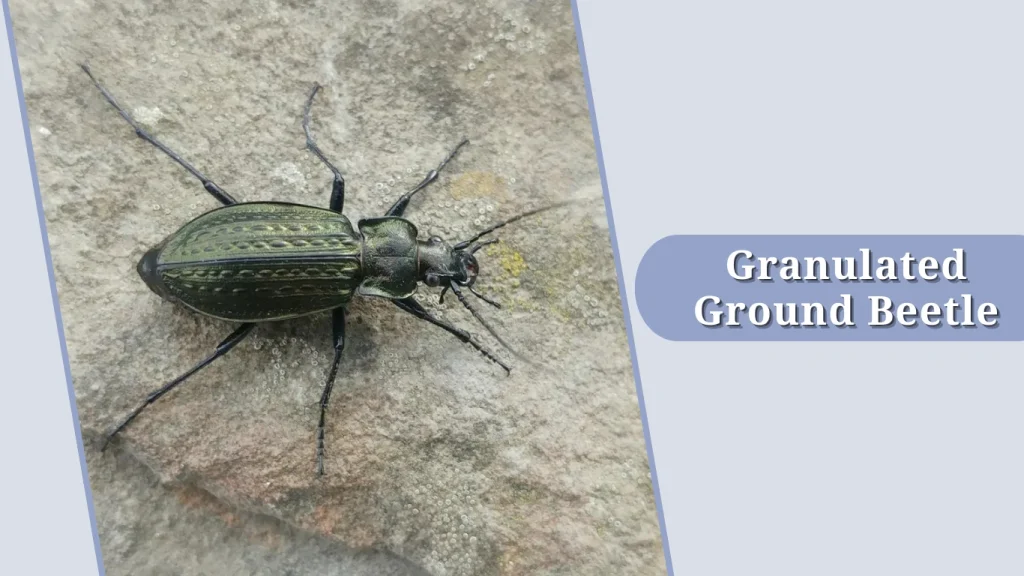
The Granulated Ground Beetle is a robust and widespread species found across Europe, parts of Asia, and introduced regions of North America. Recognized for its textured body surface, it plays a significant role in natural pest control. This beetle is active mainly at night and relies on its strong running ability to capture prey. Its adaptability to various habitats makes it one of the most common and well-studied ground beetles.
Identification
- Size: Adults range from 20–30 mm in length.
- Color: Typically dark brown or bronze with a metallic sheen.
- Body: Distinctly granulated elytra (hardened wing covers) giving a rough texture.
- Legs: Long, sturdy, and well-suited for running.
- Antennae: Prominent and segmented, aiding in sensory detection.
Habitat
The Granulated Ground Beetle thrives in meadows, grasslands, forests, and wetlands, often staying close to moist soil. It is frequently found under stones, logs, and leaf litter. In agricultural landscapes, it inhabits crop fields and hedgerows, contributing to natural pest management. Its tolerance for damp conditions makes it particularly abundant near rivers, marshes, and ditches.
Behaviors
This beetle is nocturnal, hunting at night and hiding during the day. It is a fast, ground-dwelling runner rather than a flyer. In colder climates, it hibernates in soil or protected spaces through the winter. Its life cycle includes both adult and larval predation, which enhances its ecological importance.
Diet & Life
The Granulated Ground Beetle is a voracious predator, consuming caterpillars, slugs, snails, and insect larvae. Both adults and larvae actively feed on pests, making them allies in agriculture. Reproduction occurs in late spring, with females laying eggs in soil. Larvae develop quickly, preying on soil-dwelling insects before pupating. Adults may live up to two years, maintaining their role in pest regulation across multiple seasons.
3. Violet Ground Beetle (Carabus violaceus)
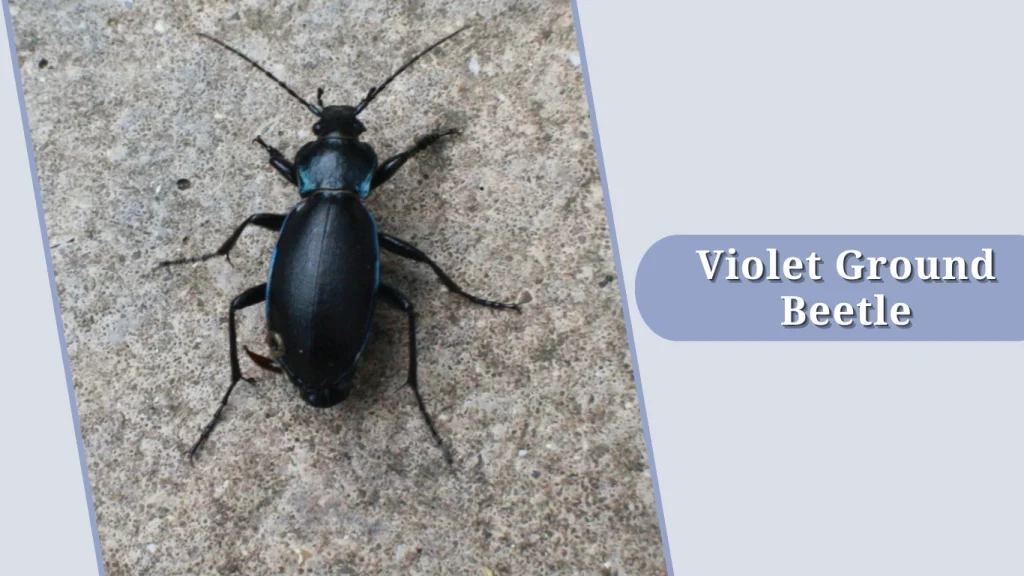
The Violet Ground Beetle is a striking species named for its metallic violet or purple sheen along the edges of its body and wing covers. Common across Europe and introduced to parts of North America, it is among the most familiar large ground beetles. With its bold coloration and significant size, it is easily recognized and admired by naturalists and gardeners alike. This beetle is an important natural predator, reducing populations of slugs, worms, and other soft-bodied invertebrates.
Identification
- Size: Adults measure 20–30 mm in length.
- Color: Shiny black body with violet or purple margins on the elytra and pronotum.
- Body: Elongated and flattened, built for speed.
- Legs: Long and powerful, adapted for rapid running.
- Antennae: Long, segmented, and sensitive to vibrations.
Habitat
The Violet Ground Beetle is typically found in woodlands, gardens, meadows, and agricultural fields. It favors damp, shaded areas and is often located beneath stones, logs, or within leaf litter. It is adaptable and thrives both in rural and suburban landscapes, particularly where moisture levels are high.
Behaviors
This beetle is nocturnal and emerges after dusk to hunt. It is a strong runner but rarely flies, relying on its legs to capture prey. During the day, it shelters in moist, protected areas. The Violet Ground Beetle is also known to produce a defensive secretion with an unpleasant odor when threatened, deterring predators.
Diet & Life
The Violet Ground Beetle is primarily carnivorous, preying on slugs, snails, earthworms, and caterpillars. Its strong mandibles allow it to tackle relatively large prey. Both adult beetles and their larvae are active hunters. Breeding usually occurs in spring, and females lay eggs in moist soil. Larvae develop through the summer, pupating underground before emerging as adults. Adults may live one to two years, continuing their role as efficient pest regulators.
4. Golden Ground Beetle (Carabus auratus)
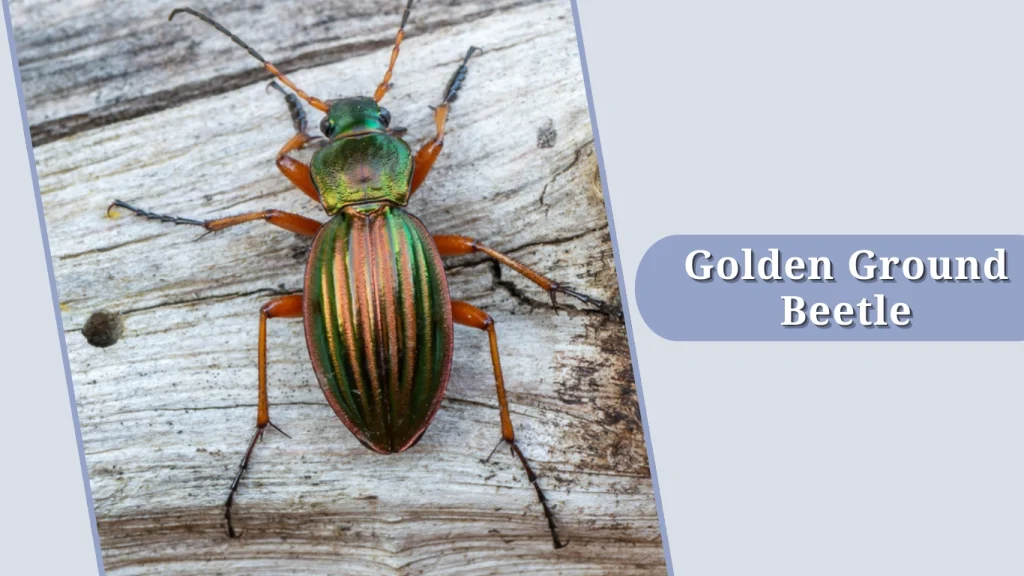
The Golden Ground Beetle is one of the most visually striking beetles in Europe. Its metallic green and golden coloration makes it highly recognizable and admired by entomologists and gardeners. Native to Europe, it is often considered a symbol of beneficial insects because of its effectiveness in controlling harmful caterpillars and other pests. Unlike many ground beetles, it is active both day and night, which increases its hunting success.
Identification
- Size: Adults measure 20–30 mm in length.
- Color: Brilliant green-golden body with metallic reflections.
- Elytra: Marked with fine longitudinal ridges and golden highlights.
- Legs: Bright red-orange, contrasting with the body.
- Antennae: Long, reddish, and finely segmented.
Habitat
The Golden Ground Beetle thrives in farmland, orchards, grasslands, and gardens, especially in temperate climates. It prefers sunny, open areas with loose soil that allows it to hunt efficiently. It is also found along field margins and hedgerows, making it a familiar sight in agricultural landscapes.
Behaviors
Unlike many ground beetles, the Golden Ground Beetle is diurnal as well as nocturnal, hunting both day and night. It is a fast and relentless predator, known for climbing low vegetation to chase prey. Although primarily a runner, it can also fly when disturbed, making it more mobile than many related species.
Diet & Life
This beetle is an active carnivore, feeding mainly on caterpillars, slugs, and insect larvae, but it also consumes aphids and other small invertebrates. Farmers and gardeners value it as a natural ally against crop-damaging pests. Reproduction occurs in late spring, with eggs deposited in soil. Larvae are equally predatory, attacking soil-dwelling insects. Adults can live up to two years, maintaining high activity levels throughout their lifespan.
5. Leather Beetle / Great Ground Beetle (Carabus coriaceus)
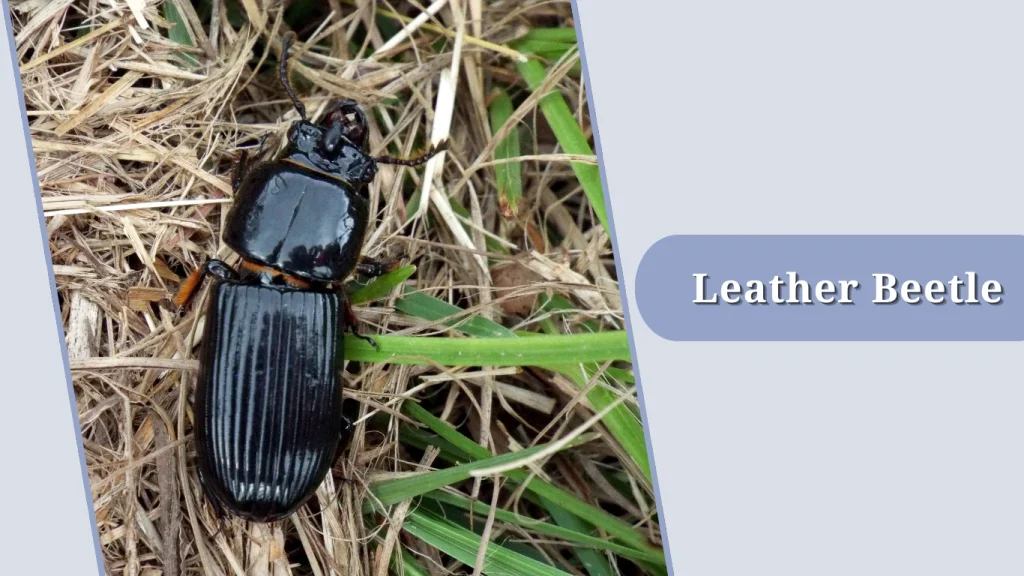
The Leather Beetle, also known as the Great Ground Beetle, is one of the largest ground beetles in Europe, making it an impressive sight for naturalists and gardeners. Its matte, leathery texture and imposing size make it stand out among other species. Despite its intimidating appearance, it is highly beneficial in controlling populations of invertebrate pests.
Identification
- Size: Adults range from 30–40 mm, making it among the largest of the family.
- Color: Uniform matte black, with a rough, leathery texture.
- Elytra: Coarse and dull compared to metallic species.
- Legs: Long and strong, suited for running.
- Antennae: Prominent and segmented, highly sensitive.
Habitat
This beetle inhabits deciduous forests, woodlands, gardens, and hedgerows, preferring shaded and moist environments. It is frequently found under logs, stones, and dense vegetation. While most common in rural areas, it occasionally wanders into suburban gardens where it continues its pest-control role.
Behaviors
The Leather Beetle is nocturnal, emerging at night to hunt. It is flightless and relies entirely on its strong legs to pursue prey. When threatened, it releases a foul-smelling defensive secretion to deter predators. During the day, it shelters in moist, dark refuges, and in winter, it hibernates underground or beneath debris until spring.
Diet & Life
This species is a powerful predator, feeding on slugs, snails, caterpillars, and worms. Its strong mandibles allow it to crush and consume even tough-shelled prey. The life cycle begins in late spring when females lay eggs in soil. Larvae are equally predatory, actively feeding until pupation. Adults may live up to two years, contributing to pest control over multiple seasons.
6. Black Field Beetle (Pterostichus melanarius)
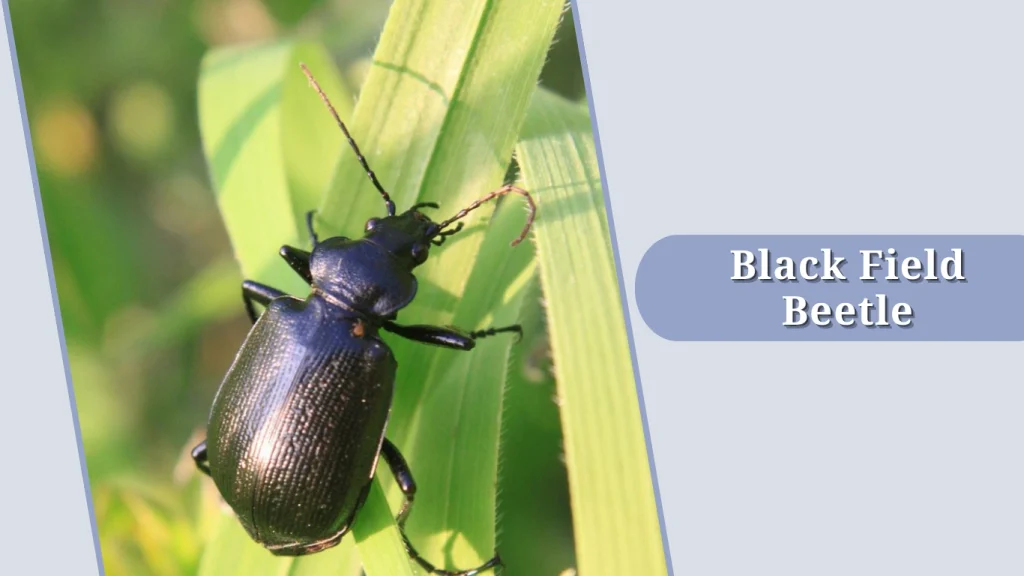
The Black Field Beetle is one of the most abundant ground beetles in agricultural landscapes. Originally native to Europe, it has spread widely and is now firmly established in North America. Farmers and gardeners recognize it as a beneficial insect because of its appetite for crop-damaging pests. Its adaptability to different environments and resilience to disturbance make it one of the most successful ground beetle species.
Identification
- Size: Adults measure 12–18 mm in length.
- Color: Shiny, jet-black body.
- Body Shape: Elongated and slightly flattened, suited for rapid movement.
- Elytra: Smooth, with fine longitudinal grooves.
- Legs: Long and slender, built for speed.
- Antennae: Long, segmented, extending forward in motion.
Habitat
The Black Field Beetle is highly adaptable, found in farmlands, grasslands, meadows, and gardens. It prefers loose, moist soil and is often seen in plowed fields, hedgerows, and near compost heaps. Because of its tolerance to human-modified landscapes, it thrives in both rural and suburban environments.
Behaviors
This beetle is nocturnal, emerging at night to hunt. It is an agile runner but flightless, relying on its legs to pursue prey. During the day, it hides under stones, logs, or soil clumps to avoid predators. It is also capable of overwintering as an adult, sheltering in soil or leaf litter until spring.
Diet & Life
The Black Field Beetle is a generalist predator, feeding on slugs, aphids, caterpillars, and fly larvae. It plays an important role in controlling agricultural pests such as root maggots. Reproduction occurs in summer, with females depositing eggs in soil. Larvae, like adults, are active predators. This beetle is multivoltine in some regions, meaning multiple generations can occur within a year. Adults may live over a year, maintaining continuous pressure on pest populations.
7. Black Ground Beetle (Pterostichus niger)
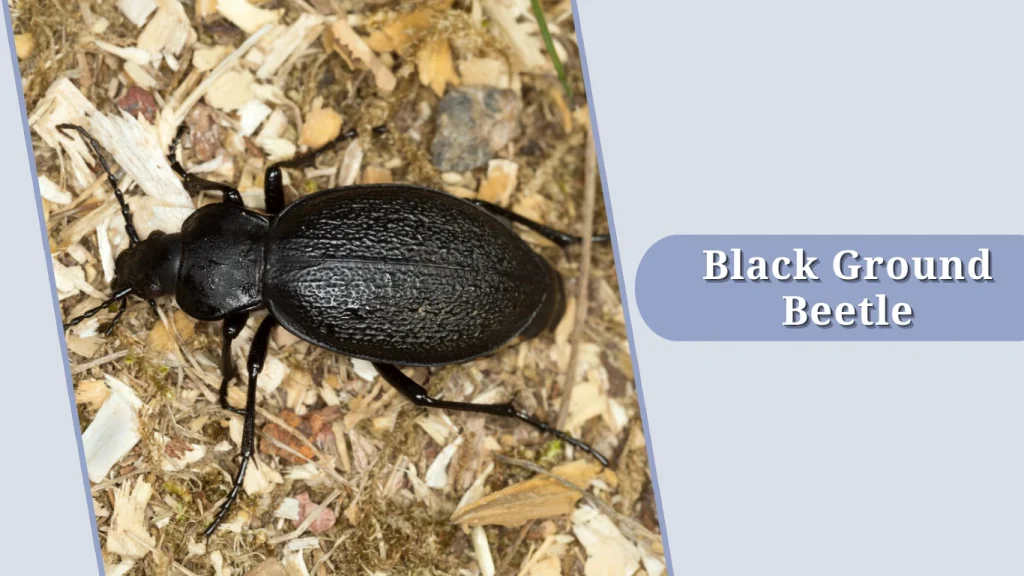
The Black Ground Beetle is one of the most common large beetles found in woodlands and forested landscapes across Europe and parts of Asia. It is an important predator within the soil ecosystem, contributing to the regulation of invertebrate populations. Its shiny black appearance and strong build make it easy to recognize in the field. Though less common in agricultural landscapes than its relative Pterostichus melanarius, it remains an ecologically valuable species.
Identification
- Size: Adults measure 15–22 mm in length.
- Color: Glossy jet-black body without metallic sheen.
- Elytra: Smooth with distinct longitudinal grooves.
- Body: Elongated and slightly flattened for ground movement.
- Legs: Long, dark, and well-developed for fast running.
- Antennae: Slender and segmented, aiding in sensory detection.
Habitat
The Black Ground Beetle inhabits deciduous and mixed forests, shaded gardens, hedgerows, and parklands. It favors damp soil rich in organic matter and is often discovered beneath fallen logs, stones, or thick layers of leaf litter. It is less tolerant of dry, open areas but thrives in environments with consistent moisture.
Behaviors
This beetle is nocturnal, emerging after sunset to hunt and staying hidden during the day. It is flightless and depends on running speed to capture prey. In colder months, it burrows into the soil to overwinter, often surviving in small groups in sheltered places. When disturbed, it may release defensive chemicals with a sharp odor to ward off predators.
Diet & Life
The Black Ground Beetle is a predator of slugs, snails, earthworms, and soft-bodied insect larvae. Its larvae are equally carnivorous and active within soil. Reproduction occurs during the spring and early summer, with eggs deposited underground. The species has a relatively long life cycle, with adults often surviving more than one year. Its feeding activity plays a vital role in natural pest suppression, particularly in woodland ecosystems.
8. Copper Ground Beetle (Poecilus cupreus)
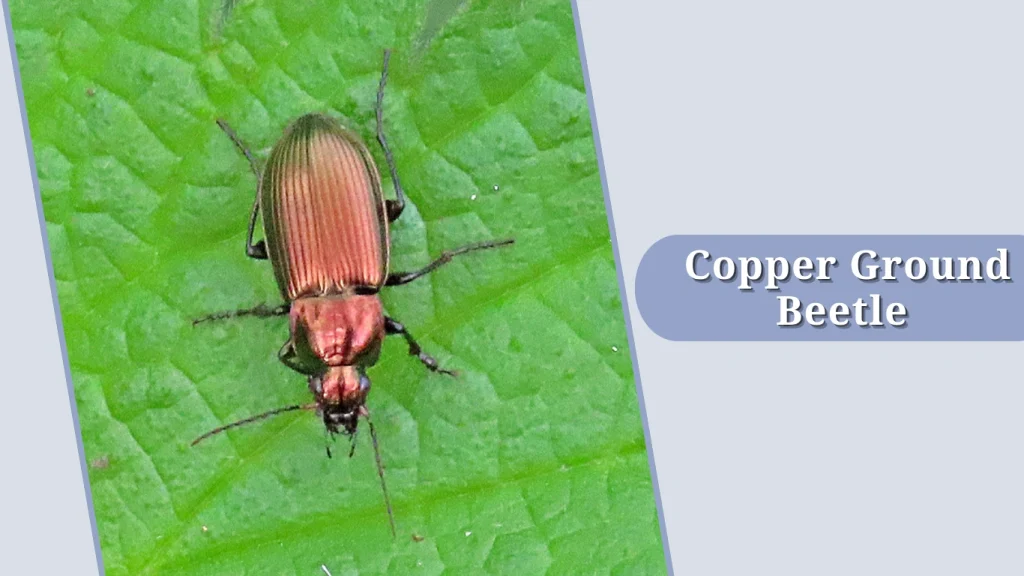
The Copper Ground Beetle is a widespread species in Europe and Asia, well known for its metallic sheen that ranges from green to bronze. It is one of the most common beetles in farmland and open grasslands, making it a familiar sight to both farmers and naturalists. Because of its abundance in cultivated fields, it plays a major role in natural pest regulation.
Identification
- Size: Adults measure 9–14 mm in length.
- Color: Metallic copper, green, or bronze with varying iridescence.
- Elytra: Smooth, with fine ridges and a glossy appearance.
- Legs: Dark or reddish, slender, and built for running.
- Antennae: Long and thin, extending forward when in motion.
Habitat
This beetle thrives in farmlands, grasslands, meadows, and open fields, especially those with loose soil and vegetation cover. It is highly tolerant of disturbed habitats and is often found along crop margins, hedgerows, and pastures. Its presence in agricultural ecosystems makes it one of the most important natural pest controllers.
Behaviors
The Copper Ground Beetle is primarily nocturnal, emerging at night to hunt. During the day, it hides under stones, leaf litter, or soil clumps to avoid predation. It is a fast runner but not a strong flier, relying mainly on ground movement. In colder months, it overwinters as an adult in the soil, reemerging in spring to resume hunting.
Diet & Life
The Copper Ground Beetle is a carnivorous generalist, preying on caterpillars, aphids, slugs, and insect larvae. It is particularly valuable in crop fields, where it reduces pest populations naturally. Females lay eggs in the soil during spring and summer. Larvae are equally predatory, contributing to pest suppression before pupating. Adults may live for one to two years, ensuring their long-term presence in farming landscapes.
9. Green Ground Beetle (Poecilus versicolor)
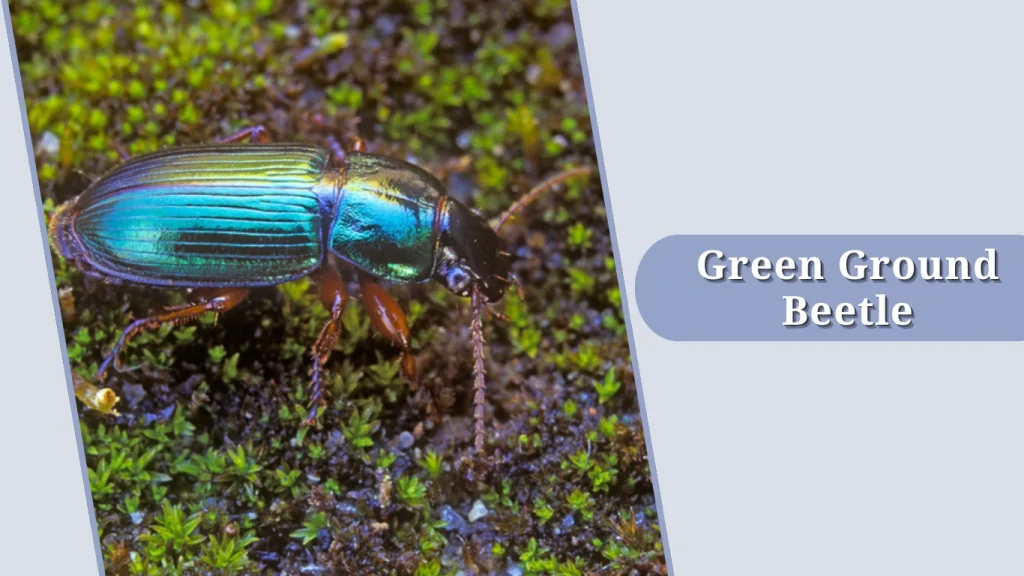
The Green Ground Beetle is a medium-sized and visually attractive species, known for its metallic sheen that varies between green, blue, and purple. It is widespread across Europe and parts of Asia and is often seen in open habitats where it contributes to natural pest control. Its adaptability allows it to thrive in both rural and semi-urban areas, making it a frequently encountered beetle by naturalists and gardeners.
Identification
- Size: Adults measure 9–13 mm in length.
- Color: Shiny metallic green, blue, or violet with iridescence depending on light angle.
- Elytra: Smooth, with shallow ridges running lengthwise.
- Legs: Dark with a slight reddish tint.
- Antennae: Slender, dark, and well-segmented.
Habitat
The Green Ground Beetle prefers grasslands, meadows, farmlands, and open woodland edges. It is especially common in cultivated fields and along hedgerows, where it hunts among vegetation and soil. It adapts well to disturbed environments, often persisting in agricultural regions where other beetles decline.
Behaviors
This species is mainly nocturnal, though it can sometimes be observed during the day in shaded areas. It is an excellent runner but rarely flies, depending on its legs to move quickly across the soil surface. During the winter months, it shelters in soil or beneath debris, emerging again in spring.
Diet & Life
The Green Ground Beetle is a generalist predator, feeding on small insects, caterpillars, fly larvae, and aphids. It plays an important role in suppressing pest populations in crop fields. Reproduction occurs in late spring, with females depositing eggs in the soil. The larvae, like adults, are predatory and contribute to pest reduction before pupating. Adults can live more than a year, ensuring a long-lasting effect on ecosystem balance.
10. Bronze Ground Beetle (Amara aenea)
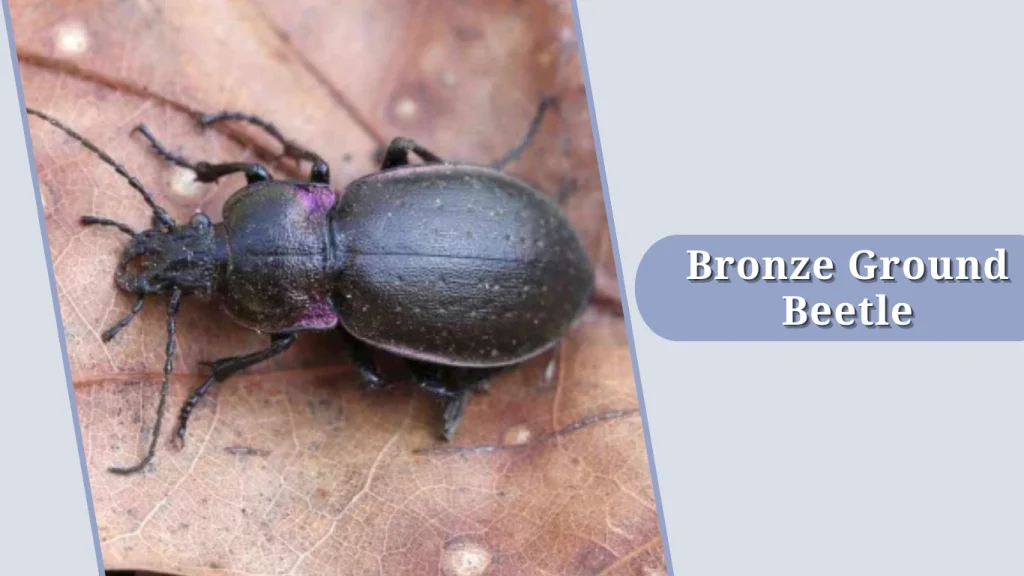
The Bronze Ground Beetle is a small but widespread species that occurs across Europe, Asia, and North America. Known for its metallic bronze sheen, it is often encountered in grasslands, meadows, and agricultural fields. Although smaller than many members of the Carabidae family, it plays an important role as both a seed eater and a predator of small insects, making it ecologically versatile.
Identification
- Size: Adults measure 6–9 mm in length.
- Color: Shiny metallic bronze, green, or coppery-brown.
- Elytra: Smooth and glossy, with faint longitudinal striations.
- Legs: Reddish to brown, slender and adapted for quick running.
- Antennae: Long, reddish, and segmented.
Habitat
The Bronze Ground Beetle favors open grassy habitats, including pastures, meadows, roadsides, and farmlands. It is especially common in cultivated fields, where it benefits from loose soil and abundant seeds. Its adaptability allows it to thrive in disturbed areas, and it is often observed in urban parks and gardens.
Behaviors
This beetle is mostly nocturnal, though it may be seen during the day when disturbed. It hides under stones, clumps of soil, or low vegetation during daylight hours. Unlike some other larger ground beetles, Amara aenea is capable of flight, which aids its dispersal across habitats.
Diet & Life
The Bronze Ground Beetle is both omnivorous and predatory. It feeds on seeds of grasses and weeds, helping regulate plant populations, but it also consumes small insects, fly larvae, and aphids. This dual feeding habit makes it ecologically significant in farmland. Reproduction occurs in spring and summer, with females laying eggs in soil. The larvae, like adults, consume seeds and small insects. Adults generally live less than a year, but their widespread presence ensures their continuous role in ecosystem balance.
11. Common Sun Beetle (Amara communis)
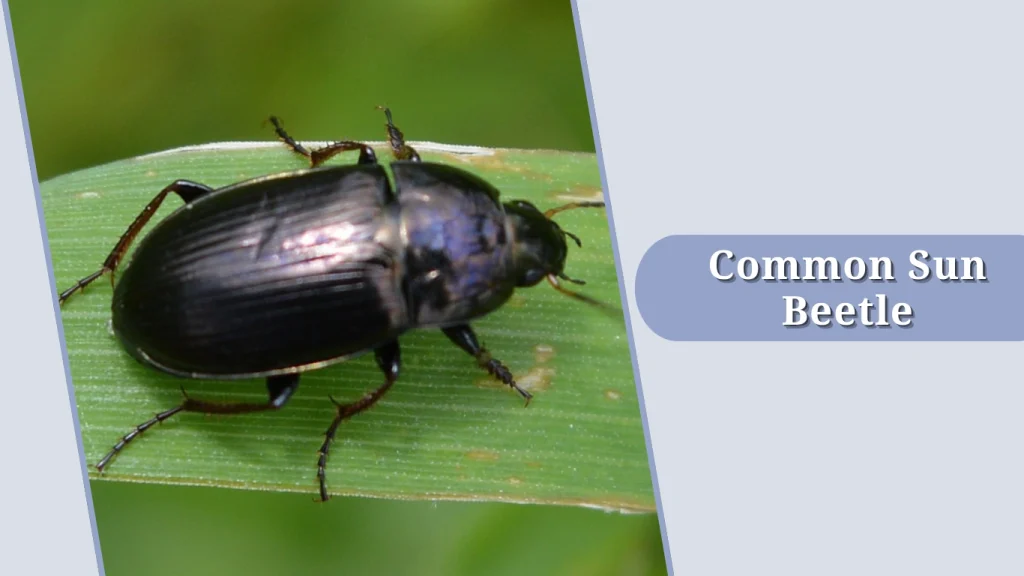
The Common Sun Beetle is one of the most familiar members of the Amara genus, widely distributed across Europe and parts of Asia. It thrives in open, sunny habitats and is often observed in grasslands, meadows, and agricultural areas. Though smaller than many other ground beetles, it plays an important role in ecosystems as both a seed feeder and a predator of small invertebrates.
Identification
- Size: Adults measure 8–11 mm in length.
- Color: Usually bronze to dark brown, sometimes with a slight greenish sheen.
- Elytra: Smooth and shiny, with faint longitudinal striations.
- Legs: Brownish to reddish, slender and quick-moving.
- Antennae: Long, thin, and reddish in color.
Habitat
The Common Sun Beetle is found in open fields, pastures, grasslands, and farmland edges. It prefers dry, sunny areas with loose soil that support both plant seeds and insect prey. It is also present in urban parks and gardens, where it finds suitable food sources and shelter.
Behaviors
This beetle is diurnal as well as nocturnal, showing more activity than many strictly night-hunting ground beetles. It often basks in sunny areas, which explains its common name. Capable of flight, it can disperse quickly between habitats, allowing it to colonize disturbed or newly cultivated areas.
Diet & Life
The Common Sun Beetle is omnivorous, feeding primarily on grass and weed seeds, but also consuming aphids, fly larvae, and other small insects when available. Its seed-feeding behavior makes it important for regulating unwanted plants in farmland. Reproduction occurs during summer, with females laying eggs in soil. Larvae are omnivorous as well, continuing the dual feeding strategy. Adults usually survive one growing season but are abundant enough to remain a constant presence in many landscapes.
12. Strawberry Ground Beetle (Harpalus rufipes)
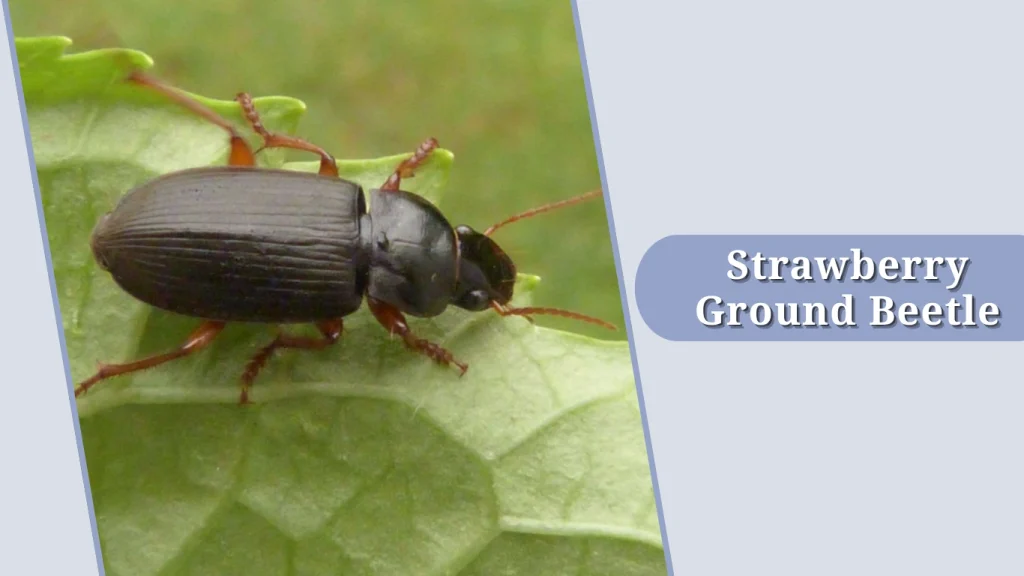
The Strawberry Ground Beetle is a common farmland species, named for its frequent presence in strawberry fields and gardens where it feeds on pests. It is native to Europe but has also spread to other regions through agricultural activity. Known for its reddish legs and useful predatory habits, it is valued as a natural ally in controlling crop-damaging insects and weed seeds.
Identification
- Size: Adults measure 11–14 mm in length.
- Color: Shiny black body with a slight bronze tint.
- Elytra: Smooth, with fine longitudinal ridges.
- Legs: Distinctive reddish to orange legs, giving the beetle its common name.
- Antennae: Long, reddish-brown, and segmented.
Habitat
The Strawberry Ground Beetle is commonly found in farmlands, meadows, hedgerows, and gardens, especially where soil is disturbed. It thrives in cultivated fields, including cereal crops, vegetables, and fruit fields. Because of its adaptability, it is one of the most abundant beetles in European agriculture and is often present in suburban gardens as well.
Behaviors
This beetle is mainly nocturnal, hunting actively after sunset. During the day, it hides under soil clods, stones, or plant debris. It is flightless, depending on its running speed for movement. In cooler climates, it overwinters as an adult in soil, reemerging in spring to hunt and reproduce.
Diet & Life
The Strawberry Ground Beetle is a generalist feeder, preying on caterpillars, slugs, insect larvae, and aphids, but it also consumes large quantities of seeds from weeds. This dual diet makes it especially beneficial to farmers by reducing both insect pests and weed competition in crops. Reproduction occurs in late spring and summer, with eggs laid in soil. Larvae are predatory as well, helping reduce pest populations. Adults typically live one to two years, maintaining consistent activity across farming seasons.
13. Shiny Field Beetle (Harpalus affinis)
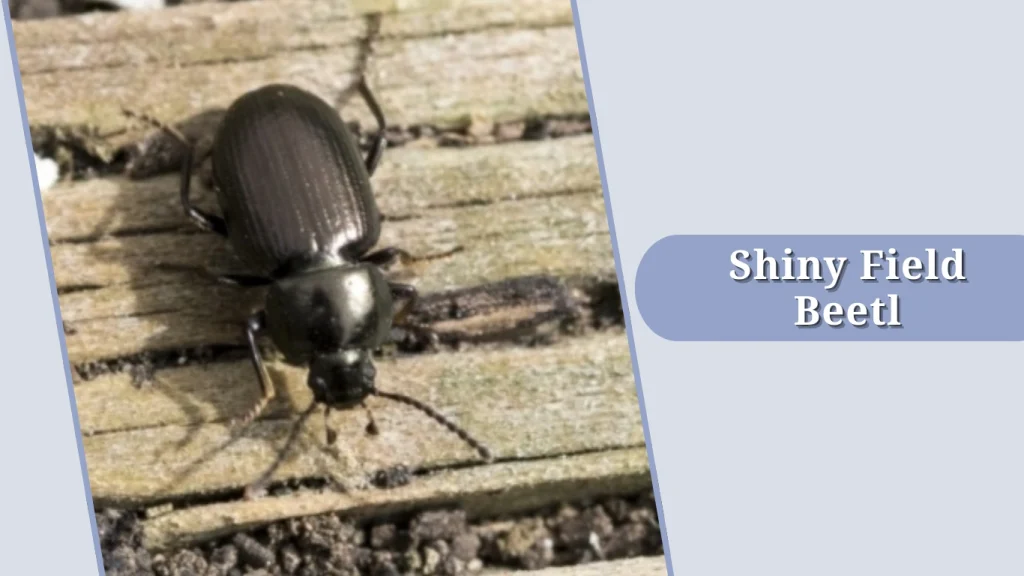
The Shiny Field Beetle is a widespread and adaptable species native to Europe but also found in Asia and introduced to North America. It is one of the more abundant species within agricultural and disturbed environments, making it a familiar beetle to both farmers and gardeners. Its glossy appearance and quick movements make it easy to spot in the field.
Identification
- Size: Adults measure 8–12 mm in length.
- Color: Distinctively shiny black to metallic greenish-black body.
- Elytra: Smooth with faint longitudinal striations, often reflective in sunlight.
- Legs: Reddish to brownish legs, slender and adapted for running.
- Antennae: Long, reddish, and segmented, sensitive to movement and vibration.
Habitat
The Shiny Field Beetle thrives in farmlands, grasslands, field margins, and gardens. It prefers open, disturbed habitats and is commonly found in crop fields, pastures, and roadside verges. It is tolerant of human activity and often flourishes in areas heavily influenced by agriculture.
Behaviors
This beetle is nocturnal, becoming most active at night to hunt and forage. During the day, it hides under stones, clumps of soil, or plant debris. It is an excellent runner but flightless, relying entirely on ground activity for dispersal. In colder months, it overwinters in soil until temperatures rise in spring.
Diet & Life
The Shiny Field Beetle is omnivorous, feeding both on weed seeds and small insects. It plays an important ecological role in regulating weed populations while also preying on insect larvae and soft-bodied invertebrates. Its diet makes it highly beneficial to agricultural systems. Reproduction occurs in spring and early summer, with eggs laid in soil. Larvae are also predatory, ensuring that both stages of life contribute to pest and weed seed control. Adults typically live one to two years, maintaining strong population numbers.
14. Pennsylvania Ground Beetle (Harpalus pensylvanicus)
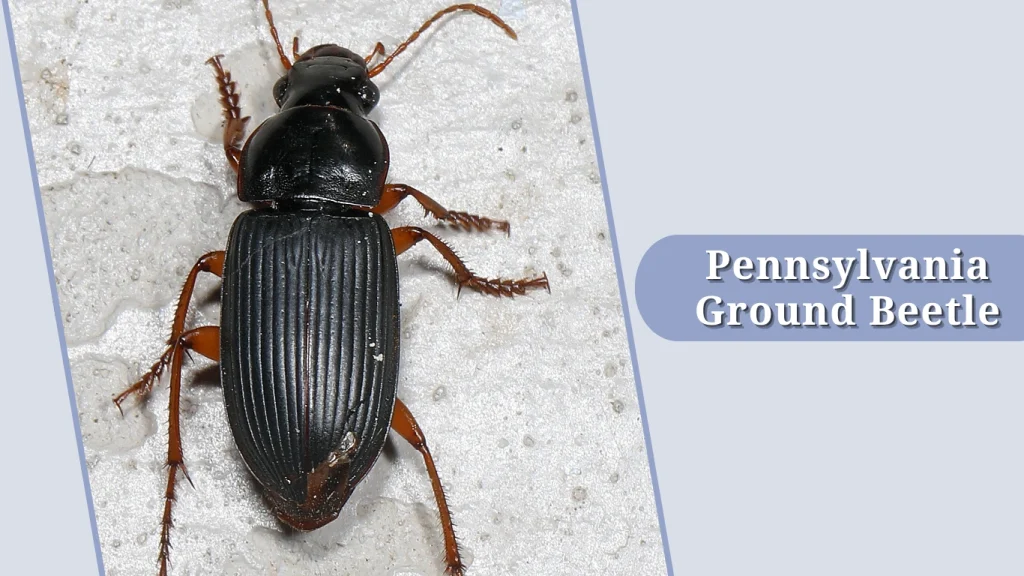
The Pennsylvania Ground Beetle is one of the most widespread and abundant species in North America, commonly found in agricultural fields, gardens, and grasslands. Farmers often recognize it as a valuable natural ally, as it not only preys on crop pests but also consumes weed seeds, helping to maintain ecological balance in cultivated landscapes.
Identification
- Size: Adults measure 12–16 mm in length.
- Color: Shiny black or dark brown, often with a slight bronze sheen.
- Elytra: Smooth, with faint longitudinal striations.
- Legs: Reddish-brown to orange legs, slender and quick.
- Antennae: Long, reddish, and finely segmented.
Habitat
The Pennsylvania Ground Beetle is highly adaptable and thrives in farmlands, gardens, grasslands, and field margins. It is particularly abundant in crop fields, where loose soil and abundant seeds provide ideal conditions. Its ability to tolerate disturbance makes it a consistent presence in intensively farmed landscapes.
Behaviors
This beetle is nocturnal, emerging after dusk to hunt and forage. During the day, it remains hidden under soil clumps, plant debris, or stones. It is a fast runner but flightless, depending on ground mobility for dispersal. In winter, it hibernates in soil until spring, when it reemerges for breeding and feeding.
Diet & Life
The Pennsylvania Ground Beetle is omnivorous, feeding heavily on weed seeds such as foxtail and lamb’s quarters, while also consuming insect pests like caterpillars, aphids, and fly larvae. This dual diet provides valuable ecological services in farming systems. Reproduction occurs in summer, with females laying eggs in soil. Larvae are predatory, continuing pest suppression underground. Adults generally survive one to two years, maintaining stable populations and consistent benefits to agriculture.
15. European Ground Beetle (Nebria brevicollis)
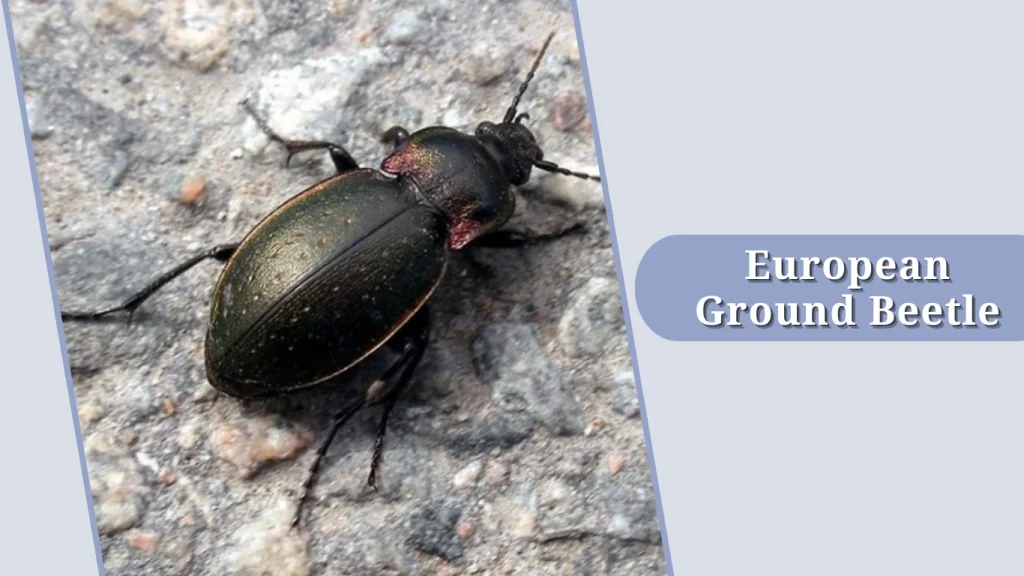
The European Ground Beetle is a highly adaptable species native to Europe but now widespread in North America, where it has become one of the most common introduced beetles. Its ability to thrive in diverse habitats, from forests to urban gardens, makes it a successful colonizer. Because of its predatory habits, it plays an important role in regulating invertebrate populations in both natural and agricultural ecosystems.
Identification
- Size: Adults measure 11–16 mm in length.
- Color: Usually dark brown to black, sometimes with a slight metallic sheen.
- Elytra: Elongated, smooth, with shallow longitudinal striations.
- Legs: Long, reddish-brown, adapted for rapid movement.
- Antennae: Long, reddish, and segmented.
Habitat
The European Ground Beetle inhabits woodlands, meadows, gardens, and agricultural fields. It is commonly found under stones, logs, and leaf litter, especially in moist and shaded conditions. In North America, it has adapted well to suburban and urban areas, becoming a frequent garden beetle.
Behaviors
This beetle is nocturnal, actively hunting at night while hiding during the day in soil crevices, under logs, or beneath vegetation. Unlike some other ground beetles, it is capable of limited flight, allowing it to spread widely. In colder regions, it overwinters in soil as an adult and emerges again in spring.
Diet & Life
The European Ground Beetle is a generalist predator, consuming slugs, caterpillars, insect larvae, and other soft-bodied invertebrates. Both adults and larvae contribute to pest control in agriculture and gardens. Breeding usually occurs in summer, with females laying eggs in moist soil. The larvae are predatory and develop rapidly before pupating. Adults often live one to two years, ensuring their ongoing presence in ecosystems where they have established.
16. Small Marsh Ground Beetle (Bembidion lampros)
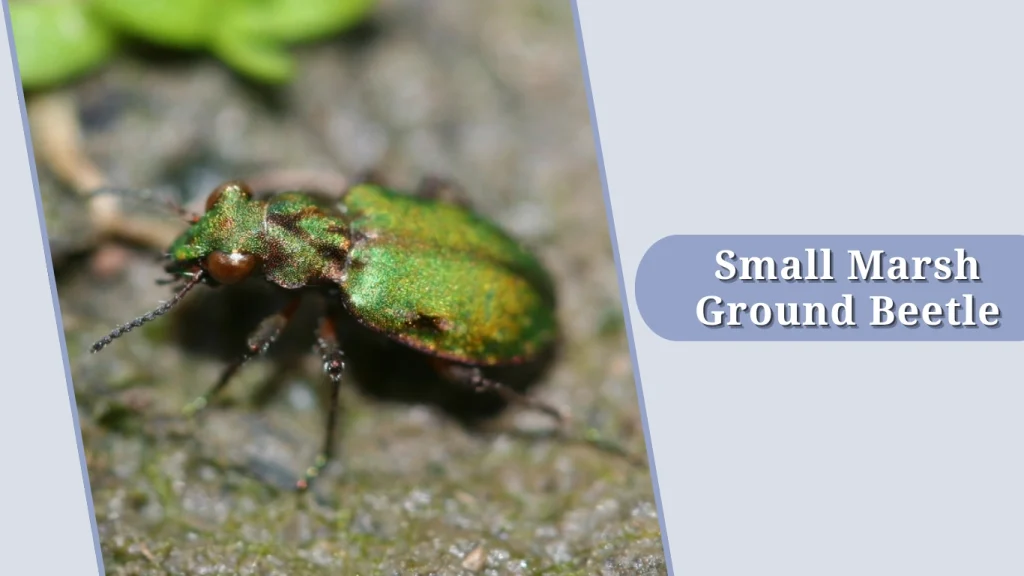
The Small Marsh Ground Beetle is a tiny yet highly significant predator in agricultural and natural ecosystems. Despite its size, it is one of the most abundant beetles in Europe and has been introduced to other regions as well. Its speed and hunting efficiency make it a key player in pest suppression, especially in farmland where insect populations can rise quickly.
Identification
- Size: Adults measure only 4–6 mm in length.
- Color: Dark brown to black, sometimes with a faint metallic tint.
- Elytra: Smooth with shallow grooves, oval and compact in shape.
- Legs: Pale brown to reddish, thin but adapted for rapid running.
- Antennae: Long relative to body size, slender and highly sensitive.
Habitat
The Small Marsh Ground Beetle thrives in farmland, grasslands, hedgerows, and wet meadows, often hiding in soil crevices, leaf litter, or under stones. It prefers damp environments, particularly along field margins and near ditches. Its adaptability to disturbed habitats allows it to flourish in intensively managed agricultural landscapes.
Behaviors
This beetle is nocturnal, emerging at night to hunt small invertebrates. It is extremely fast and agile for its size, able to chase down prey across soil surfaces. During the day, it hides in moist soil or under debris to avoid predation. It is incapable of long-distance flight but maintains strong local populations through rapid reproduction.
Diet & Life
The Small Marsh Ground Beetle is a specialized predator of aphids, springtails, mites, and insect eggs. Because of its small size, it preys mainly on minute soil-dwelling organisms, but in large numbers, it exerts a significant effect on pest control. Breeding occurs in spring and summer, with females depositing eggs in soil. Larvae are also predatory and continue reducing pest populations underground. Adults typically live a single season, but overlapping generations ensure that populations remain stable year after year.
17. Fiery Searcher / Caterpillar Hunter (Calosoma scrutator)
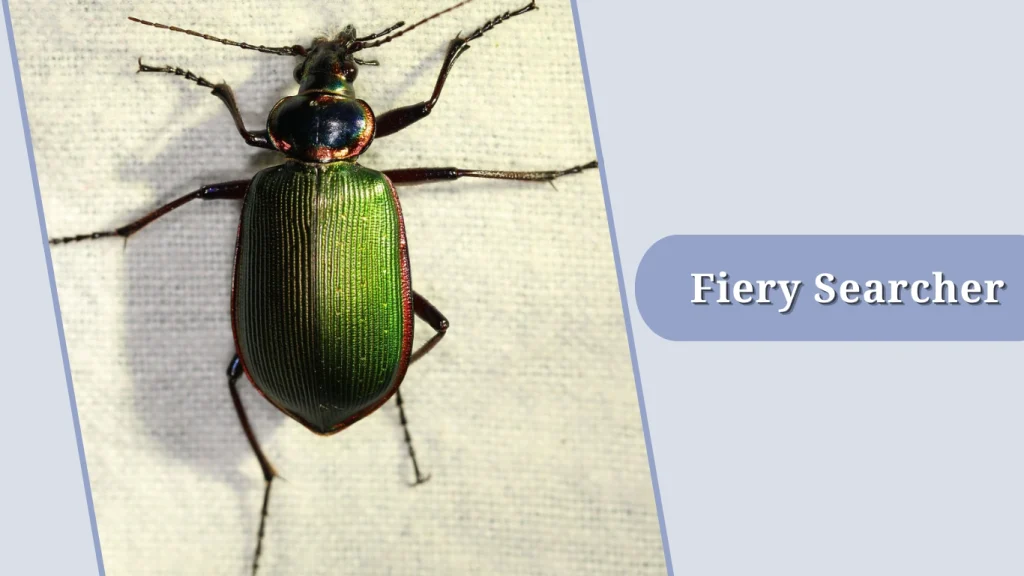
The Fiery Searcher, also known as the Caterpillar Hunter, is one of the most spectacular ground beetles in North America. With its metallic rainbow-like sheen, it is easily one of the most colorful members of the Carabidae family. Its large size and powerful predatory habits make it a natural regulator of caterpillar populations, including many species that are harmful to crops and forests.
Identification
- Size: Adults measure 25–35 mm in length.
- Color: Brilliant metallic green, blue, and purple with iridescent reflections.
- Elytra: Smooth with distinct ridges, shimmering under light.
- Legs: Long, dark, and strong, suited for fast running and climbing.
- Antennae: Long, dark, and segmented, highly sensitive to prey movements.
Habitat
The Fiery Searcher inhabits forests, meadows, orchards, and agricultural fields. It is particularly associated with areas where caterpillars are abundant, such as oak forests during outbreaks of moth larvae. It is often found on vegetation as well as on the ground, which is unusual for many ground beetles.
Behaviors
This beetle is nocturnal but may also be active at dusk. It is a strong and agile runner and is also capable of flight, which allows it to disperse widely in search of prey. Unlike many ground beetles that remain strictly terrestrial, the Fiery Searcher will climb trees and shrubs to pursue caterpillars. When threatened, it can release a foul-smelling defensive secretion.
Diet & Life
The Fiery Searcher is a specialized predator of caterpillars, including many pest species such as gypsy moth larvae and cutworms. Both adults and larvae are active hunters, feeding voraciously on soft-bodied prey. Reproduction occurs in spring and summer, with eggs laid in soil or leaf litter. Larvae are predatory and pupate after several weeks of feeding. Adults may live for two to three years, making them long-lived compared to many other ground beetles. Their presence in forests and farms is a natural defense against destructive caterpillar outbreaks.
