
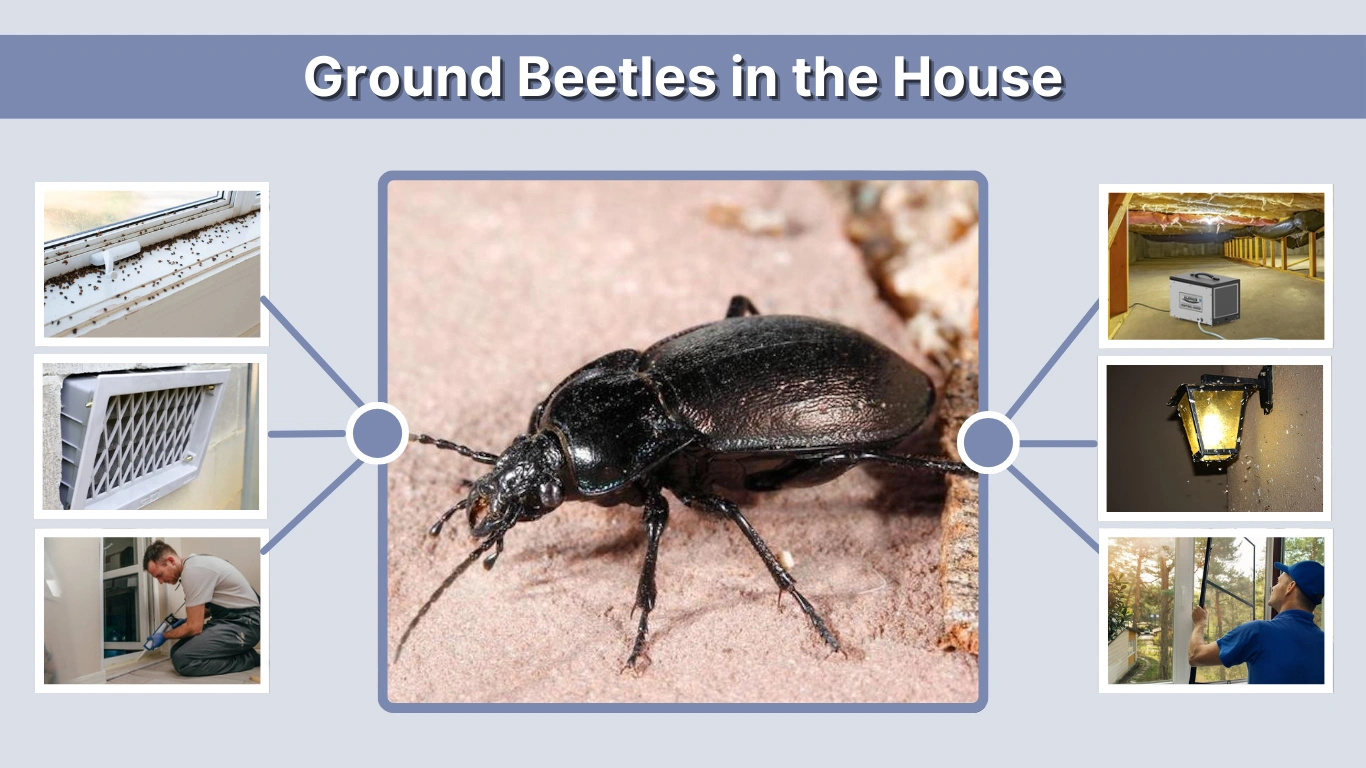
Ground beetles are common outdoor insects that occasionally wander into homes. With shiny, elongated bodies and fast movements, they often startle homeowners when spotted indoors. While they play a useful role in the garden by preying on pests, their presence inside houses can be worrying. Understanding why ground beetles enter, what species are most common, and how to recognize early signs of infestation is essential for controlling them effectively.
Understanding Ground Beetles Indoors
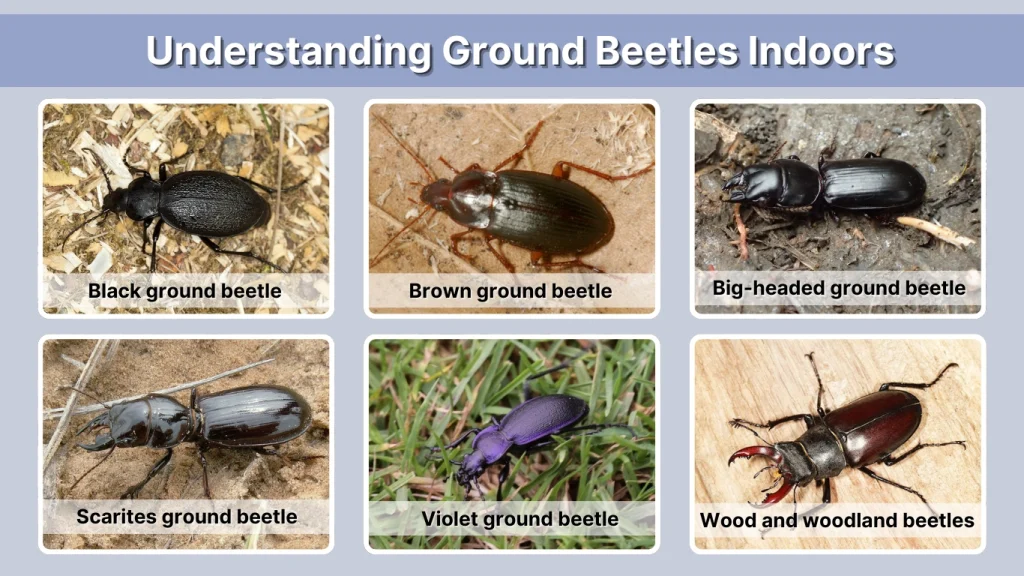
Ground beetles belong to the family Carabidae, which includes thousands of species worldwide. These beetles are usually found in soil, gardens, forests, and farmland, but they sometimes end up inside homes by accident.
Common Species Found in Houses
Several types of ground beetles may appear indoors:
- Black ground beetle – the most frequently spotted variety with a shiny dark body.
- Brown ground beetle – lighter in color but with similar habits.
- Big-headed ground beetle – known for its oversized head and strong mandibles.
- Scarites ground beetle – large, dark beetles that resemble small roaches.
- Violet ground beetle – features a metallic purple or violet sheen.
- Wood and woodland beetles – often found near damp, wooded structures.
- Amara aulica and Pennsylvania beetles – region-specific species sometimes entering homes.
Despite their variety, all ground beetles share the same behavior: they are nocturnal, fast runners, and accidental house guests.
Why Are Ground Beetles in My House?
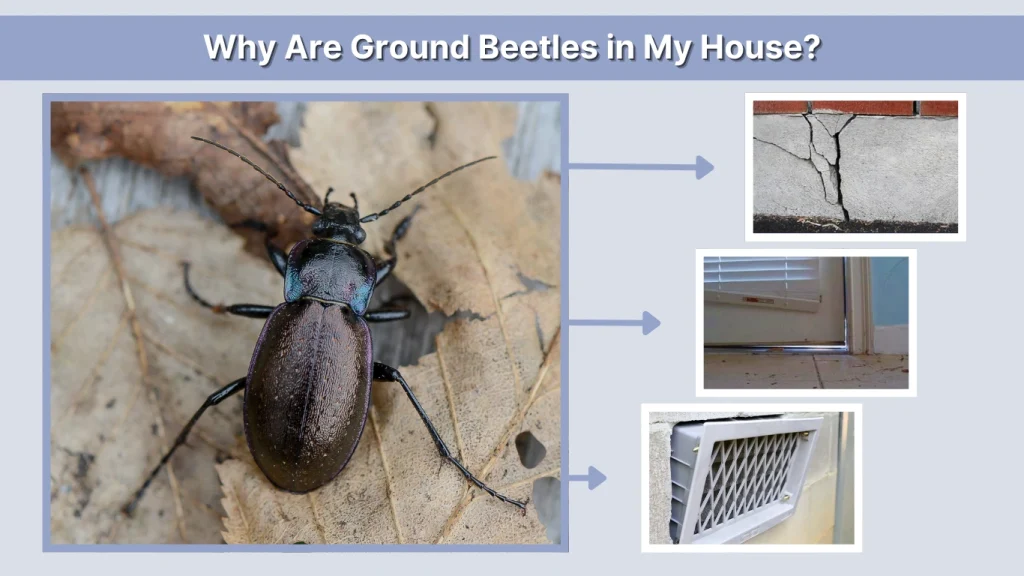
Ground beetles prefer the outdoors, but several factors can draw them into human spaces.
Seasonal Patterns
They are most commonly seen indoors during late summer and autumn, when outdoor conditions change. Cooler weather drives them toward the warmth of buildings.
Attraction to Light
Ground beetles are strongly attracted to artificial light. Outdoor lamps and indoor lighting near open doors and windows can lure them inside at night.
Entry Points
Ground beetles often slip indoors through:
- Foundation cracks.
- Gaps in windows and door frames.
- Open vents and poorly screened areas.
Once inside, they usually stay near entry points, such as basements, garages, and kitchens.
Black vs. Brown Ground Beetles Indoors
Both black and brown ground beetles are common in houses, but black beetles are spotted more often because of their tendency to roam around light sources. Brown ground beetles may remain hidden in damp corners, making them harder to notice until numbers increase.
Signs of Ground Beetle Infestation
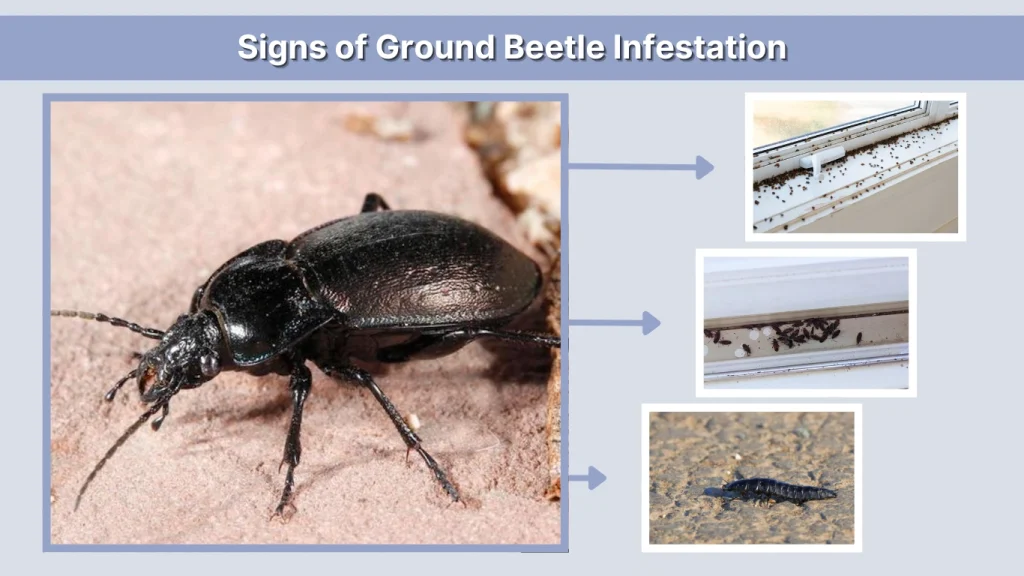
Unlike termites or ants, ground beetles rarely form true infestations indoors. Still, frequent appearances can feel overwhelming for homeowners.
Common Indicators
- Repeated sightings of beetles running along floors or near walls.
- Clusters of dead beetles near doors, windows, or light sources.
- Larvae presence, suggesting beetles are breeding close to or inside the structure.
In most cases, large numbers inside the home point to an outdoor breeding ground nearby, such as a garden bed, mulch pile, or leaf litter adjacent to the house.
Infestation in the UK vs. the US
- In the UK, ground beetle infestations inside homes are more common due to damp climates and older buildings with gaps.
- In the US, they are typically seen in basements, Pennsylvania homes, or wooded areas near residential neighborhoods.
Ground Beetle Larvae Indoors
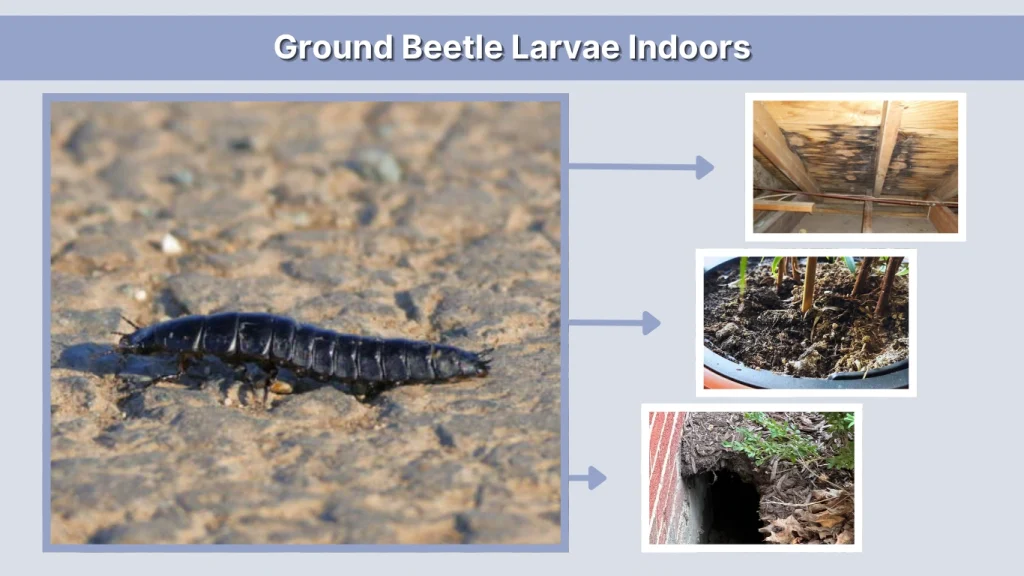
While adult ground beetles are usually harmless visitors, finding their larvae inside can be unsettling.
What Do Larvae Look Like?
Ground beetle larvae are elongated, segmented, and slightly worm-like, with visible legs and small jaws. They live in soil but may sometimes appear in basements, crawl spaces, or damp corners.
Why They Appear Indoors
- Moisture issues like leaks or poor ventilation.
- Damp soil in potted plants brought indoors.
- Nearby outdoor breeding grounds close to foundations.
Concerns About Larvae
Although they may look alarming, ground beetle larvae are not destructive like carpet beetle larvae. Instead, they are predatory, feeding on other small insects. Their presence indoors usually signals that beetles have found suitable entry points and conditions inside.
Are Ground Beetles Dangerous in the House?
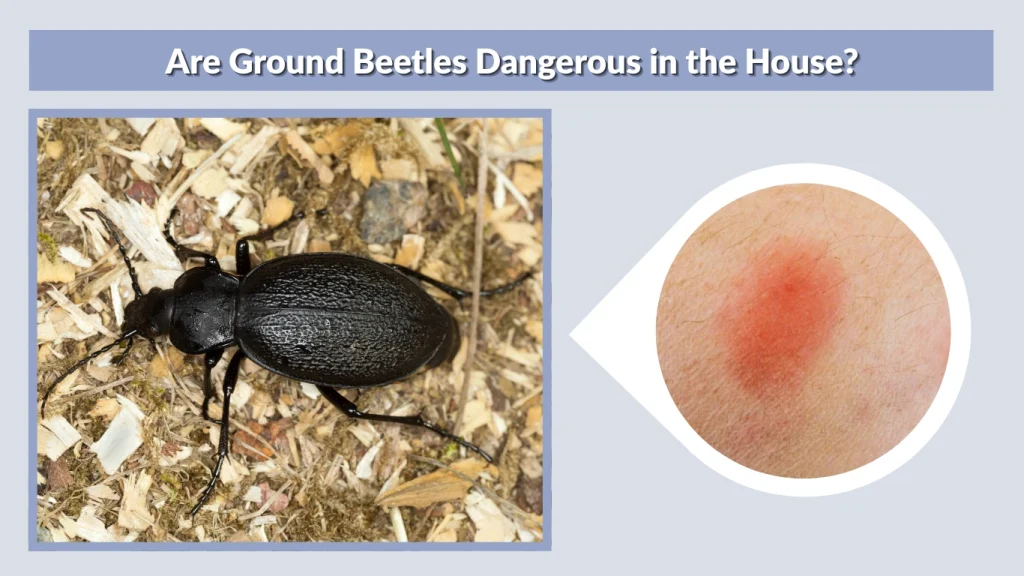
One of the most common concerns when people encounter ground beetles indoors is whether they pose a danger to humans or pets.
Do They Bite?
Ground beetles have strong mandibles, but they rarely bite humans. If handled roughly, they may nip as a defense mechanism. The bite is not venomous and typically causes only mild discomfort.
Poisonous or Harmful?
- Ground beetles are not poisonous.
- They do not carry or transmit diseases.
- Unlike some insects, they do not infest stored food or damage wood and fabric.
The Real Issue Indoors
The real problem is nuisance value. Their quick movements, sudden appearances, and tendency to cluster near lights make them alarming. However, in terms of risk, ground beetles are more helpful outdoors than harmful indoors.
How to Get Rid of Ground Beetles in Houses
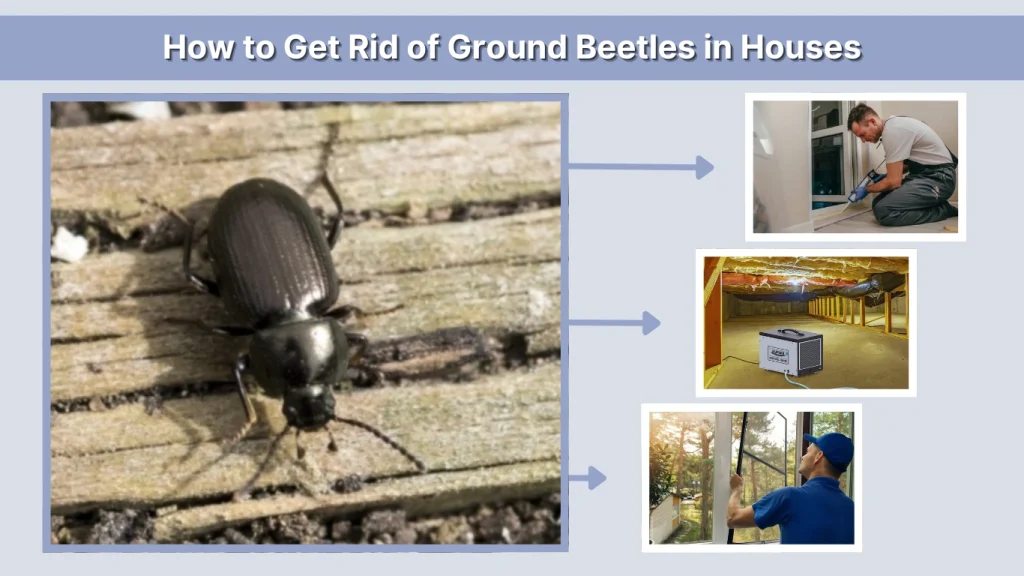
While harmless, most homeowners prefer to keep these beetles outside. Effective control involves a combination of indoor prevention and outdoor management.
Indoor Prevention and Control
- Seal entry points: Use caulk to close cracks around foundations, windows, and doors.
- Install screens: Fit doors, vents, and windows with tight screens.
- Reduce humidity: Run dehumidifiers in basements and crawl spaces.
- Vacuum removal: Safely collect beetles instead of crushing them.
Outdoor Prevention
- Lighting control: Replace bright outdoor bulbs with yellow or sodium vapor lights that attract fewer beetles.
- Yard maintenance: Clear leaf litter, woodpiles, and mulch from near foundations.
- Proper drainage: Prevent standing water that creates moist breeding grounds.
Encouraging Natural Balance
Gardeners can allow ground beetles to thrive outdoors because they act as natural pest controllers. By offering safe shelters like stones and mulch, beetles will stay in the garden where they belong.
Regional Approaches
Ground beetle problems vary depending on region and climate.
United Kingdom
- Damp, older buildings often allow beetles to enter.
- Infestation reports are more frequent, especially during wet summers.
- Homeowners in the UK should focus on sealing gaps and reducing moisture indoors.
United States
- Pennsylvania: Known for seasonal beetle invasions in homes near wooded areas.
- Other states: Beetles often show up in basements during autumn.
- General prevention through yard cleanup and lighting adjustments works effectively.
Community Insights and Discussions
Many homeowners share their experiences online, particularly on platforms like Reddit. Common themes include:
- Panic over sudden indoor appearances of dozens of beetles.
- Confusion between ground beetles and cockroaches.
- Relief after learning beetles are harmless but annoying.
Expert advice across forums consistently recommends prevention over chemical treatments, since infestations rarely last long once entry points are sealed.
FAQs
Why are there ground beetles in my house?
Ground beetles usually enter homes accidentally while searching for shelter, warmth, or food. They are attracted to artificial lights at night, which can cause them to gather near windows or doors. Once inside, they often stay near entry points rather than establishing true infestations.
How do ground beetles get inside houses?
Ground beetles commonly enter through cracks in foundations, gaps around doors or windows, and poorly sealed vents. Basements and garages are frequent entry areas. They are also drawn to moisture, so leaks or damp basements provide attractive conditions. Regular maintenance and sealing gaps helps reduce their access.
Are ground beetles dangerous in the house?
No, ground beetles are not dangerous. They don’t spread diseases, infest food, or damage household structures. While they may bite defensively if handled roughly, the bite is harmless. Their main issue indoors is nuisance—they move quickly and can alarm homeowners, especially when they appear in large numbers.
How do I know if I have a ground beetle infestation?
Signs include frequent sightings of live beetles, especially near lights, basements, or entry points. Clusters of dead beetles may be found near windowsills, and in some cases, larvae appear in damp corners. While not true infestations like ants or roaches, consistent sightings suggest nearby outdoor breeding grounds.
How can I get rid of ground beetles indoors?
To eliminate ground beetles, start by sealing cracks, repairing screens, and reducing indoor humidity. Vacuuming is the safest way to remove those already inside. Outdoors, reduce lighting that attracts them and clear leaf litter, woodpiles, and mulch near foundations. Focus on prevention since chemicals are rarely necessary.
