
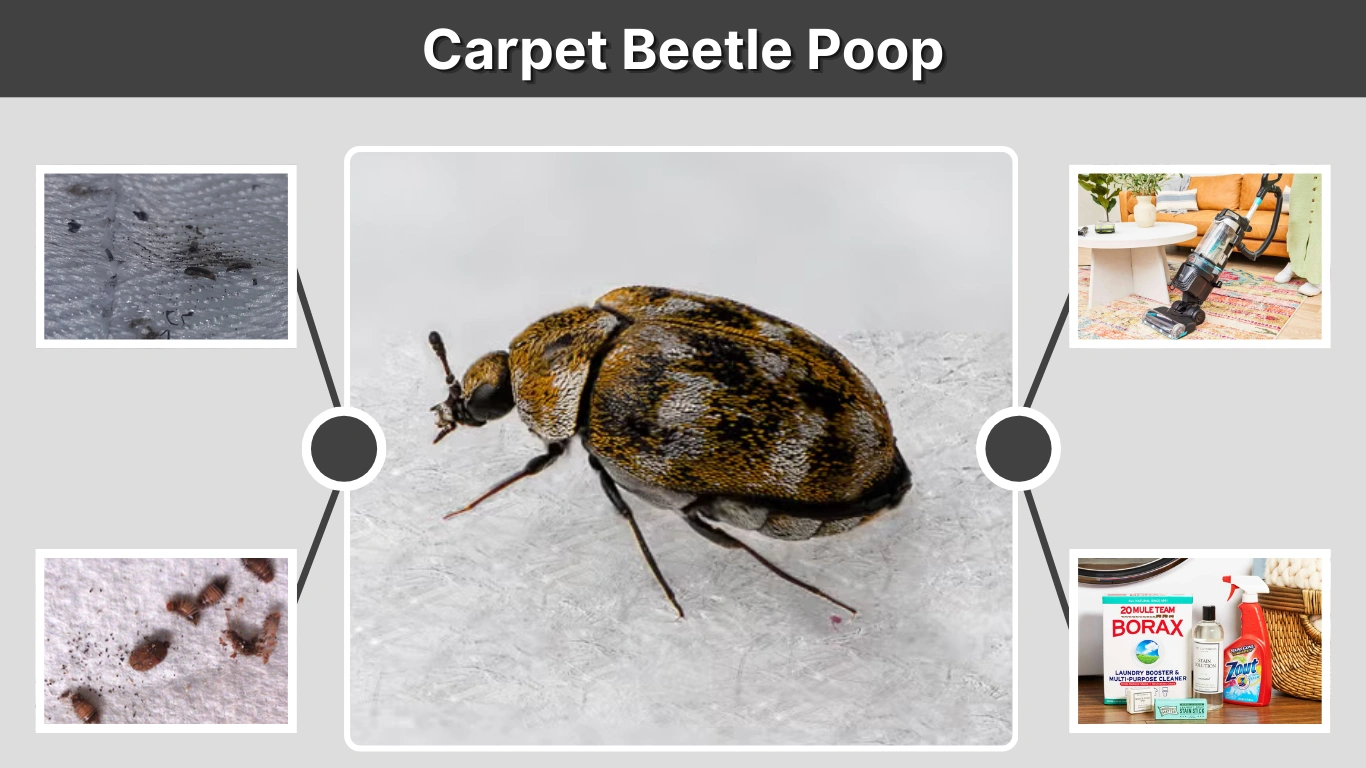
Carpet beetles are well-known for damaging fabrics, carpets, and furniture, but one of the most important signs of an infestation is their poop. Carpet beetle droppings provide clear evidence of their presence, helping homeowners identify and treat infestations before serious damage occurs. Understanding what carpet beetle poop looks like, where to find it, and how it differs between species is essential for effective pest control.
Introduction to Carpet Beetle Poop
Carpet beetle poop, also known as droppings or frass, is left behind as both larvae and adult beetles feed. While the adults mainly consume pollen, the larvae feed on natural fibers such as wool, leather, and silk. As they digest these materials, they leave behind tiny waste pellets that indicate active feeding.
Droppings are commonly found in places where larvae are active—such as rugs, furniture, mattresses, and closets. Recognizing these signs early makes it easier to prevent larger infestations.
What Does Carpet Beetle Poop Look Like?

Carpet beetle poop has a distinctive appearance, though it varies slightly depending on the species and diet. In general, the droppings are:
- Small and pellet-like – often resembling grains of sand.
- Dark in color – commonly black or brown, but sometimes rust red depending on fibers consumed.
- Powdery or string-like – in some cases, droppings appear as tiny, elongated fragments.
Homeowners often ask, what color is carpet beetle poop? The answer is usually dark brown to black, but on light carpets, the droppings can also appear rust red. Stains occur when the pellets smear or crush into fabrics, leaving discolored spots that are difficult to clean.
Carpet Beetle Larvae Poop vs. Adult Beetle Droppings

The type of droppings depends on whether you’re dealing with larvae or adults. Larvae poop is the most noticeable since it accompanies fabric destruction. Their droppings are powdery and appear close to infested items, such as clothing, carpets, or upholstery.
Adult beetles, on the other hand, are less destructive indoors. While they can leave droppings, these are usually smaller and harder to detect because adults feed mostly on pollen and are often found near windows.
Different species also produce slightly different droppings:
- Varied carpet beetle poop – tiny, sand-like specks scattered near fabric damage.
- Black carpet beetle poop – dark, often resembling pepper flakes or string-like fragments.
Recognizing these differences helps in proper identification and treatment.
Identifying Poop in Carpets, Rugs, and Furniture

One of the most common places to find carpet beetle droppings is in carpets and rugs. Because larvae burrow deep into fibers, their waste often sticks to carpets or clings to rug threads. Signs include:
- Droppings embedded in fibers – dark specks that do not vacuum away easily.
- Black string-like fragments – evidence of larvae moving and feeding within rugs.
- Clumped waste – in heavily infested areas, droppings collect in corners or under furniture.
Upholstered furniture is another hotspot. Larvae hide inside cushions and fabric folds, leaving droppings alongside shed skins. Mattresses can also harbor infestations, with waste accumulating along seams or under sheets. This makes regular inspection crucial for maintaining hygiene.
Carpet Beetle Poop Pictures and Visual Guides

Because carpet beetle poop is small and often mistaken for dust, visual identification is vital. Pictures of carpet beetle poop highlight its granular appearance and help distinguish it from other household debris.
- Carpet beetle poop pictures in houses show scattered black or rust-red specks along carpets and furniture.
- Online forums such as Reddit often feature carpet beetle poop pictures that illustrate infestations in real homes.
- Light carpet spotted beetle poop is especially visible, showing rust-red specks that contrast against pale flooring.
Visual guides not only help with confirmation but also prevent confusion with bed bug droppings, which are usually darker and smear when rubbed.
Carpet Beetle Poop in Mattresses and Bedding

Carpet beetle poop is frequently found in mattresses and bedding, especially when larvae feed on cotton sheets, wool blankets, or upholstered bed frames. Because these areas provide warmth and dark hiding places, they are ideal breeding grounds.
Signs include:
- Tiny black or rust-colored pellets along seams.
- Droppings scattered under fitted sheets or mattress covers.
- Accumulations near headboards and upholstered frames.
This kind of waste can trigger skin irritation and allergic reactions, especially for people sensitive to dust or insect debris. Unlike bed bug droppings, which smear easily into dark stains, carpet beetle poop is more granular and dry.
Cleaning and Removing Carpet Beetle Poop

Removing droppings requires thorough cleaning. Because the waste often embeds itself in fibers, surface-level vacuuming is not enough. Effective methods include:
- Vacuuming deeply – Use a high-powered vacuum with attachments to clean carpets, rugs, and furniture crevices.
- Steam cleaning – Heat kills larvae and loosens droppings stuck in fibers.
- Washing fabrics – Launder bedding, clothing, and removable upholstery covers in hot water.
- Stain removal – For poop stains that smear, use fabric-safe cleaners to prevent discoloration.
If infestations are severe, hiring a professional cleaning service ensures thorough treatment and helps preserve delicate fabrics.
Health Concerns from Carpet Beetle Poop
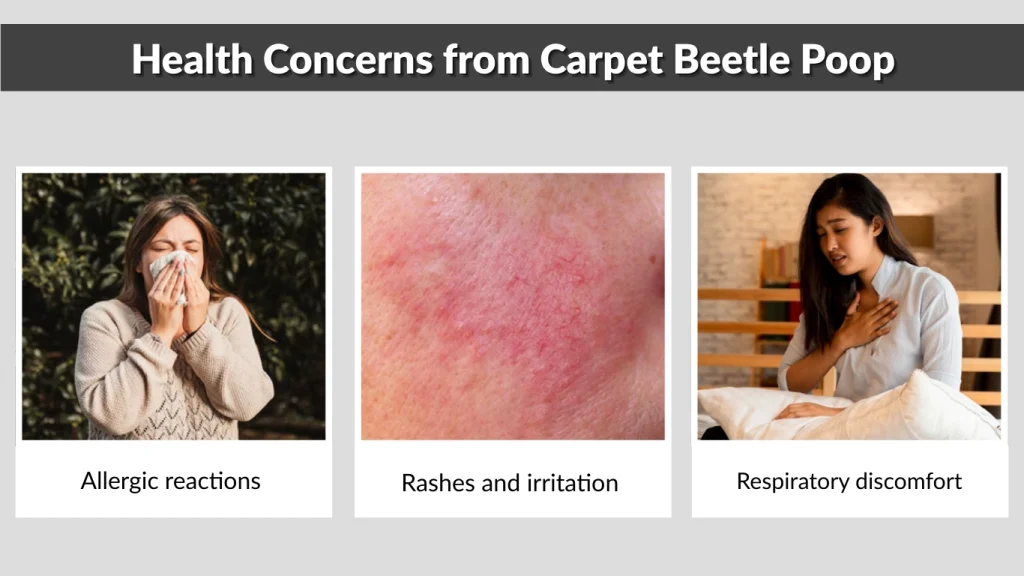
While carpet beetle droppings are not toxic, they can cause health problems in sensitive individuals. The waste contains tiny particles and hairs from larvae that trigger:
- Allergic reactions – Sneezing, runny nose, and itchy skin.
- Rashes and irritation – Red patches caused by contact with droppings or shed larval skins.
- Respiratory discomfort – Inhalation of fine particles in heavily infested homes.
For people with asthma or severe allergies, prolonged exposure to carpet beetle waste worsens symptoms. This is why cleaning up droppings is just as important as eliminating the beetles themselves.
Prevention: Stopping More Droppings
Preventing carpet beetle poop means preventing infestations. Homeowners can reduce the risk by:
- Vacuuming regularly – Especially in corners, under furniture, and in storage areas.
- Sealing fabrics – Store clothes, blankets, and linens in airtight containers.
- Inspecting furniture and rugs – Look for early signs of droppings or larvae.
- Controlling entry points – Keep windows and doors screened to stop adults from entering.
Professional pest control is recommended for large infestations, as untreated beetle populations continue producing droppings and causing fabric damage.
FAQs
Do carpet beetles leave poop?
Yes. Both larvae and adult beetles produce droppings, though larval waste is most commonly found inside homes.
What does carpet beetle poop look like?
It resembles tiny black, brown, or rust-red pellets that often look like coarse grains of sand.
Does carpet beetle poop smear or stain?
Yes. When crushed, droppings can smear and leave stains on carpets, rugs, or upholstery.
Do carpet beetles eat poop?
No. Carpet beetles feed on natural fibers like wool, silk, leather, and cotton, not feces.
Where is carpet beetle poop usually found?
Droppings are typically found in carpets, rugs, mattresses, closets, and upholstered furniture where larvae actively feed.
