
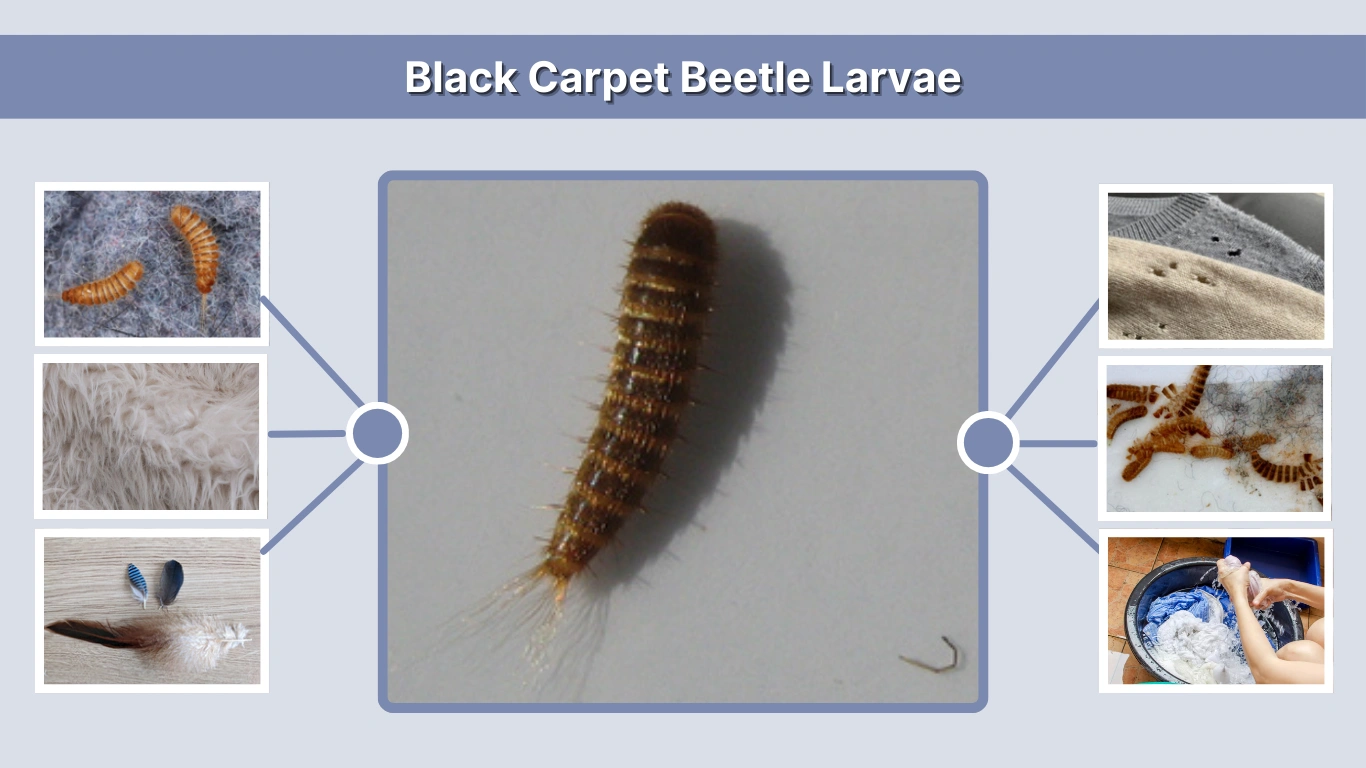
Black carpet beetles (Attagenus unicolor) are one of the most widespread and damaging species of carpet beetles found across homes worldwide. Their larvae are particularly destructive, feeding on natural fibers such as wool, silk, leather, and feathers. Unlike the adult beetles, which primarily consume pollen, the larvae are the real culprits behind damage to carpets, upholstery, and clothing.
These larvae can survive for months in dark corners, moving between different stages of development before turning into adults. Understanding how to identify, treat, and prevent black carpet beetle larvae infestations is the key to protecting your home.
Identification of Black Carpet Beetle Larvae
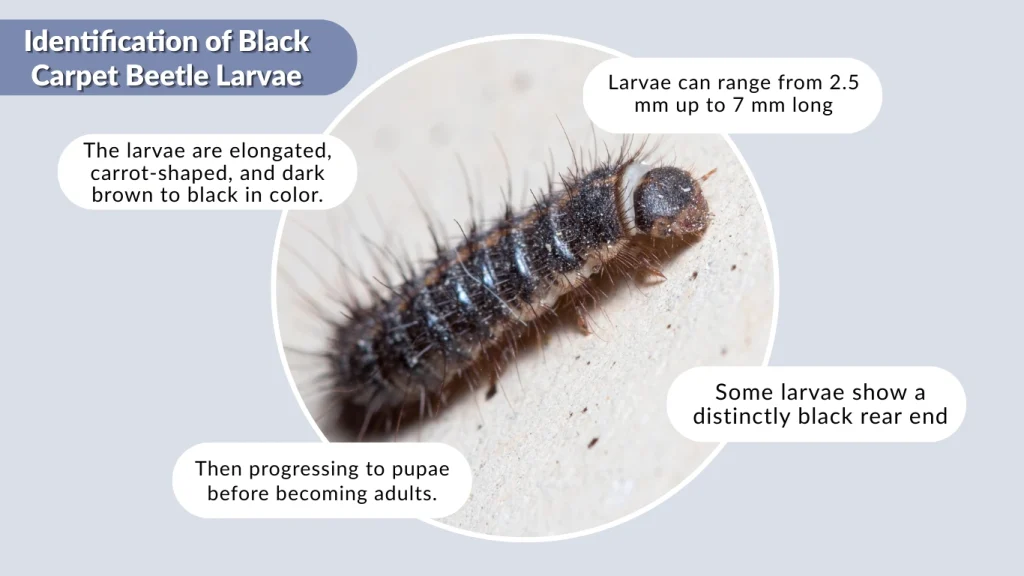
Proper identification is the first step in tackling an infestation. Black carpet beetle larvae are easily confused with other carpet beetle species, but they have unique features.
- Appearance: The larvae are elongated, carrot-shaped, and dark brown to black in color. They are covered in bristle-like hairs and often have a shiny, darker rear end.
- Size: Depending on their stage, larvae can range from 2.5 mm up to 7 mm long, making them visible to the naked eye.
- Stages: The life cycle begins as eggs, hatching into larvae, then progressing to pupae before becoming adults. The larval stage can last from several months to over a year depending on temperature and food availability.
- Pictures and Images: In photos, black carpet beetle larvae often appear as small, bristly worms with segmented bodies tapering toward the rear. They may be mistaken for tiny black worms.
- Special Traits: Some larvae show a distinctly black rear end, which helps distinguish them from varied or furniture carpet beetle larvae.
By recognizing these traits early, homeowners can act before larvae cause extensive fabric damage.
Behavior and Habits of Black Carpet Beetle Larvae
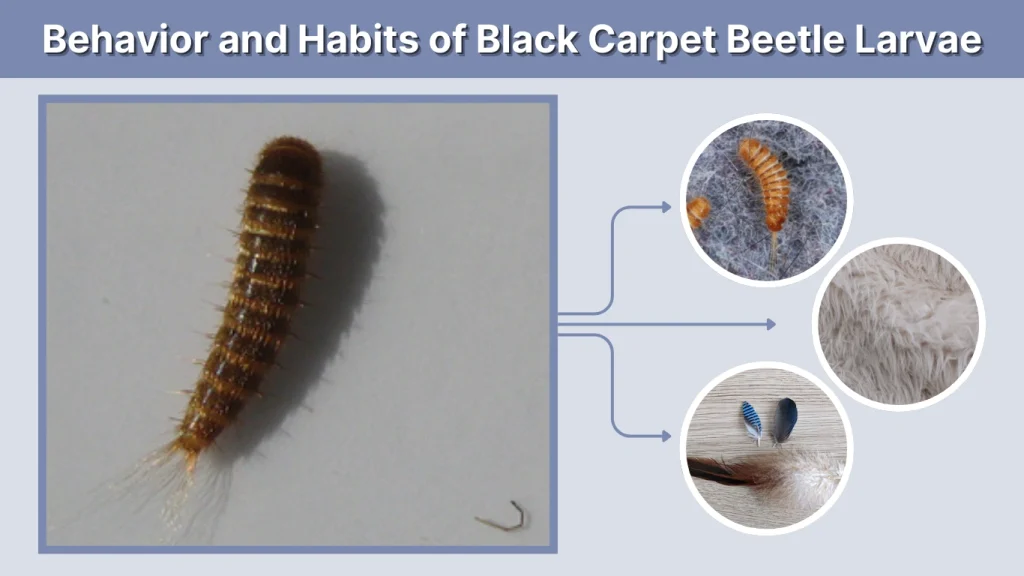
The larvae are highly adaptable and can survive in a range of environments.
- Feeding Habits: Black carpet beetle larvae feed on a wide variety of natural materials. Common foods include wool, fur, feathers, silk, felt, and leather. They are also drawn to stored food products such as cereals, grains, and pet food.
- Preferred Habitats: They thrive in dark, undisturbed areas of the house such as closets, attics, behind baseboards, and inside upholstered furniture.
- Signs of Infestation:
- Shed larval skins scattered near carpets, baseboards, or wardrobes.
- Small irregular holes in wool clothing, upholstery, or curtains.
- Larvae crawling on walls or floors, especially in spring when they are more active.
- Shed larval skins scattered near carpets, baseboards, or wardrobes.
Black carpet beetle larvae are resilient, and without treatment, they can spread from one room to the entire house.
Health Concerns: Do Black Carpet Beetle Larvae Bite?
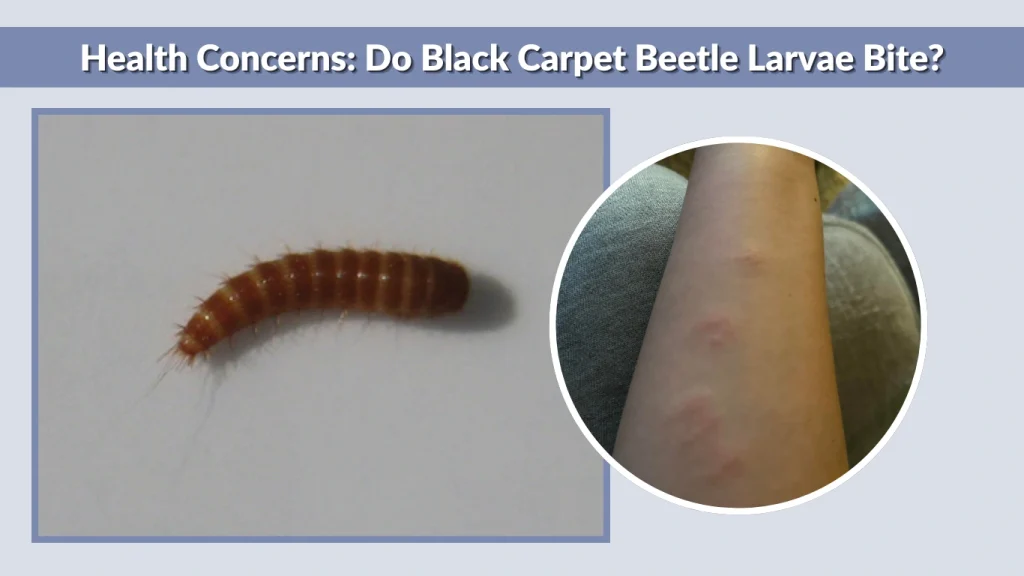
A common question is whether black carpet beetle larvae bite humans. The answer is no—they do not bite or sting.
However, their bristly hairs can irritate the skin of sensitive individuals, causing rashes or red bumps. This reaction is often mistaken for insect bites. Prolonged exposure may trigger allergic reactions, particularly if larvae infest bedding or furniture.
In very rare cases, people report larvae appearing in hair or on the body, but this is not true infestation. Instead, it is accidental contact while larvae search for food sources. A thorough shower and laundering clothes will resolve the issue.
Black Carpet Beetle Larvae in the House
Black carpet beetle larvae are one of the most common household pests. They are drawn to warm, dark, and undisturbed spaces. Within houses, infestations often start unnoticed in closets, attics, or storage boxes.
- Why They Thrive Indoors: Homes provide warmth and constant access to food sources such as clothing, carpets, and even food crumbs.
- Typical Hiding Spots:
- Under carpets and rugs.
- Behind furniture or baseboards.
- Inside air ducts or attics where bird nests may be present.
- Under carpets and rugs.
- Seasonal Infestations: Adult beetles are often more noticeable in spring and summer when they fly indoors. The larvae, however, may remain active year-round.
A single female beetle can lay dozens of eggs at once, meaning an unnoticed infestation can spread quickly.
Black Carpet Beetle Larvae in Bed and Furniture
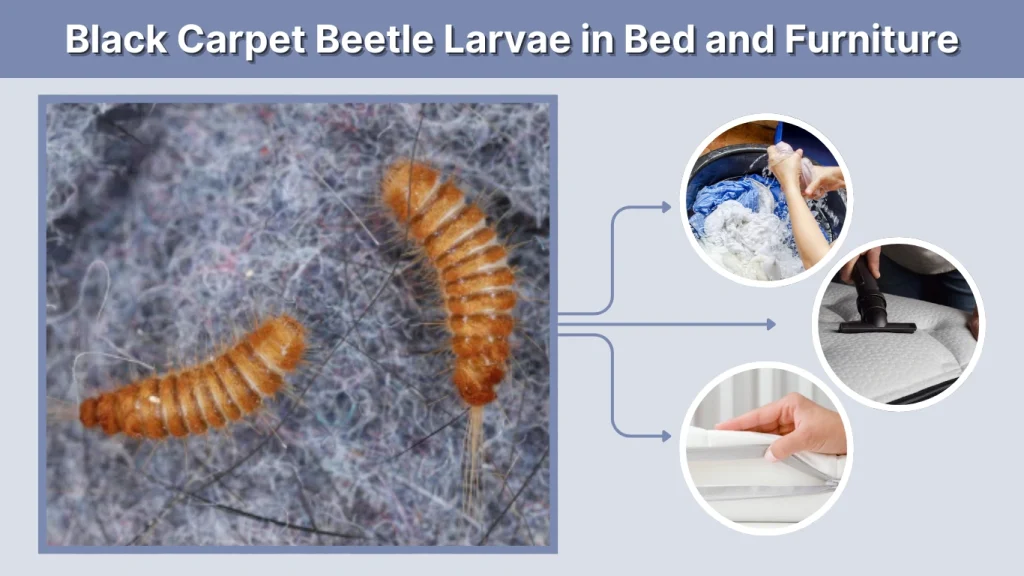
Although larvae prefer carpets and clothing, they sometimes end up in beds and couches.
In Beds and Mattresses
Larvae may crawl into beds if wool blankets, feather pillows, or natural fiber mattresses are present. They feed on the organic materials and may shed hairs in the bedding. This can cause irritation or rashes on people sleeping there.
Removal Tips:
- Wash all bedding in hot water weekly.
- Vacuum mattresses and focus on seams where larvae may hide.
- Use mattress encasements to prevent further access.
In Couches and Upholstered Furniture
Furniture provides dark crevices for larvae to hide and abundant natural fibers to feed on. Infested couches often show small holes or thinning fabric.
Treatment Steps:
- Vacuum thoroughly, including beneath cushions and along seams.
- Use a steam cleaner on fabric upholstery.
- Apply insecticidal dust or sprays safe for upholstery in hidden areas.
By addressing both beds and furniture, you eliminate major sources of infestation in the home.
Treatment & Removal Methods

Getting rid of black carpet beetle larvae requires persistence, since eggs can hatch days after cleaning. Here are the primary methods:
Thorough Vacuuming
Vacuuming remains the first line of defense. Use a crevice tool to reach corners, under furniture, and along baseboards. Dispose of vacuum bags immediately to prevent re-infestation.
Steam Cleaning
Steam cleaning is highly effective because it kills larvae and eggs with high heat. Use on carpets, rugs, furniture, and even car interiors.
Hot Washing Fabrics
Wash clothing, curtains, and bedding in hot water (above 50°C/122°F). For delicate materials, professional dry cleaning is safer.
Insecticides and Powders
For larger infestations, insecticides are often necessary. Look for sprays or powders containing bifenthrin, deltamethrin, or permethrin. Apply these around carpets, baseboards, cracks, and crevices. Always follow safety guidelines, especially in homes with pets or children.
Powders like boric acid can be sprinkled onto carpets and left for several hours before vacuuming. They act as stomach poisons for larvae and provide long-lasting control.
Natural Treatments
For those preferring eco-friendly approaches, natural methods are highly effective for small to moderate infestations:
- Vinegar Spray: Wipe shelves, walls, and storage areas with a 50/50 vinegar and water solution to dissolve residues and deter larvae.
- Essential Oils: Oils like cedarwood, clove, eucalyptus, and lavender repel beetles. Use diluted sprays or sachets in closets.
- Diatomaceous Earth (DE): This fine powder scratches the exoskeletons of larvae, dehydrating and killing them. Apply lightly to carpets and vacuum later.
- Heat and Freezing: Infested clothes or blankets can be frozen for 48 hours or treated with direct sunlight and heat to kill larvae.
Natural remedies are especially useful in bedrooms, nurseries, or other sensitive areas where chemical sprays may not be appropriate.
Professional Pest Control
When infestations become widespread, calling pest control is the most efficient option. Professionals use industrial-strength insecticides, fumigation methods, and preventive sealing to ensure complete eradication.
Regional Focus
Black Carpet Beetle Larvae in the UK
In the UK, black carpet beetles are a growing problem due to warm, centrally heated homes. They are especially common in older houses and museums, where they damage textiles and collections.
- Treatment in the UK: Homeowners can use permethrin-based sprays, insecticidal smoke bombs for attics, and cedarwood repellents for wardrobes.
- Seasonality: Infestations peak in spring and summer when adult beetles enter through windows.
Black Carpet Beetle Larvae in Michigan
Michigan households often report infestations due to colder winters driving beetles indoors. Attics, basements, and garages become prime hiding spots.
- Prevalence: High during spring and summer as adult beetles emerge.
- Prevention: Seal cracks in foundations, clean storage areas, and eliminate bird nests near roofs or chimneys.
Infestation Signs and Long-Term Control
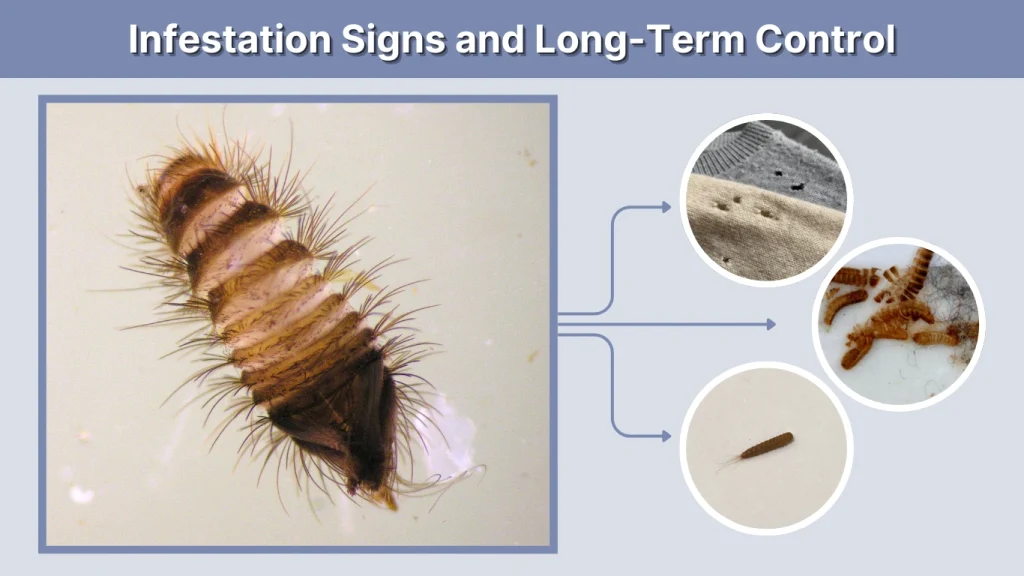
When larvae are present in large numbers, you’ll notice damage across multiple areas of the home. Common signs include:
- Irregular holes in clothing and upholstery.
- Shed skins scattered around storage spaces.
- Larvae crawling up walls or across floors.
Controlling Infestations
- Deep Cleaning Routine: Weekly vacuuming and laundering of fabrics.
- Sealing Food and Fabrics: Store clothing in airtight containers and food in sealed bins.
- Regular Inspections: Check attics, basements, and under furniture for early signs.
- Reduce Attractants: Keep pet food sealed and eliminate rodent or bird nests.
With persistence, infestations can be eliminated and kept from recurring.
Special Cases & Clarifications
- Little Tiny Black Carpet Beetle Larvae: These are simply younger larvae in their earliest stages, often less than 3 mm long.
- Black Flat Carpet Beetle Larvae: A term sometimes used to describe larvae with flattened bodies, though it often refers to the same species.
- Carpet Beetle Larvae with Black Rear End: This is a distinct feature of black carpet beetle larvae, helping identify them.
- Black Baby Carpet Beetle Larvae: Refers to the small juvenile stages that are often first noticed in homes.
- Do They Live in Hair? No, they don’t infest humans. Contact with bristles may cause rashes but larvae feed only on natural fibers.
Prevention Tips
The most effective way to protect your home long-term is prevention:
- Vacuum Regularly: Especially in hidden corners, under furniture, and along baseboards.
- Store Clothing Safely: Use vacuum-sealed bags or airtight bins for wool and silk garments.
- Use Natural Repellents: Cedar blocks, lavender sachets, and essential oils deter beetles naturally.
- Seal Entry Points: Fix gaps in doors, windows, and vents to reduce adult beetles entering.
- Inspect Seasonally: Especially in spring and summer when adult beetles are most active.
FAQs
What do black carpet beetle larvae eat?
They feed on natural fibers like wool, silk, fur, feathers, and leather, as well as cereals, grains, and pet food.
How big do black carpet beetle larvae get?
They range from 2.5 mm to 7 mm, depending on their stage of development.
Can black carpet beetle larvae bite?
No, they do not bite. However, their bristly hairs can cause skin irritation or rashes.
How do I kill black carpet beetle larvae naturally?
Use vinegar sprays, essential oils, diatomaceous earth, or freeze infested items for at least 48 hours.
Are black carpet beetle larvae common in Michigan and the UK?
Yes. They are widespread in both regions, thriving indoors during colder months in Michigan and in warm, heated homes across the UK.
