

Carpet beetles are tiny pests that can cause big problems in your home. While adults often go unnoticed, their larvae feed on natural fibers like wool, silk, and leather, leaving behind damaged fabrics and hidden infestations. Many homeowners confuse them with bed bugs, especially when skin rashes appear after exposure. Knowing the early signs of carpet beetles is essential to prevent costly damage and ongoing discomfort. In this guide, we’ll explore the seven most common indicators of a carpet beetle infestation and the best ways to eliminate them.
Sign 1: Visible Adult Beetles
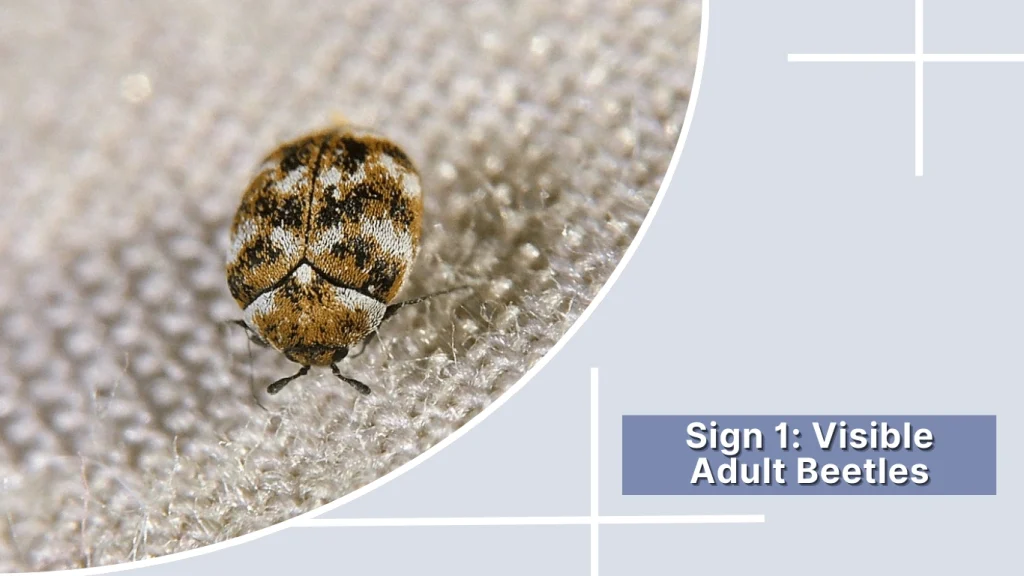
One of the earliest and most noticeable signs of a carpet beetle infestation is the presence of adult beetles. These pests are small, oval-shaped insects, typically measuring 2–4 mm in length. They often have a mottled appearance, with a mix of black, white, and brown patterns across their backs.
Adult beetles are usually drawn to light sources, which means you’re likely to spot them crawling on windowsills, curtains, or near lamps. Unlike larvae, adults don’t feed on fabrics inside your home; instead, they consume pollen and nectar outdoors. However, their presence indoors indicates that eggs may already have been laid in carpets, mattresses, or furniture, leading to a larger problem over time.
Varied and Black Carpet Beetles
- Varied carpet beetle: Has irregular patches of white, brown, and yellow scales, making them easy to identify.
- Black carpet beetle: Dark brown or shiny black in color, slightly larger, and commonly responsible for heavy fabric damage.
Spotting adult beetles indoors should never be ignored. Even if they’re not eating your fabrics directly, they are a sign that larvae are present nearby, which are the true cause of destruction and skin irritation.
Sign 2: Carpet Beetle Larvae
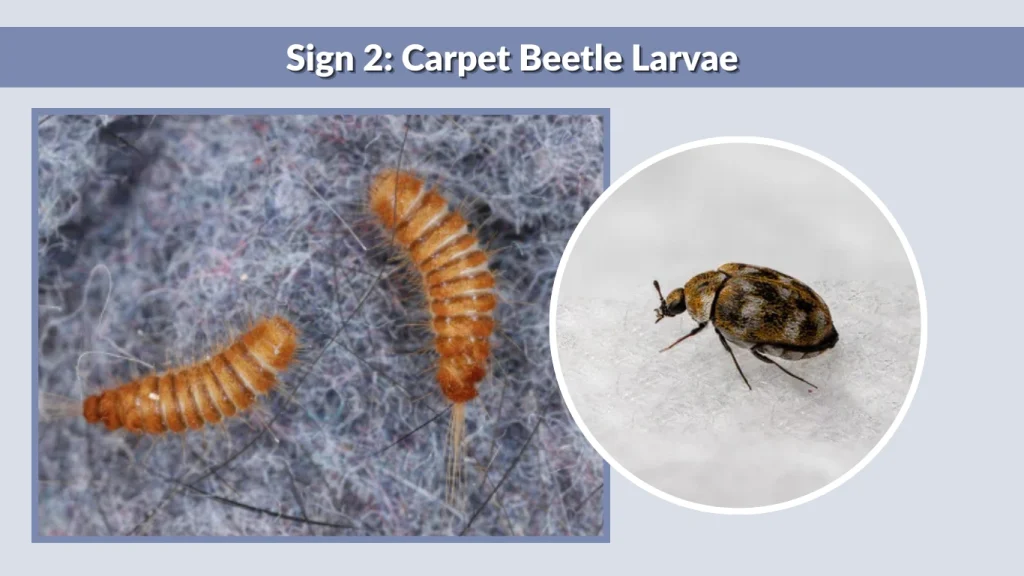
The most damaging stage of a carpet beetle’s life cycle is the larval stage. Larvae are small, brownish, worm-like creatures covered in tiny bristles or hairs, giving them a fuzzy appearance. They are often referred to as “woolly bears.”
Larvae feed on natural fibers, including wool, silk, leather, fur, and feathers, as well as stored food products. They thrive in dark, hidden areas, such as under carpets, inside closets, or in the folds of upholstered furniture.
Larvae in Mattresses and Clothing
- Mattresses: Larvae often hide along seams, folds, and edges, feeding on bedding fibers.
- Clothing: Infestations in wardrobes are common, especially with garments made of wool or silk.
- Stored fabrics: Old blankets, coats, or rugs left untouched for months can become breeding grounds.
Spotting larvae is a clear warning sign that your home may already have an active infestation.
Sign 3: Shed Skins and Fecal Pellets
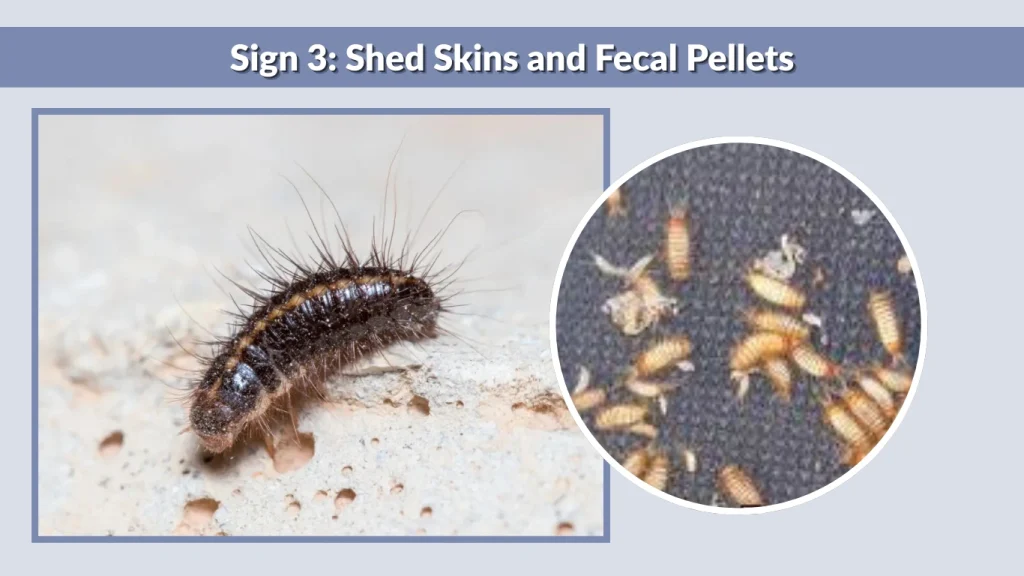
As carpet beetle larvae grow, they go through several molts, shedding their outer skins. These tiny, dry, brownish husks are often found in corners, along baseboards, or inside drawers. Because larvae can shed up to a dozen times before becoming adults, their shed skins often accumulate in infested areas.
Another sign is the presence of fecal pellets. These look like tiny, round specks the same color as the material the larvae have been feeding on. They are often confused with dust but are actually a telltale indicator of larval activity.
Early Infestation Clues
- Shed skins found near window sills, carpets, or under furniture.
- Powdery droppings in wardrobes, fabric storage boxes, or shelves.
- Presence of both skins and pellets in the same spot confirms larval feeding activity.
These remnants are one of the strongest early warnings that carpet beetles are breeding inside your home.
Sign 4: Fabric and Furniture Damage
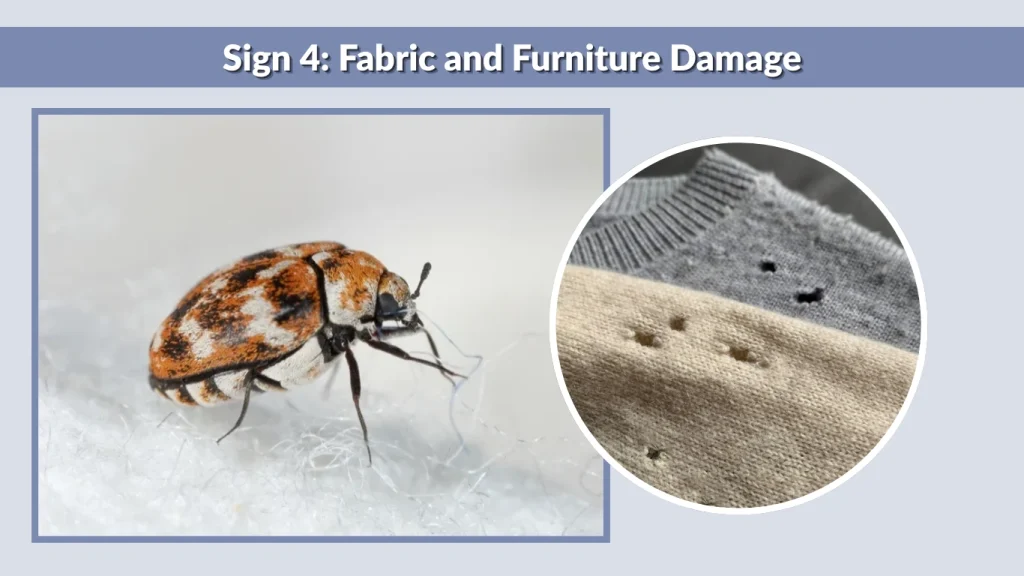
One of the most frustrating and costly signs of carpet beetles is visible damage to fabrics and furniture. Unlike moths, which leave irregular holes, carpet beetle larvae tend to create small round holes or thinning patches in natural fibers.
Common Damage Areas
- Clothing: Wool sweaters, silk scarves, and leather items may develop holes or weak spots.
- Carpets and Rugs: The edges of rugs and carpeted areas often show bald patches.
- Upholstered Furniture: Larvae feed on padding, cushions, and fabric covers.
The damage can be subtle at first, but with time, it spreads and weakens the fibers, sometimes destroying entire garments or pieces of furniture.
Carpet Beetles in Cars
Carpet beetle infestations are not limited to homes. They can also be found in cars, where they damage carpet flooring, seat upholstery, and even trunk linings. Regular cleaning is the best prevention.
Sign 5: Infested Mattresses and Bedding
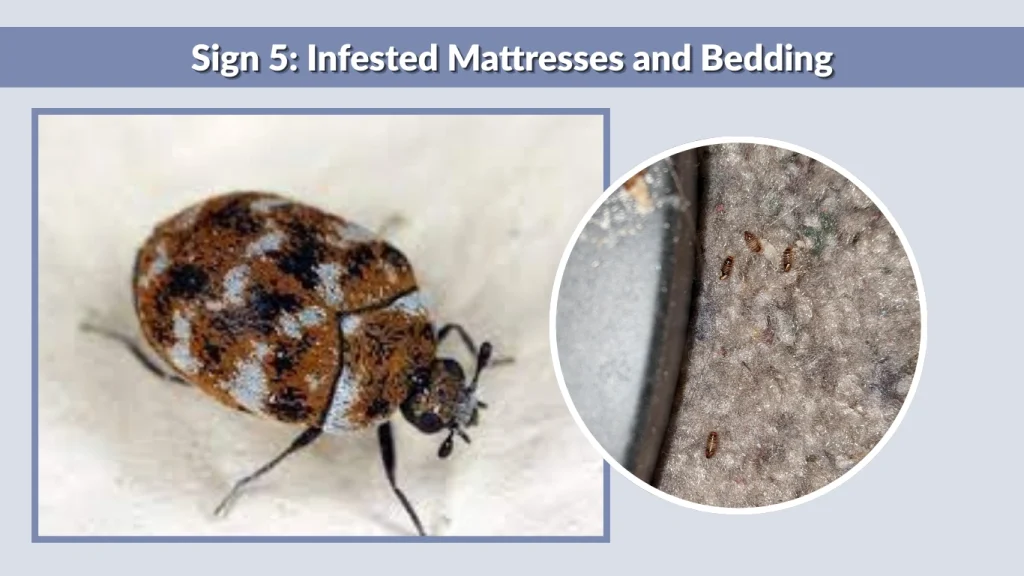
Another common place where carpet beetles thrive is in mattresses and bedding. Since mattresses often contain natural fibers and remain undisturbed, they are an ideal environment for larvae.
Key Indicators in Mattresses
- Shed skins or fecal pellets along seams and folds.
- Tiny larvae crawling in hidden creases.
- Unexplained fabric thinning or holes in sheets and blankets.
Mattress vs. Bed Bug Confusion
Many people mistake carpet beetle infestations for bed bugs. The key difference is that bed bugs bite humans, leaving red welts, while carpet beetle larvae cause allergic rashes from skin contact. Checking for shed skins and fabric damage can help tell them apart.
Sign 6: Skin Reactions and Rashes
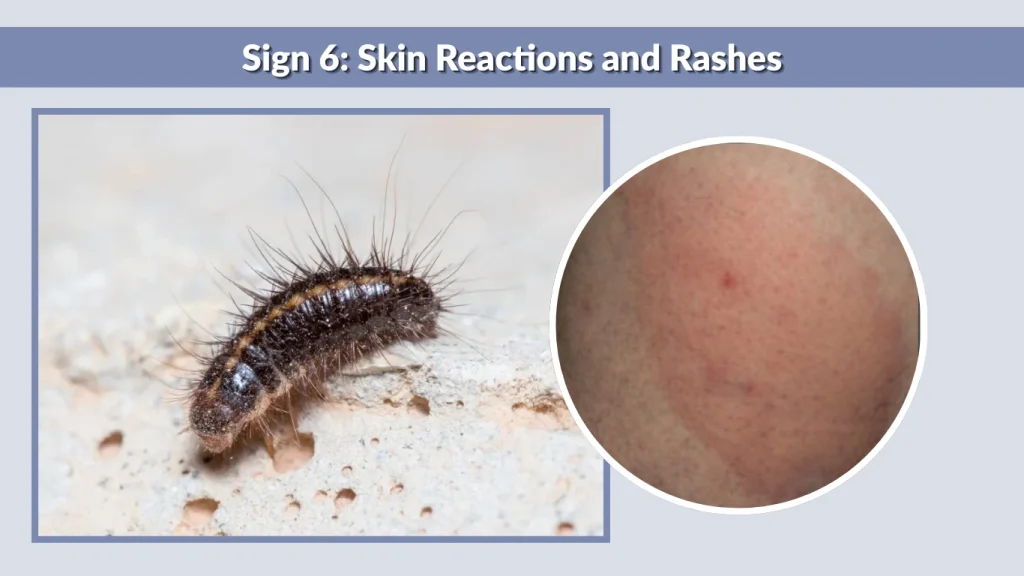
A less obvious but equally important sign of carpet beetles is the effect they have on human skin. While these pests don’t bite, their larvae have tiny bristle-like hairs that can cause allergic reactions. When these hairs or shed skins come into contact with the skin, they may lead to irritation.
Common Skin Symptoms
- Red, itchy bumps resembling insect bites.
- Rash-like patches that may spread with continued exposure.
- Irritation that flares up after contact with infested clothing, carpets, or bedding.
Rash vs. Bed Bug Bites
- Bed bug bites: Appear in rows or clusters, with noticeable swelling and puncture marks.
- Carpet beetle rashes: Random, scattered patches without punctures, caused by allergic reactions rather than true bites.
For people with sensitive skin, children, or allergy sufferers, these reactions can be more severe, sometimes requiring medical attention.
Sign 7: Increased Presence of Tiny Black or Brown Bugs
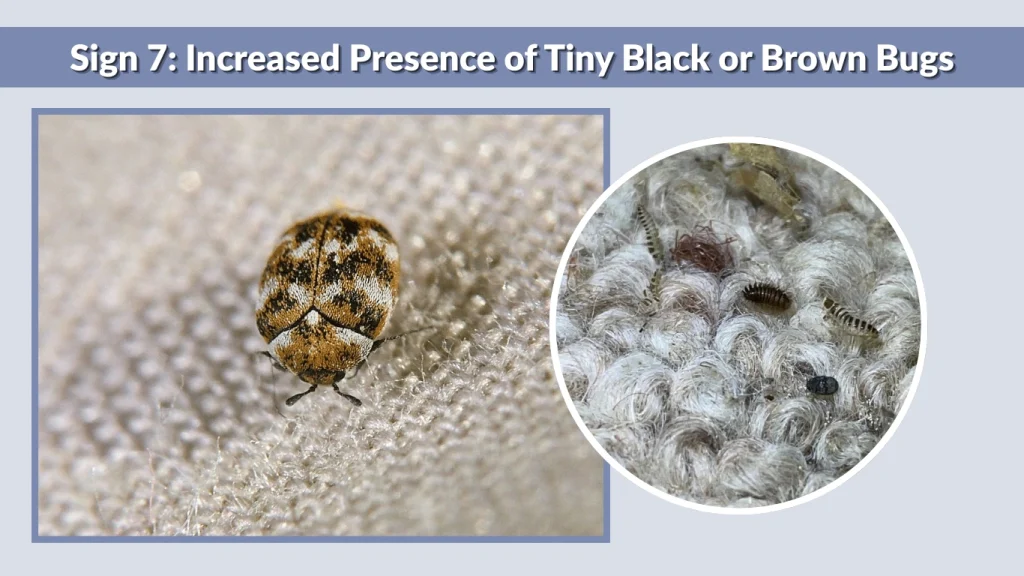
Finally, the most visible sign of a carpet beetle infestation is the appearance of small adult beetles crawling around your home. These insects are drawn to light, so they’re often seen on walls, ceilings, window sills, and near lamps.
Early Warning Indicator
- A few beetles indoors may not seem alarming, but their presence suggests that larvae are thriving in hidden areas.
- Spotting them repeatedly is a strong sign of an active infestation that needs immediate attention.
Tiny Black Bugs vs. Carpet Beetles
Carpet beetles are sometimes mistaken for lint, crumbs, or even fleas because of their small size. Unlike fleas, they do not jump. Identifying them correctly ensures you take the right steps toward pest control.
How to Get Rid of Carpet Beetles
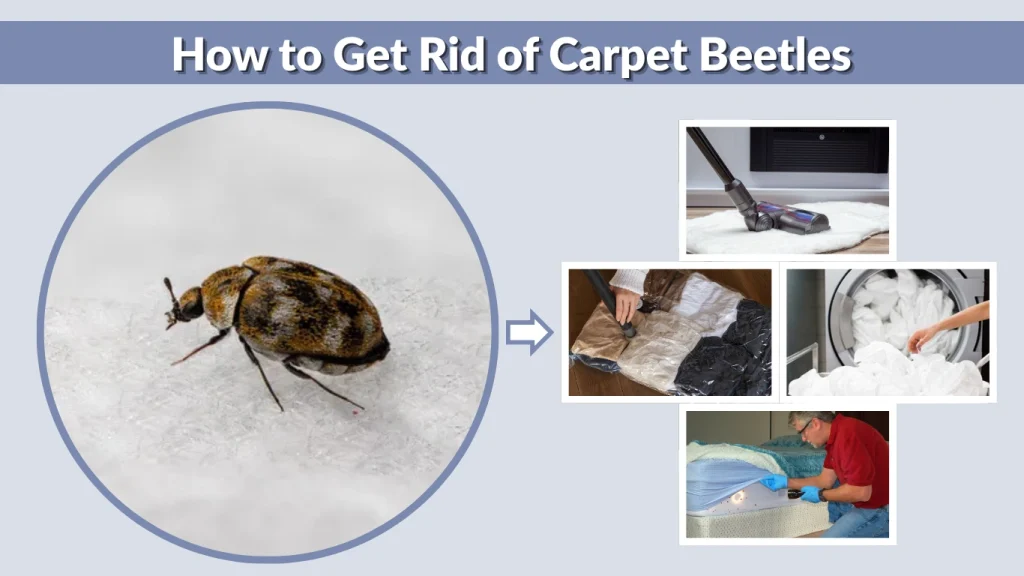
Noticing the signs of carpet beetles is only the first step—eliminating them is essential to protect your home and belongings. Since both larvae and adults can spread quickly, a multi-step approach works best.
Step 1: Deep Cleaning
- Vacuum carpets, rugs, furniture, and baseboards thoroughly.
- Dispose of the vacuum bag or empty the canister outside immediately to prevent re-infestation.
Step 2: Hot Water Washing
- Wash infested clothing, bedding, and curtains in hot water (at least 120°F / 49°C) to kill larvae and eggs.
- Dry items on a high-heat setting for added effectiveness.
Step 3: Steam Cleaning
- Steam treatment penetrates deep into carpets, upholstery, and mattresses, killing hidden larvae.
Step 4: Sealing and Storage
- Store seasonal or delicate clothing in airtight containers or vacuum-sealed bags.
- Avoid leaving wool, silk, or fur items in open storage for long periods.
Step 5: Pest Control
For large or persistent infestations, professional pest control is often the safest option. Licensed exterminators can apply targeted insecticides to cracks, crevices, and carpets where larvae hide.
By combining these methods, you can not only remove existing carpet beetles but also prevent them from returning.
FAQs
What are the first signs of carpet beetles?
The earliest signs include spotting adult beetles on windowsills or light sources, finding larvae in carpets or closets, and noticing shed skins or tiny fecal pellets in hidden areas.
Can carpet beetles live in mattresses?
Yes, carpet beetle larvae can hide in mattress seams, folds, and bedding. While they don’t bite, their bristly hairs may cause skin irritation or allergic rashes.
Do carpet beetles cause skin rashes?
Carpet beetles do not bite, but their larvae shed hairs that can cause itchy red bumps or rash-like irritation, often mistaken for insect bites.
Are carpet beetles a sign of a dirty house?
Not necessarily. Even clean homes can attract carpet beetles since they feed on natural fibers, pet hair, and pollen. However, clutter and dust make infestations harder to detect.
How do you prevent carpet beetle infestations?
Regular vacuuming, hot water laundering, and sealing clothing in airtight containers are effective prevention methods. Inspecting secondhand items before bringing them inside also helps.
