
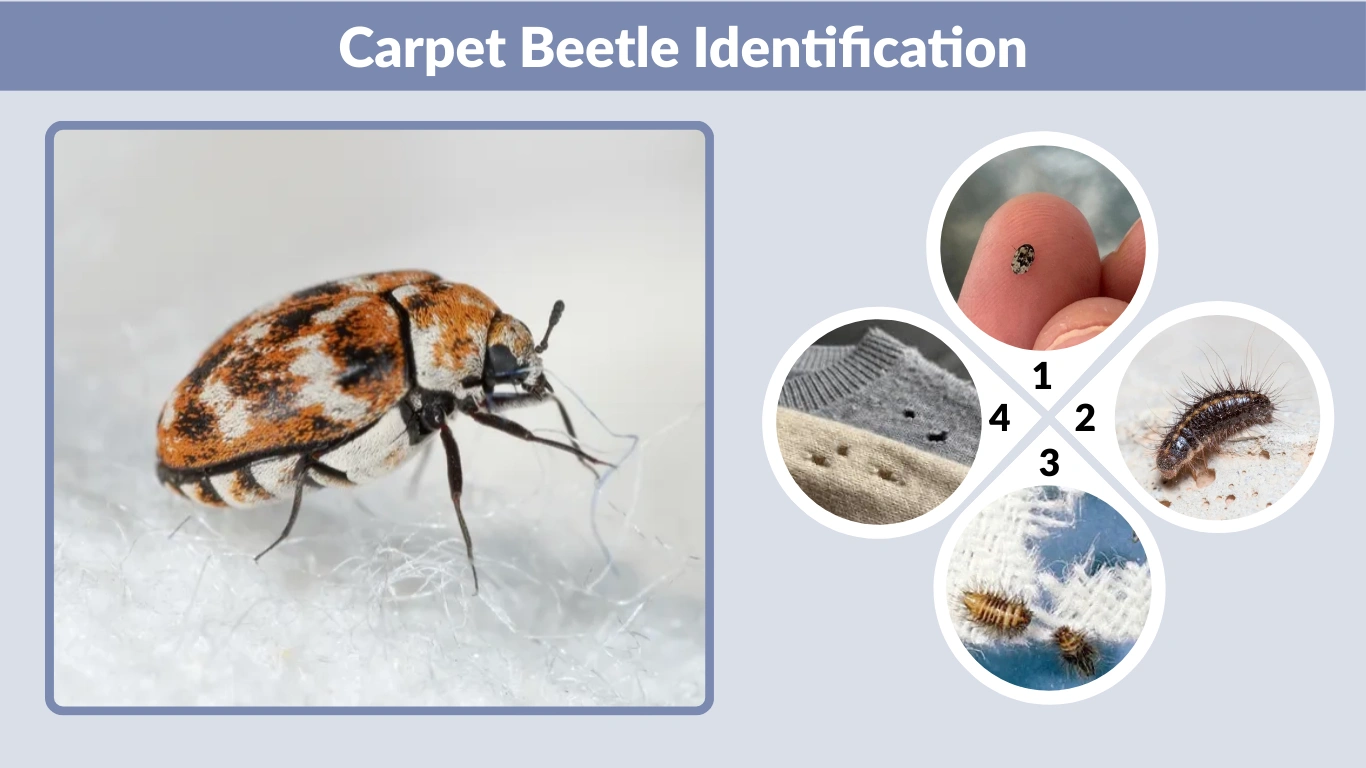
Carpet beetles are among the most common household pests that quietly damage fabrics, furniture, and stored clothing. Unlike pests that bite or sting, their danger lies in their ability to destroy natural fibers like wool, silk, and leather. Because they are so small, infestations often go unnoticed until visible damage appears. Proper identification is the first step in tackling a carpet beetle problem effectively.
What Do Carpet Beetles Look Like?
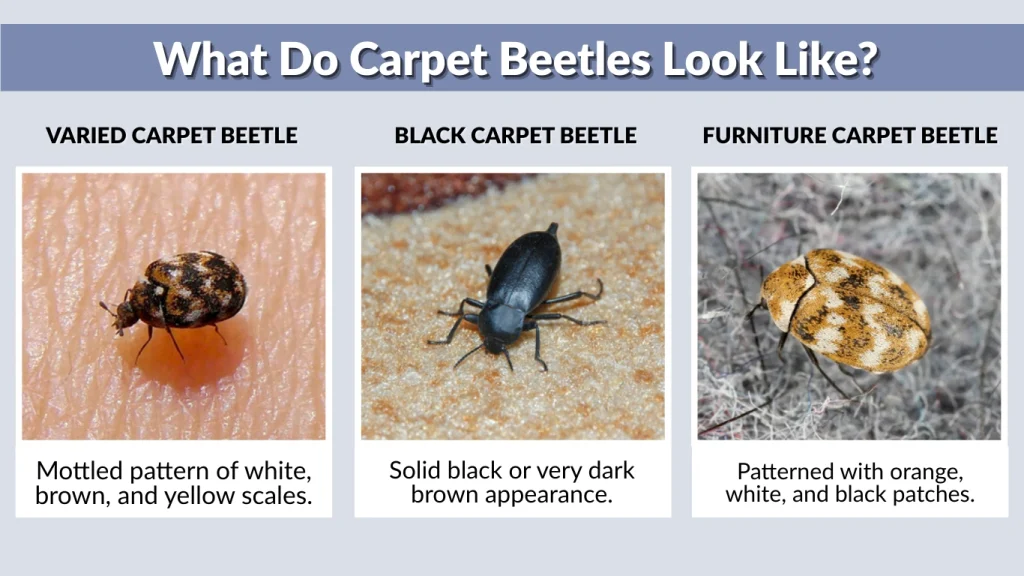
Adult carpet beetles are small insects, usually measuring between 2 to 4 millimeters in length. Their body shape is oval or round, and they are often confused with lady beetles due to their similar size. However, their coloring helps tell them apart. The most common species include:
- Varied Carpet Beetle – mottled pattern of white, brown, and yellow scales.
- Black Carpet Beetle – solid black or very dark brown appearance.
- Furniture Carpet Beetle – patterned with orange, white, and black patches.
Their tiny size makes them difficult to spot unless you know exactly what to look for. Adults are often seen near windows, as they are attracted to light.
How to Identify Carpet Beetles
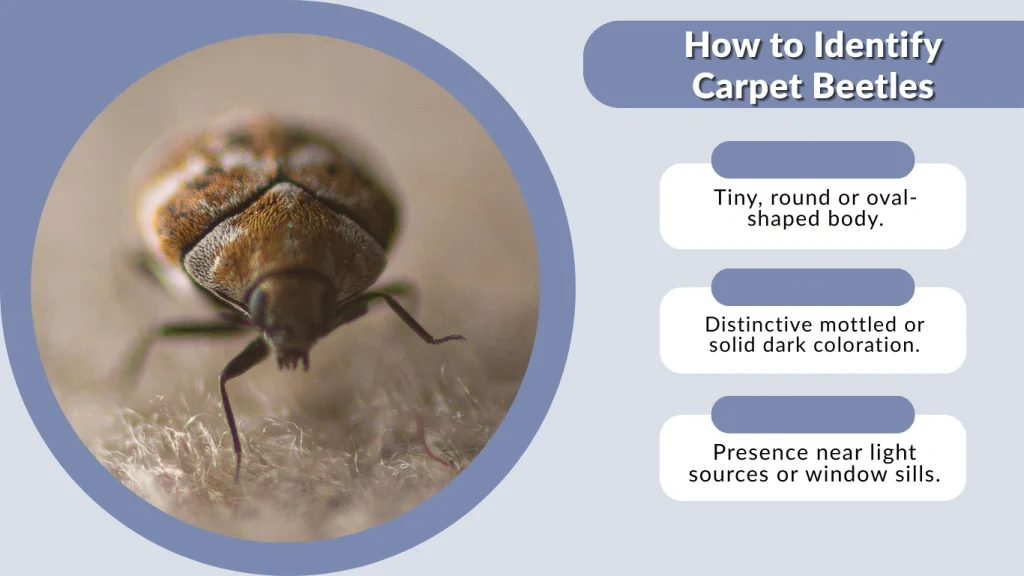
Carpet beetles have unique traits that set them apart from other household insects. Adults are usually hard-shelled with distinctive colors or scales. Unlike bed bugs, which are flat and reddish-brown, carpet beetles have a more rounded dome shape.
The main difference to note is that adult carpet beetles do not cause the damage—their larvae are the real culprits. Still, spotting even one adult indoors can indicate that larvae are somewhere nearby.
When identifying, focus on these key points:
- Tiny, round or oval-shaped body.
- Distinctive mottled or solid dark coloration.
- Presence near light sources or window sills.
Carpet Beetle Larvae Identification
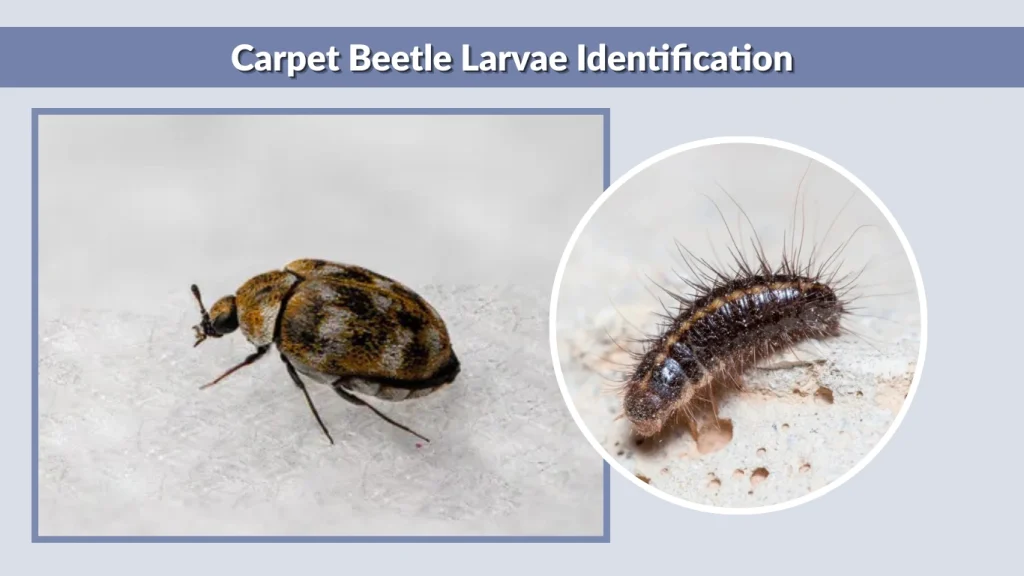
The larvae are far easier to detect once you know what to look for. Unlike the adults, they are elongated and covered with bristly or hair-like structures. Carpet beetle larvae can grow up to 5 millimeters long, making them slightly larger than the adult stage.
They are typically brown to dark brown in color, with a striped or banded appearance depending on the species. Some species also have tufts of longer hairs at the end of their bodies. These hairs can break off and irritate human skin, sometimes causing itchy welts that resemble insect bites.
Larvae are the most destructive stage of the carpet beetle life cycle. They feed relentlessly on natural fibers such as wool, silk, feathers, fur, and leather. Damage from larvae often appears as irregular holes or thinning patches in fabrics and carpets.
Carpet Beetle Eggs
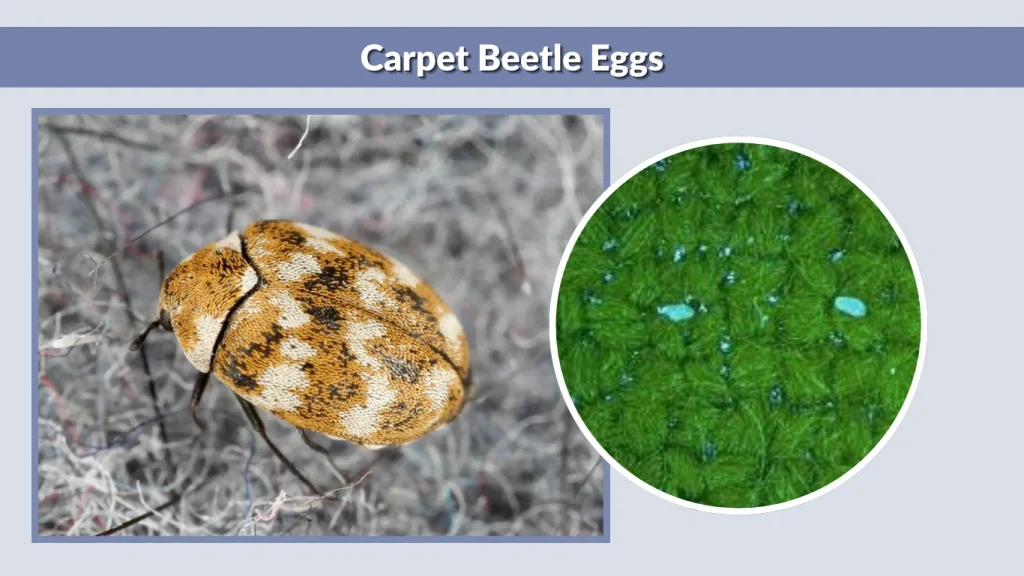
Another stage worth identifying is the egg stage. Carpet beetle eggs are tiny, whitish or cream-colored, and oval in shape. At about 0.5 millimeters long, they are barely visible to the naked eye. Despite their small size, eggs play a critical role in infestations because females can lay up to 100 eggs at a time.
Eggs are usually hidden in dark, undisturbed areas where food sources are abundant. Common sites include beneath carpets, along the edges of rugs, inside furniture stuffing, and in closets where natural fiber clothing is stored. Because they hatch within 1 to 2 weeks, early detection is difficult but extremely important.
Where to Find Carpet Beetles in the Home
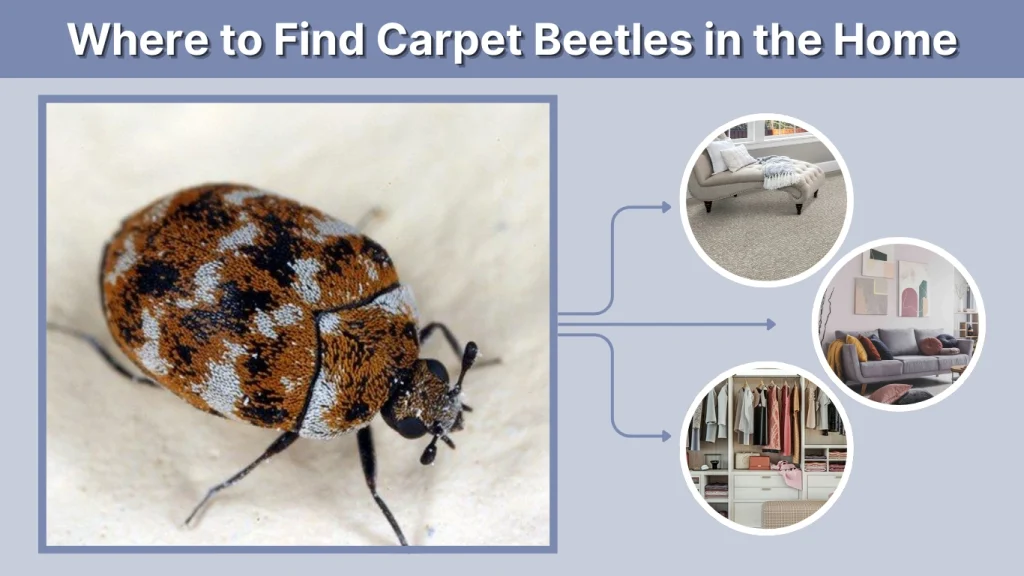
Carpet beetles thrive in areas where food sources are readily available. In homes, this means places rich in animal-based fibers. Some of the most common hiding and breeding areas include:
- Carpets and Rugs – especially those made from wool or natural blends.
- Upholstered Furniture – the fabric covering and stuffing provide ideal conditions.
- Clothing Storage – wardrobes, closets, and trunks containing silk, wool, or fur garments.
- Dark Corners and Attics – undisturbed spaces often harbor both larvae and eggs.
- Air Ducts and Baseboards – where lint, pet hair, and dust accumulate.
Adults may be found near windows and lamps since they are drawn to natural and artificial light. Spotting them there can be a warning sign of a hidden infestation elsewhere in the house.
Signs of Infestation for Easy Identification
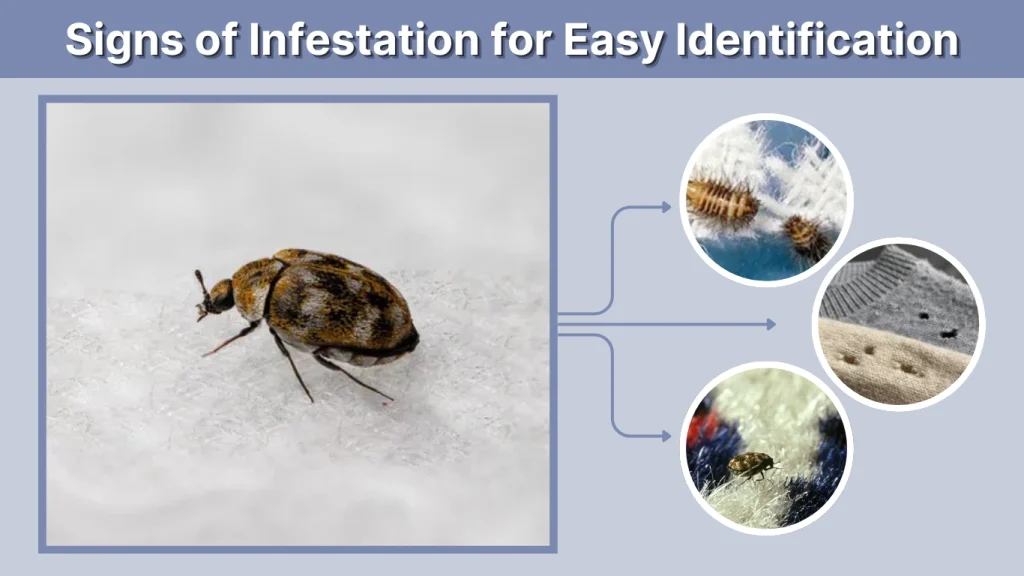
One of the best ways to confirm a carpet beetle problem is by recognizing the telltale signs they leave behind. Since the insects are small, these indirect clues often give them away before you see the beetles themselves.
- Shed Skins – Larvae molt several times as they grow, leaving behind dry, brownish, shell-like skins that often accumulate near fabrics or carpets.
- Fabric Damage – Irregular holes or thinning patches appear on wool clothing, carpets, and upholstery. Unlike moths, carpet beetles create more scattered and uneven damage.
- Adult Presence – Spotting tiny beetles near windows, lamps, or curtains is a strong indicator. Adults often enter in search of light or to find new egg-laying sites.
- Larvae Trails – Infested areas may show clusters of bristly larvae, usually around baseboards or under heavy furniture.
Catching these signs early is crucial for minimizing damage and controlling infestations effectively.
Common Misidentifications
Carpet beetles are often mistaken for other pests due to their small size and patterned appearance. Misidentification can lead to wasted time and money on the wrong treatments.
- Bed Bugs – Unlike beetles, bed bugs are flat, reddish, and feed on blood. Carpet beetles do not bite humans.
- Fleas – Fleas are much smaller, jump when disturbed, and are typically found on pets. Carpet beetles crawl slowly and cannot jump.
- Lady Beetles – Though similar in size, lady beetles have a more rounded dome and lack the mottled or bristly appearance of carpet beetles.
Creating a comparison checklist when inspecting pests can help avoid confusion and ensure proper treatment.
Helpful Tips for Accurate Identification
Proper identification takes a keen eye and patience. These practical tips can help confirm whether you’re dealing with carpet beetles:
- Use a Magnifying Glass – This makes spotting the fine hairs and mottled scales easier.
- Inspect Light Sources – Adults are often attracted to windowsills and lamps, making them easier to find.
- Check for Fabric Damage – Irregular holes in natural fibers are strong signs of larvae activity.
- Look for Clusters – Eggs, larvae, and shed skins are usually found together in undisturbed areas.
- Collect Samples – If unsure, capture a specimen in a clear container and show it to a pest control professional for confirmation.
These steps provide a reliable approach to distinguishing carpet beetles from other insects in the home.
Conclusion
Carpet beetles may be small, but their potential for damage is significant. Identifying them requires understanding each stage of their life cycle—adults with mottled shells, hairy destructive larvae, and nearly invisible eggs. They hide in fabrics, carpets, and dark corners, leaving behind shed skins and damaged fibers as warning signs.
