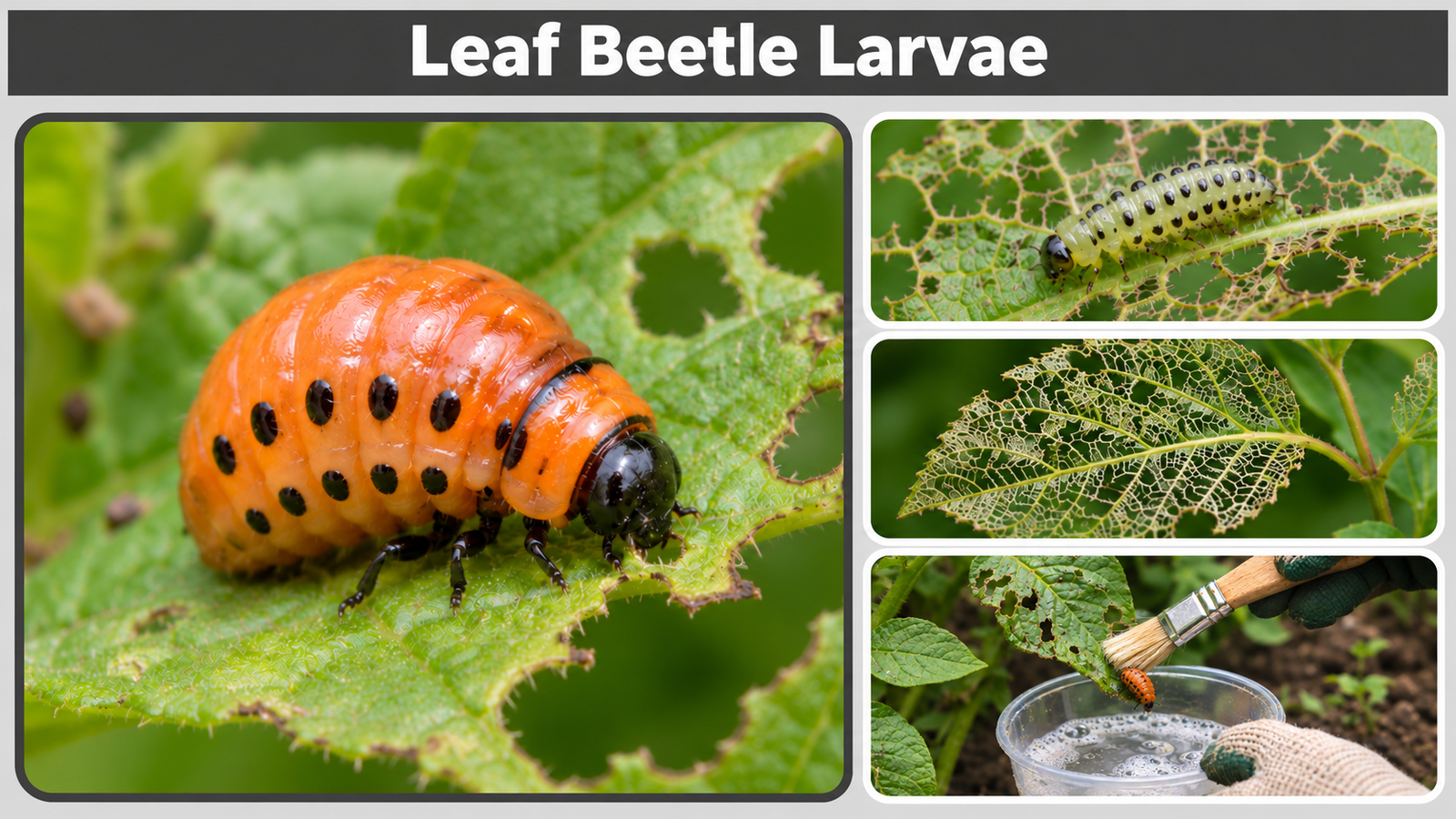
Leaf beetle larvae can turn healthy leaves into a patchwork of holes, pale spots, and ragged edges. But they don’t all look alike. Some are plump and striped, some are yellow with dark spots, and some hide beneath a coating of their own droppings. The easiest way to narrow down what you’ve found is to start with the plant it’s feeding on. This guide explains how to recognize common leaf beetle larvae, distinguish them from look-alikes, and decide whether the damage calls for action.
What Are Leaf Beetle Larvae?
Leaf beetle larvae are the immature stage of beetles in the family Chrysomelidae. Adults lay eggs, the eggs hatch into larvae, and the larvae feed and grow before becoming pupae and eventually adults. Many common garden species chew leaves as larvae, but feeding habits vary across the family. Some develop inside leaves, and others feed on roots. In a vegetable patch or flower bed, the easiest ones to find are the larvae feeding openly on foliage or hiding beneath it.
How to Identify Leaf Beetle Larvae
Start by identifying the plant, then turn over several leaves near the freshest damage. Note the larva’s shape, color, legs, and any markings. Check for eggs and adult beetles on the same plant. A photo of the larva alongside a photo of the whole plant gives you more to work with than a close-up of the larva alone.
Look at the Body Shape and Legs
Many leaf-feeding beetle larvae have soft, segmented bodies, a distinct head, and three pairs of short legs near the front. Colorado potato beetle larvae have noticeably swollen bodies, while some other species are narrower and flatter. Color varies even among larvae of the same species as they grow, so use it alongside body shape and the identity of the host plant.
Check whether the larva has fleshy, stubby legs along its abdomen. These structures, called prolegs, are common on caterpillars and many sawfly larvae. Leaf beetle larvae lack abdominal prolegs, although their small front legs can be hard to see while they’re pressed against a leaf.
Match the Larva to Its Host Plant
Bright red beetles and dark, sticky-looking larvae on true lilies point toward lily leaf beetles. Plump reddish larvae with rows of dark spots on potato leaves suggest Colorado potato beetles. Yellowish larvae with dark markings on viburnum, especially a shrub with leaves that have been eaten between the veins, suggest viburnum leaf beetles.
Make sure the insect is actually feeding. An insect resting beside a hole may have arrived after the damage occurred. If you’re unsure, check nearby leaves for the same kind of larva or watch the plant long enough to see what the insect does.
Common Types of Leaf Beetle Larvae
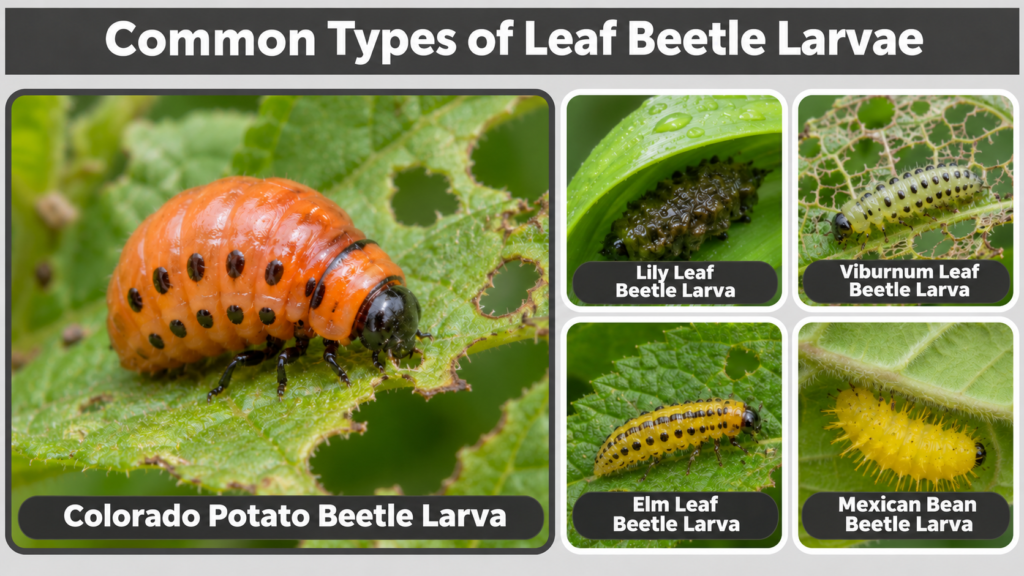
The same kind of chewing damage can appear on unrelated plants. Use the host plant and the larva’s appearance together to make a tentative identification. This table covers five leaf beetles gardeners commonly encounter in North America.
| Leaf beetle | Common host plants | What the larvae look like | Typical feeding signs |
|---|---|---|---|
| Lily leaf beetle | True lilies and fritillaries | Soft-bodied larvae usually hidden beneath dark, sticky droppings | Pale scraped patches, ragged leaves, and damaged buds |
| Colorado potato beetle | Potatoes and eggplants | Plump reddish to orange larvae with dark heads and rows of black spots | Chewed leaf edges and heavy foliage loss in larger infestations |
| Viburnum leaf beetle | Susceptible viburnum shrubs | Yellowish-green larvae with dark markings | Leaf tissue eaten between the veins, giving leaves a lacy appearance |
| Elm leaf beetle | Elm trees | Older larvae are yellowish with dark stripes along the sides | Thin, brown patches where larvae scrape away leaf tissue |
| Mexican bean beetle | Garden beans | Yellow, oval larvae covered in branched spines | Leaf undersides scraped away, leaving a lacy surface that turns brown |
What Does Leaf Beetle Larva Damage Look Like?
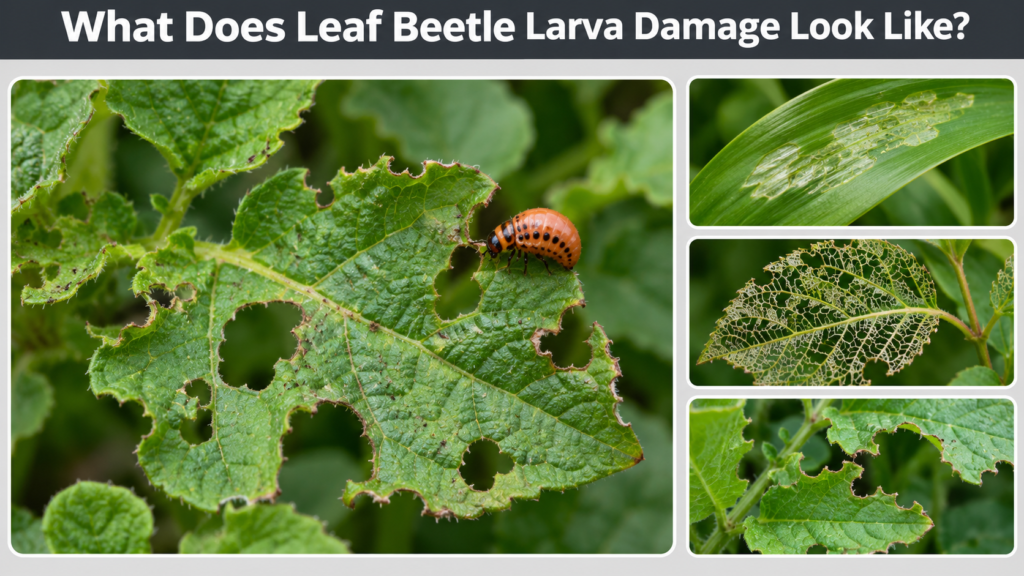
Look for a pattern across several leaves. A single hole offers little information, but a patch of pale feeding marks, fresh chewing, and multiple larvae on the same plant can show where an infestation is developing. Leaf beetle larvae may scrape away a thin layer of tissue, chew through the leaf, or leave much of the vein network behind.
Pale Patches and Skeletonized Leaves
Some young larvae feed from below and leave a thin upper layer of leaf tissue. From above, the damaged area may look pale or almost translucent. As it dries, it can turn tan or brown. This pattern is easy to miss on lower leaves or on the inside of a dense shrub.
Skeletonized leaves have much of the soft tissue removed between the veins. The remaining veins give the leaf a lacy appearance. Viburnum and Mexican bean beetle larvae can leave this kind of damage, but skeletonization alone won’t identify the species.
Ragged Holes and Missing Leaf Edges
Larvae that chew through the whole leaf can leave irregular holes or eat inward from the edges. When many larvae feed together, small areas of damage can merge until little foliage remains. Young plants have fewer leaves to spare, so check seedlings and actively growing shoots closely.
Holes remain after the insects leave. To see whether feeding is still active, take a photo of a lightly damaged leaf and compare it a few days later. You can also check recently opened leaves for new holes and look beneath them for larvae.
How to Tell Leaf Beetle Larvae From Look-Alikes
Caterpillars, sawfly larvae, and other insects can feed on the same plants or leave similar damage. Some beneficial larvae also hunt on leaves, especially where aphids are present. Taking a moment to watch an unfamiliar larva can help you avoid removing a garden predator.
Leaf Beetle Larvae vs. Caterpillars and Sawfly Larvae
Caterpillars typically have three pairs of true legs near the head and several pairs of fleshy prolegs farther back. Many sawfly larvae look much like caterpillars but have more pairs of prolegs. Leaf beetle larvae have their true legs concentrated near the head and lack those fleshy abdominal legs.
Very small larvae can be difficult to inspect in the garden. Take a side-view photo or use a hand lens. A side view can also show whether a dark lump is an insect with a visible head and legs or simply debris stuck to the leaf.
Leaf Beetle Larvae vs. Ladybug Larvae
Many ladybug larvae are elongated and dark with orange markings. They often move across foliage in search of aphids and other small prey. If you see a larva moving through a group of aphids, watch to see what it eats before removing it.
The Mexican bean beetle is an important exception among ladybugs. Its yellow, spiny larvae feed on bean leaves. If you find them on the undersides of beans alongside fresh, lacy damage, check neighboring plants for more larvae and egg clusters.
How to Control Leaf Beetle Larvae in the Garden

Base your response on the plant’s condition and whether the damage is spreading. A mature plant with a few chewed leaves may only need monitoring. If larvae are stripping a young plant or spreading across a vegetable bed, removing them early can preserve more foliage.
Handpick Larvae and Check for Eggs
Inspect the underside of damaged leaves and remove visible larvae by hand. Carry a small container of soapy water to collect them. If you’re certain you’ve identified a pest’s eggs, wipe or crush them before they hatch. Preserve as much green foliage as possible, particularly when the plant is already heavily chewed.
Check the same plants again after a few days. Small larvae are easy to miss, and eggs may hatch after the first inspection. Start with affected plants, then check nearby plants of the same type. This is especially helpful when you’re managing a few lilies, potatoes, or bean plants.
Consider a Treatment Only if Damage Continues
If repeated handpicking can’t keep up, identify the pest and the host plant before choosing a treatment. A product labeled for a pest on ornamental flowers may have different permitted uses from one intended for edible crops. Follow the label for application timing, pollinator precautions, and any required interval before harvest.
Recheck the plant for live larvae and fresh damage before deciding whether further treatment is needed. Inspect the undersides of leaves and the newest growth. These areas give you a clearer view of ongoing feeding than older leaves that were already damaged.
Frequently Asked Questions
Are Leaf Beetle Larvae Harmful to Plants?
They can be. A few larvae may leave only scattered holes, while a large group can remove much of the foliage. Young plants and those already under stress have less healthy growth to spare. Check how quickly the damage is spreading before deciding what to do.
Where Do Leaf Beetles Lay Their Eggs?
Many garden species lay eggs on the undersides of host leaves. The exact location depends on the species. Viburnum leaf beetles, for example, lay eggs in small pits in twigs, so checking leaves alone can miss them.
Do All Leaf Beetle Larvae Eat Leaves?
No. Some feed on roots, while others tunnel inside leaves. The larvae most gardeners notice are the ones feeding on the surface, where their chewing leaves visible holes, pale patches, or exposed veins.
Can a Plant Recover After Leaf Beetle Larvae Feed on It?
Many plants recover from light or moderate feeding. Damaged leaves will keep their holes, so look for healthy new growth and fewer fresh feeding marks. Leave partially damaged leaves attached while they still have green tissue.
Do Leaf Beetle Larvae Look Like Adult Beetles?
Usually, the two stages look quite different. An adult typically has hard wing covers, while the larva has a softer, visibly segmented body. Finding both on the same host plant can help you work out which leaf beetle you’re dealing with.