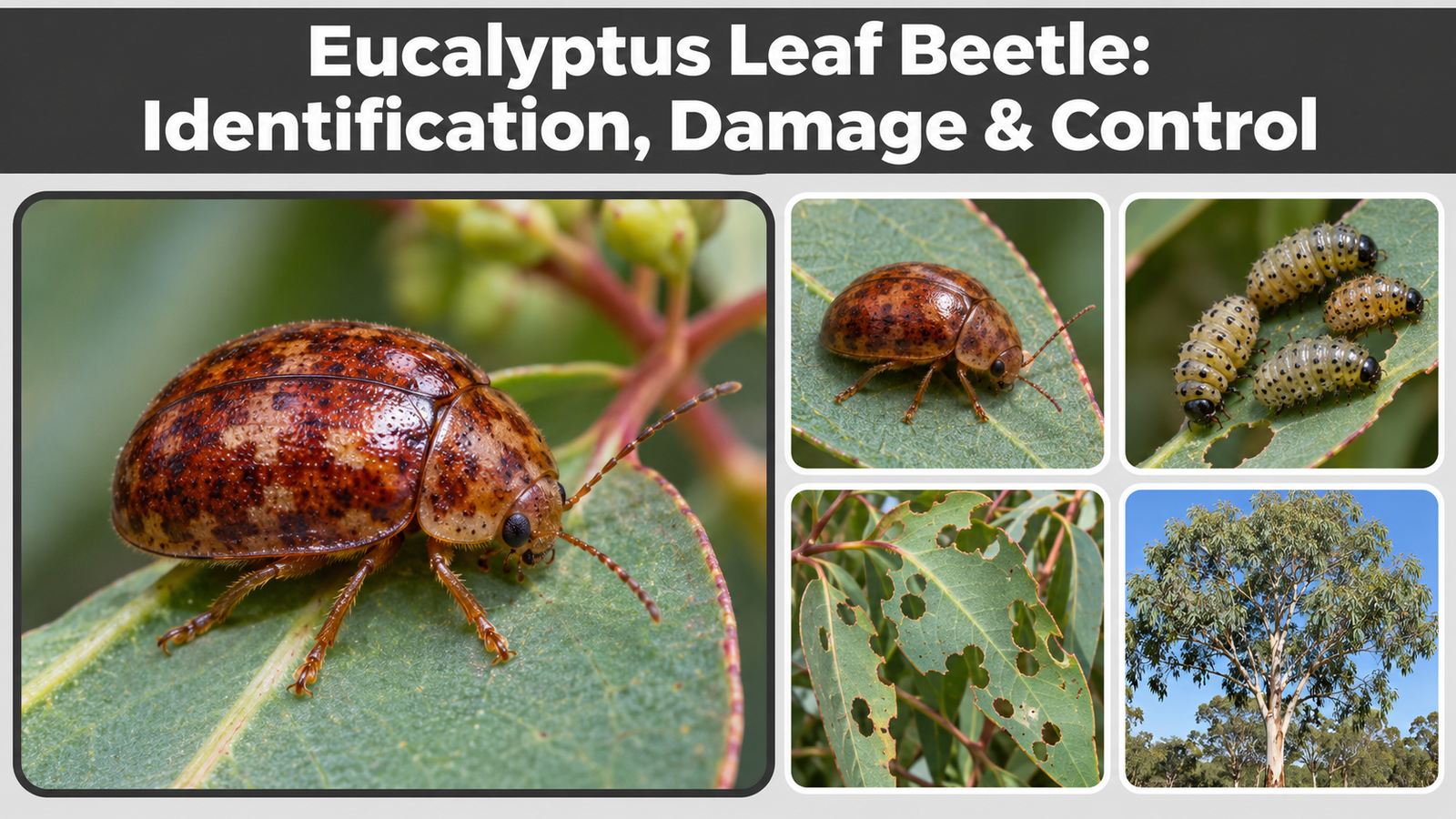
The eucalyptus leaf beetle is a plant-feeding insect that can cause noticeable damage to eucalyptus trees by chewing leaves and reducing their overall health. These beetles are particularly concerning in gardens, plantations, and landscapes where eucalyptus trees are grown for shade, timber, or ornamental purposes. Both adults and larvae feed on eucalyptus foliage, sometimes causing significant defoliation. Understanding how to identify eucalyptus leaf beetles, recognize their damage, and control infestations can help protect trees and maintain healthy growth.
What Is a Eucalyptus Leaf Beetle?
The term eucalyptus leaf beetle refers to several leaf-feeding beetles associated with eucalyptus trees. One well-known species is Paropsisterna m-fuscum, commonly called the eucalyptus leaf beetle. It belongs to the family Chrysomelidae, which includes thousands of plant-feeding beetle species.
Native to Australia, Paropsisterna m-fuscum has also established populations in California, where it feeds on certain eucalyptus species. Other closely related beetles, including Paropsisterna and Paropsis species, can cause similar damage.
These insects are especially active during warmer periods when eucalyptus trees produce fresh foliage. Although healthy, mature trees can often tolerate moderate feeding, repeated heavy infestations may weaken trees and affect their appearance.
How to Identify Eucalyptus Leaf Beetles
Eucalyptus leaf beetles are relatively small insects with rounded or oval bodies. Their appearance varies depending on the species, age, and life stage. Recognizing both adult beetles and larvae is important for identifying infestations before extensive damage occurs.
Adult Eucalyptus Leaf Beetle Identification
Adult eucalyptus leaf beetles generally have compact, oval-shaped bodies with hardened wing covers. Their coloration may range from reddish-brown to yellowish-brown, sometimes with darker markings.
Common identification features include:
- Body shape: Rounded to oval with a slightly convex back.
- Size: Many species measure approximately 5–10 mm long.
- Color: Brown, reddish-brown, yellowish, or patterned.
- Antennae: Relatively short antennae positioned near the head.
- Location: Commonly found on eucalyptus leaves and young shoots.
Adult beetles often remain on foliage during feeding and may drop from leaves when disturbed.
Eucalyptus Leaf Beetle Larvae
Eucalyptus leaf beetle larvae have soft bodies and appear quite different from adults. They are generally pale yellowish or cream-colored, sometimes with dark spots or markings.
Larvae feed directly on eucalyptus leaves and may gather near tender new growth. Their feeding can be particularly damaging because developing larvae consume foliage before becoming adults.
Where Do Eucalyptus Leaf Beetles Live?
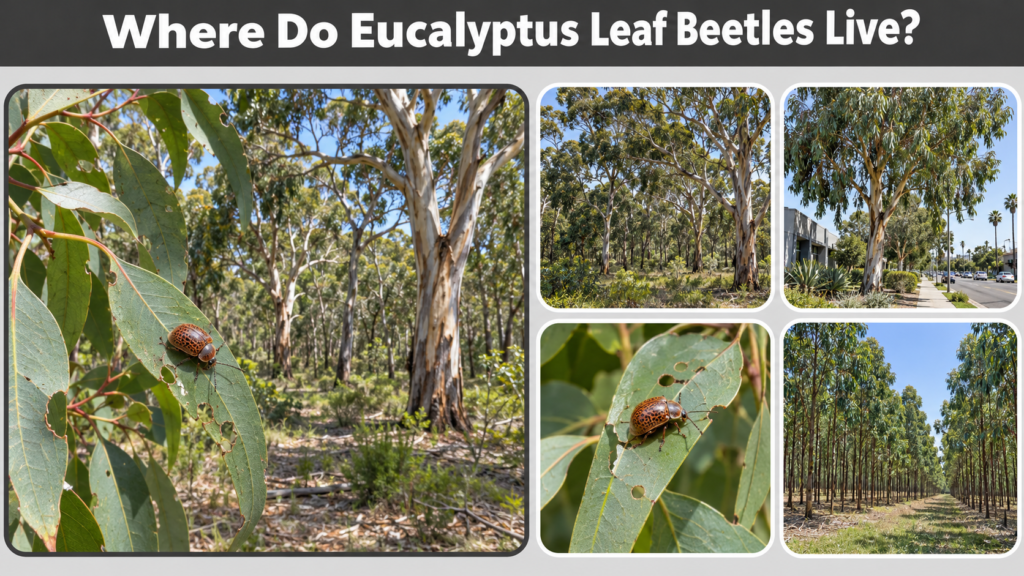
Eucalyptus leaf beetles originate primarily from Australia, where eucalyptus trees are native. Some species have spread to other regions through international plant movement and accidental introductions.
They are commonly associated with:
- Eucalyptus forests and woodlands.
- Commercial eucalyptus plantations.
- Urban parks and roadside trees.
- Residential gardens with eucalyptus trees.
- Nurseries growing eucalyptus seedlings.
In California, introduced eucalyptus leaf beetles can be found in areas where suitable host trees grow.
Their distribution depends on climate, host availability, and the particular beetle species.
What Do Eucalyptus Leaf Beetles Eat?
Eucalyptus leaf beetles primarily feed on the leaves of eucalyptus trees. Both adults and larvae consume foliage, although their feeding preferences may differ.
Many species prefer young, tender leaves because these tissues are easier to consume. Some beetles also feed on mature foliage when new growth is limited.
Common Host Plants
Different eucalyptus leaf beetle species prefer different host trees. Potential hosts include:
- River red gum (Eucalyptus camaldulensis).
- Blue gum (Eucalyptus globulus).
- Other susceptible eucalyptus species.
- Certain closely related trees within the myrtle family.
Host suitability varies considerably, so not every eucalyptus species is equally vulnerable to a particular beetle.
What Does Eucalyptus Leaf Beetle Damage Look Like?
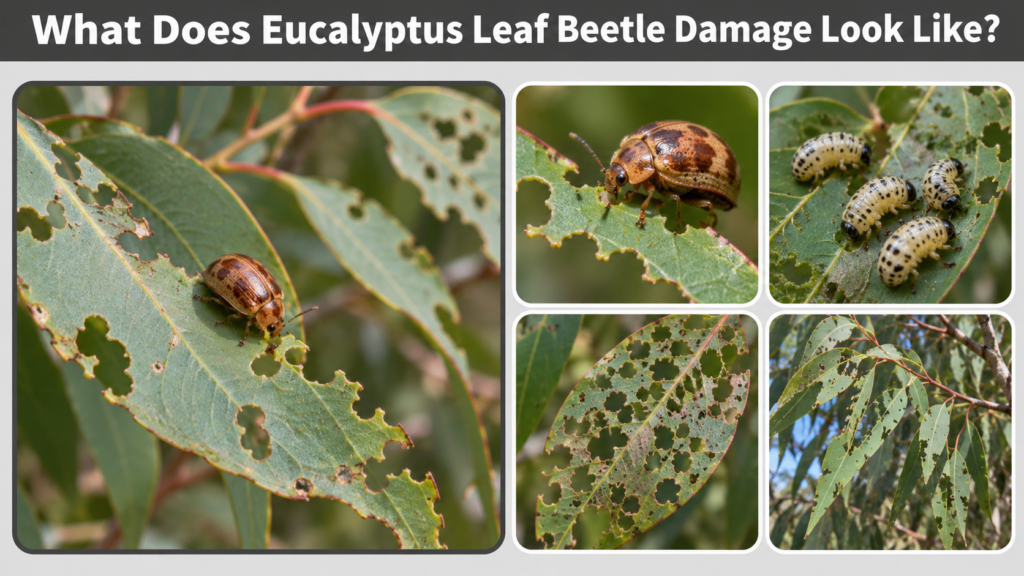
Eucalyptus leaf beetle damage usually appears as irregular holes, chewed leaf edges, or missing sections of foliage. Both adults and larvae contribute to these symptoms.
Freshly damaged leaves may have ragged edges, while heavily infested trees can develop thin or uneven canopies.
Signs of Eucalyptus Leaf Beetle Infestation
Common warning signs include:
- Irregular holes: Beetles chew through leaf surfaces, leaving noticeable openings.
- Damaged leaf edges: Feeding creates uneven or scalloped leaf margins.
- Missing foliage: Heavy infestations can remove substantial amounts of leaves.
- Visible larvae: Soft-bodied larvae may appear on young eucalyptus growth.
- Reduced tree vigor: Repeated defoliation may slow growth and weaken affected trees.
Young eucalyptus trees are generally more vulnerable because they have fewer stored resources and less foliage than mature trees.
Can Eucalyptus Leaf Beetles Kill Trees?
Eucalyptus leaf beetles do not usually kill healthy, established trees after a single moderate infestation.
However, repeated severe defoliation can reduce photosynthesis, weaken tree growth, and increase susceptibility to environmental stress.
Young trees, drought-stressed trees, and recently transplanted eucalyptus plants face greater risks. Severe damage may also affect commercial plantations by reducing growth and timber production.
Eucalyptus Leaf Beetle Life Cycle

Eucalyptus leaf beetles undergo complete metamorphosis, developing through four stages: egg, larva, pupa, and adult.
The length of their life cycle depends on the species, temperature, and food availability.
| Life Stage | Description |
|---|---|
| Egg | Females deposit eggs on suitable host foliage. |
| Larva | Young larvae hatch and feed on eucalyptus leaves. |
| Pupa | Mature larvae transform into adults, often in the soil or leaf litter. |
| Adult | Beetles emerge, feed, mate, and reproduce. |
Eggs and Larval Development
Female beetles typically lay eggs on eucalyptus leaves, where newly hatched larvae can easily reach food.
After hatching, larvae pass through several growth stages while feeding on foliage.
As larvae mature, their feeding damage becomes increasingly noticeable. Once fully developed, they enter the pupal stage before emerging as adult beetles.
How Long Do Eucalyptus Leaf Beetles Live?
The lifespan of eucalyptus leaf beetles varies among species and environmental conditions.
Warmer temperatures and suitable foliage generally support faster development. Some species can produce multiple generations annually in favorable climates.
Adults may survive for several weeks or longer, depending on food availability, weather, and natural enemies.
How to Get Rid of Eucalyptus Leaf Beetles Naturally
Natural control methods can help reduce eucalyptus leaf beetle populations without immediately relying on chemical pesticides. The most effective approach combines regular monitoring, physical removal, and proper tree maintenance.
1. Remove Beetles by Hand
For small eucalyptus trees, inspect leaves regularly and remove visible beetles, larvae, and egg clusters.
Drop collected insects into soapy water to prevent them from returning to the tree.
This method works best for light infestations on accessible plants.
2. Encourage Natural Predators
Several natural enemies help regulate leaf beetle populations, including predatory insects and parasitoids.
Avoid unnecessary broad-spectrum insecticide applications because they can kill beneficial organisms alongside pests.
Maintaining diverse vegetation around eucalyptus plantings may help support beneficial insect populations.
3. Maintain Healthy Trees
Healthy eucalyptus trees are generally better equipped to tolerate moderate leaf damage.
Provide appropriate irrigation during prolonged dry periods, especially for young or newly planted trees.
Avoid excessive fertilization, which may encourage tender growth attractive to some leaf-feeding insects.
4. Monitor New Growth
Inspect developing eucalyptus leaves during periods of active beetle feeding.
Look for fresh chewing marks, eggs, and small larvae. Early detection makes physical removal easier and helps prevent populations from increasing.
Chemical Control for Eucalyptus Leaf Beetles
Chemical treatments may be considered when infestations repeatedly cause serious damage, particularly in nurseries, young plantations, or valuable ornamental trees.
However, insecticides are not always necessary for mature eucalyptus trees.
Before applying any pesticide:
- Confirm the beetle species and severity of infestation.
- Check whether the product is registered for the intended use.
- Follow all label instructions and application restrictions.
- Avoid spraying when bees or other beneficial insects are actively visiting nearby plants.
- Consult a qualified arborist for large trees or severe infestations.
Treatments should target vulnerable life stages when appropriate. Broad-spectrum applications can disrupt natural enemies and contribute to recurring pest problems.
How to Prevent Eucalyptus Leaf Beetle Infestations
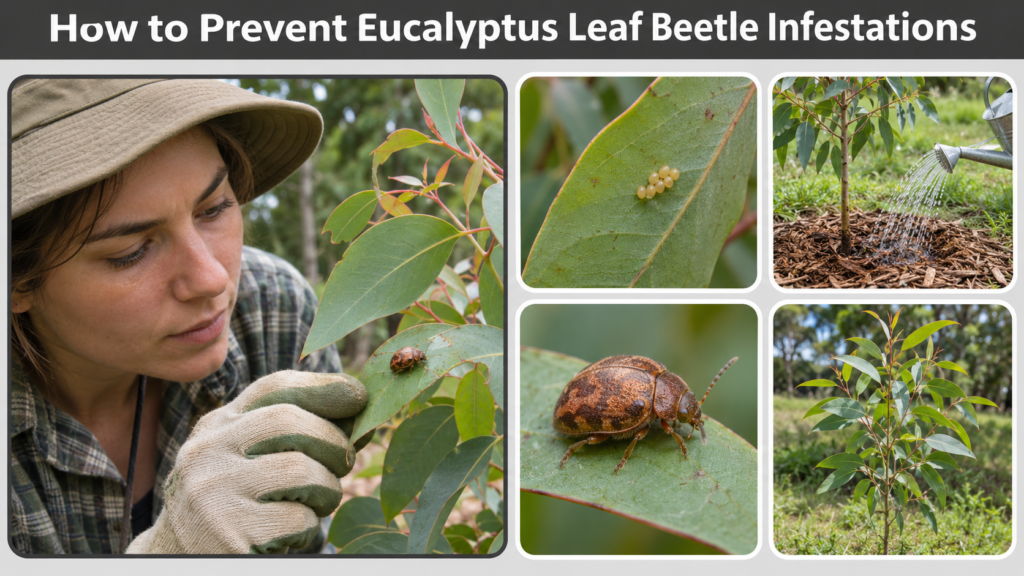
Preventing serious eucalyptus leaf beetle damage requires consistent tree care and early monitoring. Although beetles cannot always be excluded from outdoor trees, several practices can reduce their impact.
Effective prevention methods include:
- Inspect regularly: Examine leaves for eggs, larvae, and feeding damage.
- Choose suitable trees: Select eucalyptus species appropriate for the local climate and pest conditions.
- Reduce tree stress: Provide appropriate watering and avoid unnecessary root disturbance.
- Protect young trees: Monitor seedlings and newly planted eucalyptus more frequently.
- Preserve beneficial insects: Limit unnecessary pesticide applications.
Established trees with minor leaf damage generally require monitoring rather than aggressive treatment.
Eucalyptus Leaf Beetle vs. Eucalyptus Tortoise Beetle
Eucalyptus leaf beetles and eucalyptus tortoise beetles are closely related insects that feed on eucalyptus foliage. Their common names sometimes overlap, which can make identification confusing.
| Feature | Eucalyptus Leaf Beetle | Eucalyptus Tortoise Beetle |
|---|---|---|
| Scientific classification | Often Paropsisterna m-fuscum | Commonly Paropsisterna species |
| Body shape | Oval and convex | Rounded and convex |
| Color | Often reddish-brown or yellowish-brown | Varies by species |
| Main food | Eucalyptus leaves | Eucalyptus leaves |
| Damage | Holes and defoliation | Leaf chewing and defoliation |
| Control | Monitoring and integrated pest management | Similar management methods |
Because these names can refer to closely related or overlapping groups, accurate species identification may require examining detailed physical characteristics.
FAQs
1. Are Eucalyptus Leaf Beetles Harmful to Humans?
No, eucalyptus leaf beetles are not considered dangerous to humans. They do not sting, and they are not known to transmit human diseases. Their main impact involves feeding on eucalyptus foliage. Although they may occasionally land on people or nearby surfaces, they are primarily outdoor plant-feeding insects.
2. Do Eucalyptus Leaf Beetles Bite?
Eucalyptus leaf beetles possess chewing mouthparts designed for consuming plant material, but they are not known for biting humans. They generally avoid direct contact when disturbed. Their feeding behavior is directed toward eucalyptus leaves, making them a concern for tree health rather than personal safety.
3. What Attracts Eucalyptus Leaf Beetles?
Eucalyptus leaf beetles are attracted to suitable eucalyptus host trees, particularly when fresh foliage is available. Different beetle species prefer different eucalyptus plants. Tender new leaves provide food for adults and developing larvae. Warm weather and favorable growing conditions can also influence beetle activity and reproduction.
4. How Do You Kill Eucalyptus Leaf Beetle Larvae?
For small infestations, eucalyptus leaf beetle larvae can be removed manually from accessible branches. Regular inspection and early removal help limit feeding damage. Severe infestations may require species-specific pest management recommendations, especially when valuable young trees are affected. Always confirm the pest before selecting a chemical treatment.
5. Are Eucalyptus Leaf Beetles Beneficial?
Eucalyptus leaf beetles are natural components of ecosystems where they are native, serving as food for predators and participating in plant–insect relationships. However, introduced populations may become significant pests of eucalyptus trees. Their ecological role depends on the species, location, population size, and surrounding environment.