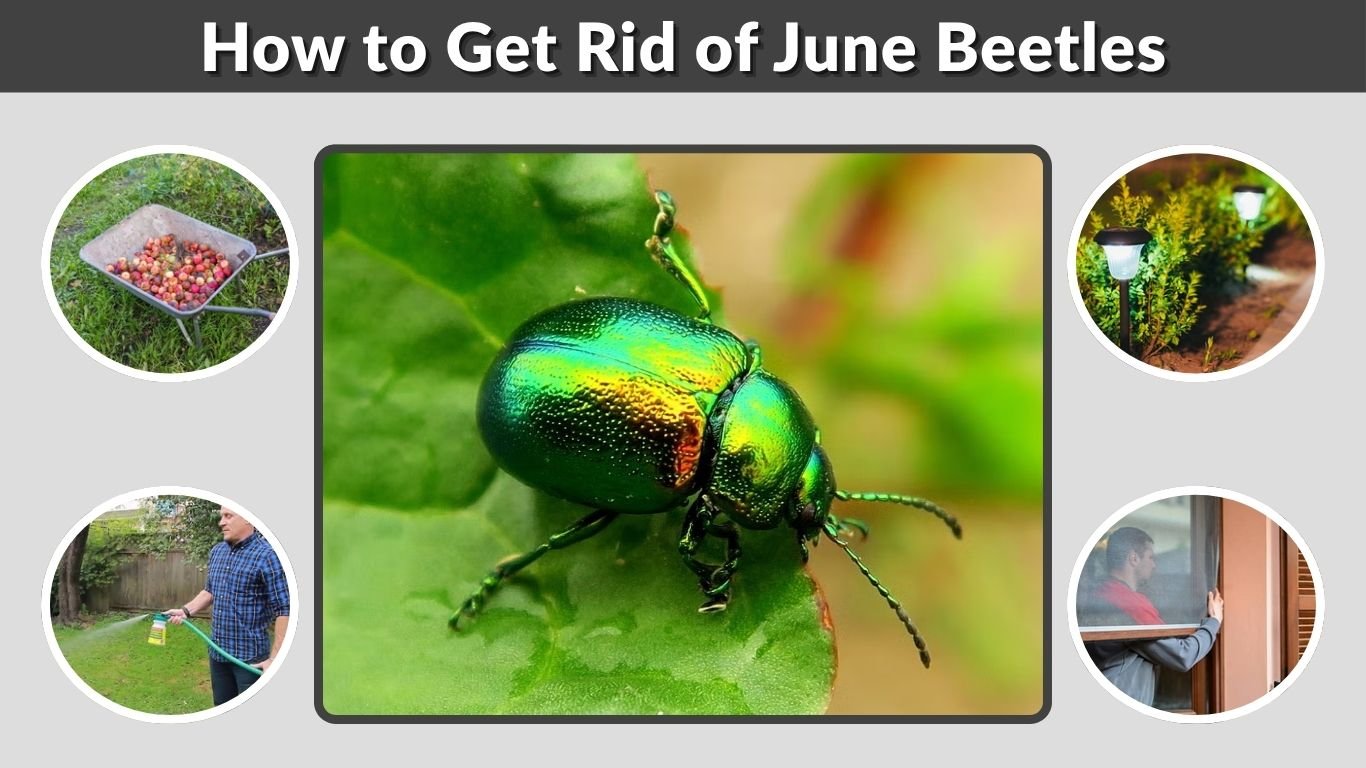
June beetles, also called June bugs, are common summer insects that frequently appear around gardens, lawns, trees, and outdoor lights. While adult beetles are usually harmless to people, some species damage plants by feeding on leaves, fruits, and roots during different stages of their life cycle. If you are wondering how to get rid of June beetles, several natural and practical methods can help control their populations. From reducing outdoor lighting to managing lawn grubs, this guide explains how to remove June beetles from your home, garden, and yard while preventing future infestations.
What Are June Beetles and Why Are They a Problem?
June beetles belong to the scarab beetle family, Scarabaeidae. They commonly emerge during late spring and summer, depending on the species and location. Although they are often grouped together as June bugs, different species have distinct appearances, feeding habits, and potential effects on plants.
Common Types of June Beetles
Several types of June beetles may appear around residential properties:
- Brown June beetles: Common May/June beetles (Phyllophaga species) that often gather around outdoor lights.
- Green June beetles: Large, green beetles (Cotinis nitida) that feed on ripe fruits.
- Ten-lined June beetles: Brown beetles with distinctive white stripes and large antennae.
- Western green June beetles: Also called figeater beetles, these insects frequently visit fruit trees.
Signs of a June Beetle Infestation
Common warning signs include beetles gathering around porch lights, feeding damage on fruits, and unhealthy patches of lawn.
Some June beetle larvae, called white grubs, feed on grass roots. Their feeding can cause yellowing grass, weak root systems, and irregular brown patches. However, not every June beetle species causes the same type of damage.
1. How to Get Rid of June Beetles Naturally
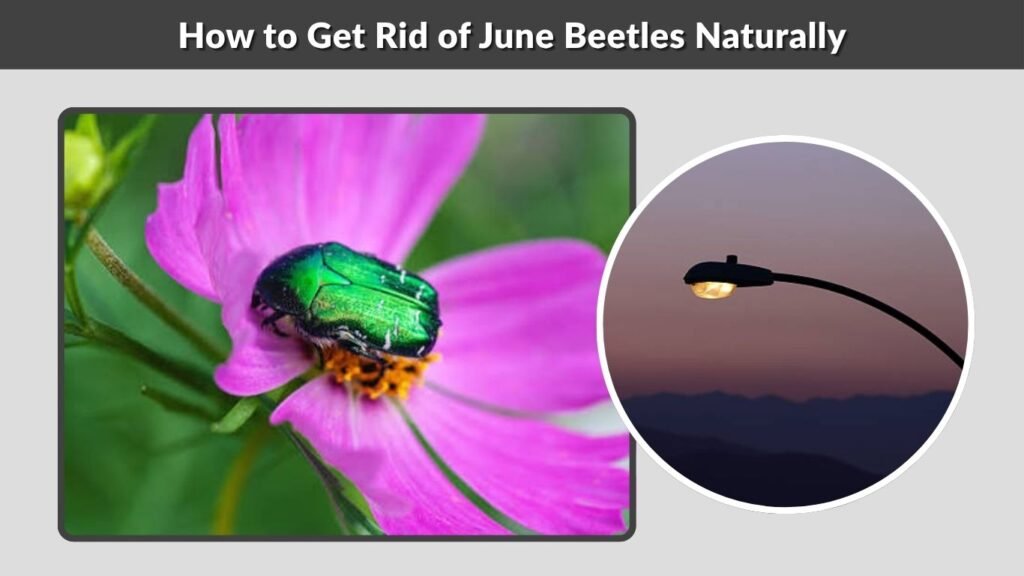
Natural June beetle control methods are often sufficient for small infestations. These approaches help reduce adult beetle activity without widespread pesticide applications. They are particularly useful around homes, vegetable gardens, and ornamental plants.
Turn Off Outdoor Lights
Many brown and ten-lined June beetles are attracted to artificial lighting at night.
Turn off unnecessary porch lights, patio lights, and decorative garden lighting during peak beetle activity. Motion-activated lights can also reduce continuous attraction.
When outdoor lighting is necessary, consider using warmer-colored bulbs that tend to attract fewer insects.
Remove Beetles by Hand
Hand removal is effective when only a few adult beetles are present.
Inspect plants during periods of beetle activity and gently collect the insects using gloves. You can relocate harmless beetles away from your home or remove them from vulnerable plants.
This technique is especially practical for small gardens where beetle numbers remain manageable.
2. How to Get Rid of June Beetles in Your Yard
June beetles often gather in yards containing lawns, shrubs, and trees. Some species lay eggs in soil, allowing their larvae to develop underground. Managing June beetles in your yard requires attention to both adult activity and potential grub infestations.
Inspect Your Lawn for June Beetle Grubs
White grubs have cream-colored, C-shaped bodies with brownish heads.
If your lawn develops unexplained brown patches, lift small sections of damaged turf and inspect the soil beneath them.
Finding approximately five to ten grubs per square foot may indicate a potential problem, depending on the beetle species, grass condition, and severity of damage.
Maintain a Healthy Lawn
Healthy grass can tolerate limited grub feeding more effectively than stressed grass.
Follow appropriate mowing practices, avoid excessive fertilizer, and water according to your grass species and local climate.
Established lawns with healthy root systems are generally more resilient against moderate insect damage.
3. How to Get Rid of June Beetles in the Garden
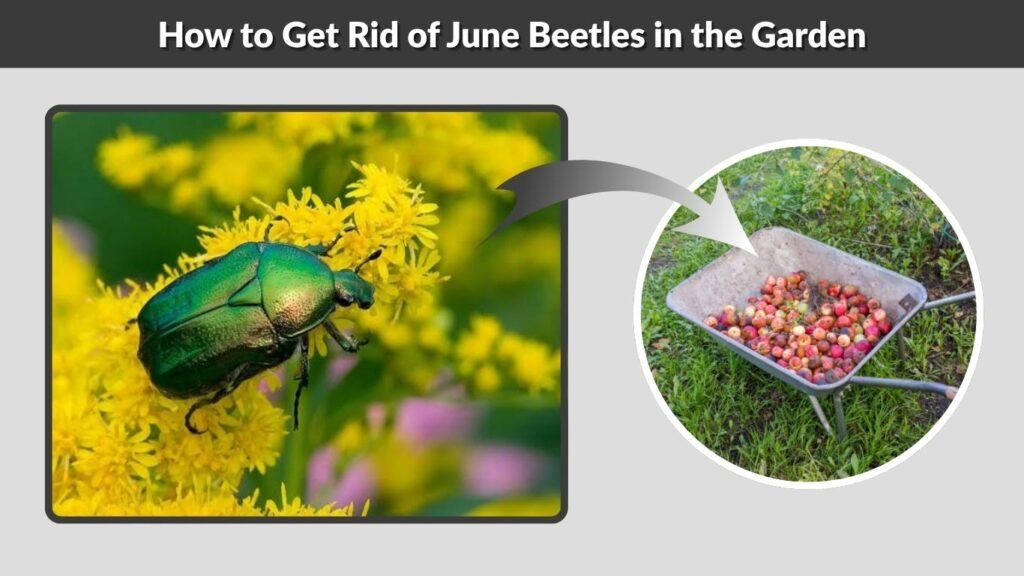
Garden June beetles may damage fruits, foliage, or underground roots depending on the species. Controlling them involves inspecting plants regularly, removing attractive food sources, and protecting vulnerable crops before substantial damage occurs.
Protect Vulnerable Plants
Fine-mesh insect netting can help prevent adult beetles from reaching certain plants.
Use properly supported netting around vulnerable fruit crops, ensuring that the mesh does not press against developing fruits.
Inspect plants regularly for feeding damage and identify the beetle species before selecting additional treatments.
Remove Fallen and Overripe Fruit
Green June beetles are particularly attracted to ripe, damaged, and fermenting fruit.
Collect fallen peaches, grapes, plums, and other fruits regularly. Harvest ripe produce promptly rather than allowing it to remain on plants.
Removing these attractive food sources can significantly reduce beetle activity around fruiting plants.
4. How to Get Rid of Green June Beetles
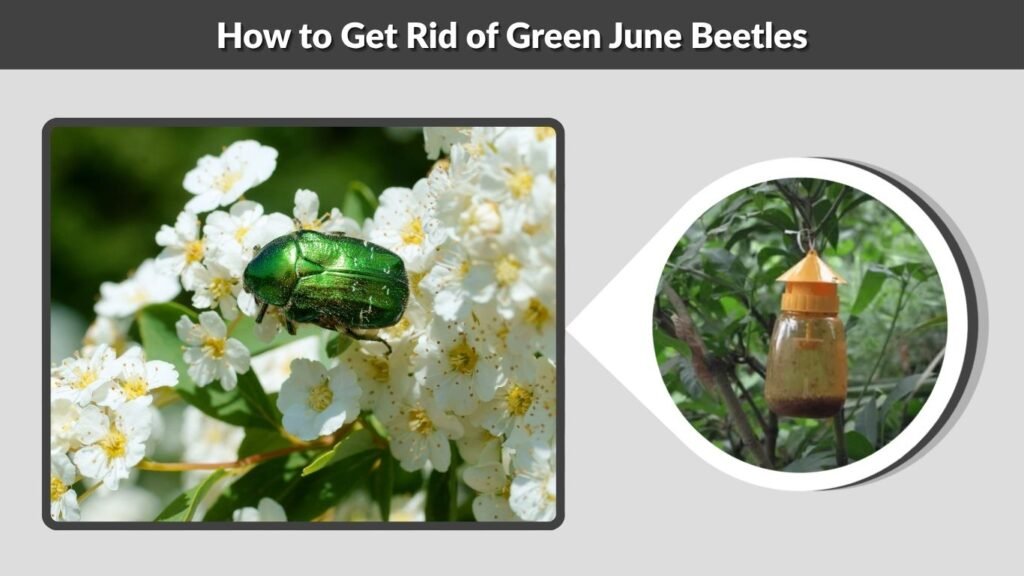
Green June beetles are large, metallic-green insects commonly found around orchards, gardens, and lawns. Unlike many brown June beetles, adults primarily become troublesome when feeding on soft, ripe fruit. Their larvae generally consume decaying organic matter.
Control Green June Beetles Naturally
Managing breeding areas is one of the most effective ways to reduce green June beetle populations.
Avoid leaving large piles of decomposing grass clippings, manure, and organic debris near fruit trees. Turn compost regularly or keep it in enclosed composting systems.
These practices can discourage green June beetles from developing in favorable breeding materials.
Use Fruit-Baited Traps
Fruit-baited traps may capture some adult green June beetles.
A mixture of equal parts grape or peach juice and water can serve as an attractant in a suitable funnel trap.
Position traps away from valuable fruit crops to avoid attracting additional beetles directly toward vulnerable plants. Traps supplement sanitation rather than replacing it.
5. How to Get Rid of June Beetles in Your House
June beetles occasionally enter homes through open doors, windows, or damaged window screens. They are generally accidental visitors rather than indoor pests. Most cannot establish a breeding population inside ordinary living spaces.
Remove June Beetles Indoors
If you discover a June beetle inside your house, capture it using a cup and a piece of paper.
Release the insect outdoors in a suitable area away from entrances. Avoid unnecessarily spraying indoor insecticides because occasional beetles rarely require chemical treatment.
A vacuum can also remove inaccessible beetles when necessary.
Prevent June Beetles From Entering
Inspect doors, window screens, and exterior openings for gaps.
Install weatherstripping beneath doors and repair damaged screens to reduce insect entry.
Keeping unnecessary lights turned off near open windows can also discourage beetles from gathering around the house.
6. How to Get Rid of June Beetle Grubs
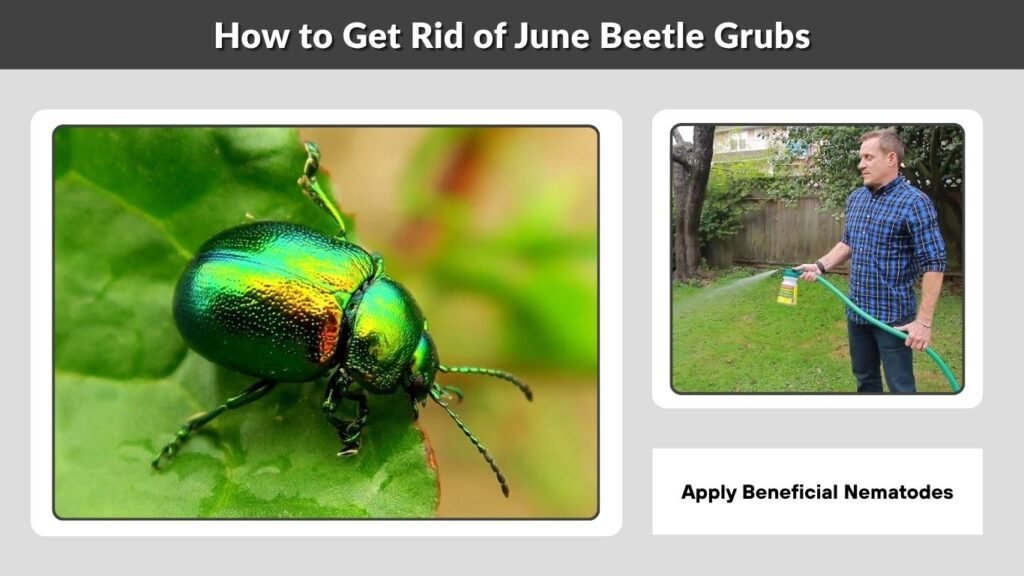
June beetle grubs can be more damaging than adults because certain species feed directly on plant roots. Successful grub control depends on identifying the species, assessing damage, and applying suitable treatments when young larvae are actively feeding.
Apply Beneficial Nematodes
Beneficial nematodes are microscopic organisms that infect certain soil-dwelling insects.
Some species, including Steinernema scarabaei, have demonstrated effectiveness against May/June beetle grubs.
Apply an appropriate product according to its instructions, preferably when soil is moist and sunlight is limited. Results vary by grub species, soil conditions, and nematode type.
Consider Targeted Grub Treatments
If lawn damage is severe and a damaging grub population is confirmed, a labeled insecticide may be appropriate.
Treatment timing is important because young grubs are usually easier to control than mature larvae.
Choose products specifically labeled for the identified pest and application site. Avoid routine pesticide treatments when grub populations are low or plant damage is insignificant.
7. How to Get Rid of June Beetles on Fruit Trees
June beetles occasionally become serious pests of fruit crops, especially when large numbers gather on ripening fruit. Green June beetles are particularly associated with damage to peaches, grapes, and other soft fruits.
Protect Peach Trees
Harvest peaches as soon as they reach suitable ripeness.
Remove fallen or damaged fruit promptly because fermenting fruit attracts additional beetles.
For small trees, physical exclusion may help protect developing fruit. Inspect ripening peaches frequently during periods of increased adult activity.
Protect Grape Vines
Green June beetles may feed on grapes as the berries soften and accumulate sugar.
Cover small grape plantings with fine-mesh netting before the fruit becomes vulnerable.
Regular harvesting, damaged-fruit removal, and careful monitoring can help reduce losses without unnecessary insecticide use.
8. How to Prevent June Beetles From Coming Back
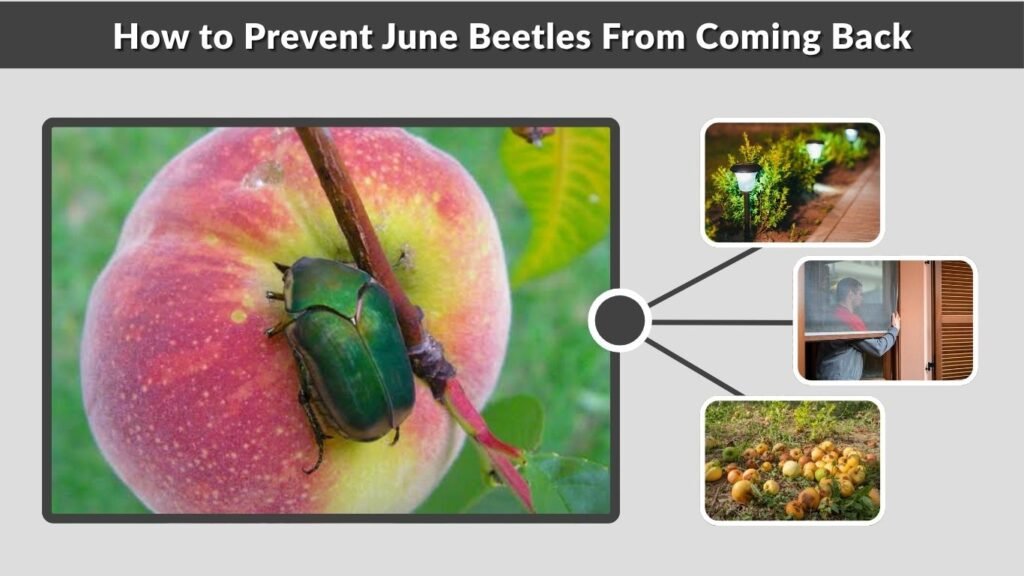
Long-term June beetle prevention focuses on making your property less attractive to adult insects and reducing conditions favorable to harmful larvae. Because June beetle species differ, prevention strategies should match the insects present.
Maintain Your Outdoor Environment
Consider these preventive measures:
- Reduce unnecessary outdoor lighting at night.
- Remove fallen and overripe fruit regularly.
- Maintain healthy lawns and garden plants.
- Turn compost piles and manage excess organic debris.
- Repair doors and window screens.
- Monitor soil for damaging grub populations.
- Use protective netting around vulnerable fruit crops.
Monitor Seasonal Beetle Activity
Adult June beetles typically become more noticeable during warmer months.
Check outdoor lights, fruit trees, and susceptible lawn areas periodically.
Early identification makes it easier to distinguish harmless beetle activity from infestations that require targeted management.
FAQs
1. What Is the Fastest Way to Get Rid of June Beetles?
The fastest way to remove individual June beetles is by hand collection or vacuuming. Turning off outdoor lights reduces attraction, while removing overripe fruit discourages green June beetles. Long-term control requires identifying the species and managing damaging larvae when necessary.
2. How Do You Get Rid of Brown June Beetles?
Brown June beetles are often attracted to outdoor lights during summer evenings. Reduce unnecessary lighting, close entry points, and manually remove insects when needed. Adults rarely cause significant damage, so widespread pesticide applications are generally unnecessary.
3. How Do You Get Rid of Ten-Lined June Beetles?
Reduce outdoor lighting to discourage male ten-lined June beetles from gathering around your property. Adults rarely require treatment. If larvae are damaging tree roots, consult a local extension specialist because controlling their deeply buried grubs can be difficult.
4. Does Soapy Water Kill June Beetles?
Soapy water can kill some beetles when they are submerged, but spraying diluted dish soap is not a reliable treatment for June beetle infestations. Household detergents may also damage plants, so avoid using them as an untested garden pesticide.
5. Will June Beetles Go Away on Their Own?
Adult June beetle activity naturally declines after the seasonal emergence and mating period. However, underground grubs may survive for months or years, depending on the species. Healthy lawns and gardens often tolerate small populations without requiring treatment.