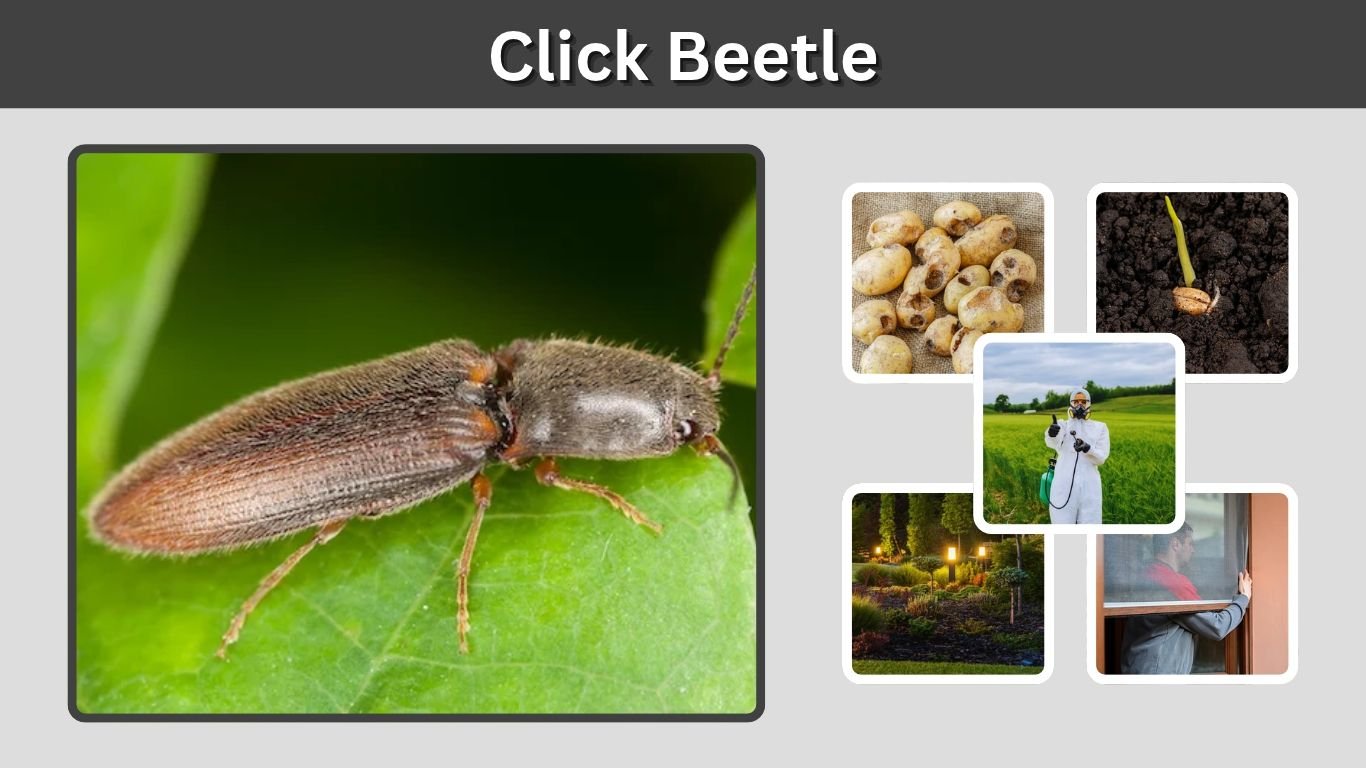
Click beetles are fascinating insects known for their unusual ability to jump into the air while producing a sharp clicking sound. These elongated beetles are commonly found in gardens, forests, agricultural fields, and occasionally inside homes. Although their sudden movements can be surprising, most adult click beetles are harmless to humans. However, certain species have larvae called wireworms that can damage plant roots and underground crops. Understanding click beetle identification, sounds, feeding habits, life cycle, and control methods helps homeowners recognize these insects and manage unwanted encounters safely.
What Is a Click Beetle?
Click beetles are insects belonging to the family Elateridae within the order Coleoptera. Thousands of species exist worldwide, including numerous varieties found throughout North America.
They are named for their distinctive clicking mechanism, which allows them to flip into the air when trapped on their backs.
Adult click beetles typically inhabit gardens, woodlands, grasslands, and agricultural environments. Their larvae develop in soil, decaying wood, or other sheltered habitats.
Although adults rarely cause significant problems, some wireworm species are agricultural pests that feed on underground plant tissues.
Click Beetle Identification
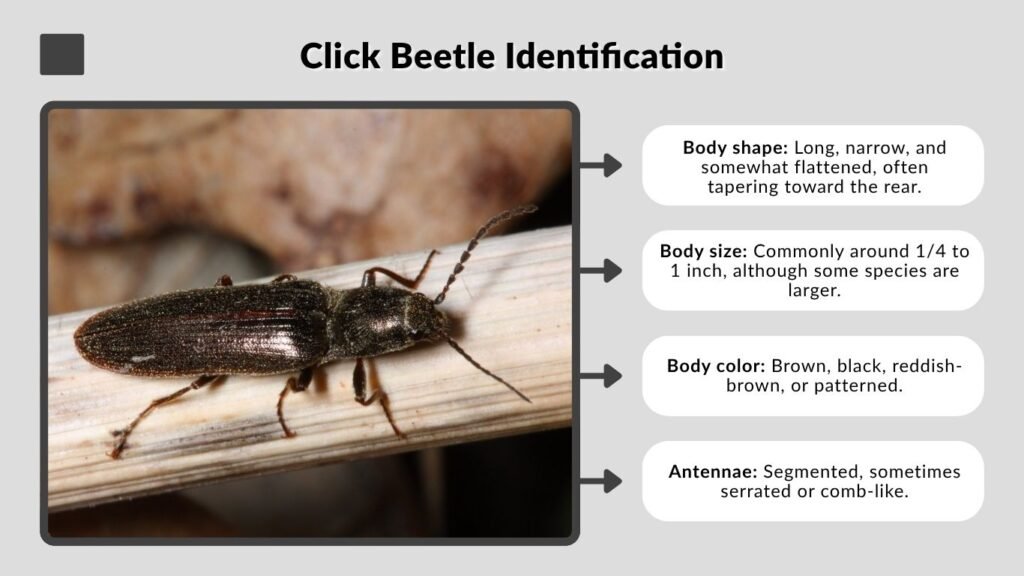
Click beetles have elongated bodies, hard wing covers, and distinctive thoracic structures. Their appearance varies considerably depending on the species, but most share several recognizable characteristics.
Adult beetles are commonly brown, black, or reddish-brown, although some species display striking patterns or unusual markings.
Physical Characteristics of Click Beetles
Common identifying features include:
- Body shape: Long, narrow, and somewhat flattened, often tapering toward the rear.
- Body size: Commonly around 1/4 to 1 inch, although some species are larger.
- Body color: Brown, black, reddish-brown, or patterned.
- Antennae: Segmented, sometimes serrated or comb-like.
- Thorax: A distinct pronotum with pointed rear corners in many species.
- Wings: Hard outer wing covers protecting functional flight wings.
Black, Brown, and Eyed Click Beetles
Black and brown click beetles are among the varieties frequently encountered around homes and gardens.
The eastern eyed click beetle (Alaus oculatus) is particularly recognizable because of two large, dark, eye-like markings on its thorax.
These markings are false eyes rather than functional visual organs. They may help discourage predators by making the beetle appear larger or more intimidating.
Why Do Click Beetles Make Clicking Sounds?
Click beetles produce their characteristic sound through a specialized mechanical structure between the prothorax and the rest of the body.
A spine-like projection fits into a groove beneath the thorax. When released suddenly, this mechanism produces a clicking sound and propels the beetle upward.
How Do Click Beetles Jump?
Unlike grasshoppers, click beetles do not depend on enlarged jumping legs.
Instead, they rapidly release stored mechanical energy within their thoracic structures.
This movement allows them to flip into the air, often landing upright after falling onto their backs.
The clicking mechanism also helps them escape predators or situations where they become trapped.
Repeated clicking usually indicates that the beetle is attempting to reposition itself or escape.
Are Click Beetles Harmful or Dangerous?
Most adult click beetles are harmless to humans and pets. They do not possess venomous stingers and are not known to transmit diseases through ordinary contact.
Their sudden clicking movements may startle people, but they are not aggressive insects.
Do Click Beetles Bite Humans?
Click beetles are not known for biting people. Although they possess chewing mouthparts, their jaws are generally not powerful enough to cause significant injury.
If handled roughly, some larger species may attempt to pinch defensively.
However, painful bites are uncommon, and these insects do not inject venom.
The primary concern associated with click beetles involves certain larvae that damage agricultural crops rather than direct harm to people.
Why Are Click Beetles in My House?
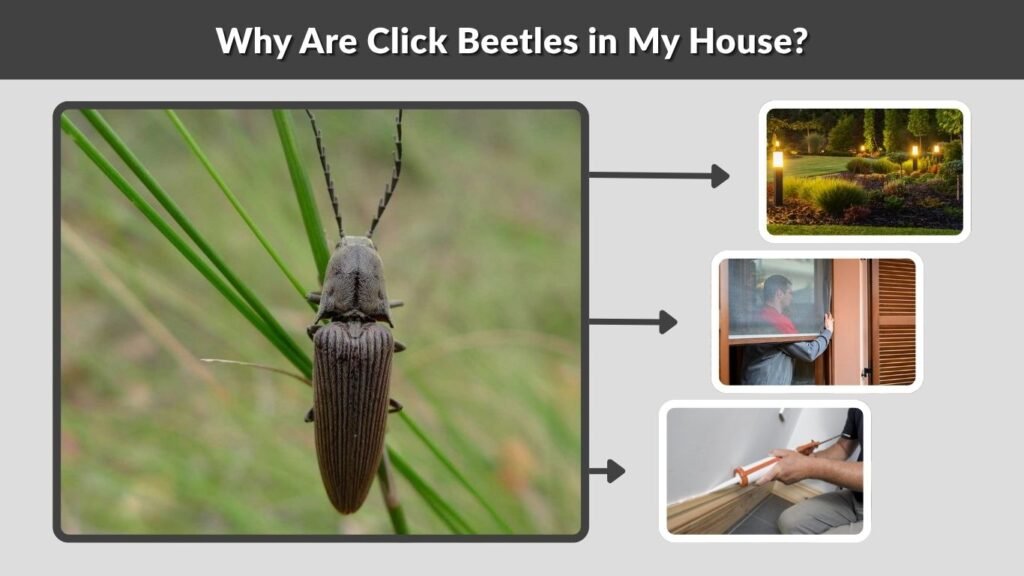
Click beetles occasionally enter houses through open windows, doors, or small gaps around exterior structures.
Many species are attracted to artificial lights, especially during warm evenings.
Finding one or two click beetles indoors does not usually indicate an infestation.
How to Get Rid of Click Beetles in Your House
Most indoor click beetle problems can be managed without chemical insecticides.
Useful removal and prevention methods include:
- Capture the beetle: Place a container over the insect and slide paper underneath.
- Release it outdoors: Move the beetle away from entrances and windows.
- Reduce outdoor lighting: Turn off unnecessary porch lights during periods of insect activity.
- Repair window screens: Seal tears and openings that allow beetles to enter.
- Close structural gaps: Inspect door frames, window edges, and utility openings.
- Vacuum occasional visitors: Remove unwanted beetles without applying indoor pesticides.
Adult click beetles generally do not reproduce indoors unless unusual conditions provide suitable larval habitats.
Click Beetle vs. Cockroach
Click beetles are sometimes mistaken for cockroaches because both insects may have brown or black bodies, long antennae, and functional wings.
However, their appearance and behavior differ significantly.
Physical Differences
Click beetles generally have long, narrow bodies with hard wing covers meeting along a straight line down the back.
Cockroaches usually have flatter, broader bodies and long, threadlike antennae.
Their front wings are typically leathery rather than hard beetle wing covers.
Behavioral Differences
Click beetles are best recognized by their ability to produce a sharp click and flip into the air.
Cockroaches cannot perform this specialized clicking jump. Instead, they usually escape by running rapidly into sheltered areas.
Some cockroach species establish indoor breeding populations, while adult click beetles are usually accidental visitors.
Click Beetle Larvae: What Are Wireworms?
Click beetle larvae are commonly called wireworms because of their long, slender, and relatively hard bodies.
They typically live in soil or decaying wood, depending on the species.
Some wireworms are important agricultural pests, while others feed on decomposing material or prey on smaller organisms.
Click Beetle Larvae Identification
Wireworms have elongated, cylindrical bodies that are usually yellowish, tan, or brown.
Their tough outer covering gives them a firm, wire-like appearance.
They possess three pairs of short legs near the front of the body and a clearly segmented abdomen.
Wireworms may remain underground for several years before developing into adult beetles.
What Do Click Beetles Eat?
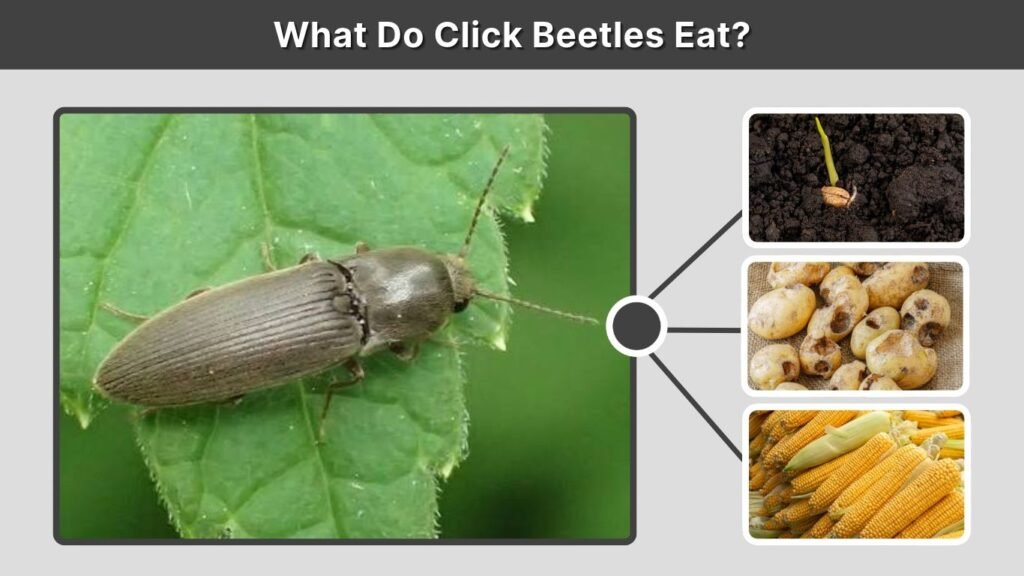
Click beetles have different feeding habits depending on their species and development stage.
Adult beetles may feed on nectar, pollen, leaves, or other plant materials. Some species consume little food during their relatively short adult lives.
What Do Click Beetle Larvae Eat?
Wireworm diets vary widely. Some feed on roots, germinating seeds, and underground stems.
Agricultural wireworms can damage potatoes, corn, wheat, and other crops by chewing into developing plant tissues.
Other click beetle larvae are predators that feed on insect larvae living inside decaying wood.
The eastern eyed click beetle is particularly beneficial because its larvae prey on certain wood-boring insects.
Click Beetle Life Cycle
Click beetles undergo complete metamorphosis, passing through egg, larval, pupal, and adult stages.
Females generally lay eggs in soil, leaf litter, or other suitable environments.
Egg and Larval Development
After hatching, larvae begin feeding within their preferred habitats.
Depending on the species, the larval stage may last several months or multiple years.
During this period, larvae molt repeatedly as their bodies increase in size.
Pupal and Adult Stages
Mature larvae form pupal chambers in soil or decaying wood.
Inside these chambers, they transform into adult beetles.
Adults eventually emerge, disperse, and begin searching for mates.
Life cycle duration varies considerably among species and environmental conditions.
How to Control Click Beetles in Gardens

Click beetle management mainly focuses on wireworms when they cause confirmed damage to garden plants or agricultural crops.
Adult beetles rarely require direct control because they generally cause little damage.
Effective Click Beetle Control Methods
Practical management strategies include:
- Inspect affected plants: Examine roots and underground stems for feeding damage.
- Monitor wireworms: Use appropriate soil sampling or bait traps before planting.
- Remove plant debris: Manage excessive weeds and unwanted vegetation around growing areas.
- Improve soil management: Maintain suitable drainage and avoid unnecessary soil disturbance.
- Rotate susceptible crops: Use locally recommended crop rotations to reduce persistent wireworm problems.
- Seek professional guidance: Contact an agricultural extension specialist when crop damage becomes serious.
Chemical control should be considered only when the wireworm species and damage have been confirmed.
Glowing Click Beetles and Other Interesting Species
Some click beetles possess specialized light-producing organs that create visible bioluminescence.
These glowing click beetles occur mainly in tropical and subtropical regions.
Their light-producing structures are different from the clicking mechanism used for jumping.
Eastern Eyed Click Beetle
The eastern eyed click beetle is a large North American species recognized by its two prominent false eyes.
Its larvae are beneficial predators that develop in decaying wood and feed on other insect larvae.
Bioluminescent Click Beetles
Certain tropical click beetles, including species in the genus Pyrophorus, produce light through chemical reactions within specialized organs.
These beetles may display glowing spots near the thorax and a light-producing area beneath the abdomen.
Unlike fireflies, which belong to a different beetle family, glowing click beetles retain the characteristic clicking mechanism.
FAQs
1. Can Click Beetles Fly?
Yes, most adult click beetles can fly. They have functional hindwings beneath their hard wing covers and may fly toward artificial lights during warm evenings.
2. Are Click Beetles Good or Bad?
Click beetles can be beneficial or harmful depending on the species. Some larvae prey on wood-boring insects, while certain wireworms damage crop roots and seeds.
3. Why Do Click Beetles Jump?
Click beetles jump to right themselves when overturned and to escape threatening situations. Their specialized thoracic mechanism produces the characteristic clicking sound.
4. Do Click Beetles Infest Houses?
Click beetles rarely establish household infestations. Most indoor sightings involve adults that accidentally enter through doors, windows, or structural gaps.
5. How Long Do Click Beetles Live?
Click beetle lifespan varies by species. Some spend several years developing as larvae, while the adult stage generally lasts a much shorter period.