
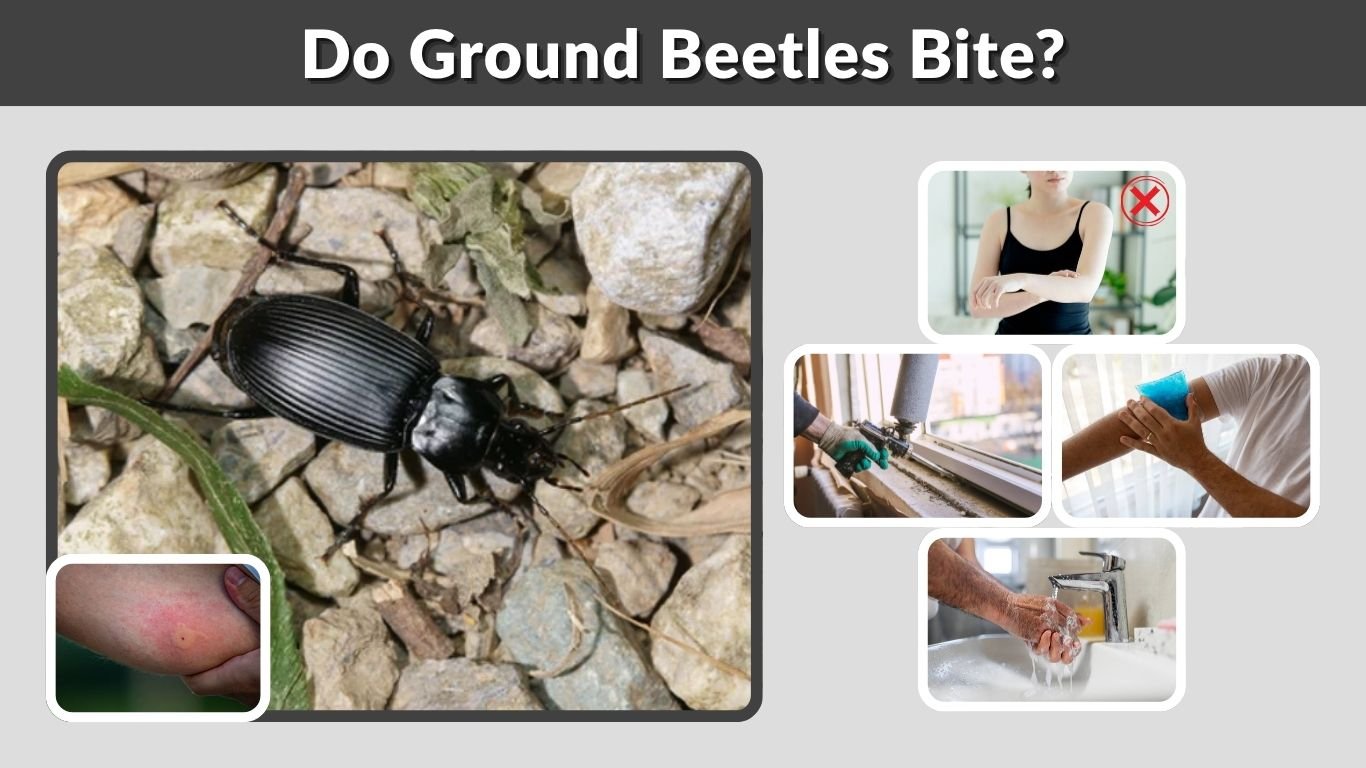
Ground beetles are common insects found in gardens, forests, and occasionally inside homes. Their shiny bodies, powerful jaws, and fast movements can make them appear threatening. But do ground beetles bite humans? Although these insects are generally harmless, some species can deliver a defensive pinch when handled or disturbed. Fortunately, most encounters cause little or no injury. Understanding ground beetle bite symptoms, potential risks, and simple first-aid methods can help you respond safely. This guide also explains which ground beetles are more likely to bite.
Do Ground Beetles Bite Humans?
Yes, ground beetles can bite humans, but it is uncommon. These insects belong to the family Carabidae and use their strong mandibles primarily to capture prey rather than attack people. Most species prefer escaping when threatened. However, a larger beetle may pinch exposed skin if someone picks it up, traps it, or accidentally presses against it.
Why Do Ground Beetles Bite?
Ground beetles are predators that feed on caterpillars, insect larvae, worms, and other small invertebrates. Their jaws are designed for gripping and breaking down prey.
A ground beetle may use those same mouthparts defensively when it cannot escape. For example, holding a beetle tightly between your fingers can trigger a sudden pinch.
Unlike mosquitoes or fleas, ground beetles do not bite to obtain blood. They also do not seek humans as a food source.
Are Ground Beetles Aggressive Toward People?
Ground beetles are not naturally aggressive toward humans. Most respond to disturbances by running away, hiding beneath objects, or remaining motionless.
Many species are nocturnal and avoid unnecessary contact with larger animals. Consequently, an unexpected encounter with a ground beetle rarely leads to a bite unless the insect is physically restrained.
What Does a Ground Beetle Bite Look Like?
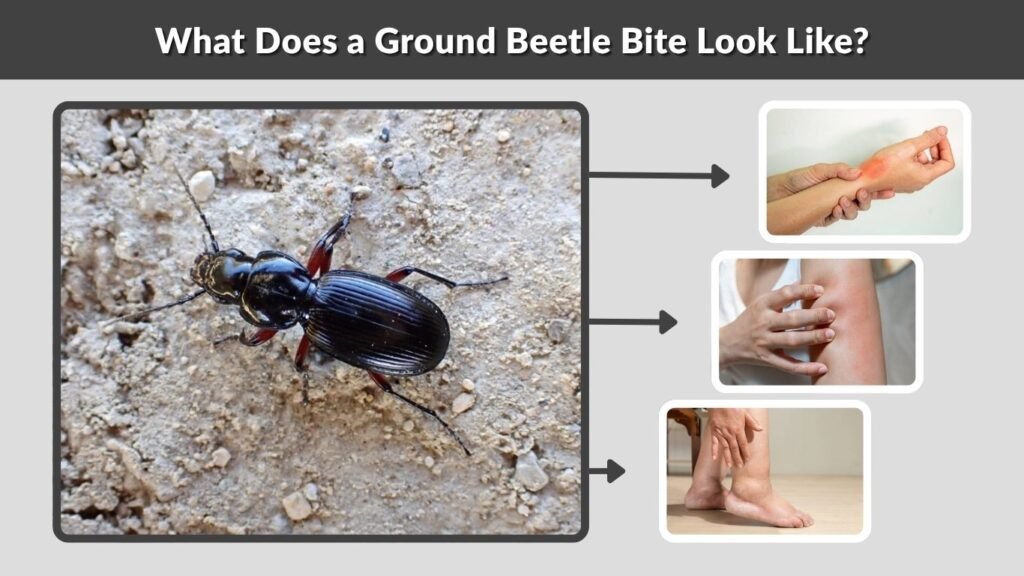
A ground beetle bite typically involves a mechanical pinch from its mandibles. The appearance depends on the insect’s size, the pressure applied, and individual skin sensitivity. Some bites leave no visible mark, while others cause temporary redness or discomfort. Unlike certain other insects, ground beetles do not produce a distinctive bite pattern that reliably identifies them.
Common Ground Beetle Bite Symptoms
Possible symptoms following a defensive pinch include:
- Mild pain: A brief sharp or pinching sensation.
- Redness: Temporary discoloration around the affected area.
- Tenderness: Minor sensitivity when touching the skin.
- Slight swelling: Local inflammation following irritation.
- Small skin injury: Occasionally, stronger jaws may break the skin.
- Temporary discomfort: Mild symptoms typically improve without complications.
These symptoms are possible rather than inevitable. Many ground beetle encounters produce no injury at all.
How Long Does a Ground Beetle Bite Last?
A mild ground beetle pinch often causes only brief discomfort. Any minor redness or tenderness should gradually improve, although healing time varies if the skin is broken.
Persistent pain, increasing swelling, warmth, or spreading redness may indicate a complication or another cause.
Because many insects produce similar skin reactions, the appearance of a mark alone cannot confirm a ground beetle bite.
Which Types of Ground Beetles Can Bite?
The ground beetle family includes thousands of species with different sizes, mouthparts, and defensive behaviors. Larger species with prominent mandibles may deliver more noticeable pinches than smaller beetles. Nevertheless, their ability to bite does not mean they regularly attack humans. Several frequently encountered groups are discussed below.
Big-Headed Ground Beetle Bite
<text></text>
The big-headed ground beetle (Scarites subterraneus) is particularly recognizable because of its enlarged head, powerful curved jaws, and narrow waist.
These beetles use their mandibles to capture insect prey. If handled carelessly, they can produce a painful defensive pinch.
Despite their intimidating appearance, big-headed ground beetles are generally harmless to humans. They usually prefer hiding or escaping rather than confronting people.
Scarites Ground Beetle Bite
The genus Scarites includes several ground beetles with strong jaws and digging adaptations.
Their enlarged mandibles are useful for capturing prey, but they may also pinch when an individual is restrained or threatened.
The presence of prominent jaws should not be interpreted as evidence of venom. These beetles use mechanical force rather than a venomous sting.
Black Ground Beetle Bite
Black ground beetles include numerous dark-colored species, such as members of the genus Pterostichus.
Although these beetles possess functional jaws, they rarely bite people. Their usual response to disturbance is to run away.
Even larger black ground beetles generally present little risk during normal outdoor activities.
Violet Ground Beetle Bite
The violet ground beetle, Carabus violaceus, is a European species recognized by its dark body and violet-colored edges.
Like other large predatory ground beetles, it has strong mandibles that may produce a defensive pinch when handled.
Some ground beetles also release unpleasant defensive substances, making unnecessary handling inadvisable.
Can Ground Beetle Larvae Bite?
Ground beetle larvae have developed jaws that help them capture small invertebrates in soil and leaf litter.
A larva may be physically capable of pinching if improperly handled, but confirmed bites on humans are uncommon.
Avoid picking up unidentified insect larvae with bare fingers, especially when their defensive capabilities are unknown.
Are Ground Beetle Bites Dangerous?
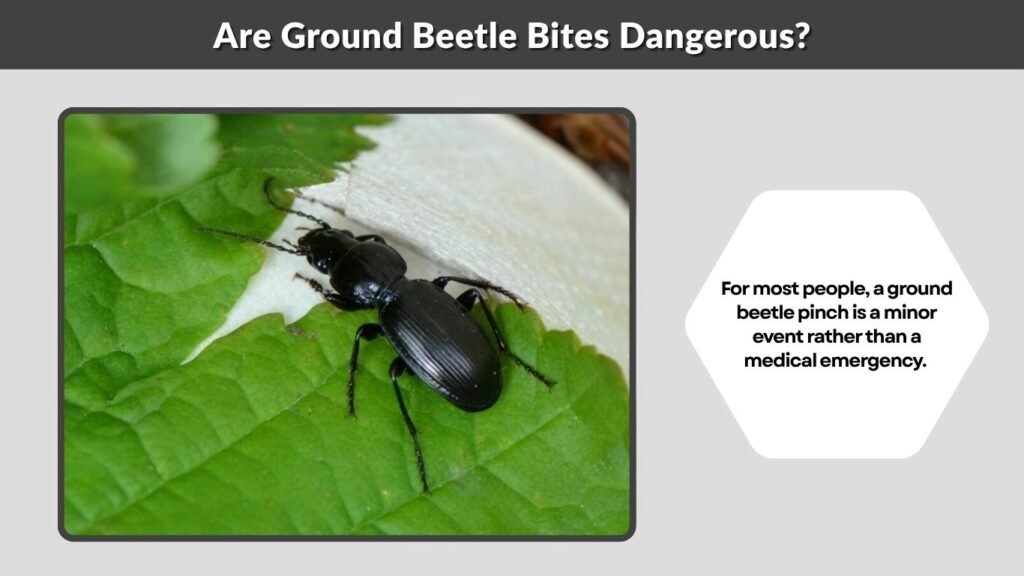
For most people, a ground beetle pinch is a minor event rather than a medical emergency. These beetles are not known for attacking humans or transmitting diseases through bites. However, it is important to distinguish an ordinary ground beetle pinch from skin irritation caused by defensive chemicals or contact with a different beetle family.
Are Ground Beetle Bites Poisonous?
Ordinary ground beetles do not inject venom through their mandibles. Their bites involve pressure from the jaws rather than a poisonous or venomous injection.
However, some members of the ground beetle family have chemical defenses. Bombardier beetles, for example, can discharge hot irritating chemicals capable of causing skin irritation or burns.
This chemical defense is different from a bite.
Can a Ground Beetle Bite Cause Infection?
An ordinary pinch presents little concern if the skin remains intact. However, any wound that breaks the skin can potentially become infected.
Keep the affected area clean and observe it for worsening symptoms.
Increasing pain, pus, spreading redness, or fever requires medical assessment. Do not assume an unusually severe reaction was caused by a harmless ground beetle without confirming the insect’s identity.
How to Treat a Ground Beetle Bite
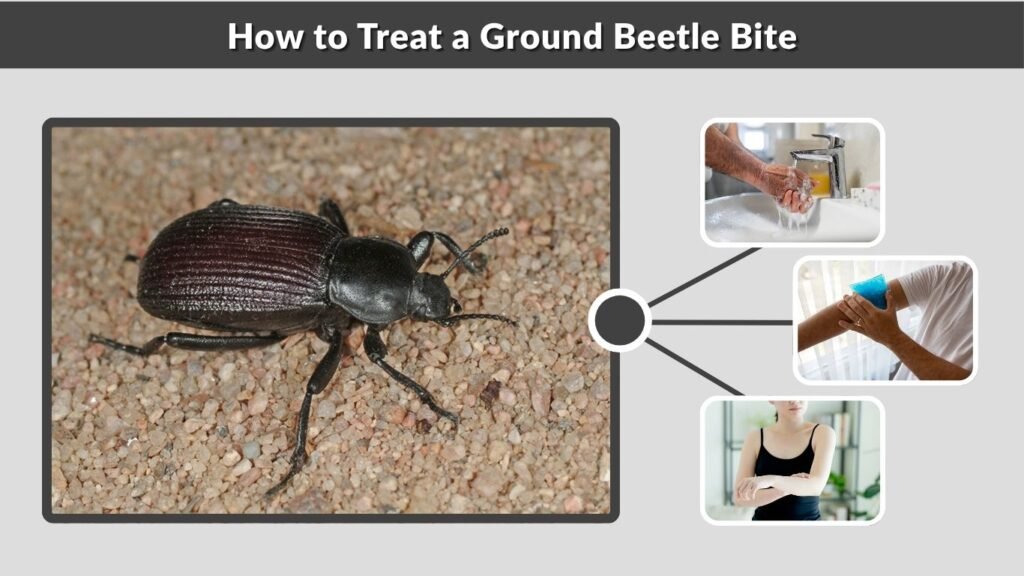
Most minor ground beetle pinches can be managed with basic first aid. Prompt cleaning helps protect damaged skin, while a cool compress may relieve temporary pain or swelling. The appropriate response depends on whether the skin is intact, the severity of the injury, and whether unusual symptoms develop.
First Aid for a Ground Beetle Bite
Follow these steps after a suspected bite:
- Move away from the beetle: Avoid squeezing or handling it again.
- Wash the affected area: Gently clean the skin with soap and water.
- Apply a cool compress: Use a cold, damp cloth for 10–20 minutes to help reduce discomfort.
- Protect broken skin: Cover any small open wound with a clean dressing.
- Avoid scratching: Scratching irritated skin may increase the risk of infection.
- Monitor the area: Check whether pain, redness, or swelling improves.
Minor symptoms generally require no specialized treatment.
When Should You Seek Medical Attention?
Consult a healthcare professional if you notice:
- Increasing pain or swelling
- Spreading redness or warmth
- Pus or other signs of infection
- A wound that is deep or difficult to clean
- Persistent symptoms or uncertainty about the insect
Seek emergency medical assistance for serious symptoms such as breathing difficulty, fainting, or swelling of the lips, tongue, or throat.
How to Prevent Ground Beetle Bites
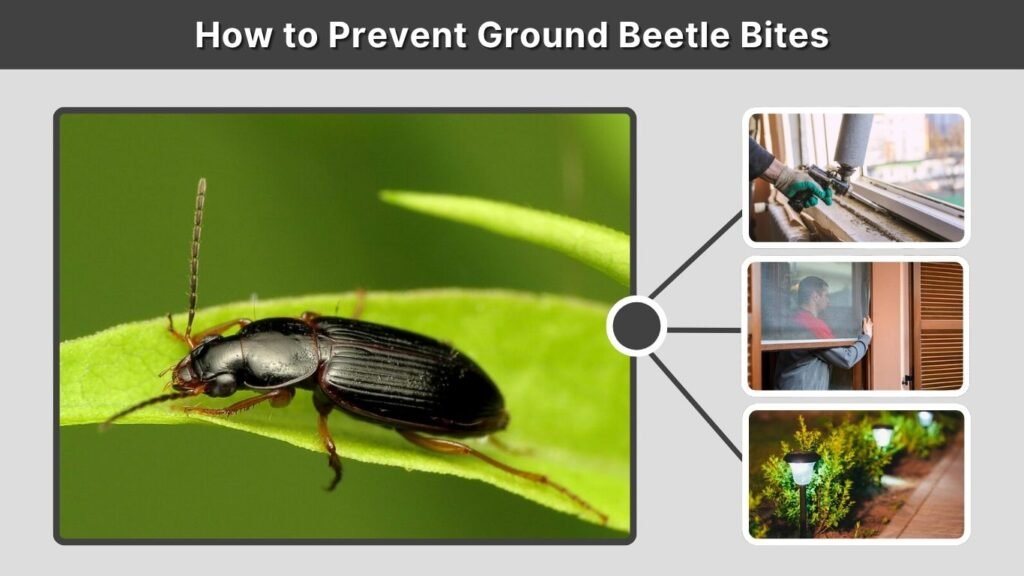
Preventing ground beetle bites is usually straightforward because these insects do not deliberately seek contact with humans. Avoiding unnecessary handling and reducing accidental encounters are the most effective strategies. Since many species provide valuable natural pest control, prevention should focus on safe coexistence rather than eliminating beetles from gardens and outdoor environments.
Handle Ground Beetles Safely
When encountering a ground beetle, allow it to move away naturally. Avoid trapping it between your fingers or testing whether its jaws can pinch.
If removal is necessary, place a container over the beetle and gently slide stiff paper underneath.
People working in gardens can also wear gloves when moving stones, logs, or accumulated leaves where beetles frequently hide.
Prevent Ground Beetles From Entering Your House
Use the following measures to reduce indoor encounters:
- Seal foundation cracks: Close openings that allow beetles to enter.
- Install door sweeps: Prevent insects from crawling beneath doors.
- Repair window screens: Block common entry routes.
- Reduce outdoor lighting: Limit unnecessary nighttime attraction.
- Clear nearby debris: Move accumulated leaves and firewood away from exterior walls.
Ground beetles generally cannot establish breeding populations inside ordinary homes. Finding them indoors usually indicates accidental entry.
Why You Should Protect Ground Beetles Outdoors
Ground beetles are beneficial predators that consume numerous garden pests, including caterpillars, insect larvae, and sometimes slugs.
Their activity can help reduce pest populations without widespread pesticide use.
Because they rarely injure people, relocating indoor visitors and preserving outdoor populations is generally preferable to killing them.
FAQs
1. Do big-headed ground beetles bite humans?
Yes, big-headed ground beetles can deliver a noticeable pinch with their strong mandibles if handled roughly. However, they are not aggressive toward humans and typically avoid contact.
2. Can black ground beetles bite?
Black ground beetles can potentially pinch with their jaws, especially when trapped or squeezed. Most species rarely bite and are considered harmless during ordinary encounters.
3. Do ground beetle bites hurt?
A larger beetle may cause a brief sharp pain, while smaller species might produce little sensation. The level of discomfort depends on the beetle and the circumstances.
4. Can ground beetles bite while you sleep?
Ground beetles do not seek sleeping humans as a food source. Although accidental contact is possible, unexplained nighttime bites should not automatically be attributed to ground beetles.
5. Do ground beetle bites require medical treatment?
Most minor pinches do not require professional treatment. Washing the affected area and monitoring symptoms is usually sufficient. Seek medical assistance if an injury becomes infected or produces concerning symptoms.
