
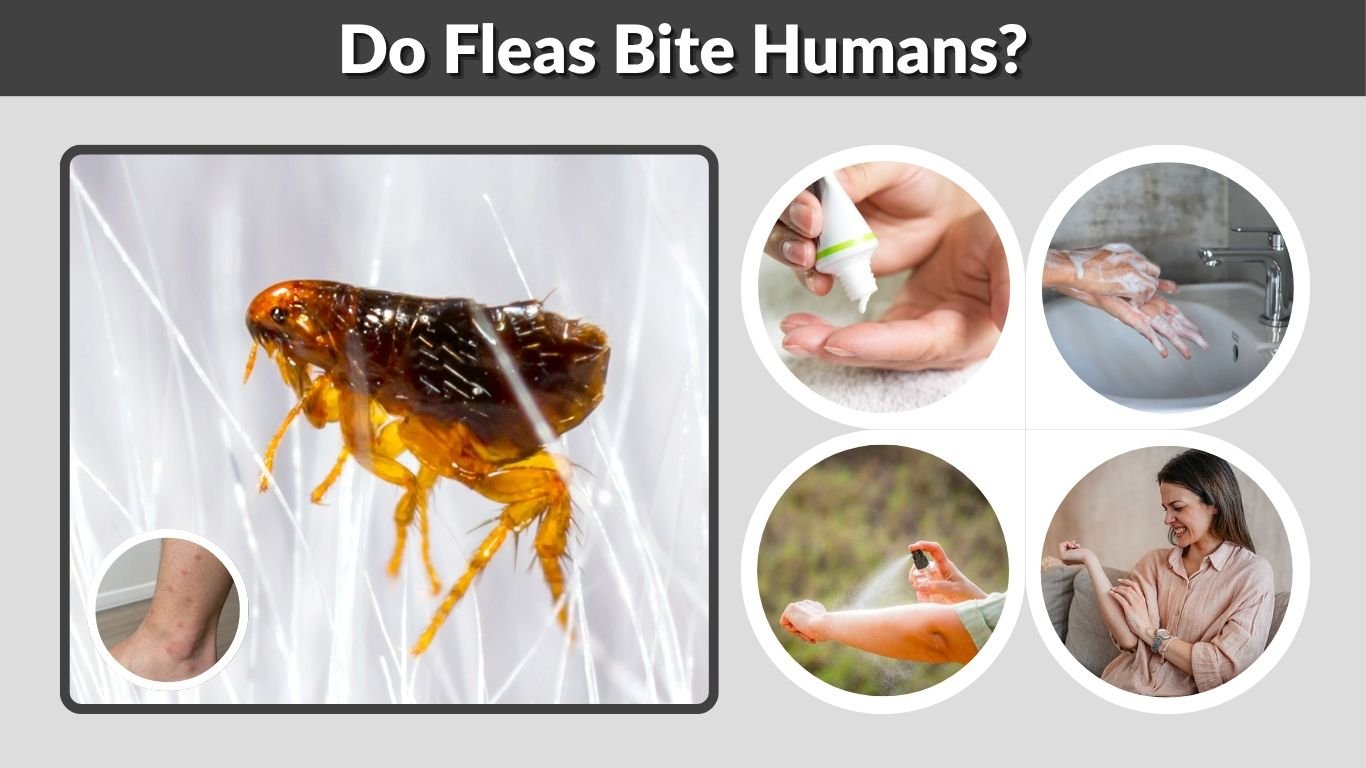
Yes, fleas bite humans, even though they usually prefer feeding on animals such as cats and dogs. Their bites can cause itchy red bumps, skin irritation, and occasional allergic reactions. Fleas may enter homes through pets, wildlife, or infested environments, making human bites more likely. Understanding what flea bites look like, where they commonly appear, and how long they last can help you identify the problem. This guide explains why fleas bite humans, how to treat their bites, and practical ways to prevent future infestations.
Do Fleas Bite Humans?
Fleas are tiny, wingless insects that survive by feeding on blood. Although most species prefer particular animal hosts, several types can bite humans when given the opportunity. Their powerful jumping legs allow them to move quickly between animals, carpets, and people. Human flea bites are especially common in environments where pets or other animals have introduced fleas.
Why Do Fleas Bite Humans?
Fleas bite humans because they need blood to survive and reproduce. Adult fleas detect potential hosts through body heat, movement, vibrations, and carbon dioxide.
When their preferred animal hosts are unavailable, fleas may feed on nearby people. However, most common pet fleas do not live permanently on humans because human bodies lack the dense fur that provides suitable shelter.
Do Cat and Dog Fleas Bite Humans?
Yes, both cat fleas (Ctenocephalides felis) and dog fleas (Ctenocephalides canis) can bite humans.
Cat fleas are particularly common in household infestations and can affect both cats and dogs. People may experience bites while playing with pets, sitting on infested furniture, or walking across contaminated carpeting.
Other species, including certain rat and bird fleas, can also feed on humans. However, flea larvae do not bite because they do not feed directly on living hosts.
What Do Flea Bites Look Like on Humans?
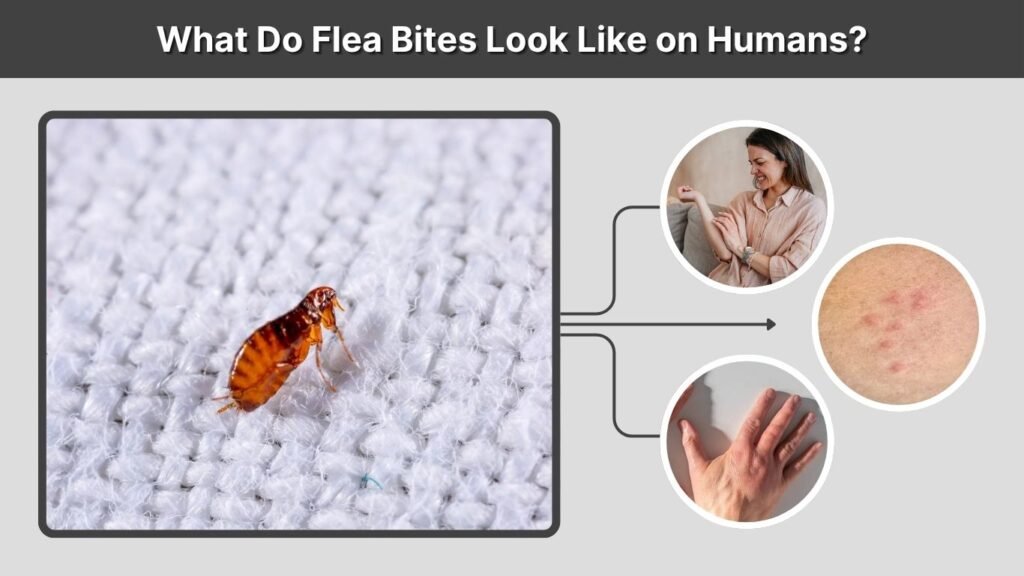
Flea bites usually appear as small, raised bumps that cause noticeable itching. They often develop in clusters or short lines, particularly around the ankles and lower legs. Their appearance varies depending on individual skin sensitivity and skin tone. Recognizing common symptoms and bite locations can help distinguish flea bites from other insect bites, although appearance alone cannot confirm the cause.
Common Signs of Flea Bites
Typical flea bite symptoms include:
- Small bumps: Raised red, pink, brown, or skin-colored spots.
- Intense itching: Irritation caused by the body’s reaction to flea saliva.
- Clustered bites: Several bumps appearing close together or in short lines.
- Localized swelling: Mild inflammation surrounding individual bites.
- Small blisters: Occasionally develop in people with stronger skin reactions.
On darker skin, flea bites may appear brown, purple, or darker than the surrounding area rather than bright red.
Where Do Fleas Usually Bite Humans?
Fleas most commonly bite the ankles, feet, and lower legs because these areas are easily accessible when fleas jump from floors or carpets.
However, bites may also develop around the waist, arms, thighs, or other exposed skin.
Fleas can occasionally bite the face, head, or scalp, but these locations are less common. Bites on the upper body may occur when someone lies on flea-infested bedding or furniture.
How Are Flea Bites Different From Bed Bug Bites?
Flea bites generally affect the lower legs and ankles, while bed bug bites often occur on exposed skin during sleep.
Both can produce itchy bumps in groups or lines, so their appearance frequently overlaps.
Finding fleas on pets, flea dirt in animal fur, or jumping insects around carpets provides stronger evidence of fleas than bite patterns alone.
How Long Do Flea Bites Last on Humans?
Most uncomplicated flea bites improve within a few days, although some may take one to two weeks to heal completely. Recovery depends on individual sensitivity, scratching, and whether additional bites occur. Flea bites typically disappear without permanent damage, but persistent itching may delay healing. Treating the irritation and eliminating fleas from the environment helps prevent repeated discomfort.
How Long Do Flea Bites Itch?
Flea bite itching commonly lasts several days. People with sensitive skin or stronger allergic responses may experience symptoms for a week or longer.
Scratching can damage the skin, increasing inflammation and the likelihood of infection.
Repeated exposure to fleas may also create the impression that old bites are not healing when new bites are continuing to appear.
Do Flea Bites Leave Scars?
Most flea bites heal without scarring. However, excessive scratching, secondary infections, or significant inflammation can occasionally leave marks.
Temporary dark spots, known as post-inflammatory hyperpigmentation, may remain after the itching disappears.
Keeping the skin clean and avoiding scratching reduces this risk.
How to Treat Flea Bites on Humans
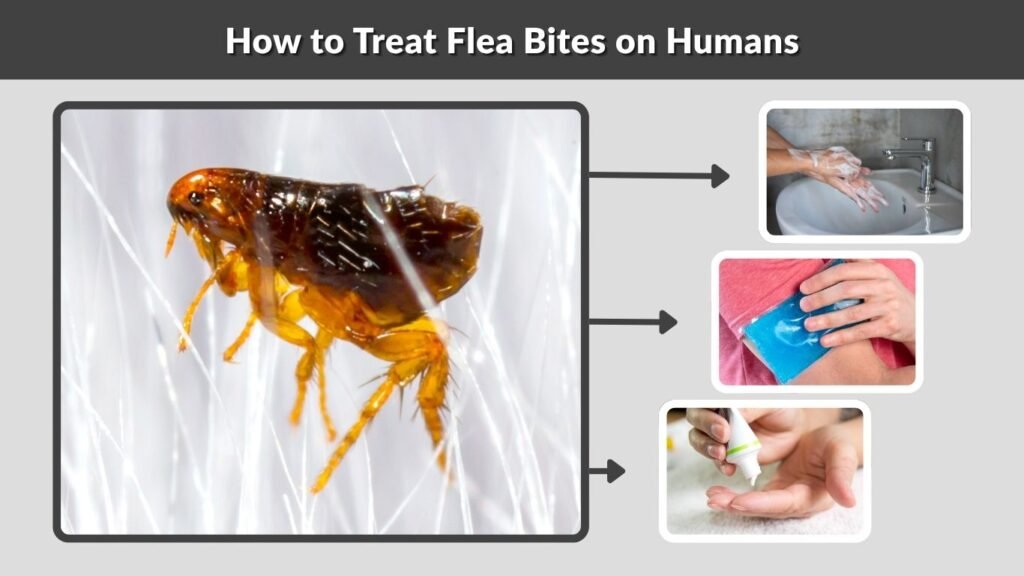
Flea bites usually respond well to simple home treatment. The main goals are reducing itching, calming inflammation, and preventing infection. Most people do not require prescription medication unless complications develop. However, treatment should address both the skin irritation and the underlying flea problem. Otherwise, new bites may continue even after existing ones have healed.
Home Treatment for Flea Bites
Follow these steps to relieve discomfort:
- Wash the area: Clean affected skin gently with soap and water.
- Apply a cold compress: Use a cool, damp cloth or wrapped ice pack to reduce itching and swelling.
- Use anti-itch cream: Over-the-counter hydrocortisone may help relieve inflammation when used as directed.
- Consider antihistamines: Ask a pharmacist about appropriate medication for persistent itching.
- Avoid scratching: Keep fingernails short to reduce skin damage.
- Protect broken skin: Clean any scratched-open bites and cover them with a clean dressing when necessary.
Avoid applying harsh chemicals or household cleaning products directly to the skin.
When Should You See a Doctor?
Although serious complications are uncommon, certain symptoms need medical attention.
- Spreading redness or warmth: May indicate a skin infection.
- Pus or increasing pain: Could suggest a developing bacterial infection.
- Fever or body aches: Require assessment, particularly after possible flea exposure.
- Persistent or worsening symptoms: May need professional evaluation.
Difficulty breathing, throat swelling, or severe dizziness after a bite requires emergency medical attention.
Can Flea Bites Make Humans Sick?
Most flea bites cause only temporary skin irritation. However, infected fleas can occasionally transmit diseases such as flea-borne typhus or plague in certain geographic regions.
These infections are uncommon compared with ordinary flea bite reactions, but unexplained fever or significant illness following flea exposure should be evaluated promptly.
How to Prevent Fleas From Biting Humans
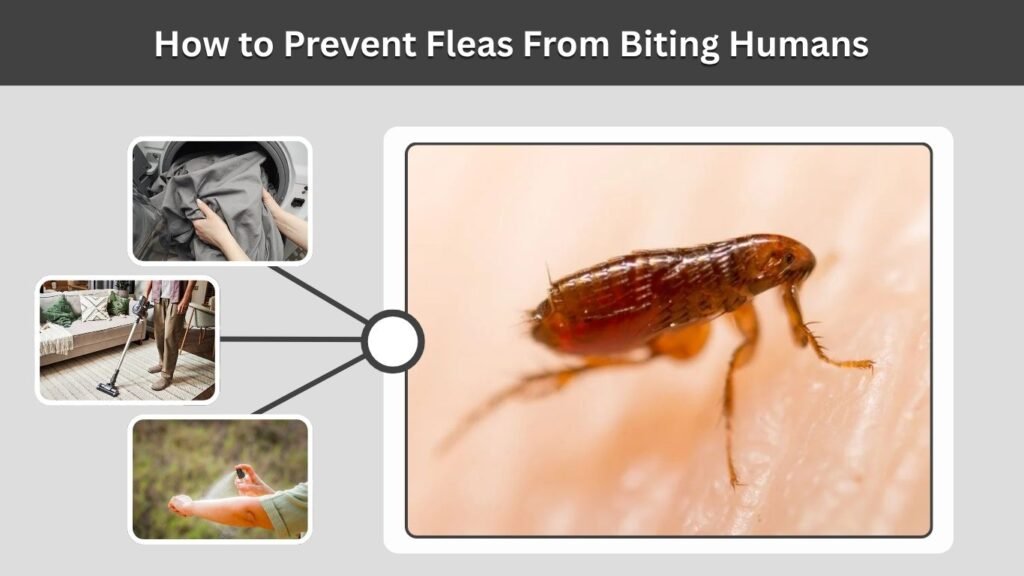
Preventing flea bites requires controlling fleas on pets and throughout the home. Treating bites alone will not solve an active infestation because fleas can continue developing in carpets, bedding, and protected spaces. Regular cleaning, appropriate veterinary flea prevention, and reducing wildlife exposure are important preventive measures. Addressing the entire flea life cycle helps reduce recurring infestations.
Effective Flea Prevention Methods
- Treat pets: Use veterinarian-recommended flea prevention consistently.
- Vacuum regularly: Clean carpets, rugs, furniture, and areas where pets rest.
- Wash pet bedding: Launder bedding and washable fabrics frequently.
- Protect exposed skin: Wear long pants and socks in flea-infested areas.
- Use suitable repellents: Follow product labels when applying EPA-registered insect repellents.
- Control severe infestations: Consider professional pest management when necessary.
Never apply household insecticides or pet flea treatments directly to human skin.
Do Fleas Bite Humans at Night or in Bed?
Yes, fleas can bite humans at night, particularly when bedding, carpets, or nearby furniture contain fleas.
However, fleas are not exclusively nighttime feeders and may bite throughout the day.
Finding bites after sleeping does not automatically indicate fleas. Bed bugs and other causes should also be considered before selecting a pest treatment.
FAQs
Flea bites raise several common concerns, particularly when people discover unexplained itchy bumps or notice fleas on household pets. Understanding how fleas behave can help prevent unnecessary worry and guide effective treatment. The following answers address questions about repeated biting, preferred hosts, and whether fleas can survive on human bodies. They also clarify common misconceptions about flea behavior.
1. Do Fleas Bite Certain Humans More Than Others?
Yes. Differences in exposure, body heat, movement, and individual skin reactions may make some people appear more attractive to fleas or more noticeably affected by their bites.
2. Do Fleas Die After Biting Humans?
No. Fleas do not die after biting humans. Adult fleas can feed repeatedly and may continue biting until removed or killed.
3. Can Fleas Live in Human Hair?
Fleas may temporarily enter human hair, but common cat and dog fleas generally do not establish permanent populations on the human scalp.
4. Do Snow Fleas Bite Humans?
No. Snow fleas are springtails rather than true fleas. They do not feed on blood and are harmless to humans.
5. Do Flea Bites Spread From Person to Person?
No. Flea bites themselves are not contagious. However, fleas may move through shared environments and bite multiple people.
