
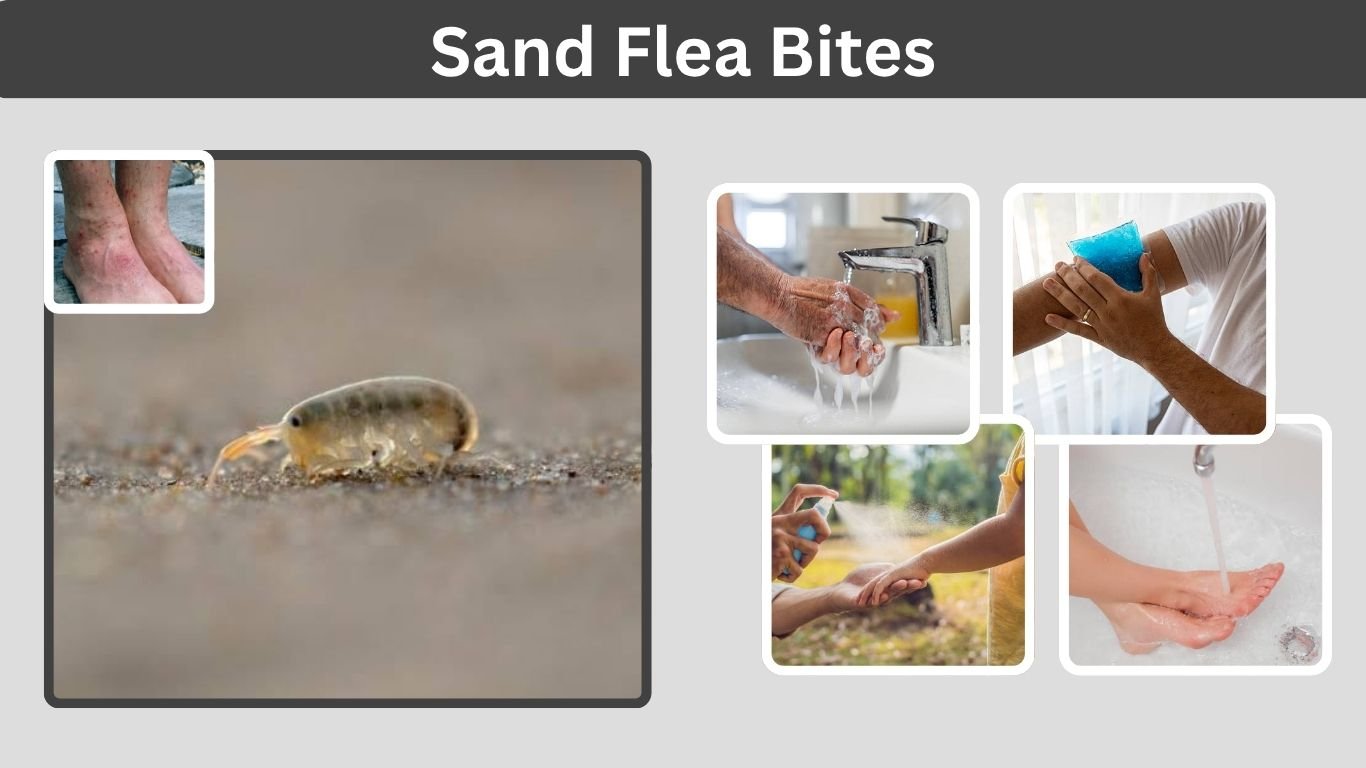
Sand flea bites can cause small, intensely itchy bumps, irritation, swelling, and redness or discoloration, especially around the feet, ankles, and lower legs. However, “sand flea” is a broad term, and not every itchy bite after visiting a beach comes from the same organism. True chigoe sand fleas can actually embed in the skin and cause tungiasis, which requires different care from an ordinary insect bite. This guide explains what sand flea bites look like, their symptoms, treatment, healing time, and prevention. Pasted text
What Do Sand Flea Bites Look Like?
The appearance of sand flea bites depends partly on what caused the reaction. Ordinary flea-like bites generally produce itchy raised bumps, while tungiasis caused by the chigoe flea (Tunga penetrans) produces a distinctive embedded lesion. Location, recent travel, exposure to sandy environments, and whether the spot changes over time can help narrow down the cause.
Common Appearance of Sand Flea Bites
Possible signs include:
- Small raised, itchy bumps
- Red, pink, brown, or darker discoloration
- Mild swelling around the affected area
- Several bites close together
- Irritated skin after scratching
- Small blisters in stronger reactions
- Crusting if the skin becomes damaged
The exact color can vary with skin tone and the degree of inflammation.
Sand Flea Bites on Feet and Legs
Feet, ankles, and lower legs are commonly associated with sand-related insect exposure because these areas are closest to the ground.
True tungiasis has an even stronger connection with the feet. WHO reports that about 99% of tungiasis lesions occur there, particularly around the toes, soles, heels, and sides of the feet.
What Does Tungiasis Look Like?
A chigoe flea lesion looks different from an ordinary itchy bump. WHO describes the embedded flea as producing a whitish, circular lesion with a dark point in its center. The lesion can become painful and itchy as the female flea enlarges beneath the skin.
Common Sand Flea Bite Symptoms
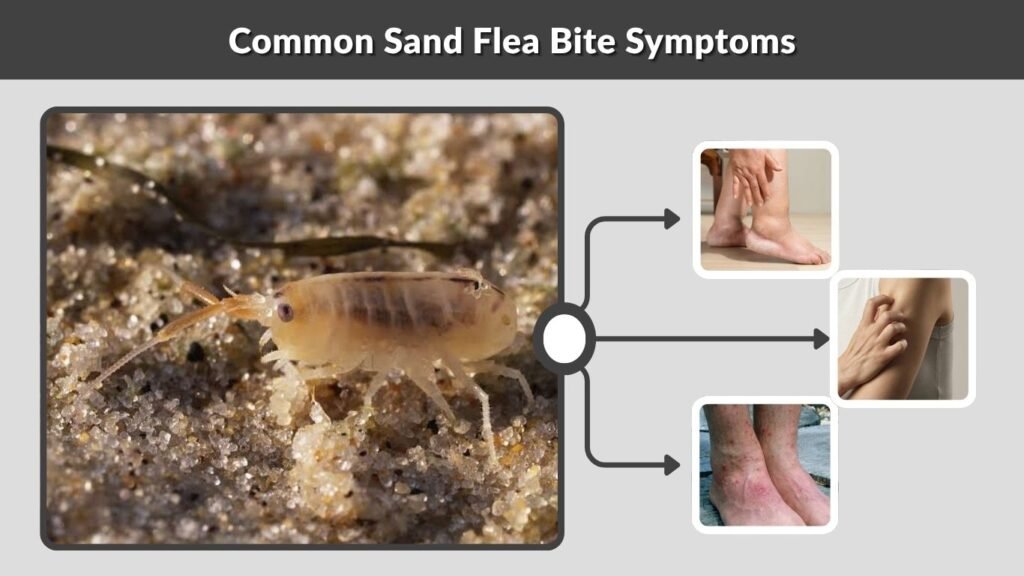
Itching is one of the most frequently reported symptoms associated with suspected sand flea bites. Some people experience only mild irritation, while others develop stronger swelling and inflammation. With tungiasis, symptoms develop as the embedded female flea enlarges, and complications can occur when scratching or improper removal damages the surrounding skin.
Itching and Irritation
An ordinary bite may begin itching soon after exposure, although skin reactions sometimes become more noticeable later.
Repeated scratching can make a small bump look considerably worse. It can also break the skin barrier, allowing bacteria to enter.
Allergic Reaction to Sand Flea Bites
A stronger reaction may involve:
- More pronounced swelling
- Intense itching
- Larger irritated areas
- Blistering
- Widespread rash-like changes
- Persistent discomfort
Seek urgent medical help for difficulty breathing, severe swelling of the face or throat, faintness, or other symptoms of a serious allergic reaction.
Can Sand Flea Bites Be Dangerous?
Most ordinary insect bites are minor. True tungiasis is different because the flea remains embedded in the skin.
WHO reports that severe cases can lead to bacterial infections, abscesses, ulcers, tissue damage, difficulty walking, tetanus, and other complications.
How to Treat Sand Flea Bites
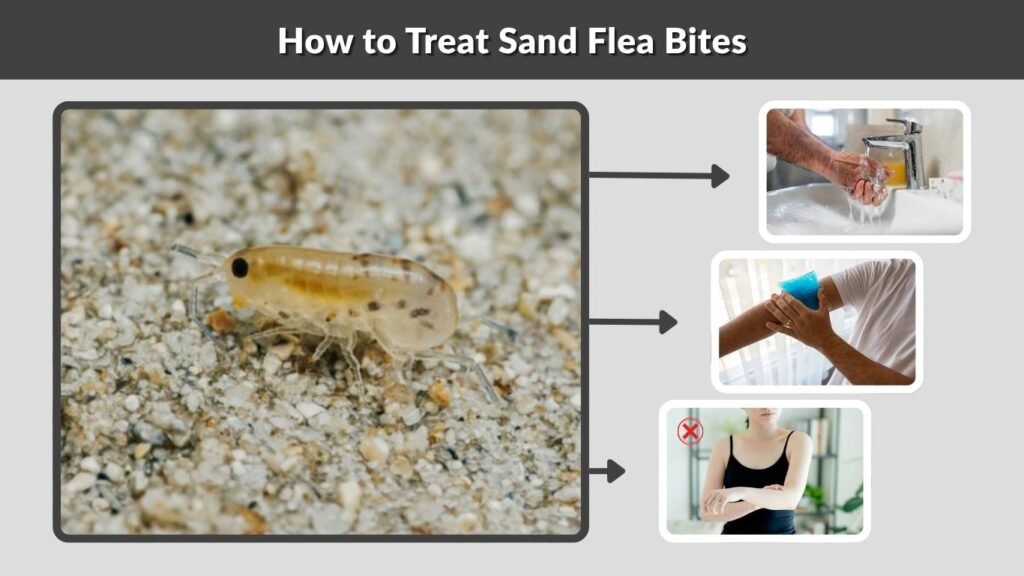
Treatment depends on whether you have a simple itchy insect bite or suspected tungiasis. Mild bites can usually be managed by reducing itching and protecting the skin. An embedded chigoe flea should receive proper medical attention rather than being dug out with unsterile needles, pins, or other household objects.
Home Care for Mild Bites
For ordinary uncomplicated bites:
- Wash the affected skin with soap and water.
- Apply a cold compress for swelling.
- Avoid scratching the area.
- Keep broken skin clean.
- Ask a pharmacist about an appropriate antihistamine.
- Consider suitable hydrocortisone cream for itching.
- Monitor for worsening pain or infection.
NHS guidance recommends washing insect bites, using a cold compress, avoiding scratching, and considering antihistamines or hydrocortisone when appropriate.
Can You Use Calamine Lotion?
Calamine is commonly used to soothe itchy skin and may provide symptomatic relief for some minor insect bites. It does not remove an embedded parasite or treat tungiasis itself.
If you are unsure which topical treatment is appropriate—particularly for children, pregnancy, extensive skin reactions, or broken skin—ask a pharmacist or healthcare professional.
Do Not Dig Out an Embedded Sand Flea
Avoid removing suspected chigoe fleas yourself with needles, thorns, scissors, or pins.
WHO warns that non-sterile extraction can rupture the flea, worsen inflammation, and introduce bacteria. When mechanical removal is needed, it should be performed under sterile conditions by trained healthcare personnel.
How Long Do Sand Flea Bites Last?
The search for how long sand flea bites last has no single answer because ordinary insect bites and tungiasis behave very differently. A mild bite reaction may improve within several days, whereas an embedded chigoe flea has a weeks-long life cycle. Scratching, allergic sensitivity, repeated exposure, and secondary infection can also extend recovery.
Ordinary Bite Reactions
Many uncomplicated insect bites improve over several days. NHS guidance notes that bites and stings generally get better within a few days, although some skin reactions can persist longer.
If new spots continue appearing, consider whether you are still being exposed to the biting organism.
How Long Does Tungiasis Last?
A chigoe flea can remain embedded for several weeks. WHO reports that the female typically lives in the skin for about 4–6 weeks, releasing eggs during that period.
Waiting for a suspected tungiasis lesion to disappear on its own is not recommended when pain, infection, or other complications are developing.
Sand Flea Bites vs. Bed Bug and Mosquito Bites
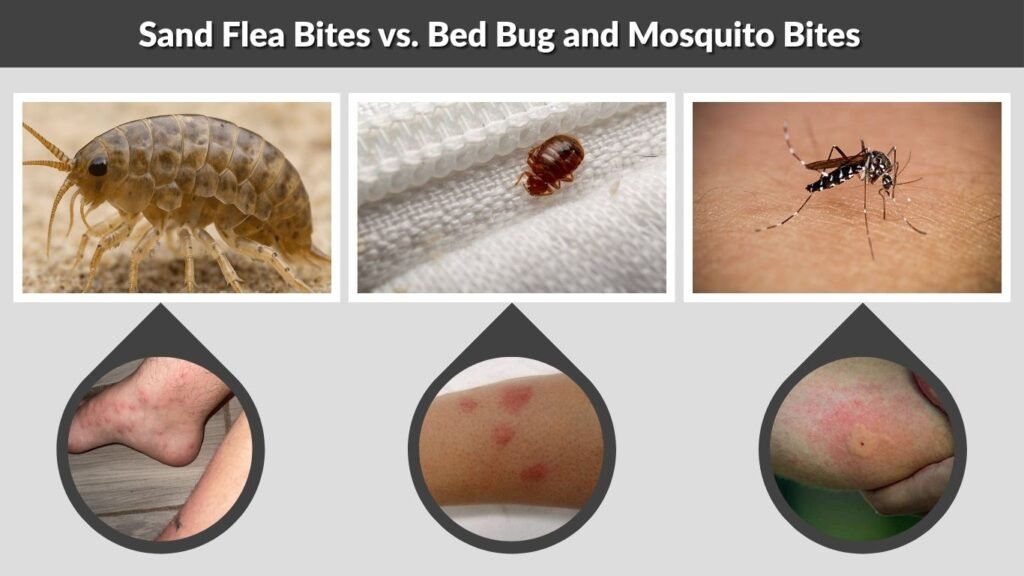
Sand flea bites can easily be confused with other insect bites. Skin appearance alone often cannot prove what caused a bump. Exposure history can be more useful: bites appearing after time on a beach or sandy ground suggest a different source than lesions developing after sleeping in an infested room.
Sand Flea Bites vs. Bed Bug Bites
Bed bug bites commonly occur on exposed skin during sleep and may appear in clusters or lines. Sand-associated bites are often noticed around exposed feet, ankles, and lower legs after outdoor exposure.
However, neither pattern is specific enough to provide a certain diagnosis.
Sand Flea Bites vs. Mosquito Bites
Mosquito bites commonly produce larger, softer raised welts on exposed skin. Flea-like bites tend to be smaller and may occur in concentrated groups.
Both can itch intensely, so location and recent exposure are important clues.
Look Beyond Bite Appearance
If you have unexplained bites, consider where you have recently been and whether other evidence exists.
A person returning from a tropical region with a persistent white lesion containing a dark central opening should be evaluated for possible tungiasis. CDC describes typical tungiasis lesions as round, slightly raised areas with a small central opening.
How to Prevent Sand Flea Bites
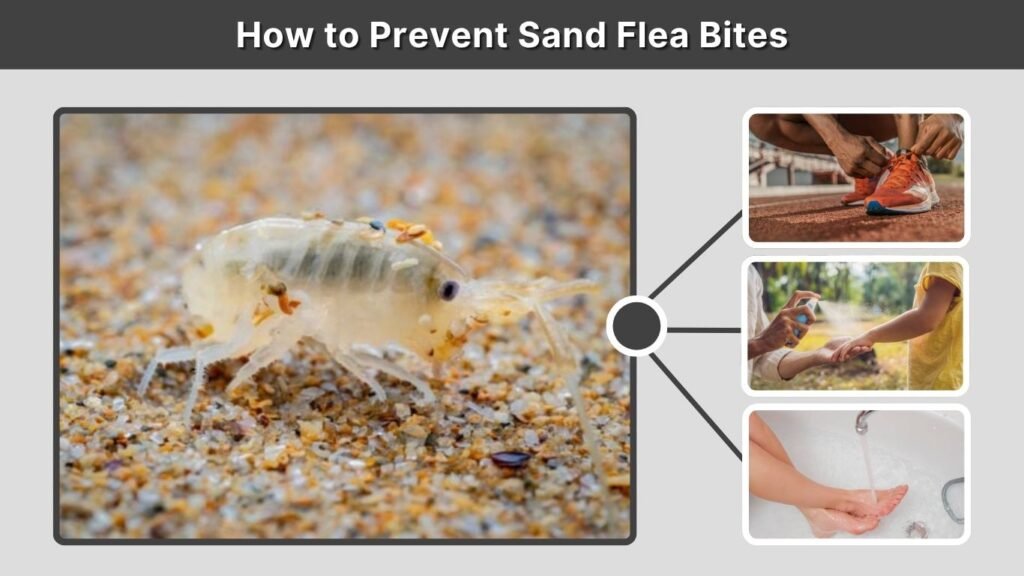
Prevention is particularly important in regions where chigoe fleas occur. These fleas develop in sandy or dry soil and can infect people when exposed skin comes into contact with contaminated ground. Shoes and basic skin protection can significantly reduce direct exposure, especially around endemic communities and high-risk environments.
Ways to Reduce Your Risk
Helpful precautions include:
- Wear shoes rather than walking barefoot.
- Keep feet covered in high-risk sandy areas.
- Avoid sitting directly on questionable soil.
- Use an appropriate insect repellent when needed.
- Wash feet regularly after exposure.
- Inspect feet after visiting high-risk environments.
- Avoid scratching existing bites.
WHO identifies barefoot exposure to contaminated soil as an important risk factor for tungiasis.
Are All Beach “Sand Fleas” Dangerous?
No. This is an important distinction. Some beach animals commonly called sand fleas are actually mole crabs and do not produce these parasitic skin lesions.
Also, itchy bumps acquired at a beach can come from other biting organisms. The presence of a beach exposure alone does not prove that a true chigoe flea caused the reaction.
FAQs
Searches around sand flea bites frequently focus on appearance, treatment, duration, delayed reactions, and differences from other bites. Pasted text Because several organisms can be described loosely as sand fleas, identifying the exposure and skin pattern is particularly important when symptoms persist or worsen.
1. What do sand flea bites look like?
Ordinary bites may appear as small, intensely itchy raised bumps with surrounding redness or discoloration. Tungiasis instead commonly forms a whitish raised lesion containing a dark central point.
2. How long do sand flea bites last?
Minor insect-bite reactions may improve within several days. Tungiasis can last much longer because the female chigoe flea may remain embedded for approximately four to six weeks.
3. Why do sand flea bites sometimes show up later?
Inflammatory skin reactions can become more noticeable after exposure rather than immediately. In tungiasis, the initial penetration can be painless, with itching and irritation developing as the embedded flea enlarges.
4. Can sand flea bites spread?
Individual bites do not normally spread across your skin like a contagious rash. New lesions may appear if exposure continues, while scratching can make existing areas larger and more inflamed.
5. When should I see a doctor for sand flea bites?
Seek medical care for suspected embedded fleas, worsening pain, pus, substantial swelling, ulcers, fever, difficulty walking, or persistent lesions after travel to an area where tungiasis occurs. Suspected secondary infection should also be evaluated promptly.
