
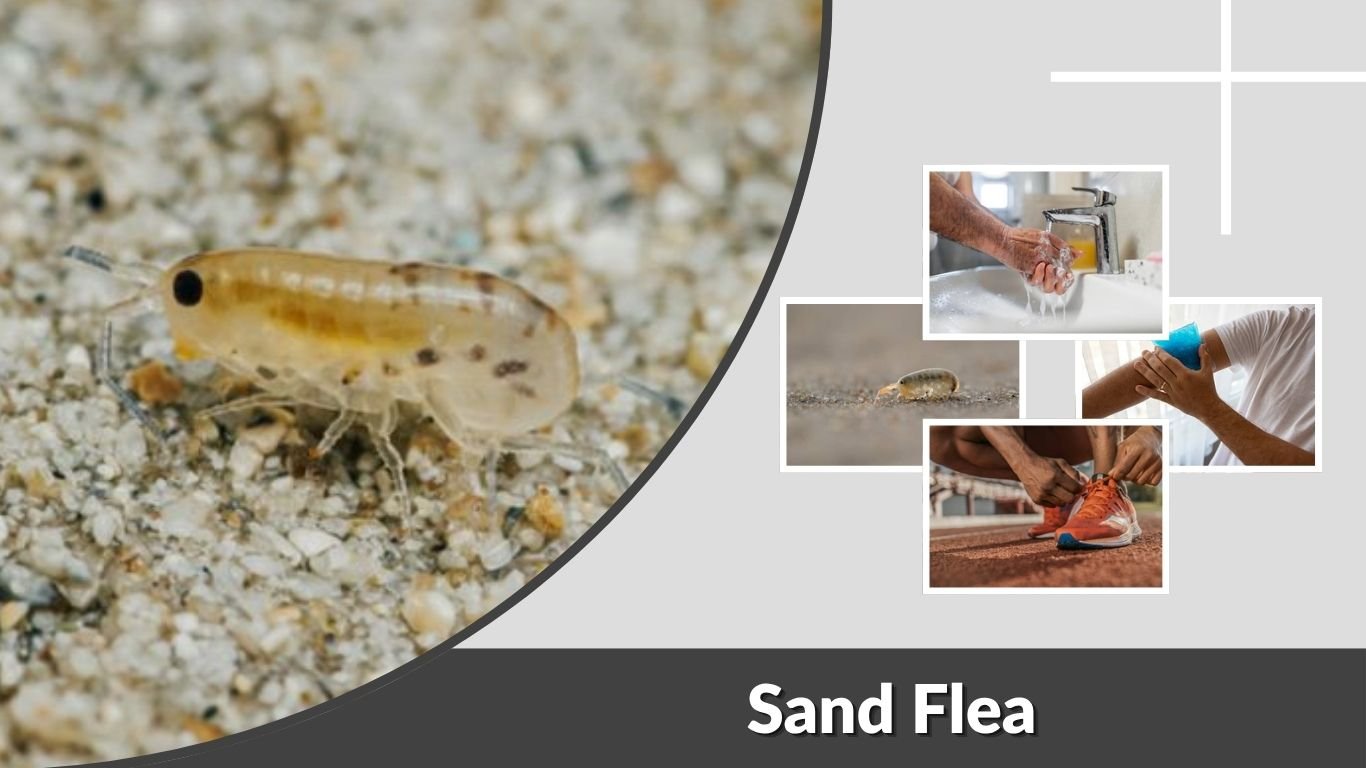
A sand flea can refer to several small creatures found around beaches and sandy environments, which sometimes causes confusion. True sand fleas such as the chigoe flea (Tunga penetrans) are tiny parasitic fleas capable of burrowing into human skin and causing tungiasis. However, beach animals called sand fleas or mole crabs are actually crustaceans and behave very differently. Understanding which creature you have encountered is important. This guide covers sand flea identification, bites, eggs in skin, symptoms, treatment, prevention, and common look-alikes.
What Is a Sand Flea?
The name sand flea does not always describe the same animal. In medical discussions, it commonly refers to the chigoe flea, Tunga penetrans, which can penetrate human skin. On many beaches in the United States, however, fishermen use “sand flea” for mole crabs in the genus Emerita. These harmless crustaceans live in surf-zone sand and are commonly collected as fishing bait.
True Sand Flea or Chigoe Flea
The chigoe flea is an extremely small parasitic flea found mainly in tropical and subtropical regions. Both sexes can feed on blood, but fertilized females can penetrate the skin and remain embedded while producing eggs.
This condition is called tungiasis. The feet are affected most frequently because contact with contaminated sandy soil commonly occurs while walking barefoot.
Mole Crabs Called Sand Fleas
Mole crabs are not insects or true fleas. They are small crustaceans related to other crabs and spend much of their time buried in wet sand along the surf line.
They are recognizable by:
- A compact, oval body
- A hard external shell
- Small legs underneath the body
- Antennae used for feeding
- Rapid burrowing into wet sand
- Presence around breaking waves
UF/IFAS notes that mole crabs are commonly called sand fleas by coastal anglers and are popular fishing bait.
Why the Name Causes Confusion
Other small beach-dwelling organisms may also be casually called sand fleas. Therefore, photographs labeled “sand flea” may show entirely different animals.
When discussing sand flea eggs in skin, parasitic infection, or tungiasis, the relevant species is generally Tunga penetrans, not a mole crab.
What Does a Sand Flea Look Like?
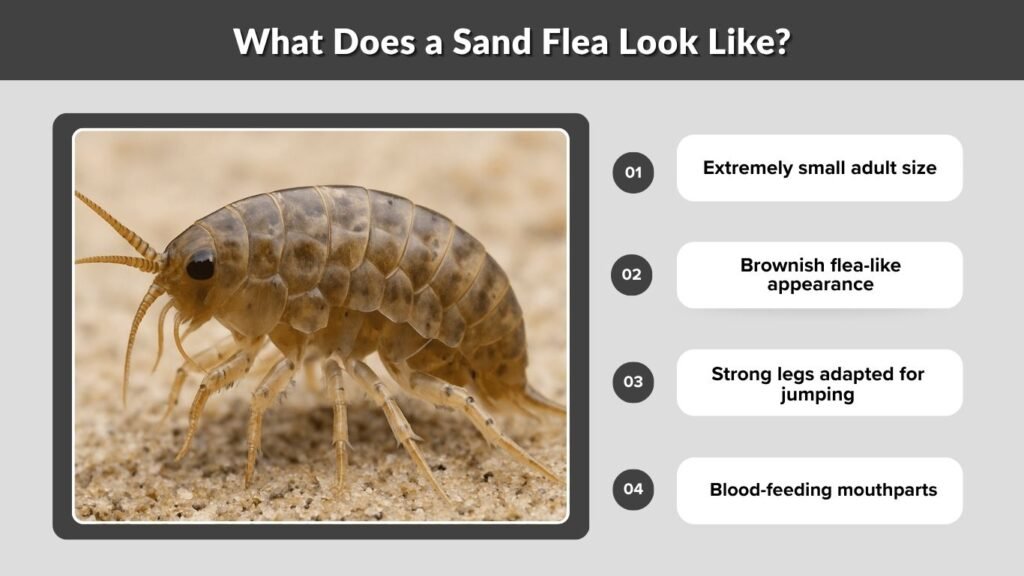
True chigoe fleas are extremely small before entering the skin, making them difficult to notice in sand. Once a female becomes embedded, her abdomen expands considerably as eggs develop. Consequently, people with tungiasis usually notice the skin lesion rather than seeing an obvious free-moving flea.
Sand Flea Identification
Important characteristics of Tunga penetrans include:
- Extremely small adult size
- Brownish flea-like appearance
- Strong legs adapted for jumping
- Blood-feeding mouthparts
- Ability of females to embed in skin
- Association with dry sandy soil in endemic regions
The CDC describes Tunga penetrans as a chigoe or jigger flea and notes that embedded females enlarge considerably while producing eggs.
What Does an Embedded Sand Flea Look Like?
According to the World Health Organization, tungiasis can appear as a whitish circular lesion with a dark point in the center. The dark center corresponds to the exposed rear portion of the embedded flea.
As the lesion develops, swelling, inflammation, itching, and pain may become increasingly noticeable.
What Do Sand Flea Bites Look Like?
The appearance associated with “sand flea bites” varies because different organisms receive this common name. Ordinary flea-like bites may produce small itchy bumps, while true chigoe fleas can create characteristic embedded lesions. Knowing whether you were exposed in an endemic tropical region is therefore particularly important when evaluating unusual skin symptoms.
Common Bite Symptoms
Minor flea-like bites may produce:
- Small raised bumps
- Red or discolored skin
- Intense itching
- Mild swelling
- Several spots close together
- Irritation around the ankles or feet
Skin color affects how inflammation appears. On darker skin, redness may be less obvious, while raised texture, itching, or darker discoloration can be easier to notice.
Sand Flea Bites on Feet
Feet and toes are especially important when discussing tungiasis. WHO reports that approximately 99% of tungiasis lesions occur on the feet, commonly affecting toes, soles, heels, and the sides of the feet.
Walking barefoot on contaminated soil increases exposure because the flea can contact the skin directly.
Sand Flea Rash
A rash after visiting a beach does not automatically mean true sand flea infestation. Mosquitoes, biting midges, ordinary fleas, contact dermatitis, and other causes can produce itchy skin after outdoor exposure.
Persistent or unusual lesions should therefore be evaluated rather than diagnosed solely from photographs.
Can Sand Fleas Lay Eggs in Human Skin?
The phrase sand flea eggs in skin is commonly associated with tungiasis, but an important distinction is necessary. The female chigoe flea itself becomes embedded in the skin. Her abdomen expands as eggs develop, and she releases the eggs through an exposed opening so they fall into the environment.
How Tungiasis Develops
The process generally follows this sequence:
- A female flea attaches to exposed skin.
- She penetrates the outer layers of skin.
- Most of her body remains embedded.
- Her abdomen enlarges while eggs develop.
- Eggs are expelled into the environment.
- The female eventually dies and is shed from the skin.
The CDC reports that an embedded female may release about 100 eggs over approximately two weeks.
Is Tungiasis Dangerous?
Tungiasis can become considerably more serious than an ordinary itchy insect bite.
Inflammation, ulceration, severe pain, difficulty walking, and secondary bacterial infections can occur. WHO also warns that severe complications may include abscesses, tetanus, tissue damage, and other infections.
How to Treat Sand Flea Bites
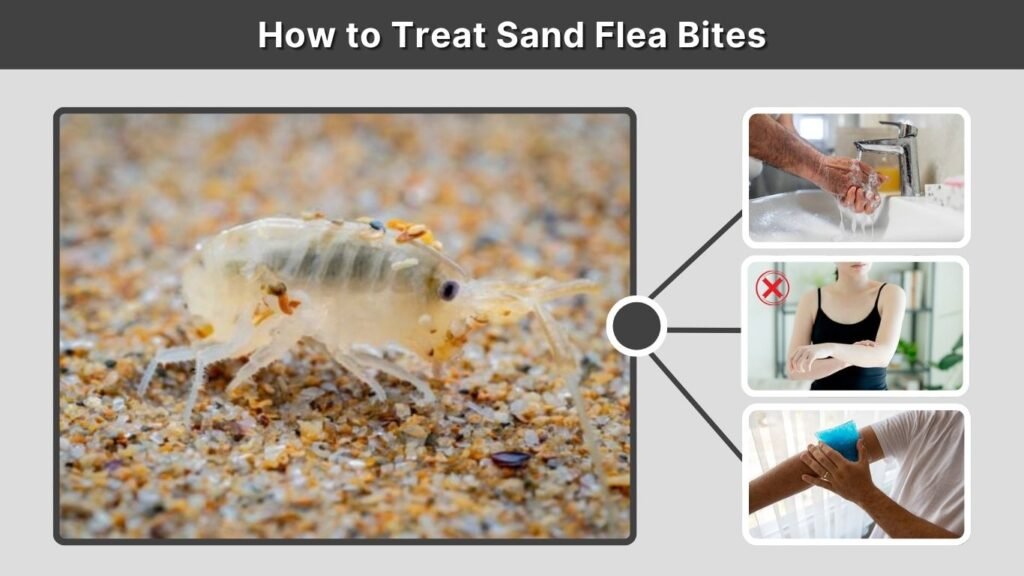
Treatment depends on whether you have ordinary itchy bites or an embedded chigoe flea. Mild unexplained insect bites can often be managed symptomatically, while suspected tungiasis requires appropriate medical evaluation. Trying to dig an embedded flea from the skin using needles or other household objects can increase the risk of infection.
Care for Mild Itchy Bites
For uncomplicated itchy bumps:
- Wash the skin gently with soap and water.
- Avoid scratching.
- Apply a cool compress for discomfort.
- Ask a pharmacist about suitable anti-itch medication.
- Keep broken skin clean.
- Watch for increasing redness, pain, or discharge.
Seek medical advice if symptoms worsen or do not improve.
Treatment for Tungiasis
WHO advises against non-sterile extraction using pins, needles, thorns, or similar objects. Improper removal may rupture the flea and increase inflammation or bacterial infection.
When mechanical removal is necessary, it should be performed with sterile instruments by appropriately trained healthcare personnel. Wound care and tetanus vaccination status may also need attention.
When to Seek Medical Care
Contact a healthcare professional if you develop an embedded-looking lesion after travel to a region where tungiasis occurs, particularly when it involves the feet.
Increasing pain, pus, swelling, difficulty walking, fever, or rapidly worsening skin changes also warrant medical evaluation.
How Long Do Sand Flea Bites Last?
Ordinary mild insect bites usually improve as the inflammatory response settles, but there is no single duration that applies to every “sand flea bite.” A person’s sensitivity, scratching, infection, and the organism responsible all affect healing time. Tungiasis follows a different course because the flea remains embedded within the skin.
Mild Bite Reactions
Minor itchy bumps may begin improving within several days. Scratching can prolong irritation by damaging the skin and creating additional inflammation.
If new bumps continue appearing, ongoing exposure to fleas or another biting organism may be occurring.
Tungiasis Lesions
An embedded female Tunga penetrans can remain within the skin for weeks. WHO reports that the flea typically lives about four to six weeks during its embedded stage while producing and releasing eggs.
Because complications can occur, suspected tungiasis should not simply be left untreated based on an expected timeline.
How to Prevent Sand Flea Bites
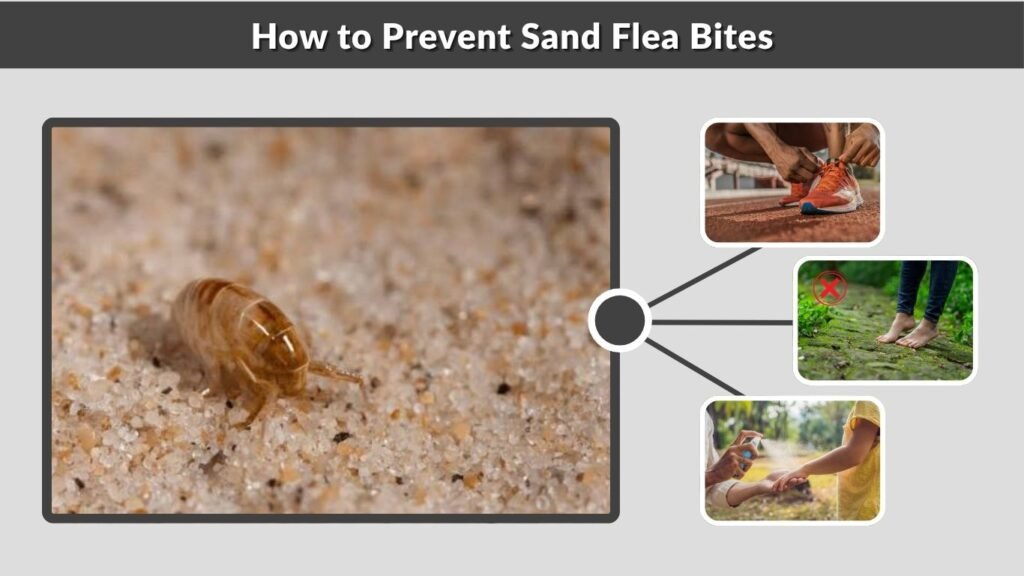
Prevention depends on the organism involved. For true chigoe fleas, reducing direct contact between bare skin and contaminated ground is particularly important. Travelers visiting regions where tungiasis occurs should be more cautious around sandy soil, unsealed floors, farms, and other environments where the parasite is established.
Practical Prevention Tips
Helpful measures include:
- Wear closed shoes in high-risk areas.
- Avoid walking barefoot on potentially contaminated soil.
- Keep feet clean and inspect them regularly.
- Avoid sitting directly on questionable sandy ground.
- Use appropriate insect repellent when recommended.
- Follow local public-health guidance in endemic regions.
WHO reports that tungiasis is concentrated in tropical areas of the Caribbean, South America, and sub-Saharan Africa.
After a Beach Visit
Normal beach exposure does not automatically mean you are at risk of tungiasis. Showering, changing clothes, washing beach towels, and checking exposed skin are sensible habits when bites or irritating organisms have been present.
Sand Flea vs. Mole Crab
The distinction between a sand flea and a mole crab is important because one can be associated with human parasitic disease while the other is a small marine crustacean. The shared nickname is based largely on habitat and movement rather than biological relationship.
The Main Difference
A chigoe flea is a tiny parasitic insect capable of embedding in skin.
A mole crab is a crustacean that lives in wet surf-zone sand, burrows rapidly, and feeds by filtering small organisms and particles from seawater.
If someone is catching “sand fleas” with a sand-flea rake for fishing, they are usually collecting mole crabs rather than parasitic chigoe fleas.
FAQs
Understanding what someone means by “sand flea” is essential because the name covers several different creatures. Questions about beach bait usually concern mole crabs, while questions about fleas burrowing into feet and producing skin lesions generally concern Tunga penetrans. These answers address the most common concerns.
1. What is a sand flea?
A true medically important sand flea is the chigoe flea, Tunga penetrans. However, the term is also commonly used for harmless beach-dwelling mole crabs.
2. What do sand flea bites look like?
Minor bite reactions may appear as small itchy raised bumps. Tungiasis instead produces an embedded lesion that may appear whitish with a dark central point and surrounding inflammation.
3. Do sand fleas lay eggs under your skin?
The female chigoe flea embeds in the skin and produces eggs while there, but the eggs are released through an opening and fall into the environment rather than remaining permanently beneath the skin.
4. How do you treat sand flea bites?
Mild itchy bites can often be managed with basic skin care and suitable anti-itch treatment. Suspected tungiasis should be medically evaluated, and embedded fleas should not be dug out with unsterile household tools.
5. Are beach sand fleas dangerous?
Animals called sand fleas on U.S. beaches are often mole crabs, which are crustaceans rather than parasitic fleas. True chigoe fleas are a different organism associated mainly with tropical and subtropical regions and can cause tungiasis.
