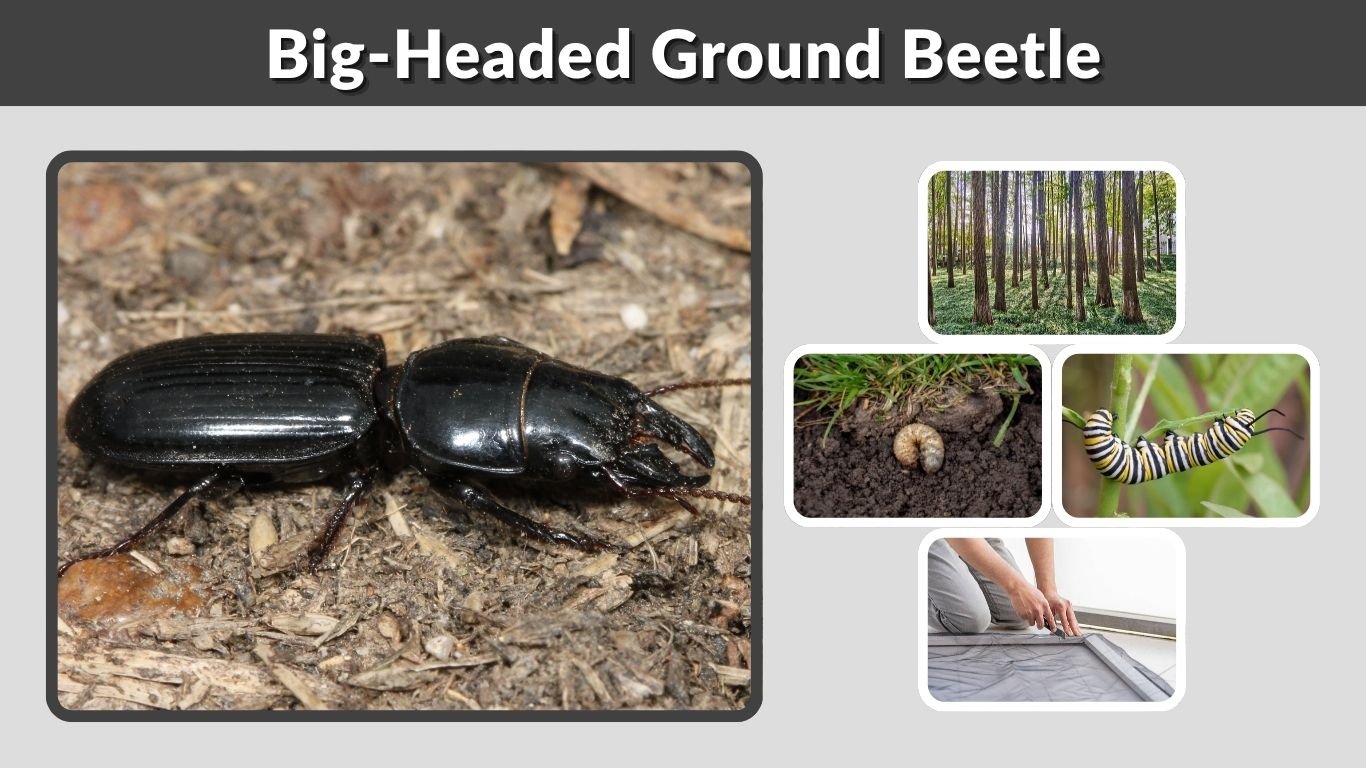
The big-headed ground beetle (Scarites subterraneus) is a shiny black predatory beetle recognized by its oversized head, powerful jaws, and deeply grooved wing covers. Although its large mandibles can make it look intimidating, this beetle is generally beneficial outdoors because it hunts other insects and soil-dwelling invertebrates. Occasionally, one may wander into a house, particularly around lights or ground-level openings. This guide explains its identification, diet, habitat, bite risk, larvae, life cycle, and what to do when one appears indoors.
What Is a Big-Headed Ground Beetle?
The big-headed ground beetle belongs to the ground beetle family Carabidae and the genus Scarites. Its scientific name is Scarites subterraneus, and it is also called the pedunculate ground beetle. It occurs across a broad part of North America and spends much of its time at or below ground level, particularly beneath debris and in soil.
Classification
- Common name: Big-headed ground beetle
- Scientific name: Scarites subterraneus
- Order: Coleoptera
- Family: Carabidae
- Subfamily: Scaritinae
- Genus: Scarites
- Species: S. subterraneus
Why Is Its Head So Large?
Its broad head supports prominent mandibles used for capturing and handling prey. The beetle also has a distinctive narrow connection between the front and rear portions of its body, giving it an unusual appearance compared with many familiar garden beetles.
Despite the threatening jaws, their primary purpose is feeding and defense rather than attacking people.
Big-Headed Ground Beetle Identification
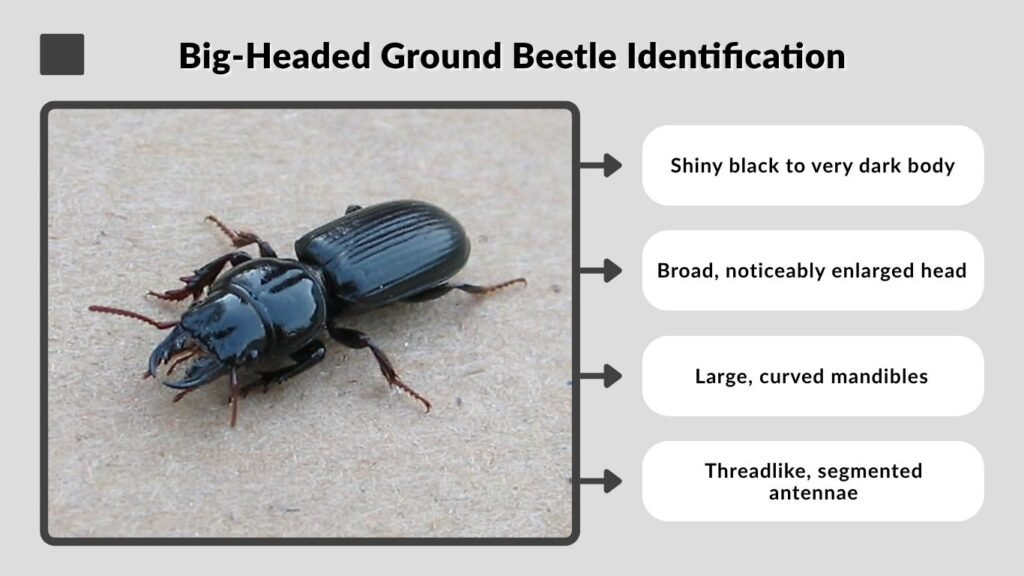
Adult big-headed ground beetles are typically glossy black and have a powerful, somewhat flattened appearance. BugGuide lists adults at roughly 15–20 mm long, though individual observations can vary. Their deeply grooved wing covers and exceptionally large jaws are among the easiest visible characteristics to notice.
Key Identification Features
- Shiny black to very dark body
- Broad, noticeably enlarged head
- Large, curved mandibles
- Deep longitudinal grooves on the wing covers
- Threadlike, segmented antennae
- Strong legs adapted for moving and digging
- Usually around 15–20 mm long
Big-Headed Ground Beetle vs. Similar Beetles
Other Scarites species can resemble S. subterraneus, so photographs alone may not always provide a certain species-level identification. BugGuide notes that characteristics of particular antennal segments are used to separate S. subterraneus from the similar Scarites quadriceps.
A ground beetle with an orange or red head may also belong to another species, so a “red-headed ground beetle” should not automatically be identified as S. subterraneus.
Habitat, Location, and Behavior
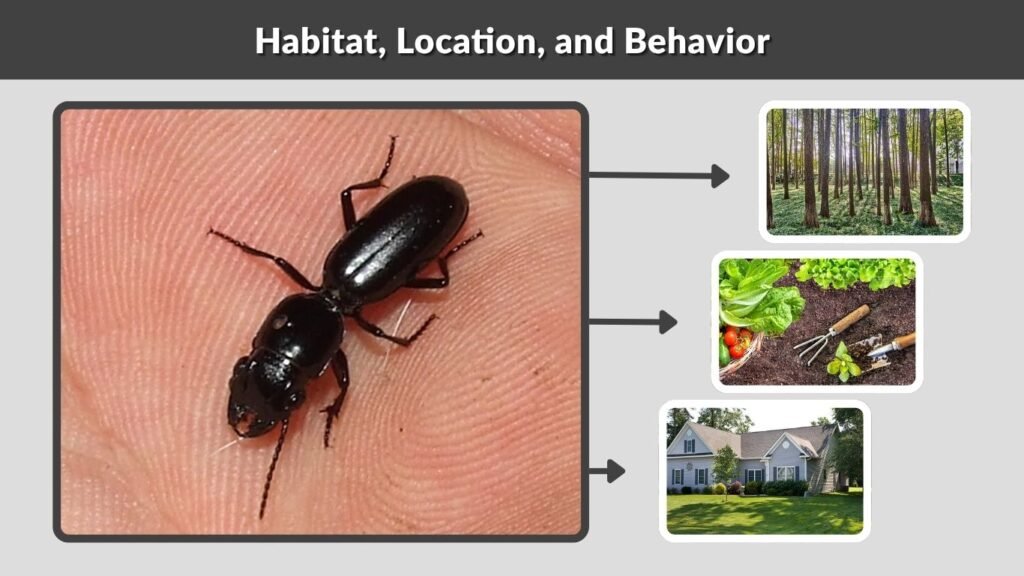
Big-headed ground beetles are primarily outdoor insects. They favor places where they can hide at ground level, including soil, leaf litter, beneath stones, and underneath other debris. Ground beetles as a group are particularly active at night and typically retreat to sheltered locations during daylight hours.
Where You May Find Them
- Beneath rocks and stones
- Under logs, boards, or garden objects
- Within leaf litter
- In soil and garden beds
- Around lawns and landscaped areas
- Near exterior lights at night
- Occasionally in basements or ground-floor rooms
Nocturnal Behavior
Ground beetles are active predators after dark. They run quickly across the soil while searching for prey and often disappear beneath debris when disturbed.
Exterior lights can attract some ground beetles, which helps explain why they sometimes show up around porches, garages, doors, and windows.
What Do Big-Headed Ground Beetles Eat?
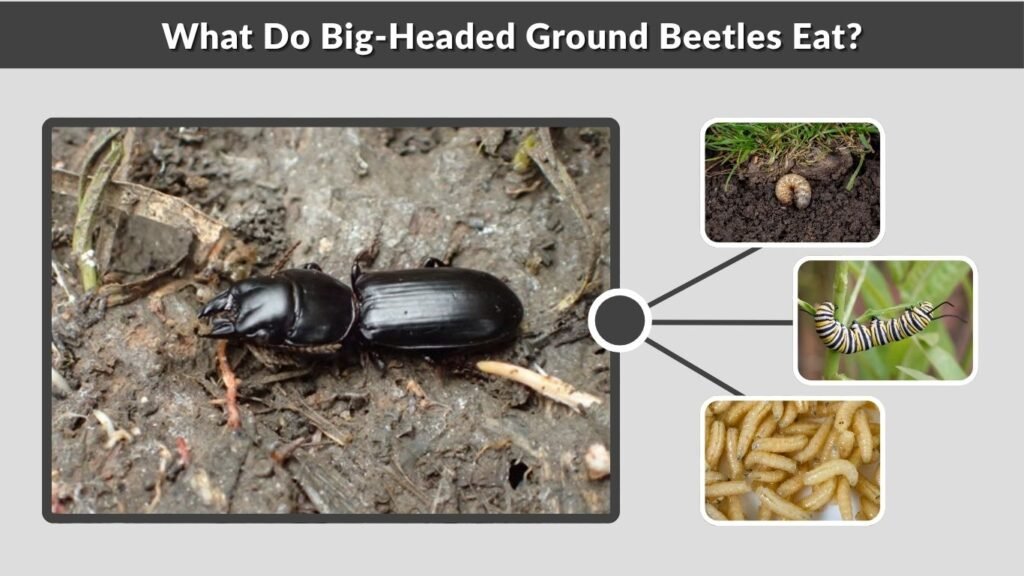
The big-headed ground beetle is predatory rather than a household-food pest. Ground beetles consume a range of insects and other small invertebrates, which is why they are generally considered beneficial in gardens and agricultural landscapes. Both adults and larvae of many ground beetles are predators.
Typical Ground Beetle Prey
- Insect larvae
- Caterpillars
- Maggots
- Other small arthropods
- Soft-bodied insects and invertebrates
- Various soil-dwelling prey
Their powerful jaws allow them to seize prey, while their nocturnal habits help them encounter insects active on or near the soil surface.
Big-Headed Ground Beetle Larvae and Life Cycle
Like other beetles, big-headed ground beetles undergo complete metamorphosis: egg, larva, pupa, and adult. Specific life-history details for S. subterraneus are less commonly documented than its adult appearance, but general ground beetle biology provides a useful picture of its development.
Life Cycle Stages
- Egg: Ground beetles generally lay eggs in soil or damp organic material.
- Larva: Larvae are elongated predators with noticeable jaws and usually live in or near soil.
- Pupa: Pupation takes place in the soil.
- Adult: Adults emerge as active ground-level predators and may overwinter in suitable shelter.
What Do the Larvae Look Like?
Ground beetle larvae generally have elongated, segmented bodies, hardened surfaces, and prominent forward-projecting jaws. They spend much of their time below ground or beneath debris, hunting small soil-dwelling insects.
Are Big-Headed Ground Beetles Dangerous?
Despite their appearance, big-headed ground beetles are not considered dangerous household pests. Ground beetles do not damage buildings, clothing, or stored food, and they do not establish reproducing populations inside homes. Their ecological role outdoors is largely beneficial.
Do Big-Headed Ground Beetles Bite?
Large ground beetles have strong mandibles and can potentially pinch skin when handled roughly. This is mainly defensive behavior, not an attempt to feed on people. University extension guidance describes ground beetles as generally harmless, while noting that larger individuals may pinch if mishandled.
Are Big-Headed Ground Beetles Poisonous?
They are not considered poisonous insects. They do not have a venomous sting and do not seek out humans as prey.
The simplest approach is to avoid picking them up with bare fingers. A container and piece of paper can be used to move one outdoors without direct contact.
Big-Headed Ground Beetle in the House
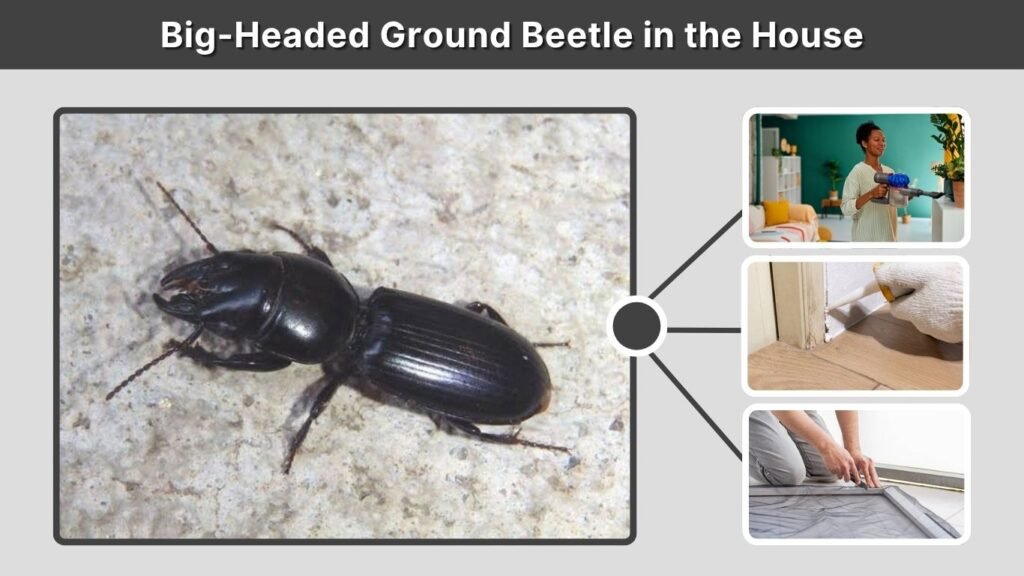
Finding a big-headed ground beetle indoors usually means it wandered inside accidentally rather than established an infestation. Ground beetles commonly enter through gaps around doors, windows, foundations, or other ground-level openings. They may also be drawn toward artificial lighting.
How to Get Rid of Big-Headed Ground Beetles
- Vacuum or capture individual beetles and release them outdoors.
- Seal cracks and gaps around foundations.
- Repair damaged window and door screens.
- Install tight-fitting door sweeps.
- Reduce leaves, boards, and debris close to the foundation.
- Keep firewood farther from exterior walls.
- Reduce unnecessary bright outdoor lighting at night.
- Keep mulch and dense vegetation from directly contacting the house.
Because these beetles are beneficial predators outdoors, widespread pesticide treatment is normally unnecessary when only occasional individuals enter a home.
FAQs
1. Are big-headed ground beetles harmful to humans?
No. They are generally considered harmless to people and are beneficial outdoor predators. A large beetle may pinch if handled roughly, so direct handling is best avoided.
2. Why are big-headed ground beetles in my house?
They usually wander indoors through cracks, door gaps, windows, or other openings. Outdoor lighting may also attract ground beetles toward buildings.
3. What do big-headed ground beetles eat?
They are predators that feed primarily on other insects and small invertebrates. Their diet makes them useful members of garden and soil ecosystems.
4. How big is a big-headed ground beetle?
BugGuide lists Scarites subterraneus at approximately 15–20 mm in length, although individual observations and closely related species can vary.
5. Should I kill a big-headed ground beetle?
Usually there is no reason to kill one found outdoors because ground beetles prey on other insects. If one enters your home, capturing or vacuuming it and sealing the entry point is generally sufficient.