
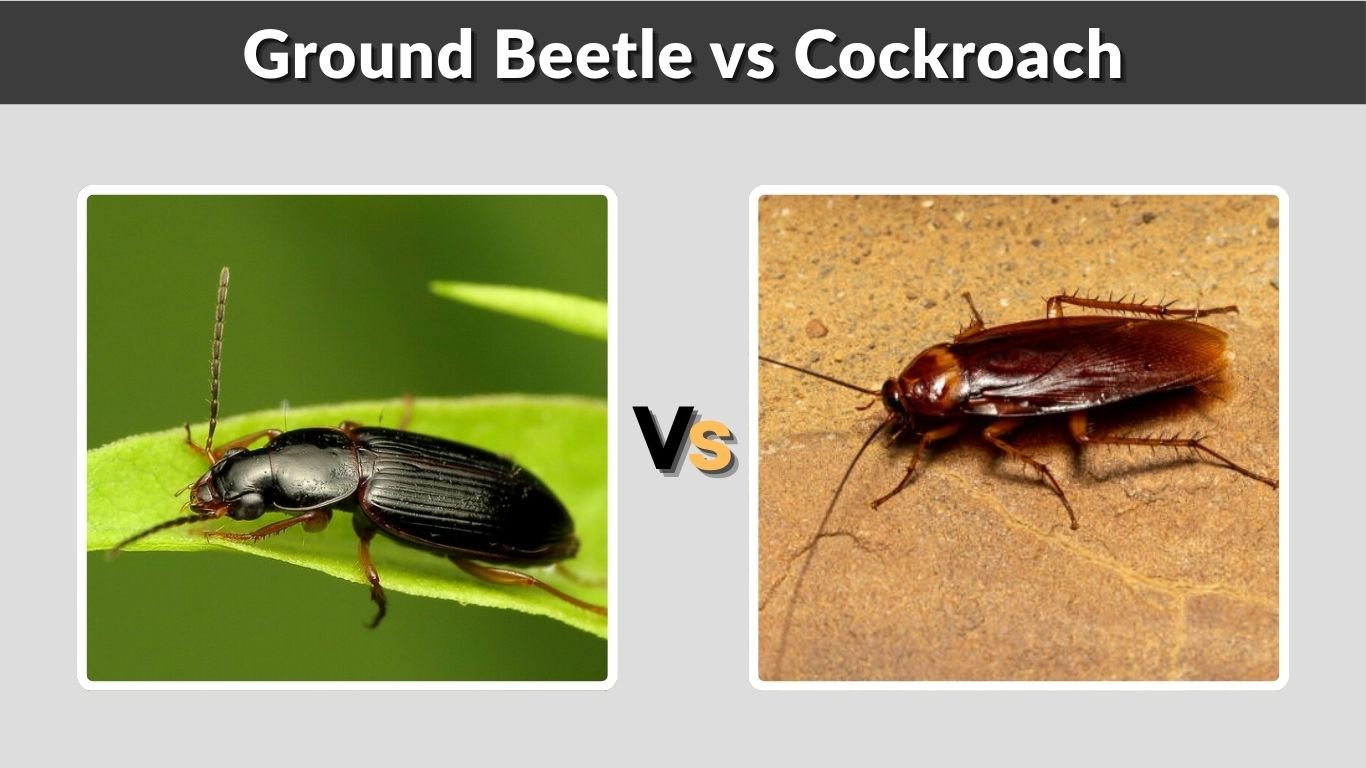
A ground beetle and a cockroach can look surprisingly similar, especially when both are dark-colored and moving quickly across a floor. However, they differ greatly in body shape, behavior, habitat, diet, and whether they are likely to become household pests. Ground beetles usually enter homes accidentally and are generally harmless, while cockroaches may establish indoor infestations and contaminate food or surfaces. This guide explains the key differences between a ground beetle vs cockroach and shows how to identify each one correctly.
Ground Beetle vs Cockroach: Quick Comparison
Ground beetles belong to the family Carabidae and are mostly outdoor predators, while cockroaches belong to the order Blattodea and include several important household pest species. Although both may appear brown or black, their antennae, wings, body shapes, movement, and habits provide useful identification clues.
Main Differences at a Glance
- Body shape: Ground beetles are usually narrow or oval; cockroaches are flatter and broader.
- Antennae: Cockroaches generally have very long, threadlike antennae.
- Body covering: Ground beetles have hardened wing covers called elytra.
- Movement: Both can run quickly, but cockroaches often dart toward cracks and hiding places.
- Habitat: Ground beetles usually live outdoors; pest cockroaches often live indoors near food and moisture.
- Diet: Ground beetles commonly prey on insects; cockroaches are opportunistic scavengers.
- Infestation risk: Ground beetles rarely reproduce indoors, while some cockroach species can create large infestations.
How to Identify a Ground Beetle
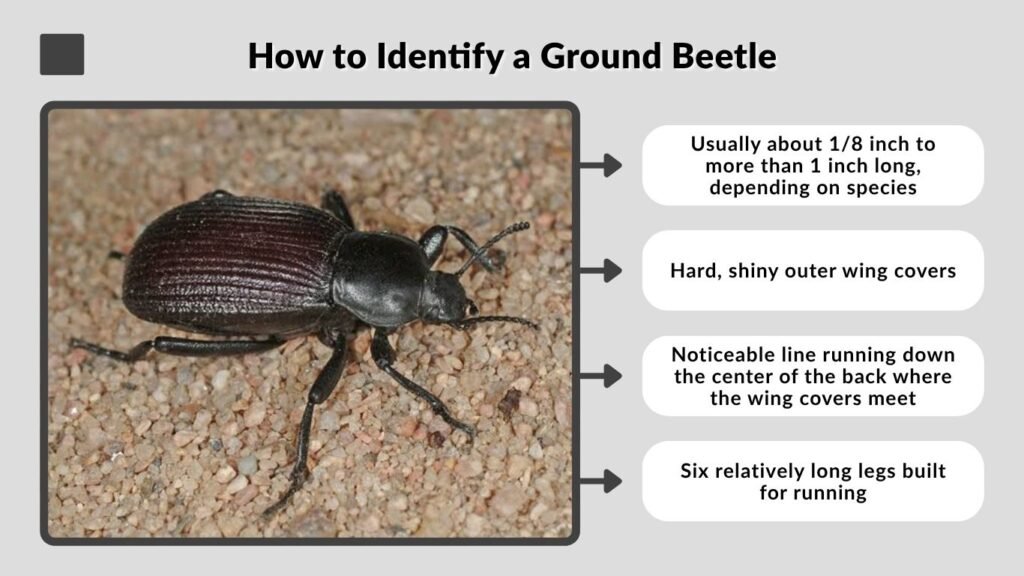
Ground beetles are a large and diverse group of beetles commonly found beneath logs, rocks, leaves, mulch, and other ground-level cover. Many species are black, dark brown, or metallic. They may wander indoors through doors, windows, foundations, or other openings, especially during seasonal weather changes.
Ground Beetle Identification Features
- Usually about 1/8 inch to more than 1 inch long, depending on species
- Hard, shiny outer wing covers
- Noticeable line running down the center of the back where the wing covers meet
- Six relatively long legs built for running
- Threadlike antennae that are usually shorter than those of cockroaches
- Often black, brown, reddish, or metallic
- Head usually visible from above
- Body is often slightly elongated rather than strongly flattened
Ground Beetle Behavior
Ground beetles are mostly nocturnal. During the day, they shelter in cool, dark places such as beneath stones, wood, garden debris, or mulch. At night, many species actively hunt caterpillars, insect larvae, slugs, and other small invertebrates.
When found indoors, a ground beetle is usually a temporary visitor. It generally does not seek stored food, establish colonies in kitchens, or reproduce rapidly inside houses.
How to Identify a Cockroach
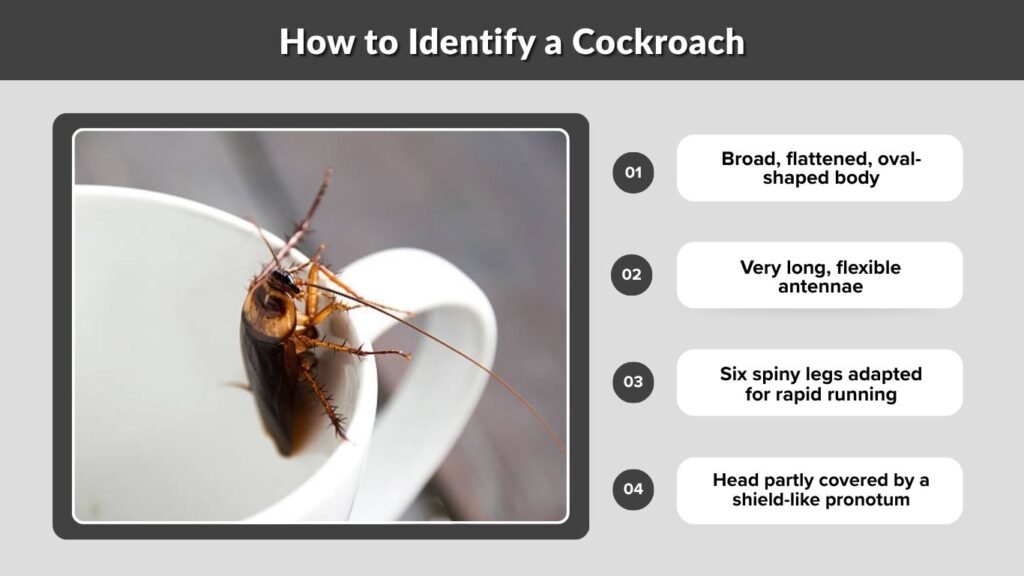
Cockroaches have broad, flattened bodies that allow them to squeeze into very narrow cracks. Several species, including German, American, Oriental, and brown-banded cockroaches, may live in or around buildings. Their close association with food, moisture, and sheltered indoor spaces distinguishes them from most ground beetles.
Cockroach Identification Features
- Broad, flattened, oval-shaped body
- Very long, flexible antennae
- Six spiny legs adapted for rapid running
- Head partly covered by a shield-like pronotum
- Brown, reddish-brown, tan, or nearly black coloration
- Adults of many species have visible wings
- No hard beetle-like seam formed by rigid elytra
- May have distinctive markings depending on species
Cockroach Behavior
Cockroaches usually hide during daylight hours and become active at night. They commonly gather near food, moisture, warmth, and shelter. Kitchens, bathrooms, drains, cupboards, wall voids, appliances, and utility areas can provide suitable hiding locations.
Seeing multiple cockroaches, especially small nymphs, may indicate that they are breeding nearby. This differs from ground beetles, which are typically isolated outdoor insects that have accidentally entered the building.
Ground Beetle vs Cockroach Identification
The fastest way to separate a ground beetle from a cockroach is to compare body shape, antenna length, back structure, and hiding behavior. Cockroaches generally appear flatter and more flexible, while ground beetles look harder and more armored.
Body Shape and Wings
Ground beetles have hardened front wings known as elytra. When viewed from above, these usually create a clear seam running lengthwise down the center of the back. The body often looks solid and shell-like.
Cockroaches have softer-looking bodies. Their wings, when present, lie relatively flat over the abdomen but do not form the same hard shell seen in beetles. Cockroaches are also noticeably flatter from the side.
Antennae and Head
Cockroach antennae are usually extremely long and may extend beyond the body. They constantly move as the insect explores its surroundings.
Ground beetles also have antennae, but they are generally shorter and appear more proportional to the body. The beetle’s head is also usually easier to see from above, whereas the cockroach head is partly shielded by the pronotum.
Black Ground Beetle vs Cockroach
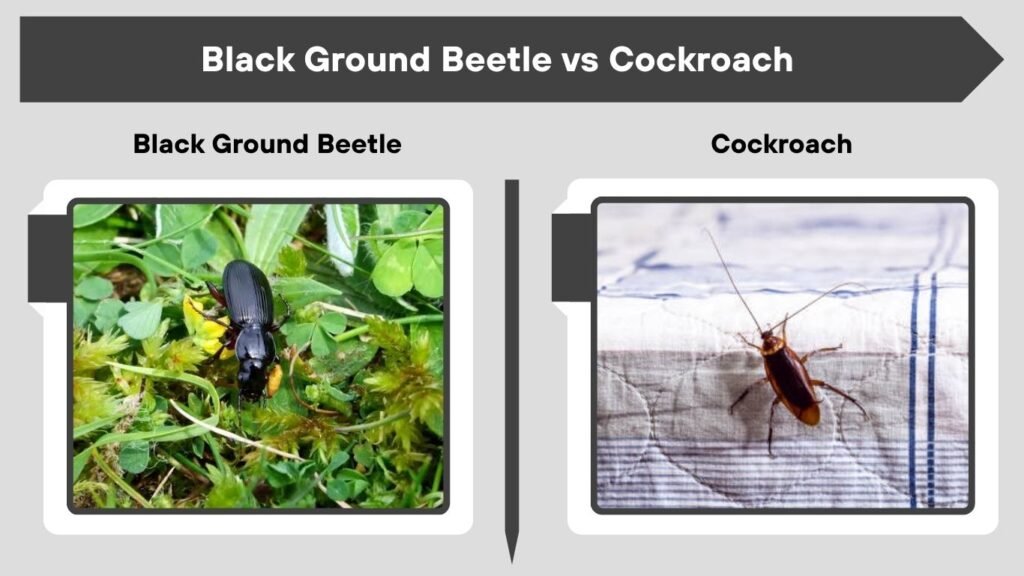
Black ground beetles are among the species most frequently mistaken for cockroaches. Their dark coloration and fast movement can make identification difficult when they suddenly appear indoors at night. However, examining the insect closely usually reveals important differences.
How to Tell Them Apart
- Black ground beetles usually have a shiny, hardened back.
- Oriental cockroaches often appear shiny too, but their bodies are flatter and broader.
- Ground beetles have a distinct center seam along the wing covers.
- Oriental cockroaches have much longer antennae.
- Ground beetles commonly wander near doors, basements, or windows.
- Cockroaches are more likely to remain near drains, plumbing, food, or persistent moisture.
Ground Beetle vs Oriental Cockroach
The Oriental cockroach is especially easy to confuse with a dark ground beetle because both may appear black or dark brown. Adult Oriental cockroaches are relatively broad and shiny, while many ground beetles have similarly dark coloration.
Key Identification Clues
Oriental cockroaches have flattened bodies and very long antennae. Their legs often look more visibly spiny than those of many ground beetles. Male Oriental cockroaches possess shortened wings, while female wings are much smaller.
Ground beetles generally have hard wing covers extending across most of the abdomen. They also tend to appear more rounded or convex when viewed from the side.
Where Ground Beetles and Cockroaches Live
Both insects prefer hiding places, but their normal habitats are very different. Understanding where the insect was discovered can provide an important identification clue.
Typical Ground Beetle Habitat
Ground beetles commonly live outdoors in gardens, wooded areas, fields, lawns, and landscaped areas. They shelter under logs, rocks, leaf litter, mulch, bark, and garden materials. Bright outdoor lights may sometimes attract them toward buildings.
Typical Cockroach Habitat
Cockroaches commonly inhabit sheltered areas containing moisture and food. Depending on species, they may live in kitchens, bathrooms, basements, sewer systems, utility spaces, cabinets, wall voids, and around appliances.
Outdoor cockroach species also exist, so location alone should not be used as the only identification feature.
Ground Beetle vs Cockroach Diet
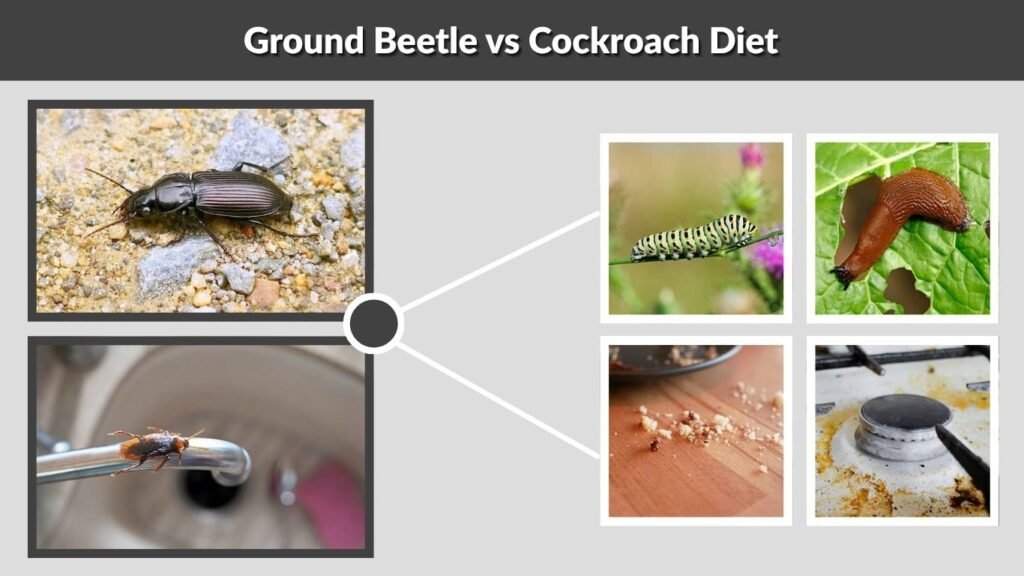
Their feeding habits are another major difference. Ground beetles can actually be beneficial outdoors because many species feed on organisms that damage garden plants.
Ground Beetle Diet
Many ground beetles consume:
- Caterpillars
- Insect larvae
- Slugs
- Snails
- Small insects
- Insect eggs
- Other small invertebrates
Some species also eat seeds or plant material.
Cockroach Diet
Cockroaches are highly opportunistic feeders. They may consume crumbs, grease, pet food, garbage, decaying organic matter, starch, paper-based materials, and many other substances. This ability to survive on a broad range of food sources contributes to their success inside buildings.
Are Ground Beetles or Cockroaches Dangerous?
Ground beetles are generally considered harmless to people. Most do not damage homes, infest stored food, or reproduce indoors. Some species may release defensive chemicals when handled, but they are not considered major household pests.
Cockroaches are more concerning because infestations can contaminate surfaces and food. Their shed skins, feces, and body fragments may also contribute to indoor allergen problems. Therefore, identifying which insect is present matters when deciding whether pest management is necessary.
How to Prevent Ground Beetles and Cockroaches
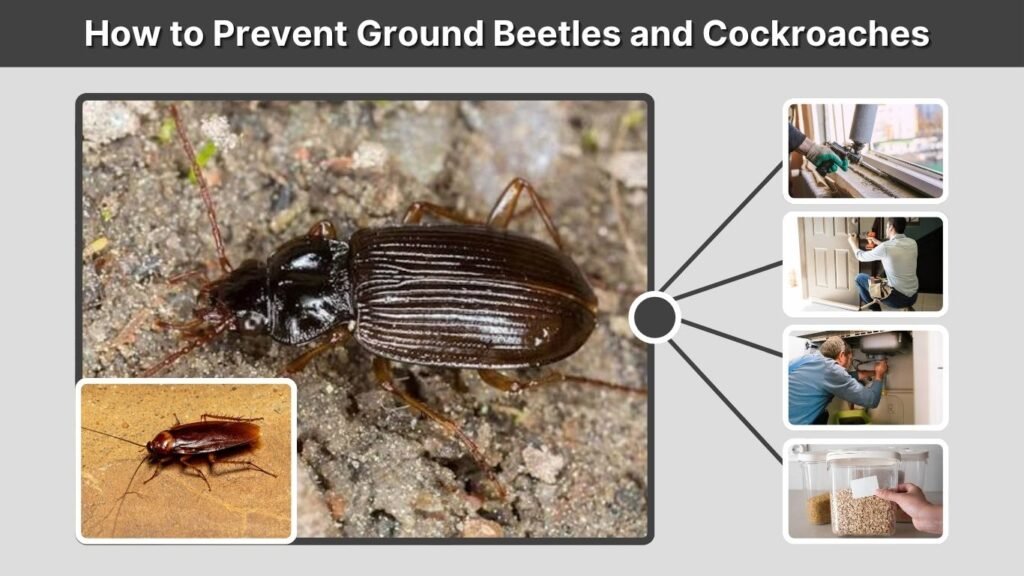
Although their habits differ, some basic exclusion and sanitation methods can help reduce encounters with both insects.
Prevention Tips
- Seal cracks around foundations, doors, and windows.
- Install or repair door sweeps.
- Reduce excessive moisture around the home.
- Repair plumbing leaks.
- Store food in sealed containers.
- Clean crumbs and spills promptly.
- Keep mulch and heavy vegetation away from the foundation when practical.
- Remove unnecessary outdoor debris near entrances.
- Use screens on windows and vents.
FAQs
1. Are ground beetles mistaken for cockroaches?
Yes. Dark ground beetles are frequently mistaken for cockroaches because they can be black or brown and move rapidly. Ground beetles, however, usually have hard wing covers with a visible center seam.
2. Do ground beetles infest houses?
Ground beetles rarely establish indoor infestations. Most enter homes accidentally while searching for shelter or after being attracted toward buildings. Finding one or two usually does not indicate reproduction indoors.
3. Is a black ground beetle the same as an Oriental cockroach?
No. They are completely different insects. Oriental cockroaches have flattened bodies and very long antennae, while black ground beetles have hardened wing covers and a more beetle-like shell.
4. Do ground beetles move as fast as cockroaches?
Many ground beetles are excellent runners and can move quickly. Cockroaches are also extremely fast and often disappear immediately into narrow cracks, so movement alone is not enough for reliable identification.
5. What is the easiest way to tell a beetle from a cockroach?
Look at the back and antennae. Ground beetles usually have hard wing covers with a straight seam down the middle. Cockroaches have flatter bodies, softer-looking wings or wing covers, and antennae that are often much longer than the body.
