
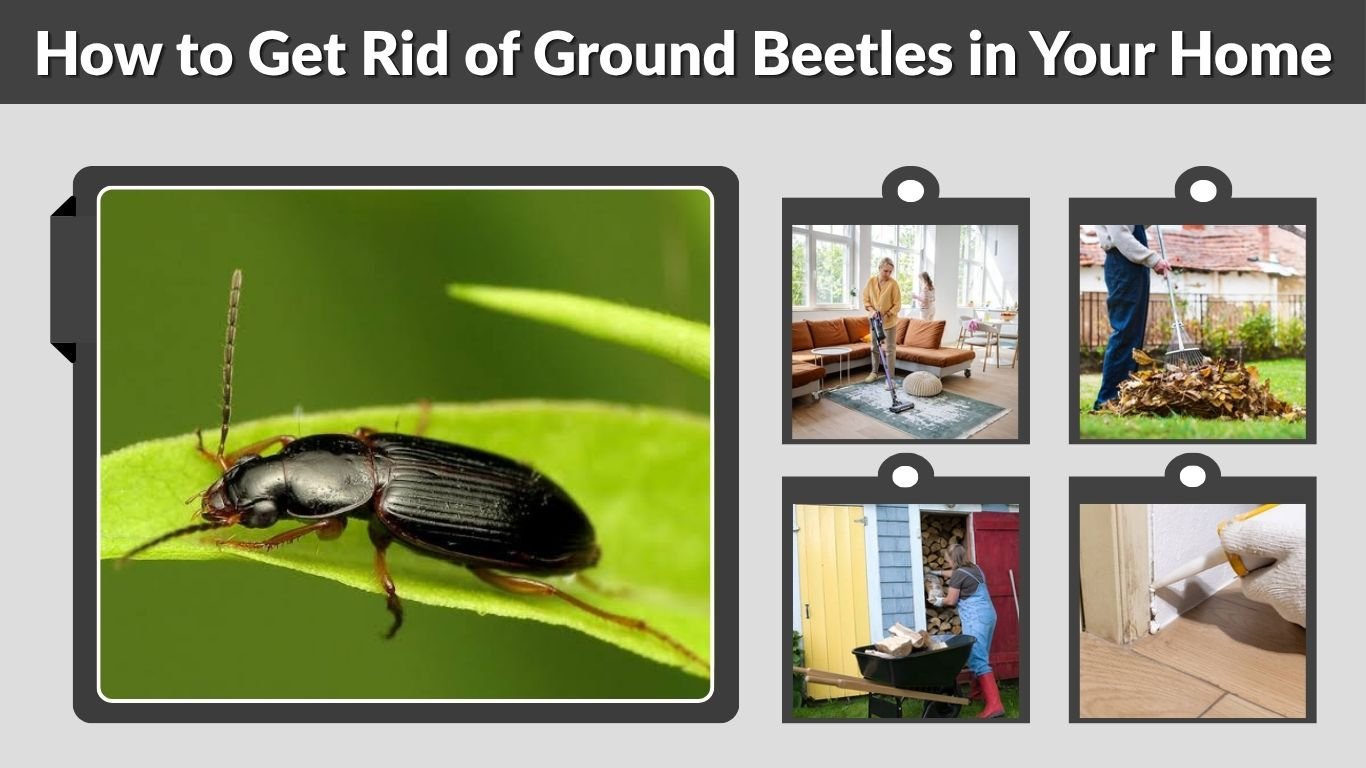
Ground beetles are common outdoor insects that occasionally wander into houses, basements, garages, and apartments. Although seeing shiny black beetles running across the floor can be alarming, most ground beetles are harmless and do not reproduce indoors. In fact, many are beneficial predators outdoors because they eat other insects and small invertebrates. The best way to get rid of ground beetles is to remove the ones indoors, block their entry points, reduce hiding places, and make the area around your home less attractive.
Why Are Ground Beetles Getting Into Your House?
Ground beetles normally live outdoors under leaves, stones, logs, mulch, grass, and other protected places. Many species are active at night, and some are attracted to outdoor lighting. They usually enter buildings accidentally through small openings rather than intentionally establishing an indoor infestation. Understanding how they behave makes long-term control much easier.
How to Identify Ground Beetles
Typical ground beetles have several noticeable characteristics:
- Usually black, dark brown, or metallic in color
- Often about 1/8 to 1/2 inch long, although some can reach about 1 inch
- Long legs designed for quickly running across the ground
- Thread-like antennae
- Flattened or slightly elongated bodies
- Hard wing covers that may have visible grooves
- Frequently active after dark
Black ground beetles are especially easy to notice against light-colored floors. They can move surprisingly fast when disturbed.
How Do Ground Beetles Get in the House?
Ground beetles can crawl through cracks in foundations, spaces around doors, poorly sealed ground-level windows, utility penetrations, and similar gaps. They may also enter garages and then move farther indoors.
Once inside, they commonly hide in cool or damp locations such as basements or underneath boxes. They generally do not damage clothing, stored food, furniture, or the structure of a house, and they are short-lived indoors.
How to Get Rid of Ground Beetles in the House
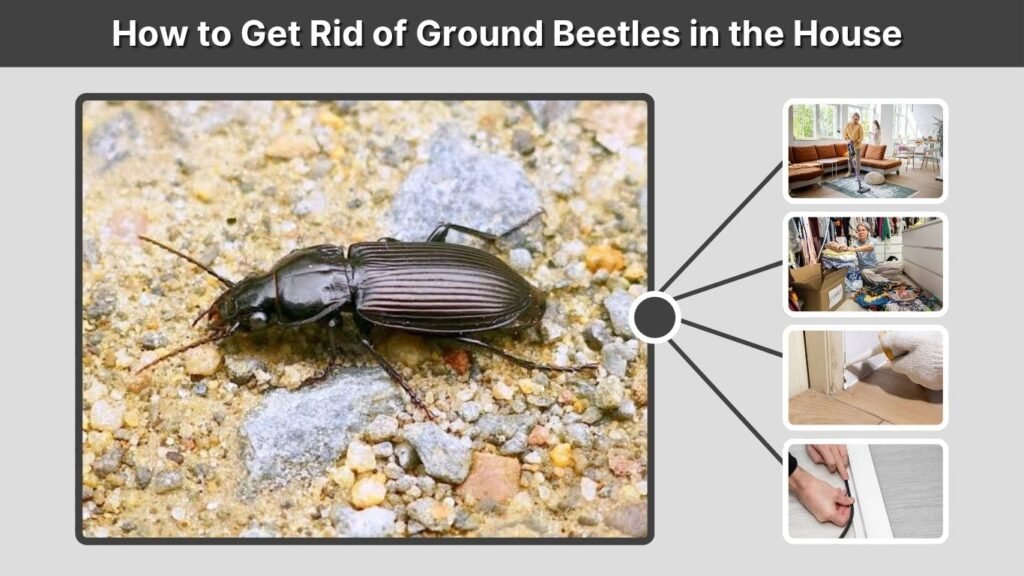
Finding one or two ground beetles indoors normally does not require aggressive treatment. Focus first on physically removing them and preventing additional beetles from entering. If beetles appear repeatedly, inspect the exterior of the building because the actual source is usually outside rather than an established indoor breeding population.
Remove the Beetles You Find
For immediate ground beetle control:
- Vacuum beetles from floors, corners, and baseboards.
- Capture individual beetles in a container and release them outside.
- Place sticky traps along walls where beetles regularly travel.
- Check beneath boxes and stored objects.
- Clean cluttered areas where insects can remain hidden.
Vacuuming is particularly useful because it removes beetles without requiring an indoor pesticide treatment.
Seal Ground Beetle Entry Points
Preventing entry provides better long-term results than repeatedly killing beetles indoors. Inspect the lower part of your home carefully and:
- Seal cracks and gaps around the foundation.
- Add weather stripping around exterior doors.
- Install or replace damaged door sweeps.
- Repair holes in window and door screens.
- Seal openings around pipes, wires, and utility lines.
- Repair gaps around ground-level windows.
Even relatively small openings can provide access to insects searching for shelter.
Reduce Indoor Hiding Areas
Ground beetles often stay close to floors and sheltered locations. Keeping basement floors, garages, storage rooms, and other low-traffic areas organized gives them fewer places to hide.
Avoid leaving cardboard boxes, leaves, firewood, or other outdoor materials directly against indoor walls. Removing these shelters also makes it easier to determine whether new beetles are continuing to enter.
How to Get Rid of Ground Beetles in a Basement
Basements are one of the most common places to notice ground beetles because these insects naturally seek protected areas close to ground level. Rather than treating the entire basement with insecticide, concentrate on reducing shelter and identifying where the beetles are entering. This approach addresses the source instead of simply eliminating individual insects.
Make Your Basement Less Attractive
Use these steps if ground beetles repeatedly appear downstairs:
- Vacuum around basement walls and corners.
- Remove unnecessary cardboard and floor clutter.
- Store items on shelves rather than directly on the floor.
- Check basement windows for gaps.
- Inspect the foundation for cracks.
- Repair gaps around utility entrances and pipes.
- Address persistent dampness or water leaks.
Ground beetles may hide underneath stored objects in damp basement locations after entering from outdoors.
Use Sticky Traps to Find Entry Areas
Sticky traps can be useful for more than simply catching beetles. Place several along basement walls and near suspected entry points.
If one location consistently catches more ground beetles, inspect nearby windows, doors, foundation joints, or utility openings. Finding and sealing that access point can provide a more lasting solution than continually treating the beetles after they enter.
How to Get Rid of Ground Beetles Outside
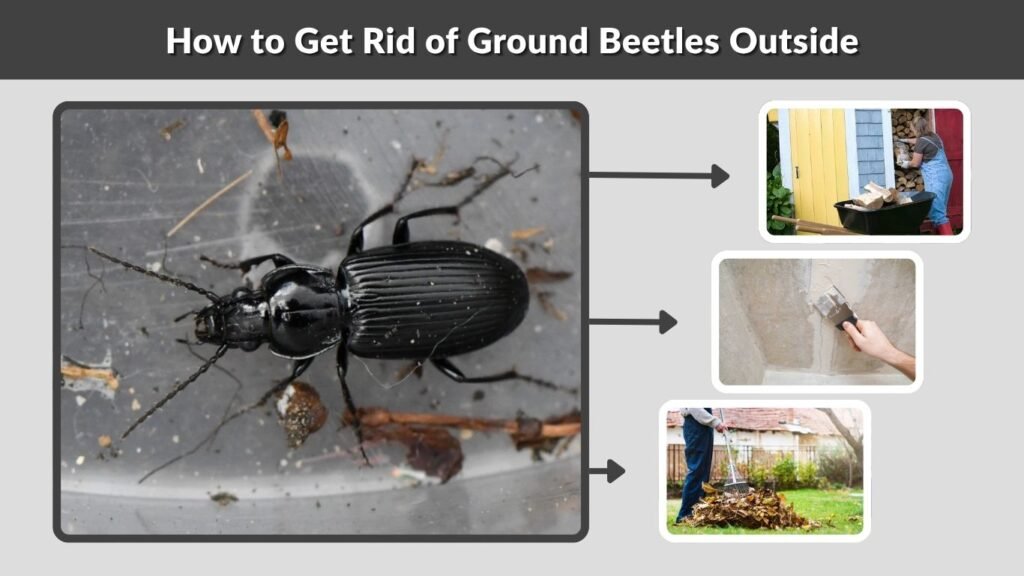
Controlling ground beetles outdoors does not mean eliminating every beetle from your property. Ground beetles are natural predators, and many species help control other insects in gardens and landscapes. Instead, create a less attractive zone immediately around the foundation while allowing beneficial beetles to remain elsewhere in the yard.
Clean Up the Area Around Your Foundation
To reduce ground beetles near entrances:
- Remove leaves, boards, stones, and excessive debris near the house.
- Keep tall grass and weeds trimmed around the foundation.
- Move firewood farther away from exterior walls.
- Avoid thick organic mulch directly against the foundation.
- Repair cracks around exterior walls and foundations.
- Keep doors and ground-level windows properly sealed.
University of Minnesota Extension specifically recommends reducing mulch, debris, firewood, tall vegetation, and similar shelter close to buildings when ground beetles are entering in large numbers.
Should You Remove Ground Beetles From the Garden?
Usually, no. Ground beetles are often valuable garden predators. Many species feed on insects and other small invertebrates living on or near the soil surface.
If ground beetles are only present under mulch, stones, plants, or garden debris and are not entering your home, control usually offers little benefit. Concentrate management around the house rather than treating the entire garden.
How to Get Rid of Ground Beetles Naturally
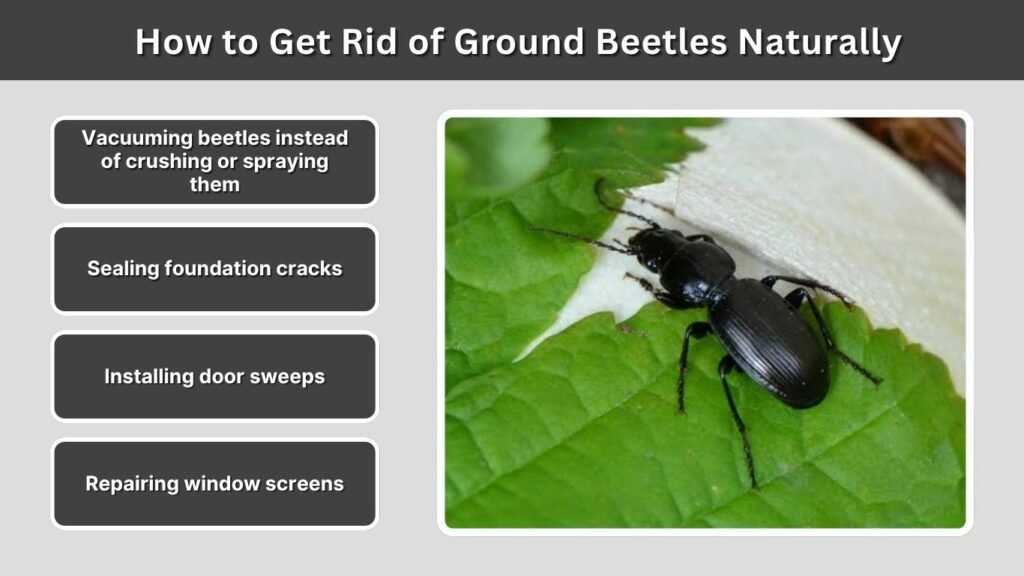
Natural ground beetle control relies primarily on exclusion and habitat management rather than chemicals. Because ground beetles do not normally establish reproducing populations inside homes, removing existing beetles while stopping new ones from entering can be enough to solve most problems. These methods are particularly appropriate when only occasional beetles are appearing indoors.
Use Physical and Environmental Control
Vacuuming beetles, sealing cracks, removing excessive shelter near your foundation, and moving firewood away from the building are among the most practical non-chemical approaches.
You can also adjust exterior lighting. Ground beetles are nocturnal, and some may be attracted to lights. Reducing unnecessary lighting close to doors and windows or using less attractive lighting can help decrease activity near entrances.
Focus on Prevention
A simple natural prevention routine includes:
- Vacuuming beetles instead of crushing or spraying them
- Sealing foundation cracks
- Installing door sweeps
- Repairing window screens
- Removing debris near exterior walls
- Moving mulch slightly away from the foundation
- Reducing unnecessary nighttime lighting
- Keeping grass and weeds trimmed near the house
These changes address the conditions that allow ground beetles to enter rather than repeatedly treating individual insects.
When Should You Consider Insecticides?
Most homeowners do not need insecticides for a few ground beetles. When unusually large numbers repeatedly enter despite sanitation and exclusion efforts, an appropriately labeled exterior perimeter treatment may be considered. The goal is to prevent beetles from crossing into the structure rather than routinely spraying living spaces.
Using Pesticides Safely
Extension guidance notes that exterior products containing active ingredients such as bifenthrin, cyfluthrin, deltamethrin, or permethrin may be options where legally registered and labeled for the intended application. Always follow the product label precisely; pesticide regulations and approved uses vary by location.
For persistent or unusually heavy activity, a licensed pest-control professional can also inspect the building for overlooked entry points and identify whether the insects are actually ground beetles.
FAQs
Ground beetles can look intimidating because many species are dark, fast-moving, and equipped with noticeable jaws. Fortunately, their presence indoors is usually temporary. The following answers address some of the most common concerns about black ground beetles, household infestations, basement activity, and their potential effects on people and property.
1. Are Ground Beetles Harmful?
Ground beetles generally do not harm people, buildings, clothing, or stored food. Some may pinch if mishandled, but they are primarily nuisance insects when they accidentally enter homes.
2. Do Ground Beetles Infest Houses?
Ground beetles may enter houses in noticeable numbers, but they generally do not reproduce indoors. Repeated sightings usually indicate that beetles are continuing to enter from outside rather than breeding throughout the house.
3. How Do I Get Rid of Black Ground Beetles?
Vacuum or capture beetles already indoors, then seal cracks around doors, windows, foundations, and utilities. Remove mulch, leaves, wood, and excessive vegetation close to the building to reduce nearby shelter.
4. Why Do I Keep Finding Ground Beetles in My Basement?
Basements are located close to soil level and commonly contain cool, protected hiding places. Beetles can enter through foundation cracks, basement windows, door gaps, and utility openings before hiding beneath stored objects or along walls.
5. Should I Kill Ground Beetles in My Yard?
Usually not. Many ground beetles prey on other insects and can be useful members of a garden ecosystem. If they are causing an indoor nuisance, concentrate control along the foundation and entry points instead of trying to eliminate them throughout the yard.
