
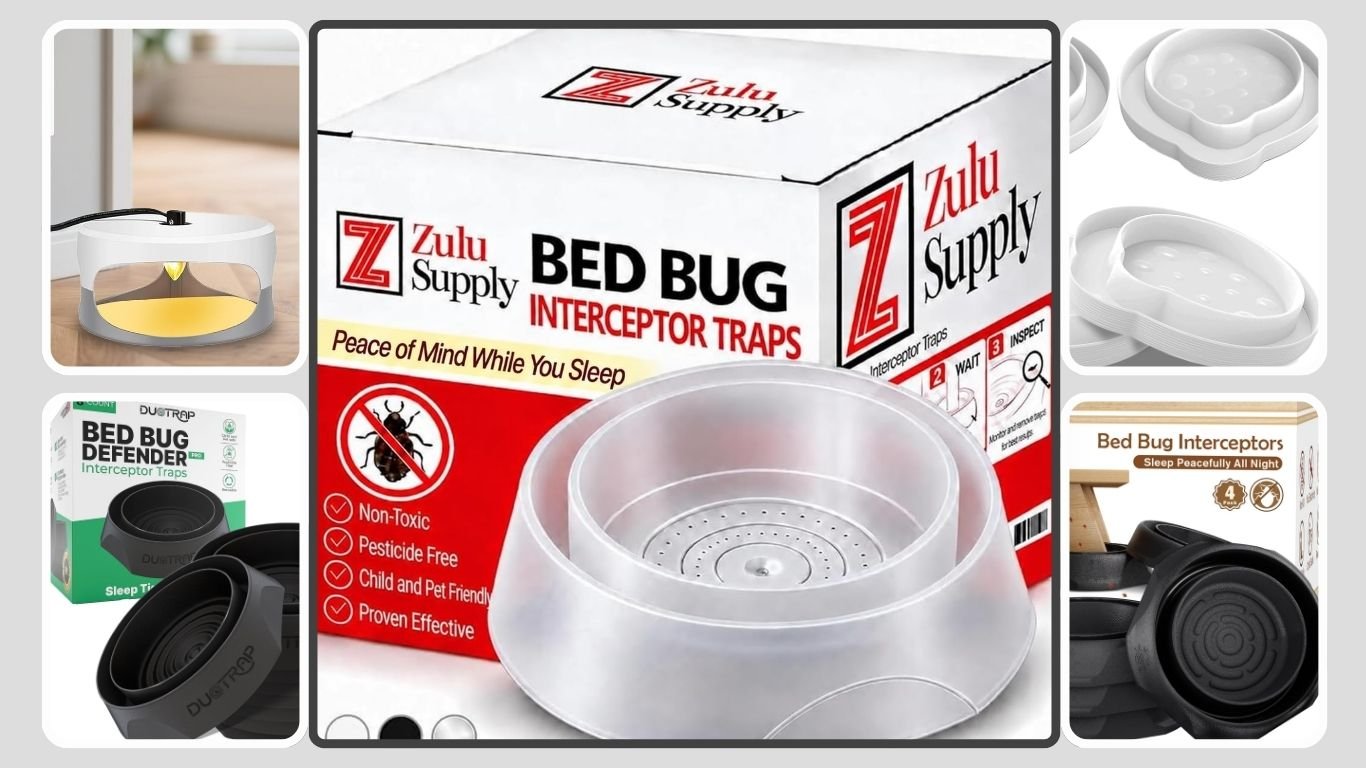
The best bed bug interceptor traps can help detect and monitor bed bug activity before an infestation becomes harder to manage. These traps are typically placed under bed frames, sofas, and furniture legs, where their smooth or textured designs help capture crawling bed bugs as they move toward or away from a sleeping area. They are chemical-free, reusable, and useful for ongoing monitoring. In this guide, we review 8 of the best bed bug interceptor traps based on design, durability, ease of use, furniture compatibility, and monitoring effectiveness.
1. Z Zulu Supply Bed Bug Interceptor Traps – 8 Pack
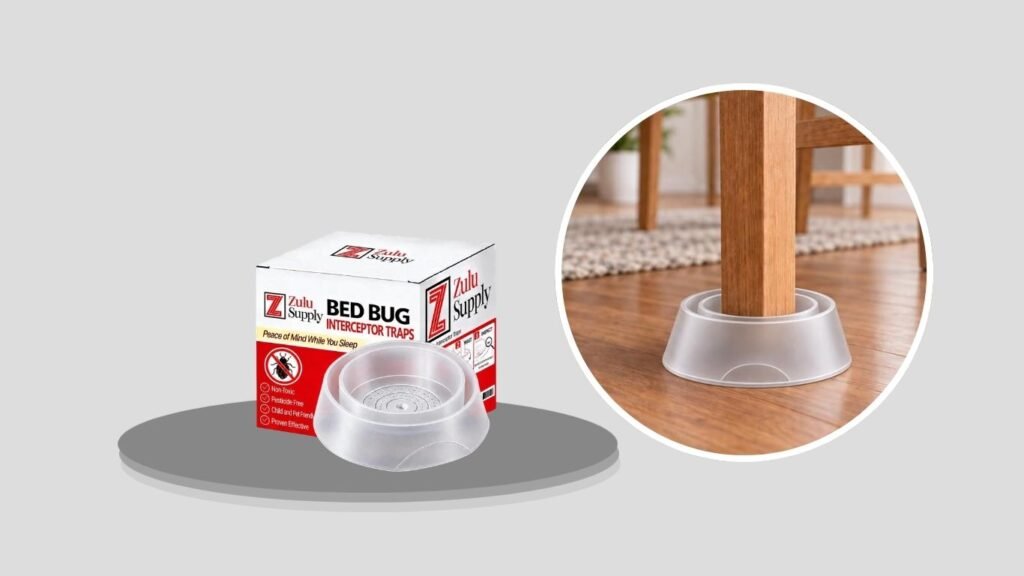
Z Zulu Supply Bed Bug Interceptor Traps provide a straightforward, chemical-free way to monitor bed bug movement around beds, sofas, and other furniture. The clear 8-pack design fits beneath furniture legs and uses smooth inner surfaces to make escaping difficult once bugs enter. Each interceptor measures approximately 4.25 x 4.25 x 1.25 inches, giving it enough room for many standard furniture legs.
Key Features
- Includes 8 clear interceptor traps
- 4.25-inch furniture-leg opening
- Tool-free installation
- Reusable design
- Smooth inner walls help retain crawling bed bugs
- Durable one-piece plastic construction
- Suitable for beds, couches, chairs, and other furniture
- Designed for routine bed bug monitoring
Why It’s Best For
This set is particularly useful for households that want to monitor more than one piece of furniture. Eight interceptors can cover two standard four-legged beds or provide broader monitoring across a bed and nearby furniture.
The transparent construction is also practical because captured insects are easier to inspect without moving the trap unnecessarily. Since no sprays, electricity, or adhesive refills are required, the interceptors can remain beneath furniture as part of a long-term monitoring strategy.
They work best when the bed or furniture is isolated from walls and bedding does not touch the floor, forcing crawling bed bugs to travel through the interceptor.
Performance & Durability
The sturdy plastic construction is designed for repeated use, and the traps require very little maintenance beyond inspection and cleaning. Their smooth inner walls exploit the difficulty bed bugs have climbing slick vertical surfaces, which is the basic principle behind interceptor-style traps.
Because each trap is a single molded piece, there are no mechanical parts or adhesives that need routine replacement.
Pros, Cons & Overall Verdict
Pros: Large 8-pack, reusable construction, clear design, simple installation, and no chemical treatment required.
Cons: Furniture legs must fit inside the 4.25-inch opening, and interceptors do not eliminate an established infestation by themselves.
Overall Verdict: Z Zulu Supply interceptors are a practical option for continuous monitoring around several furniture legs. Their reusable, low-maintenance design makes them especially suitable for homeowners who want an easy way to spot crawling bed bug activity early.
2. EcoPest Bed Bug Blocker XL Interceptor Traps
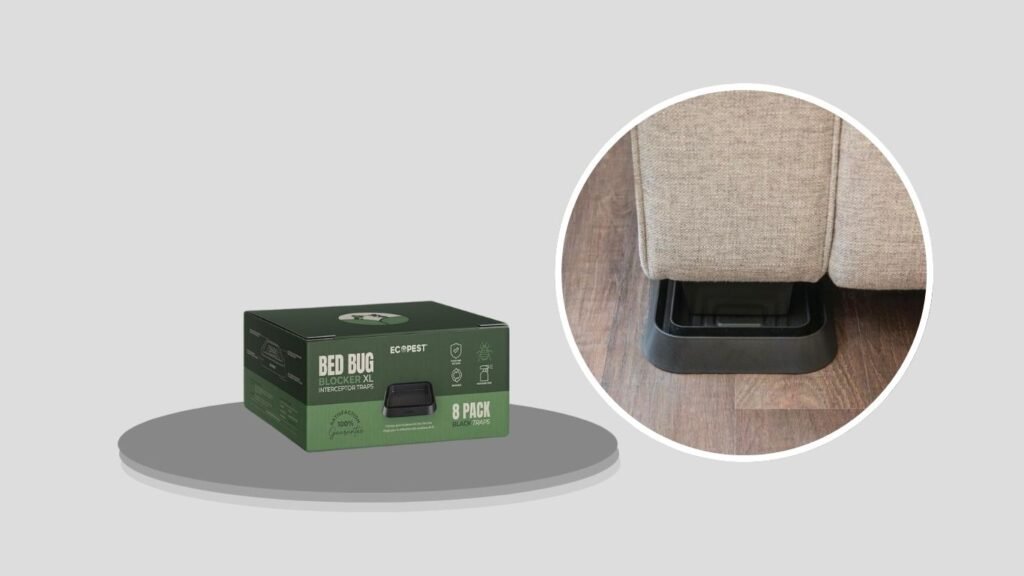
EcoPest Bed Bug Blocker XL Interceptors are designed for heavier beds and furniture with larger legs. The 8-pack uses a textured exterior that allows bed bugs to enter while a slippery reservoir makes climbing back out difficult. Their extra-large construction provides more flexibility than smaller interceptor cups, especially around substantial bed frames, sofas, and other oversized furniture.
Key Features
- Includes 8 XL bed bug interceptors
- Heavy-duty plastic construction
- Designed for larger furniture legs
- Textured exterior encourages bugs to climb into the trap
- Smooth reservoir helps prevent escape
- Suitable for beds, couches, chairs, and other furniture
- Passive 24/7 monitoring
- No powered components required
Why It’s Best For
The EcoPest Bed Bug Blocker XL is particularly well suited to beds with thick posts or furniture legs that may not fit smaller interceptor designs. That makes it useful for heavy wooden beds, upholstered frames, sofas, and other substantial furniture.
The eight-piece package also provides enough traps for broad monitoring. Owners can place one beneath every bed leg and still have extras available for another piece of furniture.
Its passive design is another advantage. Once properly positioned, there is no need to activate a device, replace batteries, or continuously apply chemicals. The trap simply remains along the route a crawling bed bug would need to take.
Performance & Durability
EcoPest markets this version as a heavy-duty interceptor intended to withstand larger furniture. The textured entry surface and slippery reservoir use a simple physical trapping approach rather than pesticides.
This makes maintenance straightforward. Regular inspection and occasional cleaning are generally all that is required to continue using the traps.
The wider design also reduces the chance of furniture legs sitting too close to the trapping channel, which can interfere with some smaller interceptors.
Pros, Cons & Overall Verdict
Pros: Extra-large format, eight traps per package, heavy-duty construction, pesticide-free monitoring, and compatibility with larger furniture.
Cons: The XL footprint takes up more floor space, and dark-colored traps may make very small insects slightly harder to inspect than light or clear models.
Overall Verdict: EcoPest Bed Bug Blocker XL is a strong choice for larger beds and heavy furniture. Its spacious, sturdy design provides convenient long-term monitoring without adding complicated maintenance to a broader bed bug control plan.
3. Schadro Bed Bug Interceptors – 4 Pack
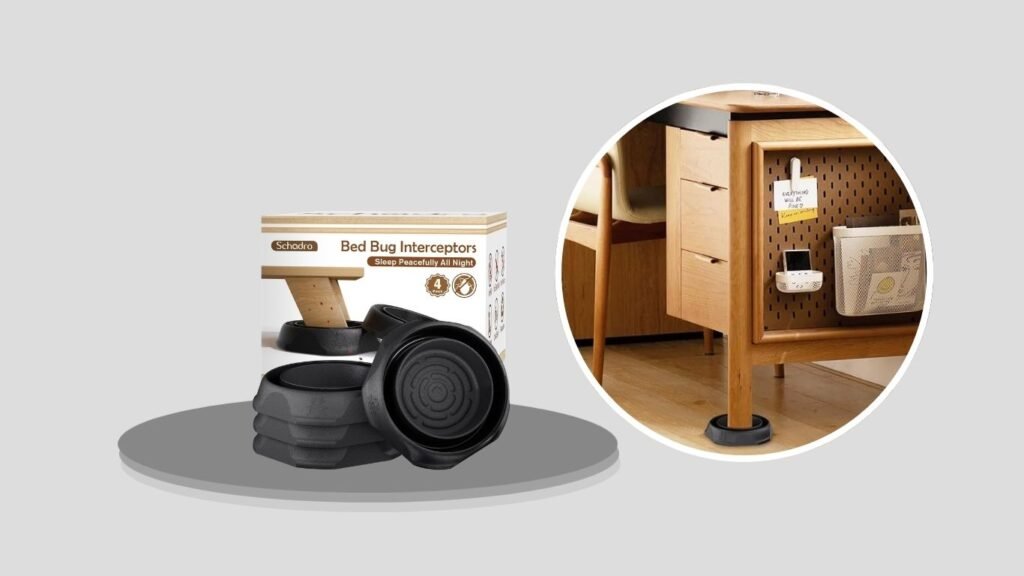
Schadro Bed Bug Interceptors use a compact four-piece design intended for beds, sofas, desks, and similar furniture. Each trap measures approximately 4.65 x 2.5 x 1 inch and uses a matte-textured approach surface combined with smooth, deep interior walls. The design is completely mechanical, with no chemicals or powered components required for everyday monitoring.
Key Features
- Includes 4 black interceptor traps
- Chemical-free plastic construction
- Manual, non-electric operation
- Textured climbing surfaces
- Smooth deep trapping walls
- Widened base for furniture support
- Inner grip design helps stabilize furniture legs
- Suitable for beds, sofas, desks, and similar furniture
Why It’s Best For
This Schadro set is a practical match for someone who only needs to monitor one standard four-legged bed or one major piece of furniture. The four-pack avoids paying for additional traps that may not be needed.
Its design also focuses on furniture stability. The widened base distributes weight while the interior surface is designed to help keep the furniture leg positioned securely.
For bedrooms where a simple under-leg solution is preferred, setup is uncomplicated. Place one interceptor beneath each leg and make sure the furniture is not providing bed bugs with an alternative route through a wall, curtain, or bedding.
Performance & Durability
The interceptor uses a combination of rough and smooth surfaces. Bed bugs can move across the textured entry area, but the deeper slick inner section is intended to make escape much more difficult.
Strong plastic construction and a wider base also improve its suitability for regular furniture loads. With no glue pads, bait, or electrical components, there are few consumable parts to worry about.
Regular inspection remains important because trapped debris can make an interceptor less effective over time.
Pros, Cons & Overall Verdict
Pros: Compact four-pack, chemical-free design, furniture-stabilizing base, simple setup, and reusable construction.
Cons: Four traps usually cover only one four-legged piece of furniture, and the relatively compact dimensions may not accommodate unusually large furniture posts.
Overall Verdict: Schadro Bed Bug Interceptors offer a simple combination of trapping design and furniture support. They are particularly practical for someone focusing monitoring on a single bed without needing a larger multi-room pack.
4. ShieldFlex TruGuard XL Bed Bug Interceptors
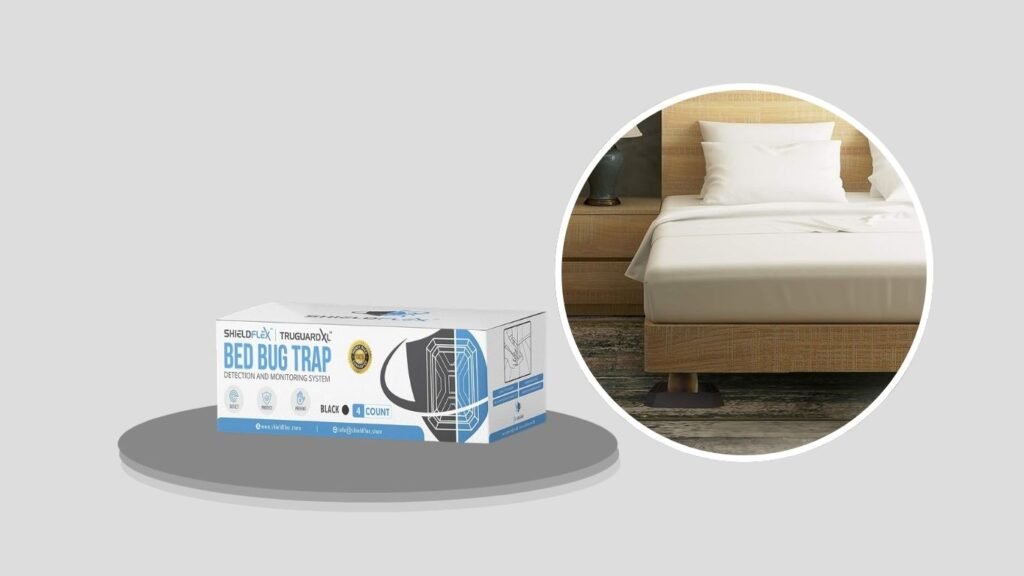
ShieldFlex TruGuard XL Bed Bug Interceptors are built for oversized furniture legs and heavier bed frames. This four-pack uses reinforced polypropylene construction with an extra-thick base plate intended to resist cracking under furniture weight. The XL design works under beds, couches, chairs, and loveseats while creating a passive monitoring point for crawling bed bugs.
Key Features
- Includes 4 XL interceptor traps
- Made from polypropylene
- Reinforced extra-thick base
- Designed for large furniture legs
- Passive bed bug monitoring
- Suitable for beds, couches, chairs, and loveseats
- No electricity required
- Designed for early bed bug detection
Why It’s Best For
TruGuard XL is particularly appealing when furniture weight and leg size are major concerns. Some inexpensive interceptor cups can flex or crack beneath heavy frames, while this model specifically emphasizes a reinforced base.
The large footprint also makes it easier to position wide bedposts without crowding the trapping area. This is useful for substantial wooden bed frames, large couches, and other furniture that may not fit compact cups.
Because four traps are supplied, one package is sized conveniently for a standard four-legged bed.
Performance & Durability
Durability is one of the strongest aspects of this model. ShieldFlex uses polypropylene and specifically reinforces the base plate to improve resistance to cracking under furniture pressure.
Once installed, the interceptors work continuously without batteries or chemical refills. Their effectiveness depends on bed bugs being forced to approach through the furniture legs, so keeping the bed separated from walls and preventing bedding from touching the floor remains important.
They can also be periodically cleaned and returned beneath the furniture for continued monitoring.
Pros, Cons & Overall Verdict
Pros: Reinforced construction, XL size, suitable for heavy furniture, reusable, and easy to install.
Cons: Only four interceptors are included, and their larger dimensions require more floor space around furniture legs.
Overall Verdict: ShieldFlex TruGuard XL is particularly well suited to heavier furniture where durability matters. The reinforced polypropylene base and oversized design make it a practical long-term monitoring option for large bed frames and sofas.
5. LNYUHAD Flea Light Trap with Sticky Discs
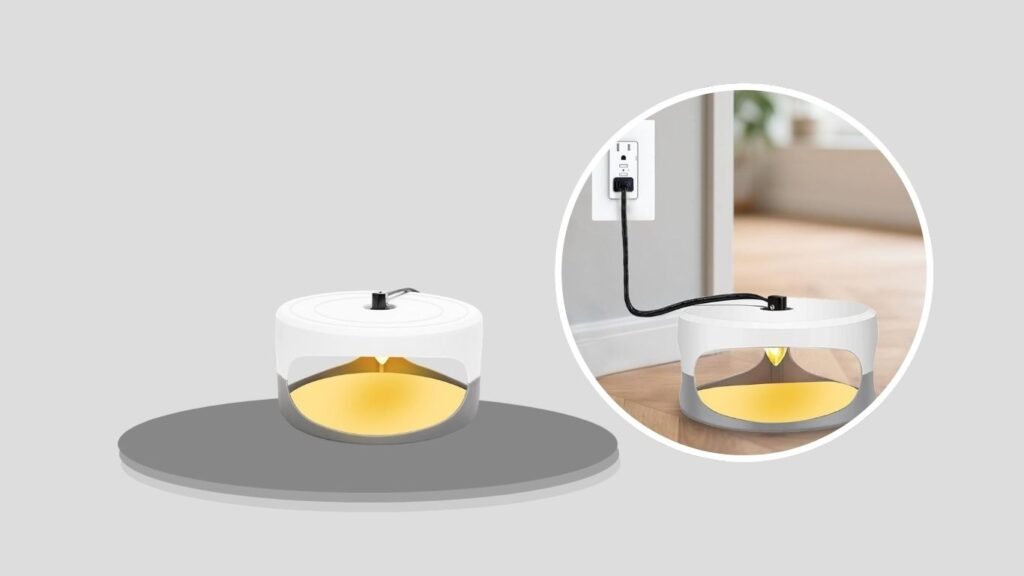
The fifth product differs significantly from the other options in this roundup because it is not a traditional under-the-leg bed bug interceptor. LNYUHAD’s indoor light trap uses light and gentle warmth to attract crawling and flying pests toward replaceable adhesive discs. The four-unit kit includes 12 sticky boards, 12 bulbs, and four power cords and is marketed for fleas, bed bugs, ticks, gnats, and moths.
Key Features
- Includes 4 light-trap units
- Comes with 12 sticky glue-board refills
- Includes 12 replacement bulbs
- Uses light and warmth as attractants
- Physical adhesive capture method
- Designed for bedrooms and living areas
- Operates silently
- No pesticide emissions
- Recommended adhesive replacement about every two weeks or when heavily covered
Why It’s Best For
This product makes more sense for users who want an active indoor monitoring trap rather than something placed beneath a furniture leg.
The light-and-heat approach can help draw pests toward a specific monitoring location, which may be useful near pet areas, bedrooms, or darker corners where flea activity is suspected.
The four-unit kit also allows several rooms to be monitored simultaneously. Unlike a furniture interceptor, it does not depend on a bug crossing a particular bed leg, giving it a different role within an indoor pest-monitoring strategy.
Performance & Durability
Performance depends on maintaining both the light source and adhesive surface. The manufacturer recommends replacing glue discs roughly every two weeks or sooner when they become covered with insects or debris.
The package includes multiple replacement bulbs and adhesive discs, so it is ready for extended use without immediately requiring additional consumables.
However, sticky traps primarily provide capture and monitoring. They should not be treated as proof that a bed bug infestation has been eliminated.
Pros, Cons & Overall Verdict
Pros: Four-unit kit, multiple replacement discs and bulbs, silent operation, pesticide-free physical capture, and broader indoor pest monitoring.
Cons: It is not a true furniture-leg interceptor, requires electricity and replacement glue boards, and is more flea-focused than the other products in this roundup.
Overall Verdict: The LNYUHAD light trap is better considered a supplemental indoor pest monitor than a conventional bed bug interceptor. Its light, warmth, and adhesive system can add broader monitoring coverage, but households specifically seeking under-bed-leg interception should favor one of the first four designs.
6. ASPECTEK Bed Bug Detector and Interceptor – 4 Pack
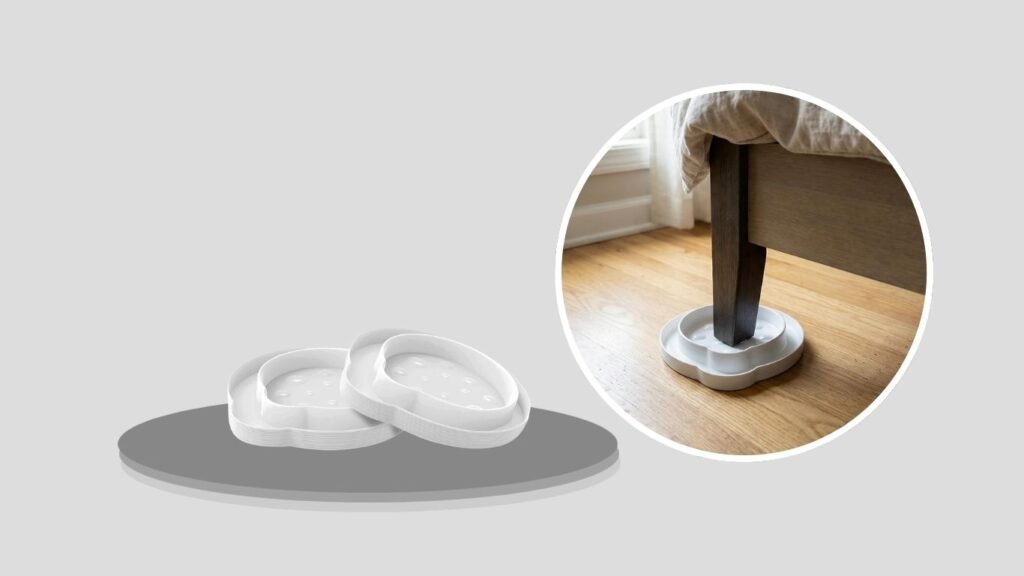
ASPECTEK Bed Bug Interceptors provide a reusable monitoring solution for beds, sofas, chairs, cribs, and other furniture. This four-piece white set uses a wide center area designed to accommodate larger furniture legs while supporting substantial furniture weight. Its pesticide-free construction relies on the physical interceptor design rather than chemicals, making it suitable for continuous monitoring around sleeping and resting areas.
Key Features
- Includes 4 bed bug interceptor traps
- Wide center accommodates larger furniture legs
- Designed to support heavy furniture
- Smooth trapping area makes escape difficult
- Pesticide-free and chemical-free operation
- Reusable plastic construction
- Easy to empty, rinse, and reuse
- Suitable for beds, cribs, sofas, and chairs
- White surface makes inspection convenient
Why It’s Best For
ASPECTEK is particularly useful for homeowners who want a straightforward interceptor for one standard four-legged bed or piece of furniture. Its larger center area provides more flexibility with different furniture-leg dimensions than some compact interceptor cups.
The design also requires no pesticide, adhesive, electricity, or replacement cartridges. Once one interceptor is positioned beneath each furniture leg, it continuously monitors insects attempting to travel between the floor and furniture.
This makes it especially useful as part of an ongoing bed bug monitoring strategy rather than something that must be activated only when bugs are suspected.
Performance & Durability
Durability is one of the stronger features of this product. ASPECTEK states that the interceptors are designed to support heavy furniture without breaking, while the plastic construction can be emptied, rinsed, and reused.
The textured approach and smooth trapping area use the same general principle as pitfall-style interceptors: bed bugs can enter but have difficulty climbing out across smooth surfaces. University of Florida guidance explains that interceptor traps use rough entry surfaces and smooth-sided moats to retain bed bugs.
Pros, Cons & Overall Verdict
Pros: Reusable, easy to clean, supports heavier furniture, accommodates larger legs, and requires no pesticides or replacement glue.
Cons: The four-piece package generally covers only one four-legged item, and proper furniture isolation is necessary for the best monitoring performance.
Overall Verdict: ASPECTEK offers a durable and uncomplicated solution for under-leg bed bug monitoring. Its wide center, reusable construction, and ability to support substantial furniture make it particularly practical for beds and sofas where long-term monitoring is needed.
7. DuoTrap Bed Bug Interceptor Traps – 8 Pack
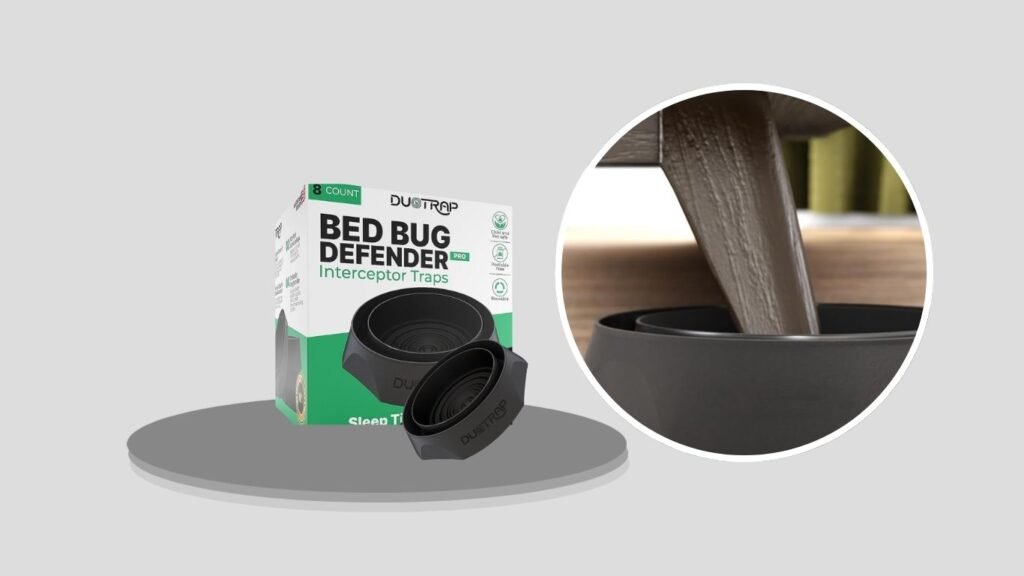
DuoTrap Bed Bug Interceptors combine a large 6.5-inch footprint with a double-reservoir design intended to capture bed bugs attempting to reach or leave furniture. The eight-piece pack fits beneath many bed and furniture legs and arrives preassembled for quick setup. Its low-profile black design also makes it relatively discreet when positioned beneath beds, couches, and chairs.
Key Features
- Includes 8 interceptor traps
- Approximately 6.5-inch design
- Double-reservoir trapping system
- Fits most common furniture legs
- Preassembled and ready to use
- Low-profile black appearance
- Durable construction
- No sticky glue or pesticide treatment required
- Suitable for beds, couches, hotels, and dorm rooms
- Designed with homes containing children or pets in mind
Why It’s Best For
DuoTrap is particularly appealing for users who want broader monitoring coverage. Eight traps are enough for two typical four-legged beds or for distributing interceptors between a bed, sofa, and other frequently occupied furniture.
The larger footprint also gives furniture legs more space than compact interceptor cups. This can simplify setup when beds have thick wooden posts or unusually wide feet.
Its double-reservoir concept is another useful feature. The design creates separate trapping zones intended to intercept bed bugs traveling in either direction—toward the furniture or away from it.
Performance & Durability
DuoTrap emphasizes a rugged construction designed to support furniture while remaining in place for continuous monitoring. The interceptors are preassembled, so installation mainly involves positioning each unit beneath a furniture leg.
For interceptors to work effectively, furniture should be isolated from alternative routes. EPA guidance recommends moving beds away from walls, preventing bedding from touching the floor, and placing an interceptor beneath each furniture leg.
Regular inspection also allows users to see whether bed bug activity is continuing after other control measures.
Pros, Cons & Overall Verdict
Pros: Large eight-piece pack, double-reservoir design, generous dimensions, ready-to-use construction, and no chemical or adhesive refills.
Cons: The larger 6.5-inch footprint requires more floor space, and black surfaces may make very small captured insects less immediately visible than white or clear traps.
Overall Verdict: DuoTrap is a practical choice for households needing several durable furniture-leg interceptors. Its eight-pack quantity and spacious double-reservoir design make it especially useful for monitoring multiple beds or other upholstered furniture.
8. BugMD Bed Bug Interceptor Sticky Traps – 12 Pack
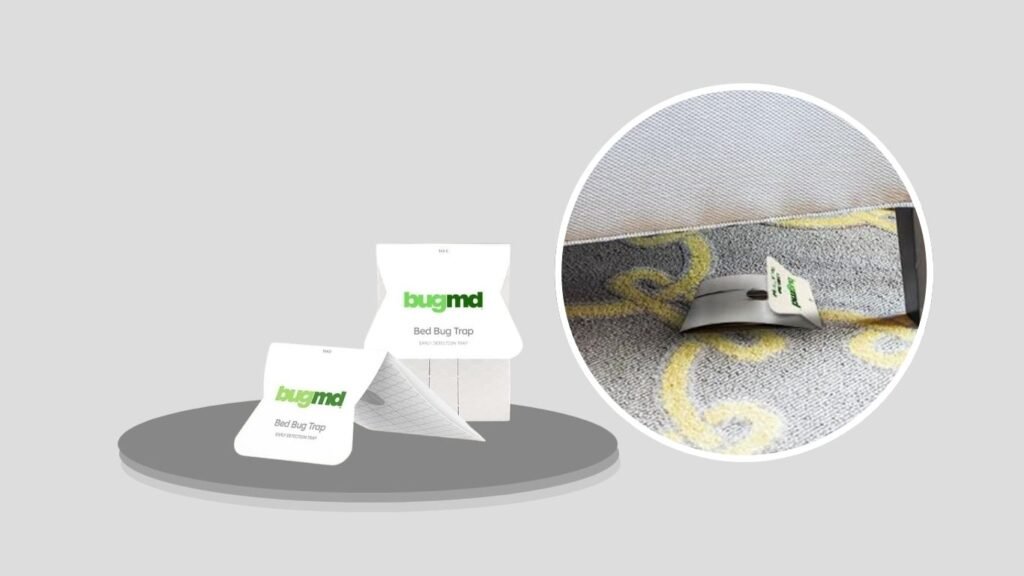
BugMD takes a different approach from traditional plastic interceptor cups. These 12 disposable traps use an ultra-sticky adhesive surface and can be folded into three configurations for placement beneath furniture legs, between a mattress and bed frame, or along floors and other suspected travel routes. That flexibility makes them useful when bed bug monitoring needs to extend beyond furniture legs alone.
Key Features
- Includes 12 bed bug traps
- Ultra-sticky adhesive surface
- Foldable in three different configurations
- Can be positioned beneath furniture legs
- Can be placed between mattresses and bed frames
- Suitable for placement along floors
- No traditional pesticide application required
- Disposable, mess-free design
- White paper construction
- 24-hour passive monitoring capability
Why It’s Best For
The main advantage of BugMD is placement flexibility. Traditional interceptor cups generally need to sit directly beneath furniture legs, but these adhesive monitors can be positioned in several areas where bed bugs may travel.
This makes them useful around headboards, bed frames, furniture, and other narrow locations where a large plastic cup might not fit. Penn State Extension notes that sticky monitor cards can be useful for detecting bed bug movement in narrow or difficult-to-reach locations, although they differ from conventional pitfall-style interceptor cups.
The 12-trap package also makes it easier to monitor several locations simultaneously.
Performance & Durability
BugMD’s adhesive surface captures bed bugs when they crawl directly onto the glue. The trap can be folded into three configurations depending on where monitoring is required. Once a trap becomes covered with insects, dust, or debris, it can simply be discarded and replaced.
That disposable format eliminates cleaning but means these traps are not reusable like hard-plastic interceptor cups.
It is also worth noting that EPA guidance distinguishes sticky traps from purpose-built bed bug interceptors. For monitoring around furniture legs specifically, pitfall-style interceptors have a more established role.
Pros, Cons & Overall Verdict
Pros: Twelve traps included, flexible placement, strong adhesive, easy disposal, and useful for locations where cup-style interceptors cannot fit.
Cons: Disposable rather than reusable, adhesive can collect dust, and this is a sticky monitor rather than a traditional smooth-wall interceptor cup.
Overall Verdict: BugMD is most useful as a flexible supplemental monitoring tool. Its three-way folding design allows placement around several potential bed bug travel routes, making it a practical companion to conventional under-leg interceptors when wider monitoring coverage is desired.
FAQs
1. Do bed bug interceptor traps really work?
Bed bug interceptors can be effective monitoring tools when positioned correctly. They are designed to catch bed bugs moving between furniture and the surrounding room. Rutgers Extension identifies pitfall-style traps as cost-effective tools for detecting bed bugs, while EPA recommends interceptors as part of bed bug monitoring and integrated pest management.
2. Where should I place bed bug interceptor traps?
Place one interceptor directly beneath each leg of the bed, sofa, chair, or other furniture you want to monitor. For beds, EPA recommends moving the bed away from the wall and making sure blankets, sheets, and other bedding do not touch the floor, since these can provide alternative routes for bed bugs.
3. How often should bed bug interceptors be checked?
Check them frequently when you first suspect an infestation. EPA recommends initially inspecting bed interceptors daily and continuing to use them for long-term post-treatment monitoring. Other EPA guidance recommends checking monitoring methods at least every seven days, while Rutgers suggests inspecting interceptors every one to two weeks during routine monitoring.
4. Can bed bug interceptor traps be reused?
Hard-plastic interceptor cups are generally reusable when the manufacturer allows cleaning and reuse. They should be inspected and cleaned so dust or debris does not make the smooth trapping surface easier for bed bugs to climb. Sticky adhesive traps are different; once the glue becomes dirty, full, or ineffective, the entire trap generally needs replacement.
5. Can interceptor traps completely eliminate bed bugs?
Interceptors should primarily be viewed as detection, monitoring, and isolation tools—not a complete treatment by themselves. EPA recommends a comprehensive integrated pest management approach that may combine monitoring with cleaning, vacuuming, encasements, heat or other appropriate control methods, and properly labeled pesticides when necessary. Professional pest management may be appropriate for established or difficult infestations.
