

Do bed bugs jump? No, bed bugs cannot jump or fly. Unlike fleas, bed bugs have no powerful hind legs for jumping and no functional wings for flying. Instead, they move by crawling across mattresses, furniture, floors, walls, clothing, and other surfaces. Their ability to hide in tiny spaces and hitchhike on belongings often makes it seem as though they suddenly jumped from one place to another. Understanding how bed bugs actually travel can make them easier to identify, control, and prevent from spreading through your home.
Do Bed Bugs Jump?
Bed bugs do not have the physical structures needed to jump. Their six legs are designed primarily for crawling rather than launching their bodies through the air. Although a bed bug may disappear quickly into a mattress seam or crack when disturbed, this movement is crawling. Knowing this difference is useful because jumping insects found around a bed are more likely to be something else.
Why Bed Bugs Cannot Jump
Bed bugs have flattened, oval bodies and relatively short legs. Their anatomy is very different from insects such as fleas, which have enlarged hind legs specifically adapted for jumping.
Important characteristics include:
- Six legs designed for crawling
- No enlarged jumping legs
- No functional wings
- Flat bodies suited to narrow hiding spaces
- Strong ability to grip and move over many surfaces
Even baby bed bugs, known as nymphs, cannot jump. They move in essentially the same crawling manner as adults.
How Do Bed Bugs Move?
Bed bugs walk and crawl from one location to another. They can travel across mattresses, bed frames, carpets, walls, floors, upholstered furniture, and other surfaces while searching for a blood meal or hiding place.
They are especially active when a host is resting. Bed bugs locate people partly through cues such as body heat and exhaled carbon dioxide. After feeding, they normally crawl back into nearby cracks and sheltered areas.
Do Bed Bugs Fly or Jump?
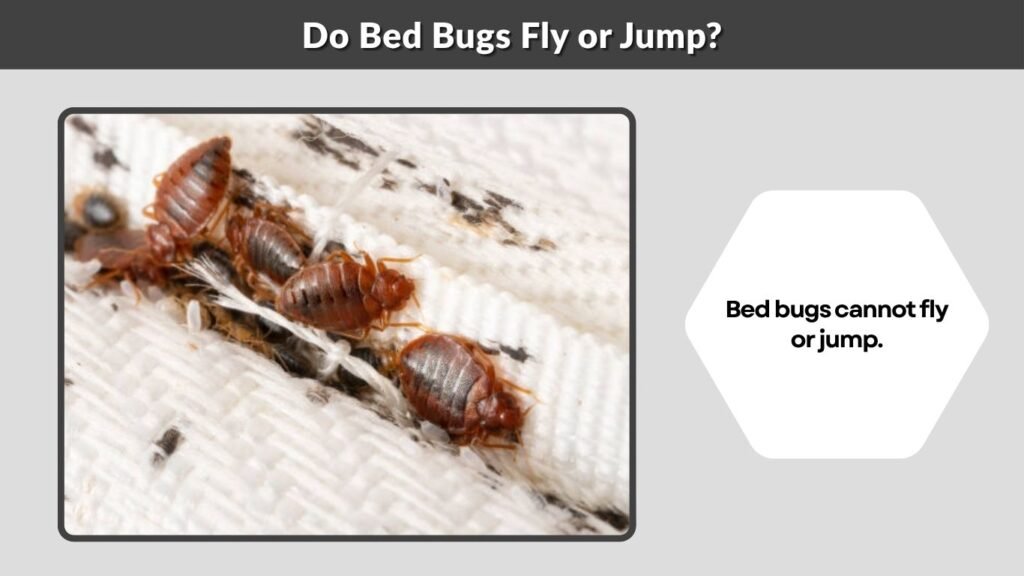
Bed bugs cannot fly or jump. Adult bed bugs have small wing pads, but these structures do not function as wings and cannot lift the insect into the air. Their main method of independent movement is walking. Confusion often happens because people discover bed bugs unexpectedly on beds, clothing, furniture, or walls and assume they must have flown or jumped there.
Bed Bugs vs Flying and Jumping Insects
If an insect around your bed is visibly flying or repeatedly jumping, it is probably not a bed bug.
Some useful differences are:
- Bed bugs: crawl but cannot jump or fly.
- Fleas: crawl and can jump considerable distances relative to their size.
- Mosquitoes: have functional wings and fly.
- Carpet beetles: adult beetles can fly.
- Ticks: crawl and cannot jump or fly.
- Lice: crawl and cannot jump or fly.
Watching how an unknown insect moves can therefore provide a useful identification clue.
Do Bed Bugs Have Wings?
Bed bugs do not have functional wings. Adults possess small structures that are remnants of wings, but they cannot be used for flight.
This means a bed bug on a wall or ceiling reached that location by crawling rather than flying. If one appears to fall from a ceiling or piece of furniture, gravity may make it seem like the insect jumped.
Do Bed Bugs Jump Like Fleas?
Bed bugs and fleas can both leave itchy bites, which is one reason people confuse them. Their movement, however, is very different. Fleas are excellent jumpers, while bed bugs depend completely on crawling and hitchhiking. Observing an insect’s movement can therefore help distinguish these two household pests before closer identification is attempted.
Bed Bugs vs Fleas
Several differences can help separate them:
- Fleas have powerful hind legs; bed bugs do not.
- Fleas frequently jump when disturbed.
- Bed bugs normally crawl toward a hiding place.
- Fleas often infest pets and animal resting areas.
- Bed bugs usually hide around beds and furniture.
- Adult bed bugs are broad and flattened.
- Fleas look narrower when viewed from above.
Finding an insect that suddenly leaps several inches strongly suggests it is not a bed bug.
How Far Do Bed Bugs Jump?
Bed bugs cannot jump any distance at all. Questions about how high or far bed bugs jump have a simple answer: they do not jump.
Their crawling ability is enough to help them reach sleeping people, nearby furniture, walls, and neighboring hiding places. More importantly, humans often transport them much farther than they could travel themselves.
Do Bed Bugs Jump From Person to Person?
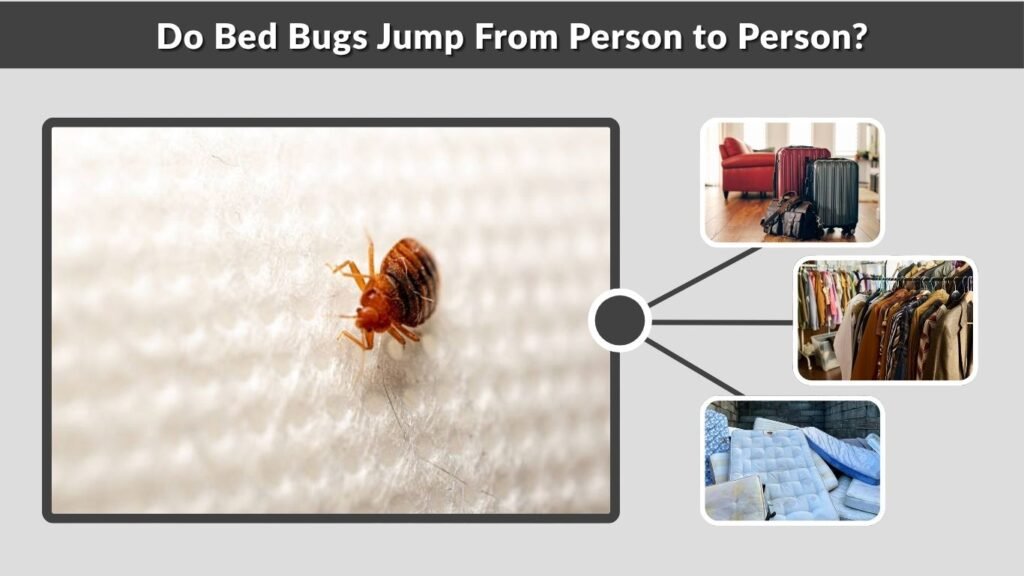
Bed bugs do not jump from one person to another. Unlike lice, they also do not normally live continuously on the human body. Bed bugs usually hide in protected areas and approach a person primarily to feed. However, they can accidentally crawl onto clothing, bags, bedding, or other belongings and be transported somewhere new.
How Bed Bugs Spread Between People
Bed bugs commonly spread by hitchhiking on objects rather than jumping directly onto someone.
They may travel in:
- Suitcases and travel bags
- Backpacks and handbags
- Clothing
- Used mattresses
- Upholstered furniture
- Bedding
- Boxes and stored belongings
This is why bed bugs can appear in homes, hotels, apartments, dormitories, and other locations even though they cannot jump or fly.
Do Bed Bugs Jump on Your Clothes?
No. A bed bug does not jump onto clothing, but it can crawl onto clothing or hide inside folds, pockets, seams, bags, or other fabric items.
A person can then unknowingly carry the insect elsewhere. Bed bugs are therefore sometimes described as hitchhikers. Clothing that has been left near an infested bed or furniture may have a greater chance of carrying them than clothing being actively worn.
Do Bed Bugs Jump on People or Pets?
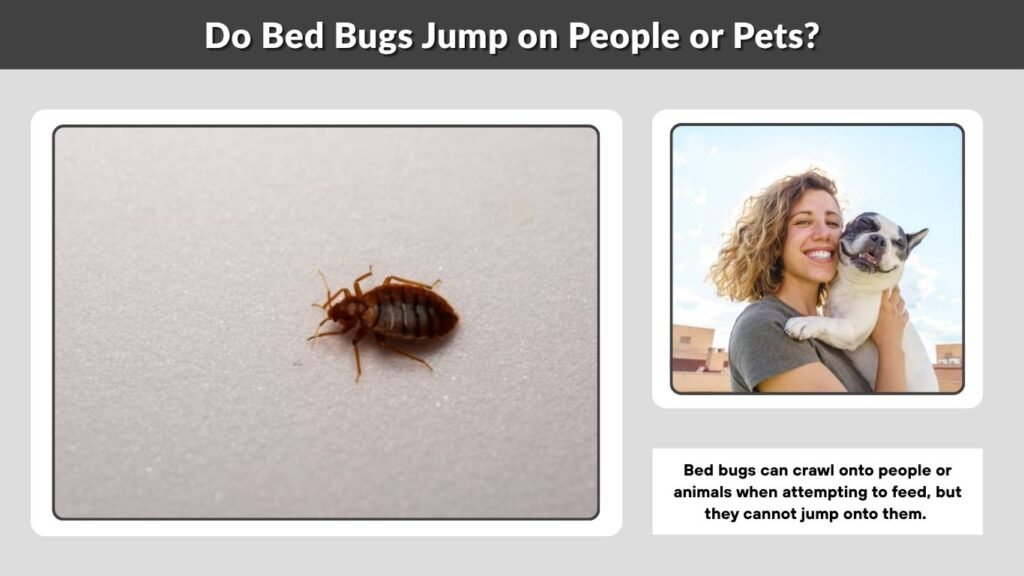
Bed bugs can crawl onto people or animals when attempting to feed, but they cannot jump onto them. Humans are their preferred hosts, although bed bugs may occasionally feed on other warm-blooded animals. They generally leave the host after feeding rather than remaining permanently attached to the body.
Do Bed Bugs Jump on Dogs or Cats?
Bed bugs cannot jump onto dogs or cats. They may crawl onto a pet and feed if necessary, but pets are not their usual long-term living environment.
If bed bugs occur in a home with pets:
- Inspect pet bedding and nearby furniture.
- Wash and heat-dry washable bedding when appropriate.
- Vacuum around pet sleeping areas.
- Inspect cracks around nearby furniture.
- Avoid applying household bed bug pesticides directly to pets.
- Follow product labels carefully when using pest-control products.
Finding insects repeatedly jumping around a pet is more suggestive of fleas than bed bugs.
Can Bed Bugs Live in Hair?
Bed bugs are not adapted to living in human hair like head lice. They may occasionally crawl across the scalp or bite exposed skin, but they generally return to protected hiding places after feeding.
Persistent insects living among hair strands are therefore more likely to involve another pest and should be identified properly.
How Do Bed Bugs Spread Through a House?
Because bed bugs cannot jump or fly, they spread through buildings by crawling or being carried. They may move through cracks, gaps around pipes, furniture, wall openings, or adjoining rooms. In apartments and multi-unit buildings, this crawling ability can allow them to move between neighboring living spaces under suitable conditions.
Common Ways Bed Bugs Travel
Bed bugs can spread through a property by:
- Crawling along walls or floors
- Moving through cracks and gaps
- Hiding inside furniture
- Traveling with luggage
- Being carried on clothing or bags
- Moving with secondhand furniture
- Hiding inside stored belongings
Their small, flat bodies allow them to enter spaces that may be difficult to inspect.
Why Bed Bugs Seem to Appear Suddenly
Bed bugs are excellent at hiding. During the day, they may remain inside mattress seams, bed frames, headboards, furniture joints, or narrow cracks where they are difficult to see.
As the infestation grows, more bugs may become noticeable. This can make it seem as though they suddenly appeared or jumped into the room, even though they were already hiding nearby.
How to Prevent Bed Bugs From Spreading
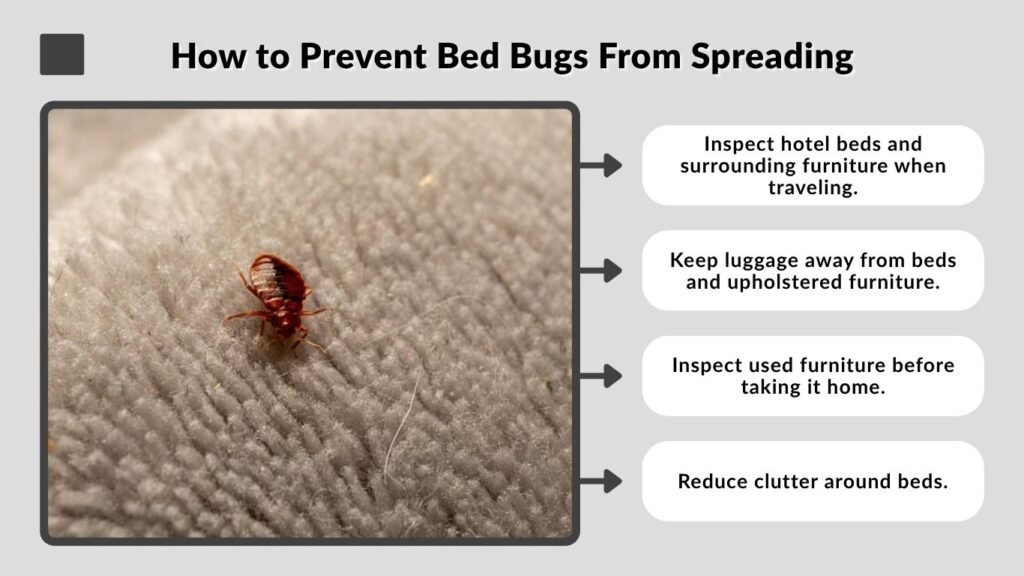
Knowing that bed bugs crawl and hitchhike helps explain why prevention should focus on belongings, furniture, beds, and hiding places. Simply preventing insects from jumping is irrelevant because they cannot jump in the first place. Regular inspection and careful handling of luggage or secondhand items are much more useful.
Practical Prevention Steps
Consider these precautions:
- Inspect hotel beds and surrounding furniture when traveling.
- Keep luggage away from beds and upholstered furniture.
- Check luggage before bringing it into sleeping areas after travel.
- Inspect used furniture before taking it home.
- Reduce clutter around beds.
- Use bed bug-proof mattress encasements when appropriate.
- Monitor bed legs with interceptor traps.
- Inspect mattress seams regularly.
Early detection can make an infestation much easier to control.
FAQs
1. Can bed bugs jump?
No. Bed bugs cannot jump. Their legs are designed for crawling rather than jumping.
2. Do bed bugs fly or jump?
Bed bugs can do neither. They have no functional wings and no specialized jumping legs. They move mainly by crawling.
3. Do bed bugs jump from person to person?
No. They cannot jump between people. However, they can crawl onto clothing, luggage, bags, or other belongings and be carried to another location.
4. How high can bed bugs jump?
Bed bugs cannot jump at all, so there is no jumping height or distance. If an insect around your bed repeatedly jumps, it is more likely to be a flea or another jumping insect.
5. Do baby bed bugs jump?
No. Bed bug nymphs cannot jump or fly. Like adult bed bugs, they move by crawling and may hide inside cracks, mattress seams, furniture joints, and other narrow spaces.
