
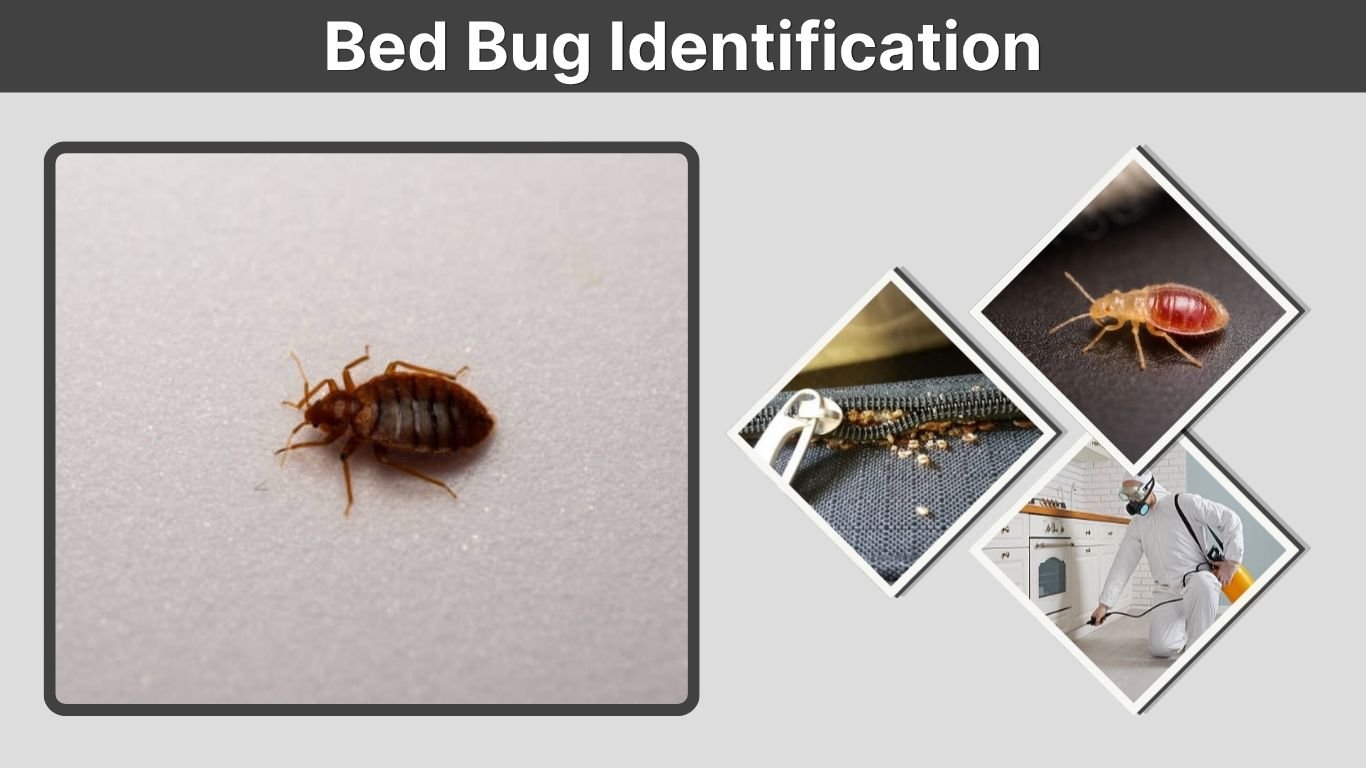
Correct bed bug identification is important because several household insects can easily be mistaken for bed bugs. Adults are small, flattened, reddish-brown insects, while younger nymphs can be pale and much harder to notice. Bites alone are not enough to confirm an infestation, so you should also look for eggs, shed skins, fecal spots, and live insects around sleeping areas. This guide explains how to identify bed bugs, their bites and life stages, and how to distinguish them from common look-alikes.
Bed Bug Identification: What Do Bed Bugs Look Like?
Adult bed bugs are visible without magnification, although their small size allows them to hide in very narrow cracks. Their appearance changes somewhat after feeding because the body becomes fuller and redder. The EPA describes unfed adults as flat, oval, brown insects measuring roughly 5–7 mm long, about the size of an apple seed.
Key Bed Bug Identification Characteristics
Look for these physical characteristics:
- Adults about 5–7 mm long
- Flat, oval-shaped body when unfed
- Brown to reddish-brown coloration
- More swollen and elongated after feeding
- Six legs
- Two antennae
- No functional wings
- Unable to jump or fly
- Small golden-colored hairs on the body
- Apple-seed-like appearance
Bed bugs are capable runners despite being unable to fly or jump. Their flattened shape allows them to squeeze into mattress seams, furniture joints, baseboards, and other narrow hiding places.
What Does a Fed Bed Bug Look Like?
An unfed bed bug generally looks broad, oval, and flattened. After taking a blood meal, its abdomen expands and becomes longer and more balloon-like. The color may also change from brown to noticeably reddish-brown.
This difference sometimes causes people to mistake fed and unfed bed bugs for separate insects. When identification is uncertain, body shape, number of legs, location, and nearby infestation evidence should all be considered rather than color alone.
Bed Bug Eggs, Nymphs, and Shed Skin Identification
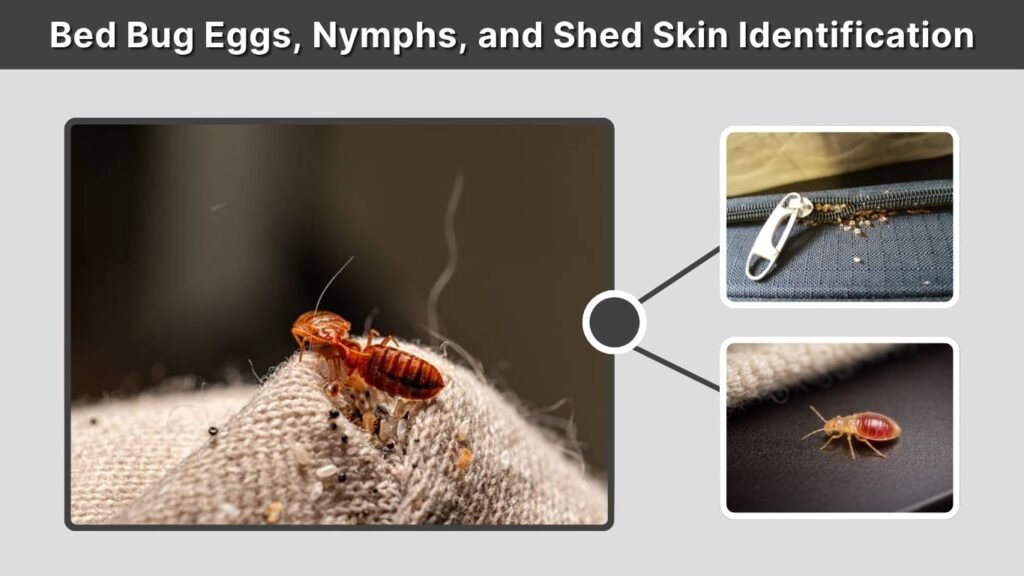
Finding immature stages can provide stronger evidence of an established infestation because bed bugs reproduce and molt near their hiding places. Eggs are considerably smaller than adults, while newly hatched nymphs may be almost transparent. Shed skins can remain behind long after a nymph has moved elsewhere, making careful inspection particularly important.
Bed Bug Egg Identification
Bed bug eggs typically have these features:
- Approximately 1 mm long
- Tiny and pearl-white
- Roughly pinhead-sized
- Often attached to surfaces
- Frequently found in cracks or sheltered areas
- Older eggs may develop a visible eye spot
Eggs can be difficult to distinguish from tiny debris without magnification, particularly on light-colored fabric. Finding several eggs together with fecal spotting or live insects makes identification much more convincing.
Bed Bug Nymph Identification
Young bed bugs are known as nymphs. They resemble miniature adults but are smaller and generally lighter in color. Newly hatched nymphs may appear whitish-yellow or nearly translucent before feeding.
As they develop, they pass through five nymphal stages, increasing from roughly 1.5 mm to around 4.5 mm before becoming adults.
Bed Bug Shells and Shed Skins
Nymphs shed their outer skin while growing. These empty exoskeletons usually resemble pale, hollow bed bugs.
Finding several shed skins around mattress seams, headboards, bed frames, or furniture cracks can indicate ongoing bed bug activity. The CDC lists shed exoskeletons among the important physical signs to check when investigating a suspected infestation.
Bed Bug Bite Identification
Bed bug bites are often noticed before the insects themselves, but bites cannot reliably confirm that bed bugs are present. Reactions vary dramatically between individuals: one person may develop itchy red bumps, while someone sleeping nearby may show virtually no visible reaction. The CDC notes that bite marks can resemble mosquito or flea bites and may appear days after the actual feeding event.
What Do Bed Bug Bites Look Like?
Typical reactions can include small, reddish, slightly swollen areas that itch. Bites may occur individually, in clusters, or sometimes in a line.
They frequently appear on exposed skin such as the arms, hands, neck, face, and legs because bed bugs feed while people are sleeping. However, appearance and arrangement alone are not reliable enough to identify the insect responsible.
Some people do not develop noticeable marks at all, while others can experience stronger inflammatory or allergic reactions.
Why Bites Alone Cannot Confirm Bed Bugs
Mosquitoes, fleas, mites, skin irritation, hives, and several dermatological conditions can produce bumps that resemble bed bug bites.
For that reason, CDC guidance emphasizes confirming suspected infestations through identification of actual adults or nymphs whenever possible.
If you develop severe swelling, signs of infection, or a serious allergic reaction, contact a healthcare professional rather than trying to diagnose the cause solely from photos.
Bed Bug Signs Around Your Bed and Furniture
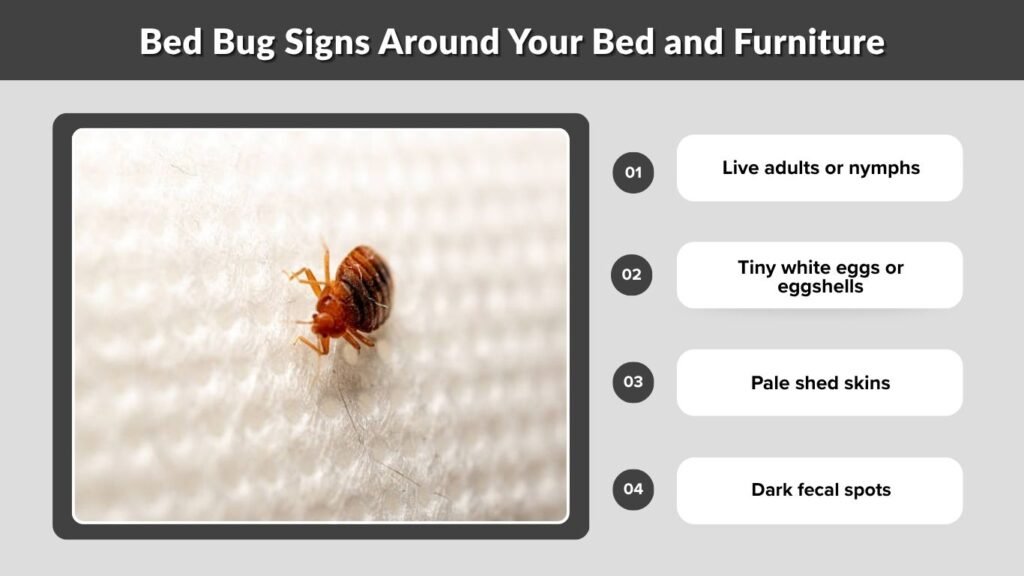
Physical evidence around sleeping areas is generally much more useful than bite patterns alone. Bed bugs spend much of the day hidden near locations where people rest, emerging primarily to feed. Examine mattress seams, box springs, bed frames, headboards, nearby furniture, and cracks carefully with a flashlight rather than inspecting only the exposed mattress surface.
Bed Bug Infestation Identification Checklist
Watch for:
- Live adults or nymphs
- Tiny white eggs or eggshells
- Pale shed skins
- Dark fecal spots
- Rusty or reddish stains on sheets
- Blood spots on bedding
- Insects along mattress seams
- Activity around headboards or bed frames
- A sweet, musty odor in heavier infestations
Dark bed bug fecal marks can resemble small ink dots and may bleed into fabric. Rust-colored stains can result from crushed bugs or blood-related material.
Where Should You Inspect?
Begin around the mattress seams and piping before checking the box spring, bed frame, headboard, bedside furniture, baseboards, wall cracks, and nearby upholstered furniture.
Bed bugs tend to remain relatively close to sleeping hosts, although they can travel farther when necessary. The CDC reports that they commonly hide within about eight feet of where people sleep.
Bed Bug vs Carpet Beetle and Other Look-Alikes
Bed bugs are frequently confused with other small household insects. Accurate identification matters because treatment for one pest may have little effect on another. Carpet beetles, cockroach nymphs, ticks, fleas, spider beetles, and bat bugs can all create confusion depending on their size, location, and life stage. The EPA specifically recommends accurate identification before beginning costly treatment.
Bed Bug vs Carpet Beetle Identification
Important differences include:
- Bed bugs: flat, oval, reddish-brown, wingless
- Adult carpet beetles: usually rounded or oval with patterned scales
- Carpet beetle larvae: elongated and noticeably hairy
- Bed bug nymphs: flat, pale, and not covered with dense hairs
- Bed bugs: feed on blood
- Carpet beetle larvae: feed on animal-based fabrics and organic materials
Hairy larvae strongly suggest carpet beetles rather than bed bugs.
Bed Bug vs Tick Identification
Ticks have eight legs as adults because they are arachnids, while bed bugs have six legs because they are insects. Ticks also lack antennae.
A bed bug usually has a broader, more clearly segmented insect body and is commonly discovered around sleeping areas rather than attached continuously to a person or animal.
Bed Bug vs Cockroach Nymph
Young cockroaches can resemble bed bugs at first glance, particularly when small and brown. However, cockroach nymphs tend to have a more elongated body and noticeably long antennae.
Bed bugs are broader, flatter, and more oval. Where the insect was found can also provide useful context, although location alone should never be considered proof.
When to Use a Bed Bug Identification Service
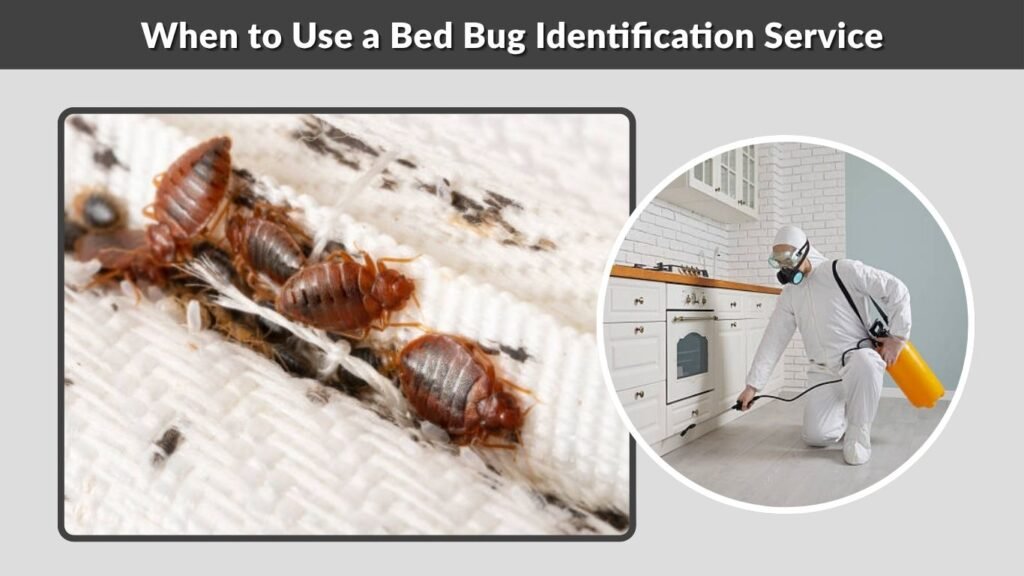
Photographs and identification guides are useful for narrowing down possibilities, but small insects can still be difficult to distinguish accurately. Misidentifying an insect can lead to unnecessary treatment, wasted money, and continued infestation. If you cannot confidently identify the specimen, preserve it rather than crushing or discarding it so an experienced professional can examine it.
Getting Professional Confirmation
Place a suspected insect in a sealed clear container or secure it carefully with transparent tape. A qualified pest management professional, entomologist, or local extension service may be able to confirm its identity.
Professional confirmation is especially valuable before treating an entire home. The EPA recommends obtaining accurate identification because many insects resemble bed bugs and incorrect identification can result in treatment for the wrong pest.
FAQs
Bed bug identification becomes easier when multiple forms of evidence are considered together. A single red bite or unidentified speck on a mattress rarely provides enough information. Combining insect appearance, eggs, shed skins, fecal spotting, location, and professional confirmation when necessary gives you a much more dependable answer and helps prevent unnecessary pest-control treatments.
1. Can you see bed bugs with the naked eye?
Yes. Adult bed bugs, nymphs, and eggs can be visible without magnification. Adults are roughly apple-seed-sized, while eggs and early-stage nymphs are much harder to notice because of their small size and pale coloration.
2. What is the easiest way to identify a bed bug?
Look for a small, flat, oval, six-legged insect that is brown to reddish-brown. Then check the surrounding area for eggs, shed skins, dark fecal spots, and rusty stains. Multiple matching signs provide stronger evidence than one characteristic alone.
3. What do bed bug feces look like?
Bed bug fecal spots typically appear as tiny dark or black marks. On absorbent fabric, the stains may soak outward somewhat like ink from a marker.
4. Do bed bugs have larvae?
No. Bed bugs do not have a worm-like larval stage. They hatch from eggs as nymphs that already resemble very small versions of adults. References to “bed bug larvae” usually reflect confusion with other insects, especially carpet beetle larvae.
5. Does finding one bed bug mean there is an infestation?
One confirmed bed bug should be taken seriously, but the size of an infestation cannot be determined from a single insect. Carefully inspect mattresses, bed frames, nearby furniture, and cracks for additional bugs, eggs, fecal spots, or shed skins, and consider professional identification if there is uncertainty.
