
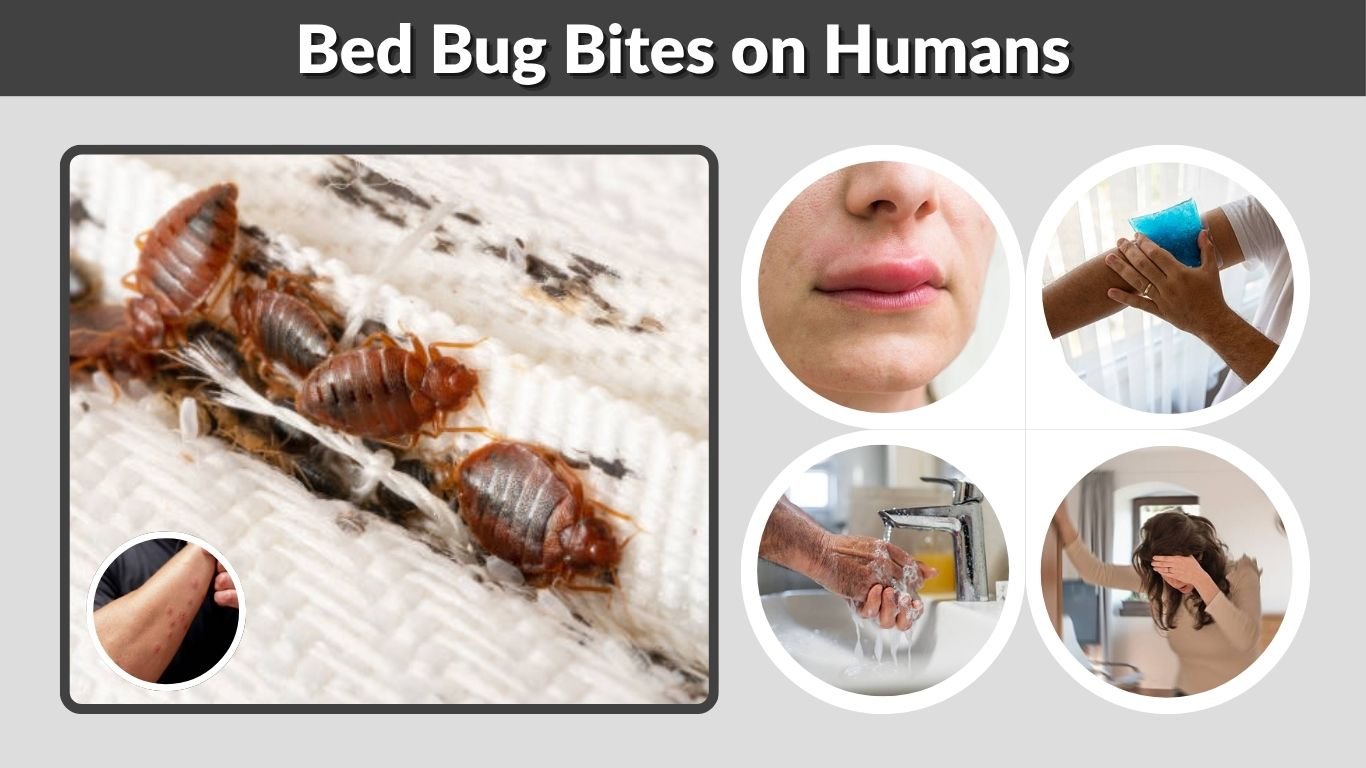
Bed bug bites on humans often appear as itchy, raised bumps after sleeping in an infested room, but their appearance can vary widely from person to person. Some develop small red or darker spots, while others experience larger swollen welts or almost no visible reaction. Because bed bug bites can resemble flea, mosquito, or other insect bites, appearance alone cannot confirm an infestation. Knowing the typical symptoms, common bite patterns, treatment options, and signs of bed bugs in your sleeping area can help you respond appropriately.
What Do Bed Bug Bites Look Like on Humans?
Bed bug bites do not have one appearance that applies to everyone. Skin tone, sensitivity, previous exposure, and immune response can all affect how a bite looks. They often occur on exposed skin after sleeping and may appear individually, in small clusters, or in irregular lines. However, these patterns are not unique to bed bugs.
Common Appearance of Bed Bug Bites
Typical features may include:
- Small raised bumps or welts
- Itching around the affected area
- Red, pink, brown, or darker discoloration
- Several bites located close together
- Bites appearing in a line or irregular cluster
- Mild swelling around individual spots
- A small darker point near the center in some cases
The bites can resemble those caused by mosquitoes, fleas, or other insects, so skin symptoms should be considered together with evidence found around the bed.
Bed Bug Bites on Dark or Brown Skin
On darker skin tones, the classic redness associated with insect bites may be less obvious. Instead, bites may appear darker than the surrounding skin, purplish, brown, or slightly raised.
Swelling and itching can still occur even when significant redness is not visible. After healing, some people may also develop temporary darker marks where the bites occurred, especially if the area has been scratched.
Where Bed Bug Bites Usually Appear
Bed bugs tend to feed on skin that is accessible while a person sleeps. Common locations include the arms, shoulders, neck, face, hands, legs, and feet.
Bites underneath tightly covered clothing may be less common, although they are still possible when insects gain access beneath loose clothing.
Symptoms of Bed Bug Bites on Humans
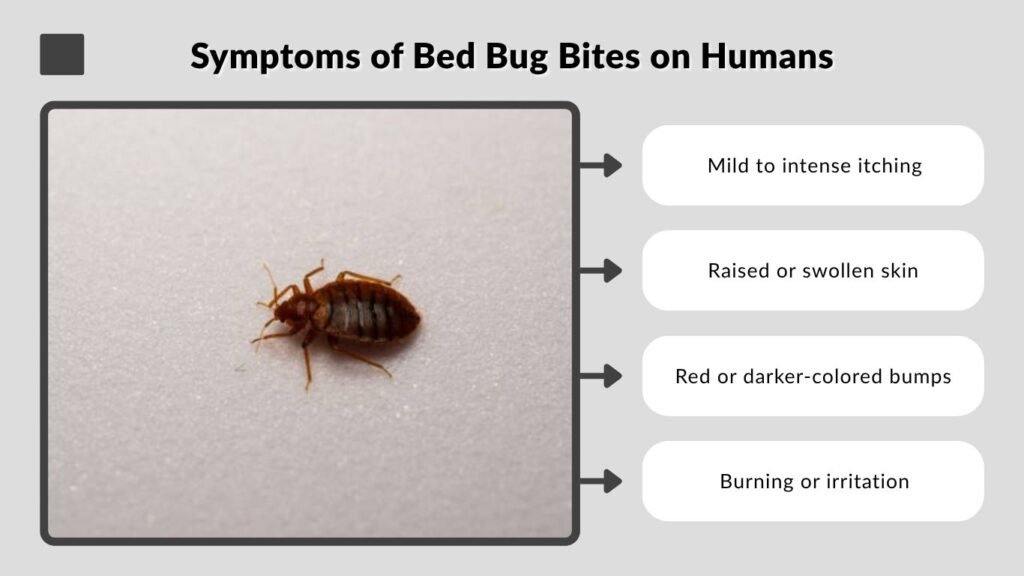
People can react very differently to bed bug bites. One person may develop extremely itchy welts while another person sleeping in the same room notices almost nothing. This variation makes it difficult to determine the severity of an infestation simply by counting skin lesions.
Common Bed Bug Bite Symptoms
Possible symptoms include:
- Mild to intense itching
- Raised or swollen skin
- Red or darker-colored bumps
- Burning or irritation
- Multiple bites near one another
- Localized inflammation
- Scratches or scabs caused by repeated itching
Most uncomplicated bites gradually improve without causing serious medical problems.
When Do Bed Bug Bites Show Up?
Reactions do not always appear immediately after a bed bug feeds.
Some people notice marks relatively soon, while others may not develop visible symptoms until later. Previous exposure can also influence how quickly the body reacts.
Because of this delay, waking up without new marks does not necessarily prove that bed bugs are absent.
How Long Do Bed Bug Bites Last?
Minor reactions commonly improve over several days, although itching or discoloration may persist longer in some people.
Repeated scratching can delay healing and increase the possibility of secondary skin infection. People with stronger allergic reactions may experience more extensive swelling that takes additional time to settle.
Bed Bug Bites vs Flea Bites on Humans
Bed bug and flea bites can look remarkably similar, which is why photographs alone are rarely enough for a confident identification. The location of bites, exposure history, insect evidence, and environmental clues are often more useful. Fleas are particularly associated with pets and floor-level environments, while bed bugs usually remain close to sleeping and resting areas.
Location of the Bites
Flea bites frequently occur around the ankles and lower legs because fleas often jump upward from floors, carpets, or animal bedding.
Bed bug bites can occur anywhere that remains exposed during sleep, including the arms, shoulders, neck, face, legs, and hands.
Bite Pattern
Both insects can cause multiple bites.
Bed bug bites are sometimes described as appearing in rows or clusters, whereas flea bites may form small groups around the lower legs. Neither pattern is reliable enough to diagnose the insect by itself.
Environmental Clues
With suspected bed bugs, check around:
- Mattress seams
- Bed frames
- Headboards
- Box springs
- Cracks near the bed
- Upholstered furniture
Signs can include live bugs, shed skins, eggs, dark spotting, or blood marks.
With fleas, investigate pets, pet bedding, rugs, upholstery, and carpets for adult fleas or flea dirt.
How to Treat Bed Bug Bites on Humans
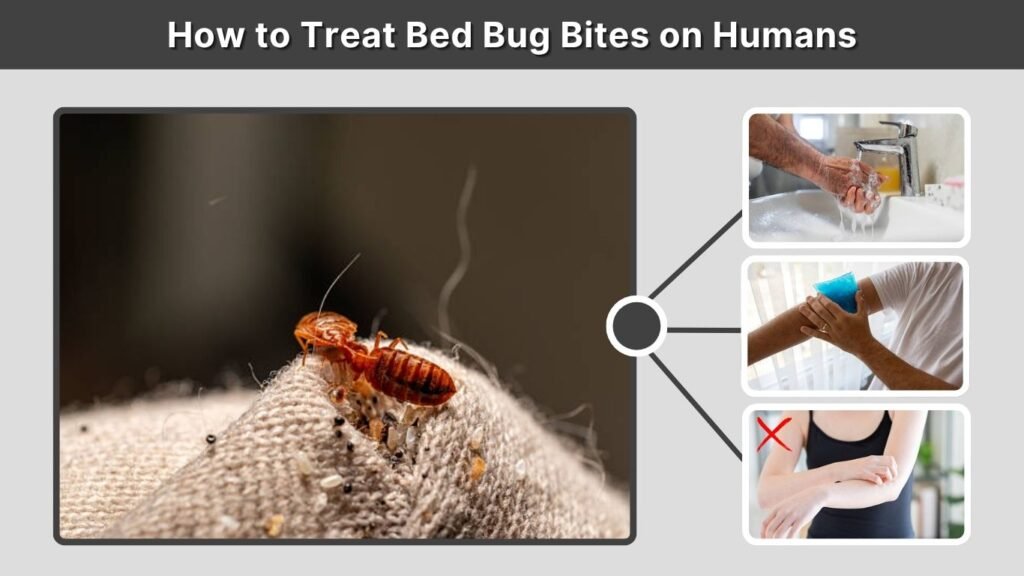
Most bed bug bites can be managed at home when symptoms are mild. Treatment focuses on controlling itching, protecting the skin, and avoiding scratching rather than treating the bite with a special cure. Eliminating the bed bug infestation is also essential, because treating existing bites will not prevent additional bites from occurring.
Basic Treatment for Bed Bug Bites
For uncomplicated bites:
- Wash the skin gently with soap and water.
- Apply a cool compress when swelling or itching is bothersome.
- Avoid scratching the affected areas.
- Keep fingernails short to reduce skin damage.
- Consider an appropriate anti-itch product if needed.
- Ask a healthcare professional or pharmacist about antihistamines for troublesome itching.
Follow the directions for any medication or topical product, particularly when treating children.
Severe Reactions
Some people can develop a stronger allergic response, including extensive swelling or widespread skin irritation.
Medical advice may be appropriate when symptoms are unusually severe, continue getting worse, or fail to improve.
Signs of Skin Infection
Scratching can break the skin and allow bacteria to enter.
Increasing pain, warmth, pus, spreading redness or discoloration, significant swelling, or fever should be evaluated by a healthcare professional.
Allergic Reactions to Bed Bug Bites
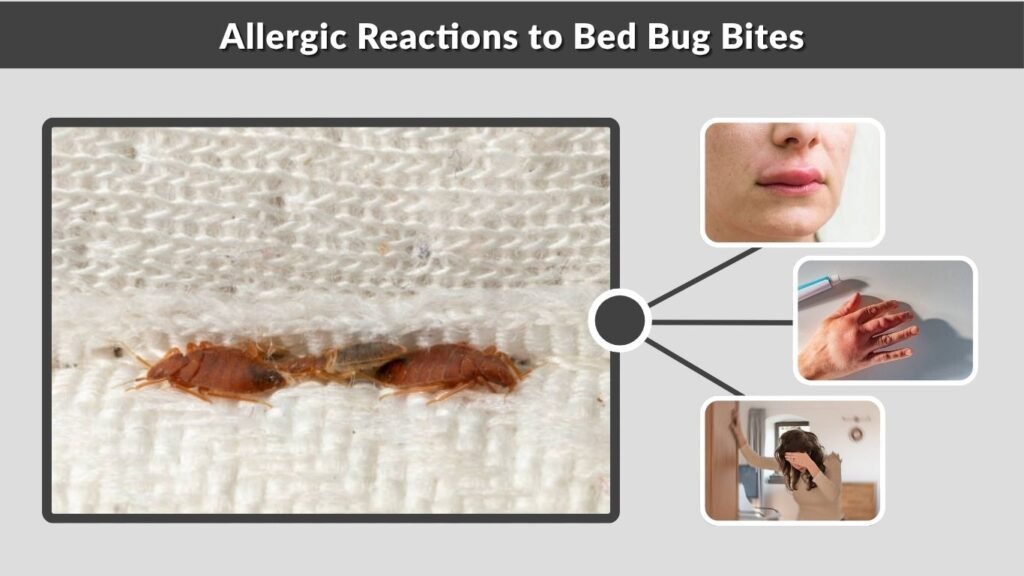
An allergic response can range from larger-than-average local swelling to a much more serious reaction. Severe allergic reactions are uncommon, but recognizing emergency symptoms is important. Someone who has previously experienced strong reactions to insect bites should pay particular attention to symptoms developing beyond the immediate bite area.
Warning Signs of a Serious Reaction
Seek urgent medical assistance for symptoms such as:
- Difficulty breathing
- Swelling of the lips, tongue, or throat
- Severe widespread swelling
- Dizziness or fainting
- Rapidly developing widespread hives
These symptoms should not be managed solely with home remedies.
Stages of Bed Bug Bites on Humans
Bed bug bites can change as the body’s inflammatory response develops and then resolves. There is no exact visual timeline that applies to everyone. Some people never develop noticeable marks, while others experience itching and swelling for several days. Therefore, bite progression should not be used as the only method for determining whether bed bugs are responsible.
Early Stage
Initially, there may be little or no visible reaction. A small raised area or mild discoloration can eventually develop around the feeding site.
Itchy and Inflamed Stage
The bumps may become more noticeable as the immune system responds. Itching, swelling, and irritation are usually most bothersome during this stage.
Repeated scratching can create scabs or open areas.
Healing Stage
Swelling gradually decreases and the skin begins returning toward its normal appearance. Temporary discoloration may remain after the itching stops, particularly following stronger reactions or scratching.
How to Identify Whether Bed Bugs Are Causing the Bites
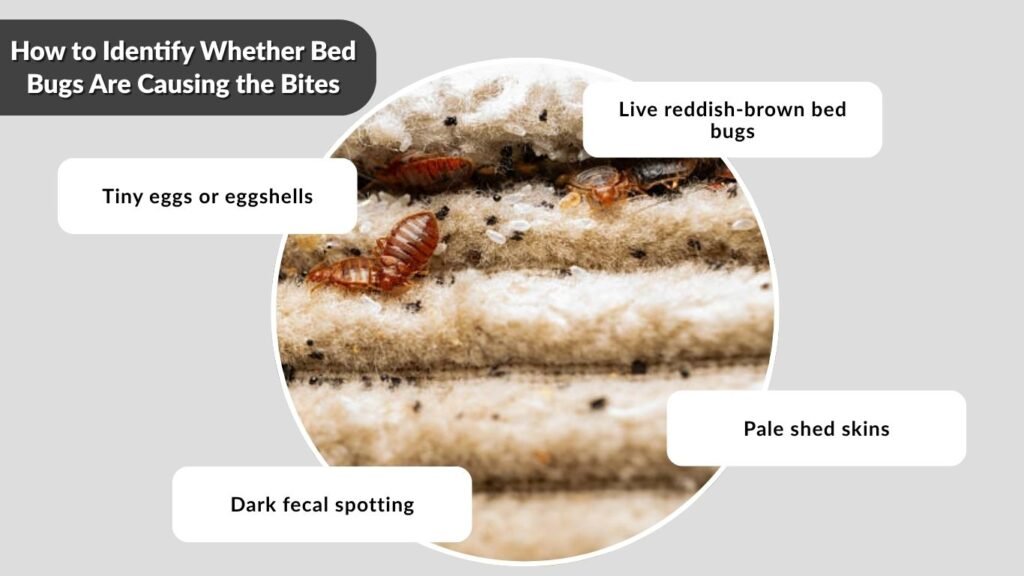
Bite appearance alone cannot reliably confirm bed bugs. Mosquitoes, fleas, mites, and some skin conditions can produce similar symptoms. Finding physical evidence around the sleeping environment provides much stronger support for identifying an infestation.
Inspect the Sleeping Area
Look closely around mattresses, bed frames, headboards, furniture joints, and nearby cracks.
Possible evidence includes:
- Live reddish-brown bed bugs
- Pale shed skins
- Tiny eggs or eggshells
- Dark fecal spotting
- Small blood stains on bedding
A professional pest-control inspection can be useful when bites continue but you cannot locate the source.
Do Bed Bug Bites Make Humans Sick?
Bed bug bites are mainly associated with itching, irritation, sleep disturbance, and occasional allergic reactions. They are not currently considered a typical means of spreading infectious disease between humans. However, repeated biting can still have meaningful effects on comfort and wellbeing, especially when an infestation continues for an extended period.
Secondary Problems From Bed Bug Bites
Persistent infestations can contribute to disturbed sleep and ongoing stress. Excessive scratching may damage the skin and create an opportunity for bacterial infection.
Heavy infestations should therefore be addressed even when individual bites appear mild.
FAQs
1. What do bed bug bites look like on humans?
They often appear as itchy, raised bumps that may be red, pink, brown, darker than surrounding skin, or swollen. Several bites may appear together or in a loose line, but appearance alone cannot confirm bed bugs.
2. How do you treat bed bug bites on humans?
Wash the area gently, use a cool compress, avoid scratching, and consider an appropriate anti-itch treatment when needed. Seek medical advice for severe swelling, infection, or significant allergic symptoms.
3. How long do bed bug bites itch?
Mild itching often improves within several days, although some reactions can last longer. Scratching may prolong inflammation and delay healing.
4. What is the difference between flea bites and bed bug bites?
Flea bites commonly affect the ankles and lower legs, while bed bug bites frequently appear on skin exposed during sleep. Neither bite pattern is completely diagnostic, so environmental evidence is important.
5. Can bed bug bites cause an allergic reaction?
Yes. Some people develop larger swollen areas, intense itching, or hives. Serious reactions involving breathing difficulty or swelling of the mouth or throat require urgent medical attention.
