
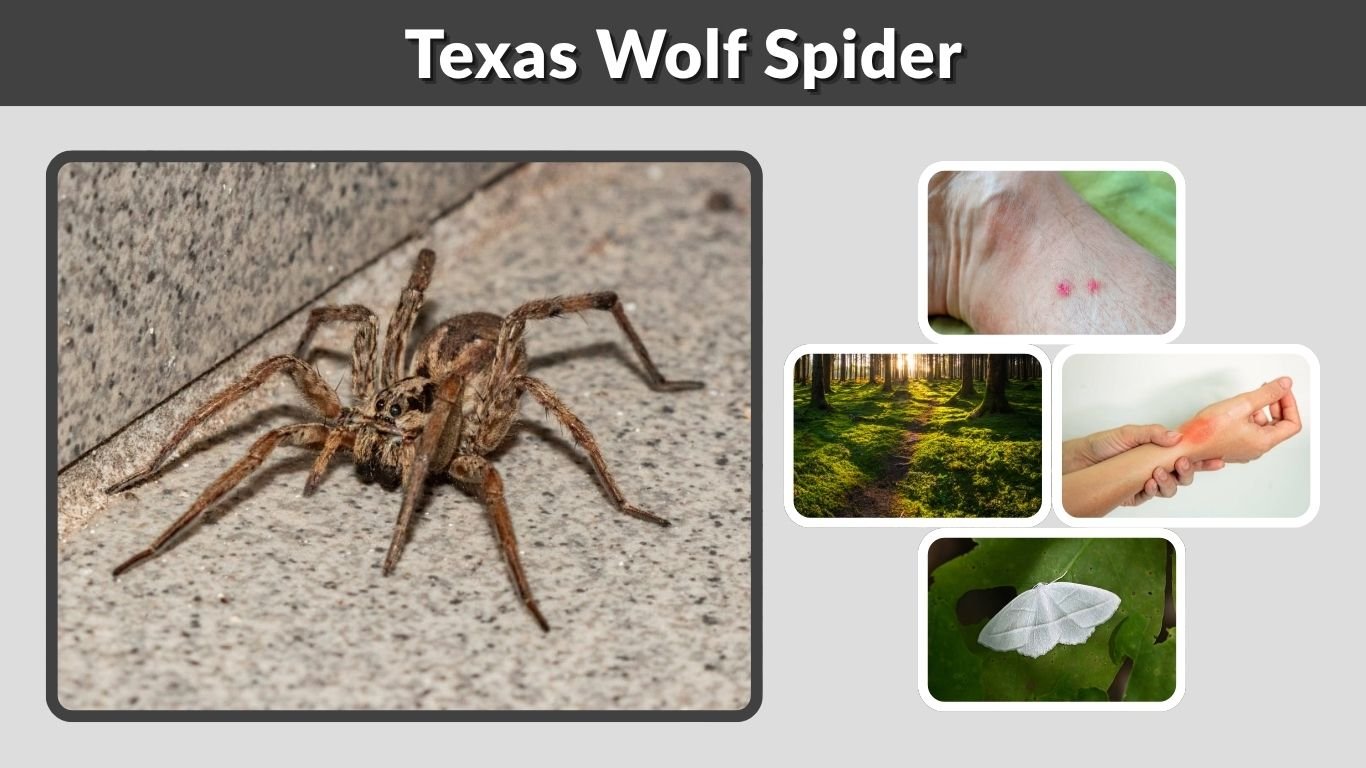
Texas is home to many wolf spiders, a large family of ground-hunting spiders known for their speed, excellent eyesight, and hairy appearance. A Texas wolf spider may look intimidating, especially when one suddenly runs across a patio, garage, or floor, but these spiders are generally not dangerous to people. Several species occur across the state, including the rabid wolf spider and Carolina wolf spider. This guide explains how to identify Texas wolf spiders, where they live, what their bites are like, and whether they are poisonous.
What Is a Texas Wolf Spider?
The term Texas wolf spider does not refer to one particular species. Instead, it describes members of the wolf spider family, Lycosidae, that occur throughout Texas. Unlike web-building spiders, wolf spiders actively hunt insects on the ground.
They are most commonly noticed outdoors at night but sometimes enter houses, garages, sheds, and other sheltered areas.
Identification
Common characteristics of Texas wolf spiders include:
- Brown, gray, tan, or dark brown coloring
- Hairy and relatively robust bodies
- Long, powerful legs designed for running
- Dark stripes, spots, or mottled markings
- Eight eyes arranged in three distinctive rows
- Two especially large forward-facing eyes
- Body size ranging from less than ½ inch to more than 1 inch in larger species
- Leg span that can make large individuals appear several inches across
Their large eyes are particularly useful for identification. When a flashlight is pointed toward the ground at night, wolf spider eyes may reflect the light.
Texas Wolf Spider Pictures and Appearance
In pictures, wolf spiders can sometimes resemble brown recluse spiders because both may have brown coloration. However, wolf spiders are normally hairier, stockier, and more heavily patterned.
A brown recluse usually has a smoother-looking body and a distinctive violin-shaped marking on the cephalothorax. Wolf spiders generally have stripes, mottling, or other patterns instead.
Common Wolf Spiders in Texas
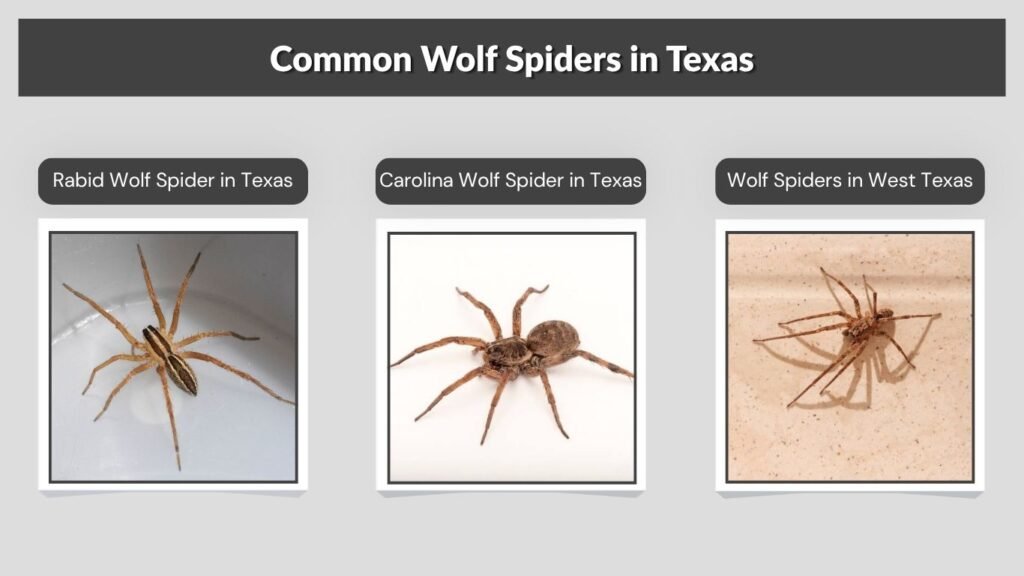
Texas supports numerous wolf spider species because the state contains deserts, forests, grasslands, wetlands, agricultural areas, and urban environments. Two names frequently associated with wolf spiders in Texas are the rabid wolf spider and Carolina wolf spider.
Rabid Wolf Spider in Texas
Despite its alarming name, the rabid wolf spider (Rabidosa rabida) does not have rabies. The word “rabid” refers to its active, fast-moving behavior rather than disease.
This wolf spider typically has a brown body with noticeable longitudinal stripes. It may occur in grasslands, gardens, fields, woodland edges, and areas around buildings.
Rabid wolf spiders are active predators that feed on insects and other small arthropods. Their ability to control insects can make them beneficial around gardens and landscapes.
Carolina Wolf Spider in Texas
The Carolina wolf spider (Hogna carolinensis) is one of the largest wolf spiders found in North America and occurs in Texas.
Adults are typically brown or gray-brown with darker markings that provide excellent camouflage against soil and leaf litter. Their large size can make them appear threatening, but they normally try to escape rather than confront people.
Carolina wolf spiders often spend the daytime inside burrows and emerge after dark to hunt.
Wolf Spiders in West Texas
A wolf spider in West Texas may be particularly well adapted to dry, open environments. Wolf spiders can inhabit grasslands, scrubland, deserts, rocky areas, and disturbed habitats.
Many species spend hot daytime hours beneath rocks, logs, vegetation, or inside burrows before becoming more active when temperatures fall.
Are Texas Wolf Spiders Poisonous?
People frequently ask, “Are Texas wolf spiders poisonous?” Technically, wolf spiders are venomous rather than poisonous. They use venom to subdue the insects and other small animals they hunt.
For humans, however, their venom is generally not considered medically significant.
Are They Dangerous to People?
Texas wolf spiders are not normally aggressive toward humans. Most encounters end with the spider quickly running away.
A bite is most likely when a spider becomes trapped against the skin, is accidentally handled, or is squeezed inside clothing or footwear. Children and pets should still be prevented from handling any unknown spider.
Do Texas Wolf Spiders Chase People?
A wolf spider may appear to run toward someone while searching for cover, but it is not deliberately hunting or chasing humans.
People are far too large to be considered prey. Running is primarily a wolf spider’s way of escaping threats and moving rapidly between hiding places.
Texas Wolf Spider Bite
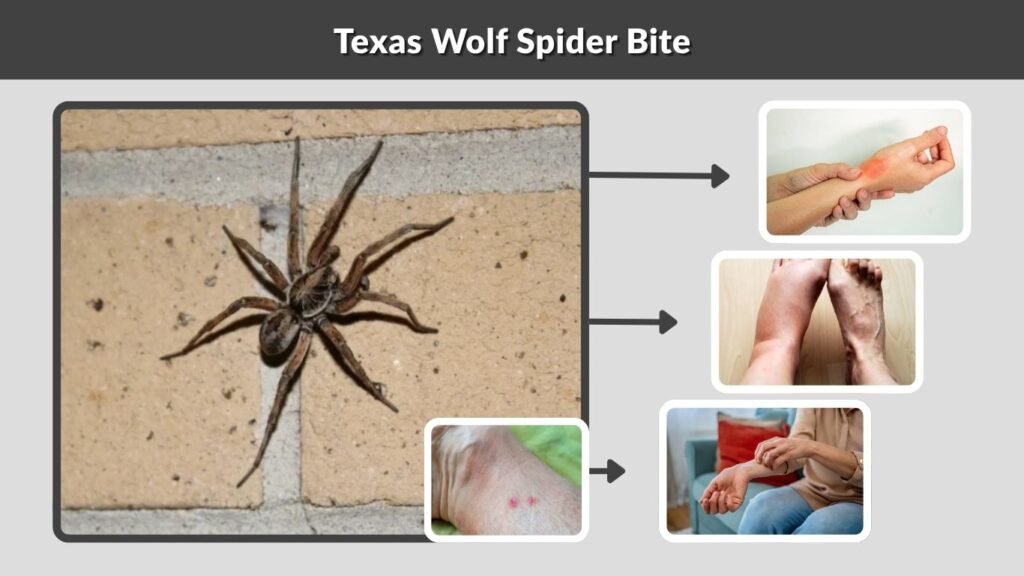
A Texas wolf spider bite is relatively uncommon because these spiders generally rely on speed and camouflage instead of biting for defense.
When a bite occurs, symptoms are usually localized around the bite site.
Possible Bite Symptoms
A wolf spider bite may cause:
- Immediate mild to moderate pain
- Redness
- Slight swelling
- Itching or irritation
- Tenderness around the bite
- Temporary discomfort
Symptoms can vary depending on the individual and the circumstances of the bite.
What to Do After a Wolf Spider Bite
Wash the area gently with soap and water and keep it clean. A wrapped cold pack can be applied briefly to help reduce pain and swelling.
Avoid scratching the bite, since damaged skin can increase the risk of infection. Seek medical attention if symptoms become severe, continue worsening, or include difficulty breathing, extensive swelling, severe pain, fever, or other concerning reactions.
It is also important not to assume every unidentified spider bite came from a wolf spider.
Where Do Texas Wolf Spiders Live?
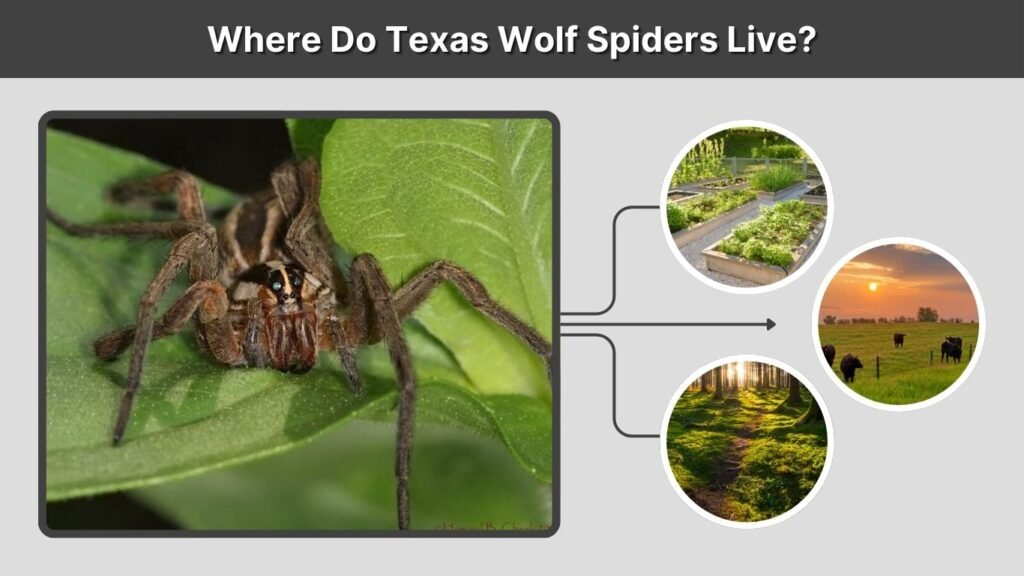
Wolf spiders are widespread across Texas and can survive in many environments. Most remain at ground level, where they search for prey and shelter.
They are frequently found anywhere insects are abundant.
Outdoor Habitat
Common outdoor locations include:
- Lawns and gardens
- Fields and pastures
- Forest floors
- Beneath rocks and logs
- Leaf litter
- Agricultural areas
- Burrows in loose soil
- Around foundations and landscaping
Some species dig their own burrows, while others use existing cracks and sheltered spaces.
Wolf Spiders Inside Texas Homes
Wolf spiders occasionally enter homes while looking for prey, shelter, or protection from extreme weather.
Inside a house, they may be found in garages, basements, storage areas, bathrooms, entryways, and dark corners. Because they do not depend on prey-catching webs, seeing a large web is not usually a sign of a wolf spider infestation.
Texas Wolf Spider Behavior
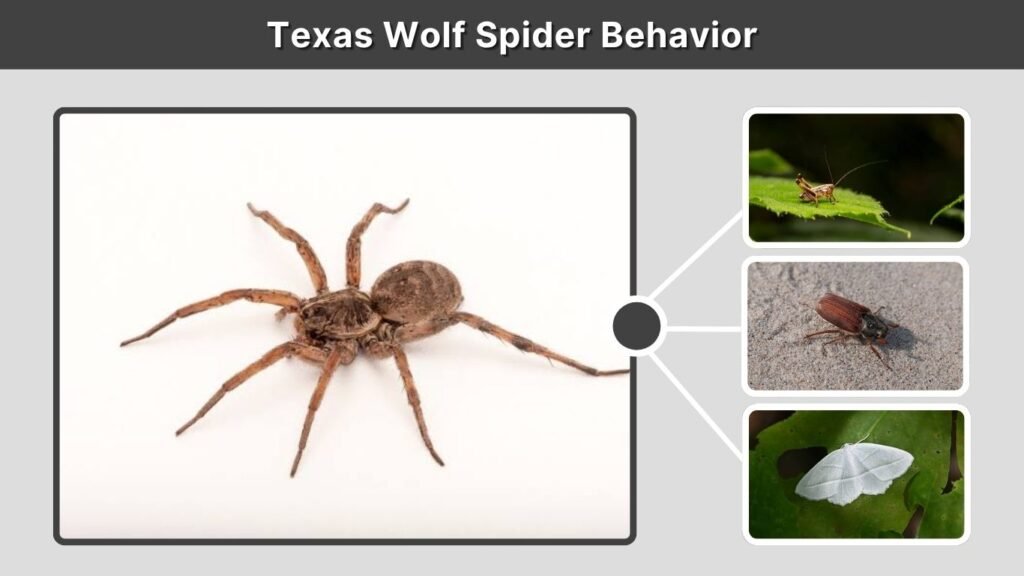
Wolf spiders have a very different hunting strategy from familiar web-building spiders. Their strong legs and eyesight allow them to actively pursue prey.
Many are primarily active during nighttime hours.
Hunting and Diet
Their diet consists mainly of small arthropods such as insects, including:
- Crickets
- Beetles
- Cockroaches
- Flies
- Moths
- Grasshoppers
- Other spiders
Because they consume pest insects, wolf spiders can play an important role in local ecosystems and gardens.
Female Carrying Babies
One of the most distinctive wolf spider behaviors involves parental care. A female attaches her egg sac to the spinnerets at the rear of her abdomen and carries it with her.
After the spiderlings hatch, they climb onto their mother’s abdomen. She may carry dozens of tiny spiderlings until they are ready to disperse.
A female covered with spiderlings can appear unusually large or textured, especially when seen at night.
How to Keep Wolf Spiders Out of Your Home
Finding an occasional wolf spider indoors does not necessarily indicate an infestation. Preventing entry and reducing insect prey usually provides effective long-term control.
Prevention Methods
You can reduce indoor encounters by:
- Sealing cracks around doors and windows
- Installing tight-fitting door sweeps
- Repairing damaged window screens
- Removing clutter from garages and storage rooms
- Keeping firewood away from the house
- Trimming vegetation touching exterior walls
- Reducing insects around entrances
- Closing gaps around pipes and utility lines
Outdoor lighting can attract insects, which in turn may attract hunting spiders. Adjusting unnecessary nighttime lighting near doors may therefore help reduce spider activity.
FAQs
1. Are Texas wolf spiders dangerous?
Texas wolf spiders are generally not dangerous to humans. They possess venom for capturing prey, but bites normally cause only temporary localized symptoms.
2. How big can a Texas wolf spider get?
Size varies considerably by species. Large species such as the Carolina wolf spider can have bodies over an inch long, while their long legs make the overall spider appear considerably larger.
3. Are rabid wolf spiders in Texas poisonous?
Rabid wolf spiders are venomous, not poisonous. Despite their name, they do not carry rabies, and their venom is not normally considered dangerous to healthy humans.
4. Why do I have wolf spiders in my Texas house?
Wolf spiders may enter through doors, cracks, gaps, or damaged screens while searching for insects or shelter. Frequent sightings can sometimes indicate that plenty of insect prey is available nearby.
5. Should I kill wolf spiders in Texas?
Usually, it is unnecessary. Wolf spiders help control insects and generally avoid people. An individual spider indoors can often be safely captured in a container and released outside.
