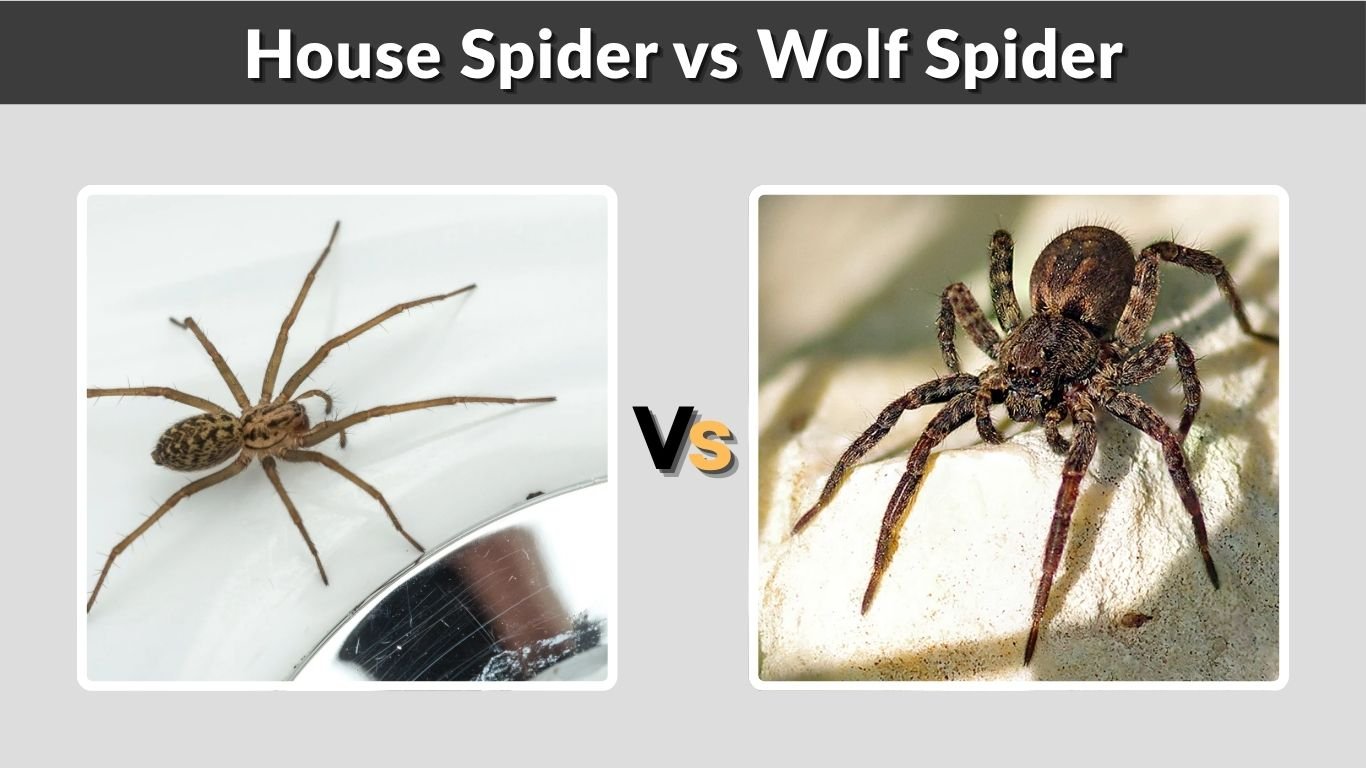
The house spider vs wolf spider comparison can be confusing because both may appear indoors and have brown, gray, or dark bodies. However, their behavior, body shape, web use, and hunting style are quite different. Wolf spiders are active hunters that usually run across floors without relying on webs to catch prey, while many common house spiders stay close to irregular webs. Giant house spiders and black house spiders can also resemble wolf spiders at a glance. This guide explains the easiest ways to tell them apart.
House Spider vs Wolf Spider
The biggest difference between a house spider and a wolf spider is how they hunt. Wolf spiders belong to the family Lycosidae and actively chase prey. The term “house spider,” however, can refer to several different indoor spider species, many of which depend on webs to catch insects.
Main Differences
| Feature | House Spider | Wolf Spider |
| Hunting style | Often waits in a web | Actively hunts |
| Web | Common in many species | Does not use prey-catching webs |
| Body | Often smaller or more rounded | Robust and hairy |
| Legs | Usually slender | Strong and sturdy |
| Eyes | Less obvious | Two large forward-facing eyes |
| Movement | Often remains near web | Fast ground runner |
| Indoor behavior | May live indoors long-term | Often wanders indoors |
| Bite risk | Usually low | Usually low |
The spider’s behavior is often more useful for identification than color alone.
What Does a Wolf Spider Look Like?
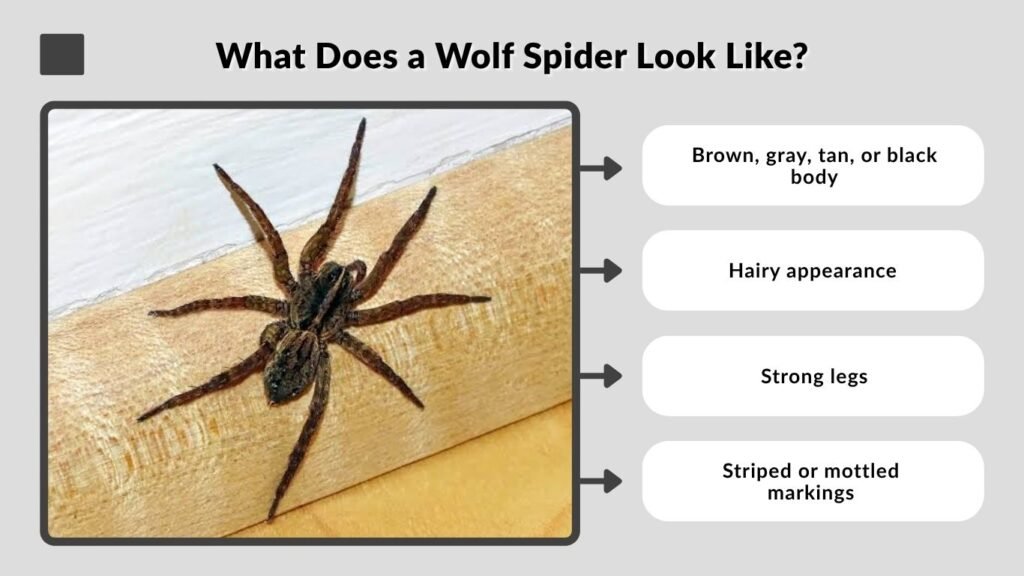
Wolf spiders are generally stocky, hairy, and well adapted for running. Their coloration usually helps them blend with soil, bark, leaves, and other ground surfaces.
They vary considerably because there are many species.
Wolf Spider Identification
Look for:
- Brown, gray, tan, or black body
- Hairy appearance
- Strong legs
- Striped or mottled markings
- Eight eyes arranged in three rows
- Two large central eyes
- Robust body
- Fast running behavior
Wolf spiders usually do not sit in messy webs waiting for prey.
What Does a House Spider Look Like?
The appearance of a house spider depends on the species.
Common indoor spiders may have rounded abdomens, long slender legs, brown or gray coloration, and relatively small bodies. Many are found hanging upside down in webs near ceilings, windows, basements, garages, or corners.
Common House Spider vs Wolf Spider
The common house spider is very different from a typical wolf spider.
Common house spiders usually stay close to tangled webs, while wolf spiders roam across surfaces searching for prey.
Key Differences
Common house spiders generally:
- Build irregular cobwebs
- Have more rounded abdomens
- Spend long periods in one location
- Frequently live indoors
Wolf spiders generally:
- Do not build prey-catching webs
- Have longer, stronger running legs
- Move rapidly across floors
- Often enter homes accidentally
If a spider has been sitting in the same cobweb for days, it is unlikely to be a wolf spider.
Giant House Spider vs Wolf Spider
The giant house spider can be especially difficult to distinguish from a wolf spider because both are large, brown, and fast.
Giant house spiders belong to the funnel-weaver group and may be encountered running across floors, particularly mature males searching for females.
Giant House Spider Identification
A giant house spider typically has:
- Very long legs
- Brown coloration
- Patterned abdomen
- Relatively slender body
- Long spinnerets
- Association with funnel-shaped webs
Wolf spiders are generally more compact and muscular-looking.
Wolf Spider vs Giant House Spider
The easiest clues include body proportions and web use.
Giant house spiders have noticeably long legs relative to their bodies and are associated with funnel webs. Wolf spiders tend to have shorter, sturdier legs and a more robust body.
Both can move quickly, so speed alone is not enough for identification.
Black House Spider vs Wolf Spider
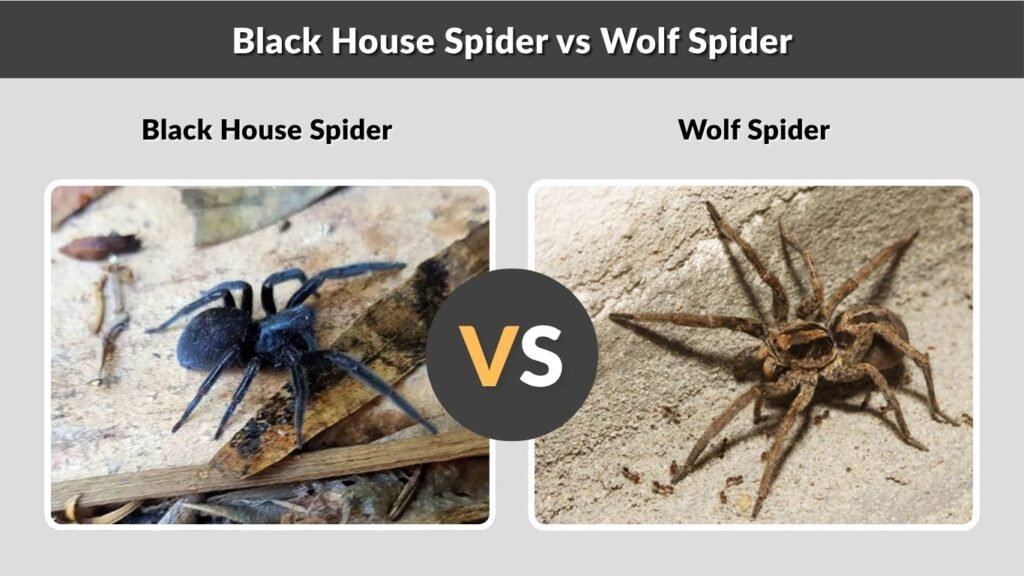
A black house spider may be confused with a dark wolf spider because both can appear brown-black or nearly black.
Black house spiders are commonly associated with webs around cracks, windows, walls, and sheltered outdoor structures.
How to Tell Them Apart
A black house spider generally:
- Remains close to its web
- Has a darker, more compact appearance
- Builds a messy funnel-like web
- Uses its web to capture insects
A wolf spider generally:
- Wanders on floors or ground
- Has more obvious hairy legs
- Does not use a capture web
- Hunts insects directly
Geographic location matters because “black house spider” commonly refers to species found in Australia.
American House Spider vs Wolf Spider
The American house spider is another common indoor spider that can occasionally be mistaken for a small wolf spider.
However, its rounded abdomen and web-building behavior separate it fairly easily.
American House Spider Features
American house spiders commonly have:
- Rounded abdomen
- Brown, tan, or gray coloration
- Irregular markings
- Thin legs
- Tangled cobwebs
Wolf spiders usually look flatter, stronger, and more built for running.
Southern House Spider vs Wolf Spider
Southern house spiders are often encountered around buildings and can become quite large.
Males may look especially similar to other wandering brown spiders because their bodies are slimmer than females.
Important Difference
Southern house spiders belong to a different family from wolf spiders and are typically associated with crevices and web retreats.
Wolf spiders actively patrol open surfaces rather than remaining closely connected to permanent retreats.
Wolf Spider vs Brown Recluse vs House Spider
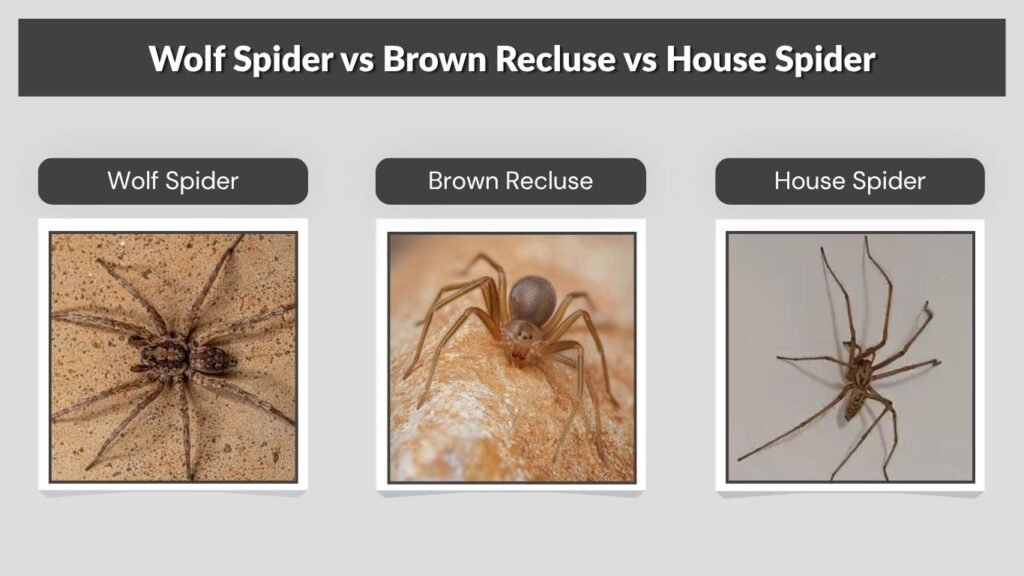
Brown recluse identification is important because it is frequently confused with harmless brown spiders.
Color alone should never be used to identify a brown recluse.
Brown Recluse Identification
Typical brown recluse features include:
- Six eyes arranged in three pairs
- Relatively uniform brown body
- Slender legs
- Violin-shaped marking in typical adults
- Lack of heavy hair or bold striping
Wolf spiders usually have eight eyes, including two very large central eyes, and often have obvious stripes or mottled patterns.
Many common house spiders also lack the classic brown recluse eye arrangement and body shape.
False Wolf Spider vs Giant House Spider
False wolf spiders resemble true wolf spiders in body shape and hunting behavior but belong to different spider families.
They can also be mistaken for giant house spiders.
How They Differ
False wolf spiders are generally roaming hunters and may resemble wolf spiders more strongly than funnel-weaving giant house spiders.
Giant house spiders are more closely associated with funnel webs and typically have longer, thinner legs.
Precise species identification may require close examination.
House Centipede vs Wolf Spider
A house centipede cannot truly be mistaken for a spider at close range, but fast movement can cause confusion when one suddenly crosses a floor.
House centipedes have many more legs than wolf spiders.
Main Differences
| Feature | House Centipede | Wolf Spider |
| Legs | 15 pairs | 4 pairs |
| Body | Long and segmented | Two main body sections |
| Antennae | Very long | No antennae |
| Movement | Extremely fast | Fast |
| Diet | Small arthropods | Small arthropods |
| Web | None | None |
Both can be beneficial because they prey on household pests.
Which Is Bigger: House Spider or Wolf Spider?
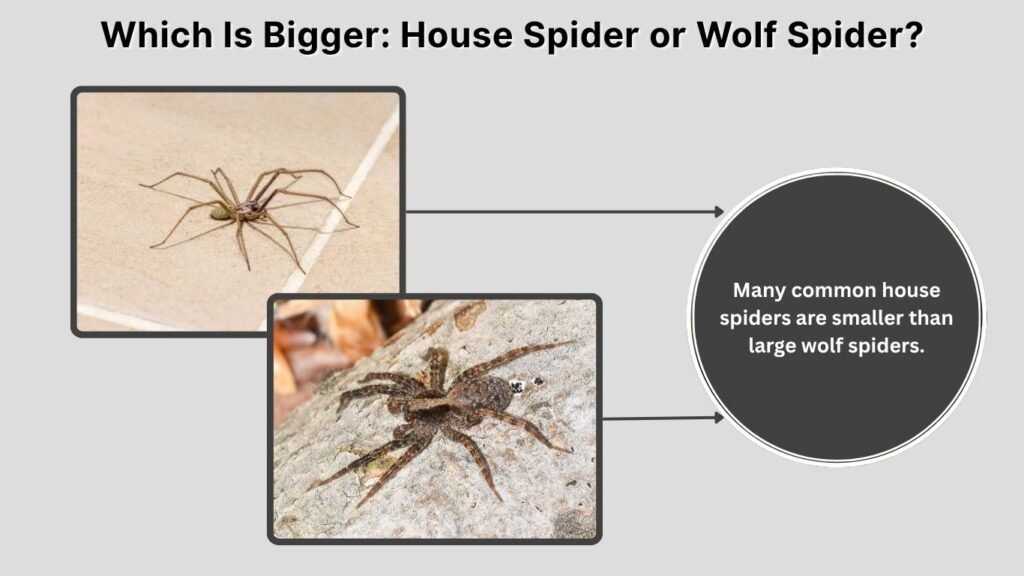
Size depends on which house spider is being compared.
Many common house spiders are smaller than large wolf spiders. However, giant house spiders may have a wider overall leg span than some wolf spiders.
Size Differences
Wolf spiders may range from very small species to individuals with bodies more than an inch long.
Giant house spiders can appear especially large because of their long legs.
Therefore, size alone is not a reliable identification feature.
Which Spider Is Faster?
Both wolf spiders and giant house spiders can move extremely quickly.
Wolf spiders depend on speed to chase prey, while giant house spiders may sprint when disturbed or when males search for mates.
Why Wolf Spiders Run
Wolf spiders are active hunters.
Instead of waiting for prey to become trapped in silk, they use excellent eyesight and fast movement to capture insects, other spiders, and small arthropods.
This explains why a wolf spider may suddenly run across a floor when lights are switched on.
House Spider vs Wolf Spider Bite
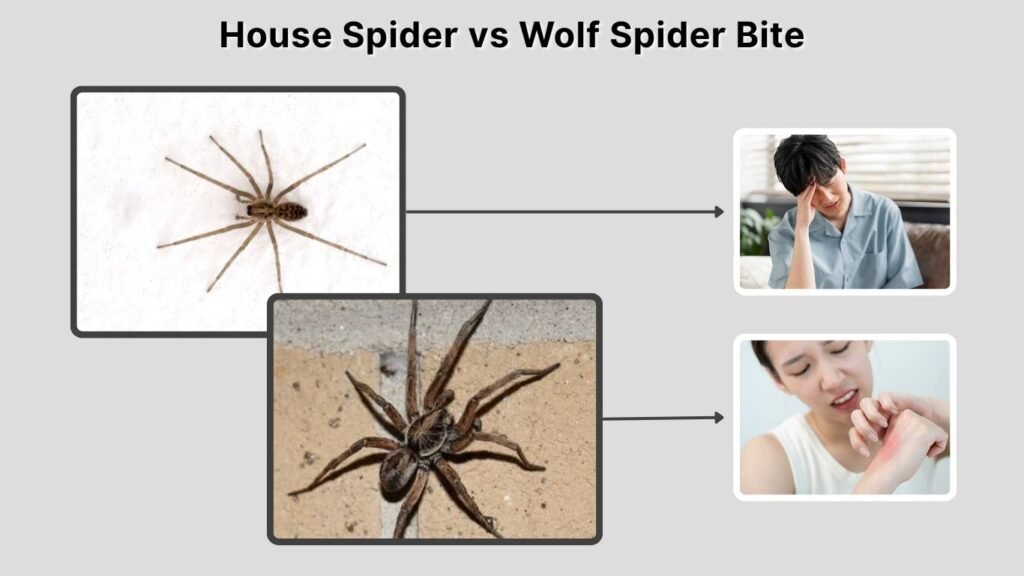
Both house spiders and wolf spiders can technically bite, but bites are uncommon because they generally prefer escaping.
Wolf spiders may bite defensively if trapped or handled roughly.
Wolf Spider Bite
Possible symptoms include:
- Mild pain
- Redness
- Swelling
- Itching
- Local tenderness
Most bites remain localized.
House Spider Bite
Most common house spiders are also reluctant to bite humans.
A bite may produce mild temporary irritation, although symptoms depend on the exact species.
Avoid attempting to identify a bite based only on skin appearance because many insect bites and skin conditions can look similar.
Are Wolf Spiders More Dangerous Than House Spiders?
Wolf spiders are venomous in the biological sense because they use venom to subdue prey, but they are not generally considered dangerous to humans.
Most common house spiders are also harmless.
Which One Should You Worry About?
For either spider, the best approach is usually to avoid direct handling.
Seek medical care if a suspected spider bite causes severe pain, rapidly worsening swelling, breathing difficulty, widespread symptoms, or other unusual reactions.
Why Are Wolf Spiders in the House?
Wolf spiders normally prefer outdoor environments but may accidentally enter houses while following prey or seeking shelter.
They may be seen more frequently in basements, garages, ground-level rooms, or near doors.
Common Reasons
They may enter because of:
- Insect prey
- Seasonal temperature changes
- Open doors
- Foundation cracks
- Garage gaps
- Moisture
- Firewood brought indoors
A single wolf spider does not usually indicate an infestation.
How to Remove a Wolf Spider or House Spider
A spider does not need to be killed simply because it entered your home.
Most can be safely relocated.
Safe Removal
- Place a container over the spider.
- Slide stiff cardboard beneath it.
- Carry it outside.
- Release it away from the entrance.
- Seal obvious gaps afterward.
Vacuuming webs and removing clutter can help reduce house spiders, while sealing ground-level gaps is especially useful for wandering wolf spiders.
FAQs
How Can I Tell a House Spider From a Wolf Spider?
Look at behavior first. Wolf spiders usually run across floors and hunt without capture webs. Common house spiders typically stay around tangled webs. Wolf spiders also have robust hairy bodies and two particularly large forward-facing eyes.
Is a Giant House Spider a Wolf Spider?
No. Giant house spiders and wolf spiders belong to different families. Giant house spiders are funnel weavers and have long, slender legs. Wolf spiders are active ground hunters with more robust bodies and do not rely on prey-catching webs.
Which Is More Dangerous, a House Spider or Wolf Spider?
Most common house spiders and wolf spiders pose little danger to people. Both generally avoid humans and bite mainly when trapped or handled. Wolf spider bites can cause localized pain or swelling but are not usually medically serious.
Is a Black House Spider a Wolf Spider?
No. A black house spider and a wolf spider are different spiders. Black house spiders typically remain around web retreats, while wolf spiders roam actively in search of prey and do not construct webs for capturing insects.
Why Do I Have a Wolf Spider in My House?
A wolf spider may have entered through a door, window, foundation gap, or other opening while hunting insects or seeking shelter. One spider usually represents an accidental visitor rather than an indoor colony.