
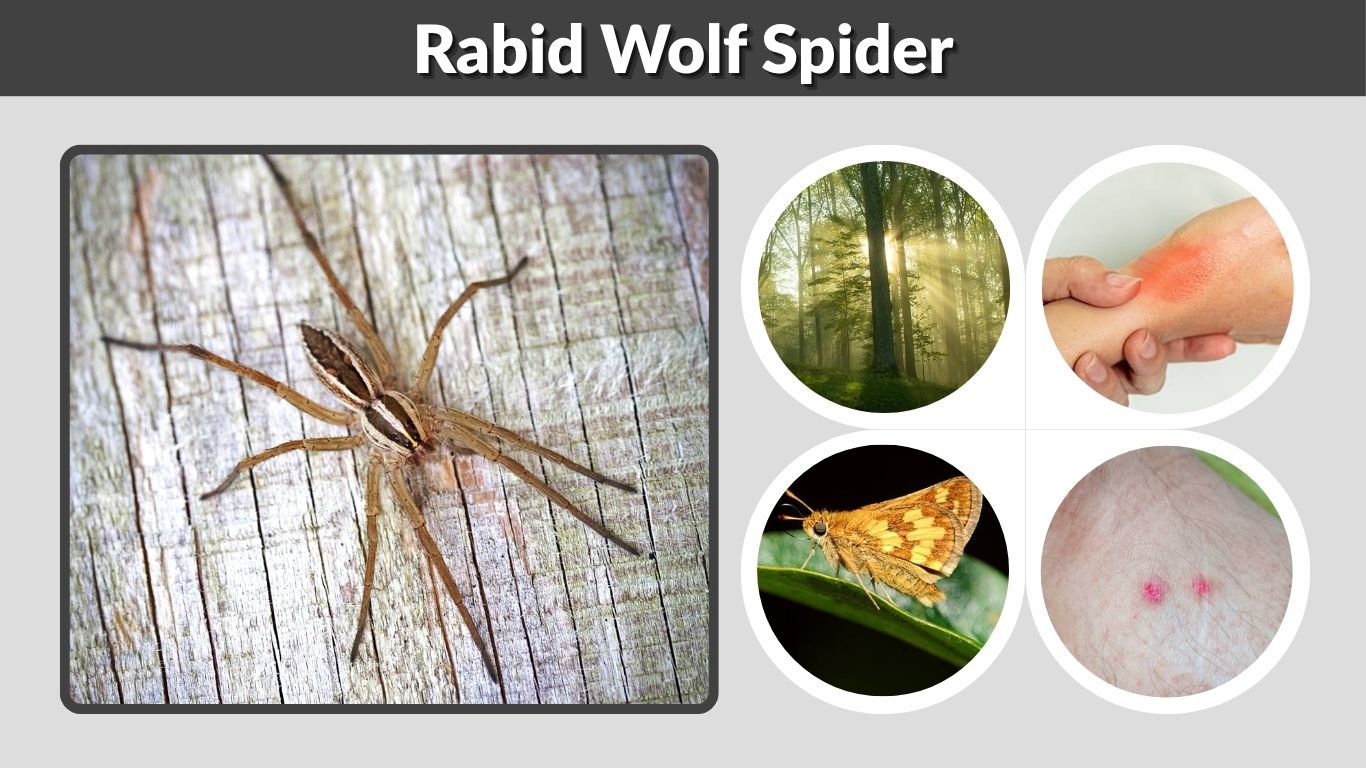
The rabid wolf spider (Rabidosa rabida) is a large, fast-moving wolf spider native to North America. Despite its alarming name, this spider does not have rabies and cannot transmit rabies to people or pets. The name is associated with its rapid, sometimes erratic movements. Rabid wolf spiders are active hunters that chase insects instead of catching them in sticky webs. Their distinctive stripes, large eyes, and powerful legs make them relatively recognizable once you know what features to look for.
What Is a Rabid Wolf Spider?
The rabid wolf spider belongs to the wolf spider family Lycosidae. Its scientific name is Rabidosa rabida. It is widespread through much of the eastern and central United States and is commonly encountered in fields, yards, woodlands, gardens, and occasionally homes.
Unlike orb weavers and many house spiders, it hunts actively rather than relying on a prey-catching web.
Rabid Wolf Spider Identification
Look for these common features:
- Light brown, tan, or yellowish overall coloration
- Two dark longitudinal stripes on the cephalothorax
- Dark central pattern running along the abdomen
- Pale lines bordering darker abdominal markings
- Long, strong, hairy legs
- Eight eyes arranged in characteristic wolf-spider rows
- Two particularly large forward-facing eyes
- Fast ground-running behavior
Adult males often have noticeably dark brown or black front legs, which can provide an additional identification clue.
Why Is It Called a Rabid Wolf Spider?
The word “rabid” can understandably cause confusion.
Rabid wolf spiders are not infected with rabies simply because of their name. The common name is associated with their extremely fast and seemingly erratic movement when disturbed. Spiders do not transmit rabies.
Rabid Wolf Spider Size
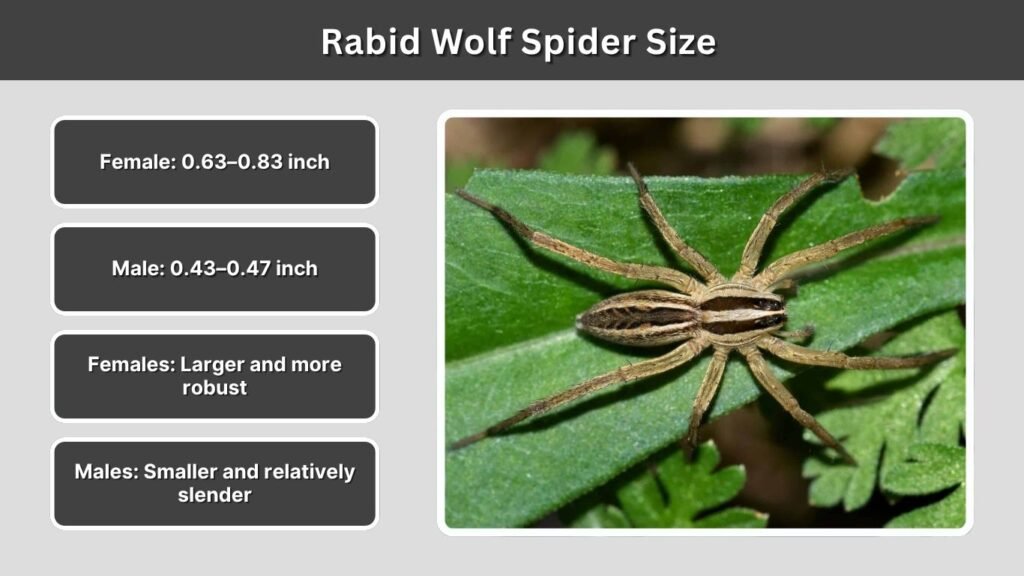
Rabid wolf spiders are relatively large compared with many common household spiders. Females are noticeably larger and heavier-bodied than males, while males tend to look slimmer and may have darker front legs.
Their long legs also make them appear considerably larger than their actual body measurement.
How Big Can a Rabid Wolf Spider Get?
Typical adult body lengths are approximately:
- Female: 0.63–0.83 inch
- Male: 0.43–0.47 inch
- Females: Larger and more robust
- Males: Smaller and relatively slender
When the legs are included, a large individual can look substantially bigger, especially when running across an open floor.
Male vs. Female Rabid Wolf Spider
Male and female rabid wolf spiders have broadly similar striped coloration, but there are several useful differences. Sex can be especially noticeable in mature specimens.
Females also display one of the most interesting parental behaviors among spiders.
Male Rabid Wolf Spider
Adult males generally have:
- Smaller bodies
- Slimmer abdomens
- Longer-looking legs
- Dark brown or black front legs
- Enlarged pedipalps when mature
The dark first pair of legs is particularly helpful when distinguishing mature males from similar wolf spiders.
Female Rabid Wolf Spider
Females are generally:
- Larger than males
- More heavily built
- Broader through the abdomen
- Capable of carrying an egg sac
- Seen carrying spiderlings on their back
Female wolf spiders attach their egg sacs to their spinnerets. Once the young hatch, the spiderlings climb onto their mother’s abdomen and remain there temporarily.
Where Do Rabid Wolf Spiders Live?
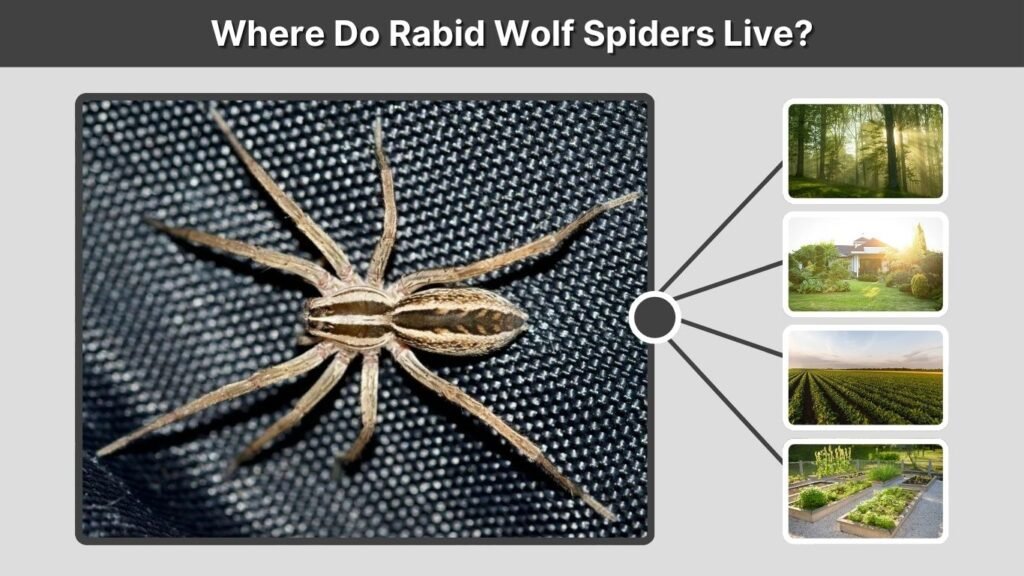
The rabid wolf spider is native to North America and has a broad range across much of the United States. Records extend through eastern and central regions, including from Maine south toward Florida and west through areas such as Oklahoma, Nebraska, and Texas.
They are wandering ground hunters, so they can appear in many environments where insect prey is available.
Rabid Wolf Spider Habitat
Common habitats include:
- Woodlands
- Fields
- Gardens
- Lawns
- Agricultural areas
- Leaf litter
- Beneath logs
- Under stones
- Around buildings
- Other sheltered ground-level areas
They may hide during part of the day and become more active when conditions are suitable for hunting.
Texas Rabid Wolf Spider
The rabid wolf spider is well established in Texas, particularly across eastern and central portions of the state. Its brown coloration and longitudinal stripes help it blend with soil, grass, bark, and dry vegetation.
People may encounter them in yards, gardens, fields, garages, and around homes.
Rabid Wolf Spider in the House
Finding a large rabid wolf spider indoors can be surprising because these spiders run quickly when disturbed.
However, they generally wander indoors rather than establishing permanent colonies.
Why They Enter Homes
They may enter while:
- Hunting insects
- Looking for shelter
- Searching for mates
- Following prey
- Escaping outdoor conditions
- Moving through gaps beneath doors
Wolf spiders do not need a web-filled corner to live. Because they actively hunt, they may simply move from room to room searching for prey.
If possible, an unwanted spider can be trapped beneath a container and relocated outdoors rather than handled directly.
Rabid Wolf Spider Bite
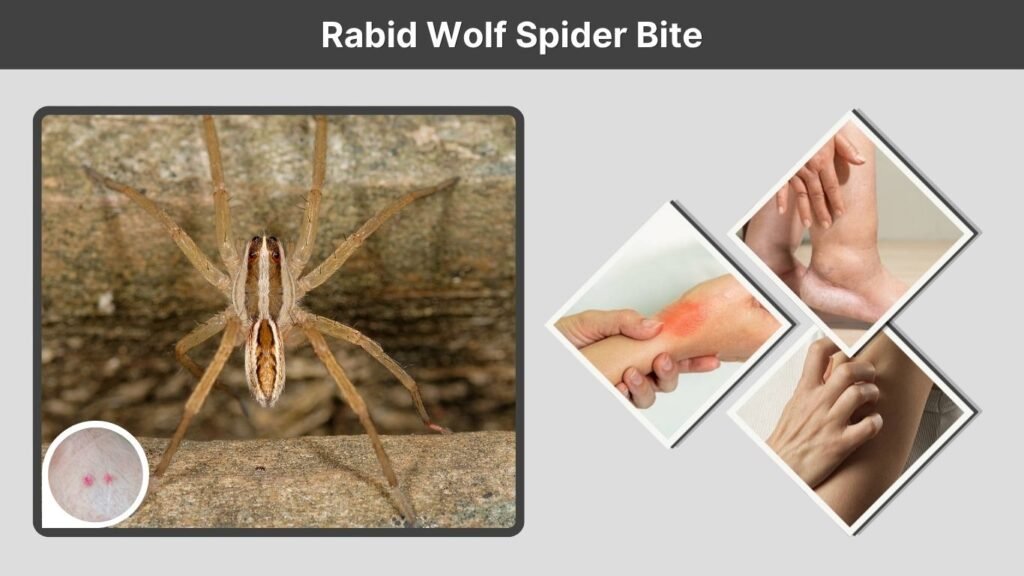
Rabid wolf spiders possess venom for immobilizing their prey, but they generally avoid biting people. A bite is more likely if the spider is trapped against the skin, squeezed, or deliberately handled.
Wolf spider bites most commonly produce localized symptoms.
Rabid Wolf Spider Bite Symptoms
Possible symptoms include:
- Local pain
- Redness
- Mild swelling
- Itching
- Tenderness
- Temporary burning or irritation
The bite can hurt, but wolf spider bites are generally not considered medically significant for most people.
Washing the site with soap and water and applying a wrapped cold pack can help with minor discomfort.
Seek medical attention for severe or worsening symptoms, difficulty breathing, widespread swelling, or if the spider cannot be confidently identified.
Is a Rabid Wolf Spider Poisonous?
Rabid wolf spiders are venomous, not poisonous.
They inject venom through their fangs to immobilize prey. Their venom is not generally considered dangerous to humans, although any bite can cause pain or localized irritation.
Rabid Wolf Spider vs. Brown Recluse
Rabid wolf spiders and brown recluses may both be brown, but they look quite different once their major features are compared.
Rabid wolf spiders are usually hairier, more strongly patterned, and more robust.
Key Differences
| Feature | Rabid Wolf Spider | Brown Recluse |
| Body | Hairy and robust | Smoother, slimmer |
| Pattern | Strong longitudinal stripes | Usually plain brown |
| Eyes | Eight | Six |
| Legs | Hairier and stronger | Slender |
| Movement | Fast ground hunter | More secretive |
| Medical concern | Usually minor | Potentially medically significant |
A brown recluse is also famous for a violin-like marking, although markings alone should never be relied upon for definite identification.
Rabid Wolf Spider vs. Grass Spider
Grass spiders are another common source of confusion because they can have similar brown coloration and longitudinal stripes.
Behavior and web use provide some of the easiest clues.
How to Tell Them Apart
Rabid wolf spiders:
- Actively chase prey
- Have especially noticeable large eyes
- Look relatively robust
- Do not construct funnel webs for catching prey
Grass spiders:
- Commonly live in funnel-shaped sheet webs
- Have prominent elongated spinnerets
- Often remain near their web
- Generally have a more elongated appearance
If a striped brown spider is sitting inside a funnel-shaped lawn web, a grass spider is more likely.
What Does a Rabid Wolf Spider Eat?
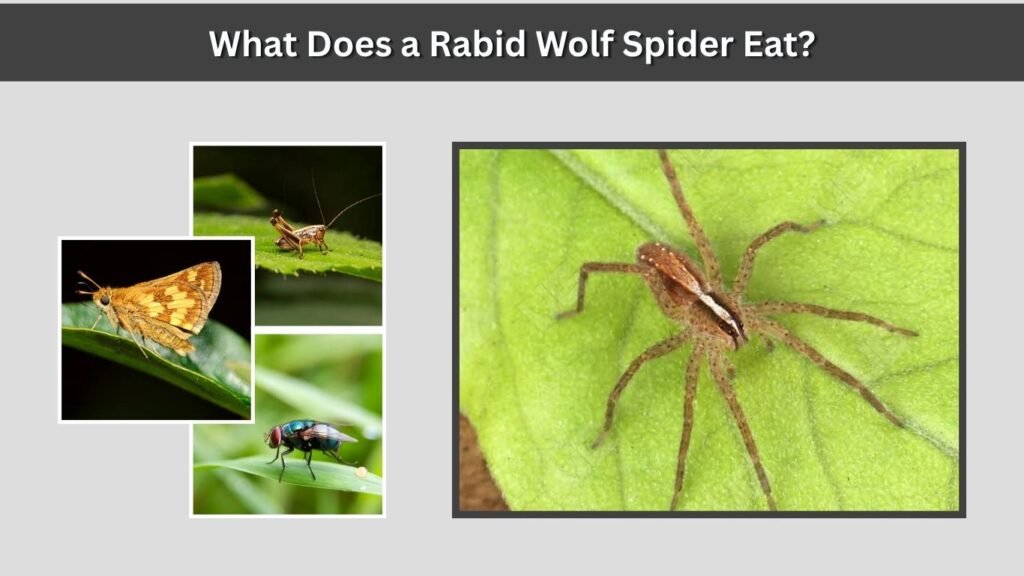
Rabid wolf spiders are carnivorous hunters. They mostly prey on insects and other small arthropods encountered while wandering at ground level.
Rather than waiting for food to enter a web, they pursue or ambush it.
Typical Diet
Their prey may include:
- Crickets
- Flies
- Moths
- Beetles
- Cockroach nymphs
- Grasshoppers
- Caterpillars
- Small spiders
- Other small arthropods
This predatory behavior can make wolf spiders useful around gardens because they naturally consume many insects.
Rabid Wolf Spider Web and Hunting Behavior
Rabid wolf spiders do not normally create sticky webs for catching insects. Their speed and eyesight allow them to hunt directly.
They may ambush prey or rapidly chase an insect before grabbing it with their legs and delivering a venomous bite.
Silk is still important for reproduction and other purposes, particularly when females construct and carry egg sacs.
Are Rabid Wolf Spiders Dangerous?
Despite their name and impressive appearance, rabid wolf spiders generally present little danger to humans.
Their first defense is often to run away. Their remarkable speed can make them appear aggressive even when they are simply trying to escape.
The spider’s venom is primarily intended for relatively small prey rather than people.
FAQs
1. Can a rabid wolf spider give you rabies?
No. The name “rabid wolf spider” does not mean the spider carries rabies. The name is associated with its rapid movements, and the spider cannot transmit rabies to humans or pets.
2. Is a rabid wolf spider bite dangerous?
Usually not. A bite can produce temporary pain, redness, swelling, or itching, but wolf spider bites generally do not cause serious medical problems in healthy people. Severe or unusual symptoms should still receive medical attention.
3. How big does a rabid wolf spider get?
Adult females commonly measure about 0.63–0.83 inch in body length, while males are typically around 0.43–0.47 inch. Their long legs can make them appear considerably larger.
4. What do rabid wolf spiders eat?
They prey mainly on insects and small arthropods, including crickets, beetles, flies, moths, cockroach nymphs, grasshoppers, caterpillars, and smaller spiders.
5. How can you identify a male rabid wolf spider?
Adult males tend to be smaller and slimmer than females. One particularly useful characteristic is the dark brown or black coloration on the first pair of legs, combined with the species’ characteristic striped body pattern.
