
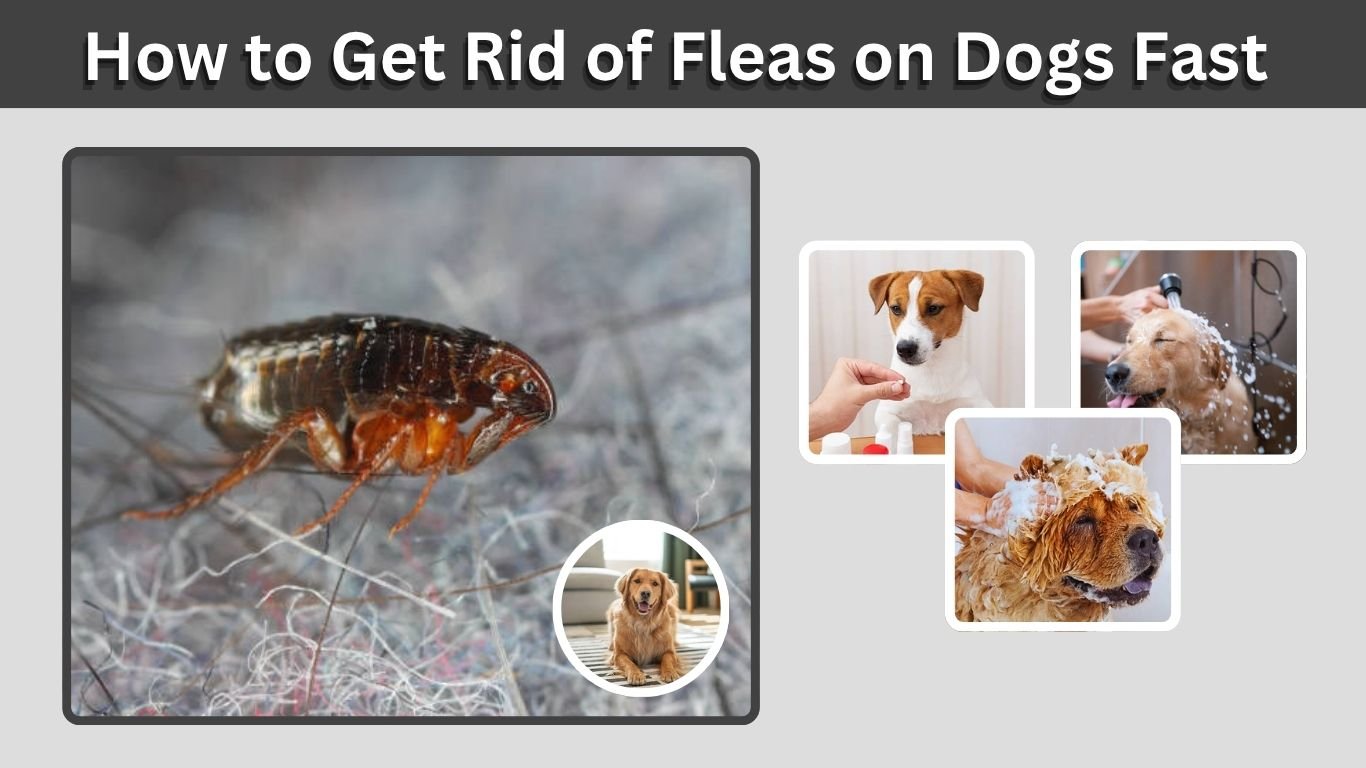
To get rid of fleas on a dog, use a veterinarian-approved flea treatment, remove visible fleas with a flea comb, and clean the home at the same time. Treating only the dog rarely ends an established infestation because flea eggs quickly fall from the animal into bedding, carpets, furniture, and floor cracks. Immediate treatment can kill adult fleas, but complete control may take several weeks as immature fleas continue emerging.
How to Check Your Dog for Fleas
Dogs with fleas may scratch, chew, lick, or rub themselves frequently. Fleas commonly gather around the neck, abdomen, groin, hind legs, and base of the tail.
Look for Fleas and Flea Dirt
Separate the coat under bright light and search for small, fast-moving brown insects. You may also see black, pepper-like particles called flea dirt, which consists largely of digested blood.
Comb the coat with a fine-toothed flea comb and place collected debris on a damp white paper towel. Flea dirt dissolves into reddish-brown marks, while ordinary soil usually remains dark.
Recognize More Serious Symptoms
Contact a veterinarian when your dog has open sores, moist skin, scabs, significant hair loss, pus, odor, or intense itching. These symptoms may indicate flea allergy dermatitis or a secondary skin infection.
Pale gums, weakness, rapid breathing, or extreme tiredness require prompt veterinary attention because heavy infestations can cause anemia, particularly in puppies and small dogs.
How to Get Rid of Fleas on a Dog Fast
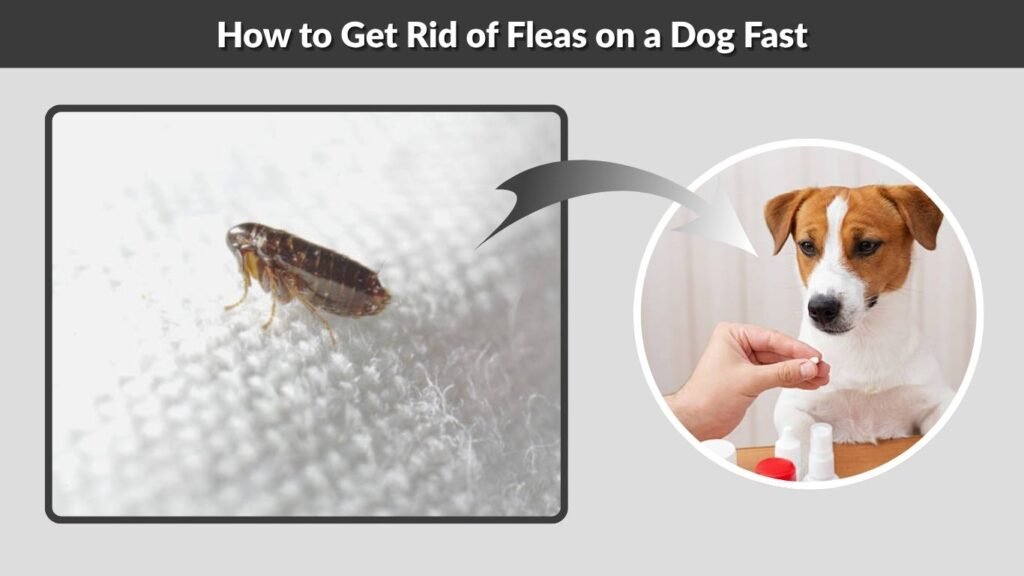
The fastest safe approach combines immediate adult-flea removal with ongoing protection. The correct treatment depends on the dog’s age, weight, health, medications, and history of reactions.
1. Ask About an Effective Flea Treatment
Veterinary flea products may be available as oral tablets, topical liquids, collars, sprays, or shampoos. Some kill adult fleas quickly, while others provide longer-lasting protection or interrupt flea development.
Choose a product labeled for dogs of your pet’s exact age and weight. Speak with a veterinarian before treating a sick, elderly, pregnant, nursing, medicated, or seizure-prone dog.
2. Apply the Product Correctly
Read the directions every time, even when you have used the product before. Never increase the dose or shorten the application interval in an attempt to kill fleas faster.
Do not combine flea products unless a veterinarian approves the combination. Keep the packaging in case your dog develops a reaction or the product needs to be identified later.
3. Use a Flea Comb
Comb slowly through the neck, back, abdomen, legs, and tail base. Drop captured fleas into a bowl of hot, soapy water.
Combing provides immediate relief and removes fleas and flea dirt, but it cannot replace a product that provides continued control. Repeat it daily while the infestation is active.
Flea Treatment Options Compared
| Method | What it does | Main limitation |
| Fast-acting oral treatment | Kills feeding adult fleas quickly | May provide only short-term control |
| Long-lasting oral preventive | Kills fleas for a labeled period | Requires correct age and weight |
| Topical treatment | Spreads through the skin or coat | Must be applied correctly and kept away from licking |
| Flea collar | Offers extended protection | Fit, age, and product quality matter |
| Flea shampoo | Removes or kills fleas during bathing | Usually has limited residual effect |
| Flea comb | Physically removes fleas and dirt | Does not prevent new fleas from jumping on |
No single method is ideal for every dog. A veterinarian can recommend an option suited to the animal’s health, household pets, local flea pressure, and lifestyle.
How to Get Rid of Flea Eggs on Dogs
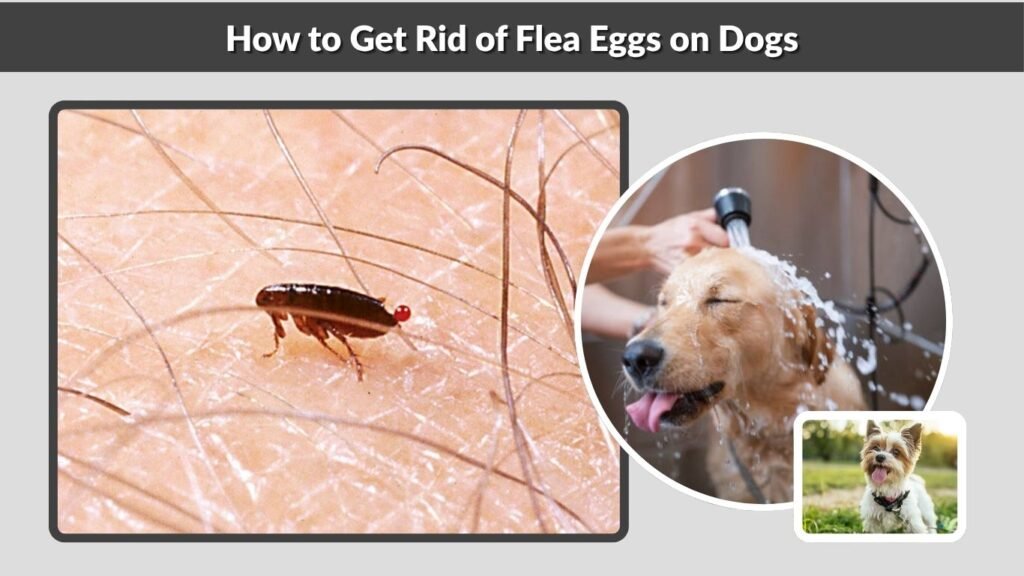
Most flea eggs do not remain attached to a dog. Adult fleas lay eggs in the coat, but the eggs usually fall into the surroundings within hours. They accumulate in bedding, carpeting, upholstery, floor gaps, and places where the dog rests.
Bathe or Comb the Dog
Bathing with a dog-safe shampoo can remove flea dirt, some eggs, and adult fleas. However, ask whether bathing will interfere with a recently applied topical treatment.
A flea comb can also remove loose debris. There is no need to scrape the skin or use harsh chemicals to remove eggs.
Treat the Environment
Vacuuming is one of the most useful first steps for removing adult fleas, eggs, and larvae from the home. Vacuum carpets, cushioned furniture, baseboards, cracks, and areas beneath furniture every day during the early control period.
Wash pet bedding and washable fabrics in hot, soapy water. Steam cleaning may help kill multiple flea stages in carpets, especially where pets sleep.
How to Get Rid of Fleas Naturally on Dogs
Natural methods can reduce flea numbers, but they are usually not enough to control a moderate or severe infestation by themselves.
Safer Nonchemical Steps
Use a flea comb daily, wash bedding, vacuum frequently, and keep indoor resting areas clean. These measures physically remove fleas and immature stages without applying additional pesticides.
Keeping the dog consistently protected with an appropriate preventive remains important because newly emerged fleas can jump back onto the animal.
Home Remedies to Avoid
Do not apply concentrated essential oils, household insecticides, bleach, alcohol, garlic mixtures, or products intended for floors and yards directly to a dog. “Natural” does not automatically mean safe.
Use only products labeled for the dog’s species, age, and weight. Never use a dog-only flea treatment on a cat because some ingredients that dogs tolerate can seriously harm cats.
How to Remove Flea Dirt From a Dog
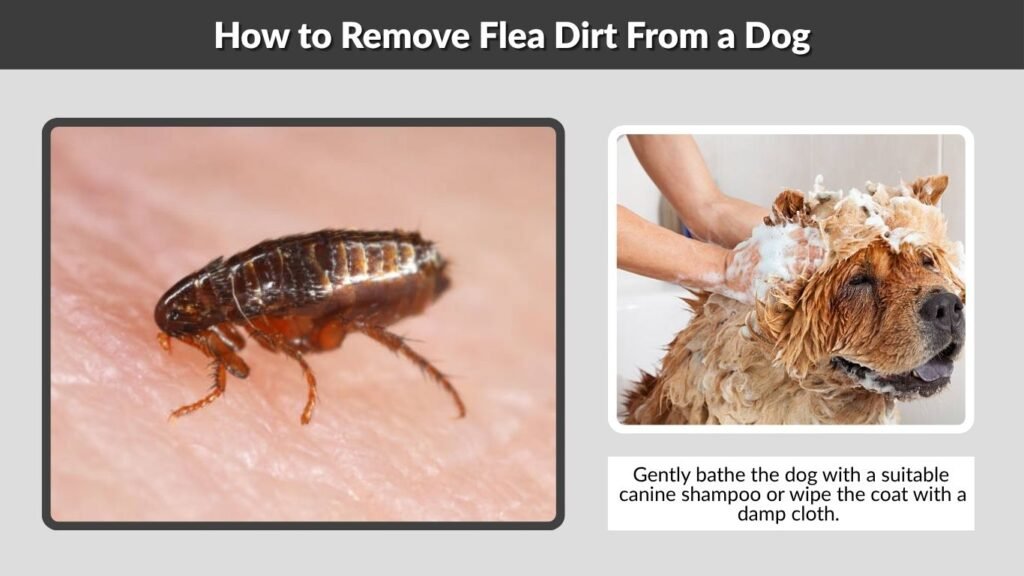
Once flea treatment has started, gently bathe the dog with a suitable canine shampoo or wipe the coat with a damp cloth. Use a flea comb to remove remaining black particles.
Flea dirt may return until all adult fleas are controlled. Therefore, repeatedly cleaning the coat without treating the infestation will not solve the underlying problem.
Scabs should not be pulled from the skin. A dog with bleeding, crusting, odor, or painful skin may need treatment for inflammation or infection.
How to Get Rid of Fleas on Puppies
Puppies require extra caution because many flea products have minimum age and weight requirements. Do not use a treatment unless its label specifically permits use on a puppy of that age and size.
For puppies too young for medication, the FDA recommends using a flea comb to remove fleas and eggs while seeking veterinary guidance. Heavy infestations can cause dangerous blood loss quickly in young animals.
Treat Every Pet in the House
Dogs and cats sharing a home should generally receive appropriate species-specific flea control at the same time. An untreated animal can continue supporting adult fleas and reseeding the environment.
Never divide one large-dog dose among smaller dogs or use a dog product on a cat. Apply each treatment according to its individual label and keep pets apart until topical products have dried when directed.
Why Are Fleas Still on My Dog After Treatment?
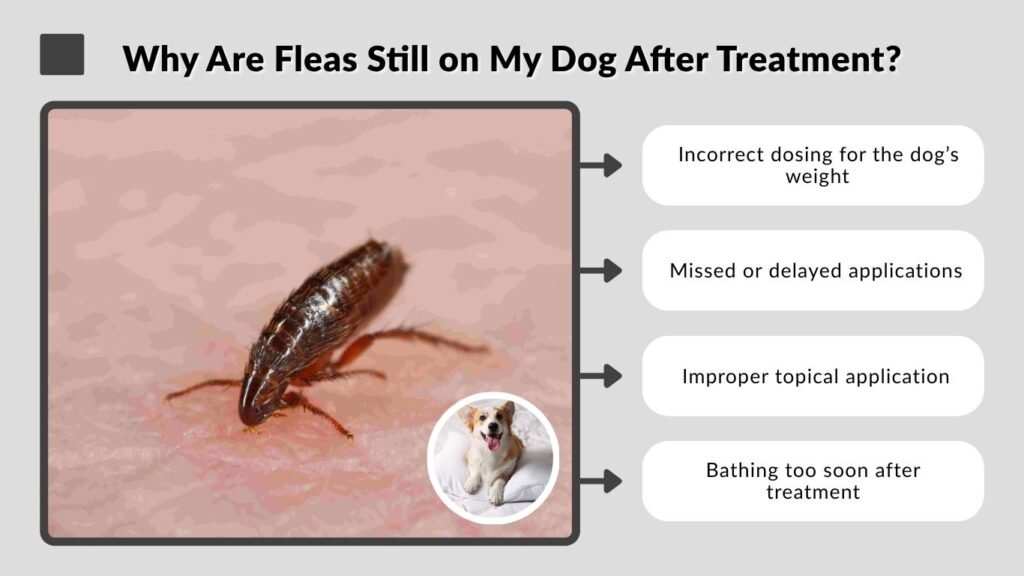
Seeing fleas shortly after treatment does not always mean the product failed. Pupae hidden in carpets, bedding, or furniture can continue producing adults, and these new fleas may jump onto the treated dog before dying.
Moderate or severe household infestations may take several months to control fully. Continue the preventive on schedule, vacuum frequently, wash bedding, and treat all pets rather than repeatedly applying extra doses.
Possible reasons for continued fleas include:
- Incorrect dosing for the dog’s weight
- Missed or delayed applications
- Improper topical application
- Bathing too soon after treatment
- Untreated pets in the household
- Persistent environmental infestation
- Use of an ineffective or counterfeit product
Watch for Treatment Reactions
After administering a new product, monitor your dog for vomiting, diarrhea, drooling, poor appetite, unusual tiredness, wobbliness, tremors, or seizures.
Contact a veterinarian immediately if any concerning symptoms develop. For a reaction to a topical product, the veterinarian or product label may direct you to wash the dog using mild soap and plenty of water.
FAQs
Can fleas be removed from a dog instantly?
A fast-acting treatment and thorough flea combing may kill or remove many adult fleas within hours. However, no one-time treatment eliminates eggs, larvae, and pupae throughout the home. Continued prevention and environmental cleaning are necessary to stop newly emerging fleas.
How long does it take to get rid of fleas completely?
Adult fleas may begin dying soon after treatment, but complete household control often takes several weeks. Moderate or severe infestations may require several months because protected pupae continue producing adults. Maintain treatment without skipping doses and keep cleaning the environment.
Can I get rid of fleas without bathing my dog?
Yes. Oral treatments, certain topical products, collars, and flea combing do not necessarily require bathing. The best option depends on the dog. Follow the product instructions because bathing may reduce the effectiveness of some topical treatments.
Why does my dog still have flea dirt after treatment?
Old flea dirt can remain trapped in the coat after adult fleas die. Remove it by combing or bathing with a suitable dog shampoo. New flea dirt appearing repeatedly may mean live fleas are still feeding or emerging from the home environment.
How can I prevent fleas from returning?
Use year-round veterinarian-recommended prevention on every pet, vacuum regularly, wash bedding, and monitor the coat with a flea comb. CAPC recommends lifelong year-round flea control for dogs to prevent infestations on pets and the establishment of fleas inside homes.
