
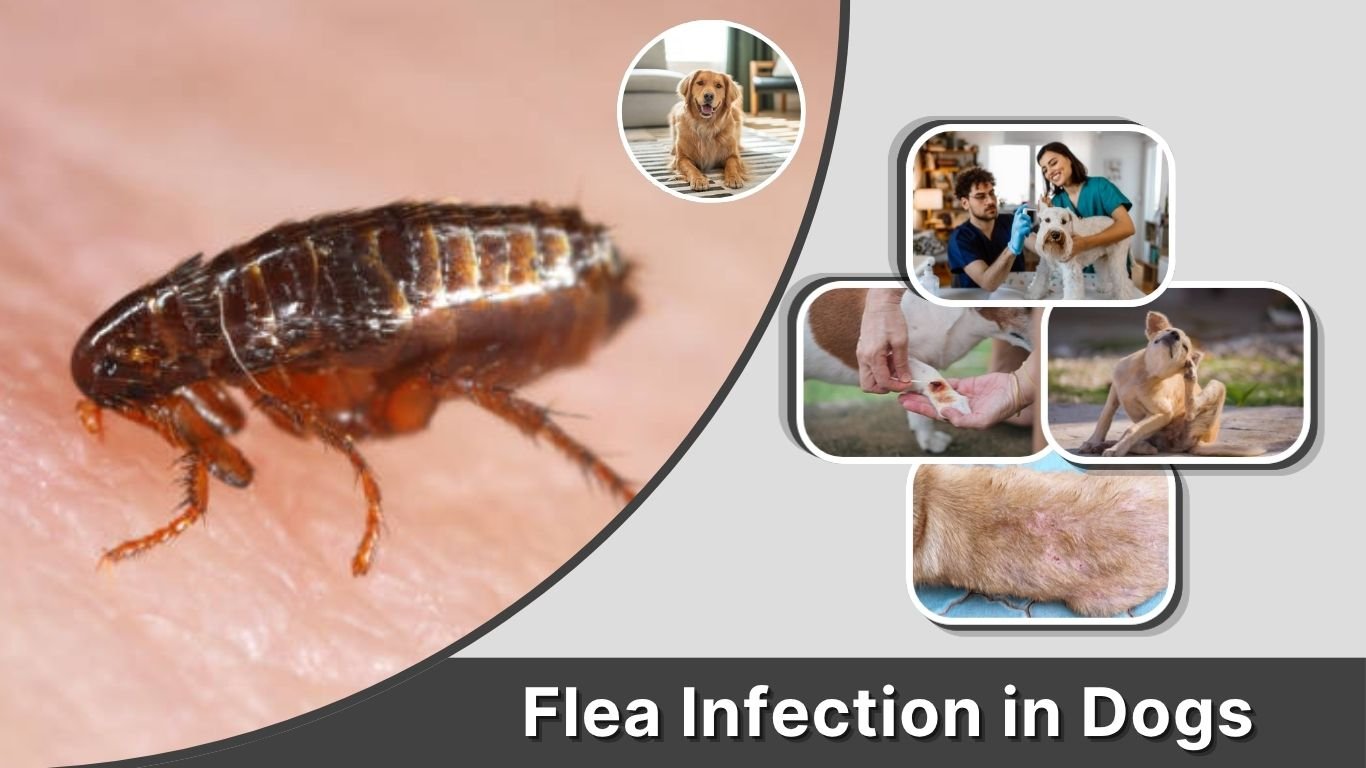
“Flea infection” in dogs usually refers to a flea infestation, flea allergy dermatitis, or a secondary skin infection caused by scratching and chewing. Flea bites can produce intense itching, redness, scabs, hair loss, and open wounds. Damaged skin may then develop bacterial or yeast infections. Effective treatment requires controlling fleas on every pet, treating the dog’s skin problems, and reducing fleas in the home. Severe irritation, pus, odor, weakness, or pale gums requires veterinary attention.
Flea Infestation vs. Flea-Related Infection
Fleas are parasites rather than infections themselves. They feed on blood and inject saliva into the skin. Some dogs experience mild irritation, while flea-allergic dogs can develop severe itching after very limited exposure.
The resulting scratching, licking, and biting can break the skin and allow bacteria or yeast to multiply. This secondary infection may require veterinary treatment in addition to flea control.
| Condition | What it means | Typical signs |
| Flea infestation | Live fleas are feeding on the dog | Scratching, flea dirt, visible fleas |
| Flea allergy dermatitis | Allergic reaction to flea saliva | Severe itching, hair loss, scabs |
| Bacterial skin infection | Bacteria infect damaged skin | Pustules, crusts, discharge, odor |
| Yeast dermatitis | Yeast overgrows on inflamed skin | Greasy skin, odor, redness |
| Flea-related tapeworm | Dog swallows an infected flea | Rice-like segments near the anus |
Symptoms of Flea Infection in Dogs
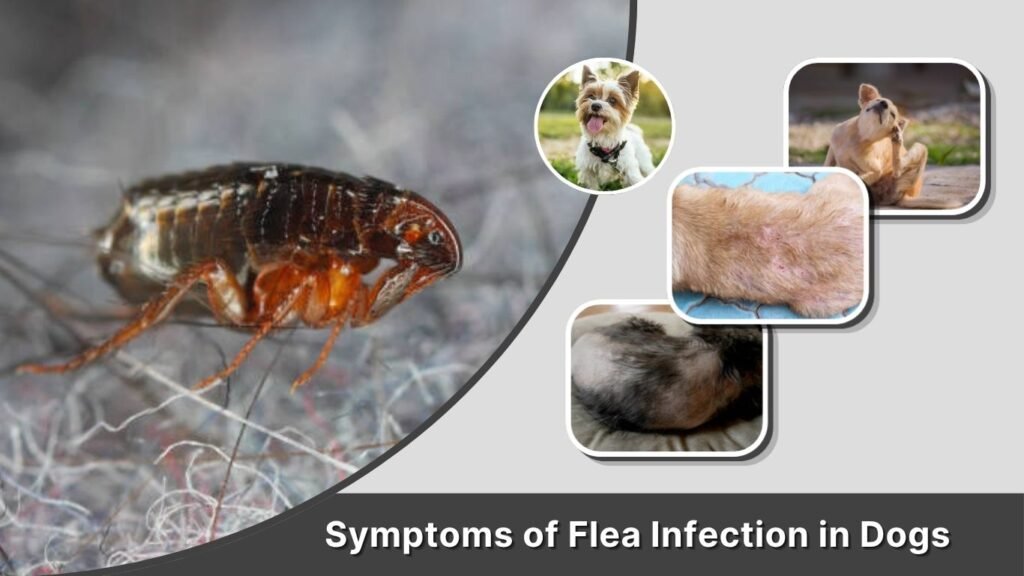
Flea problems frequently affect the lower back, hips, thighs, abdomen, and base of the tail. However, an allergic dog may itch across much of its body.
Early Signs
Common early symptoms include:
- Frequent scratching and biting
- Licking the legs, belly, or hindquarters
- Restlessness or difficulty sleeping
- Small red bumps
- Fleas moving through the coat
- Black specks known as flea dirt
- Mild hair thinning
Flea dirt consists largely of digested blood. When placed on a damp white paper towel, it may dissolve into reddish-brown stains. A highly allergic dog may have few visible fleas because constant grooming removes them.
Signs of an Infected Flea Bite
A flea bite may become infected after repeated scratching damages the skin. Warning signs include:
- Increasing redness or swelling
- Moist, raw skin
- Yellow or green discharge
- Pus-filled bumps
- Thick crusts or scabs
- Unpleasant odor
- Pain when touched
- Spreading hair loss
- Skin that becomes dark or thickened
These signs can indicate bacterial pyoderma, yeast dermatitis, or another condition requiring veterinary diagnosis. Skin cytology or other tests may be needed to identify the cause.
Flea Allergy Dermatitis in Dogs
Flea allergy dermatitis occurs when a dog’s immune system overreacts to proteins in flea saliva. Even a small number of bites can cause severe itching in a sensitive dog.
What Does It Look Like?
Typical signs include intense scratching, hair loss, red skin, crusts, and scabs around the tail base, hips, and thighs. Chronic cases may lead to thickened or darkened skin.
The dog’s self-trauma can create hot spots and secondary bacterial or yeast infections. Treating the inflammation without controlling the fleas will provide only temporary improvement.
How to Treat Flea Infection in Dogs
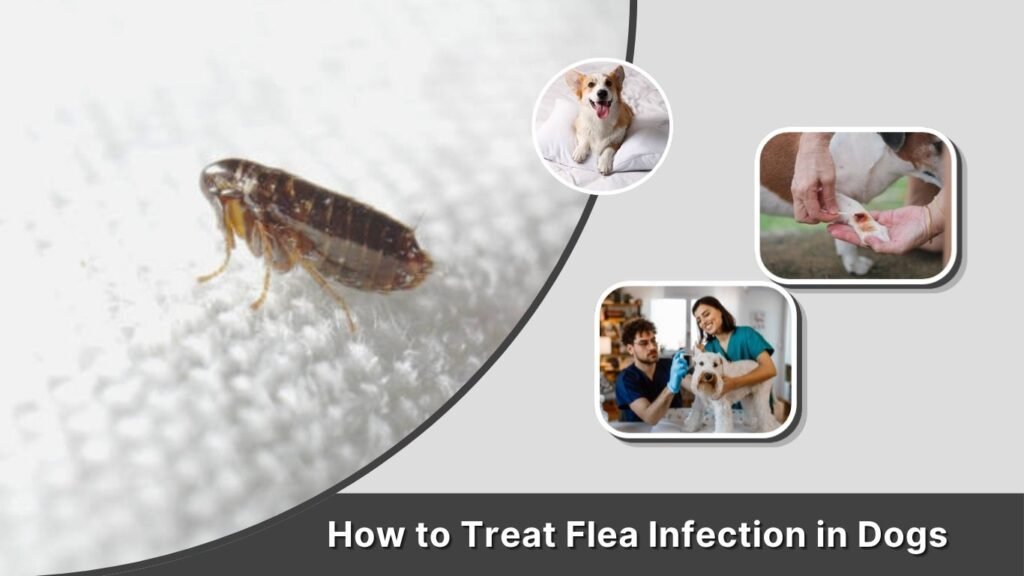
Treatment must address both the fleas and any skin complications. A veterinarian should examine dogs with open wounds, discharge, odor, significant pain, or widespread irritation.
1. Use a Veterinary Flea Treatment
Ask a veterinarian to recommend a flea-control product suitable for the dog’s age, weight, health, and lifestyle. Options may include oral tablets, topical treatments, or collars.
Every dog and cat in the household generally needs an appropriate product, even when only one animal appears affected. Do not apply a dog-only product to a cat; some ingredients considered suitable for dogs can be dangerous to cats.
2. Treat the Skin Infection
A veterinarian may recommend an antiseptic wash, medicated shampoo, topical therapy, or prescription medication depending on whether the infection is bacterial, fungal, localized, or widespread.
Antibiotics should not be given without veterinary direction. The dog may require testing to select the correct treatment, especially when infections are recurrent or have not responded to previous medication.
3. Prevent Further Scratching
A recovery collar may be needed when the dog continually bites or licks an infected area. Keep the skin clean and dry while following the veterinarian’s bathing and medication instructions.
Avoid applying alcohol, hydrogen peroxide, essential oils, concentrated vinegar, household disinfectants, human antibiotic creams, or leftover medicines unless a veterinarian specifically recommends them. These products may irritate the skin, delay healing, or be unsafe if licked.
4. Control Fleas in the Home
Most of a flea population may be present in the surroundings as eggs, larvae, and pupae rather than as adults on the dog.
Wash pet bedding in hot water, vacuum rugs and furniture regularly, and empty the vacuum promptly. Continue the prescribed preventive on every pet. Established infestations may take weeks or even several months to eliminate because immature fleas continue developing in the environment.
Can Fleas Cause Other Health Problems?
Fleas can cause more than itching, especially in puppies, small dogs, allergic animals, and dogs carrying heavy infestations.
Anemia
Because fleas consume blood, a severe infestation may cause anemia. Puppies and small or weakened dogs are at greatest risk.
Seek urgent veterinary care for pale or white gums, unusual tiredness, weakness, rapid breathing, collapse, or poor appetite.
Tapeworm Infection
Dogs can acquire the tapeworm Dipylidium caninum by swallowing an infected flea while grooming. Owners may notice small, white segments resembling rice or cucumber seeds around the anus, in stool, or on bedding.
Tapeworm treatment must be combined with flea control; otherwise, reinfection is likely.
Yeast and Ear Problems
Fleas do not usually directly create an ear infection. However, allergic skin inflammation can affect multiple areas, and scratching may worsen existing ear or skin disease. Dogs with head shaking, ear odor, discharge, redness, or pain should receive a veterinary examination.
Yeast may also overgrow on inflamed skin, producing odor, greasiness, redness, and persistent itching.
When to Contact a Veterinarian
Arrange an appointment when the dog has severe itching, open sores, pus, odor, expanding redness, widespread hair loss, or symptoms that persist despite flea control.
Seek urgent care for:
- Pale gums or marked weakness
- Difficulty breathing
- Facial swelling
- Collapse
- Extensive bleeding or raw skin
- A very young puppy with many fleas
- Rapidly spreading swelling or infection
A veterinarian can distinguish flea allergy dermatitis from mites, environmental allergies, food reactions, ringworm, and other conditions that may look similar.
Preventing Future Flea Infections
Consistent prevention is easier than treating an established household infestation. Use the flea product on its recommended schedule, including during winter when fleas may survive inside heated buildings.
Wash bedding, vacuum areas where pets rest, inspect the coat with a flea comb, and treat every household pet with a species-appropriate product. The Companion Animal Parasite Council recommends year-round flea control for dogs.
FAQs
What do infected flea bites look like on dogs?
They may appear red, swollen, moist, crusted, or painful. Pustules, discharge, odor, spreading hair loss, and raw skin suggest a secondary bacterial or yeast infection rather than a simple bite. A veterinarian should evaluate these signs.
How are infected flea bites treated?
Treatment generally combines effective flea control with veterinary care for the damaged skin. Depending on the diagnosis, the dog may need an antiseptic wash, medicated shampoo, topical medicine, itch relief, or prescription antibiotics or antifungal treatment.
Can dog fleas infect humans?
Dog and cat fleas can bite people living in an infested home. Fleas can also carry certain disease-causing organisms, although most household bites result mainly in itchy red bumps. Treat the pets and environment rather than relying only on human insect repellent.
Can a dog get tapeworms from fleas?
Yes. A dog can acquire Dipylidium caninum by swallowing an infected flea during grooming. The infection does not usually result from the flea biting the dog. Flea control is essential to prevent the tapeworm from returning.
How long does a flea infestation take to eliminate?
Adult fleas may begin dying quickly after treatment, but eggs, larvae, and pupae can remain in the home. Complete control may take several weeks and, in established infestations, up to a few months. Every pet must remain consistently protected.
