
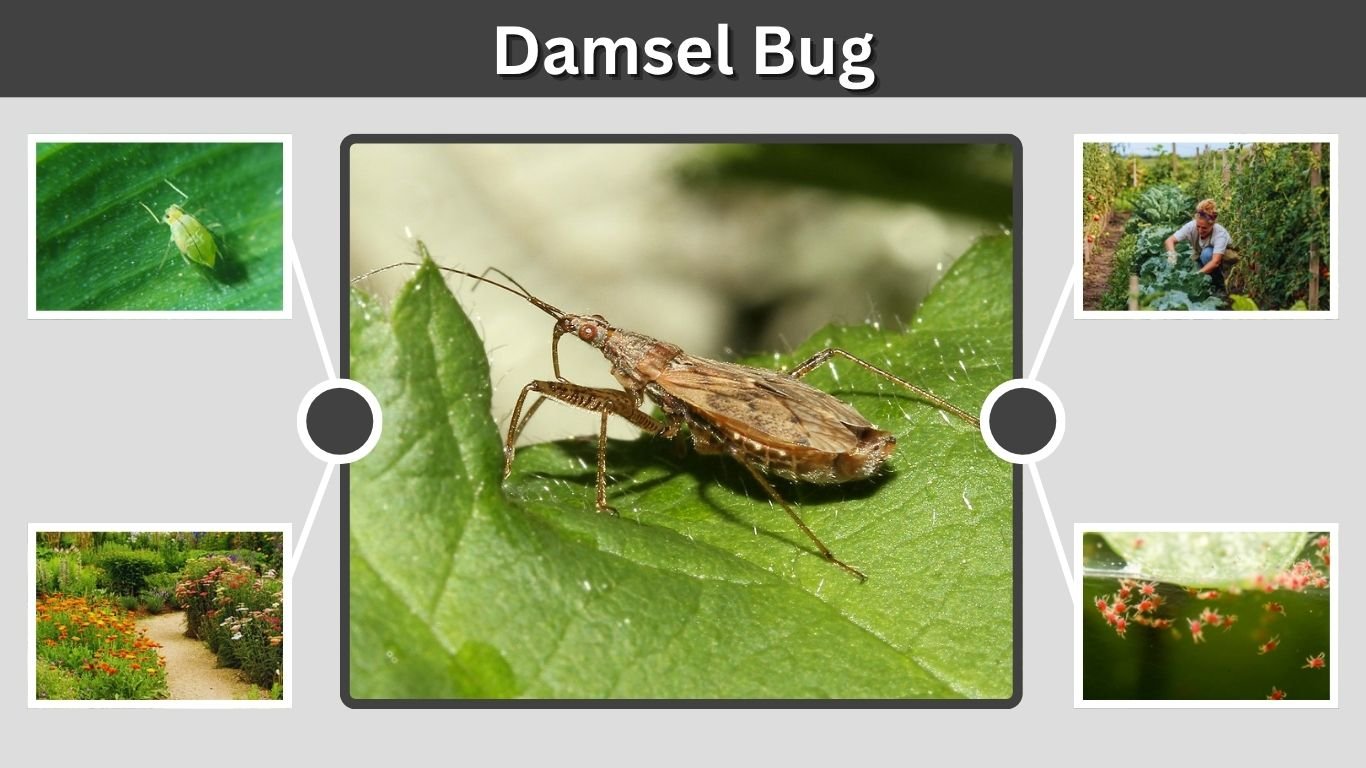
The damsel bug is a slender predatory insect commonly found in gardens, crop fields, grasslands, and other areas containing small insect prey. Rather than damaging plants, damsel bugs help control aphids, mites, thrips, caterpillars, and insect eggs. Adults are usually brown or gray with long legs, large eyes, and slightly enlarged front legs for capturing prey. Although they can occasionally bite when handled, damsel bugs are not household pests and are generally considered beneficial insects.
What Is a Damsel Bug?
Damsel bugs are true bugs belonging to the family Nabidae within the order Hemiptera. They are also called nabids. The genus Nabis contains many of the species commonly encountered in gardens and agricultural fields.
Both adults and nymphs are predators. They capture other insects with their front legs and pierce them with tubular mouthparts before consuming their body fluids. Damsel bugs may occasionally take harmless fluids from plants, but they are primarily valued as natural enemies of crop and garden pests.
| Feature | Damsel bug description |
| Family | Nabidae |
| Order | Hemiptera |
| Size | About 4–13 mm |
| Color | Brown, gray, reddish, yellowish, or black |
| Diet | Aphids, mites, thrips, eggs, and small larvae |
| Habitat | Gardens, fields, grasslands, and low vegetation |
| Benefit | Natural pest control |
| Risk to people | May bite defensively but does not feed on humans |
Damsel Bug Identification
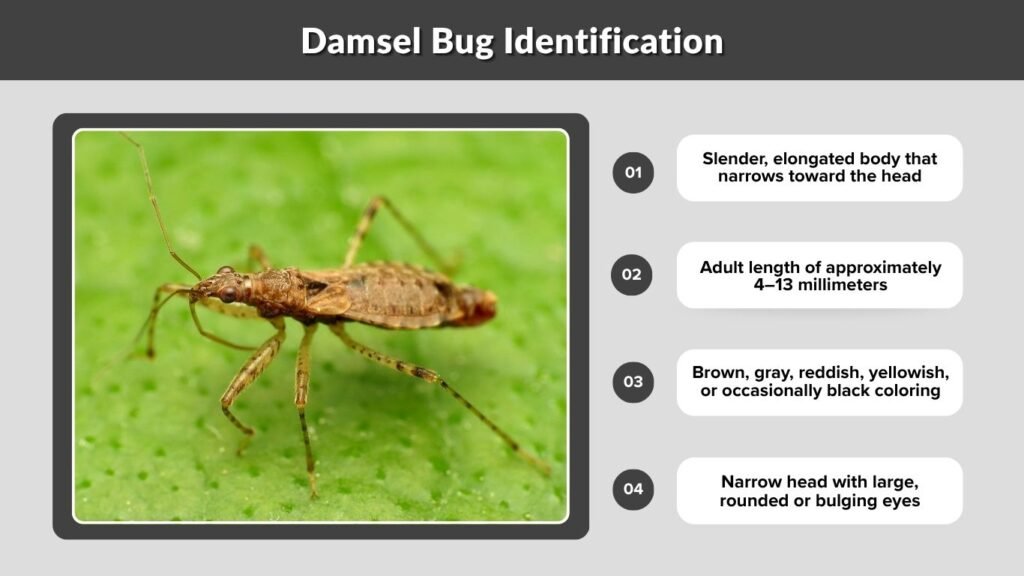
Damsel bugs may initially resemble plant bugs, stilt bugs, or small assassin bugs. Their narrow bodies and delicate appearance help distinguish them from many broader true bugs.
Key Identification Features
Look for the following characteristics:
- Slender, elongated body that narrows toward the head
- Adult length of approximately 4–13 millimeters
- Brown, gray, reddish, yellowish, or occasionally black coloring
- Narrow head with large, rounded or bulging eyes
- Long, threadlike antennae
- Long, slender middle and hind legs
- Slightly thickened front legs with small spines
- Tubular, piercing-sucking mouthparts
- Multiple elongated cells near the tips of the front wings
Adults and nymphs can move quickly when disturbed or while pursuing prey. Their enlarged front legs help them grip struggling insects.
Damsel Bug Nymph
A damsel bug nymph looks like a smaller, wingless adult. Young nymphs may be pale yellow, tan, reddish, or brown, depending on their species and developmental stage.
Older nymphs develop visible wing pads on the sides of the abdomen. These are not complete wings, so the nymph cannot fly. The term larva is sometimes used in searches, but damsel bugs technically have nymphs rather than larvae because they undergo incomplete metamorphosis.
What Do Damsel Bugs Eat?
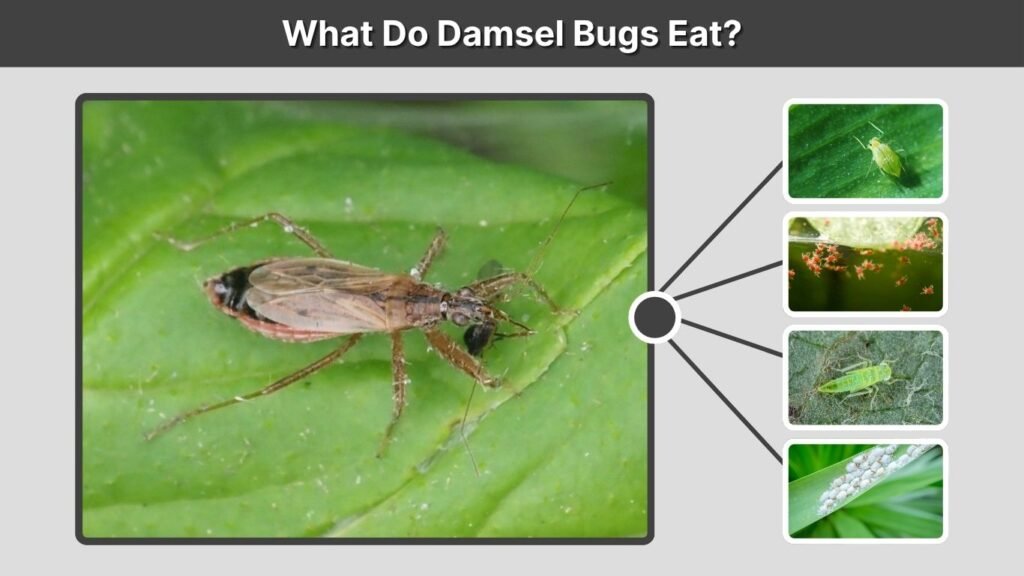
Damsel bugs are generalist predators, meaning they hunt many different small arthropods instead of depending on one prey species.
Their diet can include:
- Aphids
- Spider mites
- Thrips
- Leafhoppers
- Moth eggs
- Beetle eggs and young beetles
- Small caterpillars
- Sawfly larvae
- Plant bug nymphs
- Other soft-bodied insects
They grasp prey with their spiny front legs and insert their needlelike mouthparts. The bug then draws out the prey’s body fluids. Larger nymphs and adults may consume numerous eggs or small insects each day when prey is abundant. They can also attack other beneficial insects and may become cannibalistic when food is scarce.
Where Do Damsel Bugs Live?
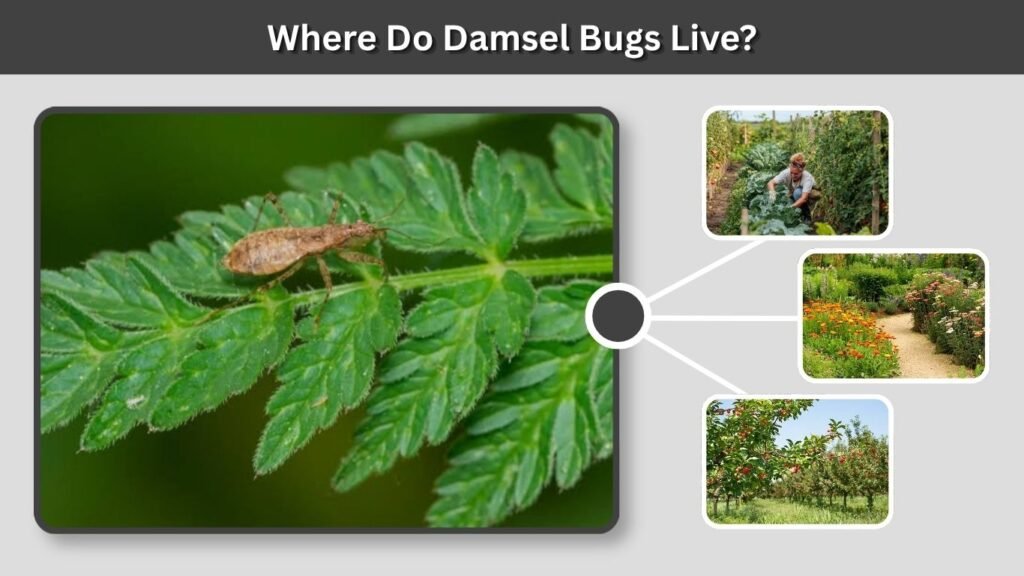
Damsel bugs have a broad distribution and are found in many parts of the world. They are particularly common in places that provide dense vegetation and abundant insect prey.
Common Habitats
Damsel bugs can be found in:
- Vegetable gardens
- Flower gardens
- Agricultural fields
- Orchards
- Meadows and grasslands
- Forest vegetation
- Low-growing ground covers
- Weedy field edges
- Alfalfa and soybean fields
- Shrubs and herbaceous plants
In home landscapes, they often shelter among grasses and ground-cover plants. Adults and nymphs patrol leaves, stems, flowers, and low vegetation while searching for prey.
Damsel Bug Life Cycle
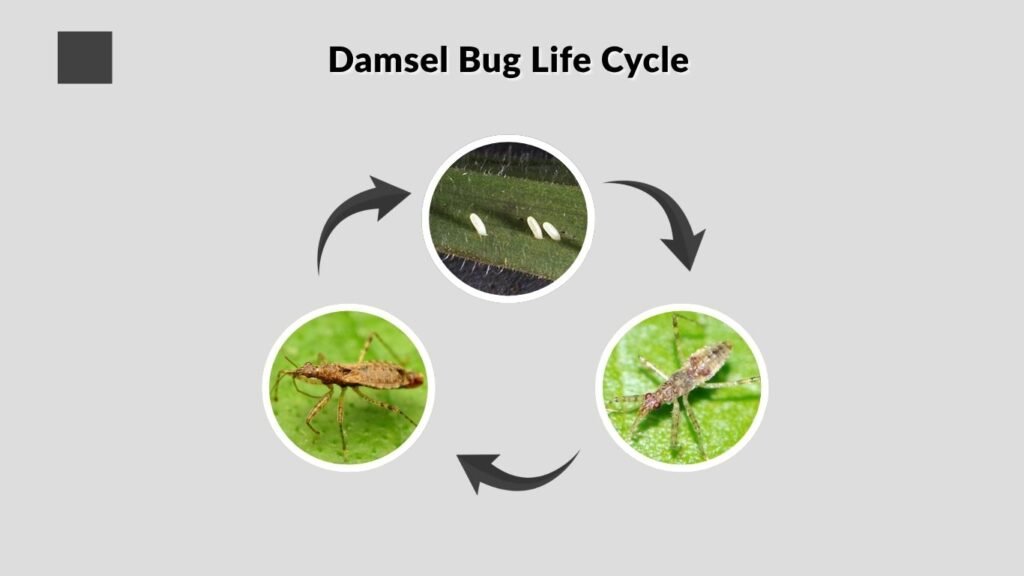
Damsel bugs undergo incomplete metamorphosis. Their life cycle has three major stages: egg, nymph, and adult. There is no larval or pupal stage.
Eggs
Females insert small, oblong eggs into soft plant stems or other plant tissue. Most of the egg remains protected inside the plant, while a small, flattened opening remains visible at the surface.
Nymphs
After hatching, the young bugs pass through five nymphal instars. They grow larger and molt between each stage. The wing pads become more noticeable as they approach adulthood.
Adults
The final nymphal stage molts directly into a winged adult. Development from egg to adult usually requires approximately one to two months during warm weather. Two or more generations may occur annually, and many species overwinter as adults in protected locations such as vegetation or leaf litter.
Are Damsel Bugs Beneficial?
Damsel bugs are beneficial because they naturally reduce populations of insects that damage garden and agricultural plants. Both adults and nymphs feed on pests, including aphids, caterpillar eggs, mites, leafhoppers, and plant bugs.
Gardeners usually do not need to purchase damsel bugs. Existing populations can be encouraged by maintaining diverse vegetation, low-growing ground cover, and areas where beneficial insects can find shelter. Avoiding unnecessary broad-spectrum insecticide applications also helps protect them and other natural predators.
Are Damsel Bugs Harmful?
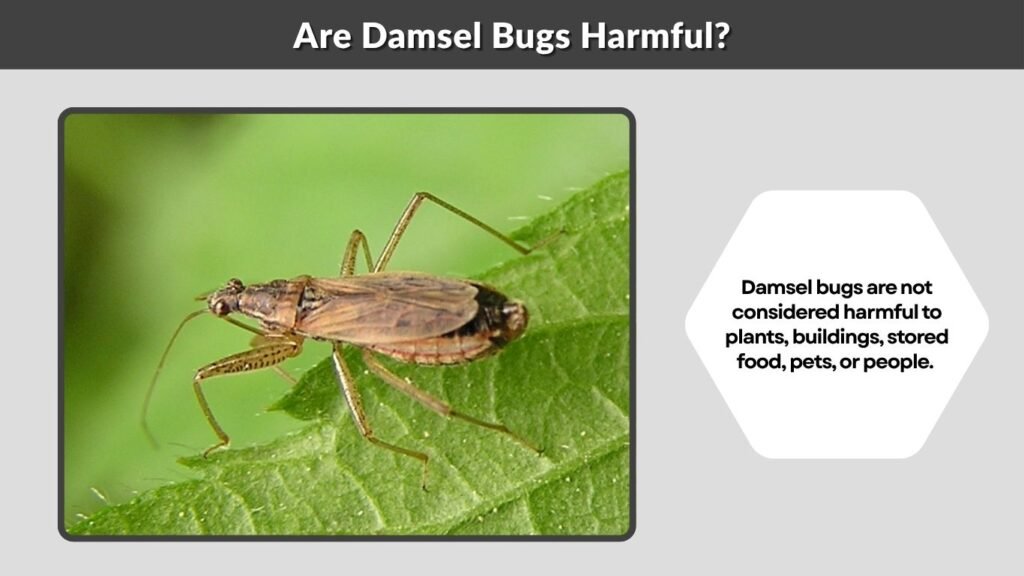
Damsel bugs are not considered harmful to plants, buildings, stored food, pets, or people. They do not infest houses, damage furniture, or reproduce by feeding on human blood.
They are equipped with piercing mouthparts, however, and can occasionally bite if trapped against the skin or handled carelessly. Documented bites are uncommon and appear to be defensive or accidental rather than feeding behavior.
Damsel Bug Bite Treatment
A bite may cause brief pain, redness, or localized irritation. Wash the affected area with soap and water and apply a cold compress wrapped in cloth if swelling develops. Avoid scratching the site.
Seek medical assistance if swelling becomes severe, the area shows signs of infection, or symptoms such as breathing difficulty or facial swelling occur. These reactions are not considered typical of damsel bugs but require prompt attention following any insect bite.
Damsel Bug in the House
Finding one damsel bug indoors usually means it accidentally entered through an open door, window, damaged screen, or gap around the building. It may also have been carried inside on flowers, vegetables, clothing, or garden equipment.
Damsel bugs do not normally establish indoor infestations because houses lack their preferred vegetation and insect prey. Capture the bug with a cup and paper, then release it outdoors. Sealing cracks and repairing window screens can prevent additional accidental visitors.
There is normally no reason to use an indoor insecticide for a single damsel bug.
Damsel Bug vs. Assassin Bug
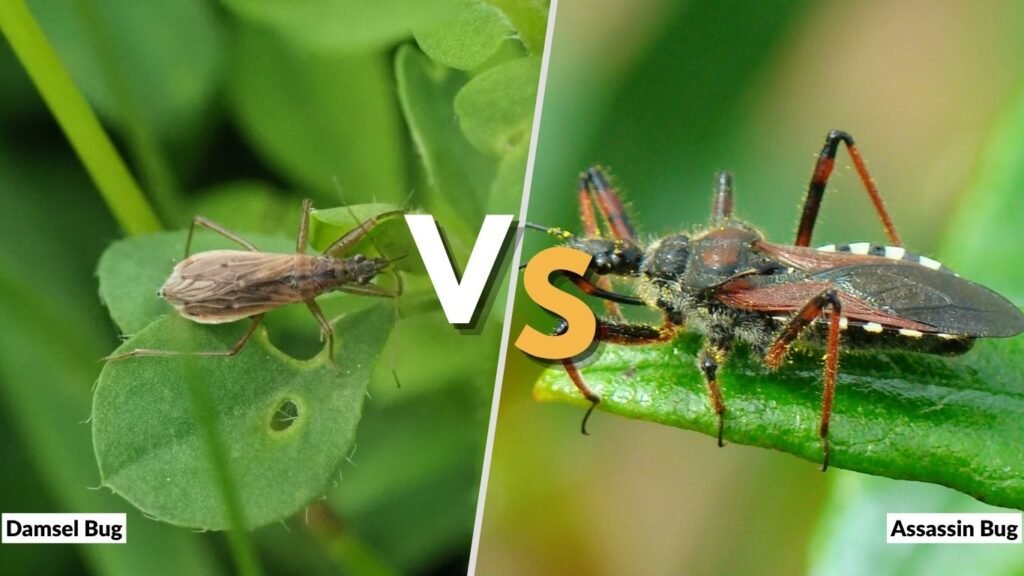
Damsel bugs and assassin bugs are predatory true bugs with piercing mouthparts, narrow heads, and legs adapted for capturing prey. However, they belong to different families.
| Feature | Damsel bug | Assassin bug |
| Family | Nabidae | Reduviidae |
| Typical build | Slim and delicate | Usually heavier and more robust |
| Common size | About 4–13 mm | Often 12–19 mm or larger |
| Front legs | Slightly enlarged | Often strongly developed |
| Beak | Relatively slender | Usually short, thick, and curved |
| Bite | Uncommon | Often more painful |
| House presence | Usually accidental | Some species regularly enter homes |
Assassin bugs generally have a more pronounced neck, heavier beak, and broader abdomen. Their defensive bites can cause noticeable pain and localized inflammation, so neither insect should be handled with bare hands.
FAQs
Do damsel bugs bite humans?
Damsel bugs can occasionally bite when handled, trapped against the skin, or disturbed. Such incidents are uncommon because they normally hunt insects rather than people. Their bite may cause temporary pain or irritation but is not part of their normal feeding behavior.
Are damsel bugs poisonous?
Damsel bugs are not poisonous and do not have a stinger. They use piercing mouthparts to subdue insect prey. Their defensive bite can be uncomfortable, but they are not known for injecting medically significant venom or transmitting human diseases.
Are damsel bugs good for gardens?
Yes. Damsel bugs help control aphids, thrips, mites, leafhoppers, caterpillars, and insect eggs. Both adults and nymphs are predatory, making them useful natural enemies in vegetable gardens, flower beds, orchards, and agricultural fields.
What is the difference between a damsel bug nymph and an adult?
Nymphs are smaller and lack functional wings. They resemble adults in body shape and often in color. As a nymph develops through five instars, wing pads become visible before its final molt into a winged adult.
Should I kill a damsel bug?
There is usually no reason to kill one. Damsel bugs are beneficial predators that help reduce plant pests. Leave outdoor individuals alone. When one enters a house, capture it carefully in a container and release it outside.
