
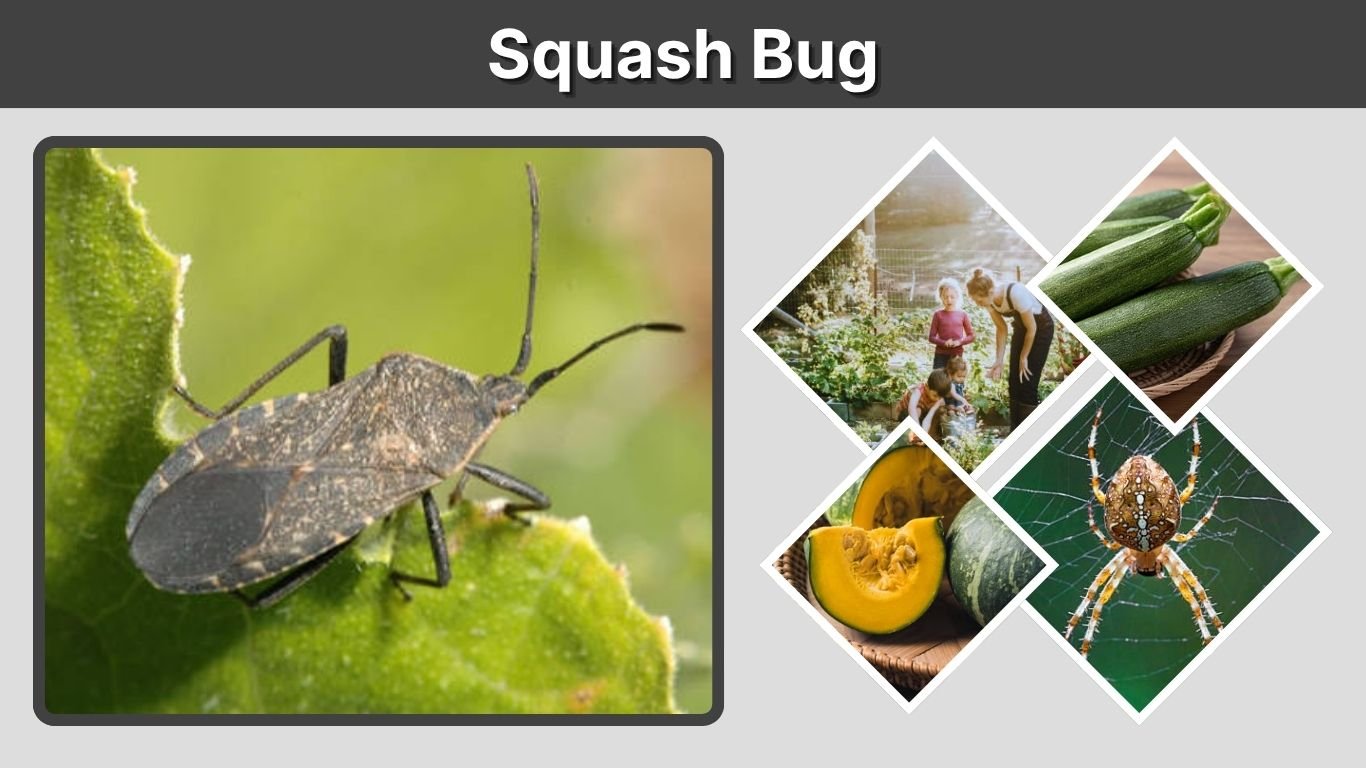
The squash bug (Anasa tristis) is a common North American garden pest that attacks squash, pumpkins and other cucurbit plants. Adults and nymphs use piercing mouthparts to remove plant fluids, causing yellow leaves, wilted vines and reduced fruit production. Because adults are difficult to eliminate, early identification of their bronze eggs and pale nymphs is essential. Understanding the squash bug’s size, habitat, diet and life cycle can help gardeners detect an infestation before serious damage occurs.
What Is a Squash Bug?
The squash bug is a true bug belonging to the leaf-footed bug family, Coreidae. Although it produces an unpleasant odour and resembles a stink bug, it belongs to a different insect family.
| Feature | Description |
| Scientific name | Anasa tristis |
| Family | Coreidae |
| Adult size | Approximately 5/8 inch or 16 mm |
| Colour | Dark grey, brown or nearly black |
| Diet | Fluids from squash, pumpkin and related plants |
| Life cycle | Egg, five nymphal stages and adult |
| Distribution | From Canada through the United States to Central America |
| Risk to humans | Does not normally bite or sting |
Squash bugs are especially troublesome because adults hide well, survive winter and are relatively resistant to many insecticides.
Squash Bug Identification and Size
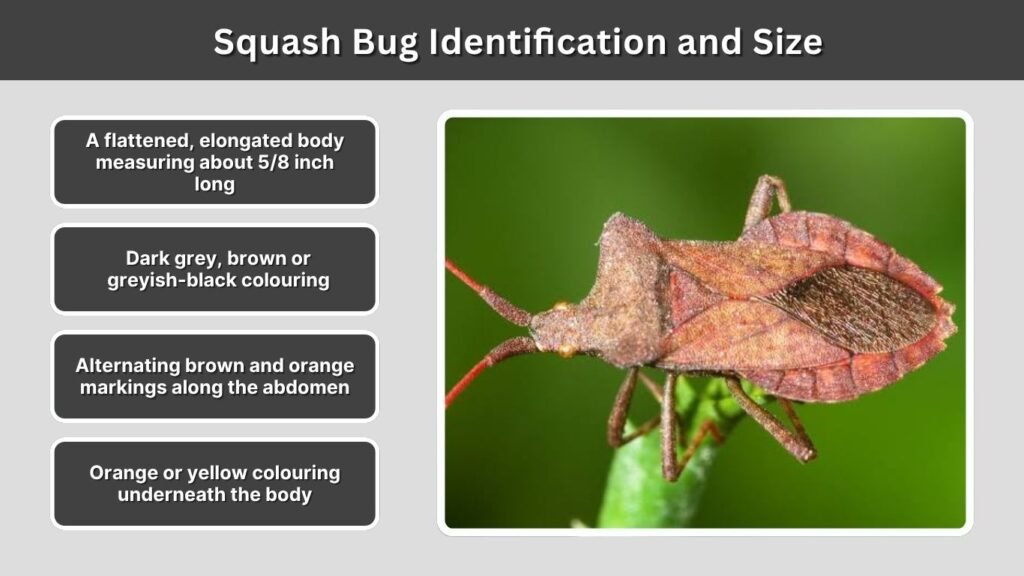
Adult squash bugs have a flattened body that allows them to hide beneath leaves, vines, boards and garden debris. Their appearance changes considerably between the egg, nymph and adult stages.
What Does a Squash Bug Look Like?
The most useful identification features include:
- A flattened, elongated body measuring about 5/8 inch long
- Dark grey, brown or greyish-black colouring
- Alternating brown and orange markings along the abdomen
- Orange or yellow colouring underneath the body
- Long, segmented antennae
- Six legs and fully developed wings
- A narrow head with piercing and sucking mouthparts
The adult’s wings overlap across its back, creating an X-like pattern. According to the University of Minnesota Extension, adults are approximately 5/8 inch long, while developing nymphs range from about 1/10 to 1/2 inch.
Squash Bug Eggs
Squash bug eggs are approximately 1/16 inch long and usually appear shiny bronze, copper, reddish-brown or yellowish-brown. Females commonly lay them in organised groups of about 12–20.
Egg clusters are frequently found on the undersides of leaves, particularly where two leaf veins meet. However, eggs may also occur on stems, leaf stalks, flowers, fruits and the upper surfaces of leaves.
Squash Bug Nymphs
Newly hatched nymphs have black legs and heads with pale green or grey bodies. As they mature, they become larger and darker, eventually developing grey bodies and visible wing pads.
Squash bugs do not have a larval or caterpillar stage. What some gardeners call “squash bug larvae” are actually nymphs.
Squash Bug Habitat and Distribution
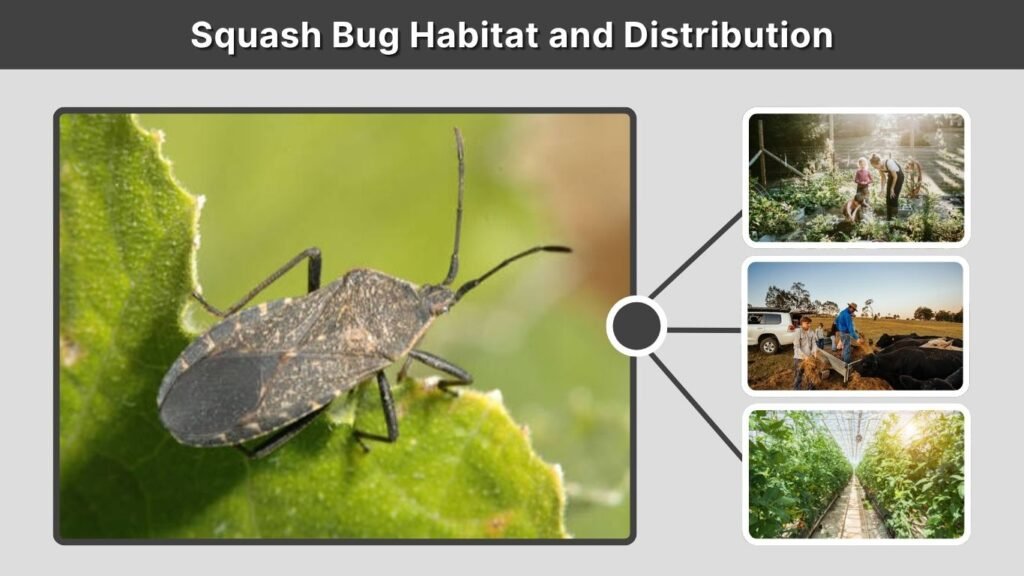
Squash bugs live wherever suitable cucurbit host plants grow. They are widespread across North America and can survive in home gardens, farms and commercial vegetable fields.
Where Do Squash Bugs Live?
During the growing season, adults and nymphs can be found:
- Under squash and pumpkin leaves
- Around the base of plant stems
- Beneath vines and developing fruits
- Inside dense plant growth
- Under mulch or garden boards
- Near damaged or dying cucurbit plants
Nymphs frequently gather together on shaded leaf undersides. Adults are more secretive and may quickly move underneath stems or leaves when disturbed.
Where Do Squash Bugs Go in Winter?
Squash bugs overwinter as adults. They seek protected spaces beneath dead plants, fallen leaves, rocks, logs, soil clods, wood piles and garden structures.
Adults become active again when temperatures rise in spring. They then fly or walk to emerging squash plants, where they begin feeding and mating. Removing crop debris after harvest reduces the number of potential winter shelters.
What Do Squash Bugs Eat?
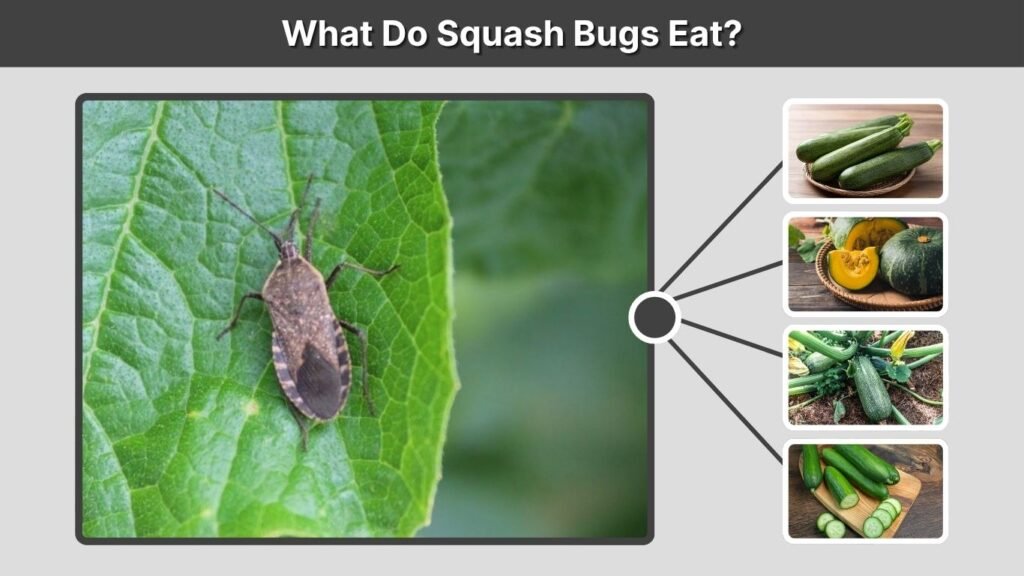
Squash bugs primarily feed on plants in the cucurbit family. Both adults and nymphs insert their beak-like mouthparts into plant tissue and extract fluids.
Preferred Host Plants
Their most common food plants include:
- Summer squash
- Winter squash
- Pumpkins
- Zucchini
- Hubbard squash
- Gourds
- Cucumbers
- Muskmelons
- Watermelons
Winter squash, pumpkins and Hubbard squash are often heavily attacked. Cucumbers and melons can also serve as hosts but are usually less preferred.
How Feeding Damages Plants
Squash bugs do more than remove a small quantity of sap. Their feeding damages cells surrounding each puncture and interferes with the plant’s ability to transport water.
Early signs include small yellow spots on leaves. These areas may later turn brown, dry and brittle. Heavy feeding can cause entire leaves or vines to wilt rapidly—a condition sometimes called Anasa wilt.
Young seedlings and newly transplanted squash are particularly vulnerable. Established plants may tolerate a few bugs, but large populations can reduce growth, damage fruit and kill entire vines.
Squash Bug Life Cycle
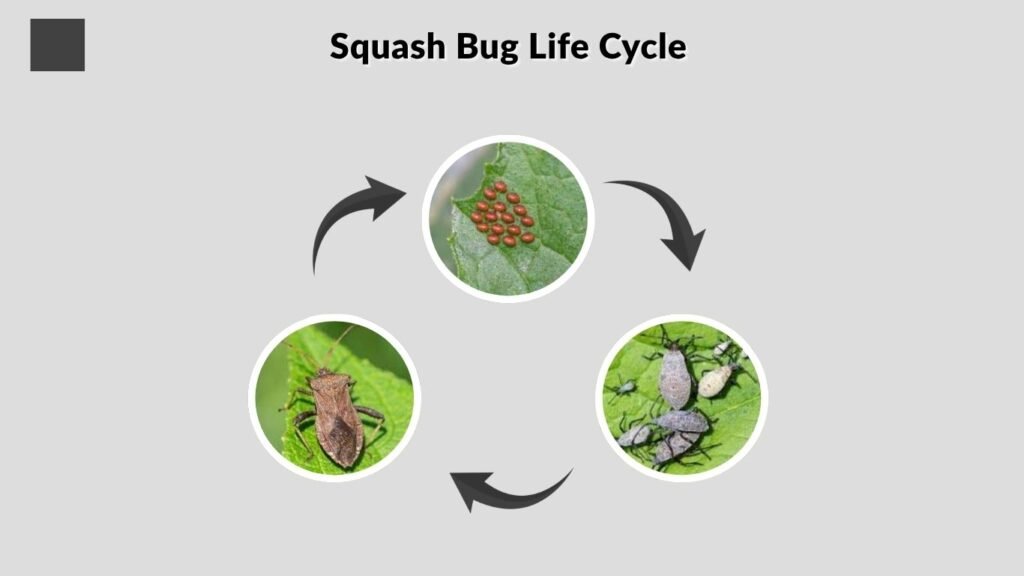
Squash bugs undergo incomplete metamorphosis. Their life cycle consists of an egg, five nymphal stages and an adult. They do not produce larvae or pupae.
Egg Stage
Overwintered adults emerge in late spring and move to young cucurbit plants. After mating, females begin depositing clusters of eggs on plant surfaces.
Eggs generally hatch within one to two weeks, depending on temperature. Regular inspection is important because the newly emerged nymphs are much easier to control than established adults.
Five Nymphal Stages
Squash bug nymphs pass through five stages called instars. They shed their outer skin between each stage and gradually grow from approximately 1/10 inch to nearly 1/2 inch long.
Early nymphs often remain together near their empty eggs. Older nymphs spread across the plant, feed more heavily and develop dark wing pads. Development from egg to adult may take approximately four to six weeks under warm conditions.
Adult Stage
Mature adults have functional wings and can fly to neighbouring plants or gardens. They continue feeding before seeking winter shelter in autumn.
Squash bugs generally produce one generation annually in cooler northern areas. Two or more overlapping generations may occur in warmer climates or during long growing seasons. Consequently, eggs, nymphs and adults can sometimes be found together.
Squash Bug vs Stink Bug
Squash bugs and stink bugs are true bugs with piercing mouthparts, overlapping wings and defensive odours. However, they belong to different families and have noticeable physical differences.
| Feature | Squash bug | Stink bug |
| Family | Coreidae | Pentatomidae |
| Shape | Longer and more elongated | Broad and shield-shaped |
| Colour | Usually grey or dark brown | Green, brown or patterned |
| Main hosts | Squash, pumpkins and gourds | Numerous fruits, vegetables and field crops |
| Abdomen | Orange-brown markings along edges | Often alternating light and dark markings |
| Odour | Produces an unpleasant smell | Produces a strong defensive smell |
Squash bugs should also not be confused with squash vine borers. Vine borers are moth larvae that tunnel inside stems, leaving sawdust-like material near the plant’s base. Squash bugs remain outside the plant and feed in groups.
Natural Predators of Squash Bugs
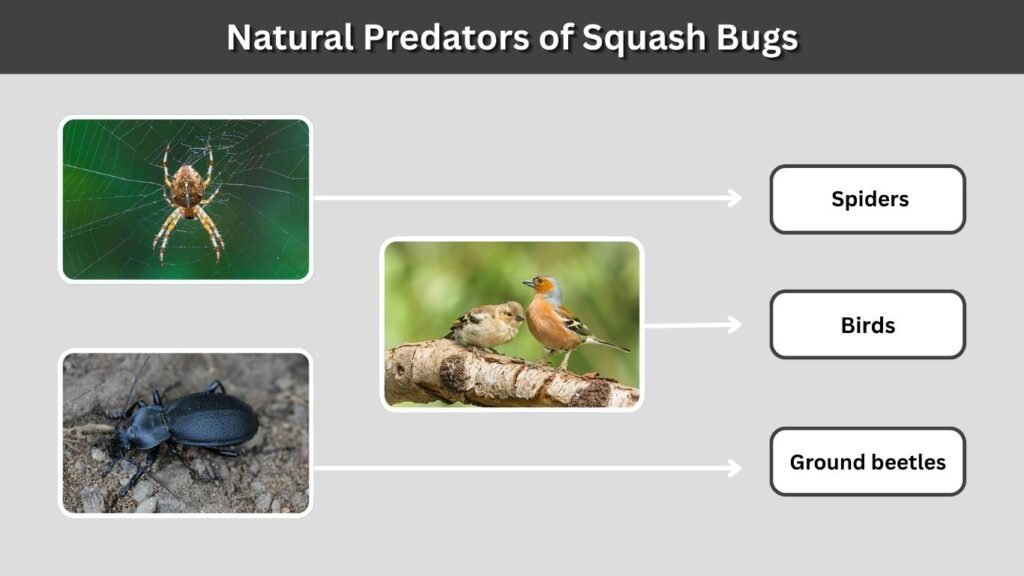
Squash bugs have several natural enemies, although predators alone may not prevent a large infestation.
What Eats Squash Bugs?
Predators and parasitoids include spiders, birds, ground beetles, damsel bugs and certain predatory true bugs. The feather-legged tachinid fly, Trichopoda pennipes, is an important natural enemy that attaches small eggs to adult squash bugs.
Avoiding unnecessary broad-spectrum insecticides helps preserve these beneficial organisms. Planting nectar-producing flowers nearby can also provide food for adult parasitoid flies.
How to Control Squash Bugs
Successful squash bug control combines monitoring, physical removal, garden sanitation and carefully selected treatments. Management is most effective before nymphs mature into adults.
Remove Eggs and Bugs by Hand
Inspect leaf undersides at least twice weekly from late spring onward. Scrape egg clusters into a container of soapy water or remove them with sticky tape.
Adults and nymphs can also be collected and dropped into soapy water. A garden board placed near affected plants may act as a simple trap because adults often hide beneath it overnight.
Use Row Covers
Lightweight row covers prevent overwintered adults from reaching young plants. Secure every edge so bugs cannot crawl underneath.
Remove the covers when flowering begins so bees can pollinate the flowers, unless plants are being pollinated by hand. Do not use covers where squash bugs may already be trapped underneath.
Apply Low-Risk Treatments
Insecticidal soap and horticultural oil may kill young nymphs when applied directly. Neem-based products can reduce feeding or affect immature bugs, but they are unlikely to provide immediate control of established adults.
Diatomaceous earth may affect bugs that crawl through a dry layer, but its effectiveness outdoors is inconsistent. It becomes ineffective when wet and may harm beneficial insects that contact it.
Prevent Future Infestations
Remove and destroy infested vines immediately after harvest. Clear fallen leaves, boards and plant debris that could provide winter shelter. Crop rotation can also help, especially when new cucurbit plantings are located away from the previous year’s squash bed.
FAQs
Do squash bugs bite humans?
Squash bugs are plant feeders and do not seek blood from humans or pets. They do not normally bite or sting and are not known to transmit human diseases. Their unpleasant defensive odour may be released if they are handled or crushed.
Can squash bugs fly?
Adult squash bugs have fully developed wings and can fly between gardens or host plants. However, they frequently move by walking and hide when disturbed. Nymphs cannot fly because they have only developing wing pads until completing their final moult.
What kills squash bugs instantly?
Dropping hand-collected squash bugs into a container of soapy water is one of the fastest mechanical methods. Contact insecticides may kill exposed nymphs, but adults are difficult to control. Always choose a product labelled for squash bugs and follow its instructions.
Does neem oil kill squash bugs?
Neem oil may affect eggs and young nymphs when it makes direct contact, but it is less dependable against adults. Thoroughly cover leaf undersides while avoiding open flowers and active pollinators. Follow the product label and test a small area before widespread application.
How can squash bugs be prevented?
Remove crop debris after harvest, rotate cucurbit plantings, inspect leaves for eggs and use secured row covers before flowering. Hand-pick adults early in the season before they reproduce. Maintaining a clean garden and protecting natural predators can substantially reduce future infestations.
