
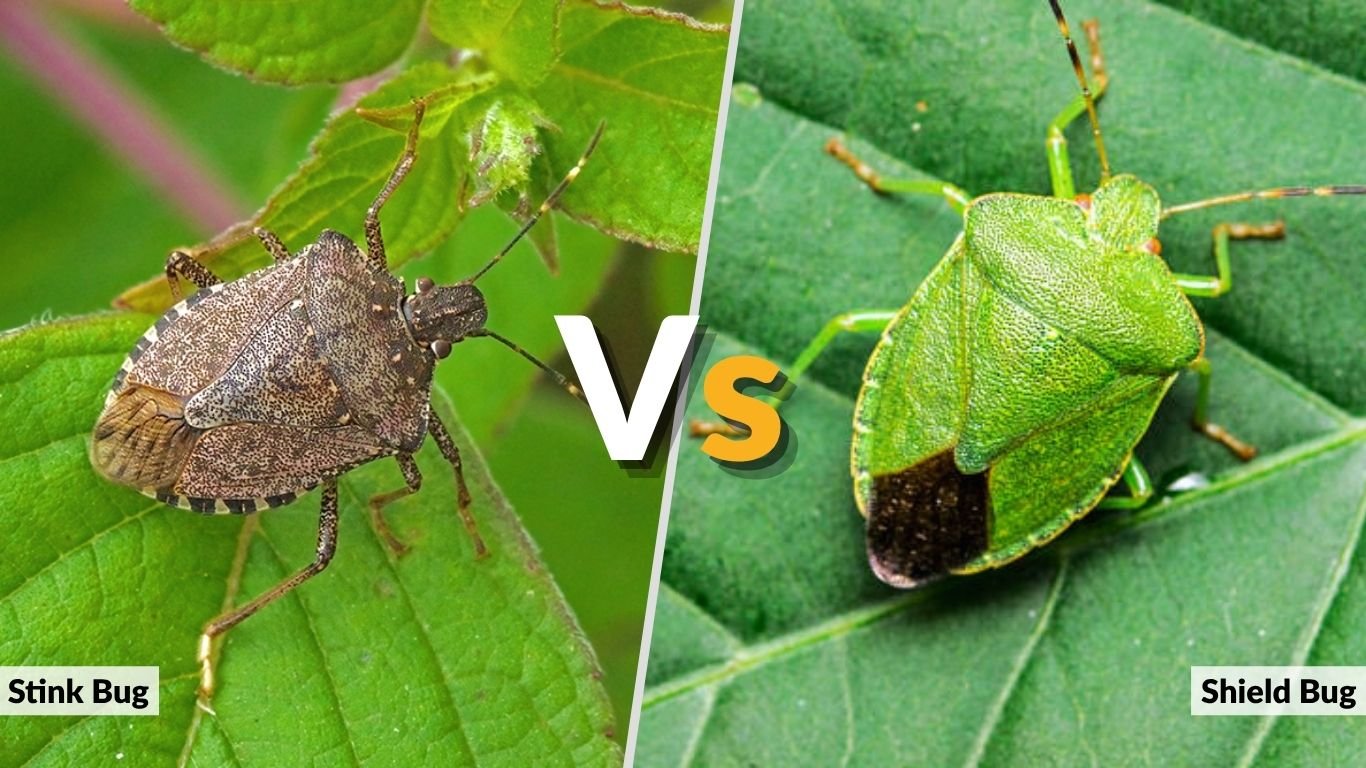
Stink bugs and shield bugs are often treated as different insects, but the names usually refer to closely related—and sometimes identical—bugs. “Stink bug” is the term commonly used in North America, while “shield bug” is more familiar in the United Kingdom and parts of Europe. Both names describe insects with shield-shaped bodies, piercing mouthparts and defensive scent glands. However, “shield bug” can sometimes include a broader group of families, making taxonomy and species identification more reliable than common names.
Stink Bug vs Shield Bug: Quick Comparison
The main difference between a stink bug and a shield bug is usually terminology rather than appearance or behaviour. Many species belonging to the family Pentatomidae can correctly be called by either name.
| Feature | Stink bug | Shield bug |
| Common usage | Mainly North America | Mainly the UK and Europe |
| Typical family | Pentatomidae | Pentatomidae and some related families |
| Body shape | Broad and shield-shaped | Broad and shield-shaped |
| Defensive smell | Usually present | Usually present |
| Mouthparts | Piercing and sucking | Piercing and sucking |
| Diet | Mostly plant fluids; some species eat insects | Mostly plant fluids; some species eat insects |
| Risk to humans | Generally harmless | Generally harmless |
| Indoor behaviour | Some species overwinter in buildings | Some species overwinter in buildings |
The Natural History Museum notes that stink bugs are sometimes called shield bugs because of their characteristic body shape.
Are Stink Bugs and Shield Bugs the Same?
In everyday conversation, stink bug and shield bug frequently mean the same thing. Both terms are commonly applied to members of the family Pentatomidae.
Why Are They Called Stink Bugs?
They are called stink bugs because they possess scent glands that can release a strong-smelling chemical secretion. The insect normally produces this odour when threatened, handled or crushed.
The smell acts as a defence against birds, reptiles, spiders and other predators. Its precise character varies by species and may be described as resembling strong herbs, coriander, chemicals or decaying vegetation.
Why Are They Called Shield Bugs?
The name “shield bug” refers to the insect’s body shape. Adults normally have a broad front, angular shoulders and a rear section that narrows slightly, creating the appearance of a medieval shield.
A triangular plate called the scutellum is visible in the centre of the back. In some related shield bug families, this structure is greatly enlarged and covers most or all of the abdomen.
The Taxonomic Difference
“Stink bug” usually refers specifically to members of Pentatomidae. “Shield bug” may be used more broadly for insects within the superfamily Pentatomoidea, which contains Pentatomidae and several related families.
Therefore, most true stink bugs are shield-shaped bugs, but not every insect described as a shield bug necessarily belongs to the stink bug family. The British Bugs shield bug gallery includes Pentatomidae alongside related families such as Scutelleridae, Cydnidae and Acanthosomatidae.
How to Identify Stink Bugs and Shield Bugs
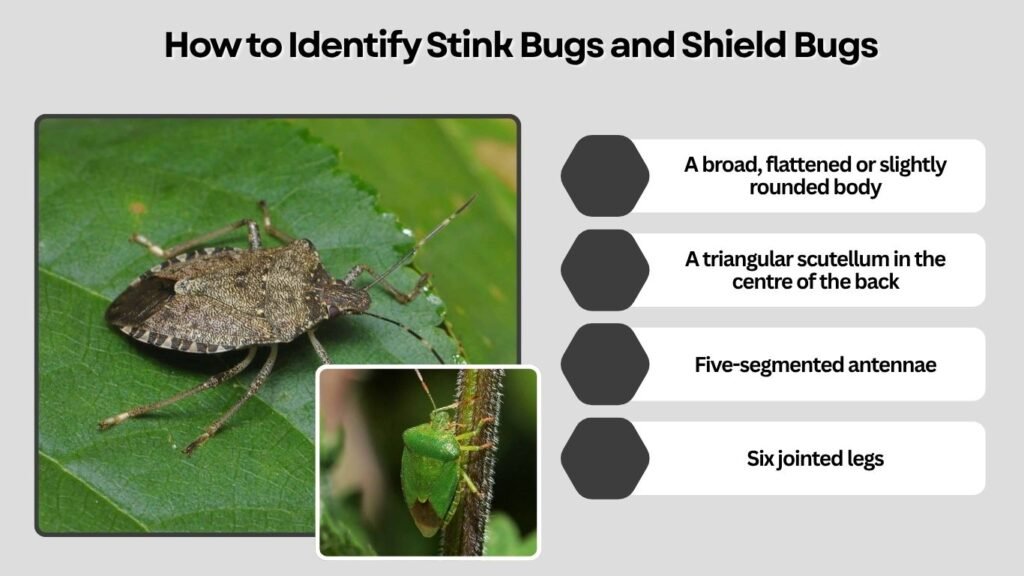
Because the two names overlap, they cannot reliably be separated through appearance alone. Identification features are more useful for distinguishing species.
Physical Identification
Most adult stink bugs and shield bugs have:
- A broad, flattened or slightly rounded body
- A triangular scutellum in the centre of the back
- Five-segmented antennae
- Six jointed legs
- Two pairs of wings as adults
- Piercing and sucking mouthparts
- Visible edges around the abdomen
- Green, brown, grey, red or patterned colouring
Adult size varies considerably. Many familiar garden species measure approximately 8–17 mm long, although some related shield bugs are smaller or larger.
Nymph Identification
Young stink bugs are known as nymphs. They are generally rounder than adults and lack fully developed wings. Their colours and patterns can change dramatically as they mature, making nymphs difficult to match with adults.
The nymphs usually pass through five developmental stages, or instars. Wing pads become increasingly noticeable during the later stages.
Eggs
Their eggs are commonly barrel-shaped and laid in organised clusters on leaves. The colour may be white, cream, pale green, yellow or darker, depending on the species and stage of development.
Egg clusters are frequently attached to the underside of leaves, where they receive some protection from weather and direct sunlight.
Green Shield Bug vs Green Stink Bug
The phrases “green shield bug” and “green stink bug” do not always identify one universal species. Their meanings can change according to country.
Green Shield Bugs in Europe
The common green shield bug, Palomena prasina, is widespread in Britain and parts of Europe. It is bright green during spring and summer but changes to a brown or bronze colour before overwintering.
The southern green shield bug, Nezara viridula, is another green species. It is also widely known as the southern green stink bug, particularly in North America and agricultural literature.
Green Stink Bugs in North America
The green stink bug, Chinavia hilaris, is widespread in North America. Adults are usually bright green with narrow yellow, orange or reddish borders.
Consequently, an online reference to a “green stink bug” may describe Chinavia hilaris, while “green shield bug” may refer to Palomena prasina. A scientific name, location and clear photograph are needed for dependable identification.
Brown Shield Bug vs Brown Stink Bug
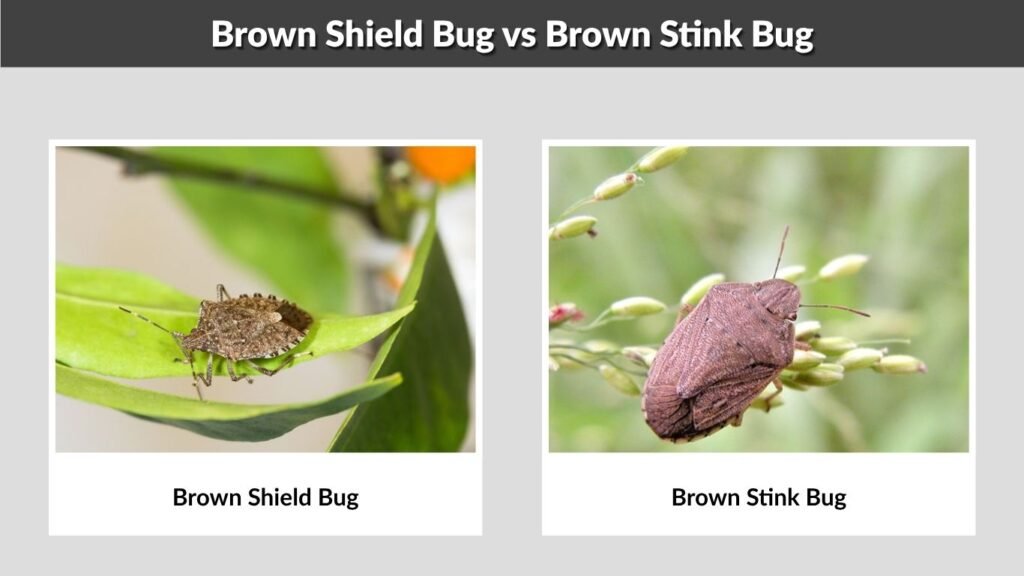
“Brown shield bug” is a general description that can apply to several brown species. It does not automatically mean the invasive brown marmorated stink bug.
Brown Marmorated Stink Bug
The brown marmorated stink bug, Halyomorpha halys, is an invasive agricultural and household pest in many countries. Identification features include pale bands on its antennae and alternating light and dark markings along the sides of its abdomen.
It feeds on numerous crops and may gather inside buildings in large numbers during autumn.
Other Brown Shield Bugs
Many harmless or beneficial shield bugs are naturally brown. Some are plant feeders, while predatory species consume caterpillars, beetle larvae and other small insects.
Colour alone is therefore insufficient for identification. Body markings, antenna bands, leg colour, shoulder shape and geographic location should also be considered.
Diet and Plant Damage

Most stink bugs and shield bugs use a beak-like mouthpart called a rostrum to pierce plant tissue and consume fluids. However, the amount of damage depends on the species and population size.
What Do They Eat?
Plant-feeding species commonly consume fluids from:
- Leaves and stems
- Developing seeds
- Seed pods
- Fruits and berries
- Flower buds
- Vegetables
- Agricultural crops
Some predatory shield bugs use the same type of mouthpart to attack caterpillars, beetle larvae and other insects. These species can be beneficial in gardens and farms.
Signs of Plant Damage
Heavy feeding may cause pale spots, scars, sunken areas, distorted fruit, damaged seeds or premature fruit drop. Feeding on developing crops can also create internal corky patches that are not immediately visible from the outside.
A few bugs in a garden rarely justify treatment. Control becomes more important when a confirmed pest species is causing noticeable crop damage.
Do Stink Bugs and Shield Bugs Bite?
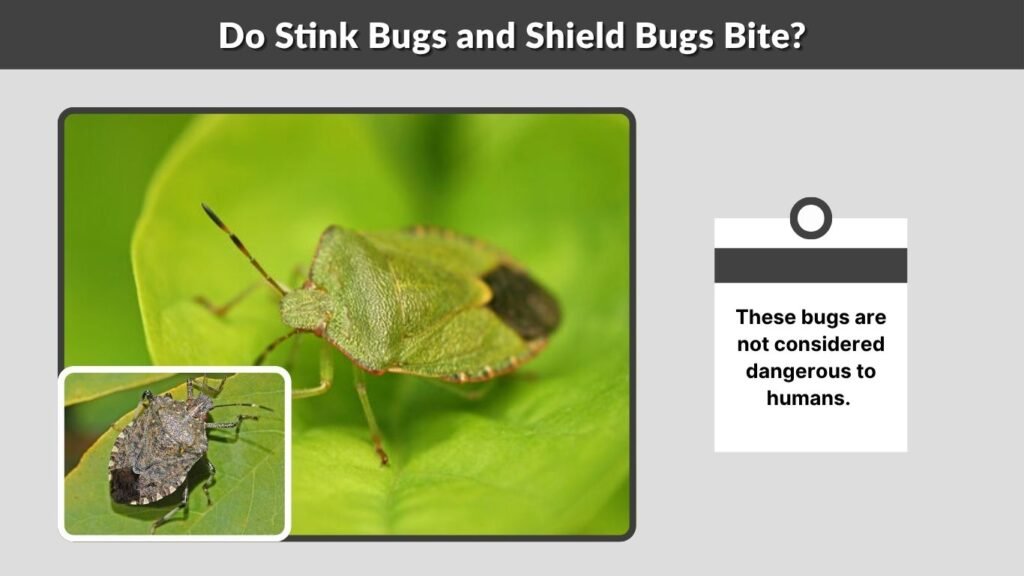
These bugs are not considered dangerous to humans. Plant-feeding species have mouthparts adapted for piercing vegetation and do not seek human blood.
Risk to Humans and Pets
Stink bugs and shield bugs do not normally bite or sting people. They are not known to transmit human diseases. Rare defensive probing or skin irritation may occur after rough handling, but such incidents are unusual.
Their defensive secretion can irritate sensitive eyes or skin. Washing the affected area with soap and water is generally sufficient. Pets that chew one may drool or vomit temporarily because of its unpleasant taste.
Bugs Found Inside Homes
Some species enter buildings during autumn to find protected overwintering sites. They may hide around windows, roof spaces, wall gaps and door frames.
They do not usually reproduce indoors, eat household materials or cause structural damage. Vacuuming or gently collecting them is preferable to crushing them, which may release their odour and stain surfaces.
Life Cycle of Stink Bugs and Shield Bugs
Both groups undergo incomplete metamorphosis, developing from eggs into nymphs and then adults without a pupal stage.
Eggs and Nymphs
Females generally place clusters of eggs on suitable host plants. Once hatched, the young pass through five nymphal stages, growing larger after each moult.
Nymphs feed in the same general manner as adults but cannot fly until their wings become fully developed.
Adults and Overwintering
Many temperate species overwinter as adults beneath bark, inside leaf litter or within buildings. They emerge in spring, feed and mate before laying eggs.
Depending on the species and climate, stink bugs may produce one or several generations annually. Warmer conditions often support faster development and additional generations.
FAQs
Is a shield bug another name for a stink bug?
Yes, the terms frequently describe the same insects, especially members of Pentatomidae. “Stink bug” is more common in North America, while “shield bug” is widely used in Britain and Europe. However, shield bug can also include several closely related families.
Do all shield bugs produce a bad smell?
Many shield bugs have defensive scent glands and can release a noticeable odour when disturbed. The smell’s strength varies between species and individuals. Some produce a mild scent, while others release a powerful odour, particularly when handled roughly or crushed.
Are green shield bugs harmful to gardens?
Common green shield bugs usually cause little noticeable damage when present in small numbers. They feed on plant fluids, fruits and seeds, but serious injury is uncommon. Southern green stink bugs can be more damaging, particularly when large populations attack vegetables or agricultural crops.
Why are stink bugs entering my house?
Stink bugs commonly enter buildings during autumn while searching for dry, protected places to survive winter. They are not usually breeding indoors. Seal openings around windows, doors, vents and pipes, and remove individual insects carefully without crushing them.
Can stink bugs or shield bugs fly?
Adult stink bugs and shield bugs can fly using wings folded across their backs. They may move between host plants or travel to overwintering shelters. Nymphs cannot fly because their wings remain undeveloped until they complete their final moult and become adults.
