
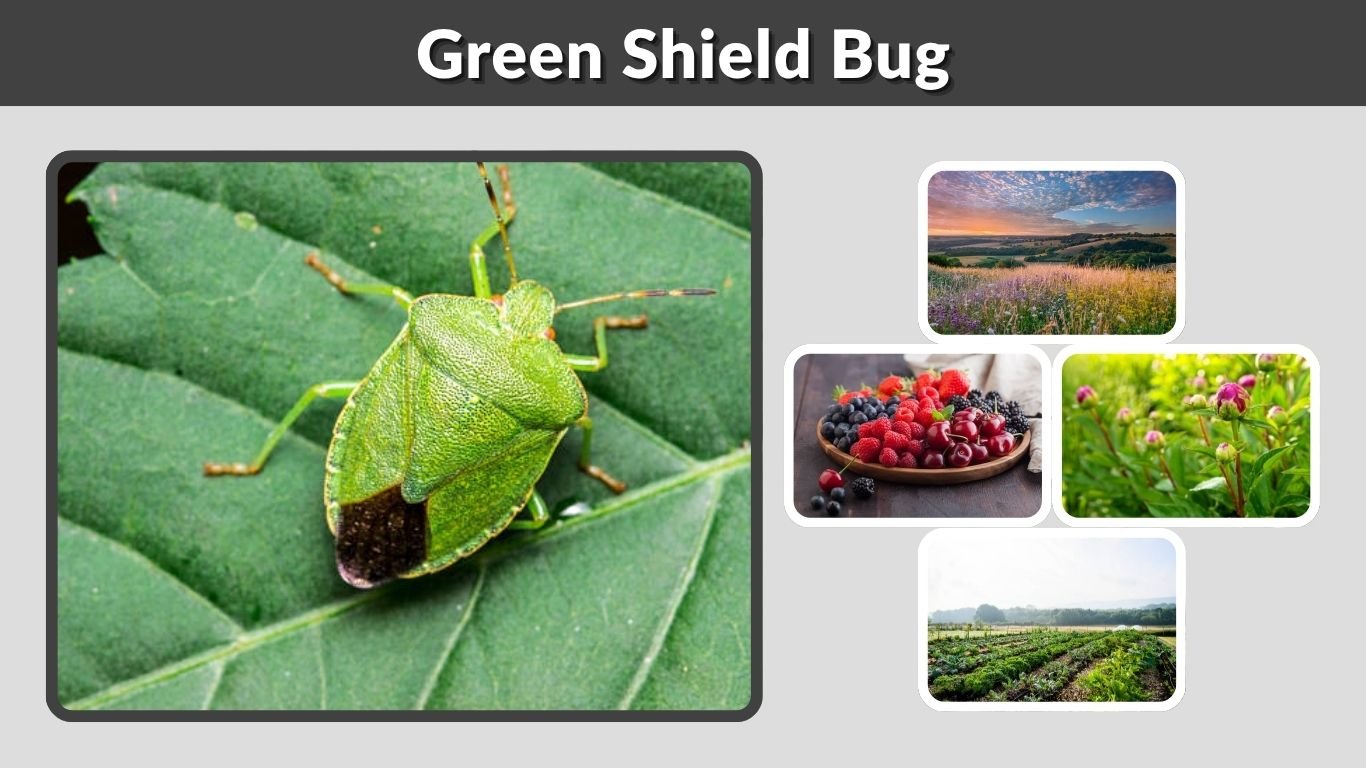
The green shield bug is a distinctive, shield-shaped insect commonly found in gardens, hedgerows, parks and woodland. Known scientifically as Palomena prasina, it feeds on plant juices and releases a strong odour when threatened. Although its appearance sometimes concerns gardeners, this native shield bug rarely causes serious plant damage. Learning about its size, habitat, diet and life cycle makes it easier to identify—and distinguish from similar-looking agricultural pests.
What Is a Green Shield Bug?
The common green shield bug belongs to the Pentatomidae family, whose members are often called stink bugs. Its broad body, triangular shield and defensive smell make it one of the most recognisable garden insects.
| Feature | Description |
| Scientific name | Palomena prasina |
| Family | Pentatomidae |
| Typical size | Approximately 12–14 mm long |
| Body shape | Broad, flattened and shield-shaped |
| Main colour | Bright green in spring and summer |
| Diet | Plant sap, fruits, seeds and developing plant tissues |
| Life cycle | Egg, five nymphal stages and adult |
| Risk to humans | Harmless; does not normally bite or sting |
The NBN Atlas classifies Palomena prasina as a native species with a conservation status of Least Concern.
Green Shield Bug Identification and Size
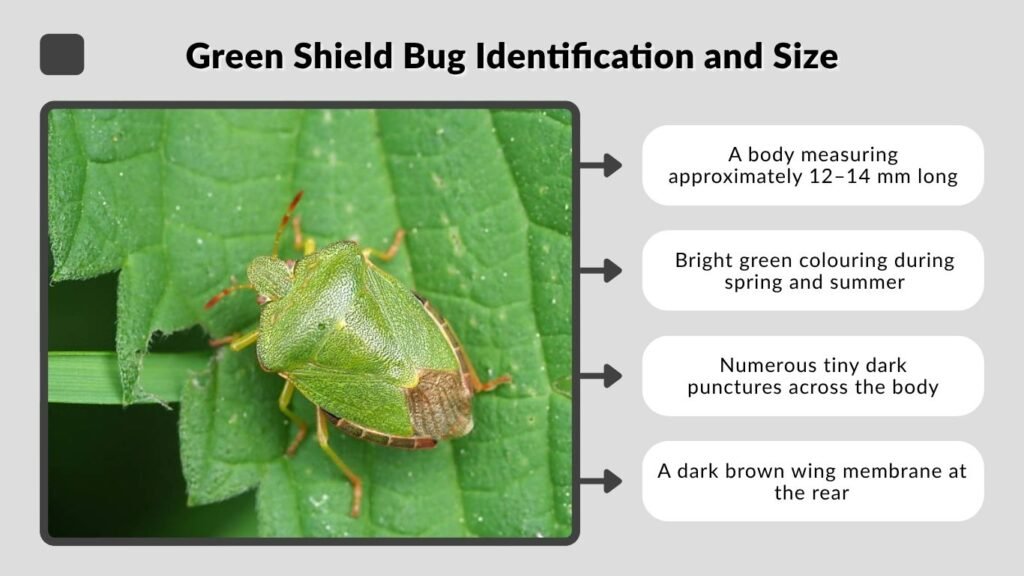
Adult green shield bugs are relatively easy to recognise, but their seasonal colour changes and similarity to other shield bugs can cause confusion.
What Does a Green Shield Bug Look Like?
The adult has a wide, flattened body that narrows towards the rear. Its back resembles a small shield, while the folded wings create a visible triangular section in the centre.
Important identification features include:
- A body measuring approximately 12–14 mm long
- Bright green colouring during spring and summer
- Numerous tiny dark punctures across the body
- A dark brown wing membrane at the rear
- Reddish-brown colouring on the final antenna segments
- Six legs and a pair of long, segmented antennae
The detailed description from British Bugs highlights its dark wing membrane and reddish outer antenna segments as useful identification features.
Why Does It Turn Brown?
A green shield bug may become bronze, brown or purplish-brown during autumn. This seasonal change provides better camouflage among dead leaves, bark and dry vegetation while the insect overwinters.
After becoming active again in spring, its bright green colouring usually returns. A brown shield bug discovered during winter may therefore be the same species rather than a different insect.
Common Green Shield Bug vs Southern Green Shield Bug
The southern green shield bug, Nezara viridula, looks similar but is a different species. Correct identification matters because the southern species can become a more significant agricultural pest.
| Feature | Common green shield bug | Southern green shield bug |
| Scientific name | Palomena prasina | Nezara viridula |
| Wing membrane | Usually dark brown | Generally paler |
| Antennae | Outer segments often reddish | Usually darker or banded |
| Pale marks | Normally absent | Often several pale spots near the front of the shield |
| Plant impact | Usually minor | Can damage crops in large numbers |
Green Shield Bug Habitat and Distribution
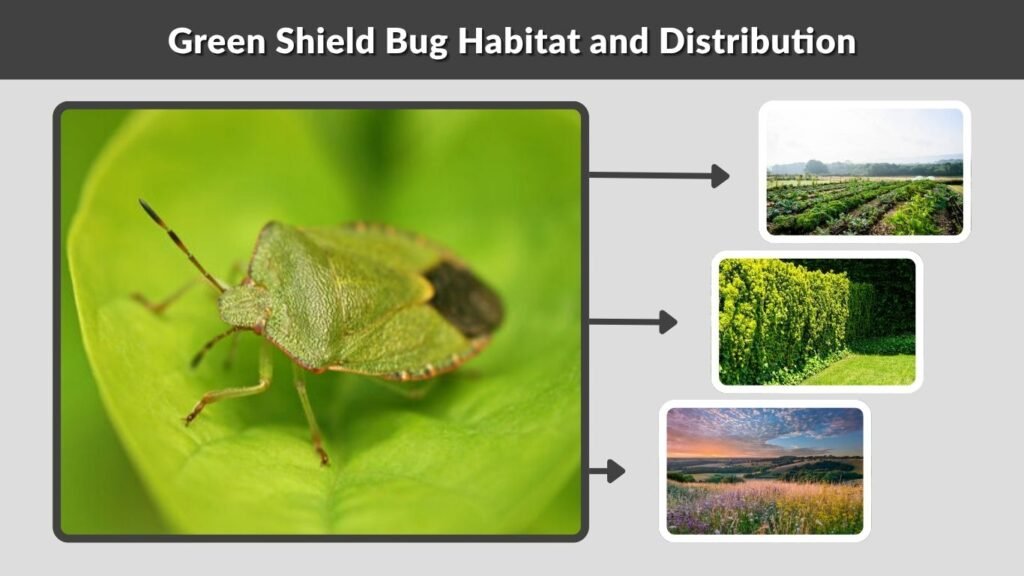
Green shield bugs prefer areas offering plentiful vegetation, food plants and protected places for overwintering. They can live in both natural and human-managed environments.
Where Are Green Shield Bugs Found?
Palomena prasina occurs across much of Europe and parts of temperate Asia. It is widespread in the United Kingdom and is frequently noticed from spring through autumn.
Common green shield bug habitats include gardens, hedgerows, woodland edges, scrubland, meadows, parks and orchards. They are often seen resting on shrubs, deciduous trees or tall herbaceous plants.
Where Do They Shelter?
During warm weather, adults and nymphs remain among leaves, stems and fruits. Their colouring provides excellent camouflage against fresh vegetation.
As temperatures fall, adults search for dry, protected overwintering sites such as:
- Leaf litter
- Loose tree bark
- Dense evergreen vegetation
- Sheds and garden structures
- Gaps around doors or window frames
- Quiet corners of unheated buildings
A shield bug entering a house is usually looking for shelter. It does not normally reproduce indoors or create a household infestation.
What Do Green Shield Bugs Eat?
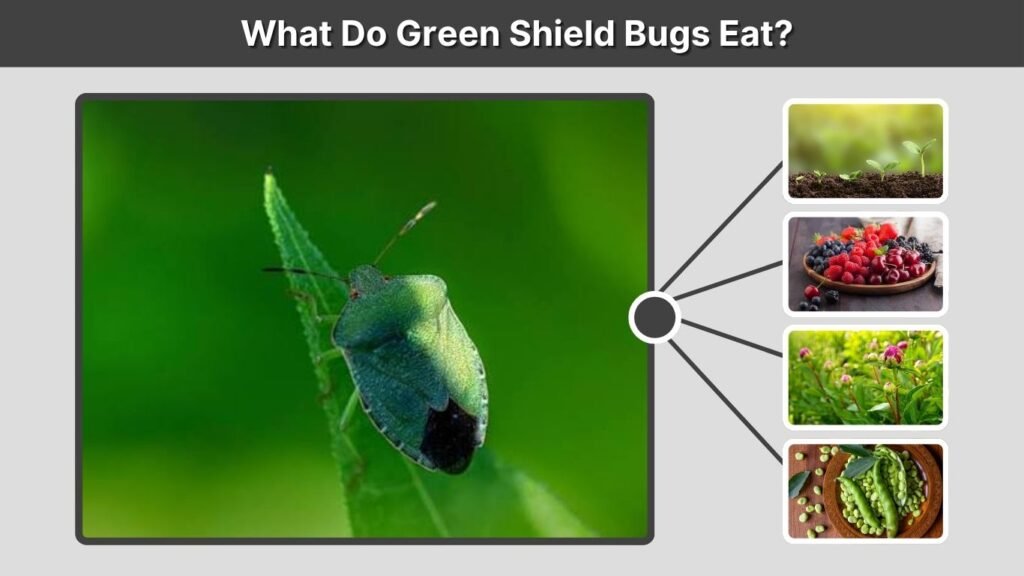
Green shield bugs are plant feeders. They have piercing and sucking mouthparts, known as a rostrum, which they insert into soft plant tissue to obtain fluids.
Common Food Sources
Their diet may include sap or juices from:
- Leaves and young stems
- Developing seeds
- Berries and soft fruits
- Flower buds
- Seed pods
- Deciduous trees and shrubs
- Herbaceous garden plants
They are polyphagous, meaning they can feed on numerous plant species rather than depending on one particular host.
Do Green Shield Bugs Damage Plants?
A few common green shield bugs are unlikely to cause visible damage. Their feeding can occasionally leave small discoloured marks or slightly distorted plant tissue, especially on young fruits and seeds.
Larger populations may cause more noticeable damage, but Palomena prasina is generally considered a minor garden visitor. Chemical control is rarely necessary. Gardeners should confirm the species before taking action because similar shield bugs can have different effects on crops.
Green Shield Bug Life Cycle
The green shield bug undergoes incomplete metamorphosis. It does not have a caterpillar-like larval stage or form a pupa. Instead, its young are called nymphs and gradually develop adult features.
Egg Stage
After mating in spring or early summer, females deposit groups of small, barrel-shaped eggs on plant surfaces, frequently underneath leaves. Placing eggs in clusters helps keep them protected and gives the emerging nymphs immediate access to vegetation.
Development speed depends on temperature. Warm conditions generally allow the eggs to hatch more quickly.
Nymph Stage
Newly hatched nymphs look quite different from adults. They are rounder, lack functional wings and may display black, green, yellow, white or reddish markings.
The nymph passes through five developmental stages called instars. It sheds its outer skin between each stage, becoming larger and developing more adult-like colouring. Wing pads appear during the later instars, but full wings are not available until adulthood.
Young nymphs may remain close to their empty eggs for a short period. They later spread across nearby vegetation to feed.
Adult Stage and Overwintering
New adults generally appear during late summer. They continue feeding before seeking a protected location as autumn temperatures decline.
Adults enter a dormant overwintering period and emerge during the following spring. They then feed, mate and begin the cycle again. In temperate regions, the common green shield bug normally produces one generation each year.
Behaviour and Natural Defences
Green shield bugs are generally slow-moving insects. Adults can fly between plants, although they often remain motionless when resting or feeding.
Why Do Green Shield Bugs Smell?
Like other stink bugs, green shield bugs possess scent glands. When disturbed, handled or crushed, they may release a pungent chemical odour.
This smell discourages predators and does not mean the insect is poisonous. Avoid squeezing a shield bug indoors because the odour may remain on skin, fabric or furniture. Instead, place a container over it, slide paper underneath and release it outdoors.
Predators and Natural Control
Despite their chemical defence, green shield bugs are eaten by birds, spiders and predatory insects. Their eggs and nymphs may also be attacked by parasitoid wasps or flies.
Providing varied planting and avoiding unnecessary broad-spectrum pesticides helps maintain these natural predators. In most gardens, the local ecosystem keeps shield bug numbers under control.
Are Green Shield Bugs Dangerous?
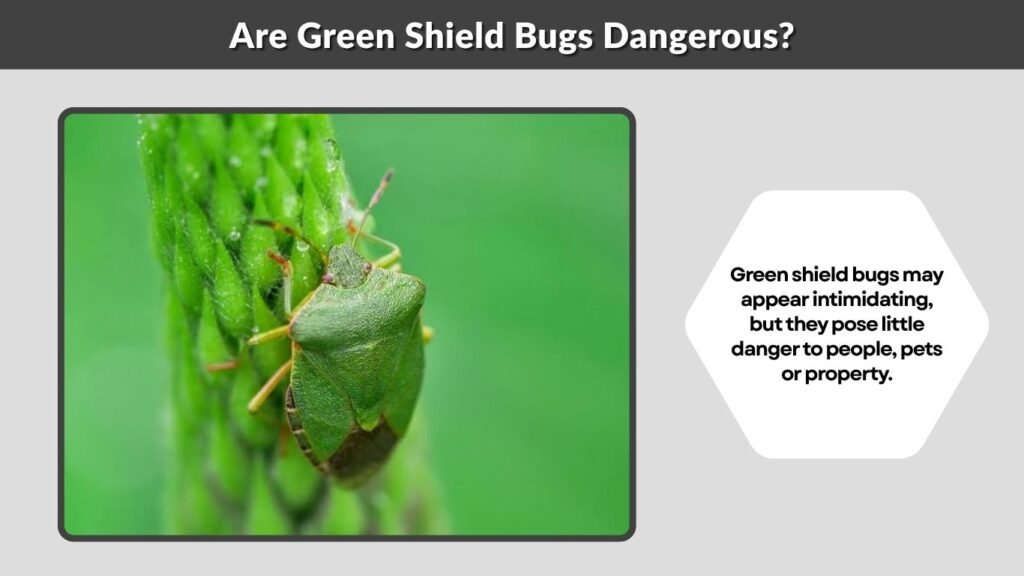
Green shield bugs may appear intimidating, but they pose little danger to people, pets or property.
Do Green Shield Bugs Bite?
Green shield bugs have mouthparts designed to pierce plants, not attack humans. They do not normally bite or sting people and are not known to transmit human diseases.
Handling one roughly could potentially cause minor irritation, so allowing it to walk into a container is preferable to picking it up with bare fingers.
Are They Poisonous to Pets?
Green shield bugs are not considered dangerously poisonous to cats or dogs. However, their defensive chemicals have an unpleasant taste and may cause temporary drooling, vomiting or mouth irritation if a pet chews one.
Contact a veterinarian if symptoms are severe, persistent or accompanied by breathing difficulties.
Should You Remove Them?
Outdoor green shield bugs can usually be left alone. If one enters your home, gently collect and release it outside. Sealing gaps around windows, doors, vents and pipes can reduce future entry without requiring insecticide.
FAQs
How big is a green shield bug?
An adult green shield bug is usually about 12–14 mm long. Its broad, flattened shape can make it appear larger than its actual body length. Nymphs are smaller and rounder, while newly hatched individuals may measure only a few millimetres.
Where do green shield bugs live?
Green shield bugs live among vegetation in gardens, hedgerows, woodland edges, parks, meadows and scrub. They feed and rest on leaves, stems and fruits during warmer months. Adults spend winter beneath bark, within leaf litter or inside other dry, sheltered spaces.
What do green shield bugs eat?
They use piercing mouthparts to drink fluids from leaves, stems, fruits, seeds and flower buds. Because they feed on many plant species, they may move between shrubs, trees and herbaceous plants. Small numbers rarely cause significant garden damage.
Can green shield bugs fly?
Adult green shield bugs have fully developed wings and can fly between feeding sites, mating areas and overwintering shelters. Their flight may appear noisy or clumsy, especially indoors. Nymphs cannot fly because their wings remain undeveloped until the final moult.
How long do green shield bugs live?
An individual can live for several months, with adults surviving winter in a dormant state. Eggs hatch during the warmer season, nymphs develop through five stages and new adults emerge in late summer. Their precise lifespan varies with climate, food and predation.
