
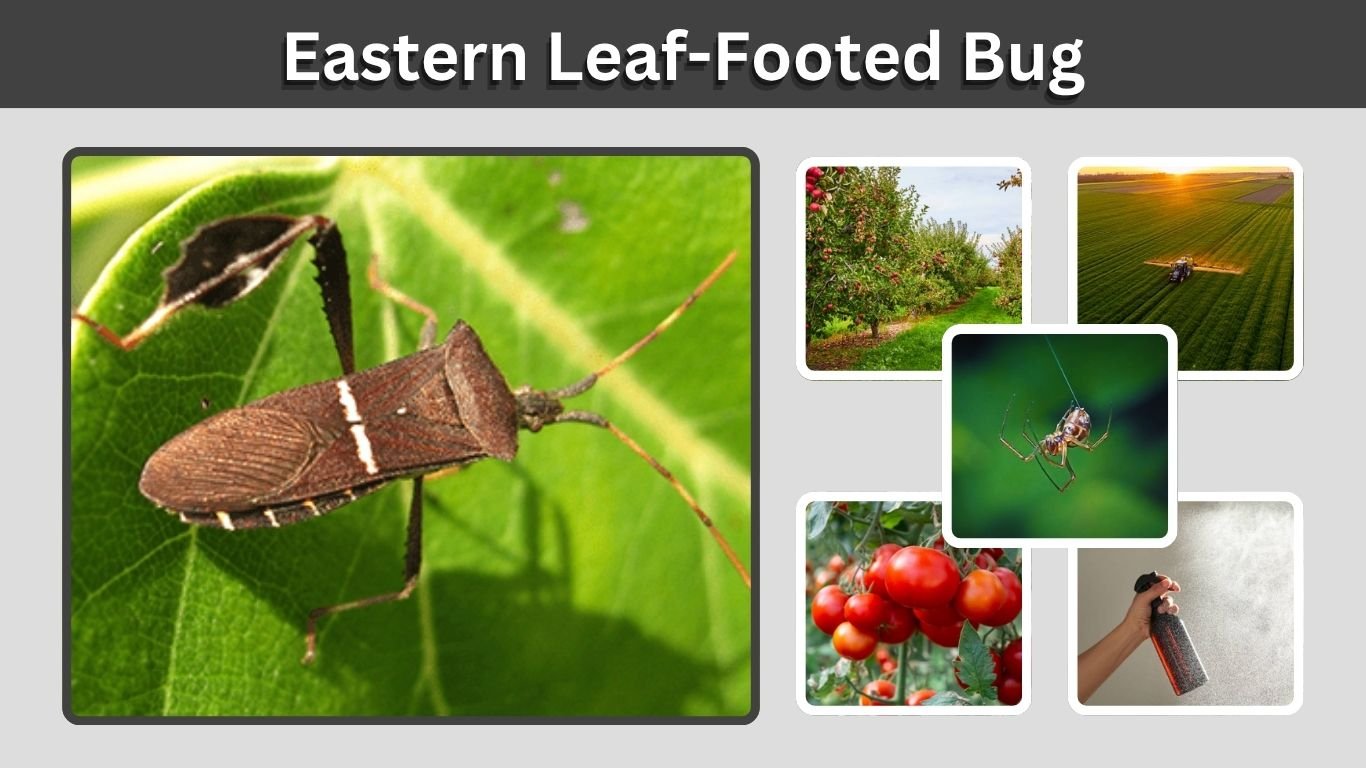
The eastern leaf-footed bug is a brown, plant-feeding insect recognized by its widened hind legs and straight white stripe across the wings. Its scientific name is Leptoglossus phyllopus, and it commonly feeds on tomatoes, peppers, citrus, beans, squash, fruits, seeds, and ornamental plants. A few individuals usually cause limited damage, but large groups can deform developing fruit or cause it to drop. Identifying the adults, nymphs, and eggs early makes controlling an infestation much easier.
What Is an Eastern Leaf-Footed Bug?
The eastern leaf-footed bug is a true bug in the family Coreidae. Its name comes from the flattened, leaf-like sections on the lower hind legs.
Unlike katydids and walking leaf insects, it does not chew leaves. It inserts a needle-like mouthpart into plant tissue and withdraws fluids.
| Feature | Description |
| Scientific name | Leptoglossus phyllopus |
| Order | Hemiptera |
| Family | Coreidae |
| Adult size | Approximately 5/8–3/4 inch |
| Adult color | Chestnut brown |
| Diet | Plant fluids, fruits and seeds |
| Development | Egg, nymph and adult |
| Human danger | Very low |
The species is generally considered a minor agricultural pest, although unusually large populations can cause substantial losses in citrus, vegetables, nuts, and other crops.
Eastern Leaf-Footed Bug Identification
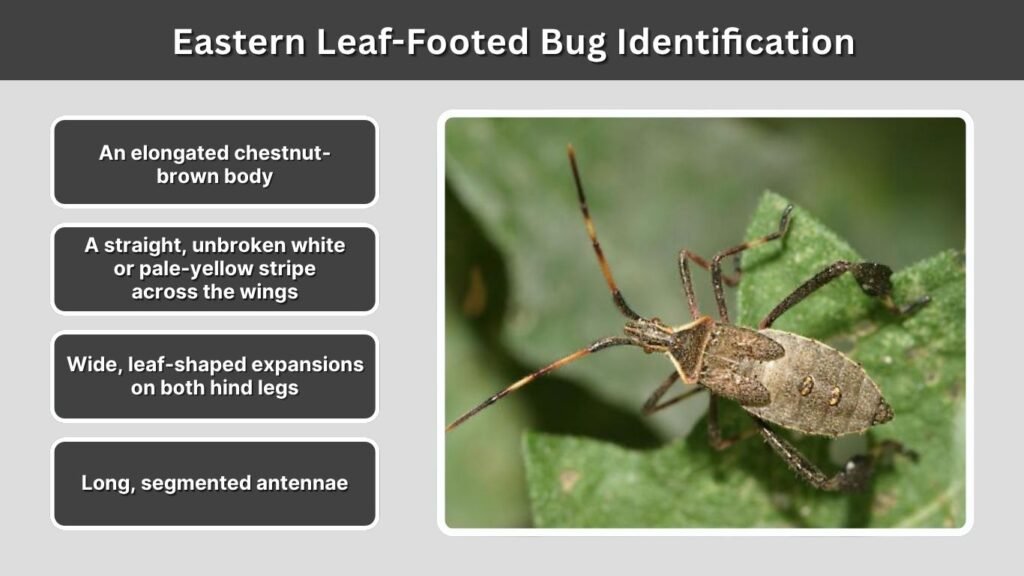
Eastern leaf-footed bugs resemble several related species. The most dependable identification feature is the pale stripe extending straight across the folded wings.
Adult Identification
Look for the following features:
- An elongated chestnut-brown body
- A straight, unbroken white or pale-yellow stripe across the wings
- Wide, leaf-shaped expansions on both hind legs
- Long, segmented antennae
- Broad shoulders behind the head
- Orange abdominal coloring visible when the wings open
- A body measuring approximately 1.6–1.9 centimetres long
Related leaf-footed bugs may have a zigzag stripe, broken markings, pale dots, or no stripe. The uninterrupted crossbar is especially useful for recognizing Leptoglossus phyllopus.
Eastern Leaf-Footed Bug Nymph
Nymphs are wingless immature bugs that may look dramatically different from adults. Young nymphs are usually orange, red, reddish-brown, or light brown with long dark legs and antennae.
They do not initially have the large leaf-like hind-leg expansions. These develop as the nymph matures. Older nymphs also develop dark wing pads before their final molt.
Newly hatched nymphs often remain together in a group. This clustering behavior can help distinguish them from beneficial assassin bug nymphs, which are more commonly seen hunting separately.
Eggs
The eggs are bronze or golden brown, cylindrical, and arranged end-to-end in a straight row. A strand may resemble a tiny chain or rod attached to:
- Plant stems
- Leaf midribs
- Leaf undersides
- Tender branches
Destroying these egg rows is one of the easiest ways to prevent a larger infestation.
Habitat and Geographic Range
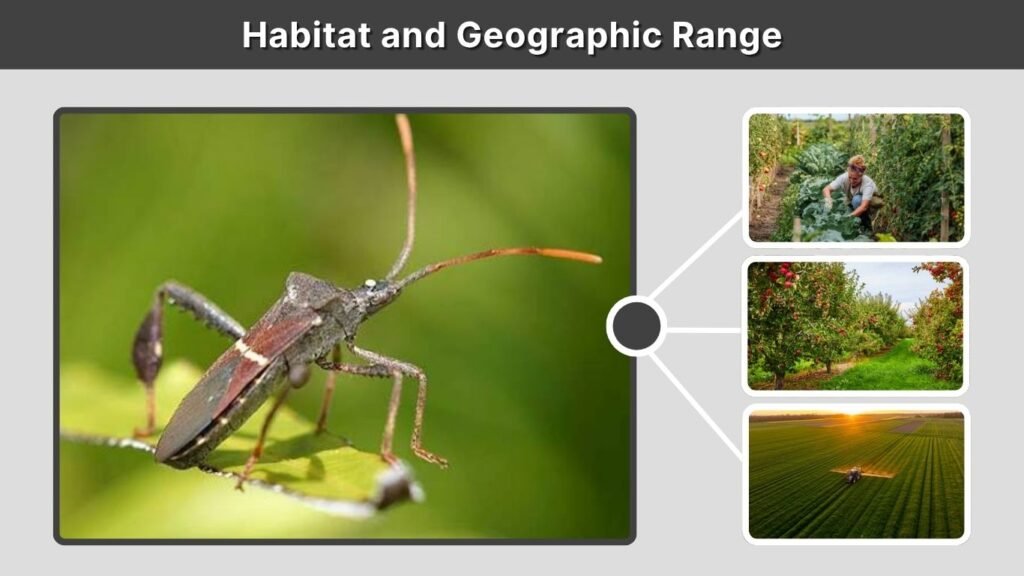
The eastern leaf-footed bug is especially common across the southern United States. Its documented range extends northward into parts of New York, westward through the central states, southwest through Texas and California, and south into Mexico and Central America.
Common habitats include:
- Vegetable gardens
- Orchards
- Agricultural fields
- Forest edges
- Meadows
- Weed-covered areas
- Parks and landscaped yards
- Areas containing thistles and fruiting plants
Adults are strongest in warm weather and may travel considerable distances between wild host plants and cultivated crops. In the Deep South, adults can be found during every month, although activity is usually highest during warmer periods.
Eastern Leaf-Footed Bug Life Cycle
Eastern leaf-footed bugs undergo incomplete metamorphosis, also called hemimetabolous development. They are not ametabolous insects because their young change visibly as they mature.
Their life cycle includes:
- Egg: Females place brown eggs in straight rows on vegetation.
- Young nymph: Small red or orange nymphs hatch and begin feeding.
- Older nymph: The body darkens, wing pads develop, and the hind legs widen.
- Adult: The final molt produces a brown, winged, reproductive insect.
Eggs may hatch within approximately five to seven days in warm conditions. Nymphs typically pass through five instars and may require about 25–30 days to mature, although temperature and food quality can alter development.
The number of generations varies by region. One generation may occur in cooler parts of the range, while multiple generations can develop in warmer southern areas. Adults commonly survive winter beneath mulch, plant debris, tree bark, or other sheltered material.
What Do Eastern Leaf-Footed Bugs Eat?
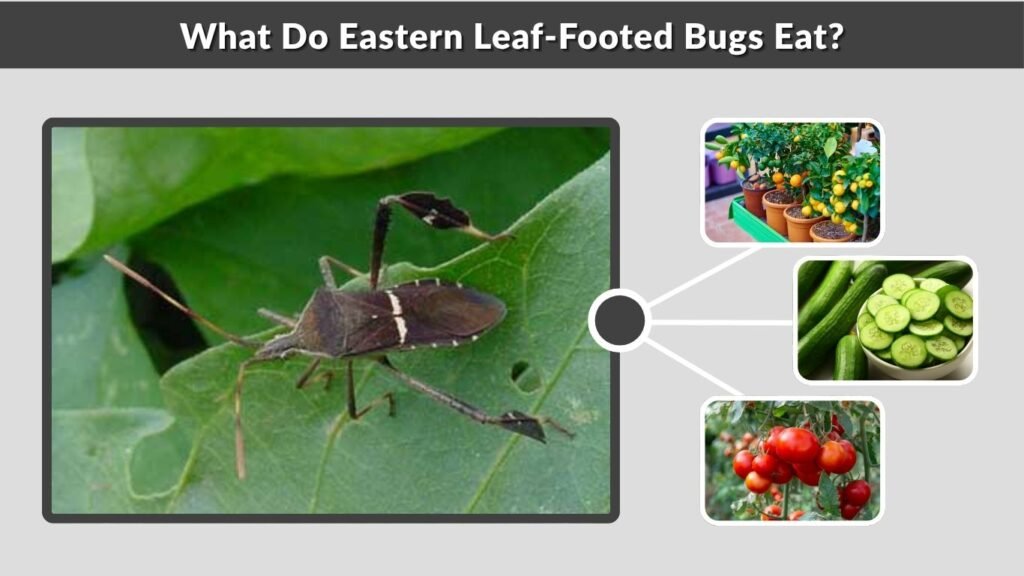
Both adults and nymphs use piercing-sucking mouthparts to remove fluids from plants. They are particularly attracted to tender shoots, developing seeds, flowers, and ripening fruit.
Common host plants include:
- Tomatoes and peppers
- Beans and cowpeas
- Cucumbers, squash, and watermelons
- Eggplants, potatoes, and okra
- Citrus fruits
- Apples, peaches, pears, and plums
- Blueberries and blackberries
- Pomegranates
- Pecans
- Sunflowers and grain sorghum
- Hibiscus, roses, and other ornamentals
- Thistles, goldenrod, and elderberry
Thistles are important wild hosts. Adults may build up on weeds before flying into gardens and orchards when fruit begins developing.
Eastern Leaf-Footed Bugs on Tomatoes
Tomatoes are commonly attacked after fruit begins forming. The bug pushes its mouthpart through the skin and feeds on the tissue beneath it.
Possible signs include:
- Small yellow or white puncture marks
- Dark depressions in the skin
- Hard, corky tissue beneath feeding sites
- Unevenly ripened fruit
- Misshapen young tomatoes
- Internal discoloration
- Premature fruit drop
- Rot entering through feeding wounds
Damage is generally most severe when the bug attacks small, developing fruit. Feeding close to harvest may leave only superficial spots, while early feeding can cause deformation or fruit loss.
Do Eastern Leaf-Footed Bugs Bite?
Eastern leaf-footed bugs are plant feeders and do not seek people, drink blood, or behave like mosquitoes or biting flies. They are not poisonous or venomous and are not considered medically dangerous.
Because they possess a pointed mouthpart, a bug trapped against the skin could potentially produce a defensive prick. Avoid squeezing or handling one with bare fingers. Use gloves, a container, or a piece of paper when moving it.
Natural Predators
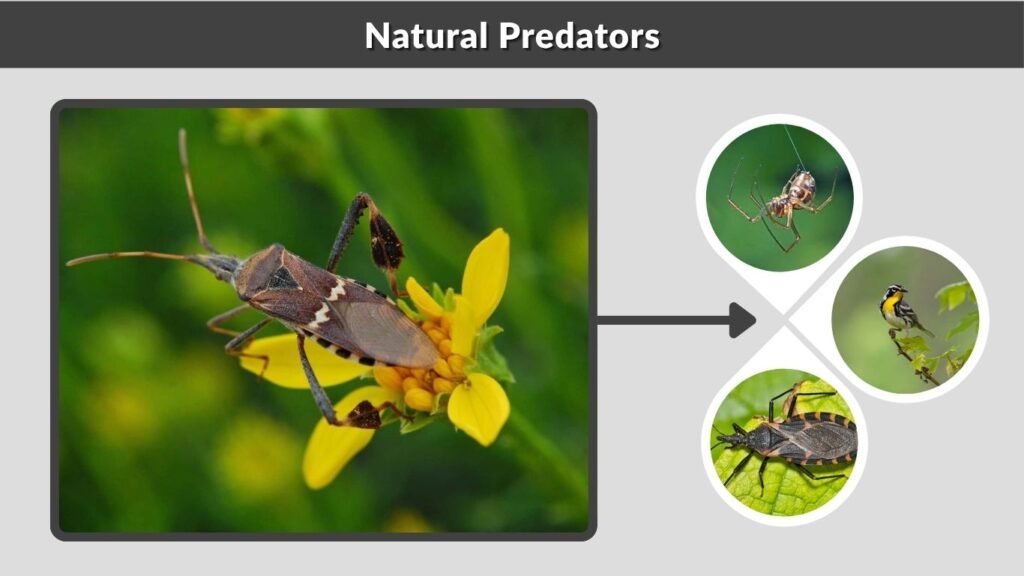
Several predators and parasitoids help reduce leaf-footed bug populations naturally.
Important enemies include:
- Assassin bugs
- Spiders
- Birds
- Parasitic tachinid flies
- Egg-parasitizing wasps
The tiny wasp Gryon pennsylvanicum attacks leaf-footed bug eggs, while the tachinid fly Trichopoda pennipes may deposit eggs on larger nymphs and adults.
Avoid unnecessary broad-spectrum pesticide use because it can kill these beneficial insects along with the pests.
How to Get Rid of Eastern Leaf-Footed Bugs
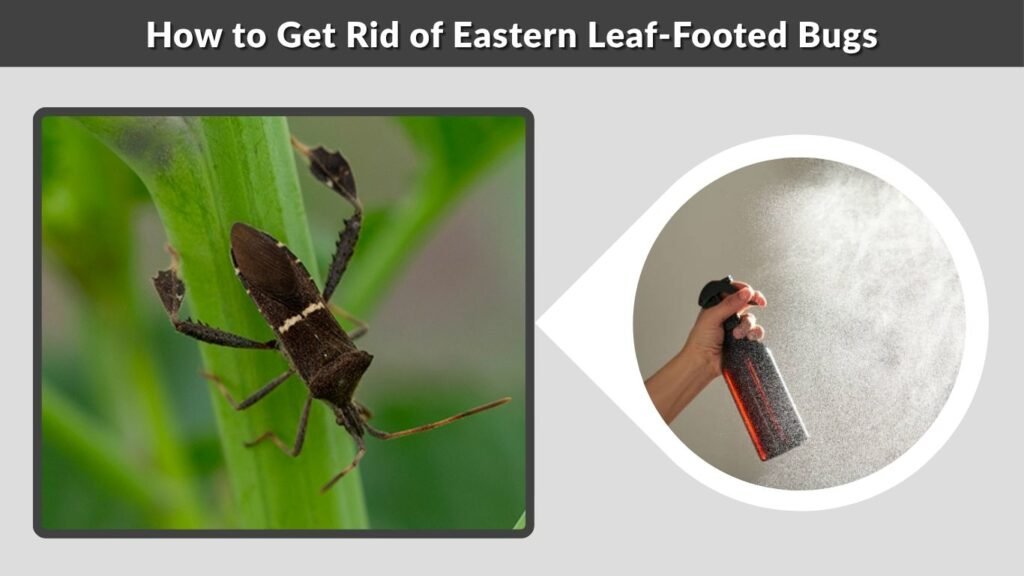
Control is easiest when the insects are still young, wingless, and gathered together.
Remove Eggs and Nymphs
Inspect stems, leaf veins, fruit clusters, and leaf undersides regularly. Crush egg rows or scrape them into soapy water. Knock groups of nymphs into a container and dispose of them.
Early morning is an ideal time because the insects are less active and adults are less likely to fly away.
Use Water Spray
A firm stream of water can knock nymphs from sturdy plants. Place a light-colored sheet beneath the plant so the fallen insects are easy to see and remove.
Repeat this every one to two weeks because spraying does not necessarily remove attached eggs.
Manage Weeds and Plant Debris
Remove unnecessary thistles, fallen fruit, crop residue, and weeds that can provide food or shelter. Clear heavy debris after the growing season to reduce overwintering sites.
Do not suddenly remove heavily infested weeds beside a fruiting crop without first controlling the bugs. Winged adults may simply move from the weeds onto the crop.
Protect Plants With Covers
Fine insect netting or row covers can stop adults from laying eggs on young plants. Install the covers before insects arrive and secure the edges.
Remove or open covers when crops need pollination unless the plants are self-pollinating.
Use Pesticides Only When Necessary
Insecticidal soap, neem-based products, or pyrethrins may suppress small nymphs when sprayed directly. They are generally less reliable against large, winged adults.
Broad-spectrum insecticides can harm bees, parasitoid wasps, and predatory insects. Use them only for serious infestations and select a product labeled for both the crop and pest. Follow application rates and preharvest waiting periods exactly.
FAQs
Are eastern leaf-footed bugs harmful?
They are generally harmless to people and pets but may damage fruits, vegetables, seeds, and nuts. A few bugs usually produce only cosmetic marks, while larger populations can deform fruit or reduce harvest quality.
Are eastern leaf-footed bugs the same as stink bugs?
No. Both are true bugs with piercing mouthparts, but stink bugs have broad, shield-shaped bodies. Eastern leaf-footed bugs are longer and have distinctive flattened sections on their hind legs.
How can I distinguish a nymph from an assassin bug?
Leaf-footed bug nymphs often have dark legs and gather in groups while feeding on plants. Assassin bugs are predators, are frequently solitary, and may be observed capturing other insects.
Should I kill an eastern leaf-footed bug?
Removing it is reasonable when several bugs are feeding on valuable fruit. A single adult resting on an ornamental or wild plant rarely requires pesticide treatment.
What is the best control method?
Regular inspection and early hand removal are usually most effective. Destroy egg rows and clustered young nymphs before they mature into flying adults that are more difficult to catch or treat.
