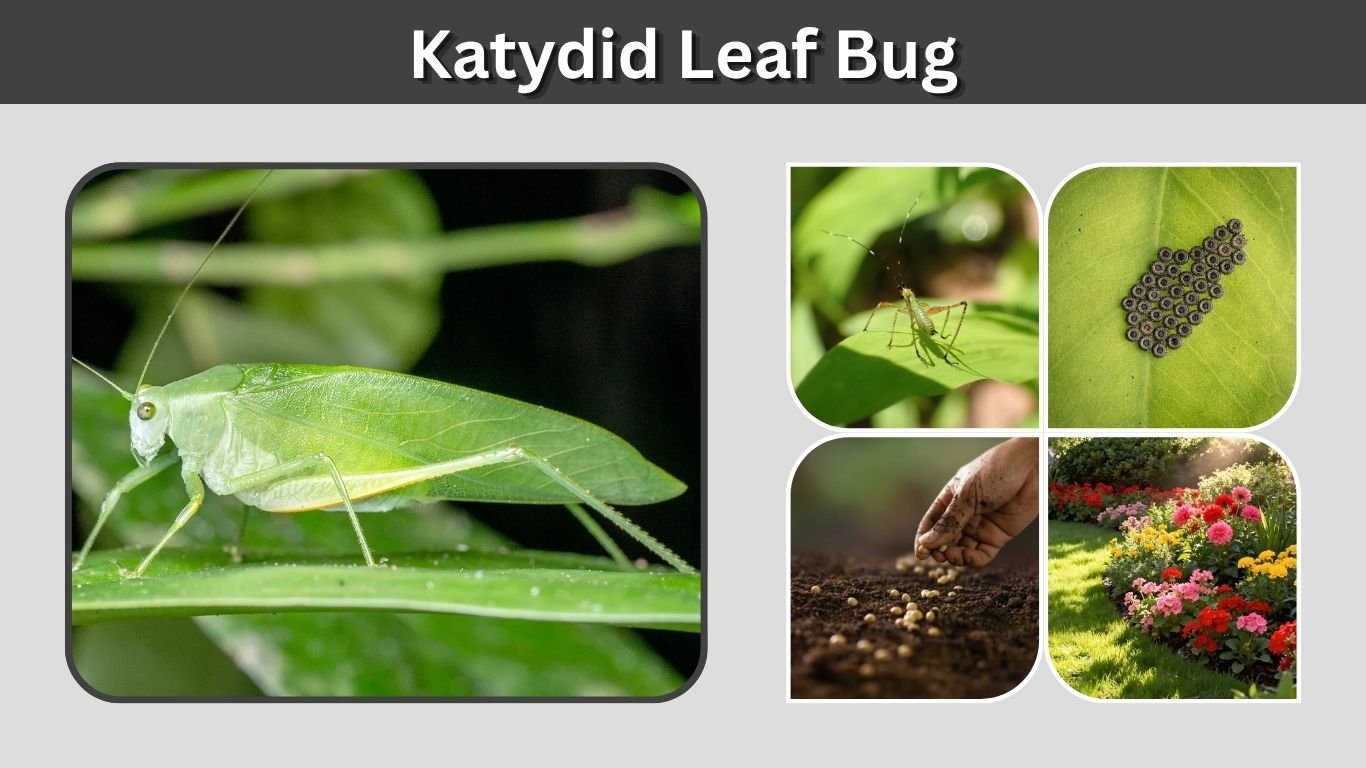
A katydid is a green, leaf-shaped insect known for its remarkable camouflage and loud nighttime call. Although people commonly call it a “katydid leaf bug,” it is not a true bug. Katydids belong to the family Tettigoniidae within the order Orthoptera, making them relatives of crickets and grasshoppers. Their veined wings, green bodies and habit of resting motionless among foliage can make them look almost exactly like living leaves.
What Is a Katydid Leaf Bug?
The term “katydid leaf bug” generally describes a katydid whose wings and body resemble a leaf. Many katydids are green, although some species or individuals may be tan, brown, yellow or even pink.
Katydids are sometimes called long-horned grasshoppers because their antennae are extremely long. However, they are more closely related to crickets than to true grasshoppers. They are found in trees, shrubs, grasslands and gardens, with many species becoming active after dark.
Katydid Identification
A katydid can usually be identified by the following features:
- Bright green, brown or leaf-patterned body
- Two antennae as long as or longer than the body
- Large hind legs adapted for jumping
- Broad wings with visible leaf-like veins
- Wings held roof-like over the abdomen
- Chewing mouthparts rather than a sucking beak
- Hearing organs located on the front legs
- A flattened, blade-like egg-laying organ on many females
Depending on the species, adults may measure from around half an inch to four inches long. Females are often larger and may have a noticeable sword- or sickle-shaped ovipositor extending from the abdomen.
Why Does a Katydid Look Like a Leaf?
Leaf mimicry helps katydids hide from birds, reptiles and other predators. Their wings may have vein patterns, irregular edges and small spots that resemble damage, decay or fungal marks on real leaves.
Many katydids also rest in positions that align their bodies with surrounding foliage. Their camouflage is so effective that they are often heard long before they are seen.
Is a Katydid a Leaf Bug?
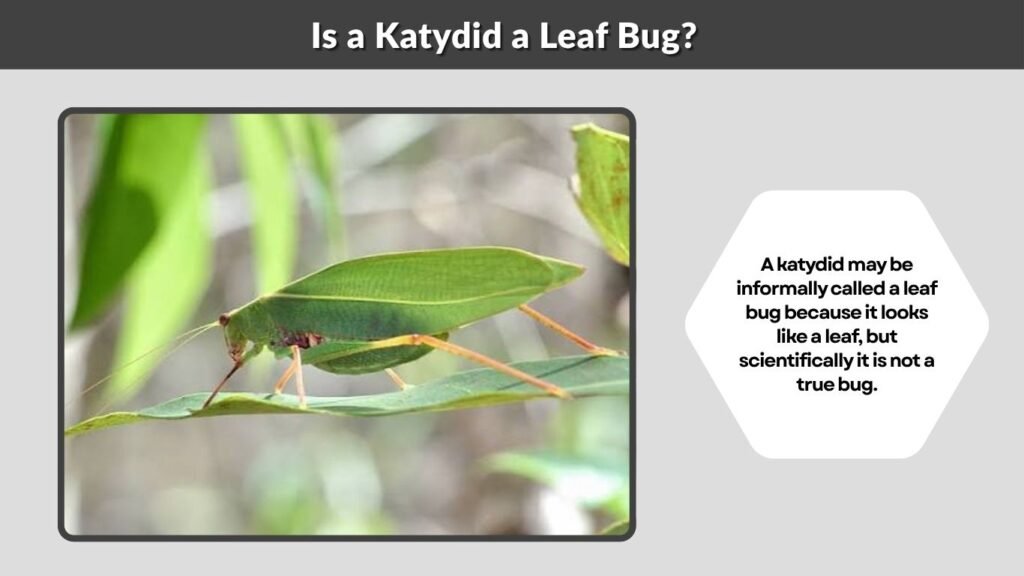
A katydid may be informally called a leaf bug because it looks like a leaf, but scientifically it is not a true bug. True bugs belong to the order Hemiptera and have piercing-sucking mouthparts. Katydids belong to Orthoptera and have jaws that chew plant tissue or prey.
Katydid vs. True Leaf Bug
| Feature | Katydid | True leaf or plant bug |
| Order | Orthoptera | Hemiptera |
| Mouthparts | Chewing jaws | Piercing-sucking beak |
| Antennae | Usually extremely long | Usually shorter |
| Hind legs | Large and adapted for jumping | Usually not strongly enlarged |
| Wings | Often leaf-shaped and roof-like | Commonly form an X pattern |
| Sound | Many species sing | Most do not produce loud songs |
| Main movement | Jumps, climbs and sometimes flies | Walks or flies |
A leaf-footed bug is also different from a katydid. Leaf-footed bugs often have flattened sections on their hind legs but possess a narrow sucking beak used to remove juices from plants. Katydids have powerful jumping legs and visible chewing jaws.
What Sound Does a Katydid Leaf Bug Make?
Katydids are among the most recognizable nighttime insect singers. Males usually create sound by rubbing specialized parts of their front wings together, a process called stridulation. Their calls are used primarily to attract females and communicate with other males.
What Does the Call Sound Like?
The sound varies greatly among species. It may resemble:
- “Katy-did, Katy-didn’t”
- Sharp clicking
- Rapid ticking
- Buzzing
- Rattling
- Scraping or raspy pulses
The common true katydid produces the famous repeated call that inspired the name “katydid.” Other species make short rattles, chirps or high-pitched sounds that may be difficult for some people to hear. Calls are often strongest on warm summer and early-autumn nights.
Do Katydid Leaf Bugs Bite?
Katydids are not aggressive toward humans and do not seek people as food. They have chewing mouthparts, however, and a large katydid may deliver a defensive pinch when squeezed, trapped or handled roughly.
A katydid bite may feel sharp, but it is not venomous or poisonous and usually does not cause serious injury. Washing the area with soap and water is generally sufficient for a minor pinch. People should avoid handling large individuals with bare fingers, particularly around the head.
Are Katydids Dangerous?
Katydids do not sting, inject venom or transmit diseases to people. Their usual response to danger is to remain motionless, jump, fly away or hide behind vegetation.
Their size, long legs and loud sounds can appear intimidating, but they are generally harmless when left undisturbed.
What Do Katydid Leaf Bugs Eat?
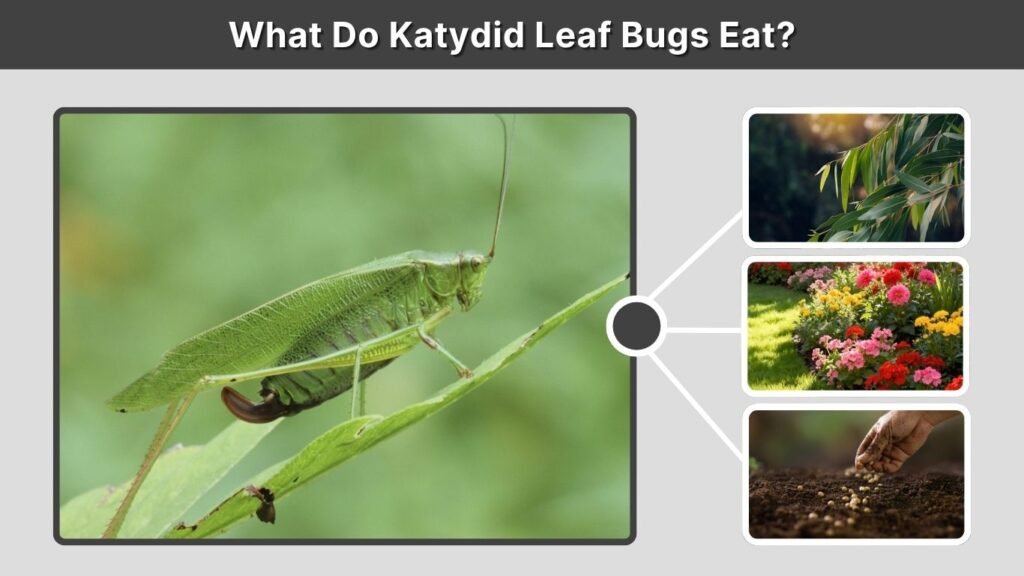
Most katydids eat plant material using their strong chewing jaws. Their food may include:
- Leaves
- Flowers
- Tender stems
- Pollen
- Seeds
- Developing fruit
- Plant bark
Some species are omnivorous and may consume insect eggs, aphids, caterpillars or other small insects. A smaller number are primarily predatory. Diet therefore depends on the species rather than simply the insect’s green color or leaf-like appearance.
Are Katydids Good or Bad for the Garden?
A few chewed leaves usually do not make a katydid a serious garden pest. Most species move between plants and remove only small amounts of foliage. Healthy trees, shrubs and established garden plants generally tolerate this feeding.
Certain species can damage young fruit. Fork-tailed bush katydids, for example, may chew citrus, pears, blueberries and stone fruits, creating scars or sunken areas as the fruit grows. Control may be justified when several katydids repeatedly damage valuable crops, but an isolated insect usually requires no treatment.
Should You Remove Katydids?
Removal is normally unnecessary unless clear damage is occurring. When control is needed, gardeners can:
- Hand-pick katydids while wearing gloves.
- Move individual insects away from valuable plants.
- Protect young fruit with suitable insect netting.
- Remove weeds or dense growth surrounding vulnerable crops.
- Inspect plants at night when katydids are active.
- Avoid broad-spectrum pesticides unless damage is serious.
Because katydids are also eaten by birds and predatory insects, eliminating every individual can unnecessarily disturb the garden food web.
Katydid Eggs and Life Cycle
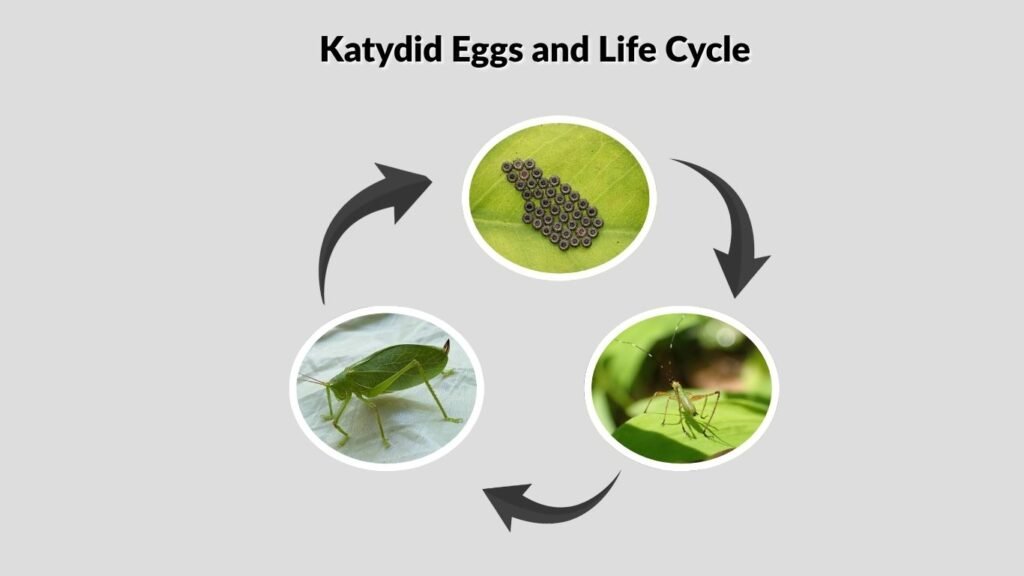
Katydids develop through incomplete metamorphosis with three main stages:
- Egg
- Nymph
- Adult
Females may insert eggs into leaves, plant stems, bark or soil. Some species arrange flat, disk-like eggs in overlapping rows on twigs, while others place eggs along leaf edges where they resemble small swellings.
Katydid Nymphs
A nymph resembles a small adult but lacks fully developed wings and reproductive structures. It grows by shedding its outer skin several times. The wings become progressively more visible after each molt until the final adult stage develops.
Katydids in temperate regions often overwinter as eggs. The nymphs appear during spring, and adults become common during summer and early fall.
Giant and Dead-Leaf Katydids
“Giant katydid” is a general name used for several especially large tropical species. Some have broad wings shaped like fresh green leaves, while others resemble dry or damaged foliage.
Dead-leaf katydids may be brown, mottled and irregularly edged. They are still katydids rather than true leaf insects. True walking leaves belong to the order Phasmatodea and typically have broad, flattened abdomens and leaf-like lobes on their legs.
Katydid Spiritual Meaning
Katydids do not have a scientifically established spiritual meaning. In folklore and personal symbolism, their camouflage may represent adaptation, patience and blending with one’s surroundings. Their nighttime songs are sometimes associated with communication, intuition, changing seasons or listening carefully before taking action.
These meanings are cultural interpretations and are not part of the insect’s biological behavior.
FAQs
Is a green leaf-shaped bug usually a katydid?
It may be. Katydids have long antennae, large jumping legs and leaf-veined wings. Other leaf-shaped insects include walking leaves, planthoppers, mantises and certain moths, so several features should be checked before identification.
Can a katydid fly?
Most adult katydids have wings, but their flying ability varies. Some can fly between trees and shrubs, while others mainly jump and use their wings for short glides or fluttering movements.
Why do katydids make noise at night?
Male katydids sing mainly to attract females and communicate with competing males. Many species are nocturnal, so their calls become most noticeable after sunset during warm weather.
Do katydids eat tomato plants?
Katydids may chew tomato leaves, flowers or fruit, but a single insect rarely causes serious damage. Larger populations could create holes or cosmetic fruit scars.
Is a katydid poisonous to pets?
Katydids are not venomous or poisonous. However, pets should not be encouraged to eat wild insects because an insect may have contacted pesticides or other environmental contaminants.