
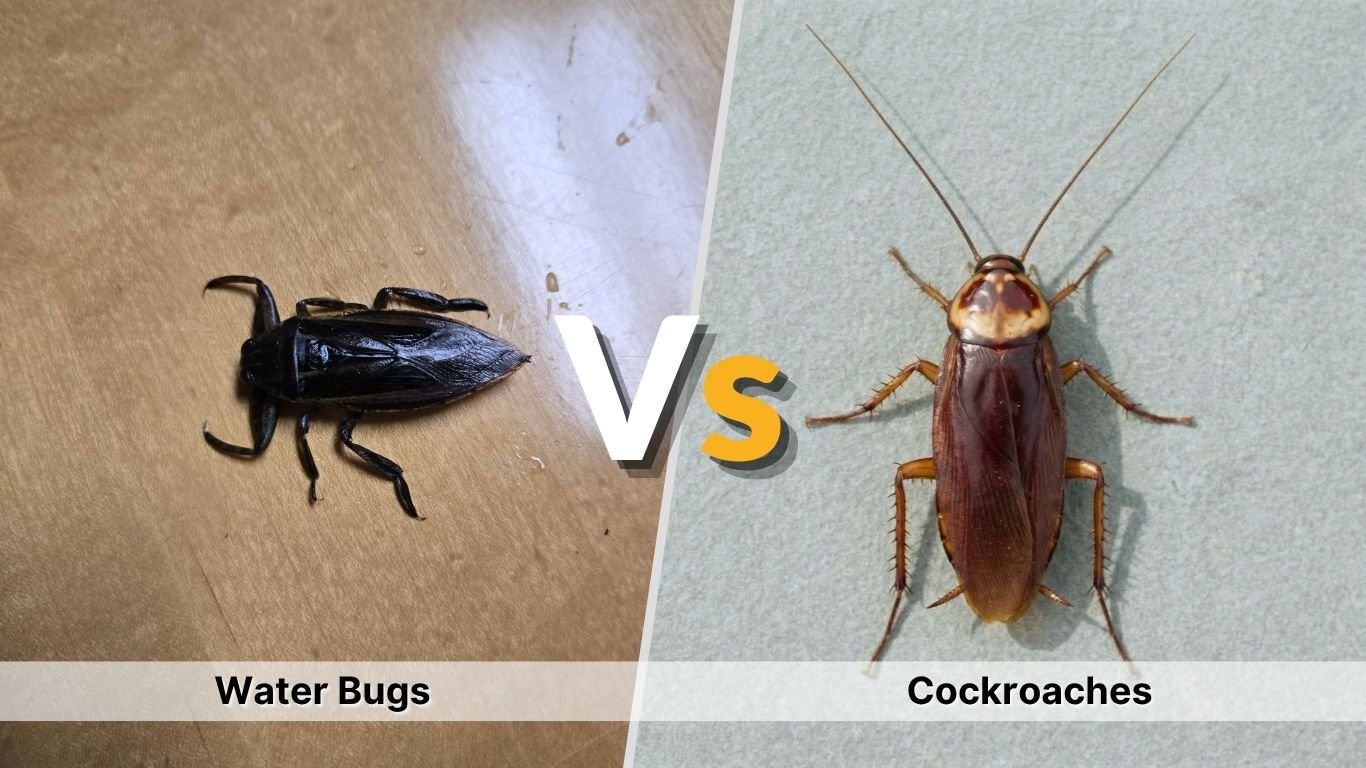
Water bugs and cockroaches are often confused because both can be large, dark-colored insects found near water. However, true water bugs and cockroaches belong to different insect groups and have very different habitats, behaviors, diets, and body features. True water bugs are aquatic predators that spend most of their lives in ponds and slow-moving water. Cockroaches are land-dwelling scavengers commonly found in kitchens, bathrooms, basements, and sewers. Understanding these differences can help you identify the insect correctly and decide whether pest control is necessary.
Are Water Bugs and Cockroaches the Same?
True water bugs are not cockroaches. The term “water bug,” however, is often used informally for large cockroach species that prefer damp environments.
For example, people frequently call Oriental cockroaches and American cockroaches water bugs because they are commonly found near drains, sewers, basements, and leaking pipes. These insects are still cockroaches, not true aquatic water bugs.
True water bugs belong to the insect order Hemiptera and include giant water bugs from the family Belostomatidae. Cockroaches belong to the order Blattodea.
Water Bug vs. Cockroach Comparison
| Feature | True Water Bug | Cockroach |
| Habitat | Ponds, streams and wetlands | Buildings, sewers and outdoor debris |
| Body shape | Broad, oval and flattened | Long, oval and flattened |
| Antennae | Short and less noticeable | Very long and threadlike |
| Front legs | Thick and adapted for grabbing prey | Slender and adapted for running |
| Diet | Aquatic insects, tadpoles and small fish | Food scraps, garbage and organic waste |
| Movement | Swims and flies | Runs quickly; some species fly |
| Biting ability | Can deliver a painful defensive bite | Rarely bites people |
| Indoor infestation | Uncommon | Common in some species |
| Main risk | Painful bite | Food contamination and allergens |
What Does a Water Bug Look Like?
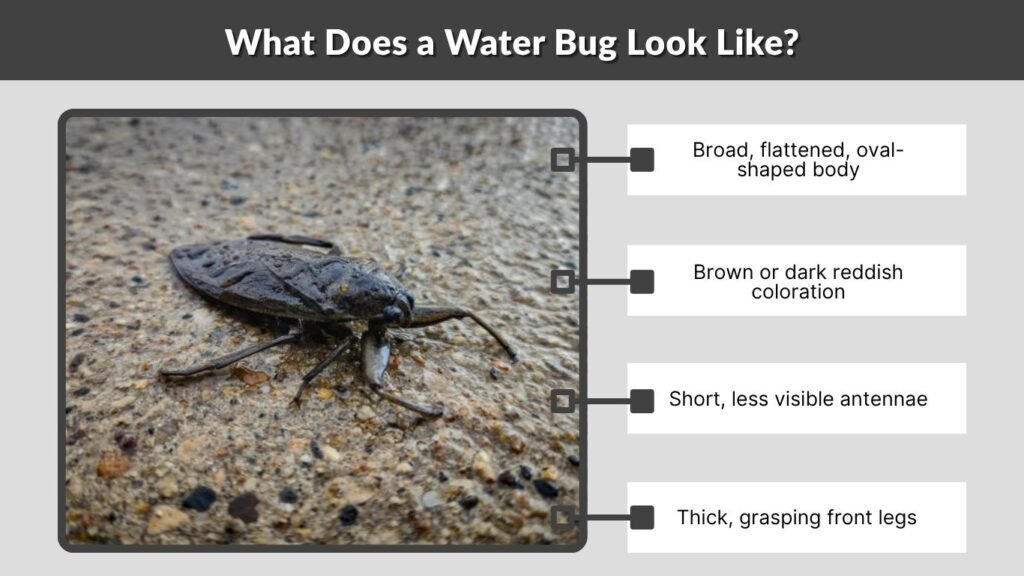
True water bugs are broad, flattened insects with powerful front legs. Depending on the species, they may be brown, tan, or dark reddish-brown.
Giant water bugs are among the largest true bugs and may reach approximately 1.5 to 4 inches long. Their oval bodies help them move through water, while their strong front legs allow them to catch and hold prey.
Water Bug Identification
- Broad, flattened, oval-shaped body
- Brown or dark reddish coloration
- Short, less visible antennae
- Thick, grasping front legs
- Large size in giant water bug species
- Hind legs adapted for swimming
- Pointed, piercing mouthpart beneath the head
- Usually found in or near natural water
True water bugs may occasionally fly toward outdoor lights, especially during warm weather. For this reason, giant water bugs are sometimes called electric-light bugs.
What Does a Cockroach Look Like?
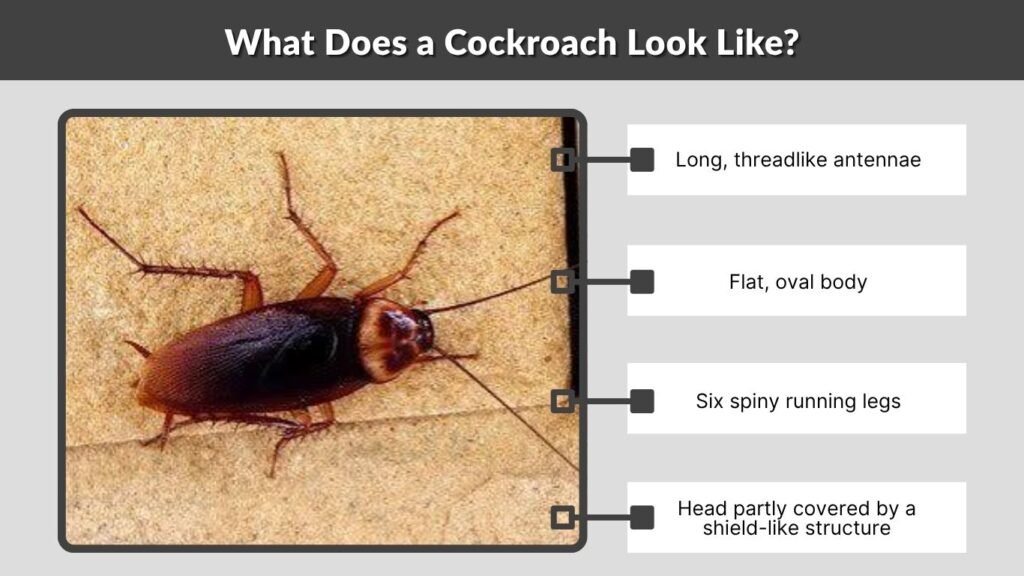
Cockroaches have flattened, oval bodies with long antennae and six spiny legs. Their legs are designed for rapid running rather than swimming or capturing prey.
Cockroach size and coloration vary by species. German cockroaches are small and light brown, while American and Oriental cockroaches are much larger and darker.
Cockroach Identification
- Long, threadlike antennae
- Flat, oval body
- Six spiny running legs
- Head partly covered by a shield-like structure
- Brown, reddish-brown, black, or tan coloration
- Two small appendages called cerci at the rear
- Frequently found in dark, enclosed places
Unlike true water bugs, cockroaches are often seen running along floors, walls, cabinets, drains, or appliances.
Differences in Habitat
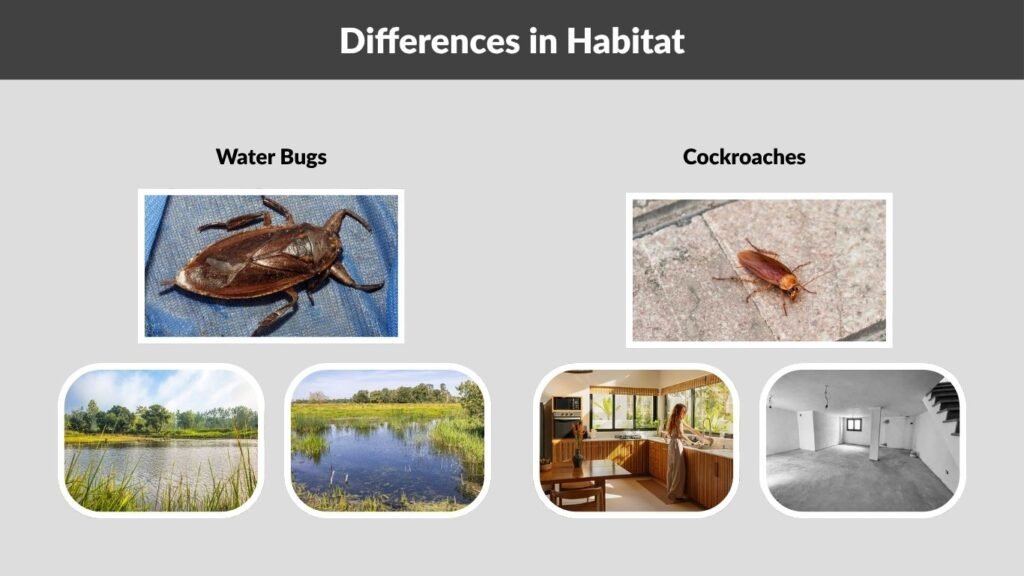
Habitat is one of the easiest ways to distinguish a water bug from a cockroach.
Where Water Bugs Live
True water bugs spend most of their lives in freshwater environments, including:
- Ponds
- Marshes
- Lakes
- Slow-moving streams
- Wetlands
- Drainage ditches
- Swimming pools
They normally remain underwater but come to the surface to obtain air. Some species hold air beneath their wings or use special structures at the rear of the body to breathe.
A true water bug found inside a house usually entered accidentally. It is unlikely to establish an indoor infestation.
Where Cockroaches Live
Cockroaches live on land and prefer areas offering moisture, warmth, darkness, and food. Common locations include:
- Kitchens
- Bathrooms
- Basements
- Sewers
- Crawl spaces
- Floor drains
- Utility rooms
- Areas beneath appliances
- Outdoor leaf litter and wood piles
Oriental cockroaches are particularly associated with damp locations, which is why they are commonly mistaken for water bugs.
Water Bug vs. Cockroach Size
True water bugs are generally larger than most household cockroaches. A giant water bug can grow several inches long, although size varies among species.
Common household cockroach sizes include:
- German cockroach: about ½ to ⅝ inch
- Oriental cockroach: about ¾ to 1¼ inches
- American cockroach: about 1½ to 2 inches
- Smokybrown cockroach: about 1¼ to 1½ inches
Large American cockroaches may look similar in size to smaller giant water bugs. Antennae and front-leg shape are more reliable identification features than size alone.
Differences in Diet
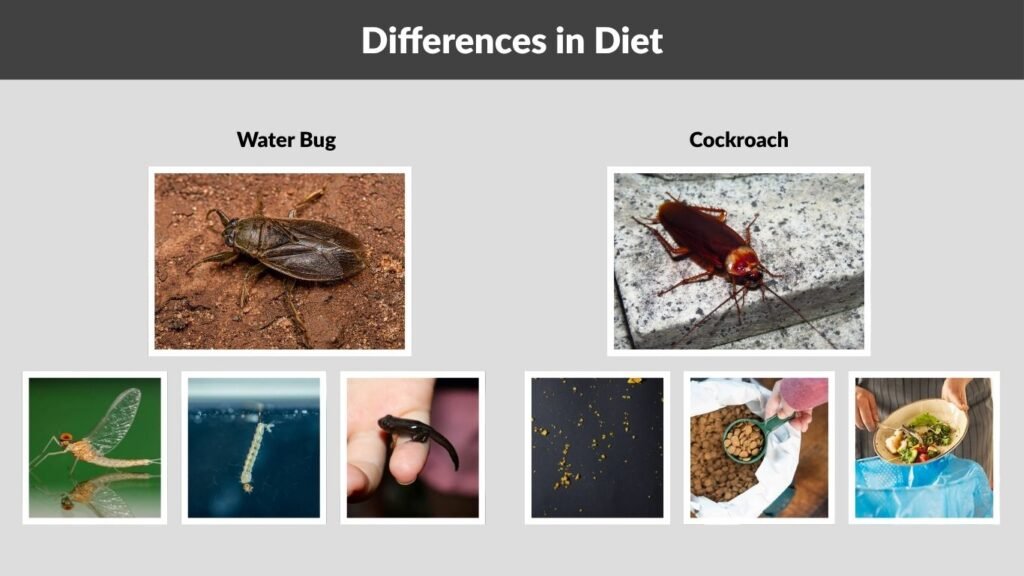
True water bugs are active predators. They use their strong front legs to seize prey and their piercing mouthparts to inject digestive saliva.
Their prey may include:
- Aquatic insects
- Mosquito larvae
- Tadpoles
- Snails
- Small fish
- Small frogs
- Other water bugs
Cockroaches are scavengers and opportunistic feeders. They consume food scraps and many types of decomposing organic material.
A cockroach may eat:
- Grease
- Crumbs
- Pet food
- Garbage
- Cardboard
- Glue
- Soap residue
- Decaying plants
- Dead insects
This scavenging behavior frequently brings cockroaches into homes and commercial buildings.
Do Water Bugs or Cockroaches Bite?
True water bugs can bite people when handled, trapped, or threatened. They use a sharp feeding structure called a rostrum to pierce prey.
A giant water bug bite can be intensely painful but is not normally life-threatening. Swelling, redness, and soreness may occur around the bite. The area should be washed with soap and water, and the insect should not be handled with bare hands.
Cockroaches rarely bite people. In severe infestations with limited food, cockroaches have occasionally been reported nibbling dead skin, fingernails, or food residue around the body. However, biting is not their primary health risk.
Which One Is More Dangerous?
True water bugs pose little risk unless they are handled. Their defensive bite can be painful, but they are not household pests and do not normally spread disease indoors.
Cockroaches present a more significant indoor health concern. They move through drains, garbage, sewage, and contaminated material before walking across food or kitchen surfaces.
Cockroach activity may contribute to:
- Food contamination
- Unpleasant odors
- Bacterial transfer
- Asthma symptoms
- Allergic reactions
- Contamination from droppings and shed skins
Cockroach allergens are particularly concerning in heavily infested homes.
Do Water Bugs or Cockroaches Fly?
Many true water bugs can fly. Adults may leave the water to find new habitats and are sometimes attracted to bright lights at night.
Flying behavior varies among cockroaches. American and smokybrown cockroaches can fly or glide, especially in warm conditions. German cockroaches have wings but rarely fly, while female Oriental cockroaches have poorly developed wings and cannot fly.
Seeing a large insect fly does not confirm whether it is a water bug or cockroach. Its antennae, legs, body shape, and location should also be examined.
Why Are There “Water Bugs” in My House?
An insect described as a water bug inside a kitchen or bathroom is usually a cockroach. Cockroaches may enter homes through drains, cracks, pipe openings, doors, vents, and gaps around utility lines.
They are attracted by:
- Leaking pipes
- Standing water
- Uncovered food
- Dirty dishes
- Garbage
- Pet food
- Damp basements
- Clutter and cardboard
A true water bug may enter accidentally after being attracted to lights, but repeated sightings usually indicate that the insects are cockroaches.
How to Get Rid of Water Bugs and Cockroaches
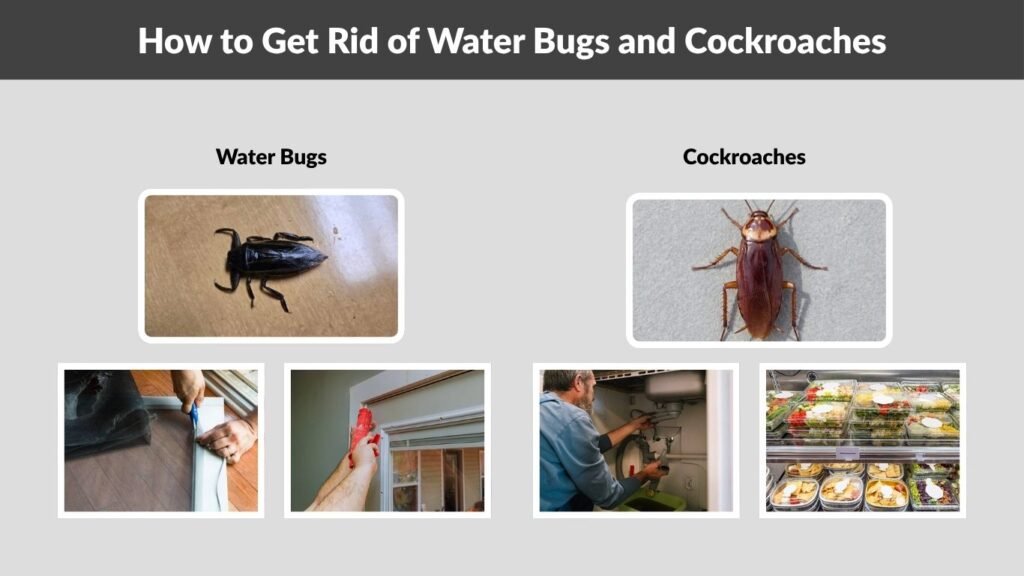
The correct control method depends on which insect is present.
Controlling True Water Bugs
True water bugs usually do not require indoor pest treatment. Remove individual insects with a container or net and release them near suitable outdoor water.
Reduce accidental entry by:
- Repairing window screens
- Sealing gaps around doors
- Reducing unnecessary outdoor lighting
- Covering swimming pools when not in use
- Removing standing water near entrances
Avoid touching a true water bug directly because it may bite defensively.
Controlling Cockroaches
Cockroach control requires sanitation, moisture reduction, exclusion, and targeted treatments.
- Repair plumbing leaks
- Keep counters and floors clean
- Store food in sealed containers
- Empty garbage regularly
- Remove cardboard and clutter
- Seal cracks around pipes and walls
- Use cockroach bait stations or gel baits
- Place sticky traps in activity areas
Avoid relying only on aerosol sprays. Sprays may kill visible cockroaches but often fail to reach hidden colonies. Severe infestations may require professional pest-control treatment.
FAQs
Is a water bug just a large cockroach?
Not always. True water bugs are aquatic insects unrelated to cockroaches. However, American and Oriental cockroaches are often informally called water bugs because they prefer damp environments.
How can you quickly identify a water bug?
Look at the antennae and front legs. True water bugs have short antennae and thick front legs for grabbing prey. Cockroaches have very long antennae and six similarly shaped running legs.
Can water bugs infest a house?
True water bugs rarely infest houses because they need an aquatic habitat. Numerous supposed water bugs inside a building are more likely to be cockroaches, especially Oriental or American cockroaches.
Are water bug bites poisonous?
True water bug bites are painful but are not generally considered poisonous to humans. Wash the area and monitor it for unusual swelling, persistent pain, or signs of infection.
Why do cockroaches come out of drains?
Drains provide moisture, darkness, food residue, and access through plumbing or sewer systems. Sealing gaps, fixing leaks, cleaning drains, and using targeted cockroach baits can help reduce their activity.
